
Basics

What to put on a resume — and what to take off

Most resumes are not missing anything. They are carrying things that stopped earning their space — an objective statement written in 1998 phrasing, a references line, a skills list padded with "hard-working", a job from three careers ago. The useful version of this question is not what to add. It is what each line is doing for a reader who has six seconds, and what to cut when the answer is nothing.

4 sections

The short version

  • Five sections always belong: contact, summary, experience, education, skills.
  • Four are situational: certifications, projects, publications and languages.
  • Take off the references line, the objective, your street address, skill bars and unsupported adjectives.
  • The test for anything uncertain: what would a hiring manager do differently having read it?
  • Space is not free. A line is charged against the attention available for the line under it.

The five that always belong

These are not negotiable, and in this order for most people.

  • Name and contact details: name, email, phone, city and country. A LinkedIn URL if the profile is current. A portfolio or GitHub if the work is relevant.
  • Summary: three sentences naming what you do, at what level, and what you are aiming at. Cut it if it would only restate your job title.
  • Experience: every relevant role, reverse-chronological, with title, employer, location and dates. Three to five bullets on recent roles, one or two on older ones.
  • Education: degree, institution, graduation year. Below experience unless you graduated within about two years.
  • Skills: the specific tools, systems and named competencies for this field. Twelve to twenty, grouped, no ratings.

The four that depend on your field

Certifications deserve their own section when they are a licensing requirement — nursing, accounting, security, project management, trades. Buried inside education, an active RN licence or a CPA is doing a fraction of the work it should.

Projects earn a section when your employment history does not yet demonstrate what you can do: students, career changers, and engineers whose best work is public. A project entry needs the same structure as a job — what you built, what you used, what happened.

Publications, speaking and patents belong on academic, research and senior technical resumes and nowhere else. Volunteering belongs when it shows leadership, when it fills a gap, or when the employer is a nonprofit.

Languages are worth listing when the role is customer-facing, international, or advertised in a country where you would be working in a second language. State a real level — "conversational", "professional working", "native" — rather than a bar chart.

What to take off

Each of these was standard once. None of them helps now, and several actively cost you.

  • "References available on request" — universally assumed, and the line spends a whole row saying nothing.
  • An objective statement describing what you want from an employer. Replace it with a summary describing what you bring, or delete it.
  • Your full street address. City and country is what anyone needs; the rest is an identity-theft surface on a document you email to strangers.
  • Date of birth, marital status, nationality and a photo — on a US, UK, Canadian or Australian application. All four are normal in much of continental Europe.
  • Skill rating bars. A five-dot meter next to "Python" is a self-assessment against an undefined scale, and no reader can act on it.
  • Soft-skill adjectives with nothing behind them: hard-working, detail-oriented, team player, results-driven. Everyone claims them, so they carry no information.
  • Jobs from more than fifteen years ago with no bearing on this one, and your high school once you have a degree.
  • Anything untrue, including a degree "in progress" that stalled and a job title you gave yourself. This is the one item on the list that ends careers rather than applications.

The test for anything you are unsure about

Ask what a hiring manager would do differently having read it. If the honest answer is nothing, it is decoration. Hobbies usually fail this test — but "volunteer wildfire responder, 6 seasons" passes it easily, because it tells someone you can be relied on under pressure and almost nobody else on the shortlist has it.

The second test is the space test. Everything on the page competes with everything else for the same six seconds. A line is not free because there is room for it; it is charged against the attention available for the line under it. That is why cutting is usually a bigger improvement than adding, and why the strongest resumes tend to be the ones that had the most taken out.
What earns its space

Scroll the table sideways to compare →

SectionInclude whenLeave off when
SummaryIt says something the chronology cannotIt would only restate your job title and years
CertificationsYour field licenses the work, or the posting names oneThey are course completions with no assessment behind them
ProjectsYour jobs do not yet demonstrate what you can doYour employment history already makes the case
LanguagesThe role is customer-facing or internationalYou would be embarrassed to be tested at the level implied
VolunteeringIt shows leadership, fills a gap, or the employer is a nonprofitIt is a single afternoon three years ago
HobbiesOne of them is demanding, sustained or genuinely unusualIt is "reading, travelling and socialising"

Section by section

Open your own resume beside this and work down it. Every line is something a reader or a parser acts on within the first pass.

  • Contact: name, email, phone, city — plus LinkedIn if the profile is current
  • Summary: three sentences, or nothing at all
  • Experience: title, employer, location, dates, and outcome-led bullets
  • Education: below experience unless you graduated within about two years
  • Skills: twelve to twenty, grouped, no ratings
  • Certifications: their own section where your field licenses them
  • Projects: only where your employment history does not yet show what you can do
  • Nothing untrue anywhere, including a degree described as finished

Templates with the right sections

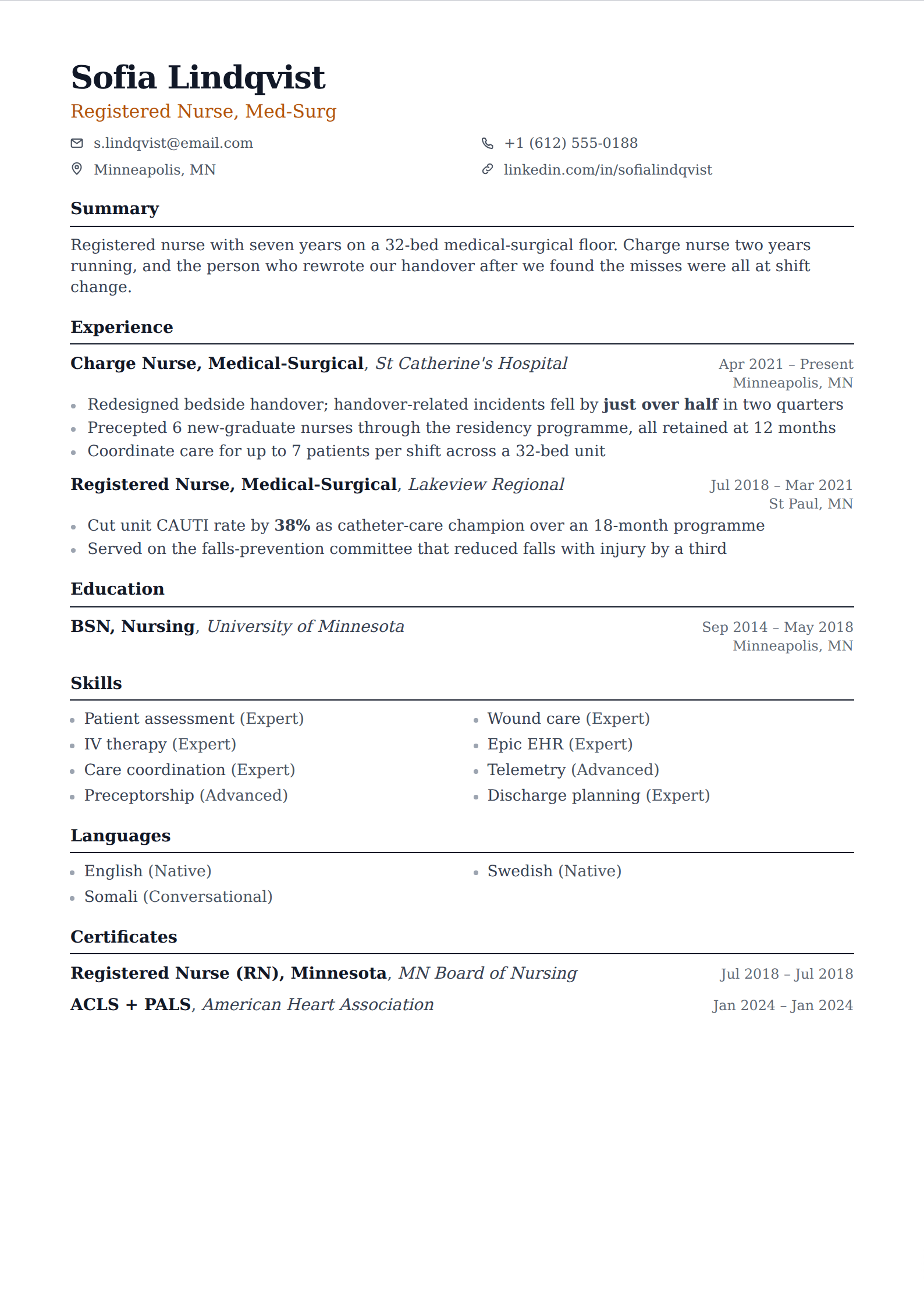
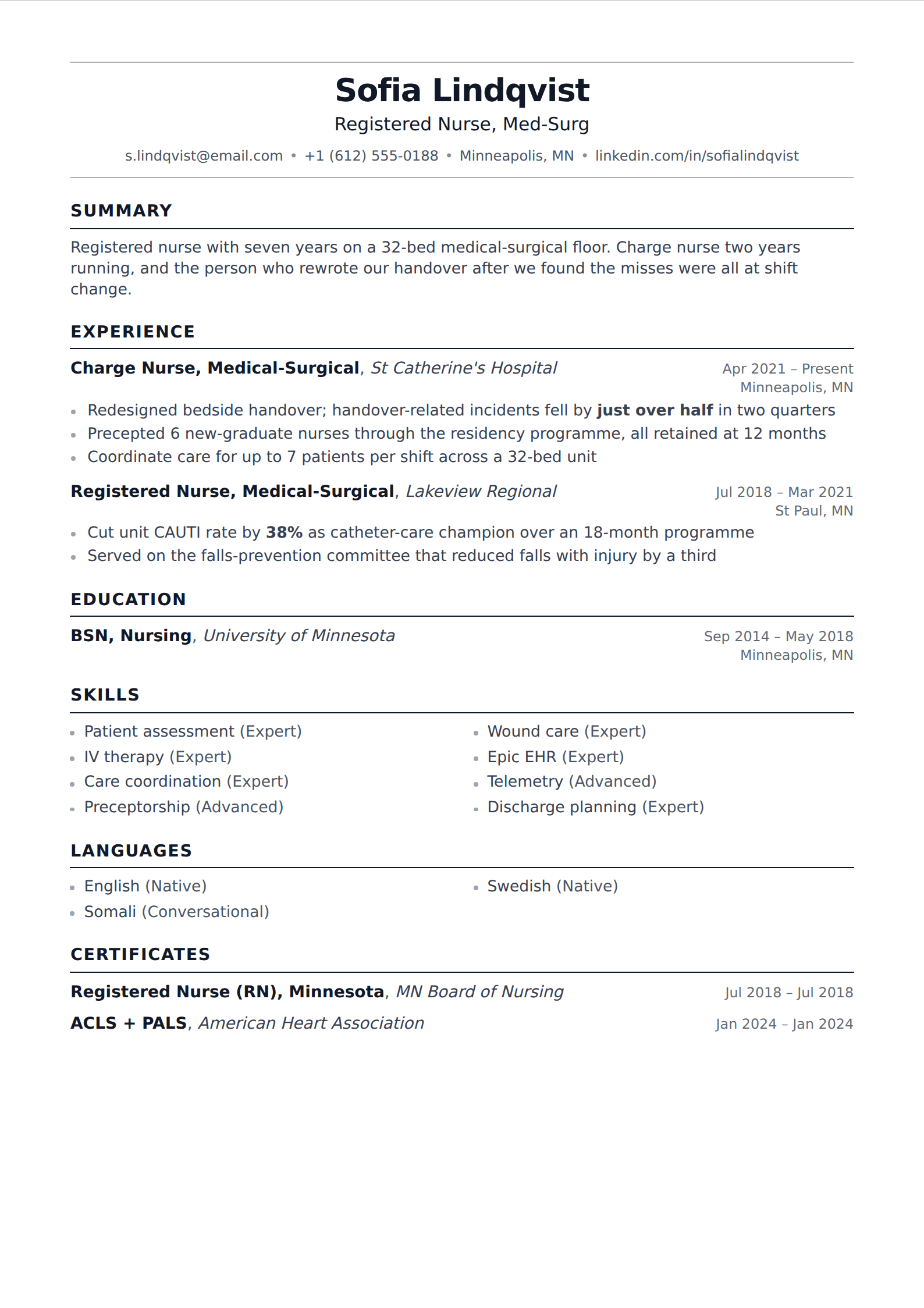
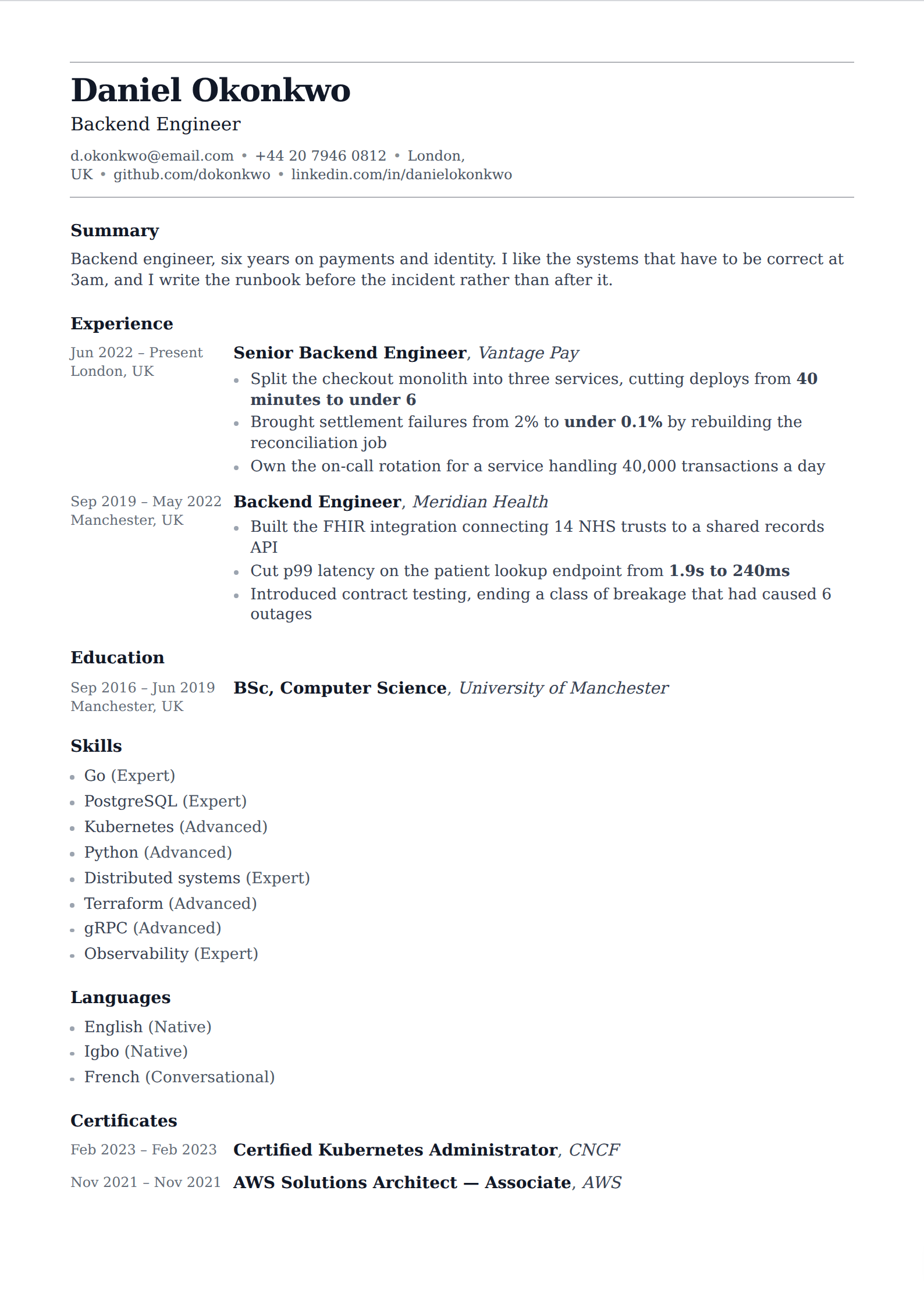
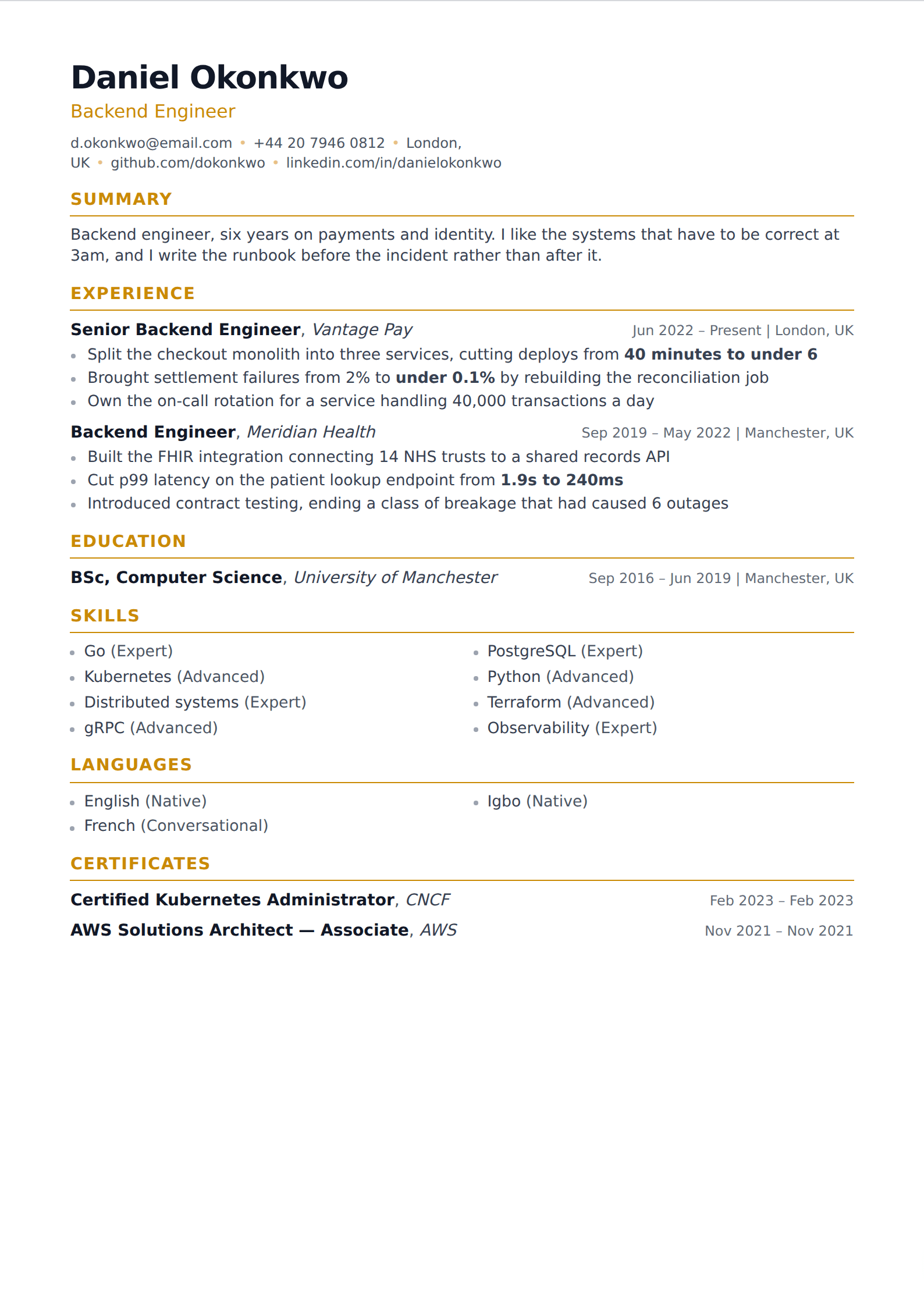
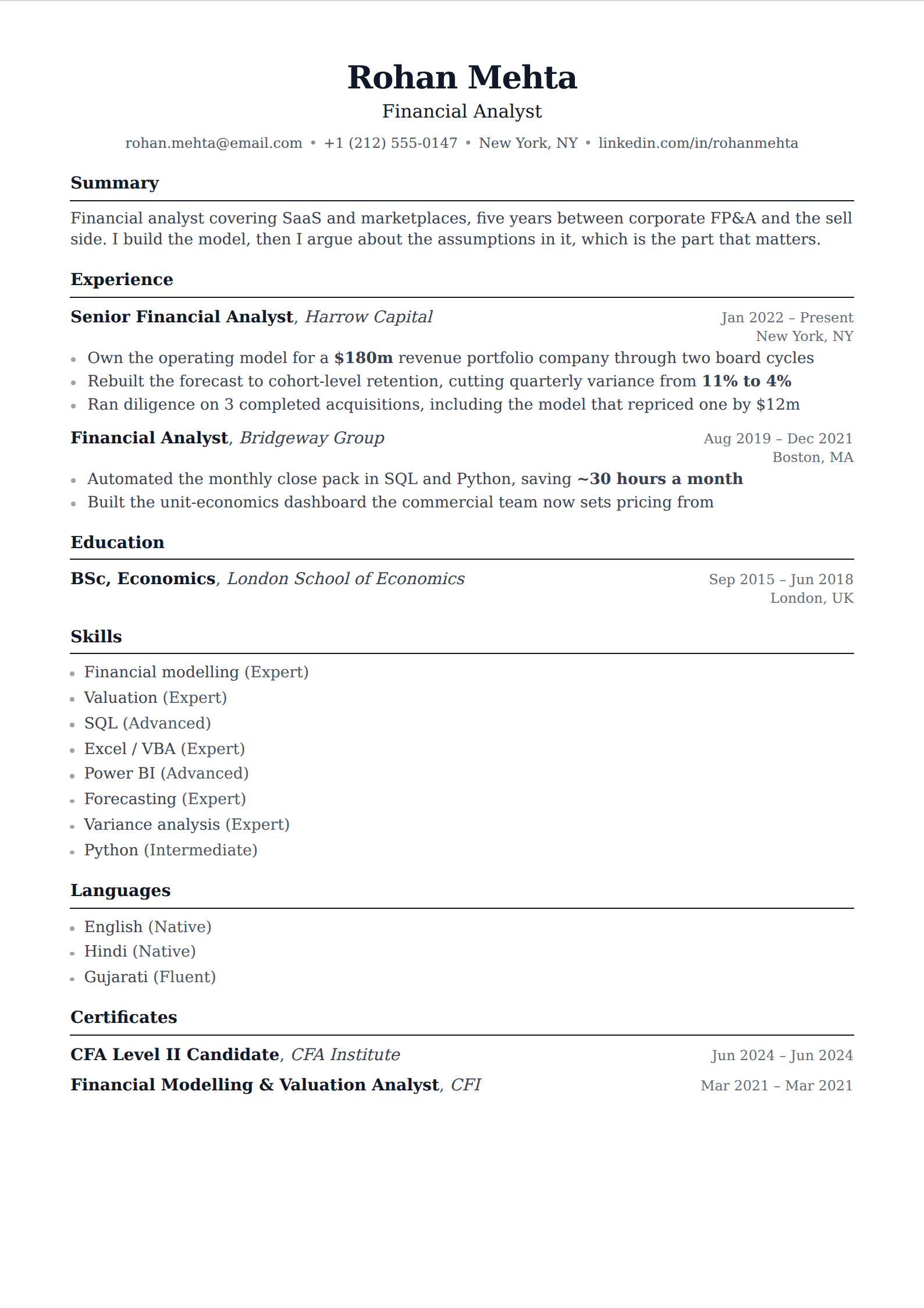
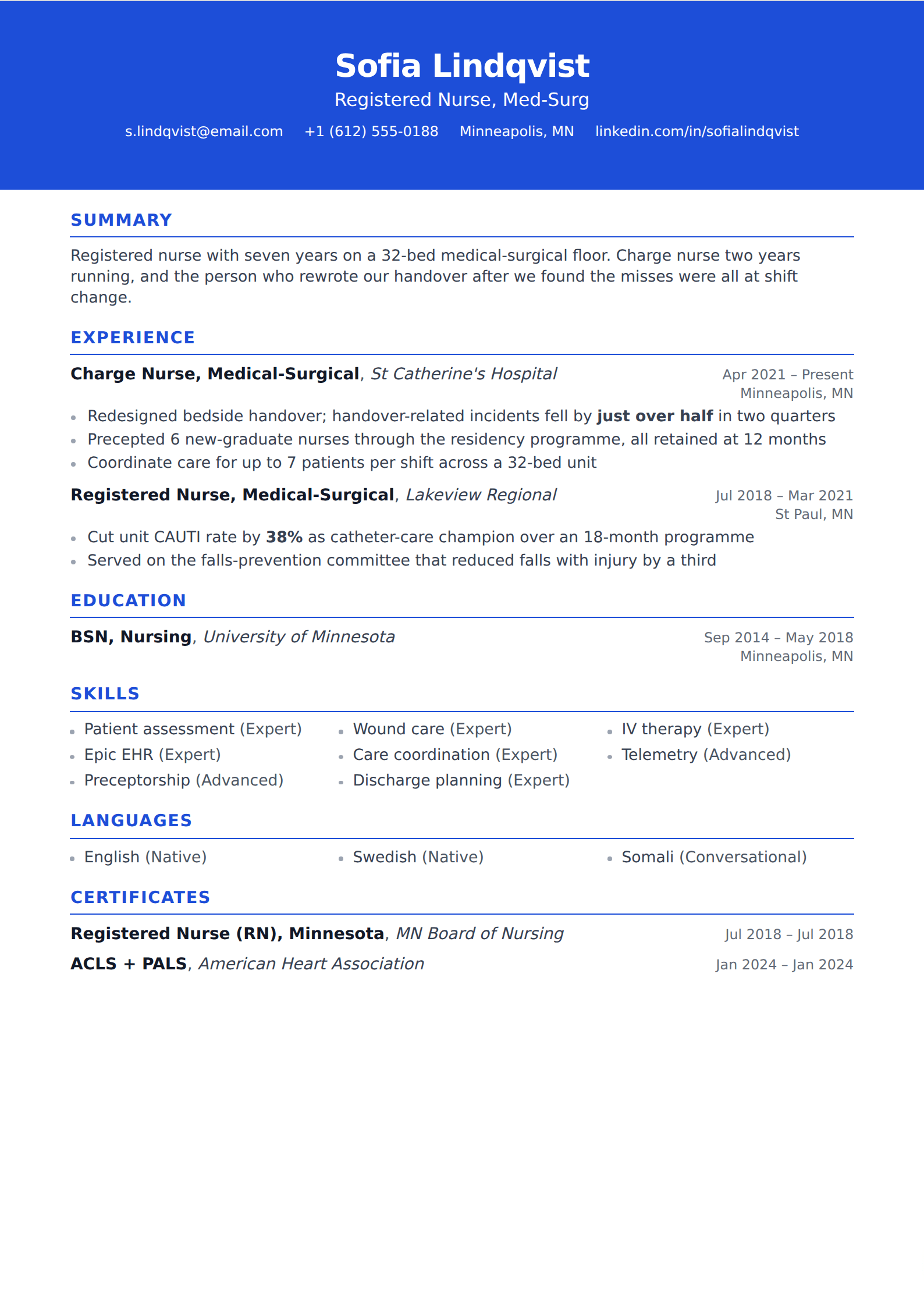
Every layout here carries the five that always belong and makes room for the situational ones without inventing sections nobody reads. No skill meters, no infographic panels.

Common questions

What should you put on a resume?

Contact details, a short summary, your work experience with outcome-led bullets, education, and a skills section. Add certifications if your field licenses them, and projects if your employment history does not yet show what you can do. Everything else is situational.

What should you not put on a resume?

"References available on request", your full street address, skill rating bars, unsupported adjectives like hard-working or detail-oriented, an objective statement about what you want, and — in the US, UK, Canada and Australia — a photo, date of birth or marital status. Also anything untrue, which is the only item here that can end a career rather than an application.

Should I put my address on my resume?

City and country only. Employers need to know whether you are local or would need to relocate, which a city answers. A full street address on a document you email to dozens of strangers is a privacy exposure that buys you nothing.

Should I include hobbies on a resume?

Only when a specific one earns its line — something demanding, sustained, or genuinely unusual that says something a job description cannot. "Reading, travelling, socialising" describes everybody. Six seasons as a volunteer firefighter describes one person.

Do I need an objective on my resume?

No. Objective statements describe what you want from the employer, which nobody screening applications is reading for. A summary that names what you do and what you are aiming at does the same job in the same space and is written from the reader's side.

Related guides

Put it into practice

Start from any template above, get AI help tightening every bullet, and export an ATS-ready PDF. Free to start, and no card at any point.

Start your resume