
CV templates
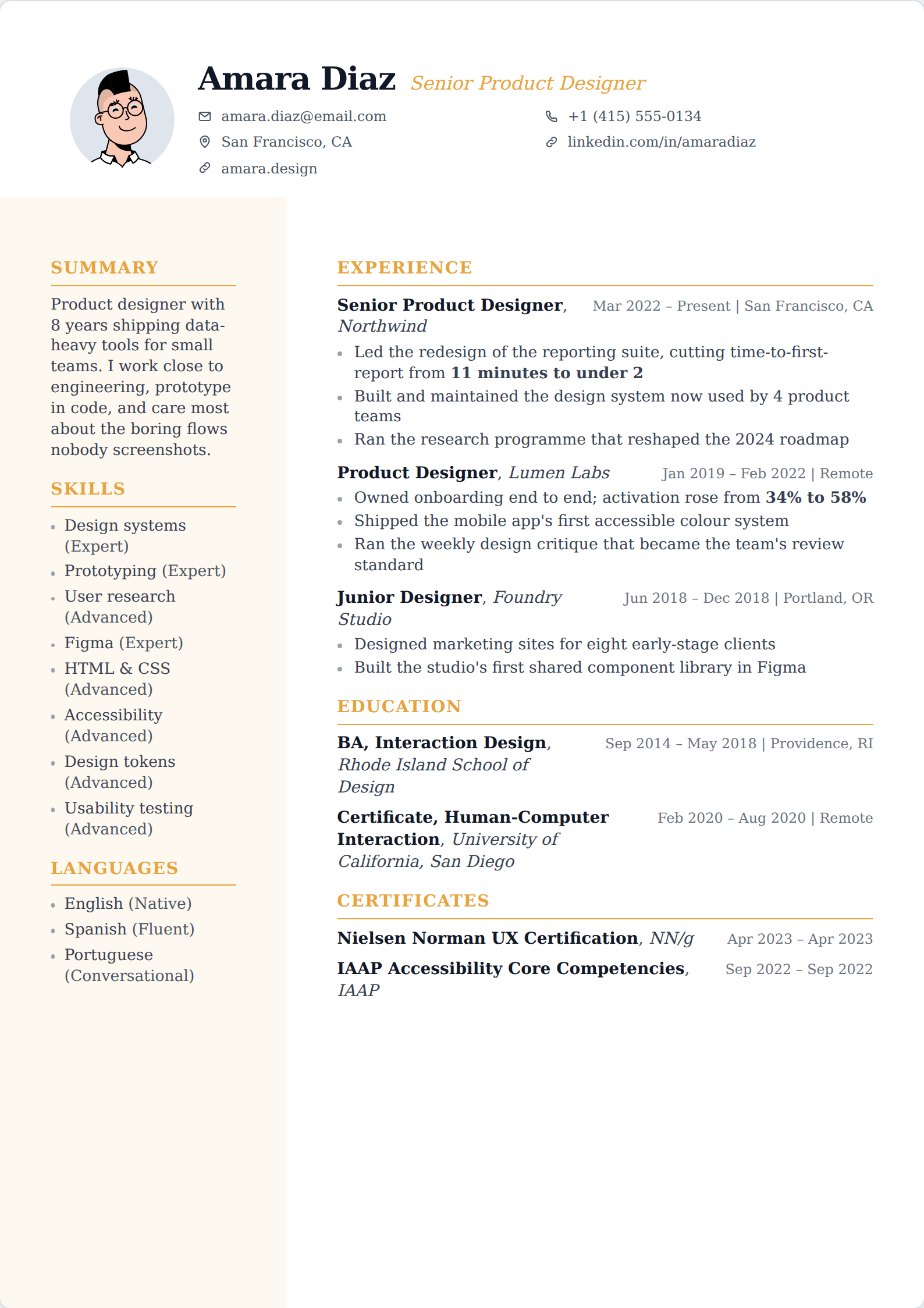
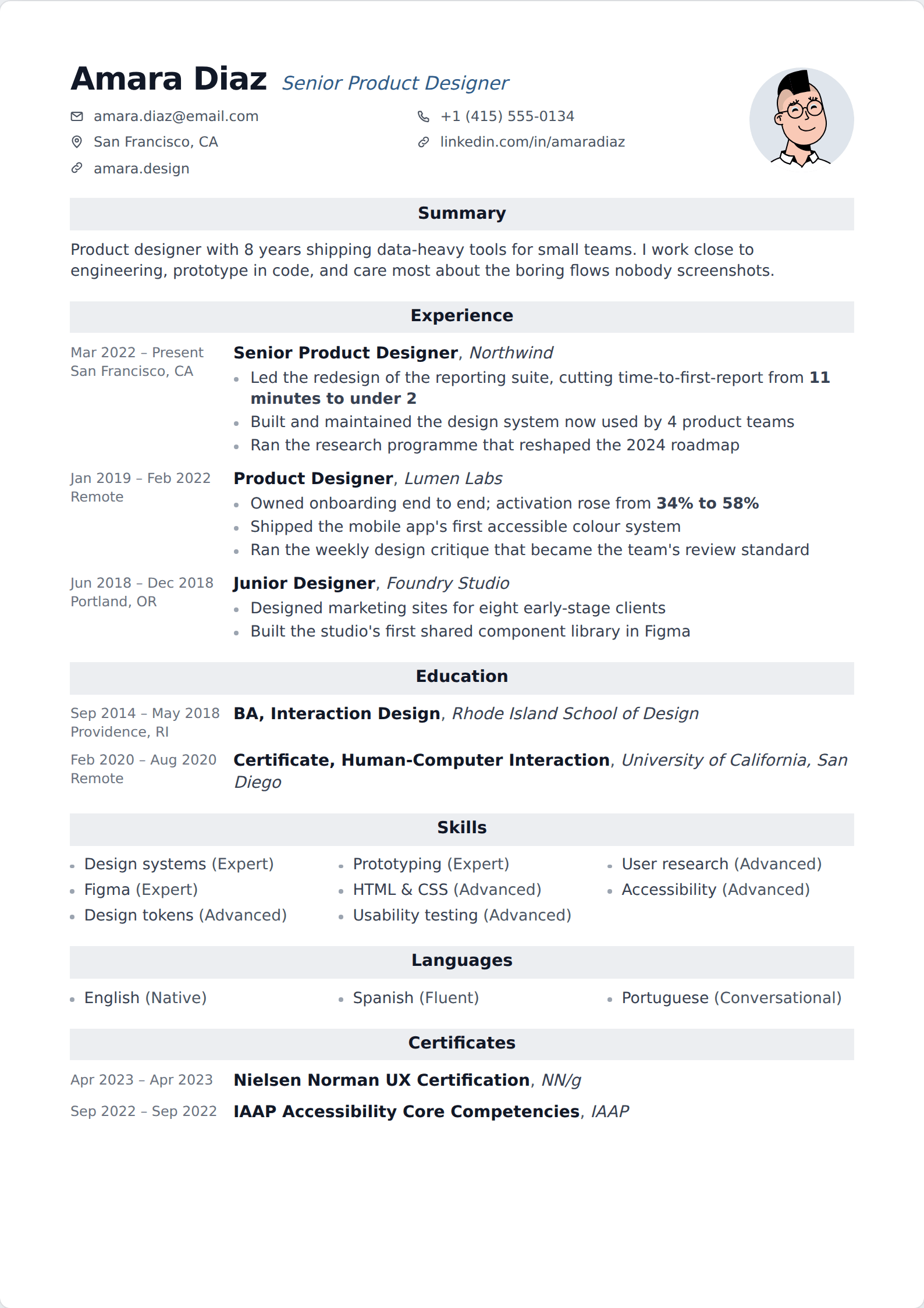
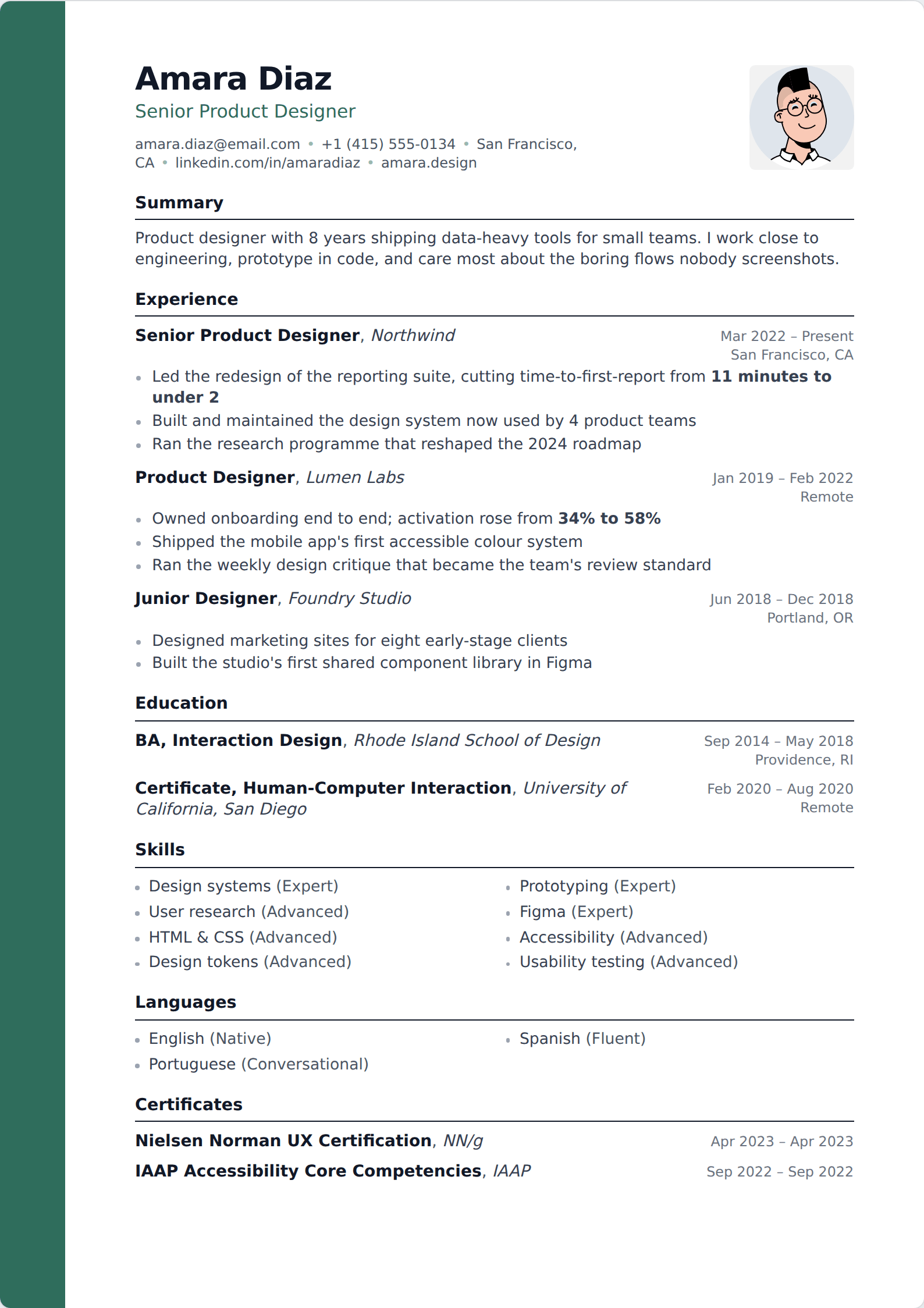
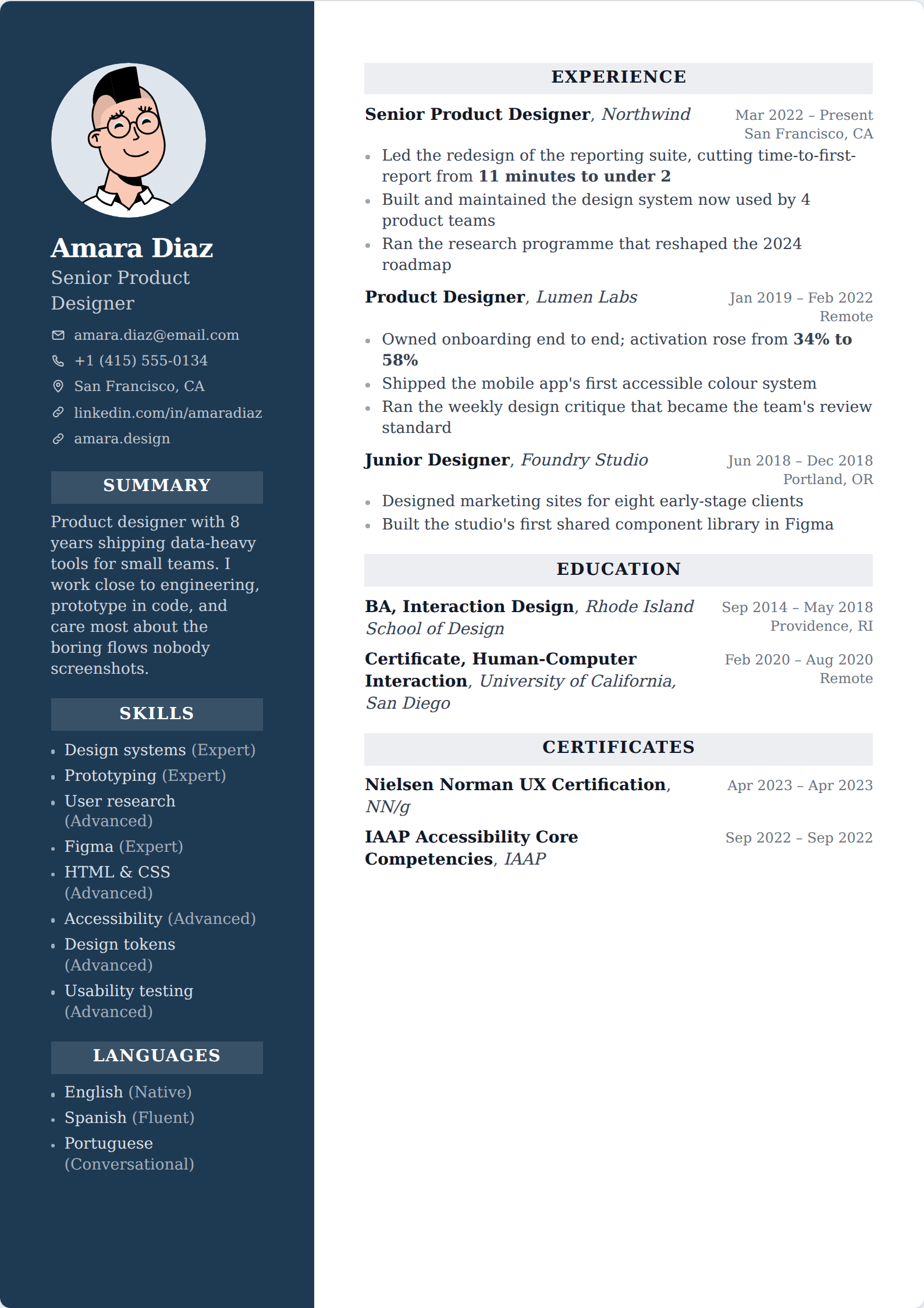
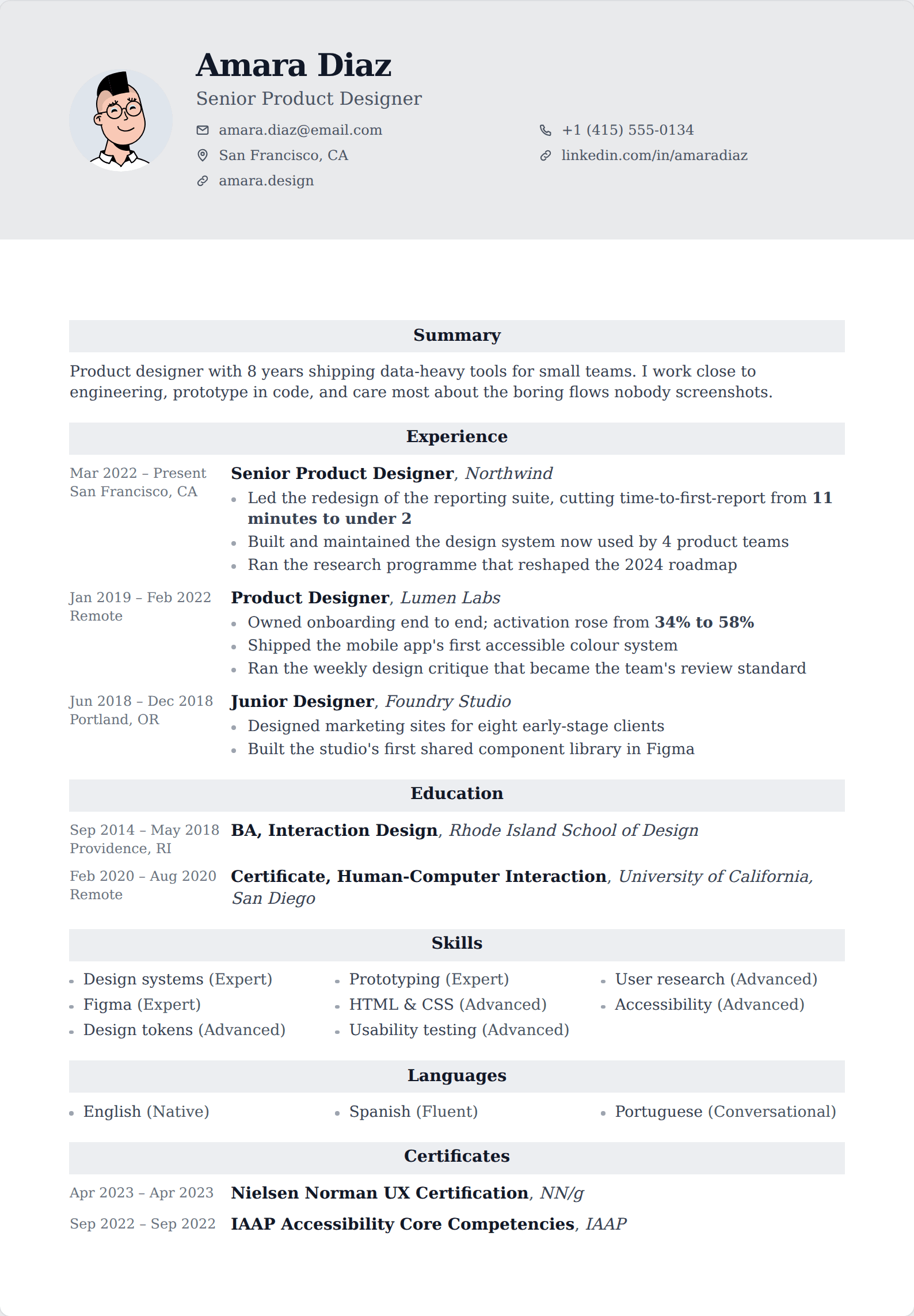
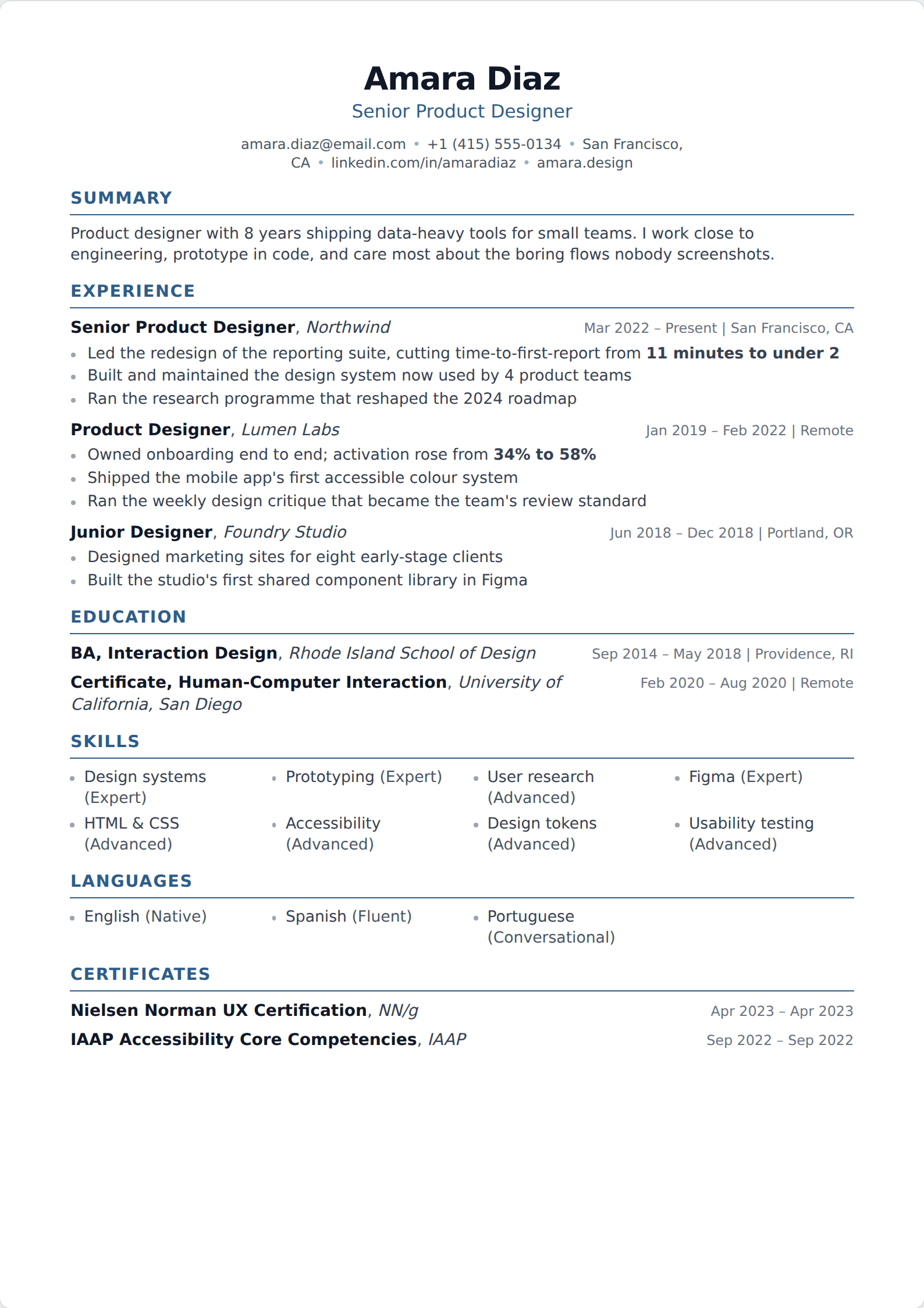
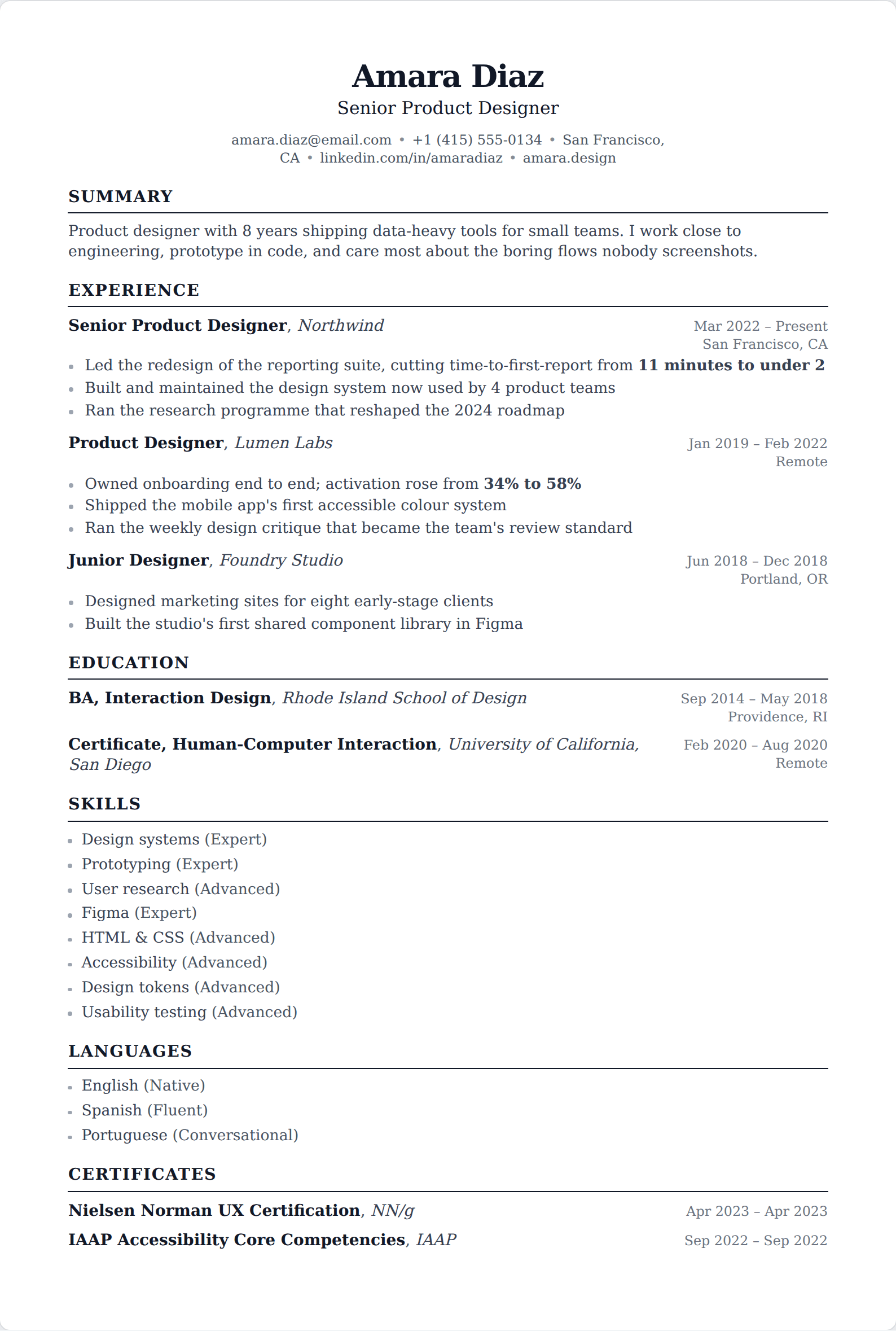
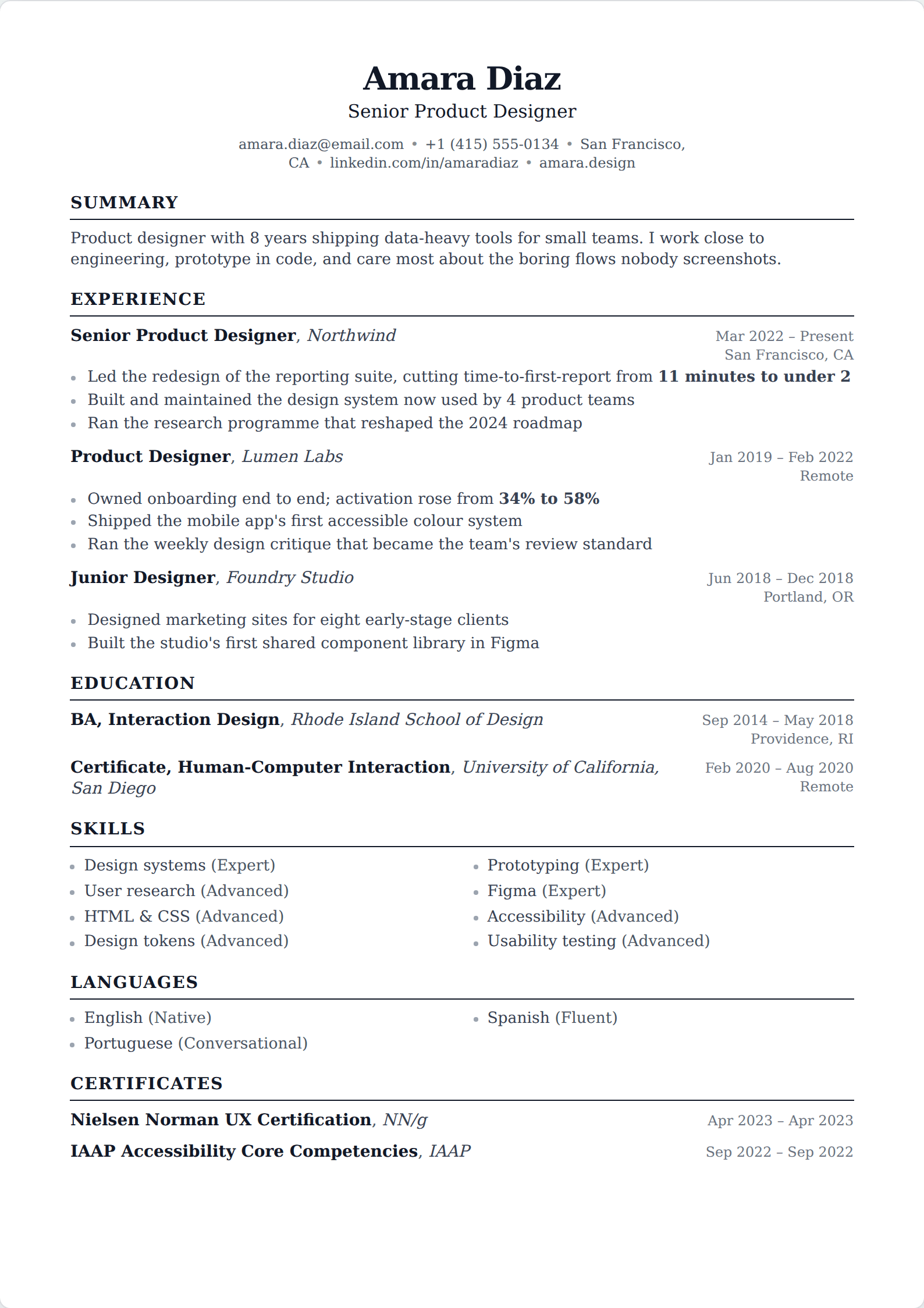
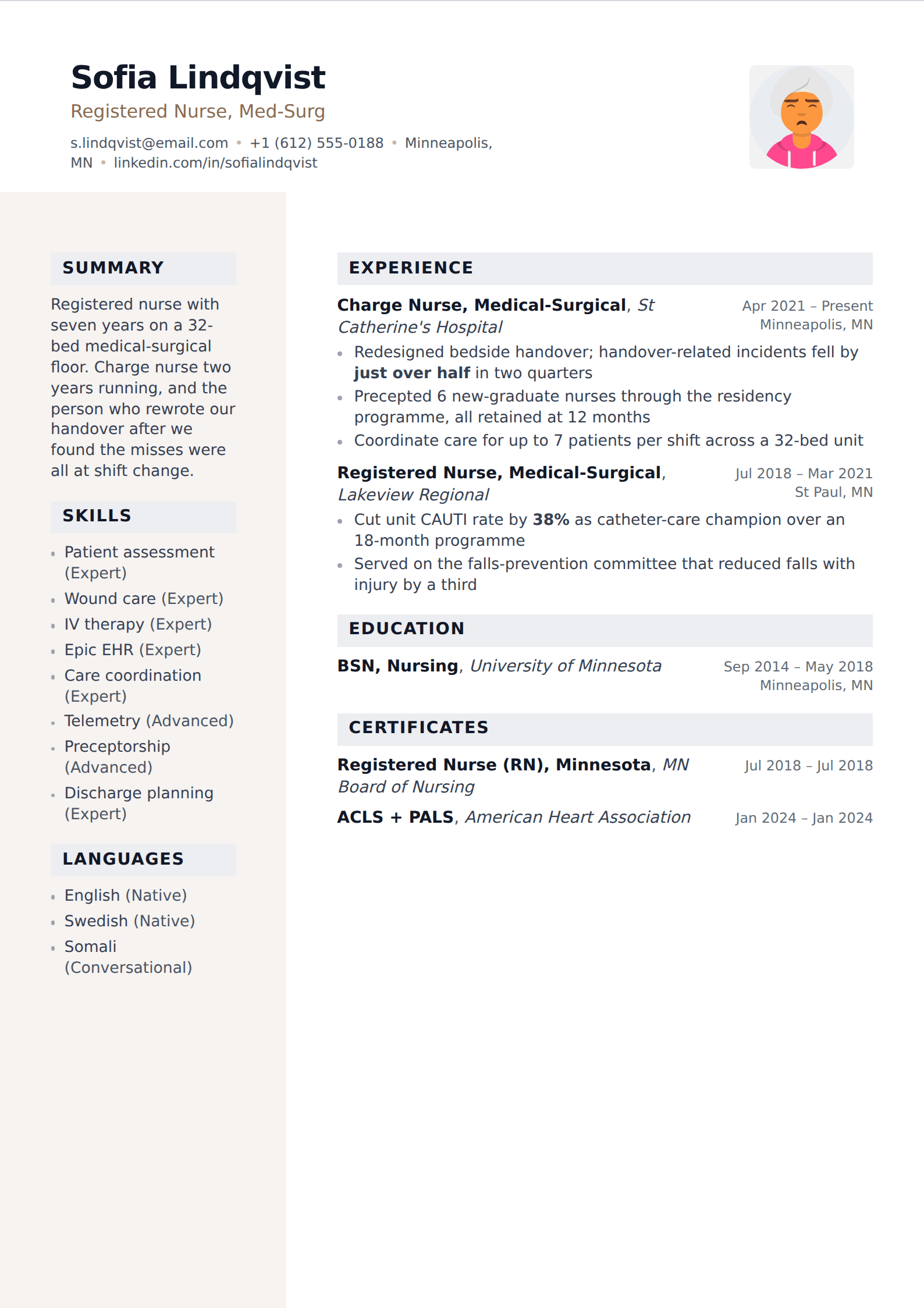
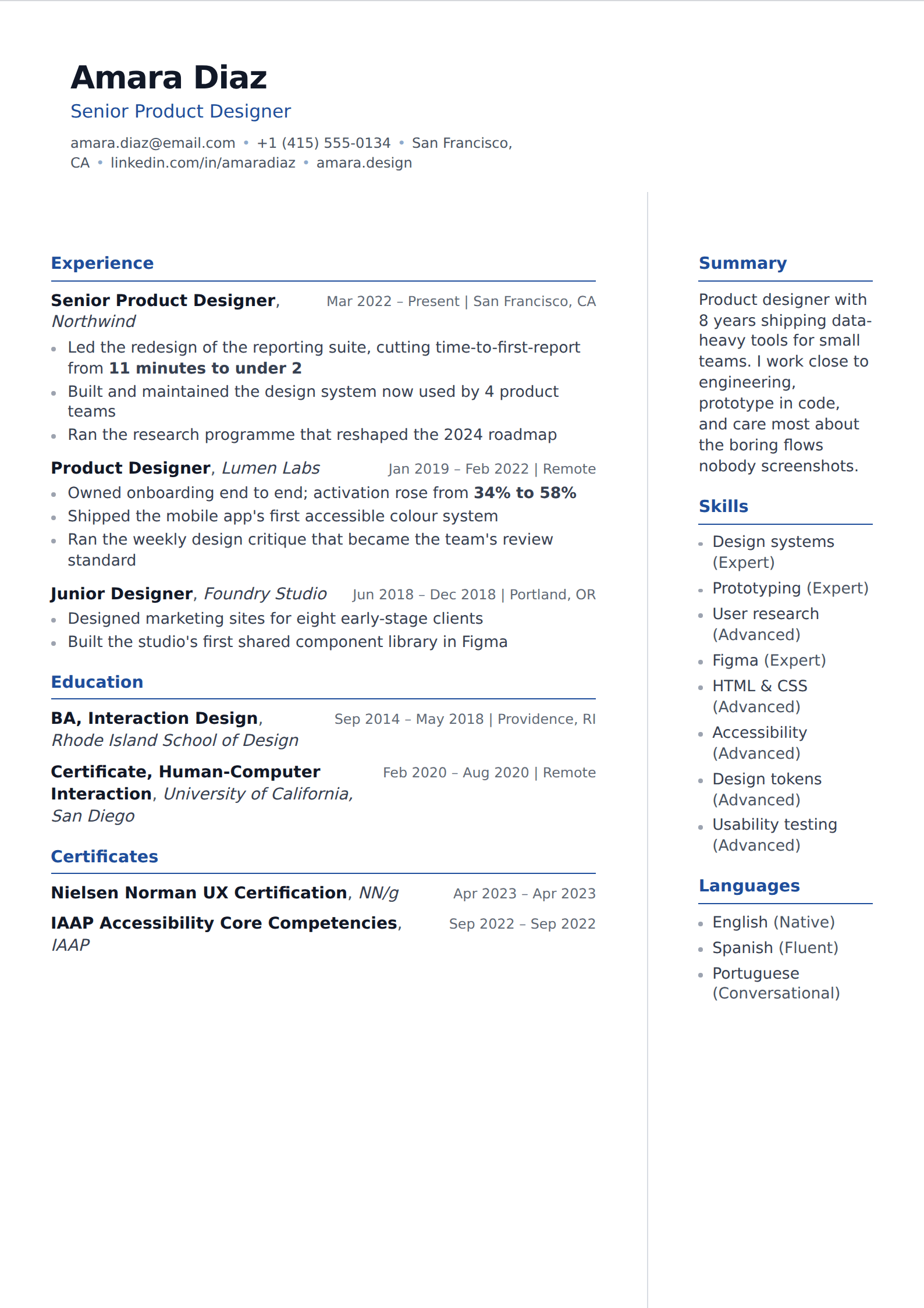
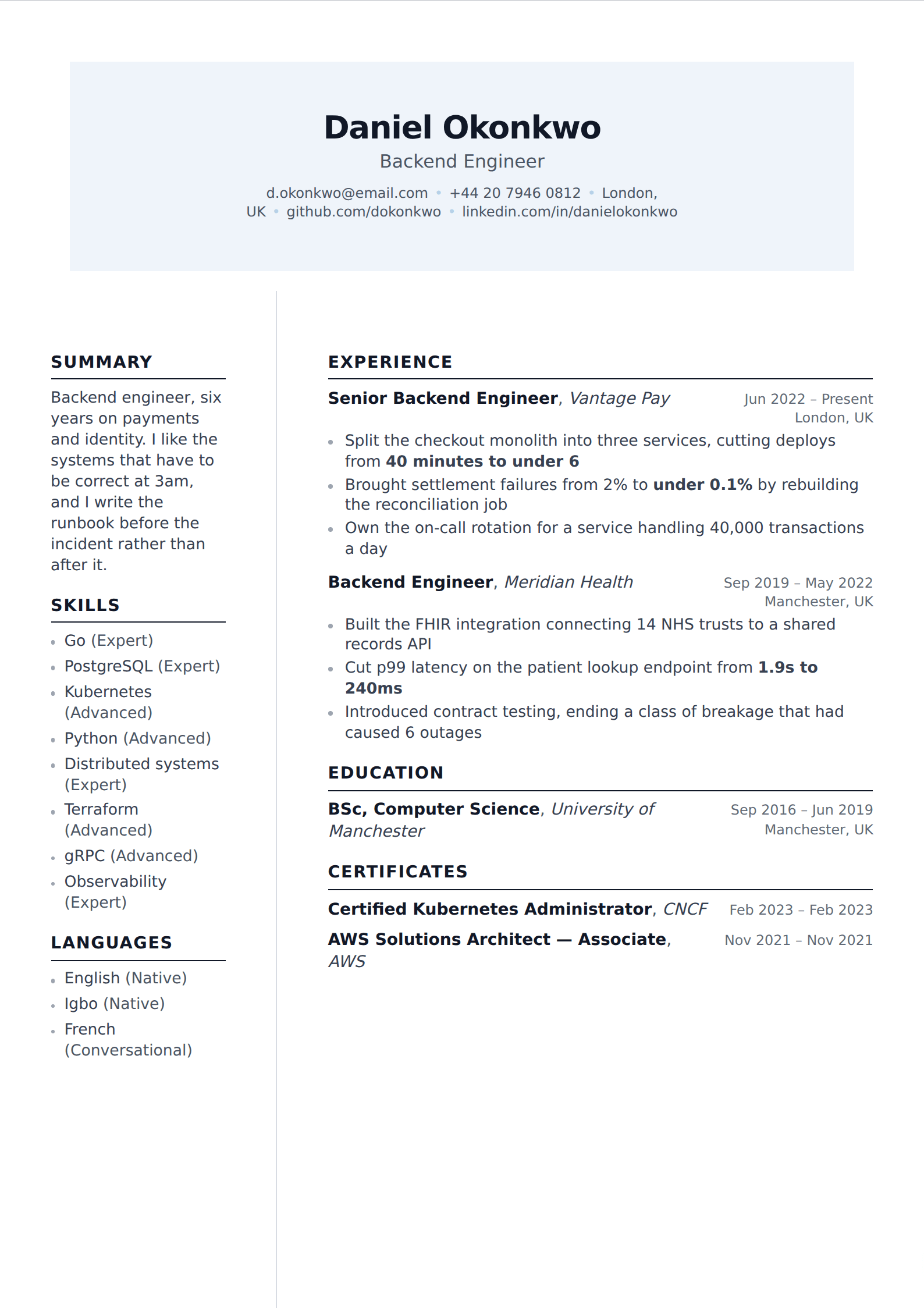
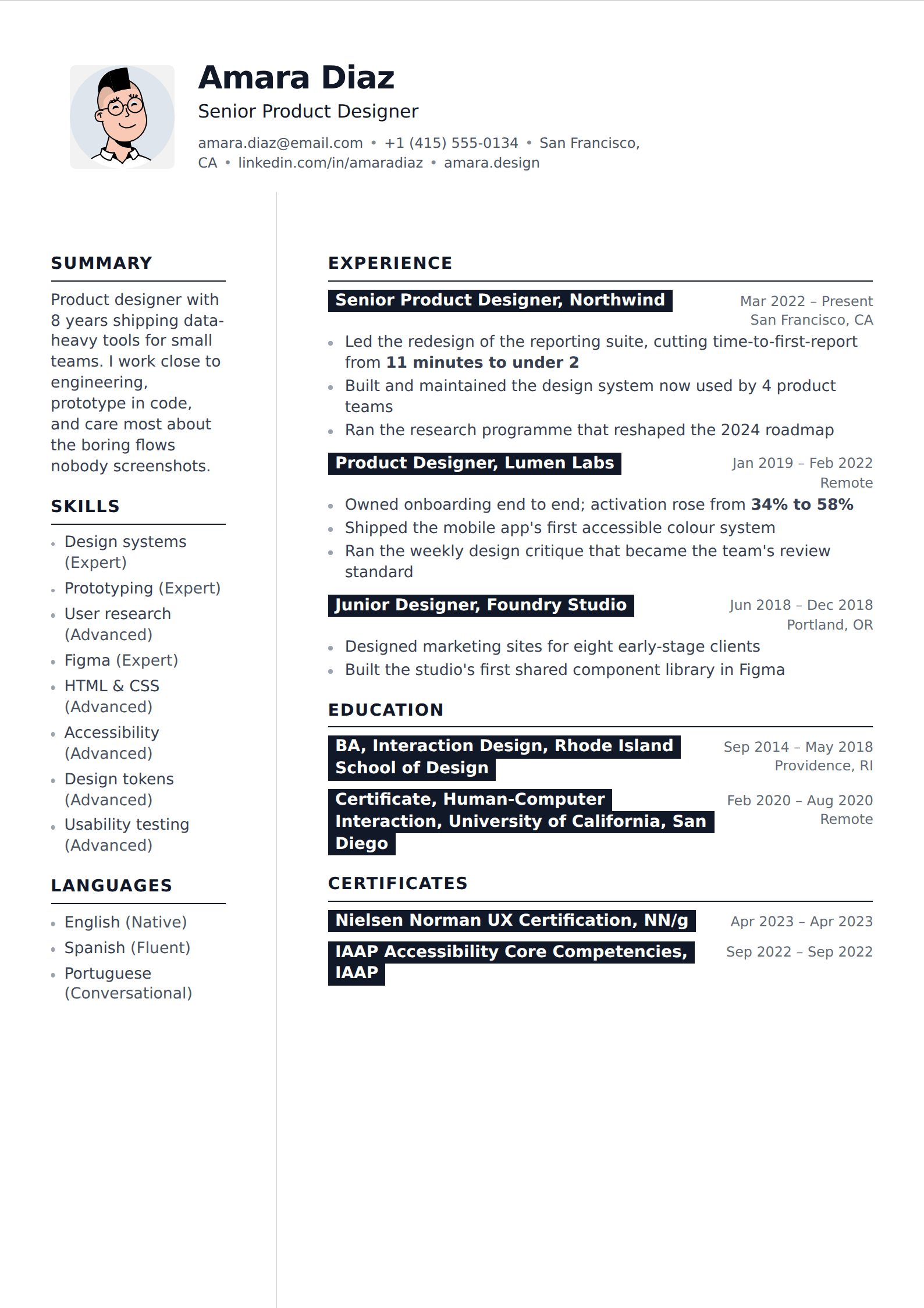
A CV is not one document. In the UK it is what Americans call a resume; in continental Europe it is that plus a photo and personal details; in academia it is an unabridged record that can run to fifteen pages. These templates cover the first two — and the section below is about telling which one you have been asked for.
Updated
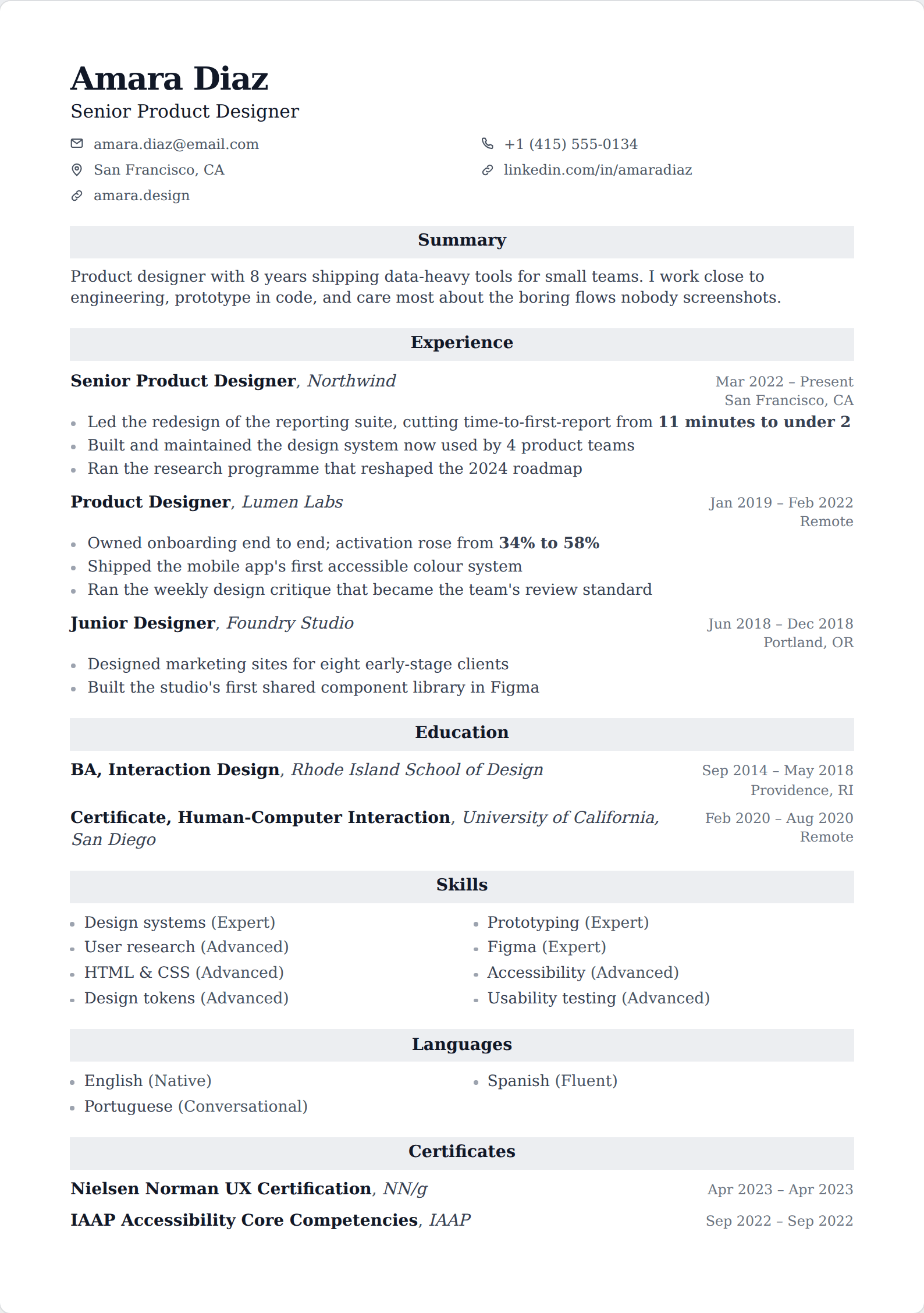
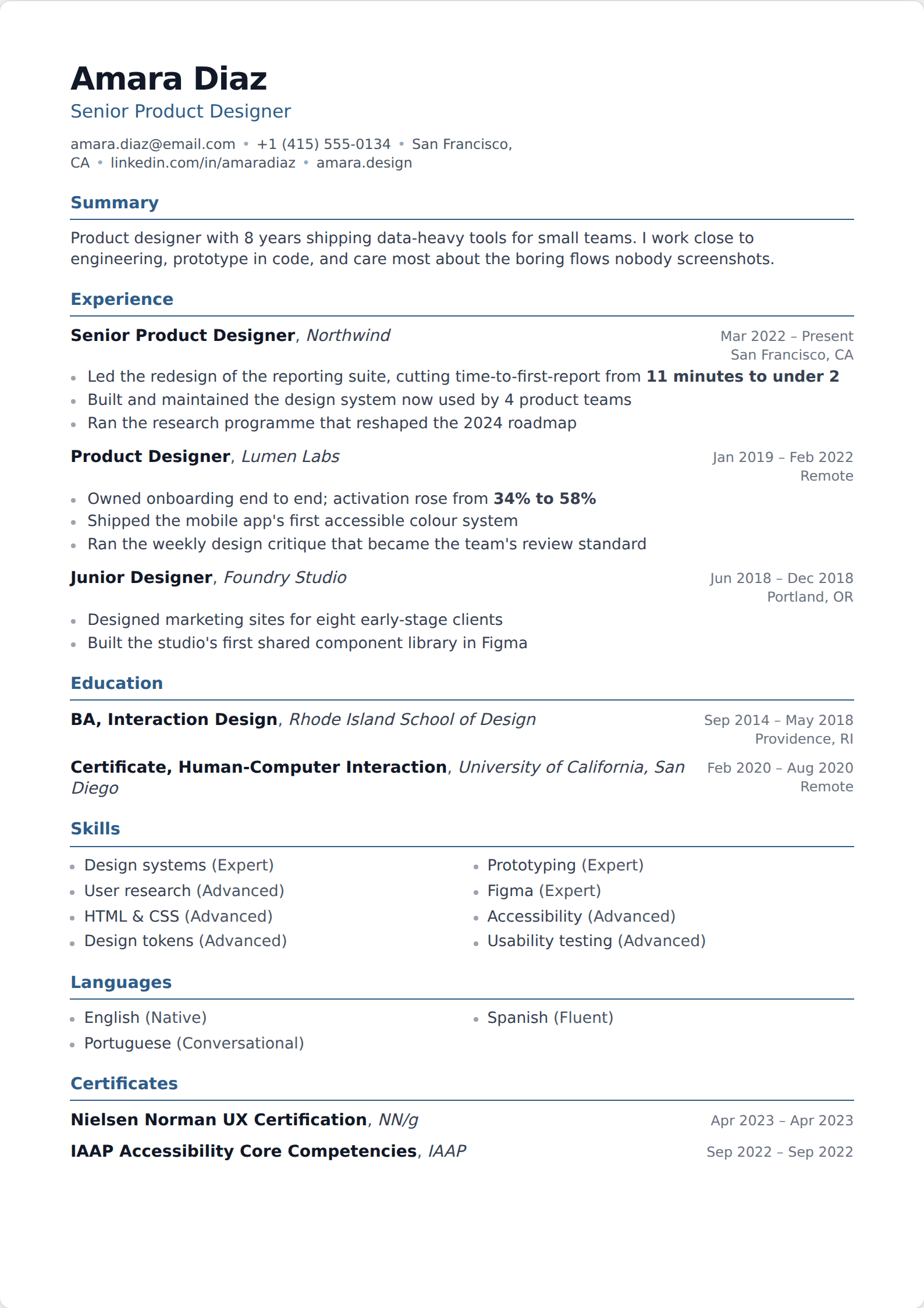
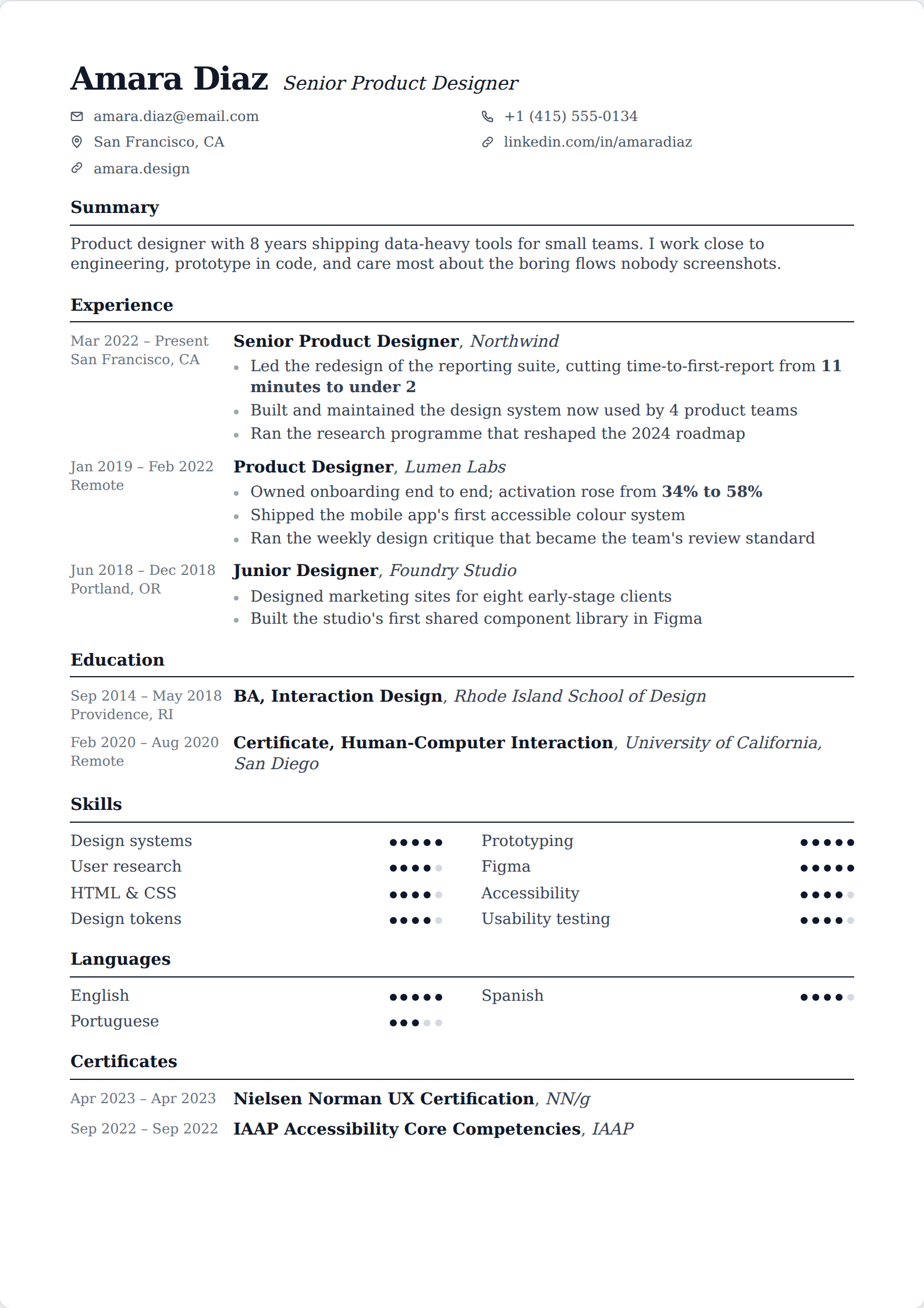
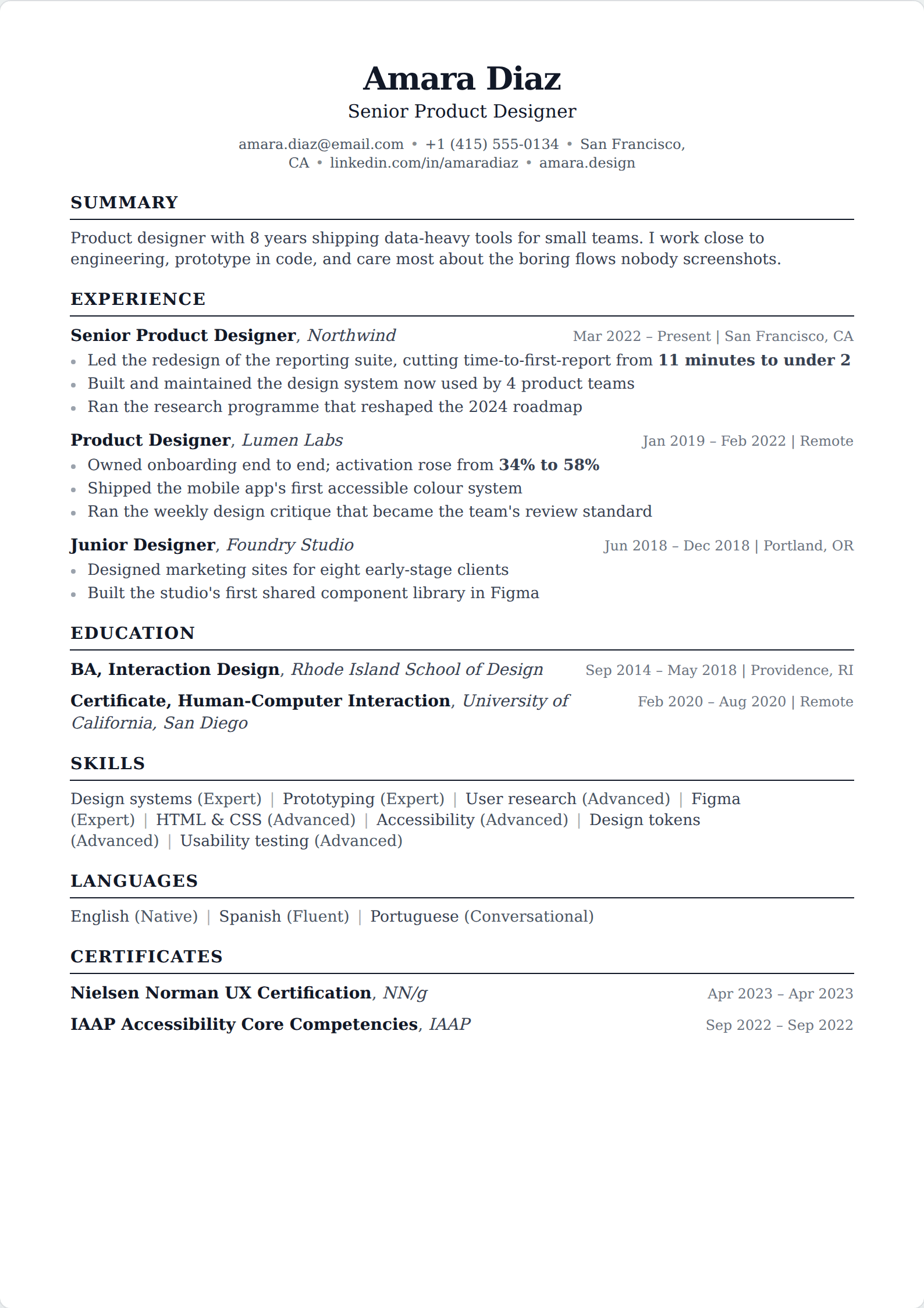
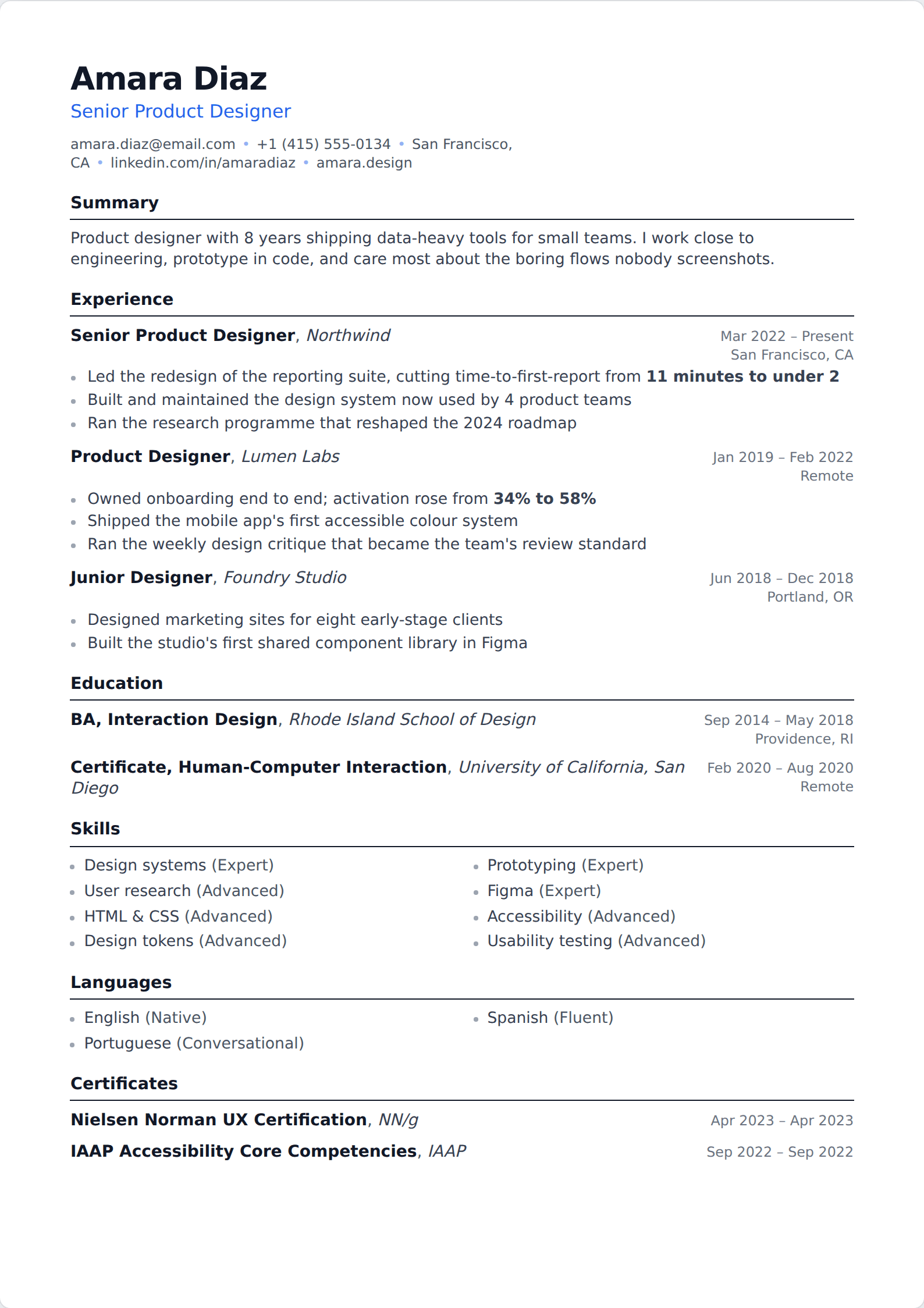
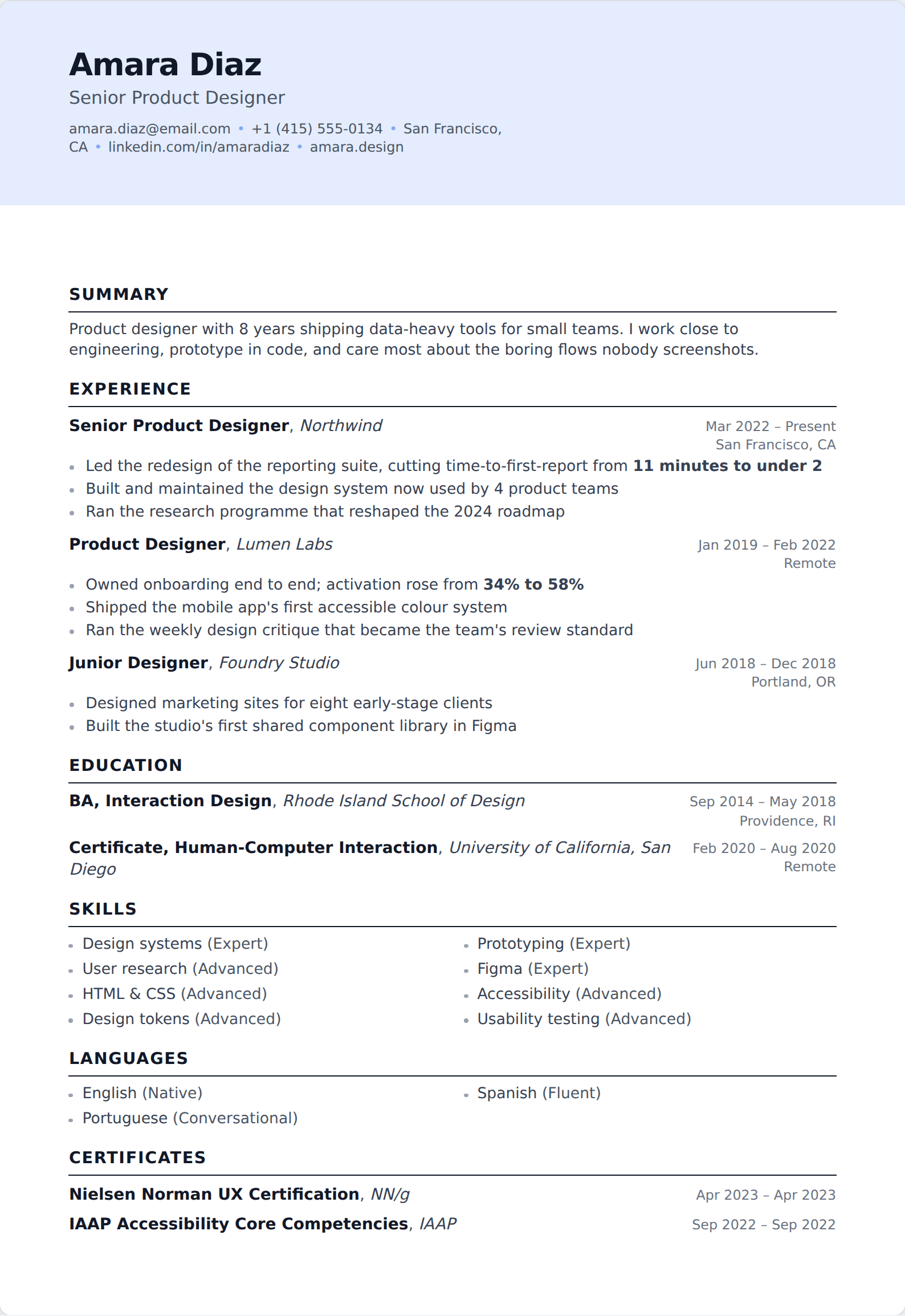
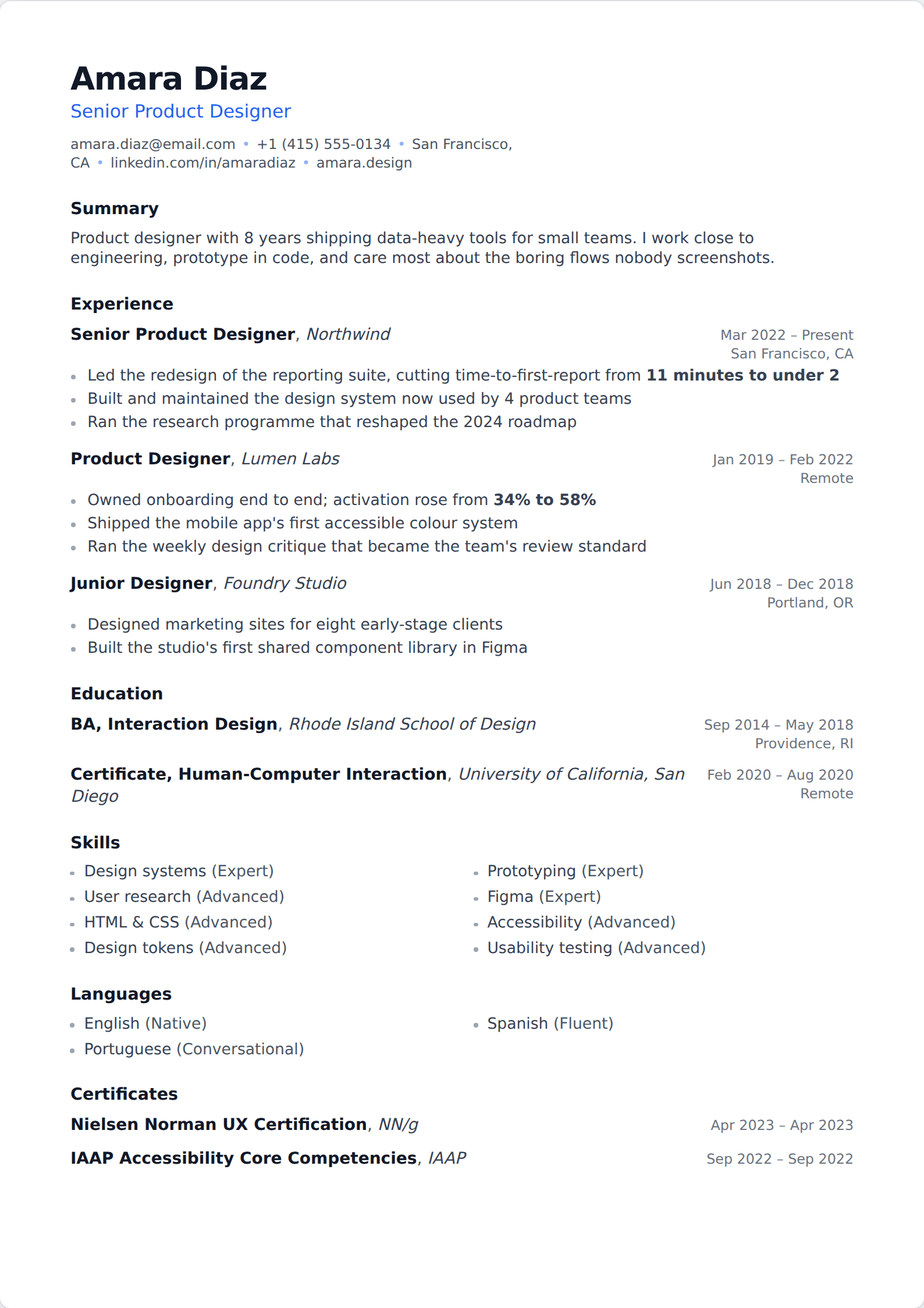
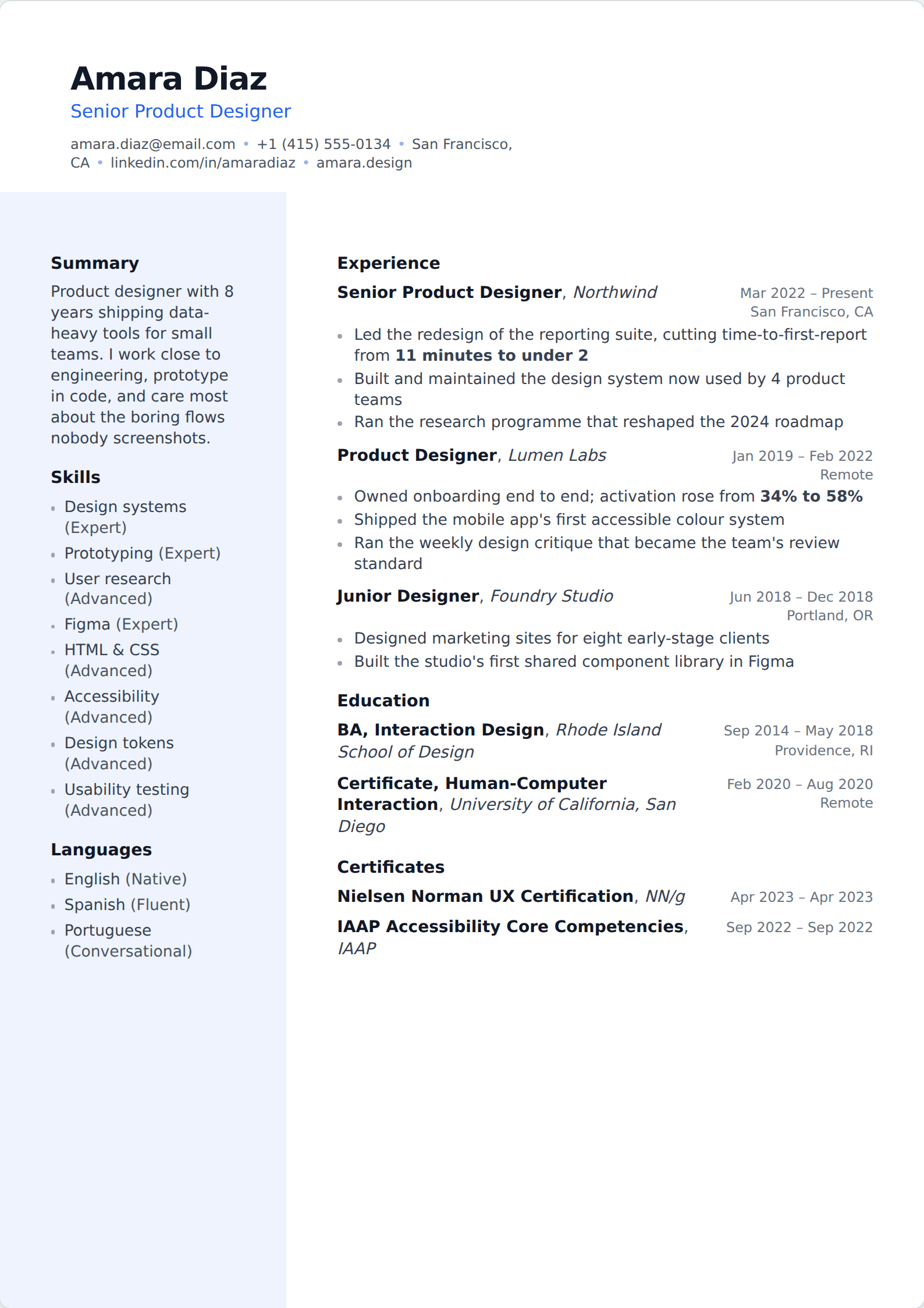
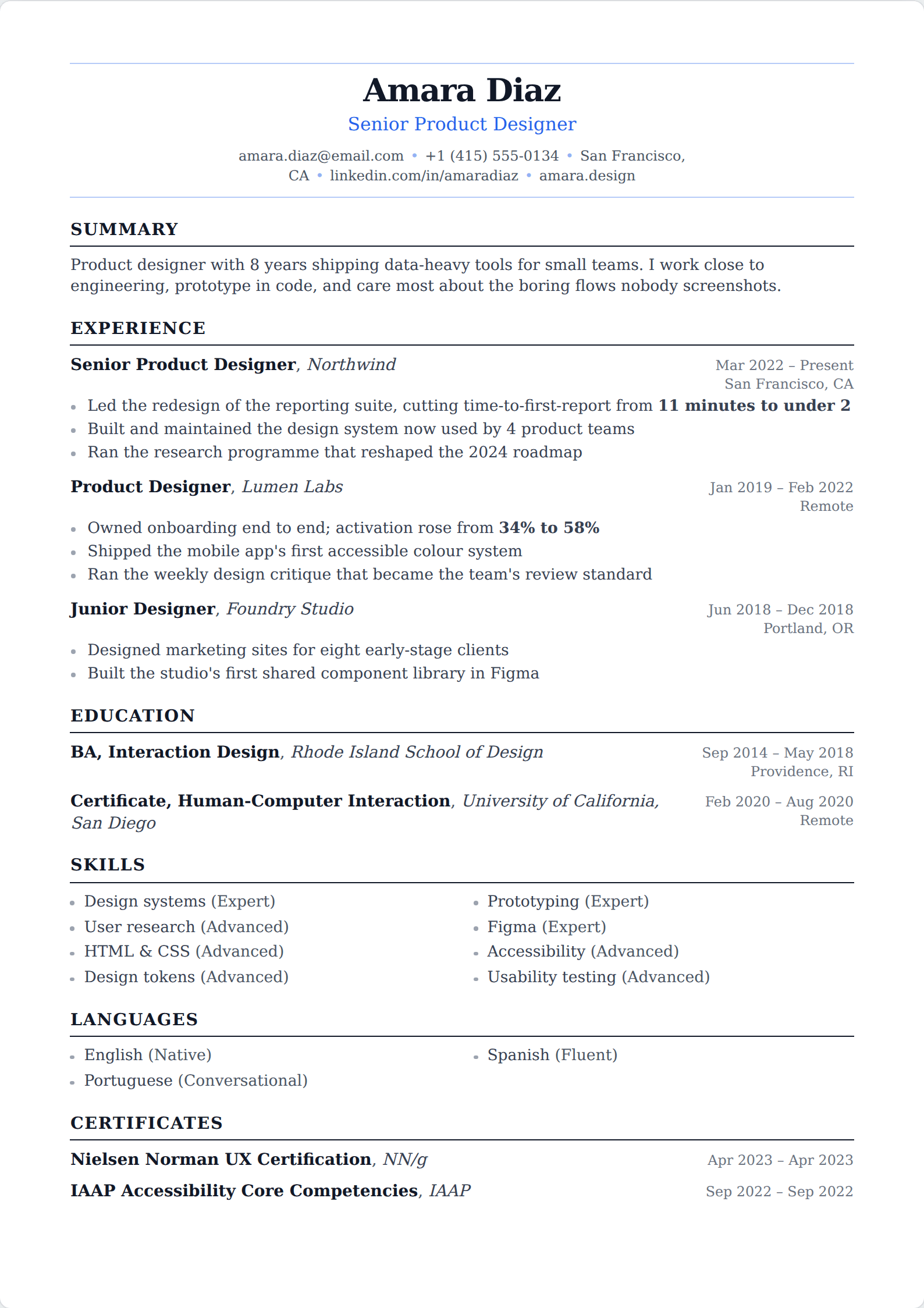
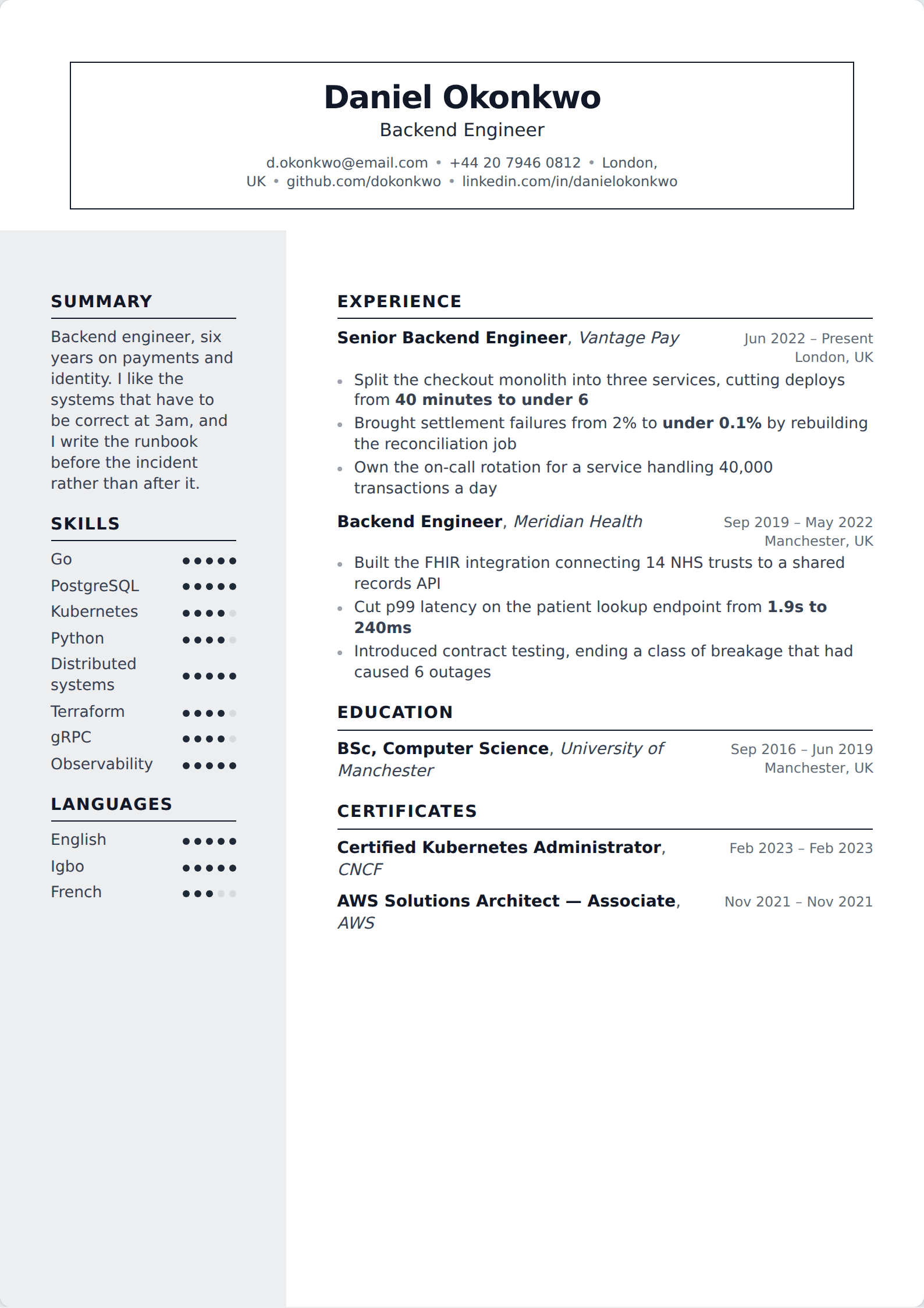
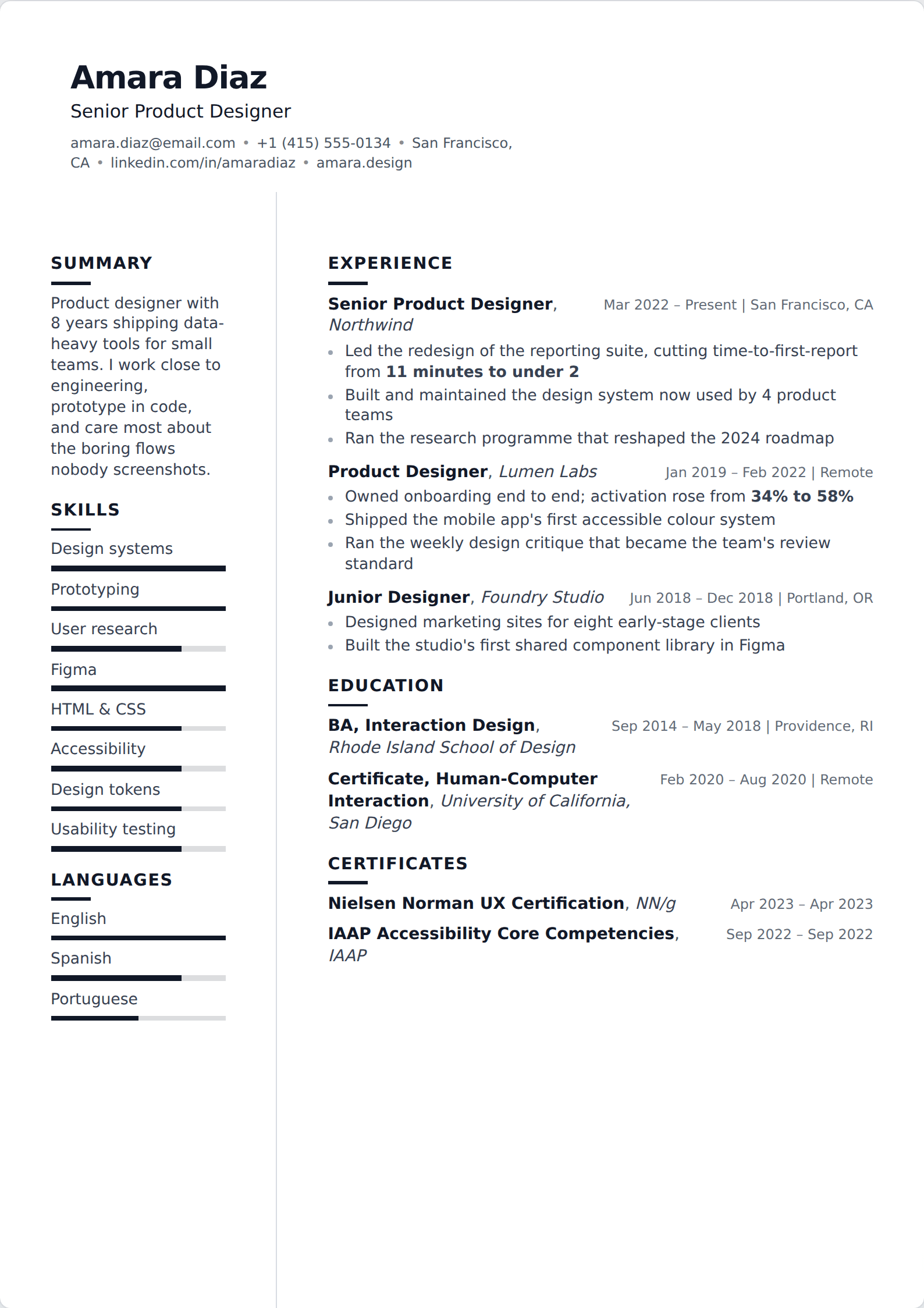
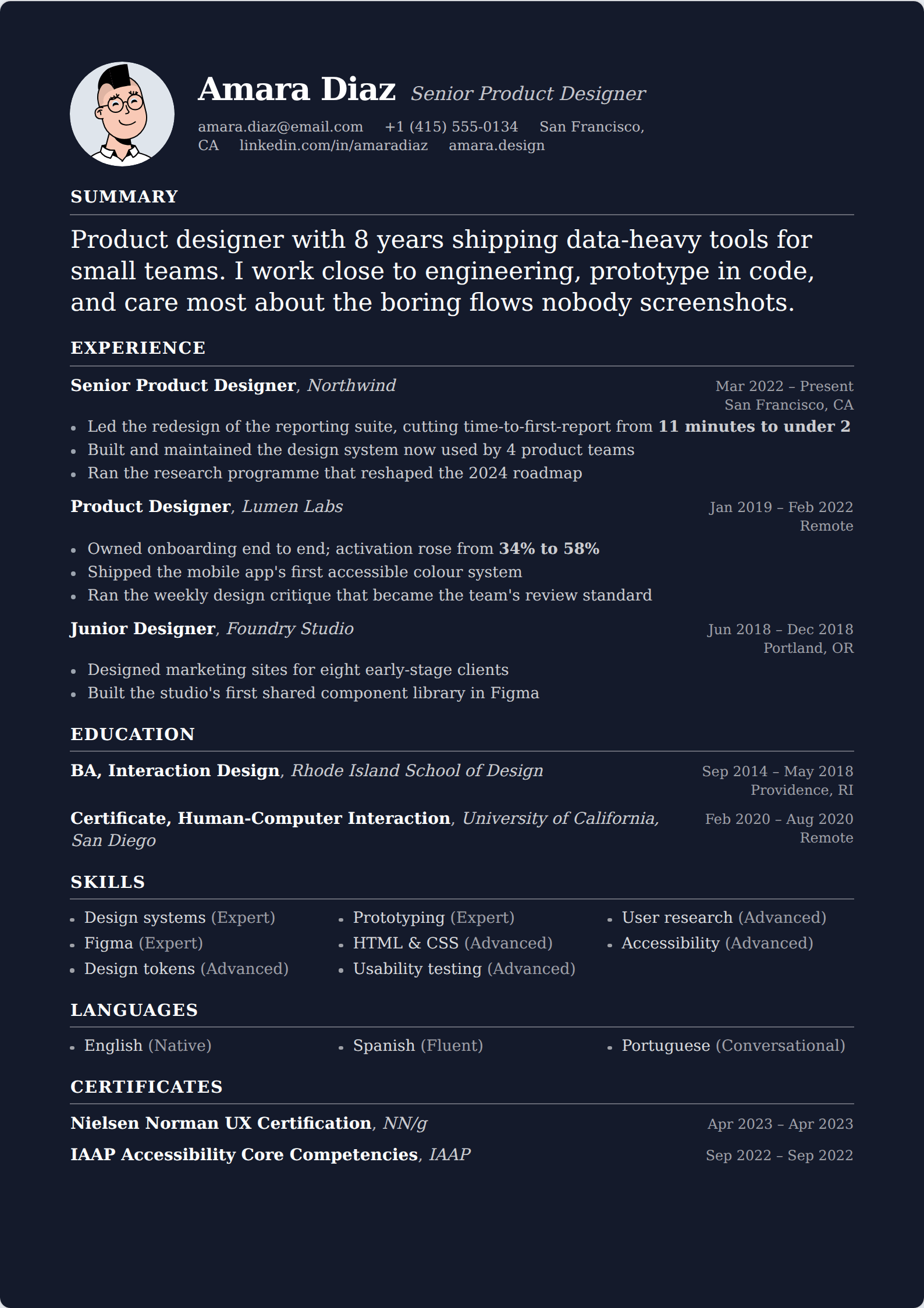
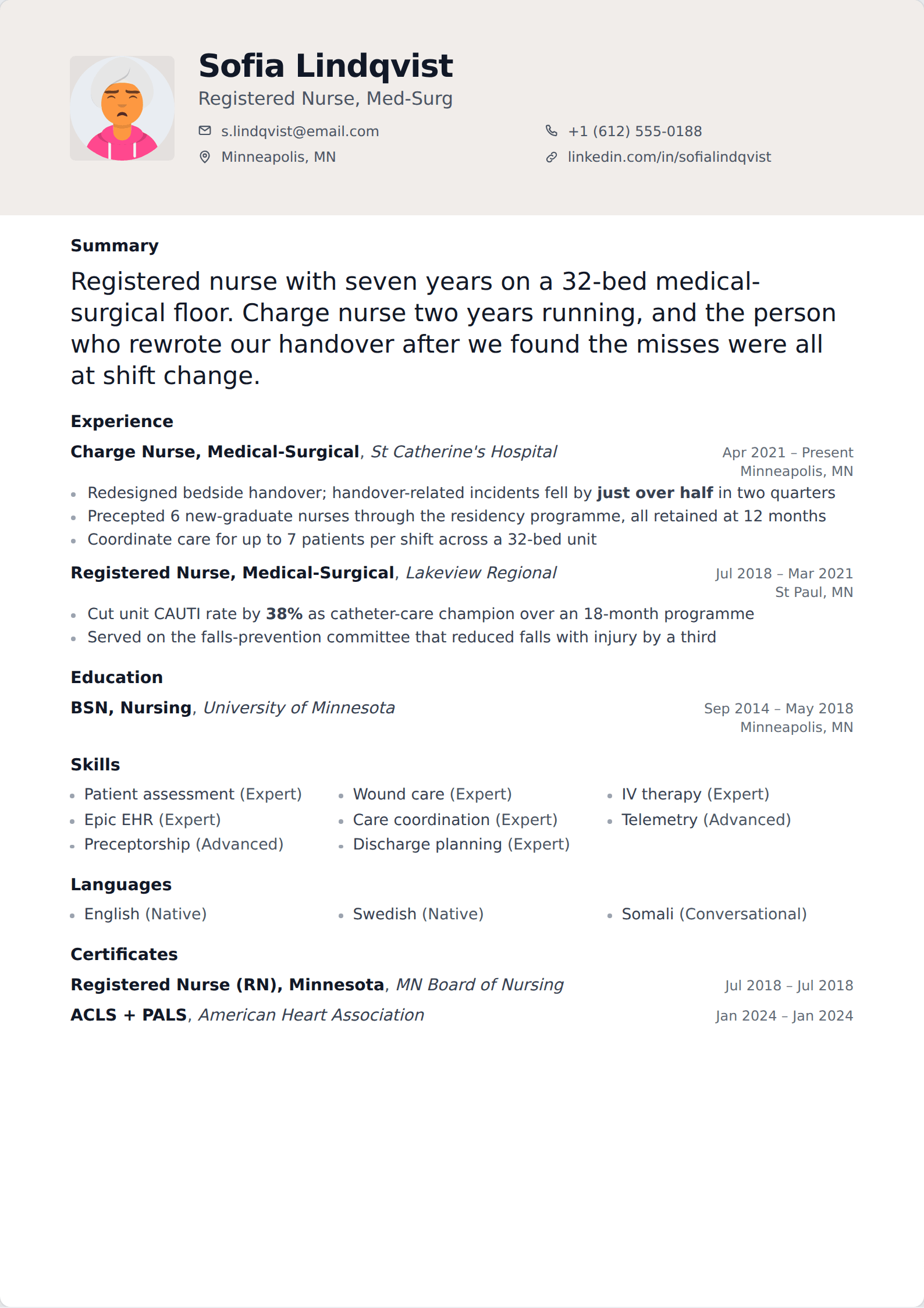
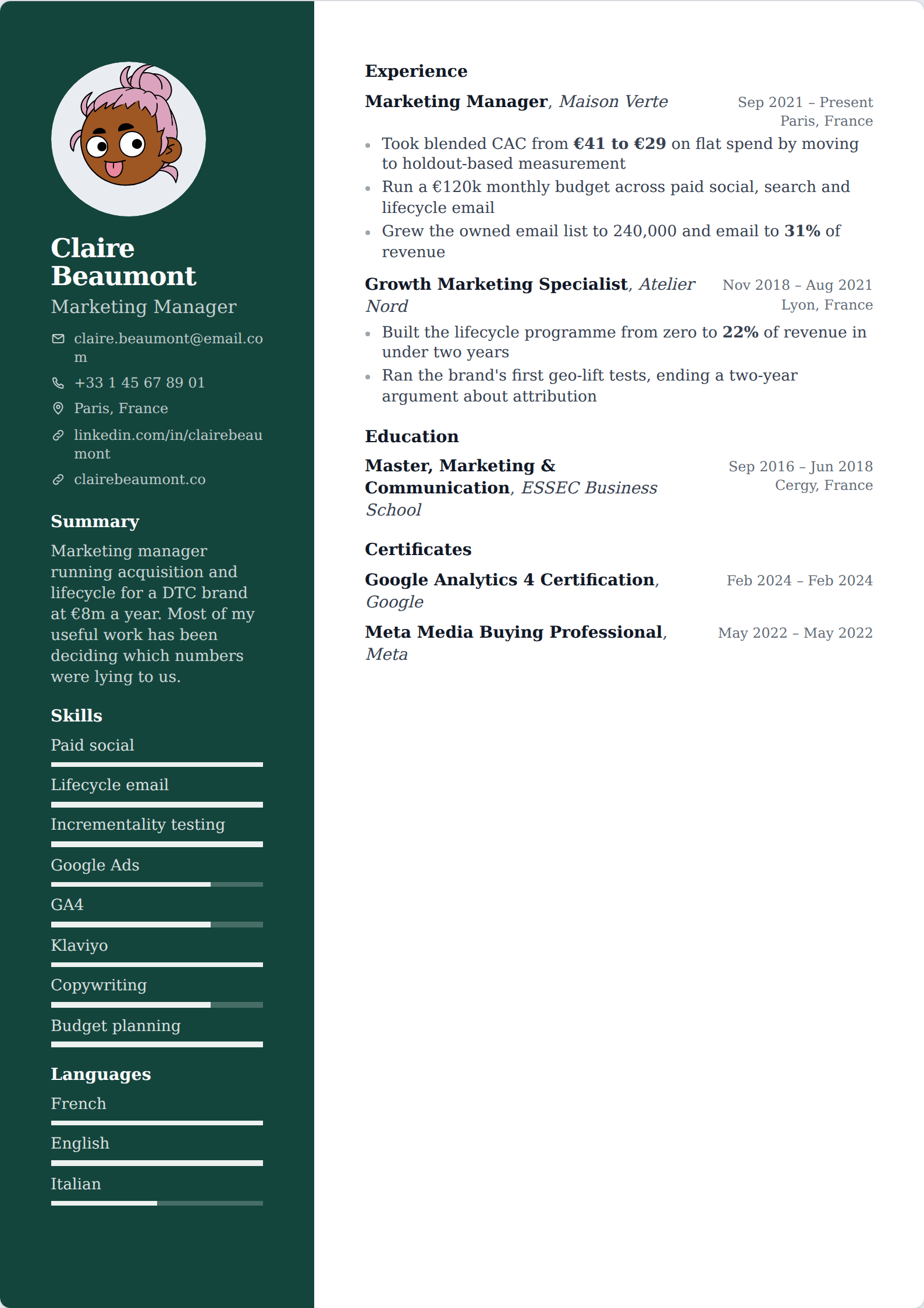
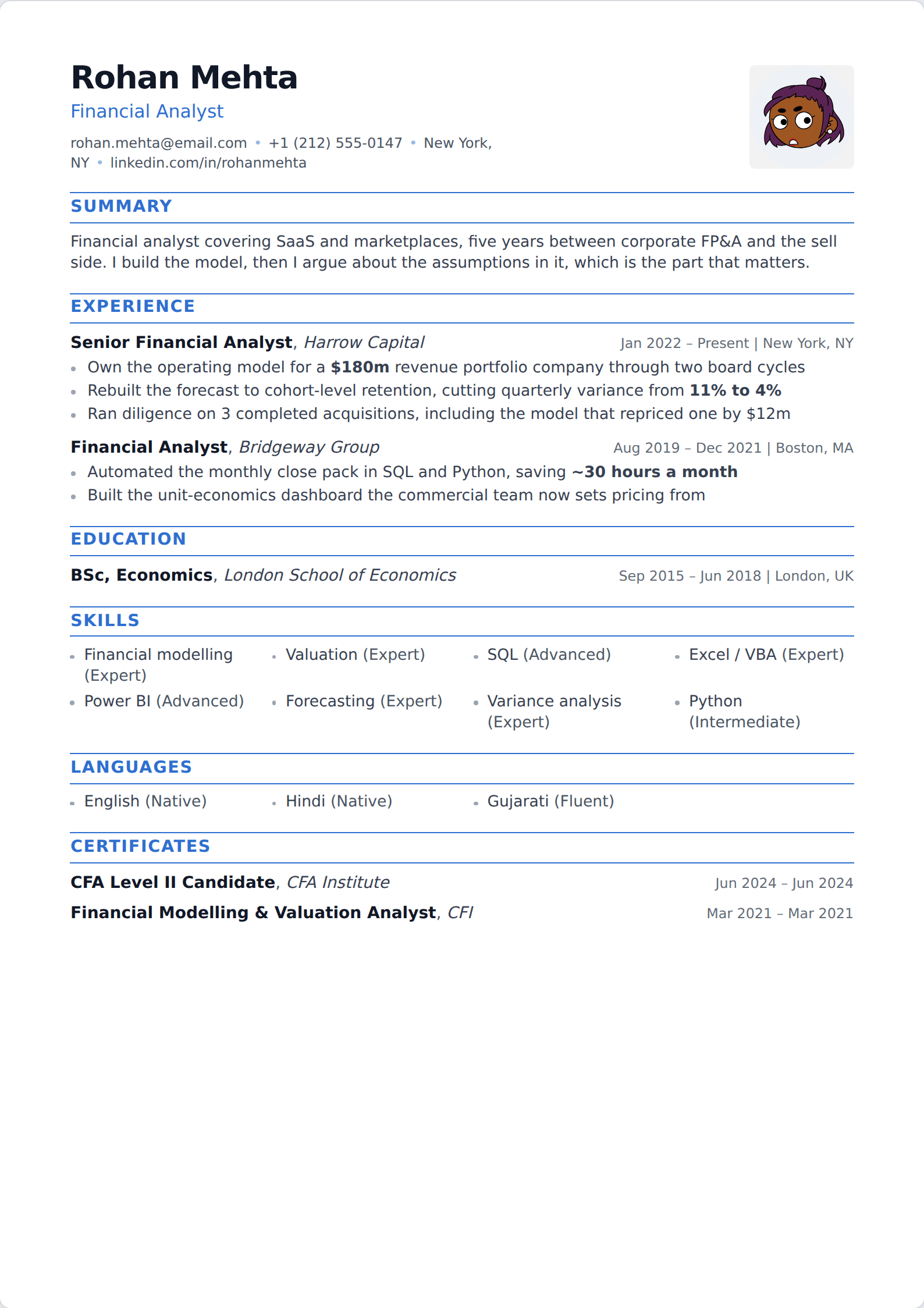
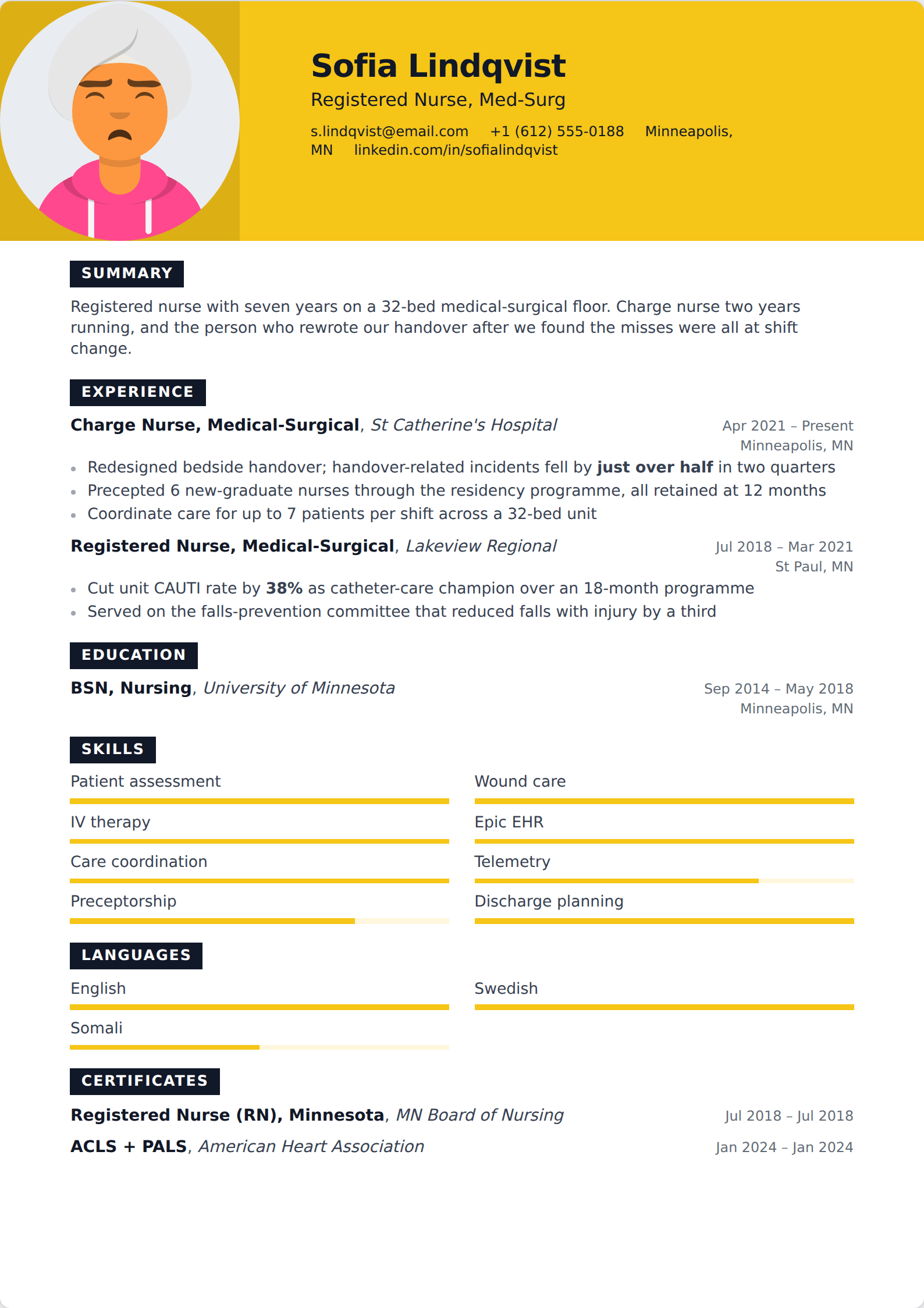
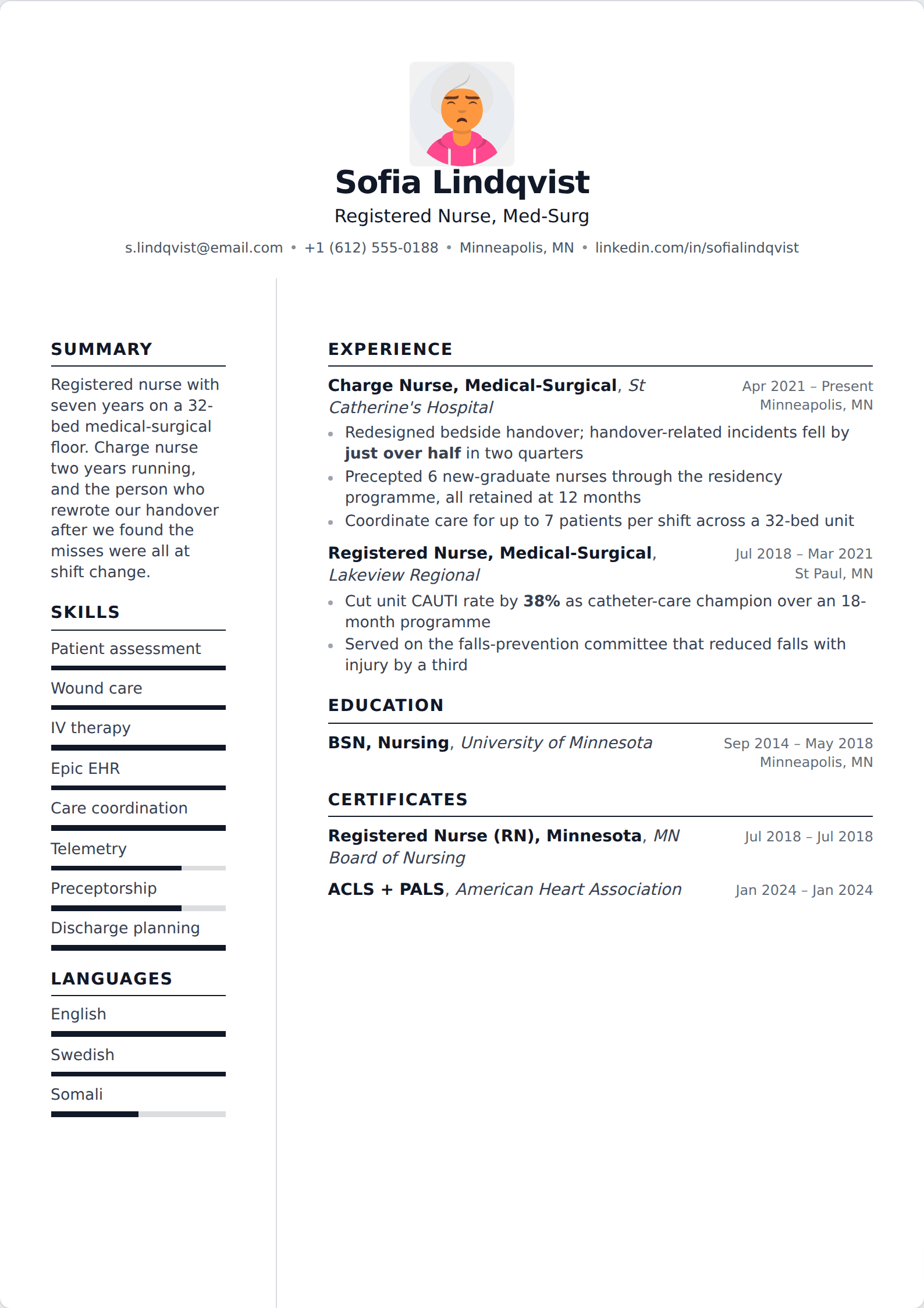
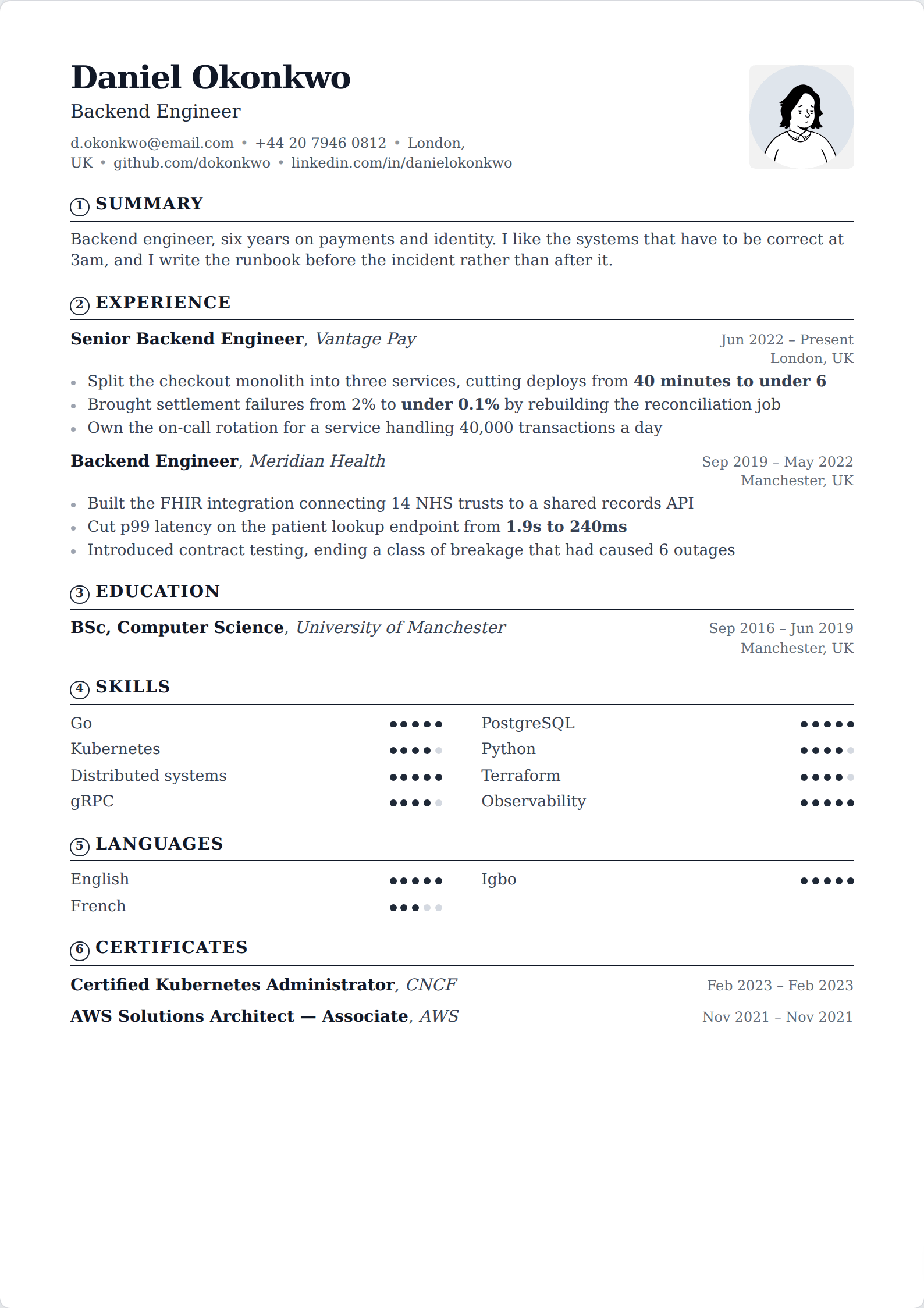
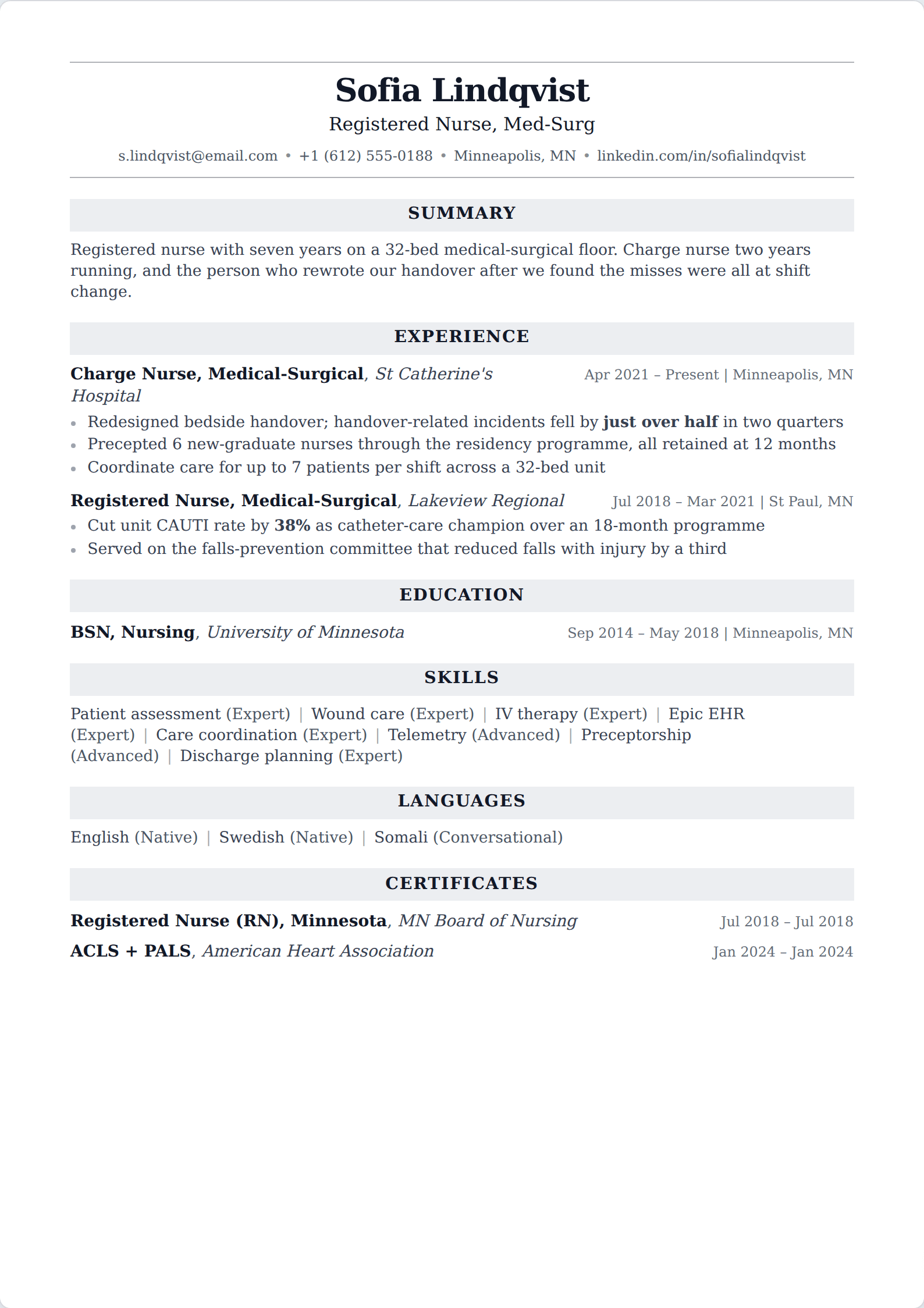
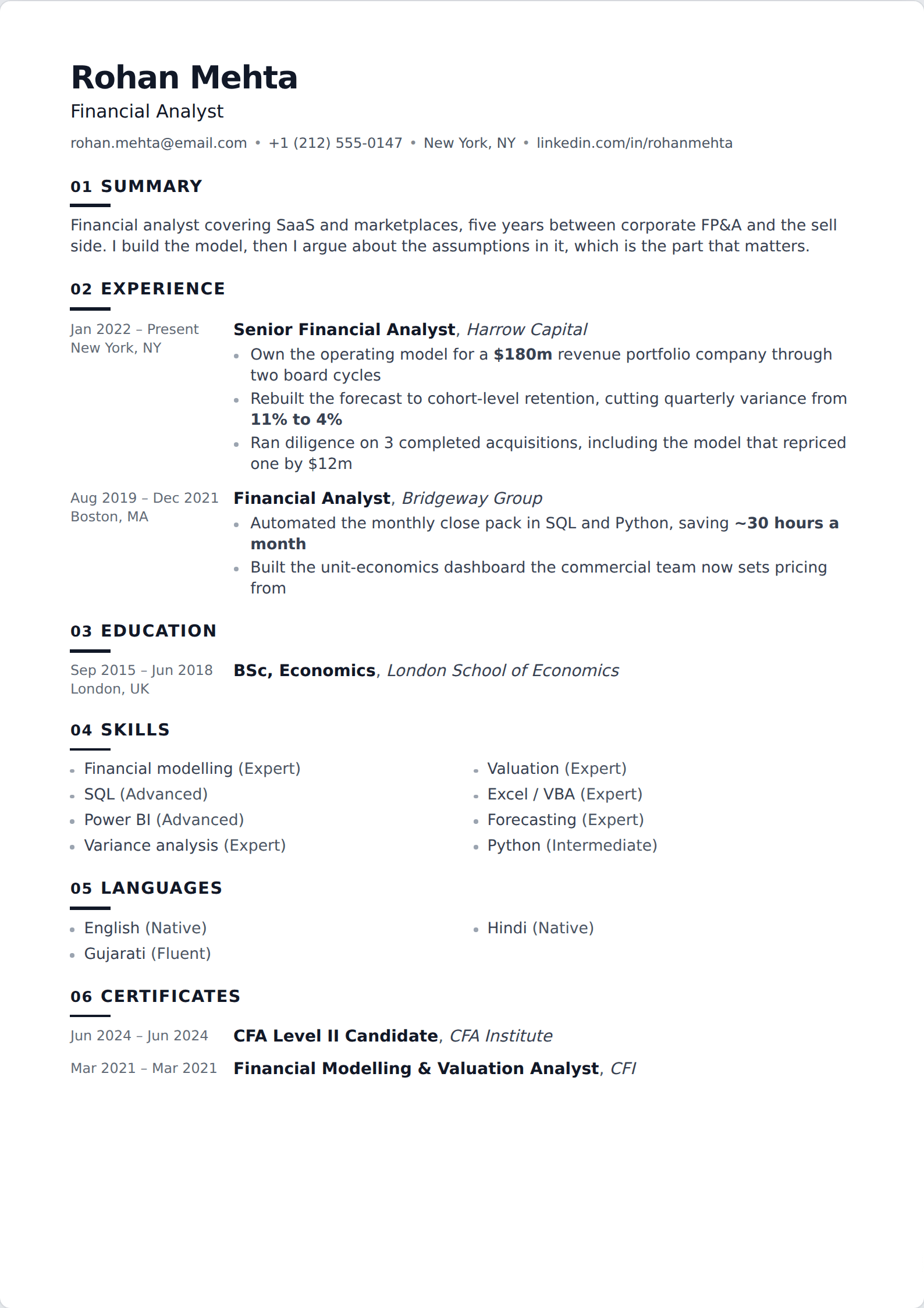
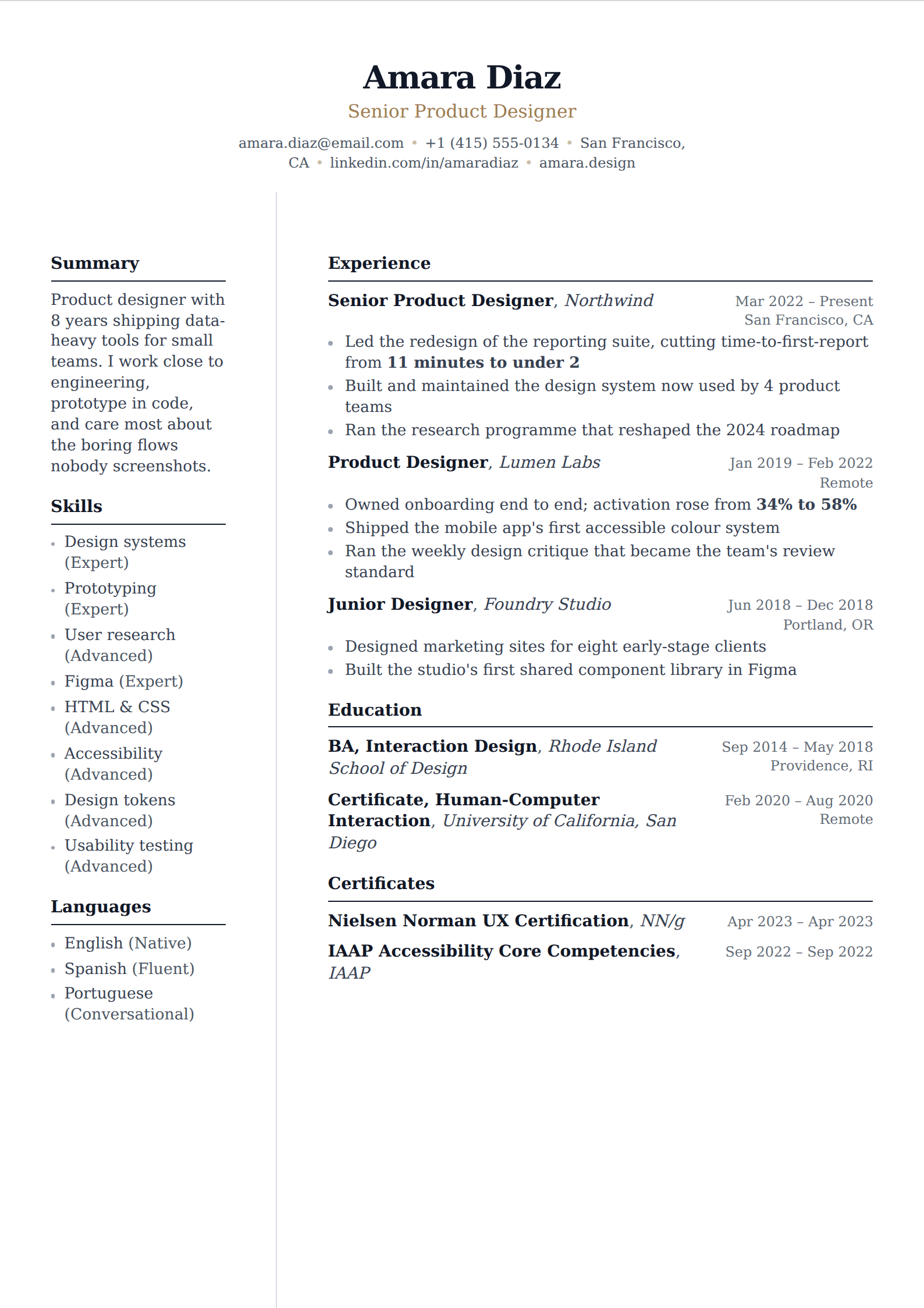
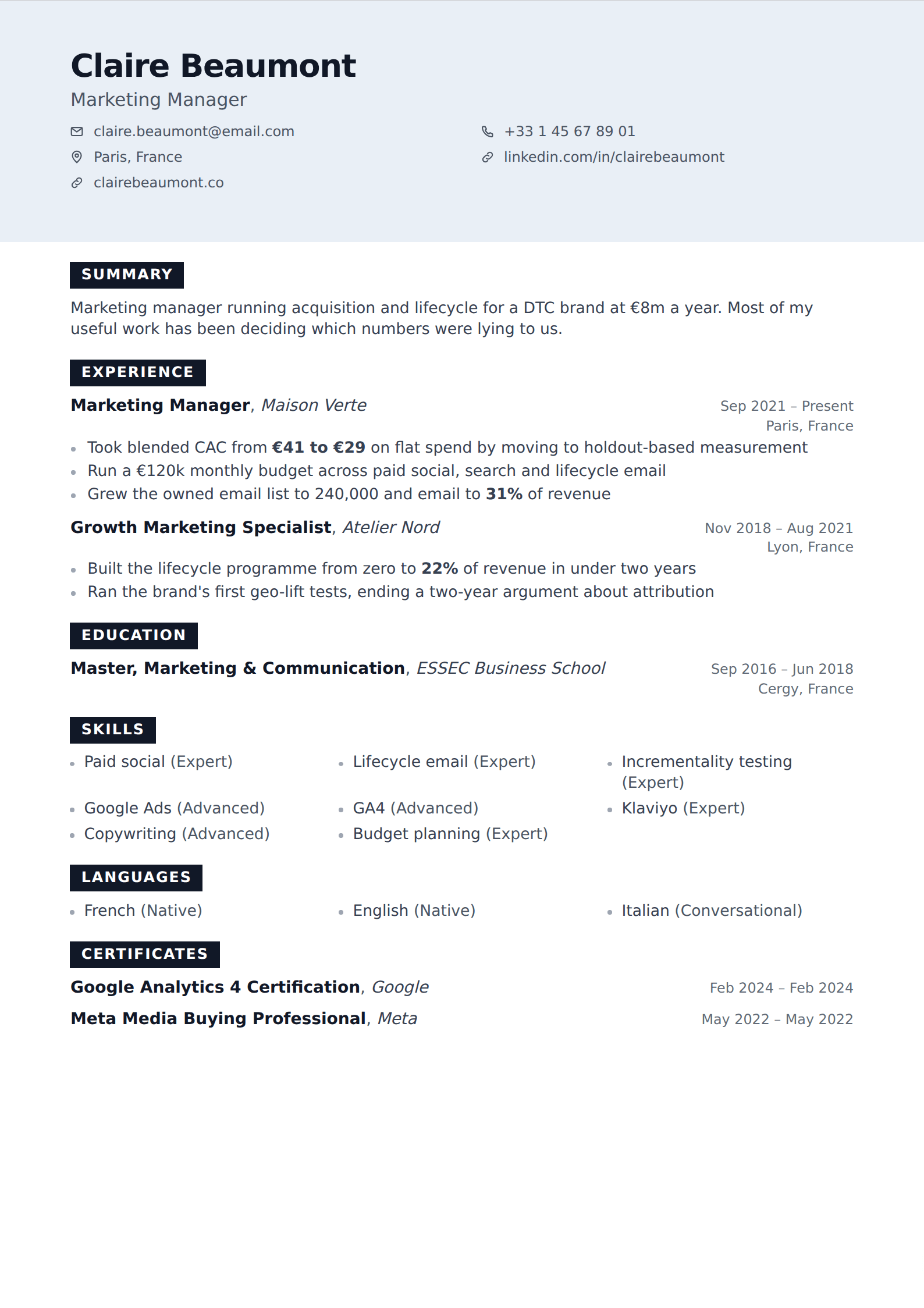
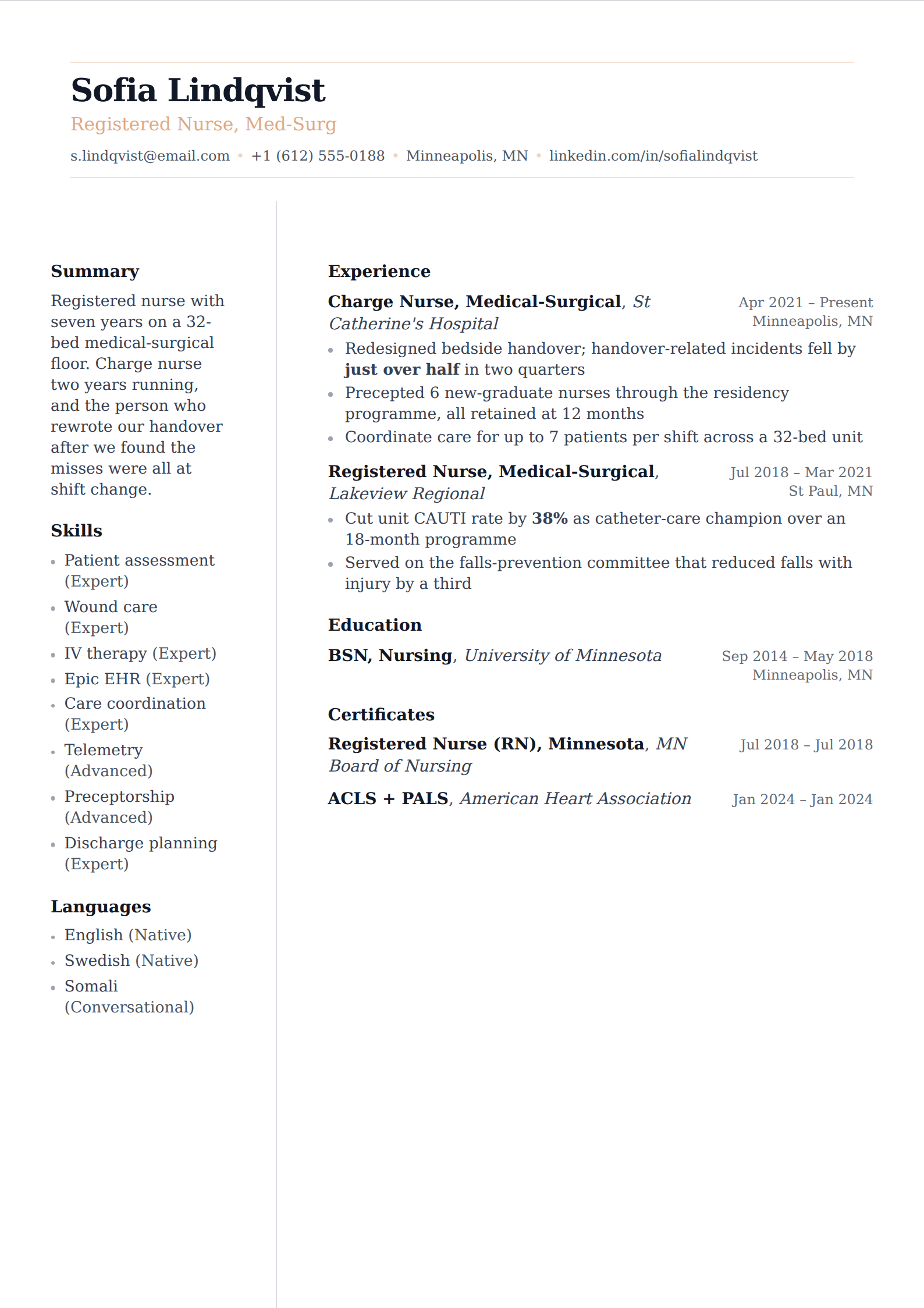
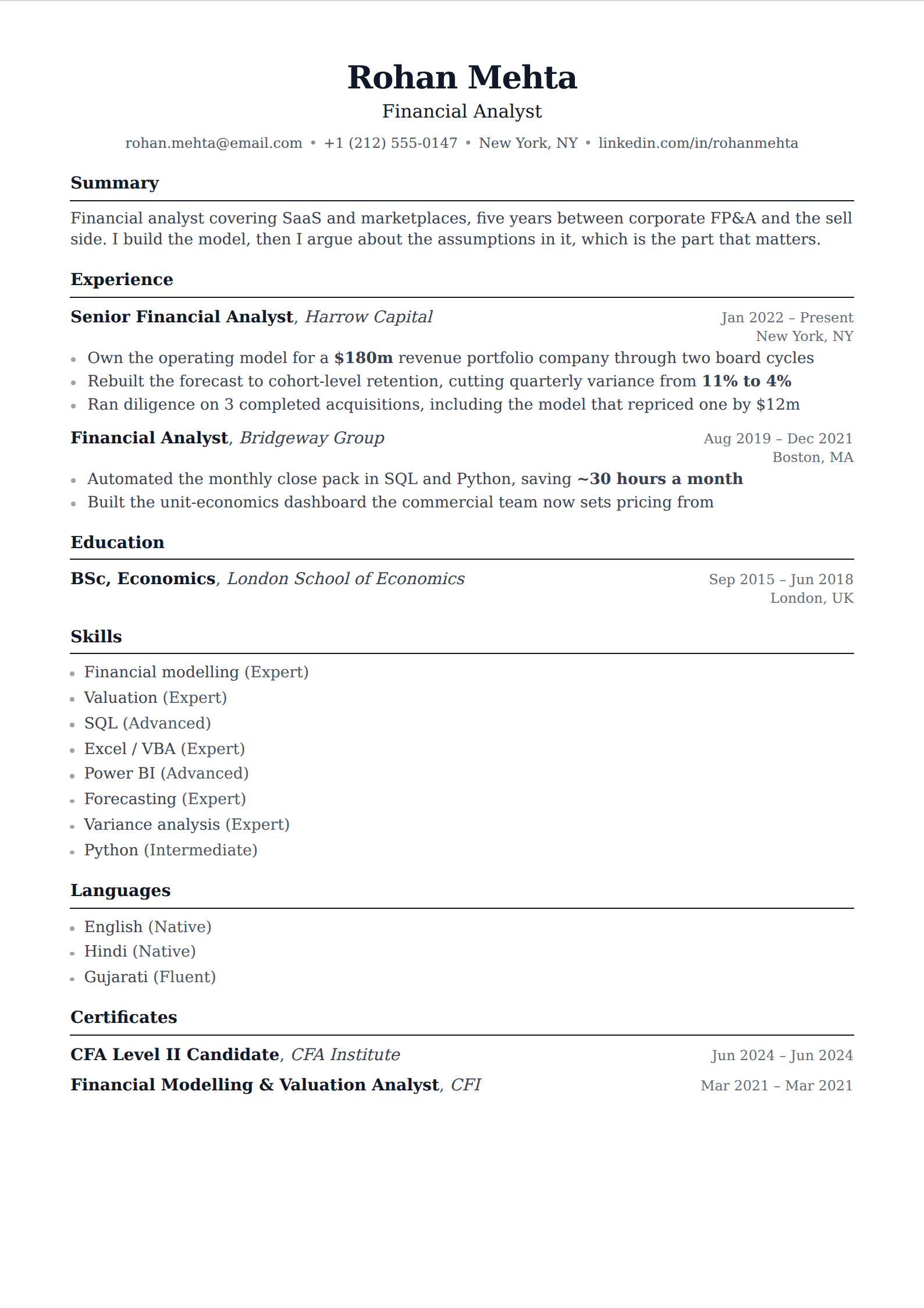
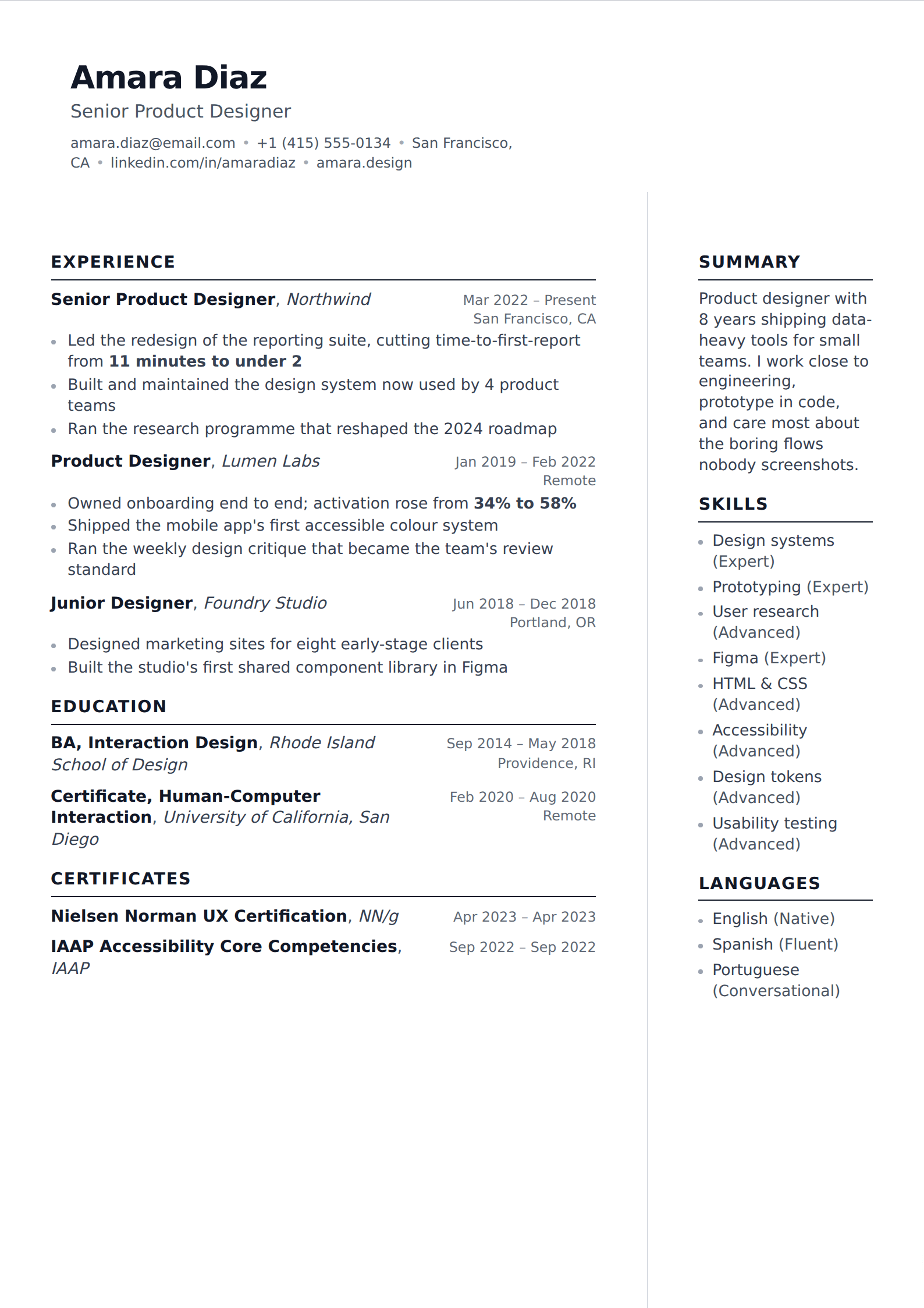
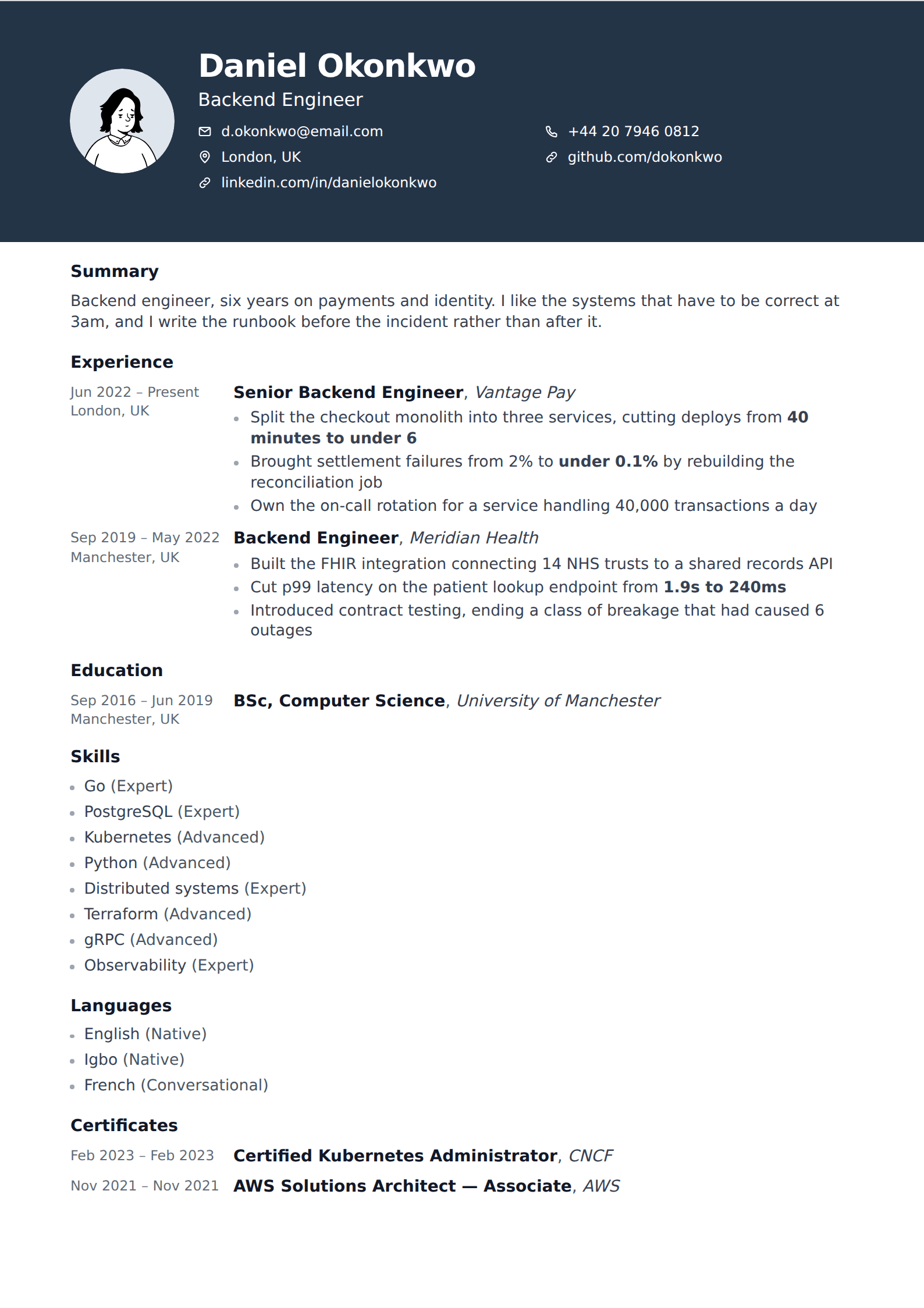
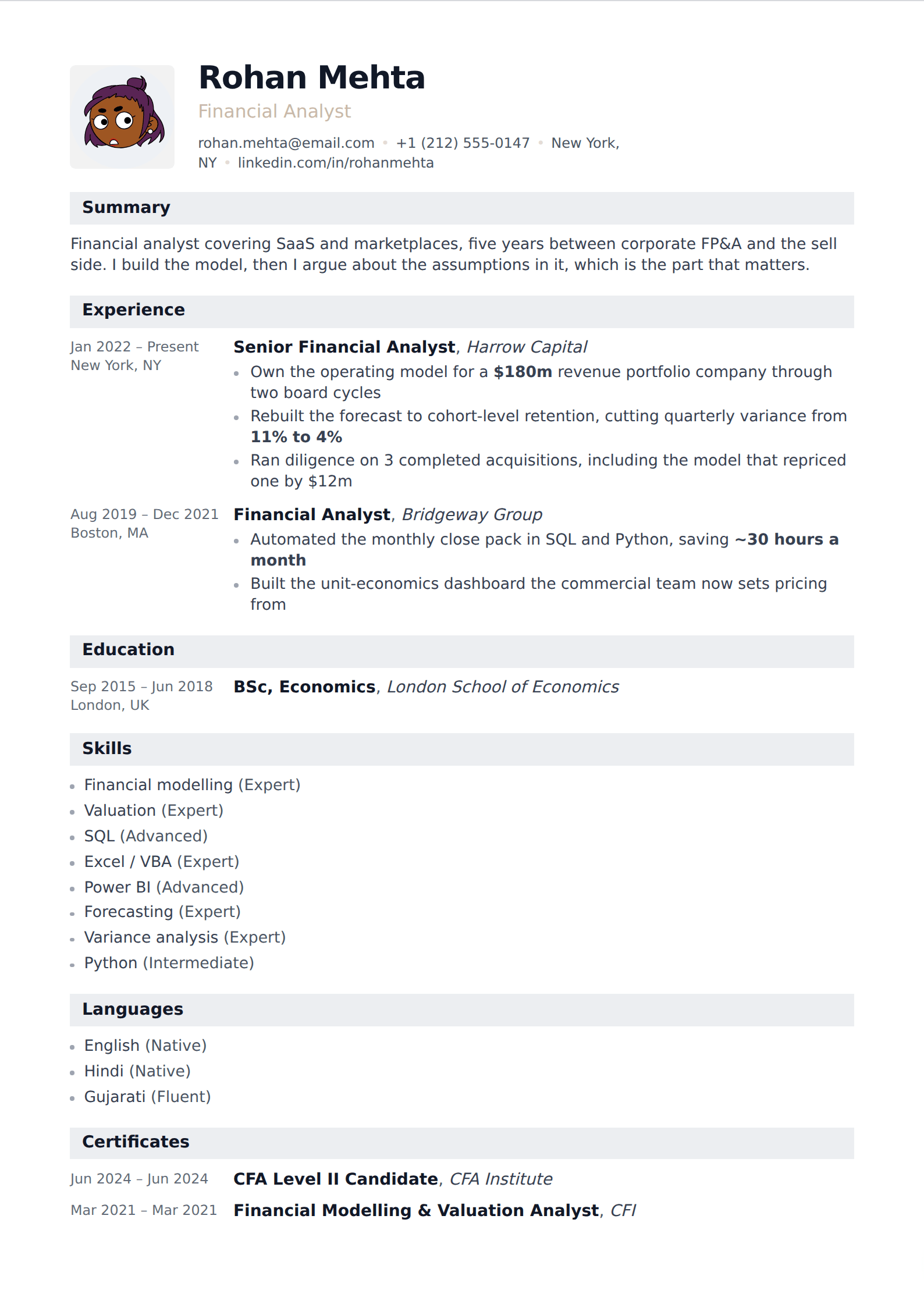
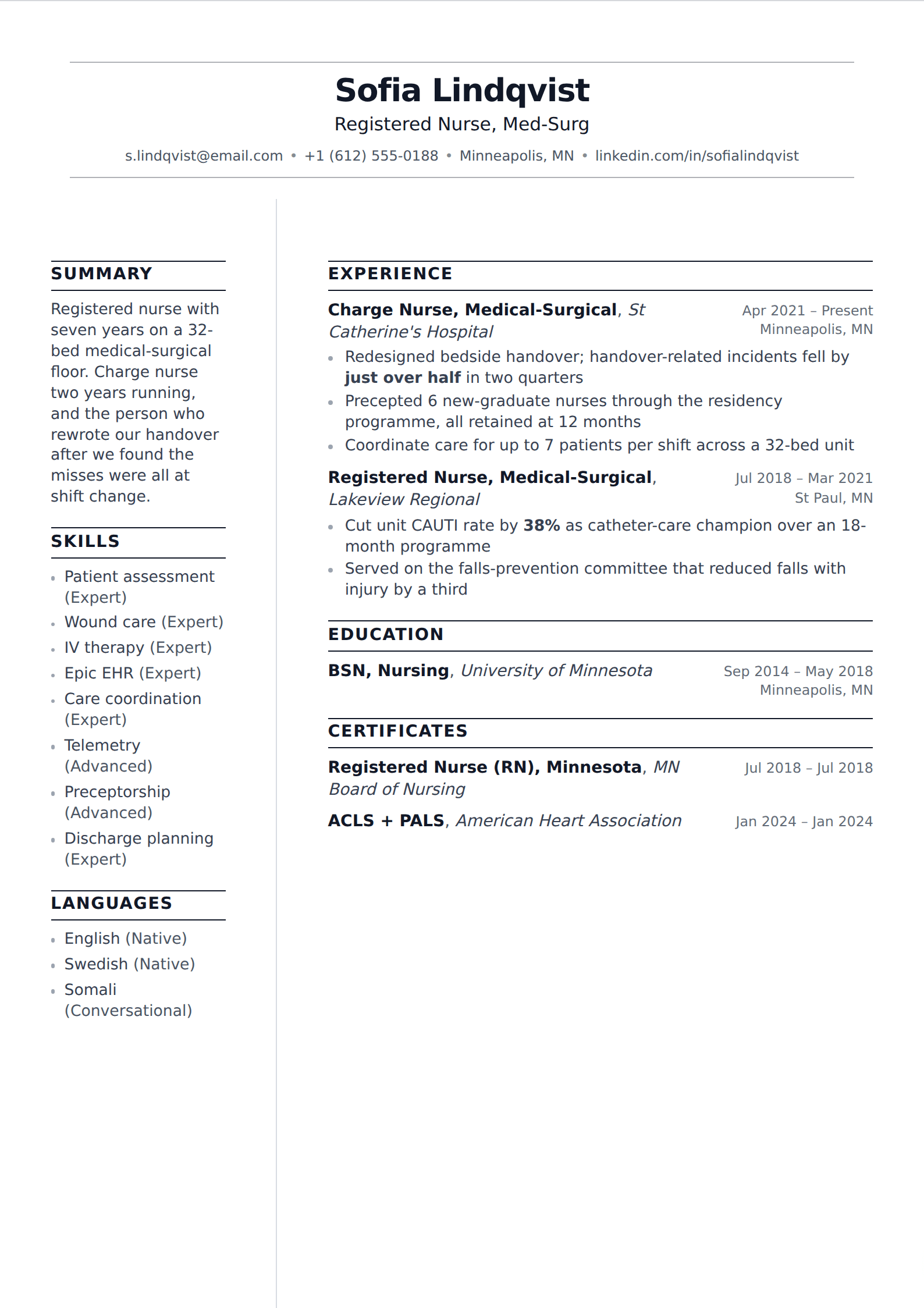
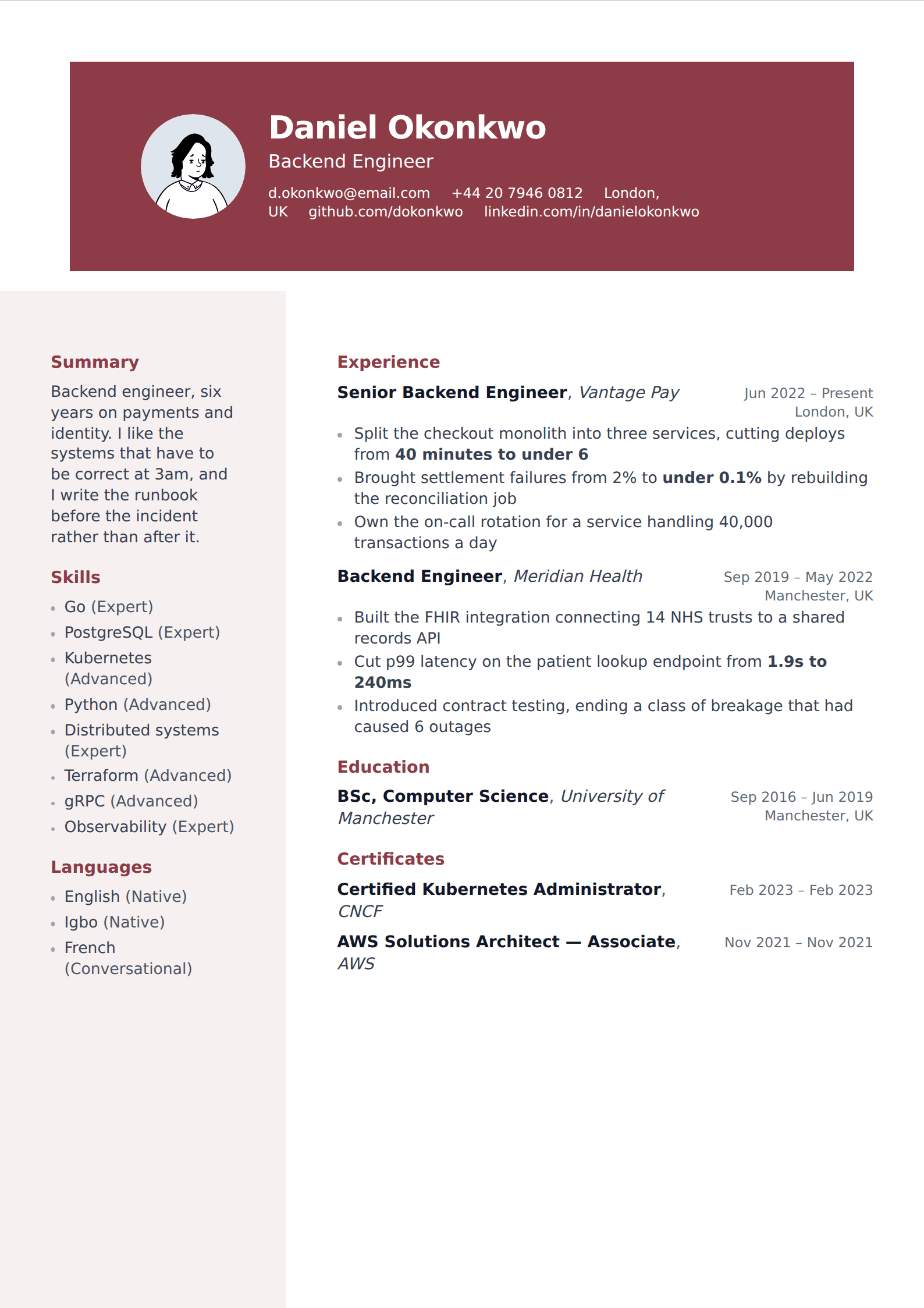
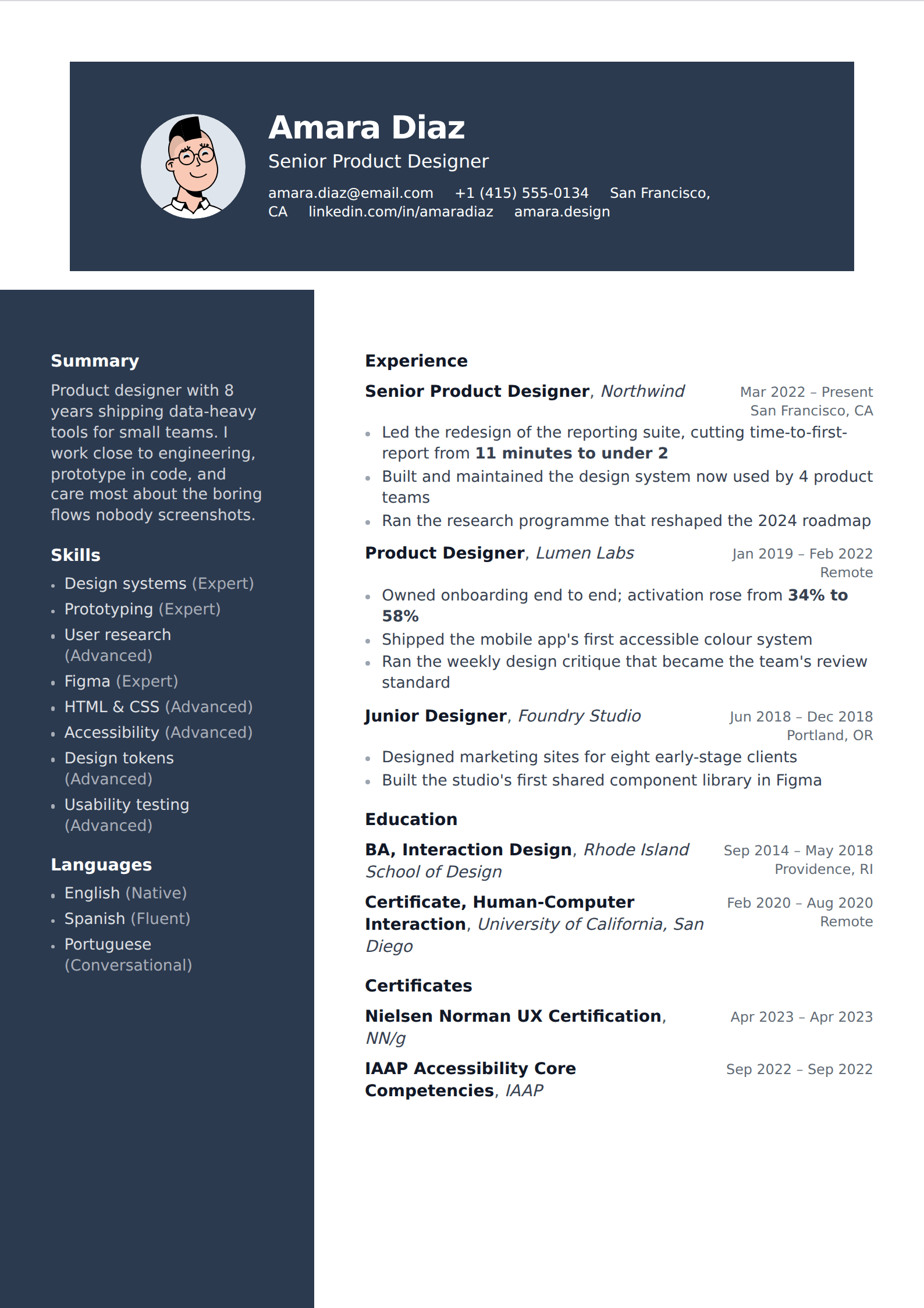
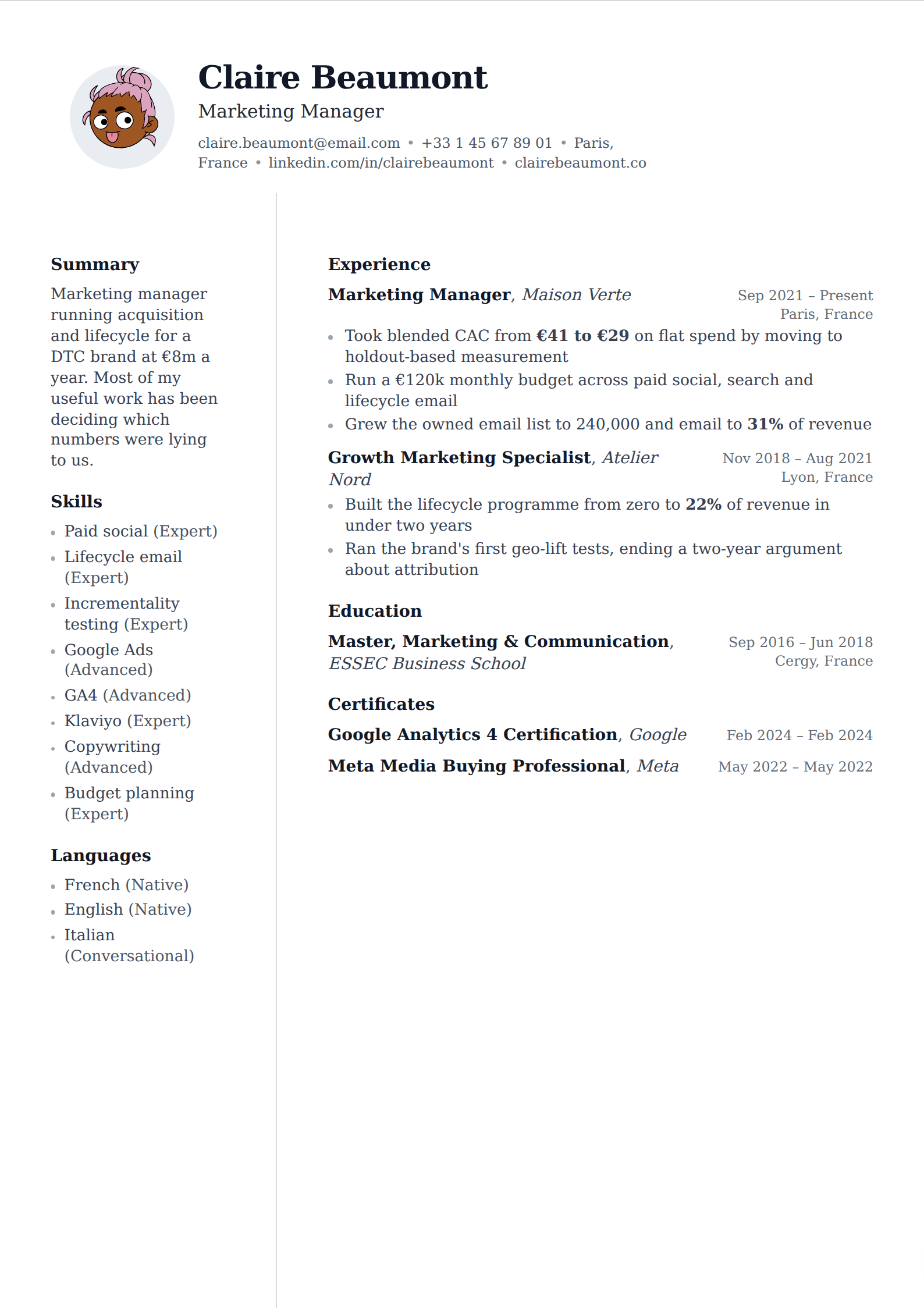
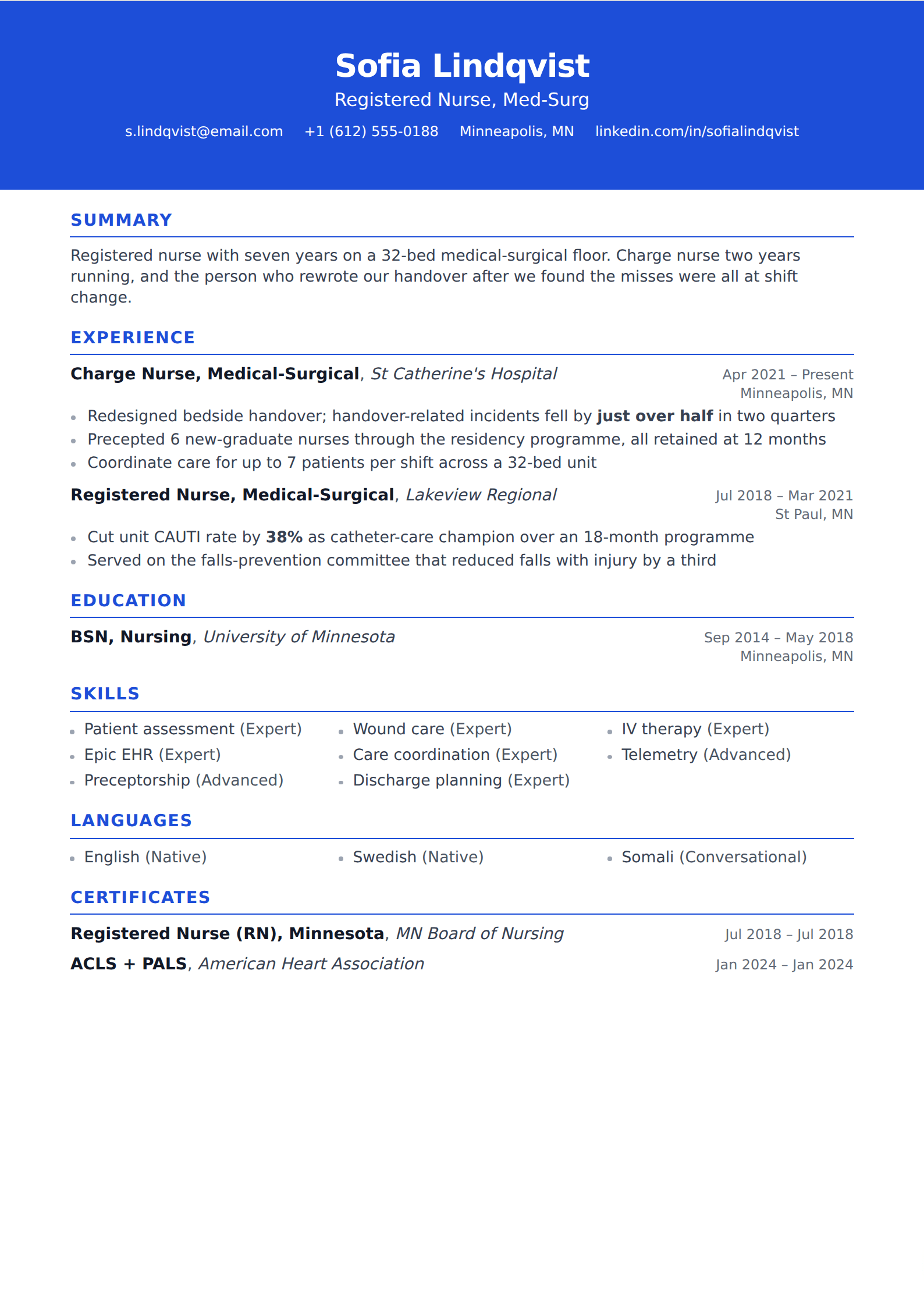
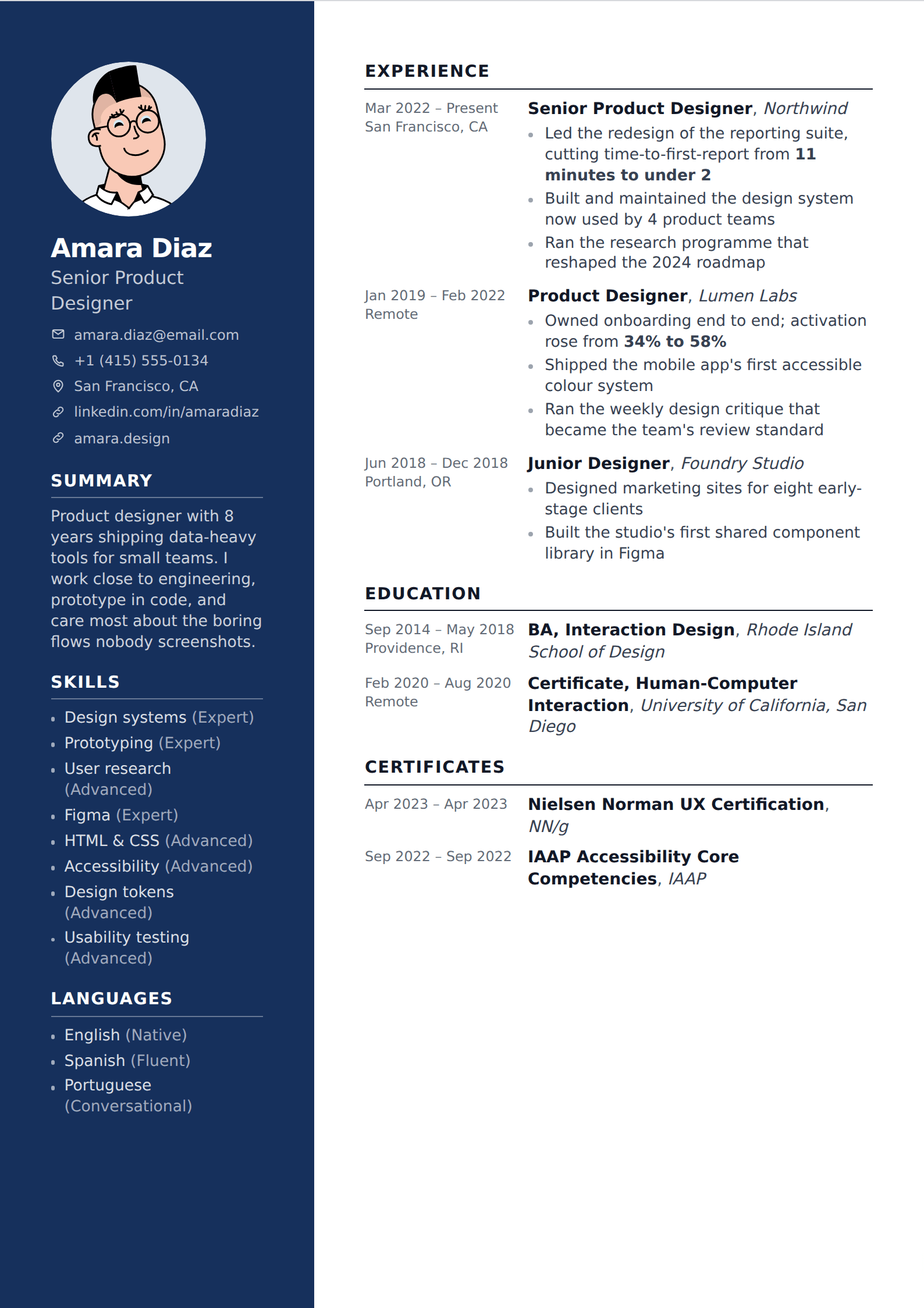
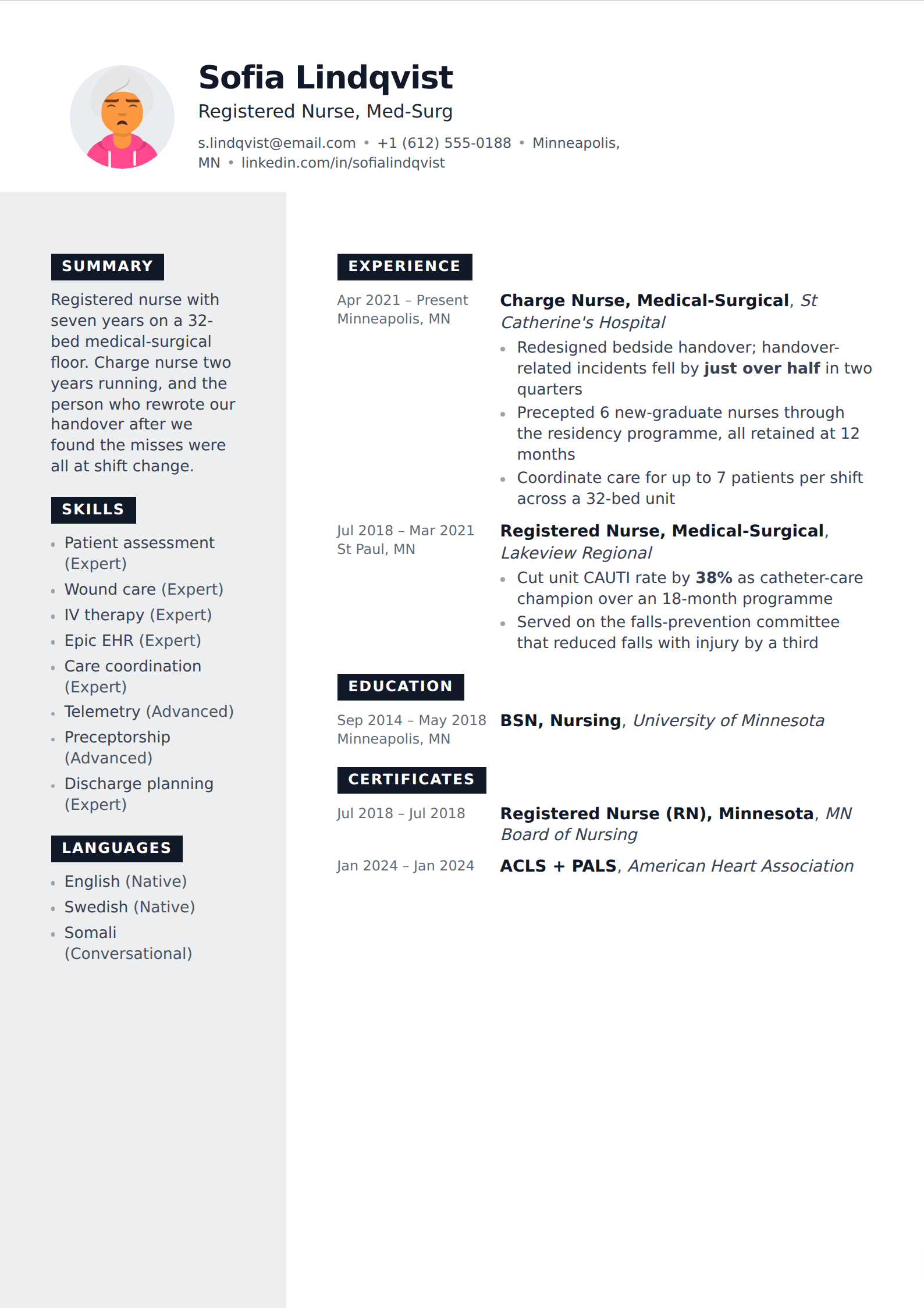
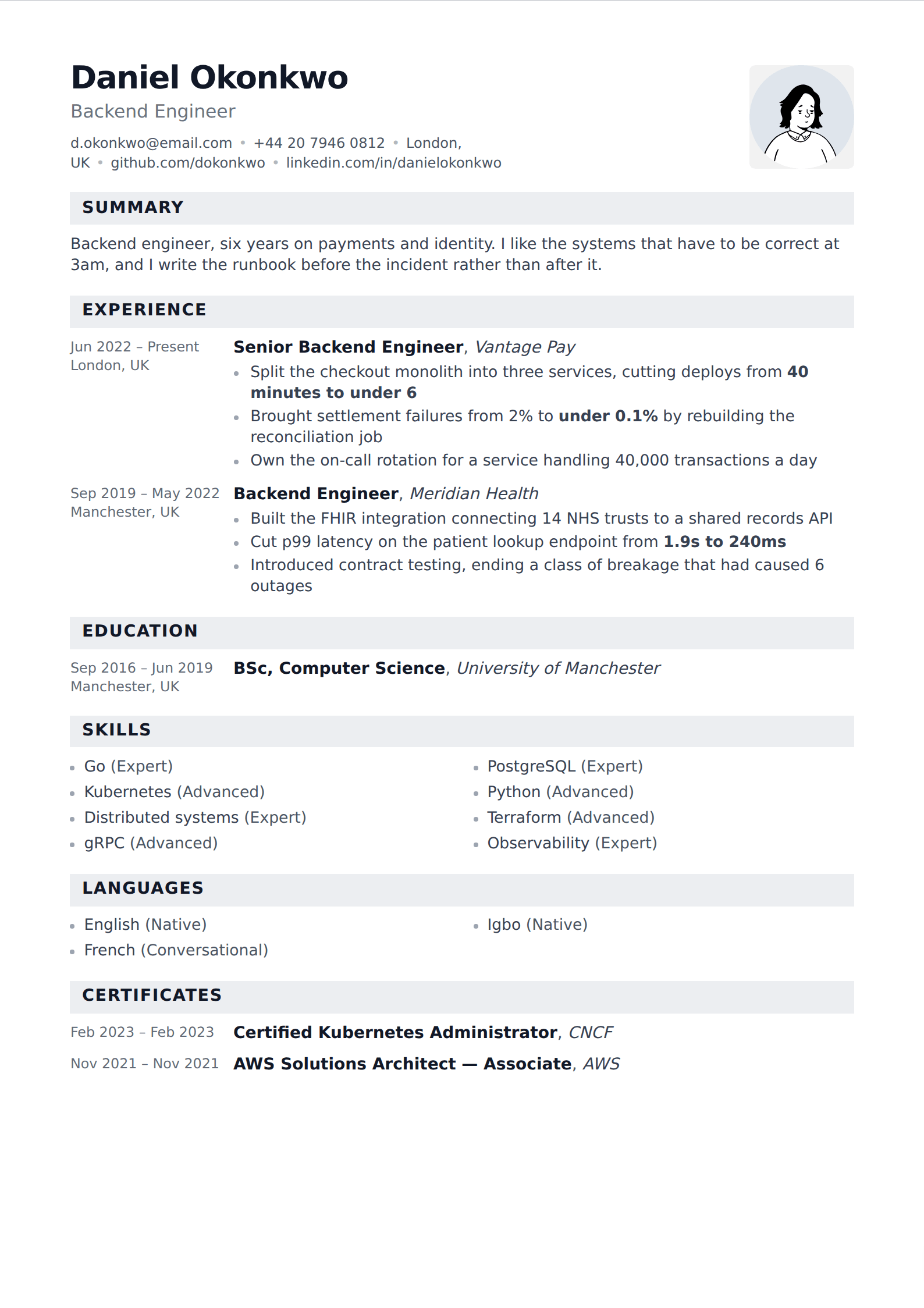
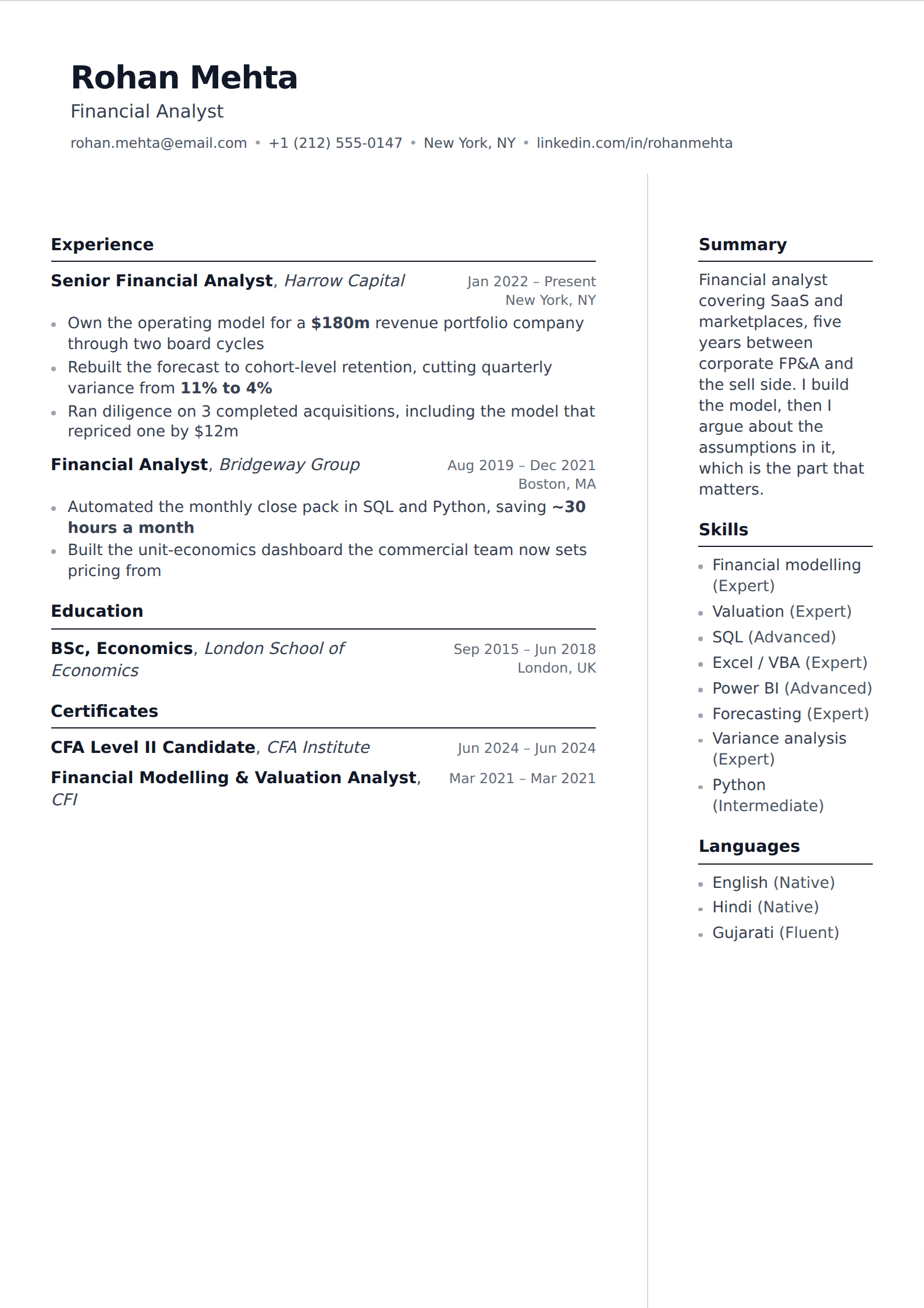
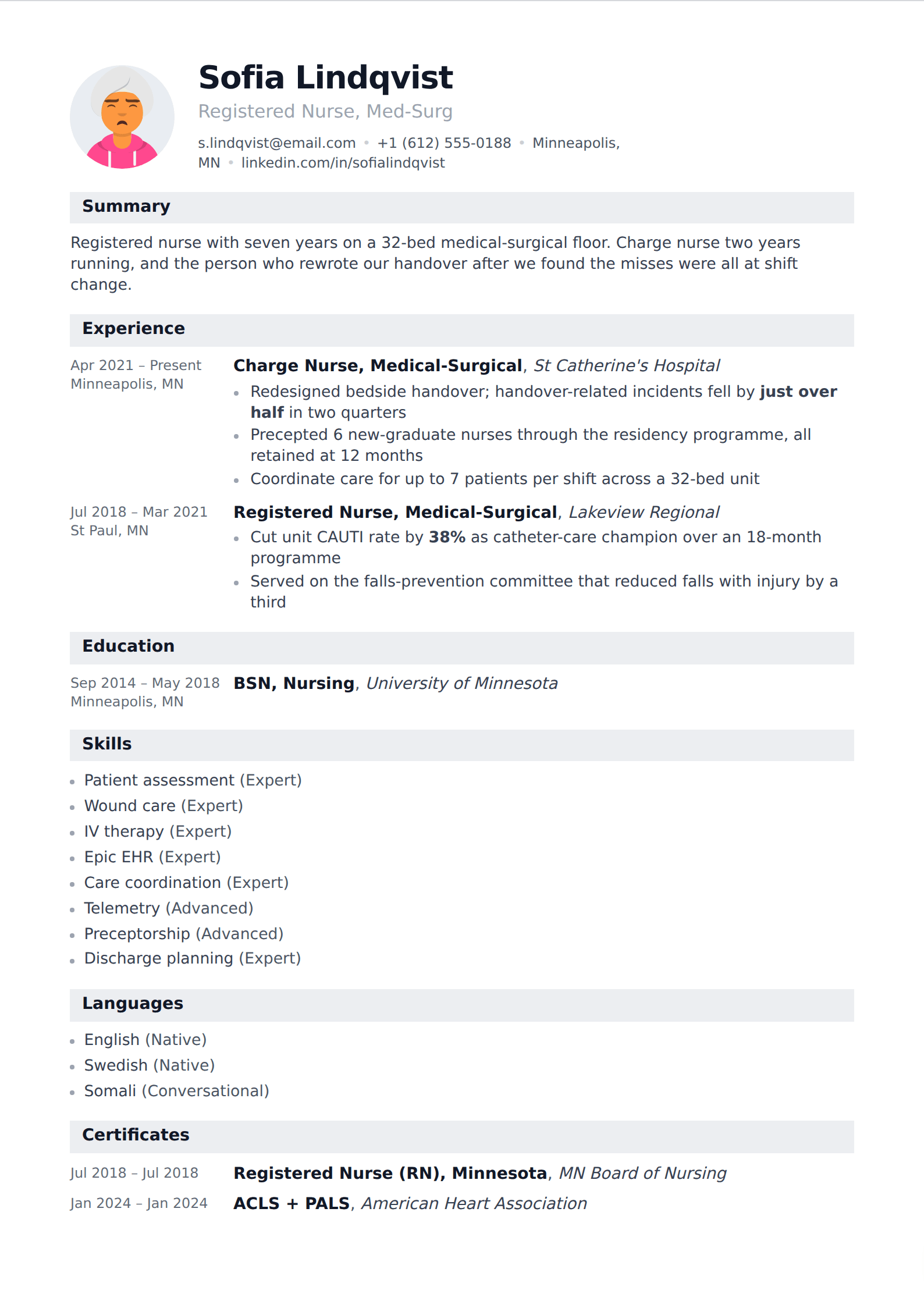
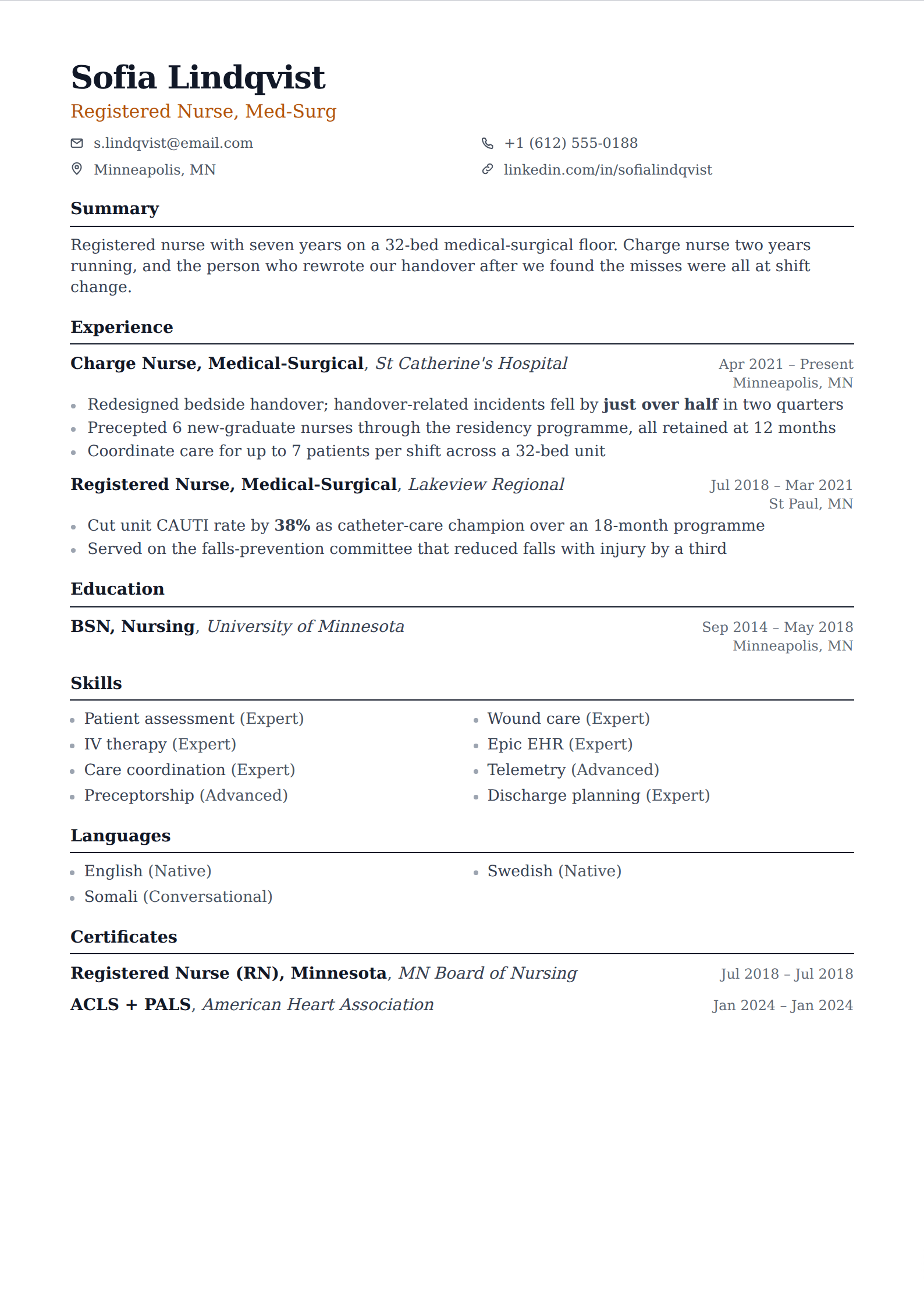
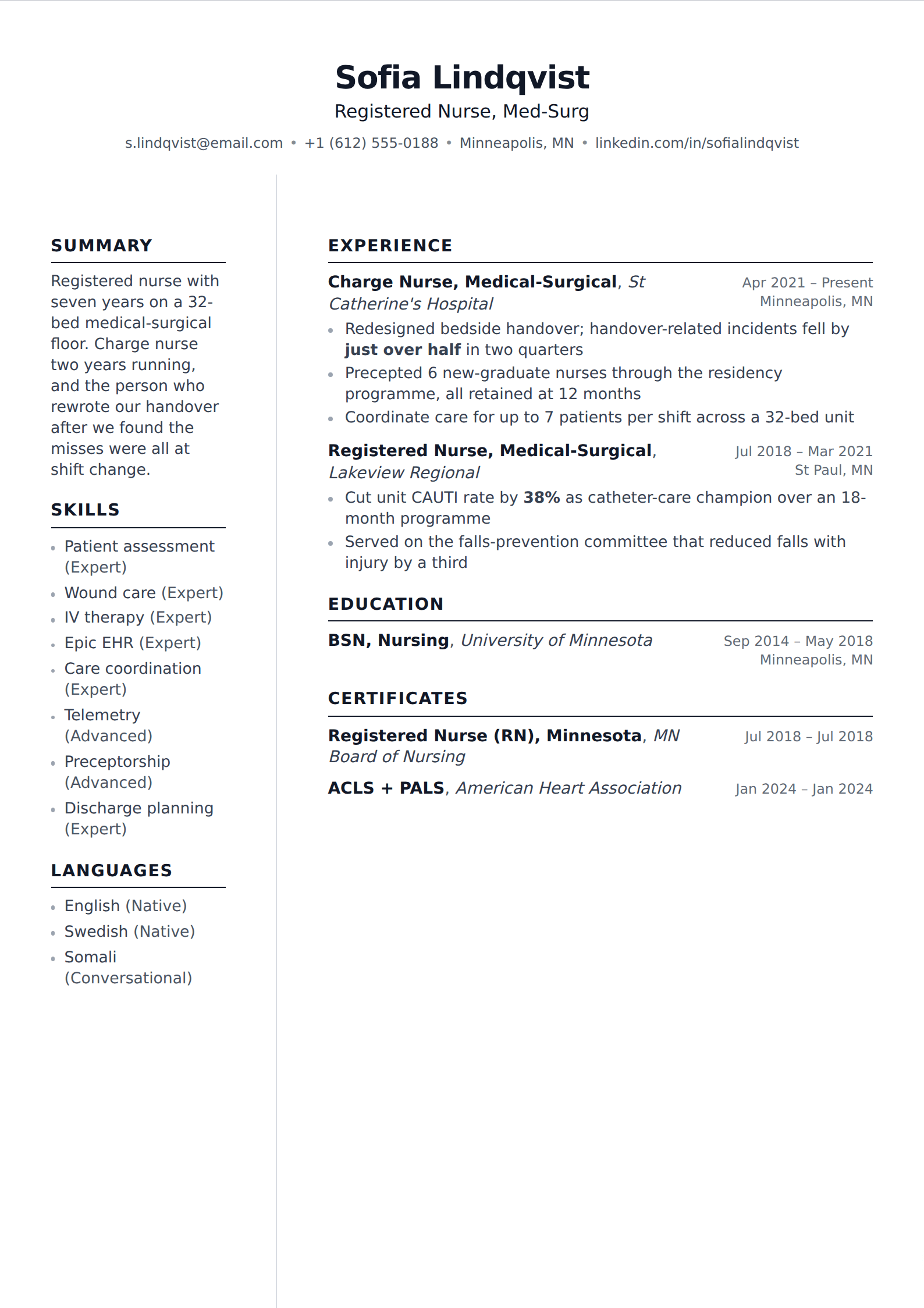
Three documents, one word
This is the single most useful thing to know before you start, because getting it wrong is not a style error — it is answering a different question from the one you were asked.
- UK, Ireland, Australia, New Zealand, South Africa: a CV is a two-page career summary. It is what the US calls a resume, and the words are interchangeable. No photo, no date of birth, no marital status.
- Continental Europe — Germany, France, Spain, Italy, the Netherlands and most of the rest: a CV is the same document plus a photo, and often nationality and date of birth. Two pages is normal rather than indulgent.
- Academia and research, everywhere: a CV is a complete record — every publication, grant, conference, course taught and committee served. There is no length limit and no editing for brevity. This is a genuinely different document and a two-page template is the wrong tool for it.
- The US and Canada outside academia: nobody says CV. If a North American employer asks for one, they mean a resume, and sending fifteen pages will end the application.
What changes between them
Length is the obvious one, and the least interesting. The substantive differences are what you are expected to disclose and how much of your history is expected to survive editing.
A UK CV is edited hard: two pages, most relevant material first, everything older than a decade compressed to a line. A German Lebenslauf is closer to a complete record in reverse-chronological order, with gaps expected to be accounted for rather than quietly closed. A French CV is typically one page and noticeably more formal in register than a British one.
The practical approach if you are applying across countries is to keep one master document and cut a version per market, rather than trying to write something that satisfies all of them. A document that hedges between conventions reads as belonging to none.
Photo or no photo
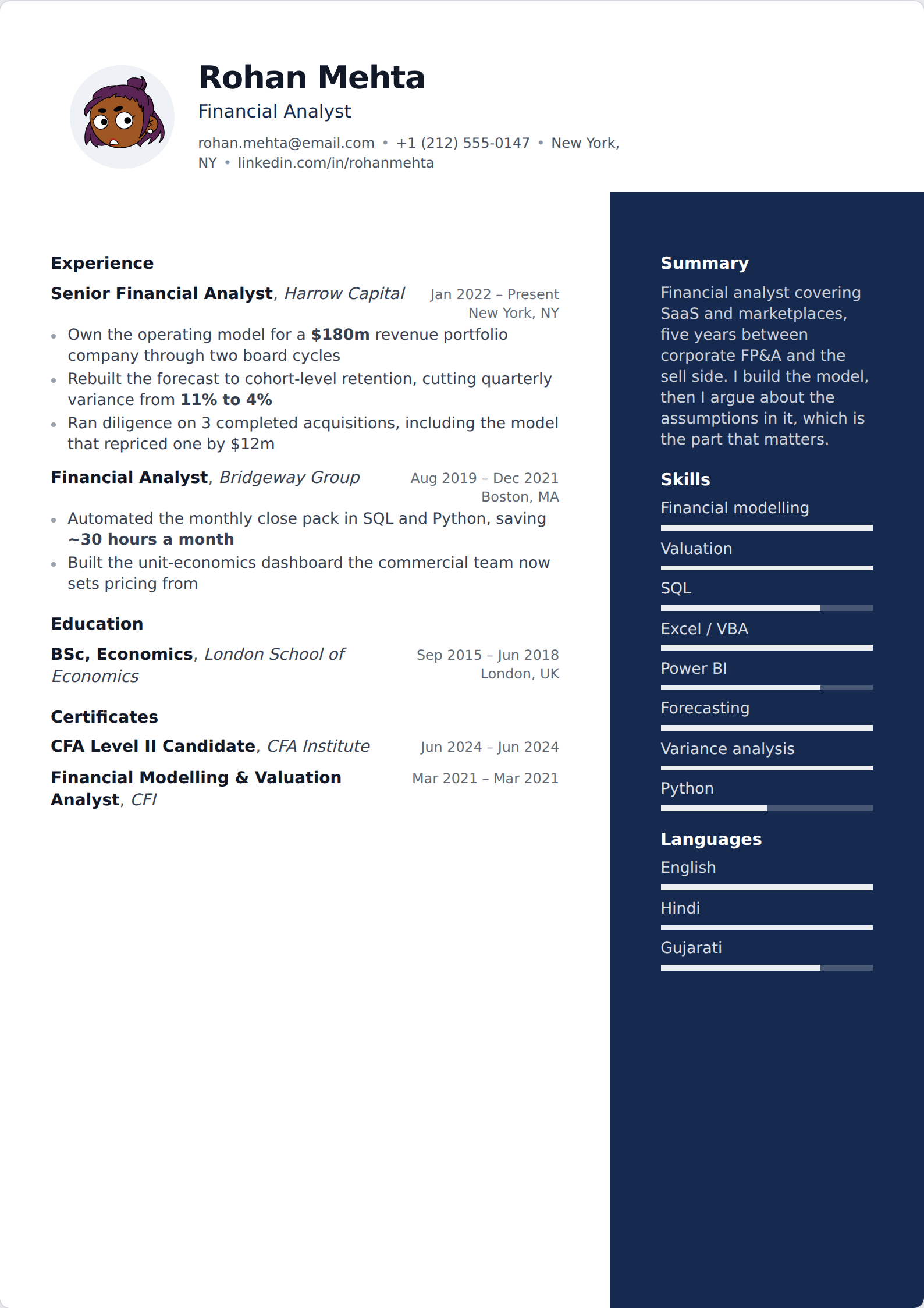
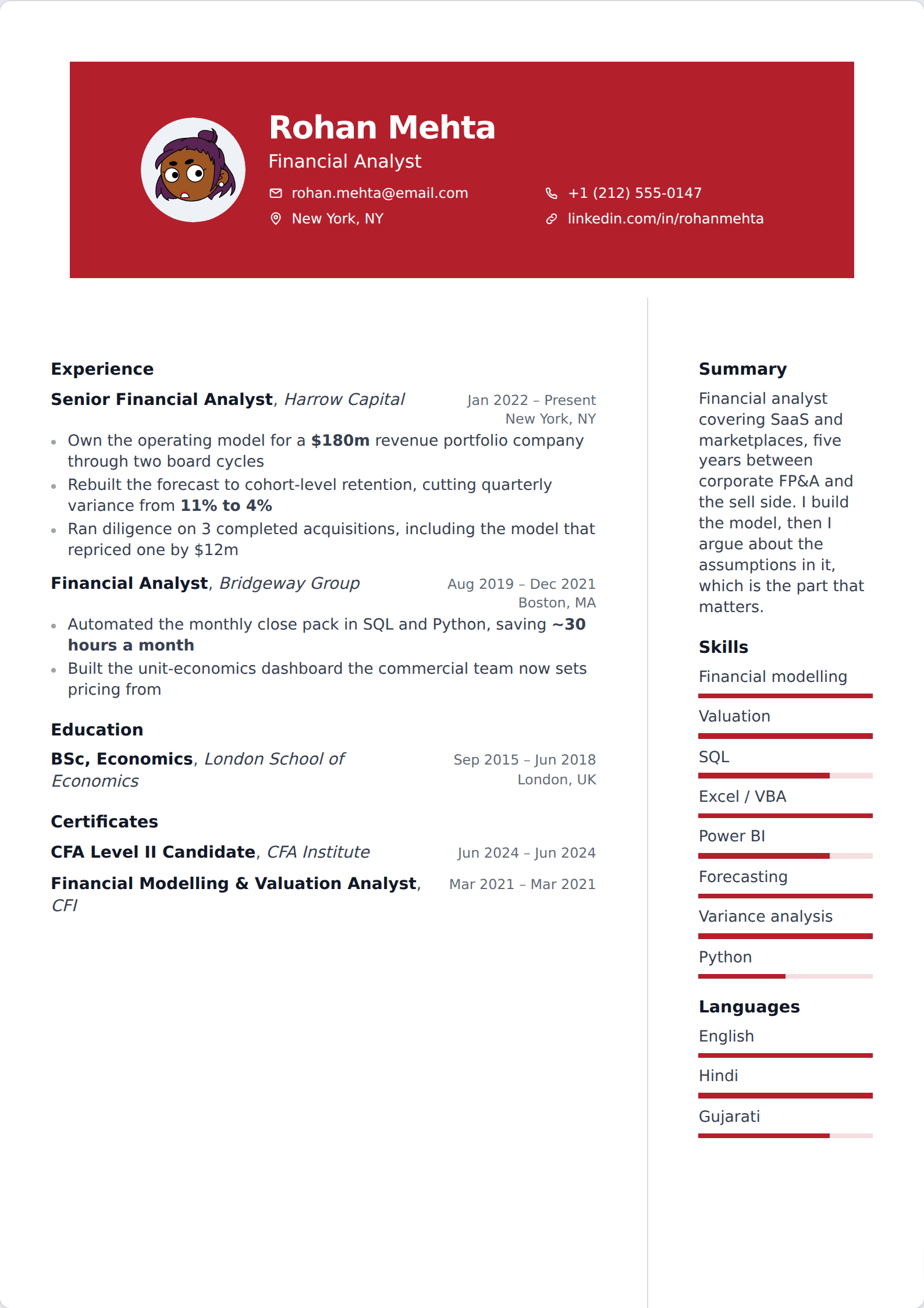
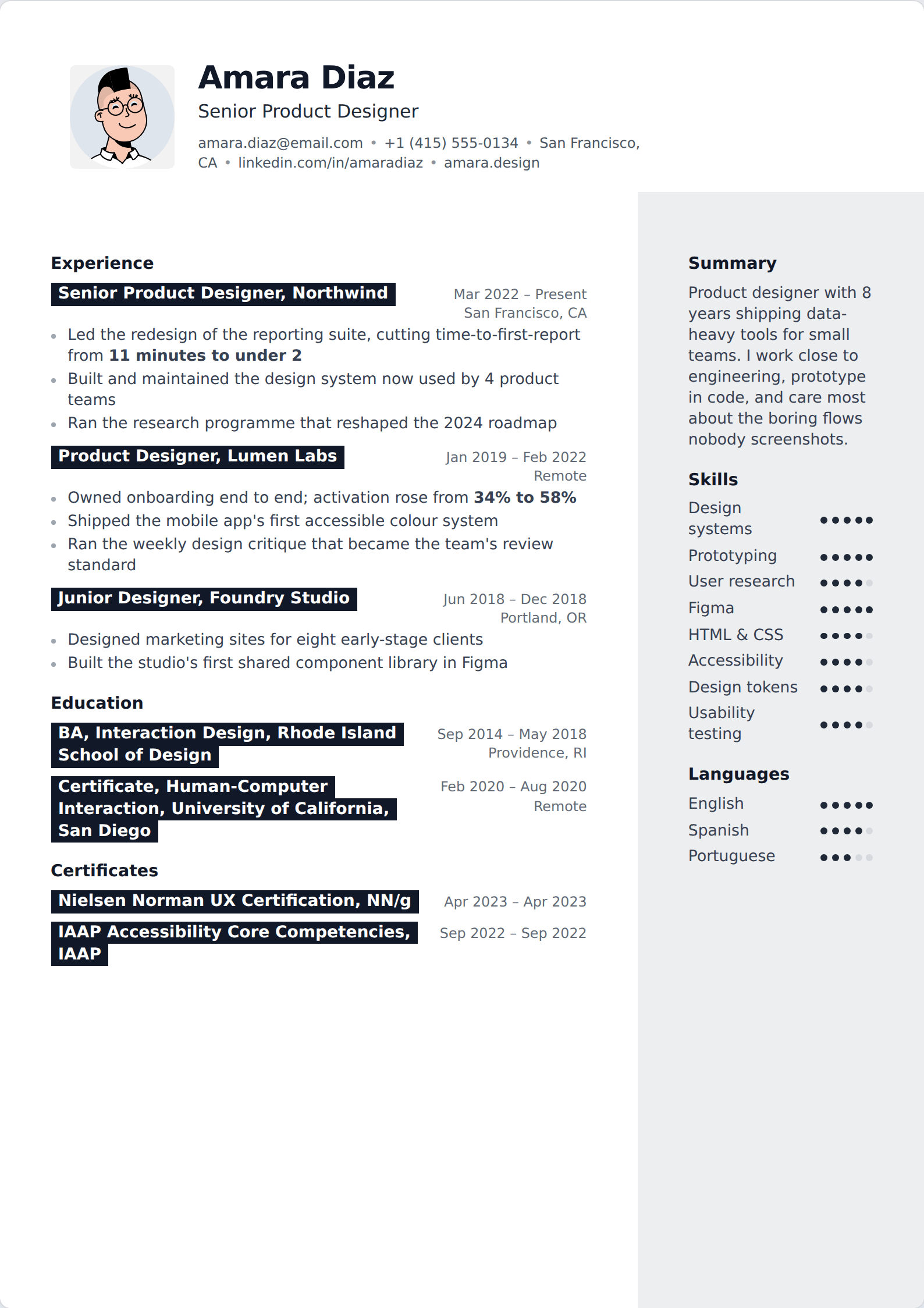
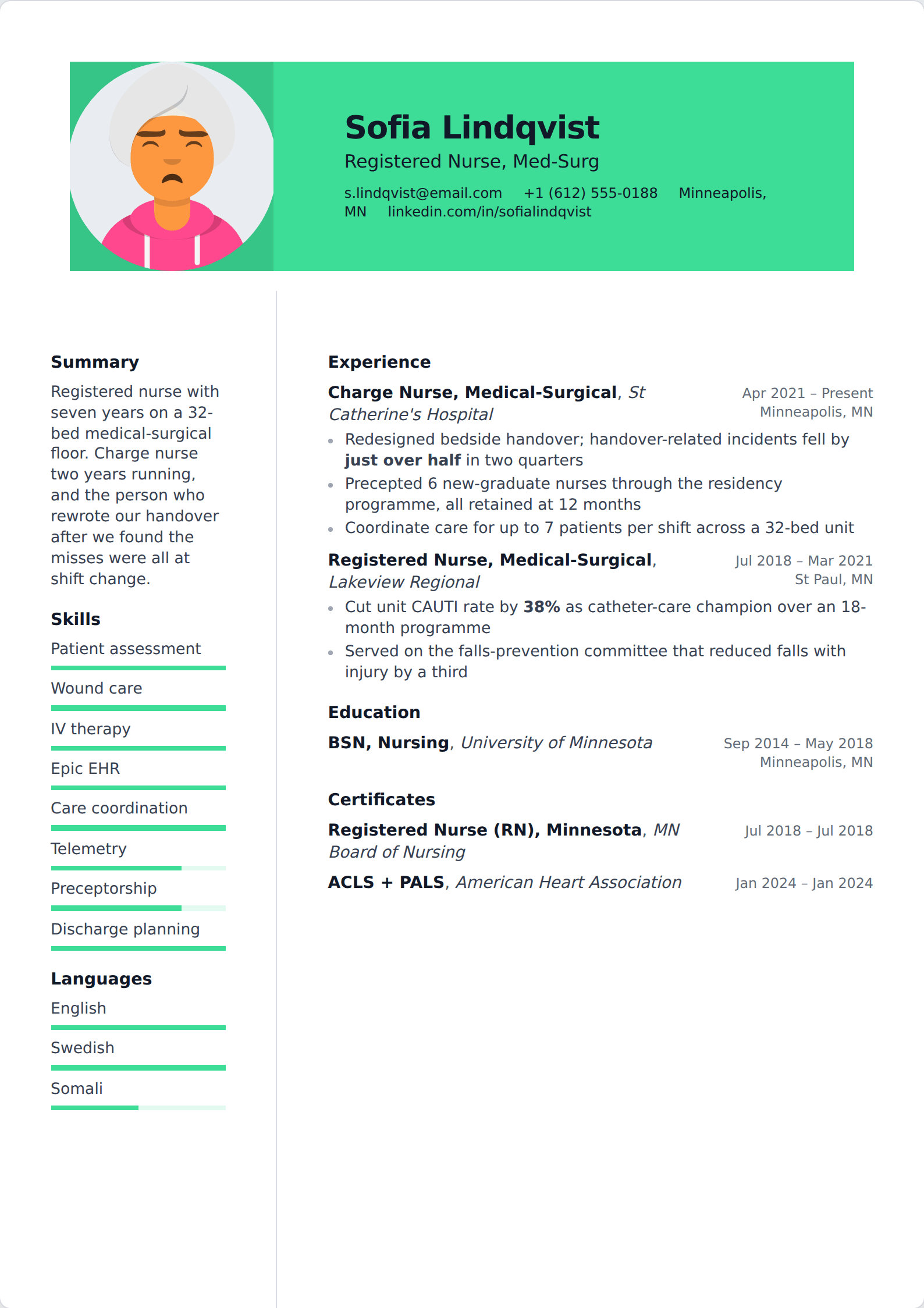
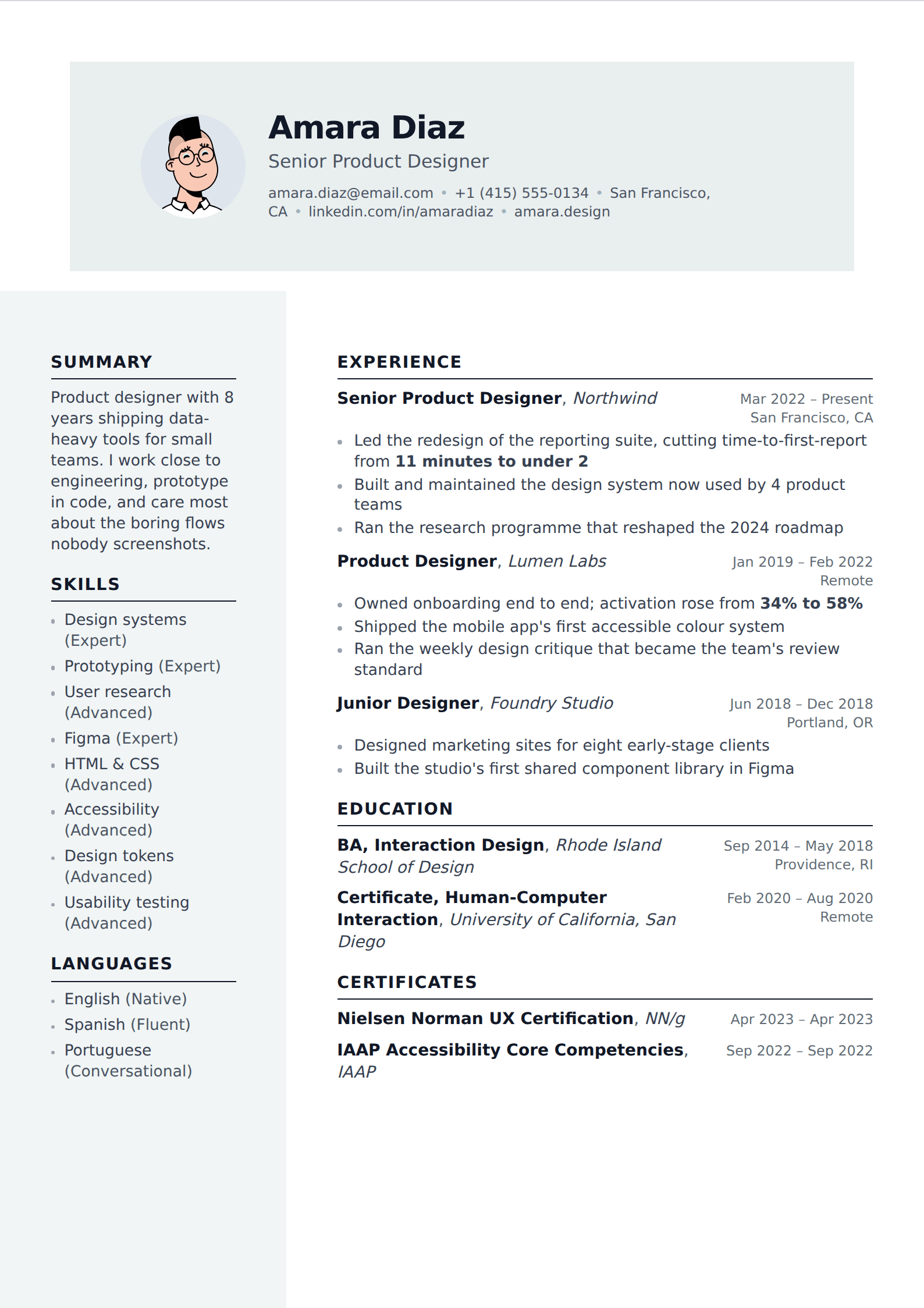
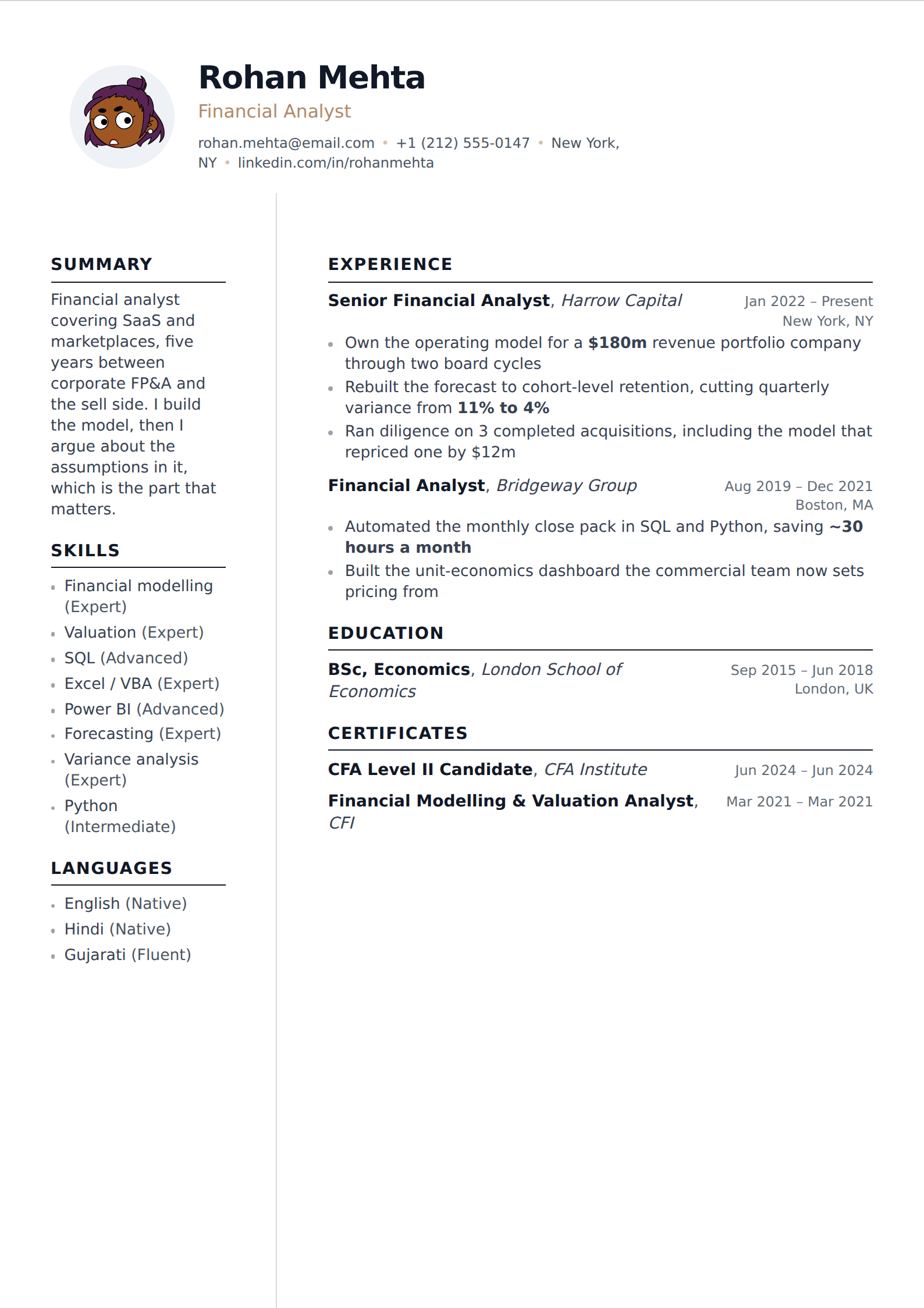
Include one for Germany, France, Spain, Italy, Austria, Switzerland, and most of continental Europe, Asia and Latin America. Leave it off for the UK, Ireland, the US, Canada and Australia, where many employers strip photos before review and some will not consider an application that includes one.
When you do include one, the technical rule matters more than the aesthetic one: never put text inside the image. A name or contact detail rendered as part of a graphic does not exist to any parser.
Related
Common questions
What is the difference between a CV and a resume?
- It depends entirely on where you are. In the UK, Ireland, Australia and New Zealand they mean the same thing — a two-page career summary. In the US and Canada, a resume is that two-page summary and a CV is an exhaustive academic record. In continental Europe, a CV is the standard job-application document and usually includes a photo and some personal details a UK or US employer would never ask for.
How long should a CV be?
- Two pages for almost every non-academic application, in every country that uses the word. One page if you are early career. An academic CV has no limit and routinely runs to ten pages or more, because its job is completeness rather than persuasion — but that is a different document from the one these templates produce.
Should a CV include a photo?
- In continental Europe, yes — its absence is noticed. In the UK, Ireland, the US, Canada and Australia, no: many employers prefer applications without one for bias reasons and some systems remove them automatically. Follow the convention of the country the job is in.
Are these CV templates free?
- Yes. Every template is free to use with unlimited PDF downloads and no watermark, on the free plan, with no card. The paid plans add AI writing, more documents and translation — none of which you need to produce a finished CV here.
Do I need a different CV for each country?
- If you are applying across conventions, yes — but it is a cut of one master document rather than a rewrite. Change the length, add or remove the photo and personal details, and adjust the register. Keeping one source and exporting variants is much less work than maintaining several, and it is what the editor is built for.
Build it in the editor
Live preview, AI writing help, and an ATS-ready PDF. Free to start, and no card at any point.
Start your resume