
The definition, and why it matters
The word comes from the French résumé, meaning summary, and the etymology is the whole point. A resume summarises. It selects. Something being true about your career is not a reason for it to be on the page; the reason is that it helps a stranger decide, in under a minute, that talking to you is worth an hour of their time.
That reader is not reading in the sense you mean when you say reading. The first pass is six to ten seconds and it is a scan for disqualifiers and signals: does this person do roughly this job, at roughly this level, recently, somewhere plausible. A resume is designed for that pass first and the careful second read after.
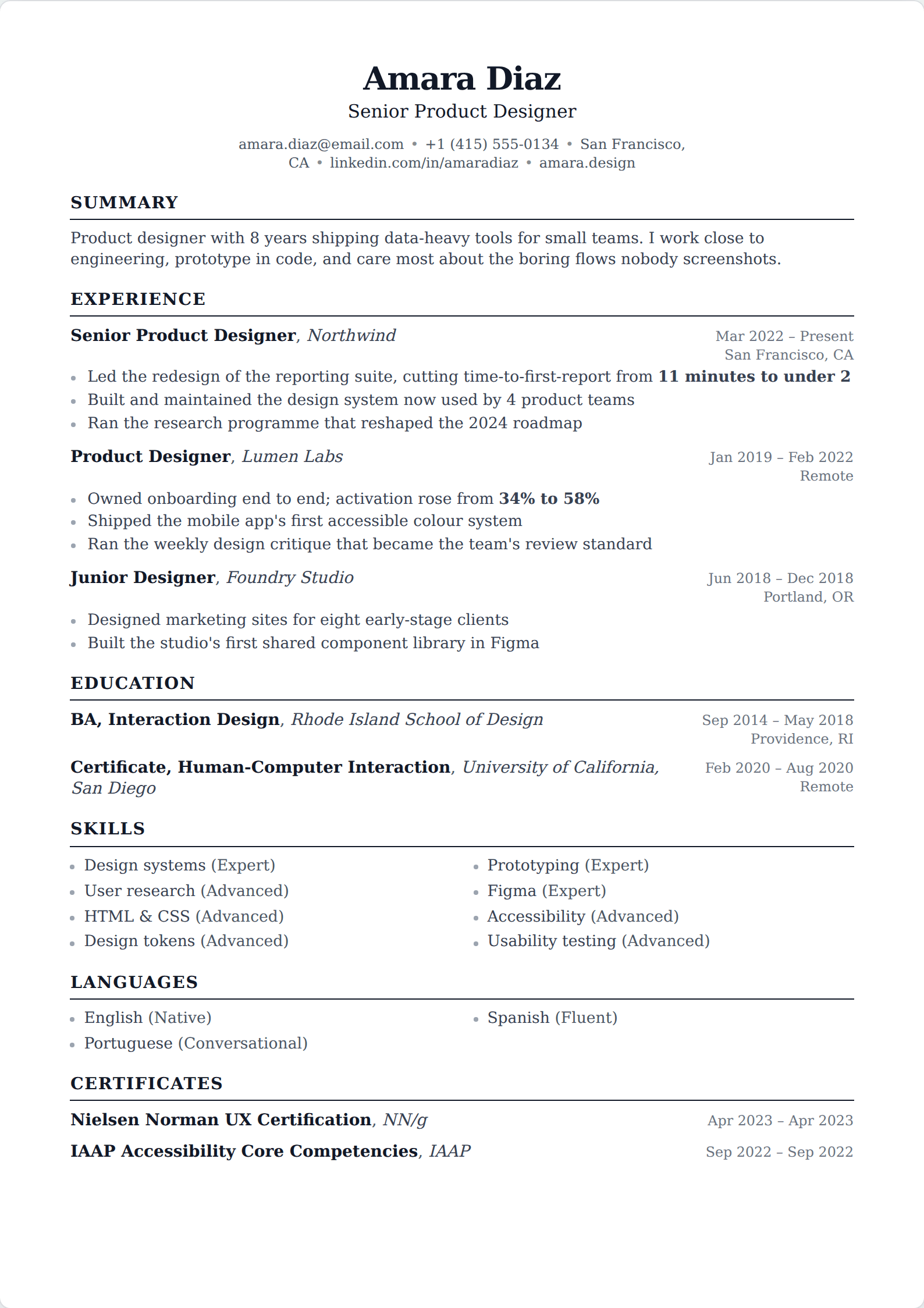
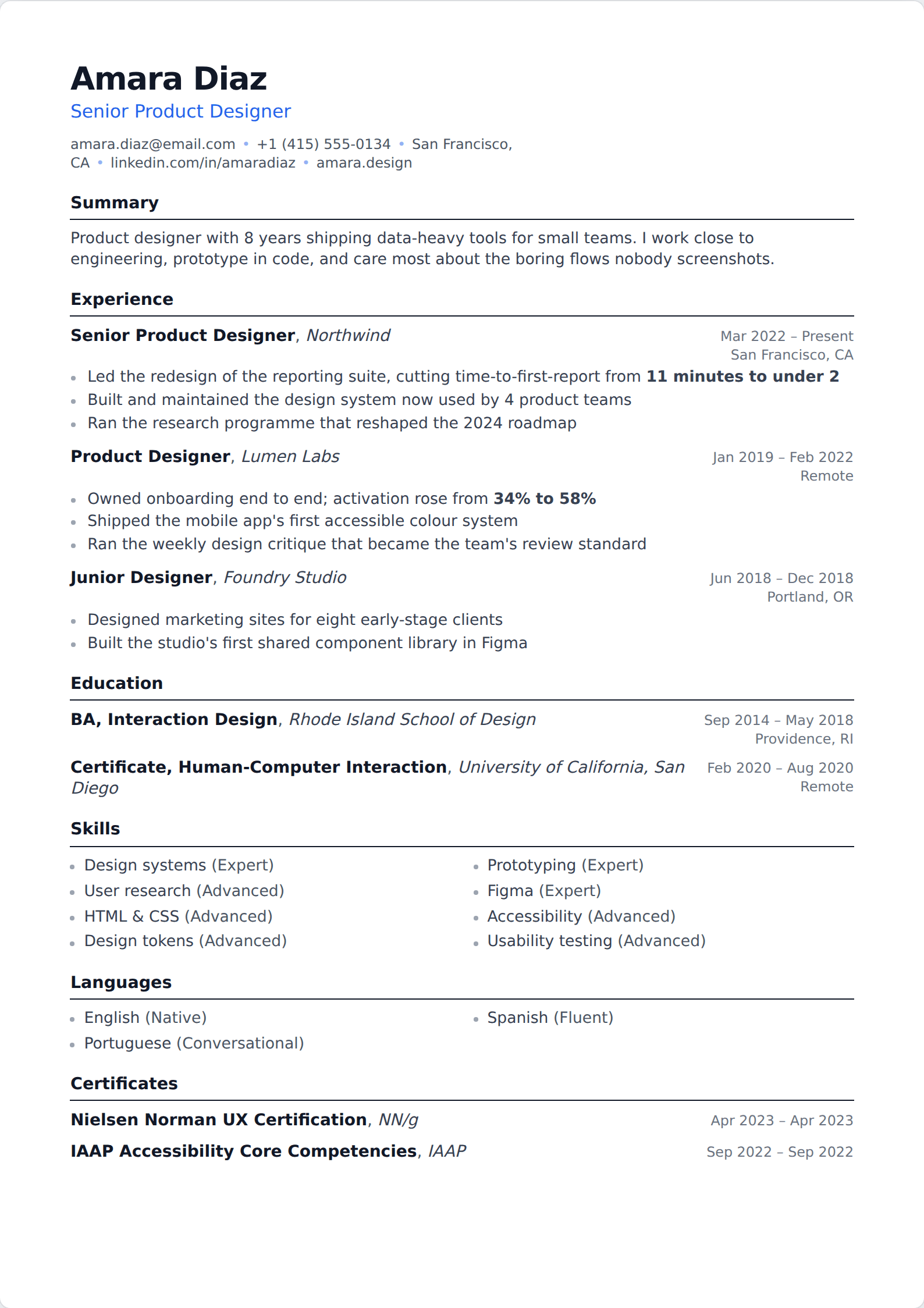
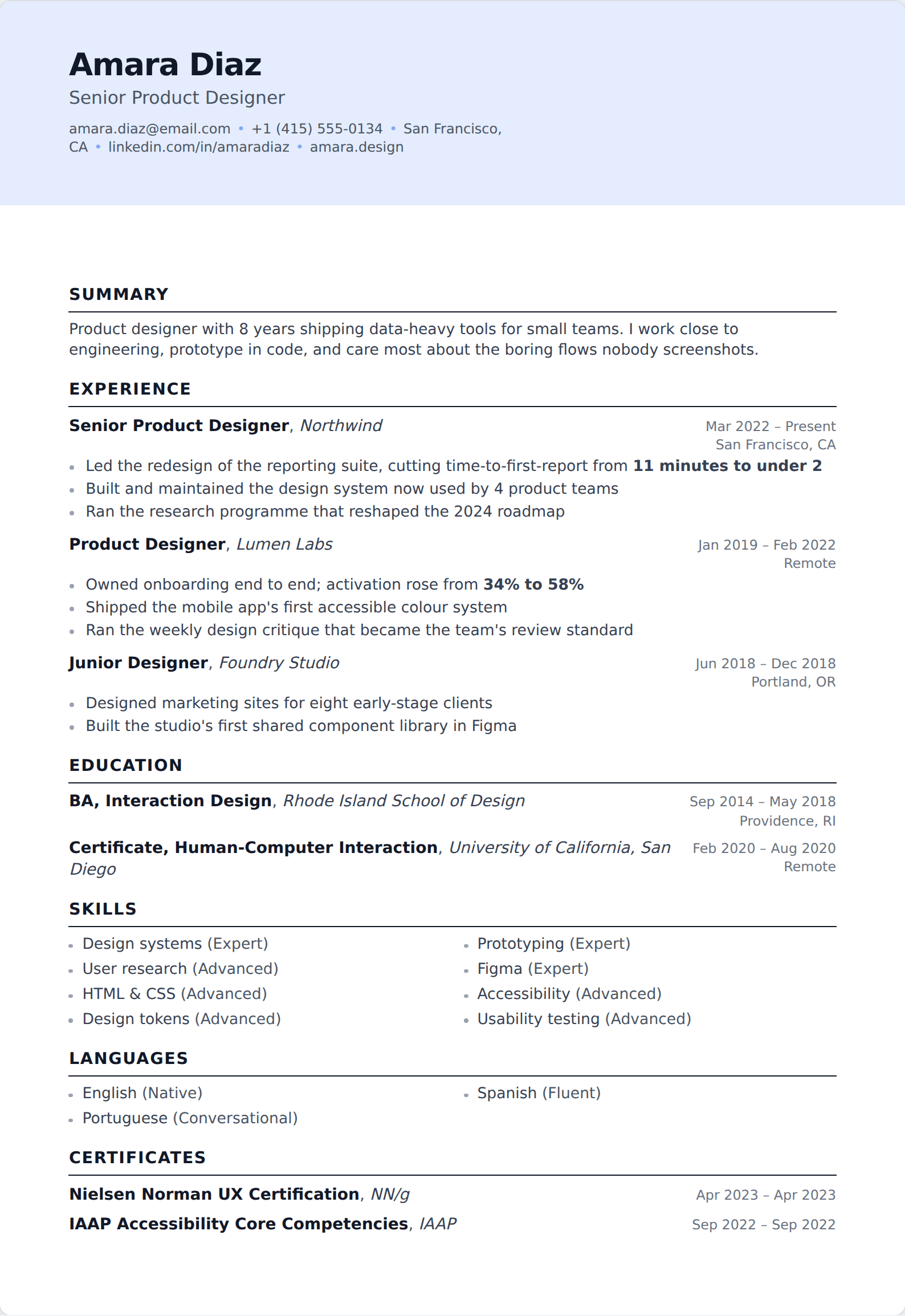
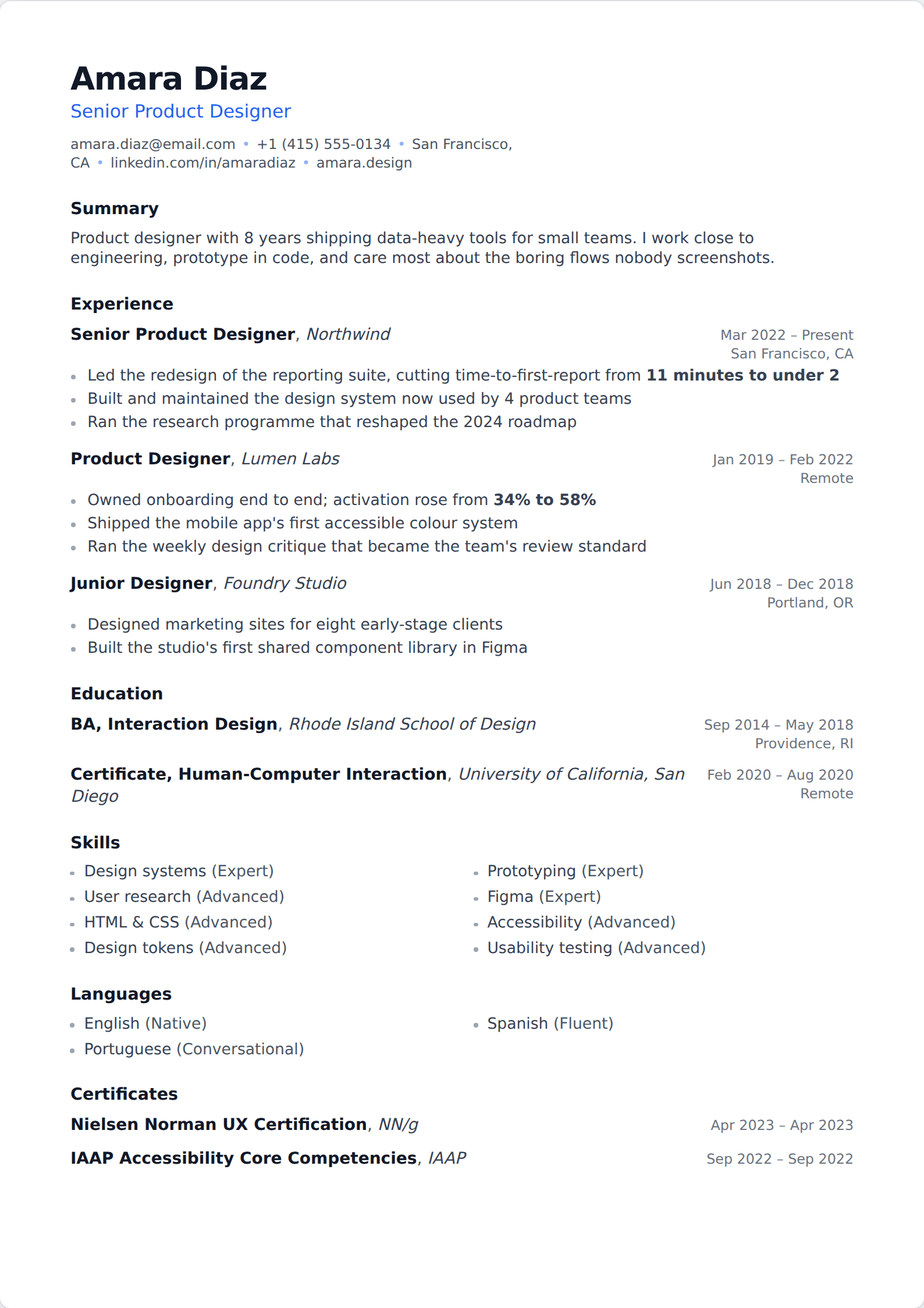
What a resume contains
There is more consensus here than the volume of advice suggests. Five sections do almost all the work, and the arguments are about ordering, not membership.
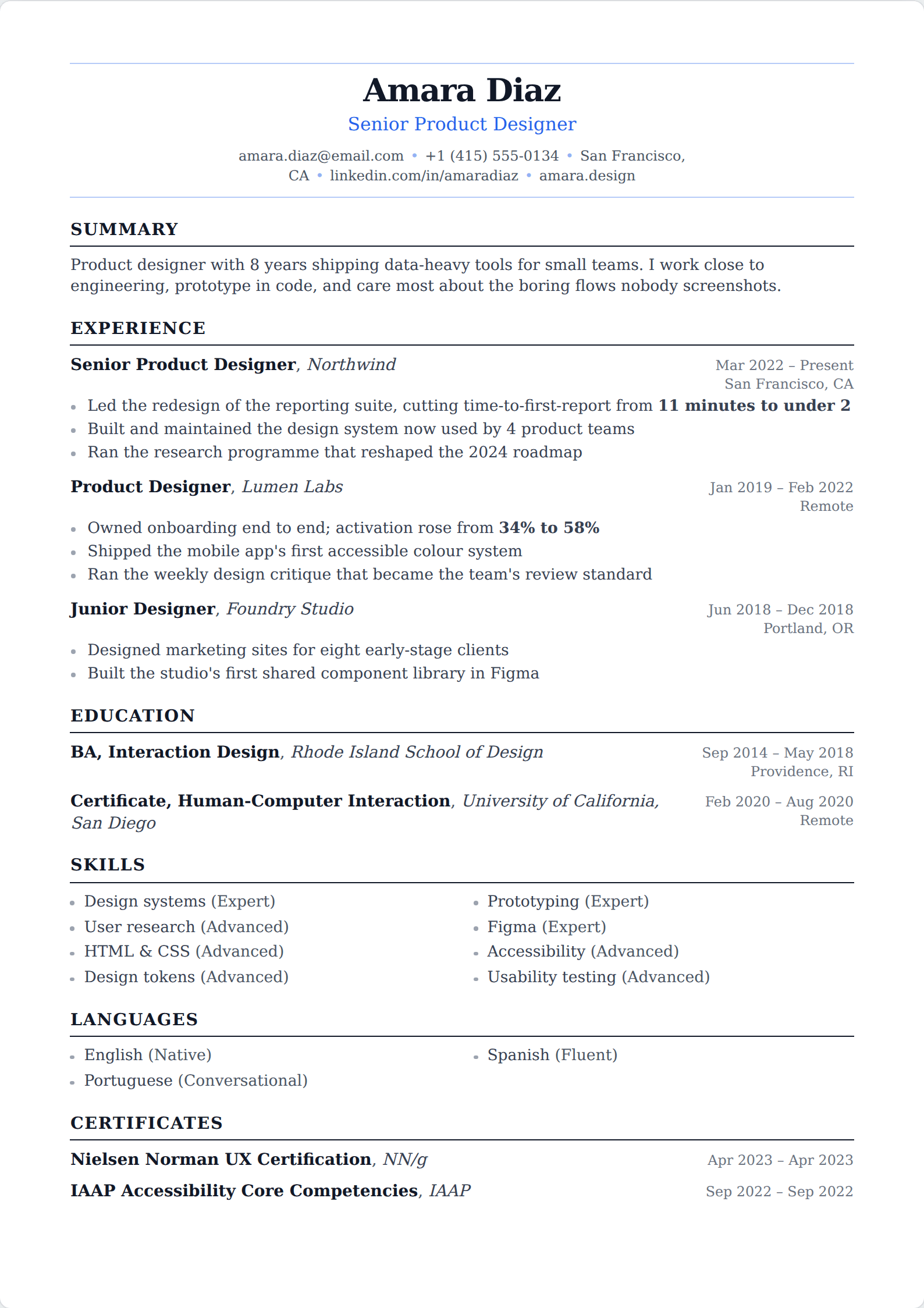
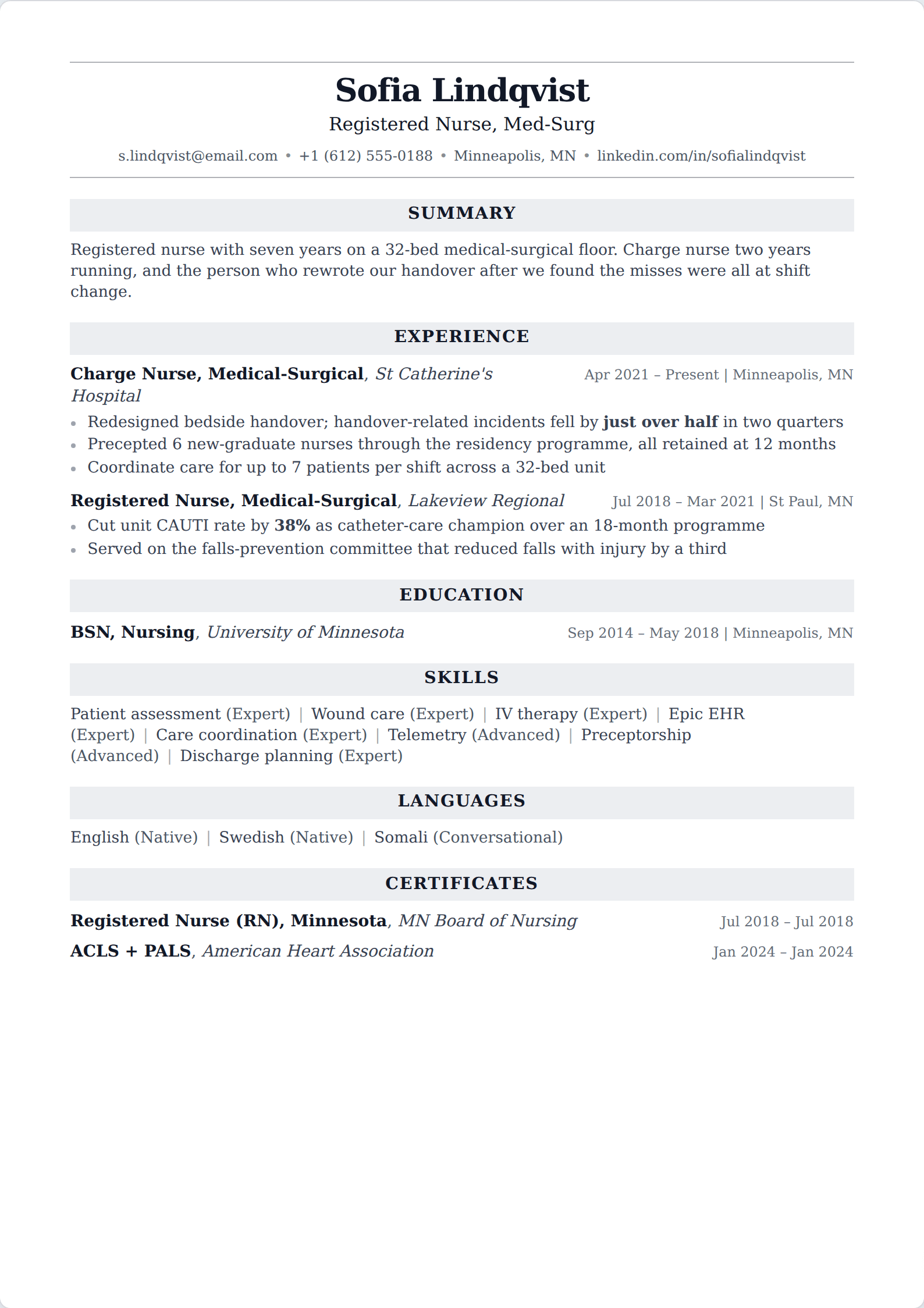
- Contact details: name, email, phone, city. Not your full street address.
- A summary: three sentences on who you are and what you are aiming at. Optional, but strong when it is specific.
- Experience: reverse-chronological, most recent first, each job with bullets that end in outcomes.
- Education: degree, institution, year. It moves to the top only while you are a student or a recent graduate.
- Skills: the tools and named competencies that a reader or a parser would search for.
What a resume is not
It is not a job description. "Responsible for managing the reporting process" describes a role that existed; it says nothing about whether you were good at it. The version that works names what you owned and what changed: the same fact, rewritten as evidence.
It is not your complete history. Ten to fifteen years of relevant experience is the working horizon, with anything older compressed to a line or dropped. A first job from 2004 that has nothing to do with what you do now is costing you space and telling the reader nothing.
It is not an autobiography, and it is not a CV in the academic sense. There is no obligation to be complete, and completeness actively hurts — every irrelevant line dilutes the relevant ones.
Résumé, resume or resumé?
All three are in use and none of them will cost you a job. "Resume" with no accents is standard in American professional writing and is what almost every job posting uses. "Résumé" with both accents is the original French and is the most formally correct. "Resumé" with one accent is a hybrid that is common but has the least justification.
Pick one and be consistent, and if you are filing the document, name the file with your own name rather than the word — "Jordan-Alvarez-Resume.pdf" is found again three weeks later, "resume.pdf" is one of forty files with that name in a recruiter's downloads folder.
The pronunciation is REZ-oo-may, three syllables, which is worth knowing only because it distinguishes it in speech from the verb resume, meaning to continue. They are the same letters and unrelated words.
How long, and in what format
One page up to roughly ten years of experience, two pages after that, and a third page essentially never outside academia. Two pages is not a failure — a senior engineer or a nurse with fifteen years of clinical history compressed onto one page has deleted the evidence, not tightened the writing.
Send a PDF unless the posting asks for something else, because a PDF is the only format that reaches the reader looking the way you left it. The one thing that matters technically is that the text is real text rather than an image of text, which is true of any PDF exported from a real editor and false of a scan or a screenshot.