1. Dump everything first
Before worrying about wording, list every role, project, and responsibility you can remember, along with any number attached to it — team size, budget, users, latency, revenue, error rate, headcount you hired. Don't edit while you do this. You are building raw material.
This stage is uncomfortable because it looks like a mess. That is fine. A messy list of true specifics beats a tidy page of vague claims, and everything after this is subtraction.
2. Decide what the resume is for
A resume is not a career history, it is an argument for one particular job. Pick the role you are actually applying for and let it decide what stays. The consultancy work is essential on one application and a distraction on another.
If you are applying for materially different roles, keep separate versions. Tailoring beats a single document that hedges between two directions.
3. Write the experience section first
It is the section that gets read, so write it while you are fresh. For each role: what you owned, what you changed, and what the result was. Three to five bullets for recent roles, one or two for older ones.
Lead every bullet with a verb and put the outcome where it can't be missed. "Cut onboarding time from three weeks to four days by rebuilding the setup flow" says more in one line than a paragraph of responsibilities.
4. Then the summary
Write the summary last, even though it sits first. Once the experience section exists, the summary is a distillation of it — two or three sentences on what you do, the ground you cover, and what you are strongest at.
Skip the adjectives. "Results-driven professional with a passion for excellence" is invisible to a reader; "Backend engineer, nine years, payments and identity systems in regulated fintech" is not.
5. Education, skills, and the rest
Education goes near the bottom once you have a few years of experience, and near the top before that. List skills you could be interviewed on — a language you used once does not belong next to the one you have shipped production systems in.
Everything else is optional and earns its place only if it supports the argument: projects if they show work your jobs don't, volunteering if it demonstrates relevant scope, languages if the role is international.
6. Cut it down
One page under ten years of experience, two beyond that. This constraint is what forces the quality up — when a line has to compete for space, the weak ones become obvious.
Read it as a stranger would: ten seconds, top to bottom. If the most impressive thing you have done isn't visible in that pass, move it up.
Working from an example rather than a blank page
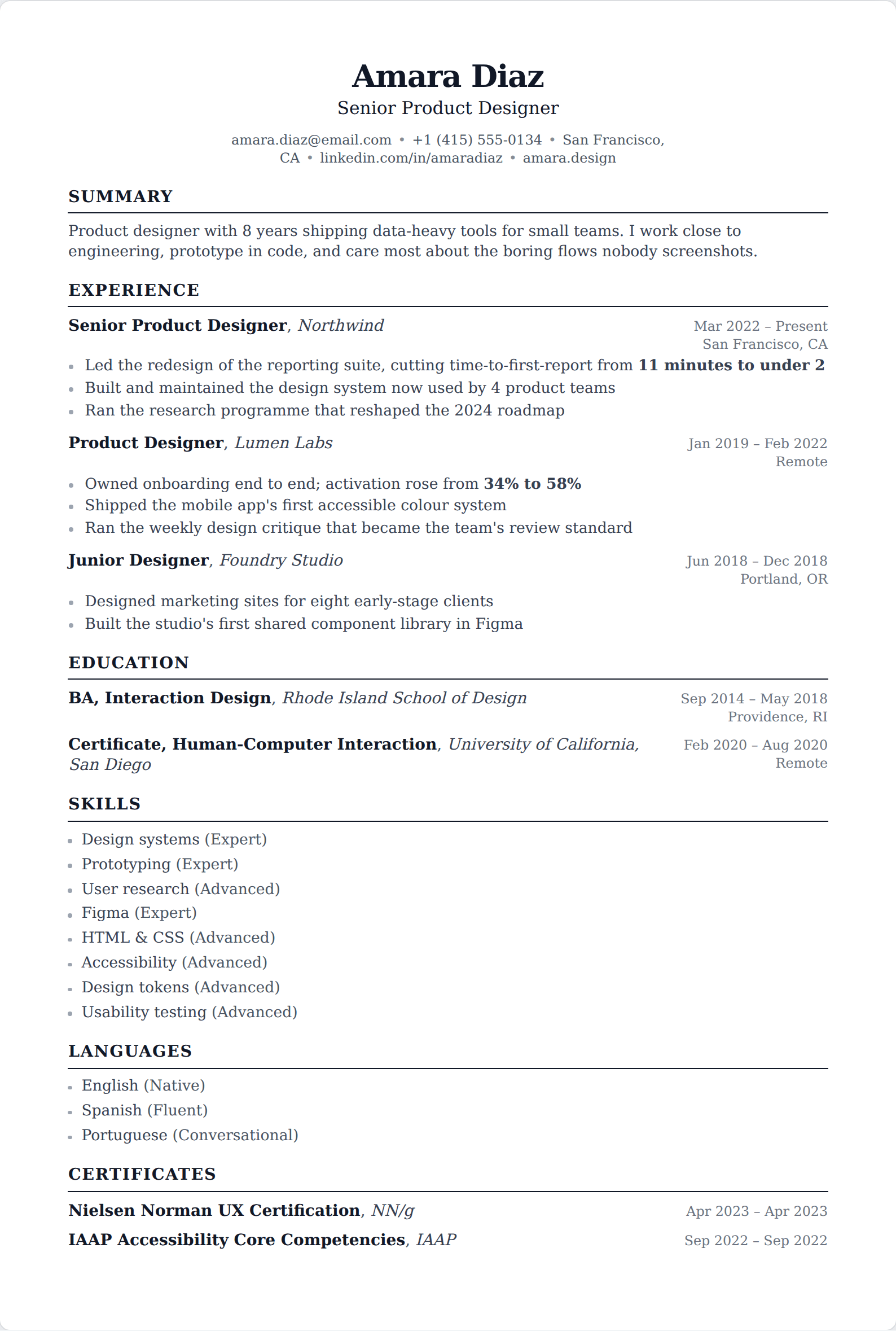
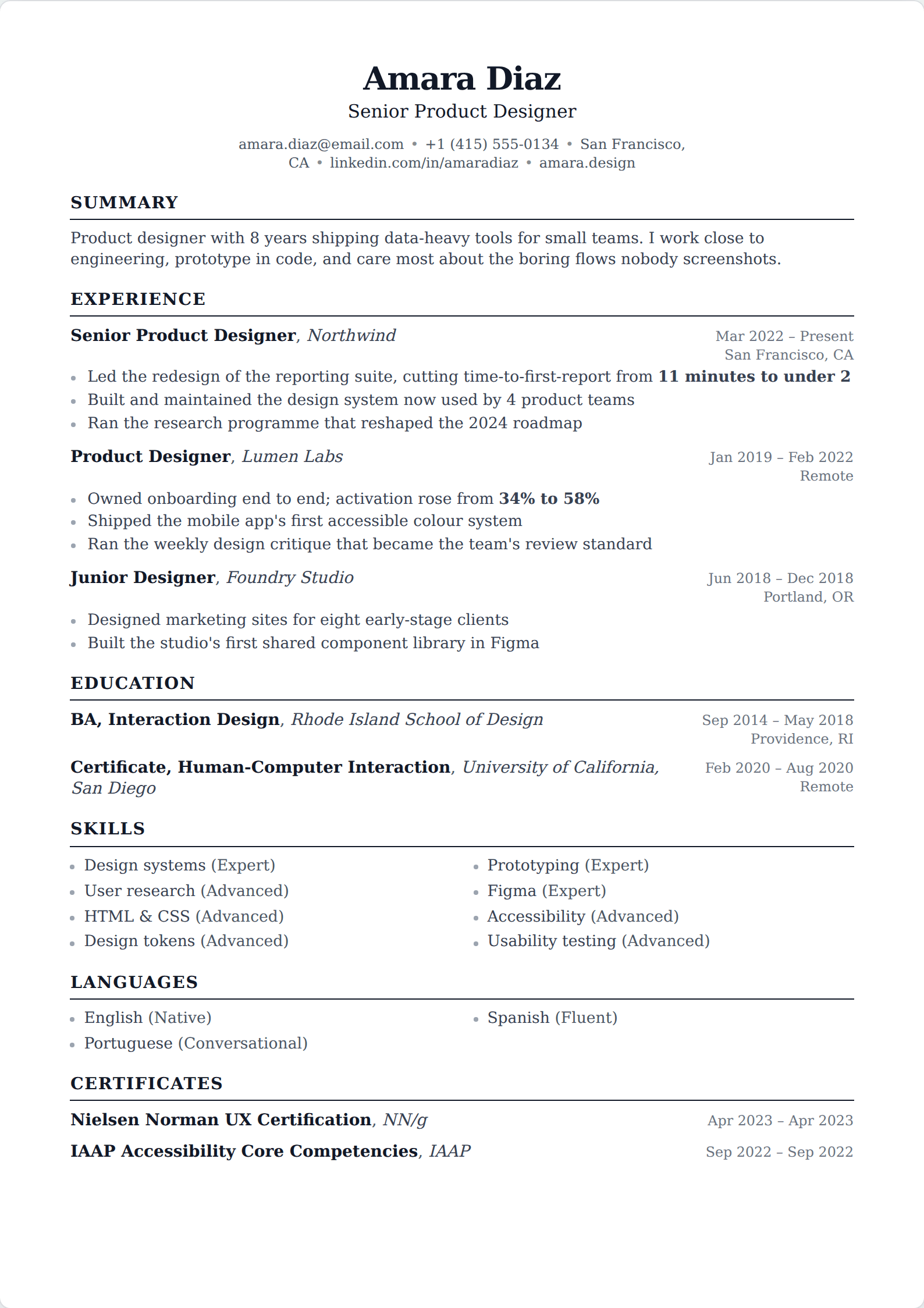
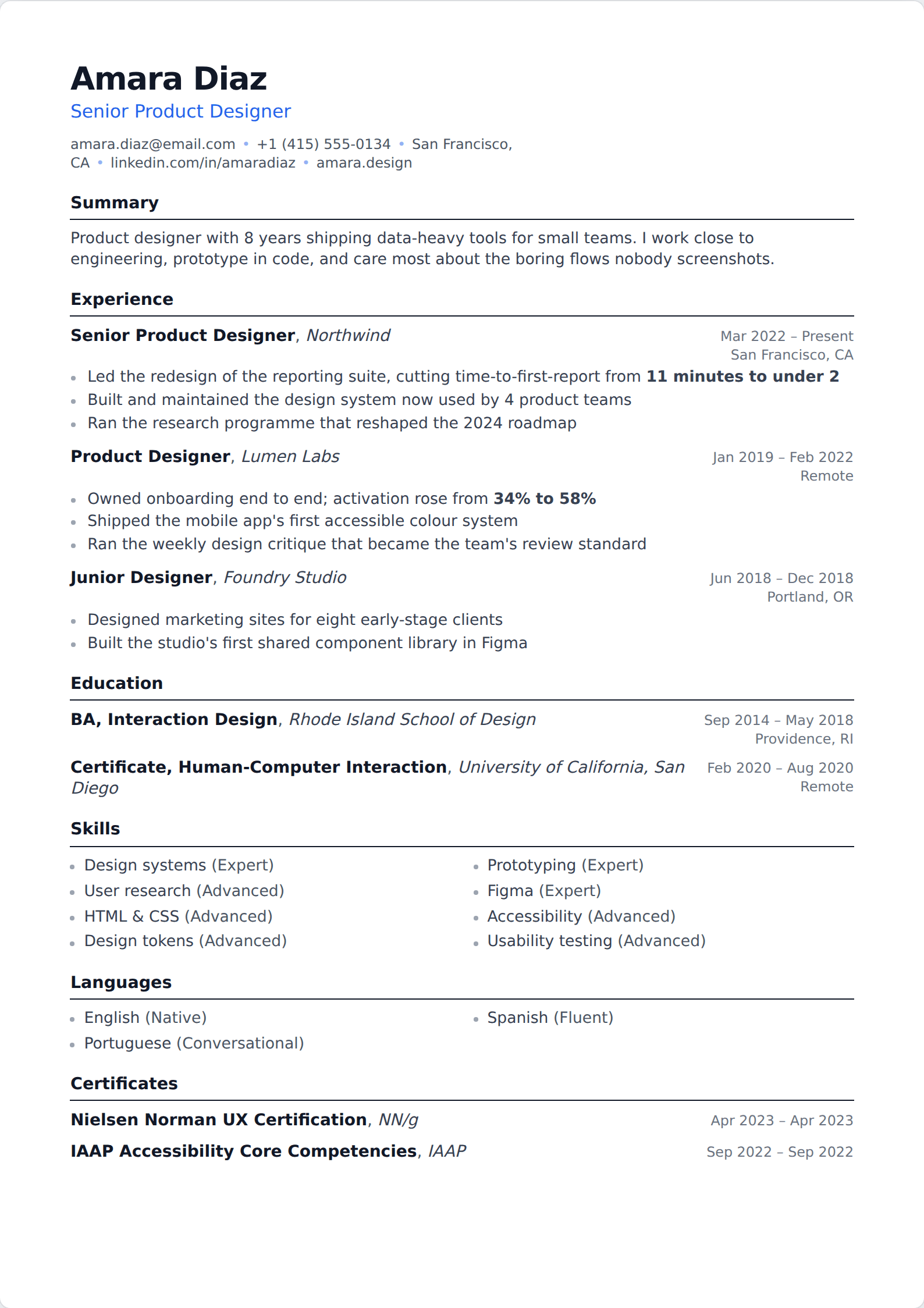
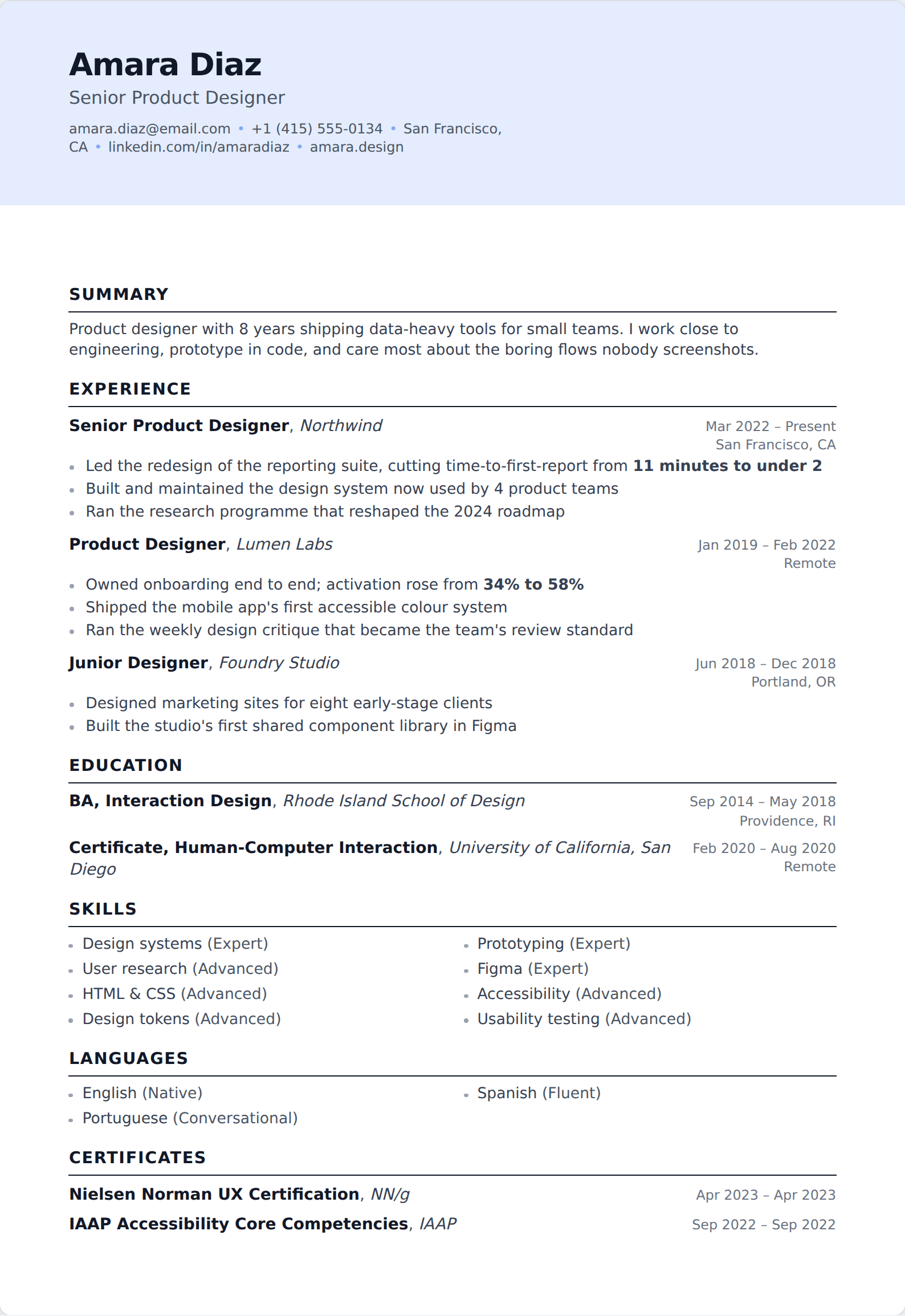
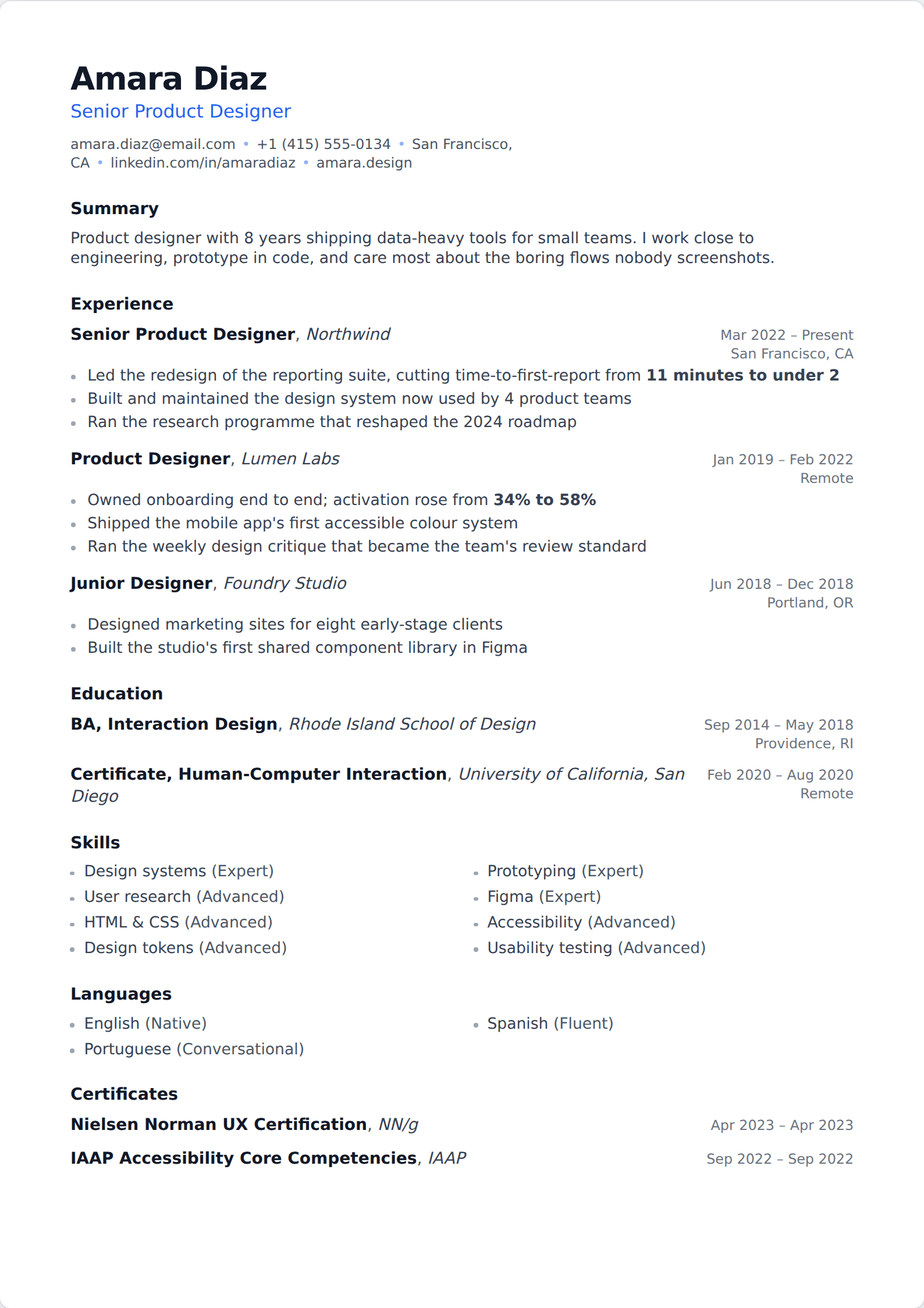
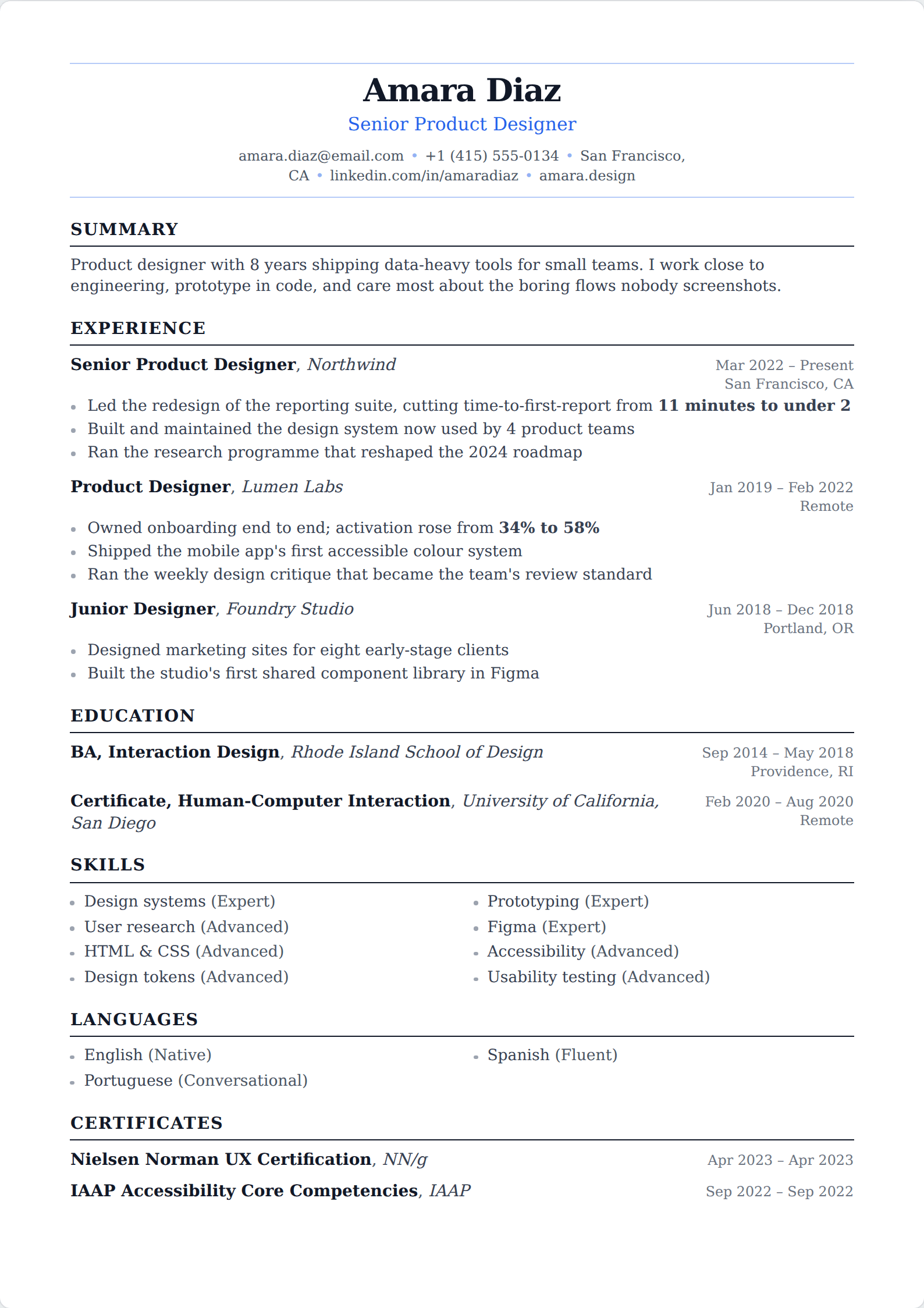
A blank page is the worst place to start, and it is where most of the difficulty in this process actually lives. Working from a finished resume in your own field is faster and produces a better first draft, because you can see what a real bullet looks like in your discipline before you try to write one.
Use it for structure and register, not for content. What an example shows you is which sections that field expects, how much detail a bullet carries, what a summary sounds like at your level, and what kind of numbers people quote. What it must never supply is a claim — a bullet copied from someone else's resume is a fact about someone else, and it collapses in the first interview.
The role examples on this site are written for exactly this: a complete document per job title, with the reasoning beside it, so you can see both what the page looks like and why it is built that way.