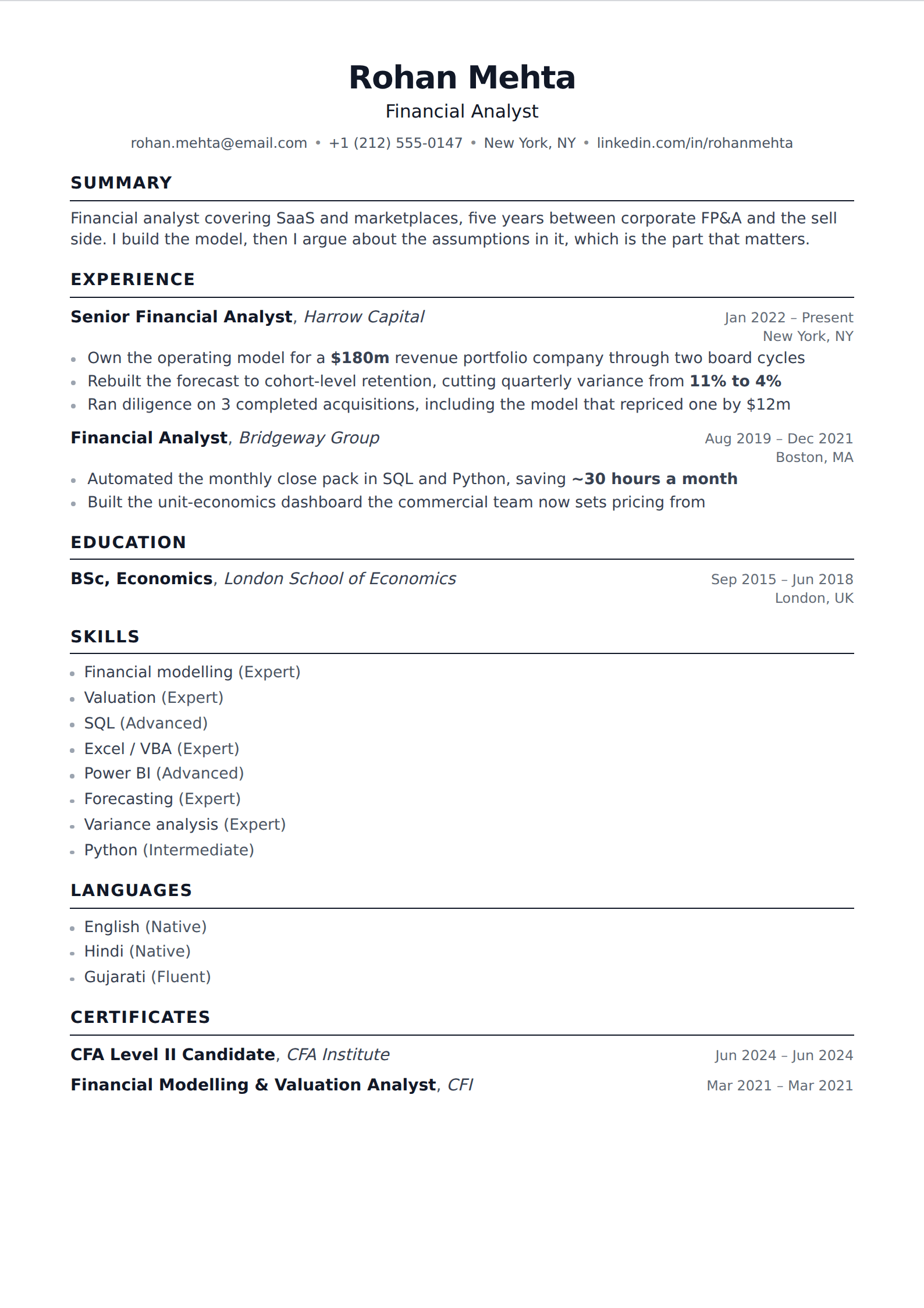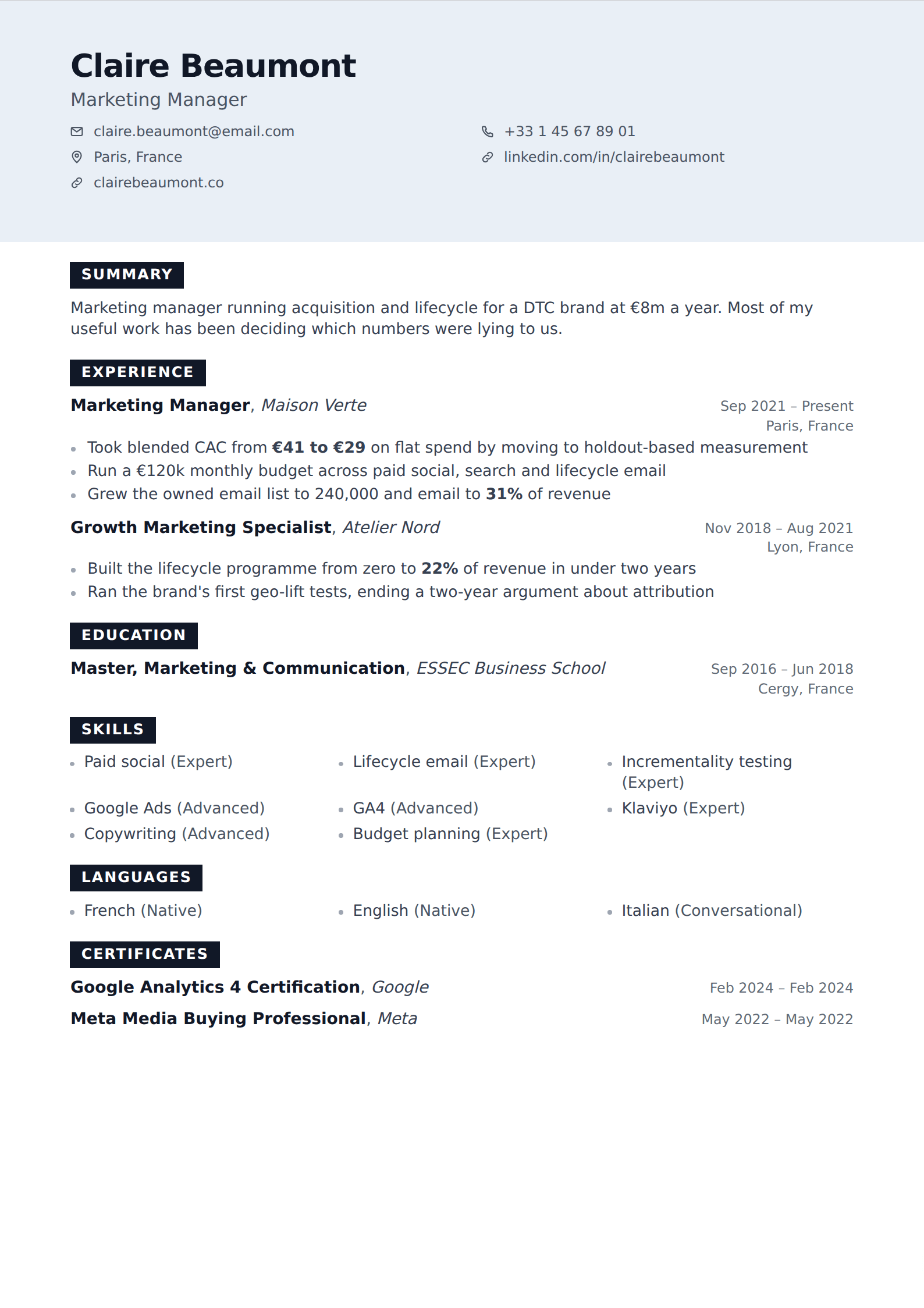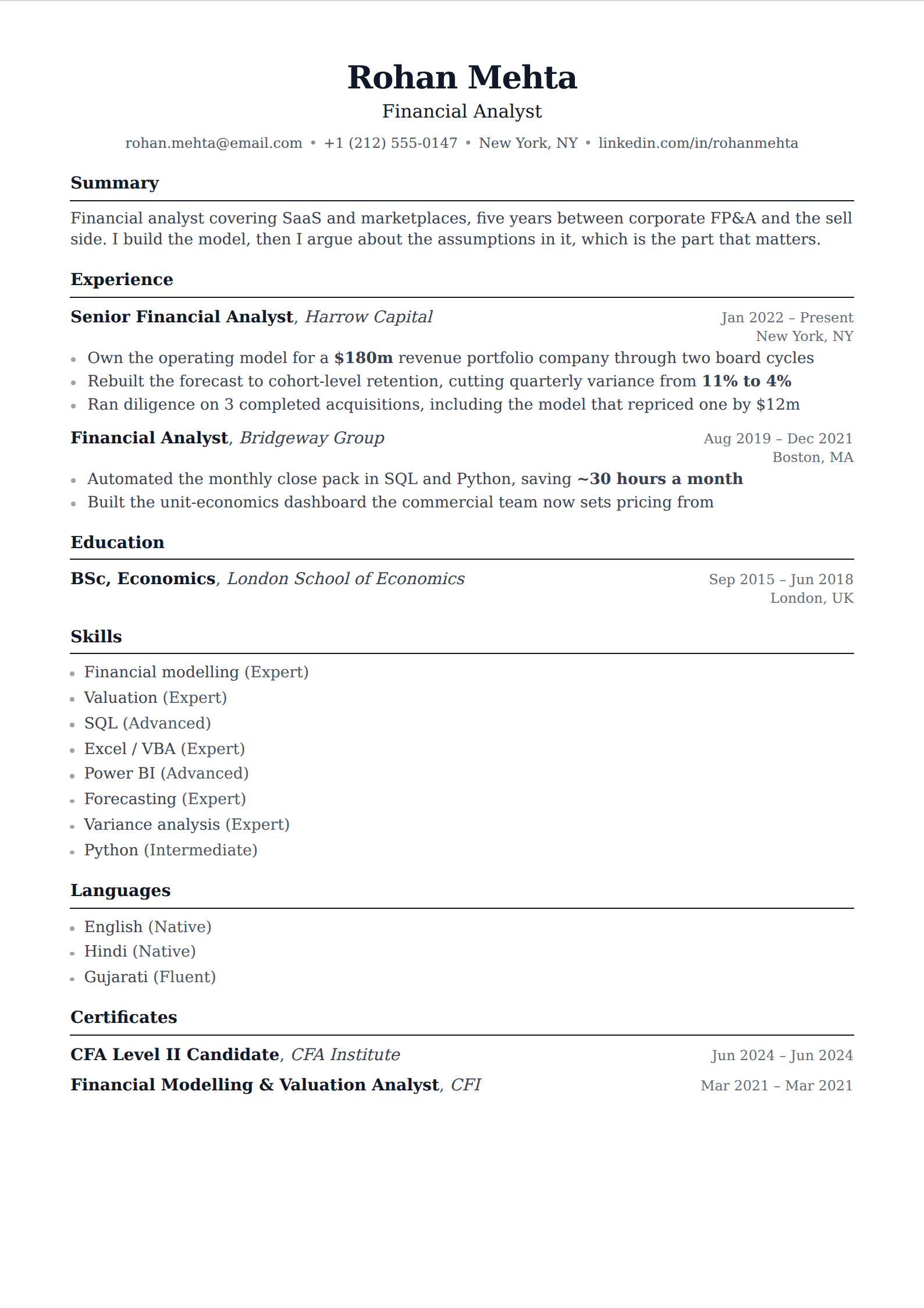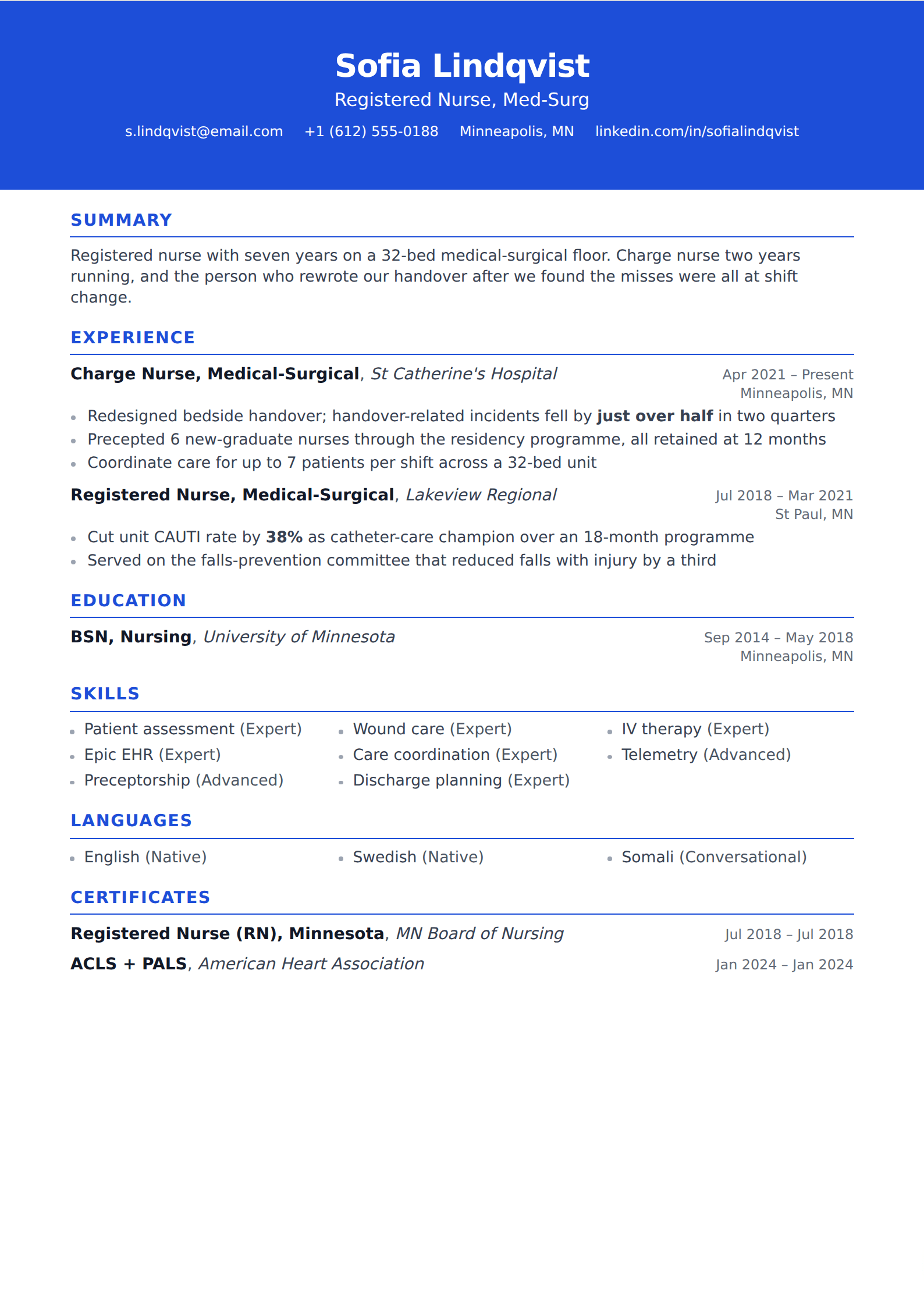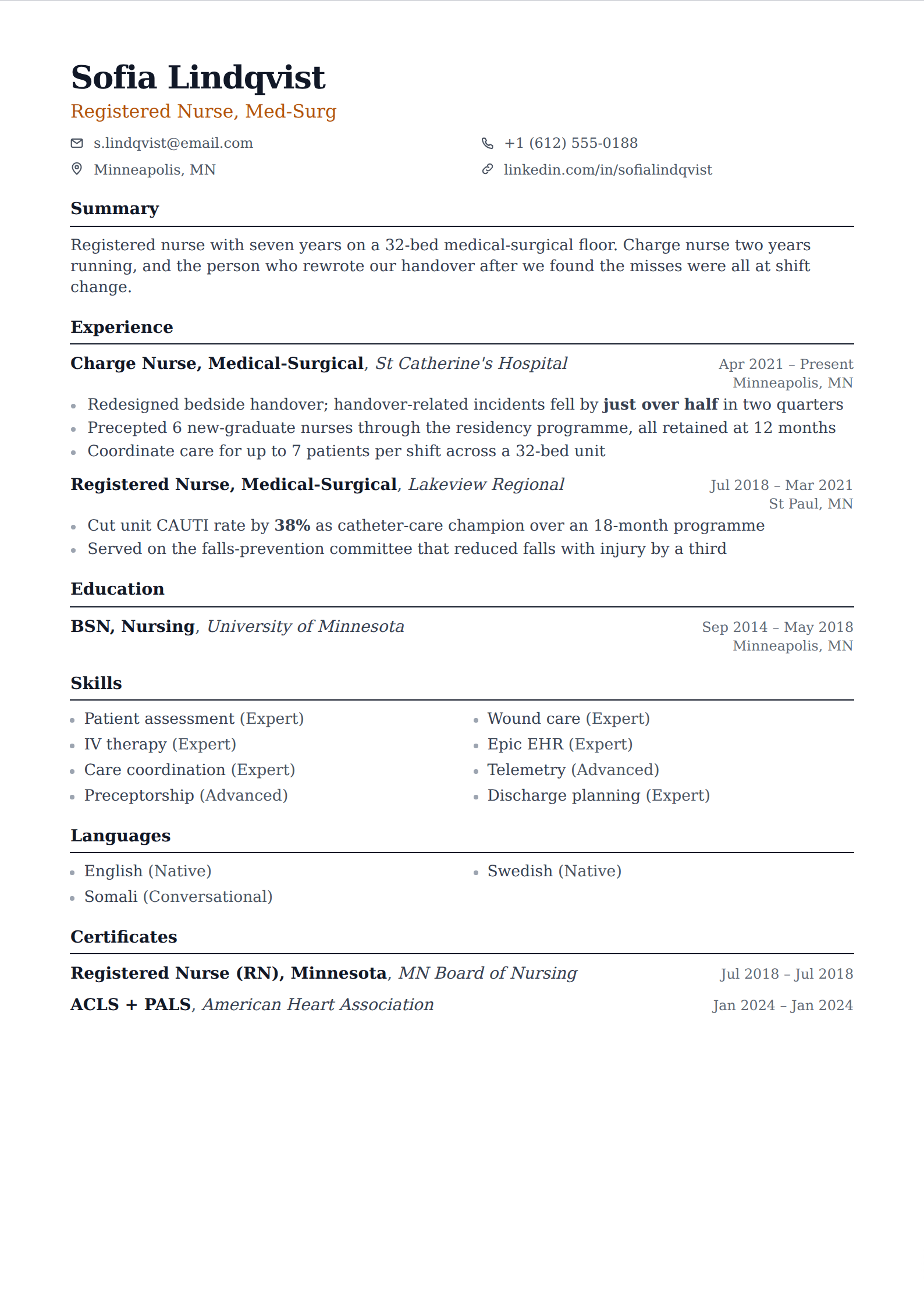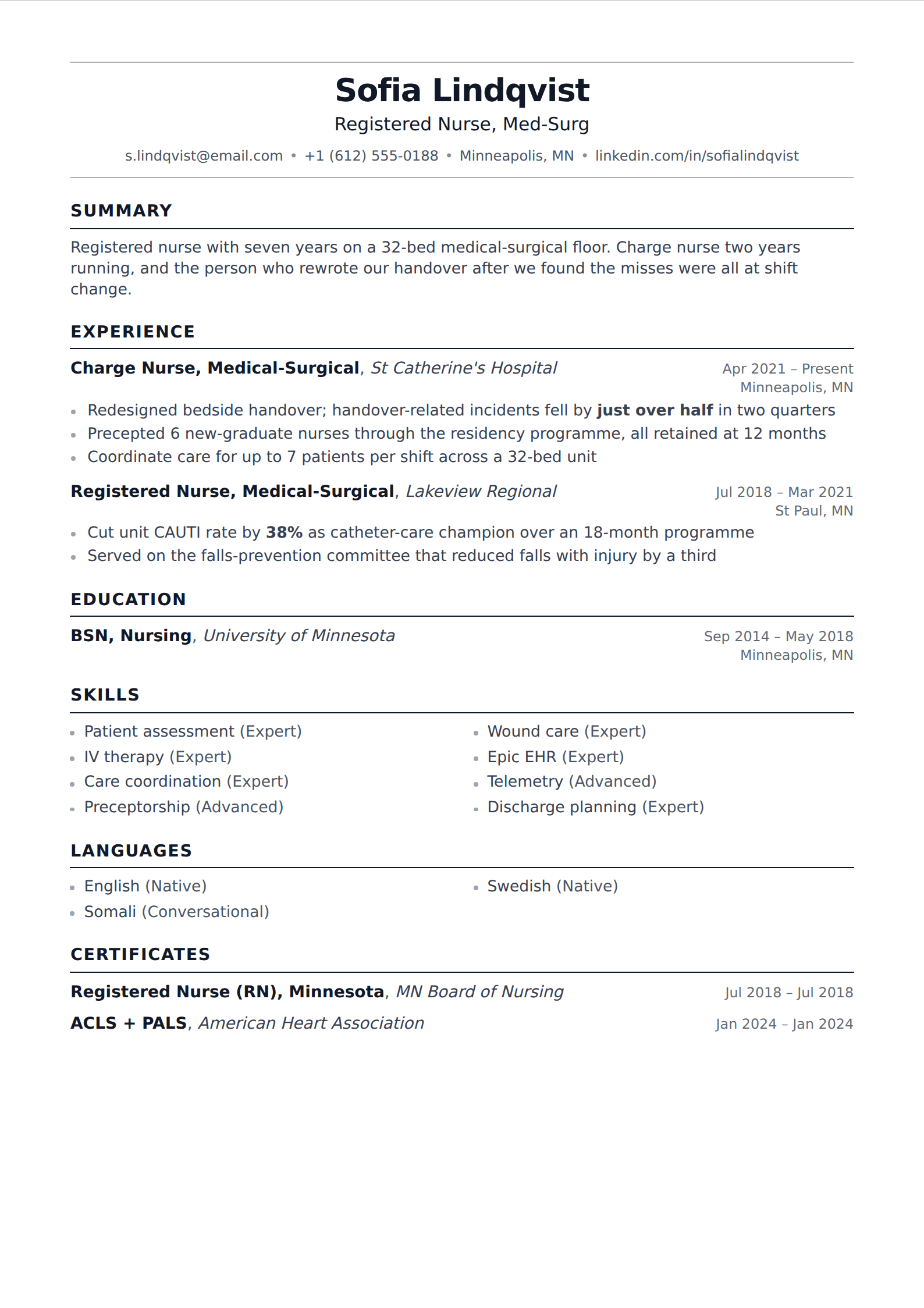

What it's for
The summary answers the question a reader forms in the first second: what is this person, and why am I looking at them for this role? It is orientation, not persuasion. Get that right and the rest of the page is read in the correct frame.
It is not an objective statement. Nobody needs to be told you are seeking a challenging position with a forward-thinking company.
A formula that holds up
Sentence one: what you are and for how long, with the domain. Sentence two: the ground you cover, or your strongest evidence. Optional sentence three: what you are pointed at now.
Every clause should be checkable against the rest of the resume. If the summary claims something the experience doesn't demonstrate, you have written a cover letter by accident.
Worked examples
Software engineer: "Backend engineer with nine years on payments and identity systems in regulated fintech. Owned a ledger handling 2M transactions a month and cut authorisation latency from 800ms to under 200ms. Now looking for staff-level work on high-throughput infrastructure."
Product designer: "Product designer working on complex B2B tools — the kind with permission models and audit trails. Led the design system that took the company's four inconsistent products onto one component library. Strongest where research and interface work meet."
Career changer: "Secondary school teacher moving into instructional design, with a postgraduate certificate completed alongside four years of classroom work. Built the department's curriculum materials for 200 students and trained six colleagues on delivering them."
What to cut
Adjectives about yourself. "Detail-oriented", "passionate", "hard-working" and "results-driven" are claims nobody can verify and everybody makes, so they read as noise.
Also cut the first person. "I am a backend engineer" wastes two words; resumes are written in an implied first person and every reader understands it.
What to call the section
Summary, Professional Summary, Profile and Professional Profile are interchangeable and none of them is wrong. Pick one, and pick it for the reader rather than for the parser — applicant tracking systems key on the experience, education and skills headings, and treat whatever sits above them as introductory text regardless of its label.
"Professional Summary" is the safest choice in conservative fields, because it is the phrasing those readers expect. "Summary" is shorter and reads as more confident. "Profile" is common in the UK and Europe and slightly unusual in the US.
What not to use: "About Me", which belongs on a personal website; "Career Objective", which announces you are about to write about what you want; and no heading at all, which leaves a floating paragraph that a reader has to classify before they can use it. One word of heading buys you the reader's orientation.
The professional summary at each stage
The three sentences do different work depending on where you are, and copying a senior template as a graduate is a common way to produce something that reads as inflated.
Early career: what you are studying or have just finished, the one or two things you have actually done, and the role you are aiming at. Direction is the information, because the chronology has not yet supplied it.
Mid-career: your discipline and years, your strongest piece of evidence, and the specialism or scale you want the reader to register. This is the version where naming a number — team size, revenue, users, volume — does the most work.
Senior and executive: scope first, in the first clause. Revenue owned, headcount, geography, functions. A senior summary that opens with a philosophy of leadership rather than a size has spent the most valuable four lines on the page saying nothing checkable.