
Cover letter templates

A cover letter has one layout and it has not changed in decades — which means a template's value isn't in its design, it's in the shape of the argument. These are the five situations that need a different argument, each with a written opening you can work from.

The structure, once

Underneath every pattern below is the same four paragraphs. If you only take one thing from this page, take this:

  1. 1

    The opening

    Say what you're applying for and why you, in two sentences.

  2. 2

    The evidence

    Prove the claim you just made, with one specific story.

  3. 3

    The fit

    Show you know what this company actually does.

  4. 4

    The close

    Ask for the interview and stop.

The hub page covers what each paragraph is for in detail, and how each one characteristically goes wrong.

Five situations, five arguments

The standard application

You have directly relevant experience and you're applying cold through a posting or a portal.

  • Lead with your closest match to the posting's first requirement, stated as a fact rather than a claim.
  • Spend the middle paragraph on one worked example with a number in it.
  • Use the third paragraph to show you've read something about the company beyond its careers page.
  • Keep the whole thing under 300 words. A full page of prose is read less carefully than half of one.

Opening paragraph

I'm applying for the Senior Backend Engineer role. I've spent the last four years on payments infrastructure at a similar scale to yours — most recently rebuilding a settlement pipeline that was failing about 2% of transactions, and bringing that under 0.1%.

Changing career or industry

Your job titles don't match the posting and you need to explain the jump before the reader dismisses it.

  • Name the change in the first paragraph. Trying to obscure it makes the reader work it out themselves, and they'll conclude the worst.
  • Translate rather than apologise. Identify the two or three things the new role actually requires and show where you've already done them under a different title.
  • Give one concrete reason for the move that is about the work, not about disliking your last job.
  • Do not list what you lack. The reader can see your resume; your job here is to make the transferable case, not to argue the other side of it.

Opening paragraph

I'm applying for the Data Analyst role, coming from six years in clinical nursing. That's a change of field but less of a change of work than it sounds: the last two of those years were spent running our unit's quality reporting, where I built the dashboards that tracked readmission rates across 400 beds and presented them monthly to the clinical board.

First job, or no direct experience

You're a student, a recent graduate, or applying for your first role in the field.

  • Use coursework, projects, volunteering and part-time work as evidence. They count, and treating them as if they don't is the most common mistake in an entry-level letter.
  • Be specific about a project. What it did, what you built, what you'd do differently. Specificity is the only thing that distinguishes one graduate letter from another.
  • Show you understand what the job involves day to day. At entry level, evidence that you know what you're signing up for is genuinely persuasive.
  • Never open by apologising for being new.

Opening paragraph

I'm applying for the Junior Front-End Developer role. I finished my computer science degree in June, and spent the last year of it building and maintaining the booking site for a 40-person climbing gym — React and TypeScript, about 300 bookings a week, and the first production system I've had to keep running when it broke at 8am.

You were referred by someone

Someone inside the company suggested you apply, or you met someone there.

  • Put the name in the first sentence. A referral is the strongest signal available to you and it decays the further down the page it appears.
  • Say briefly how you know them and why they thought of you — that second half is what turns a name-drop into evidence.
  • Then write the rest of the letter exactly as you otherwise would. A referral gets the letter read; it doesn't finish the argument for you.

Opening paragraph

Priya Raman suggested I get in touch about the Operations Manager opening. We worked together on the warehouse migration at Northgate, where I ran the cutover for three sites, and she thought the scale-up problem you're solving now would be a good match.

No posting — writing on spec

You want to work somewhere that hasn't advertised a role you fit.

  • Open with the problem you think they have, not with a request. You're proposing something, and a proposal that starts by asking for a favour reads as a favour.
  • Be concrete about what you'd do in the first six months.
  • Name a role, or describe one. Asking whether there's anything going puts the work of imagining you onto a stranger.
  • Accept a low response rate and send few, carefully. A speculative letter that reads as a mail-merge is worse than none.

Opening paragraph

You've opened three new sites this year and, as far as I can tell from your careers page, no one is running logistics across them as a single operation. I've spent five years doing exactly that — most recently consolidating four regional warehouses into one network and taking about 18% out of the per-unit cost.

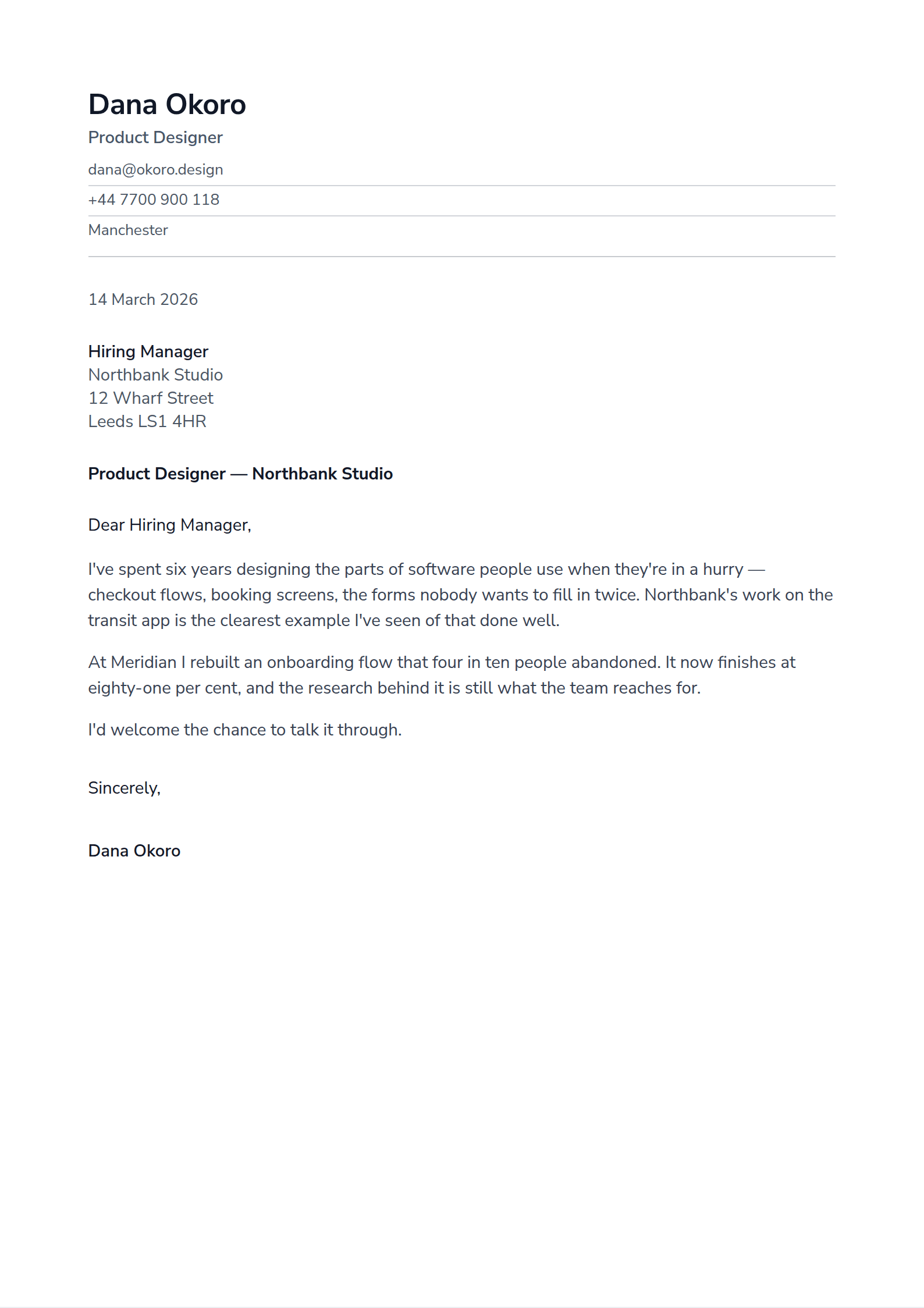
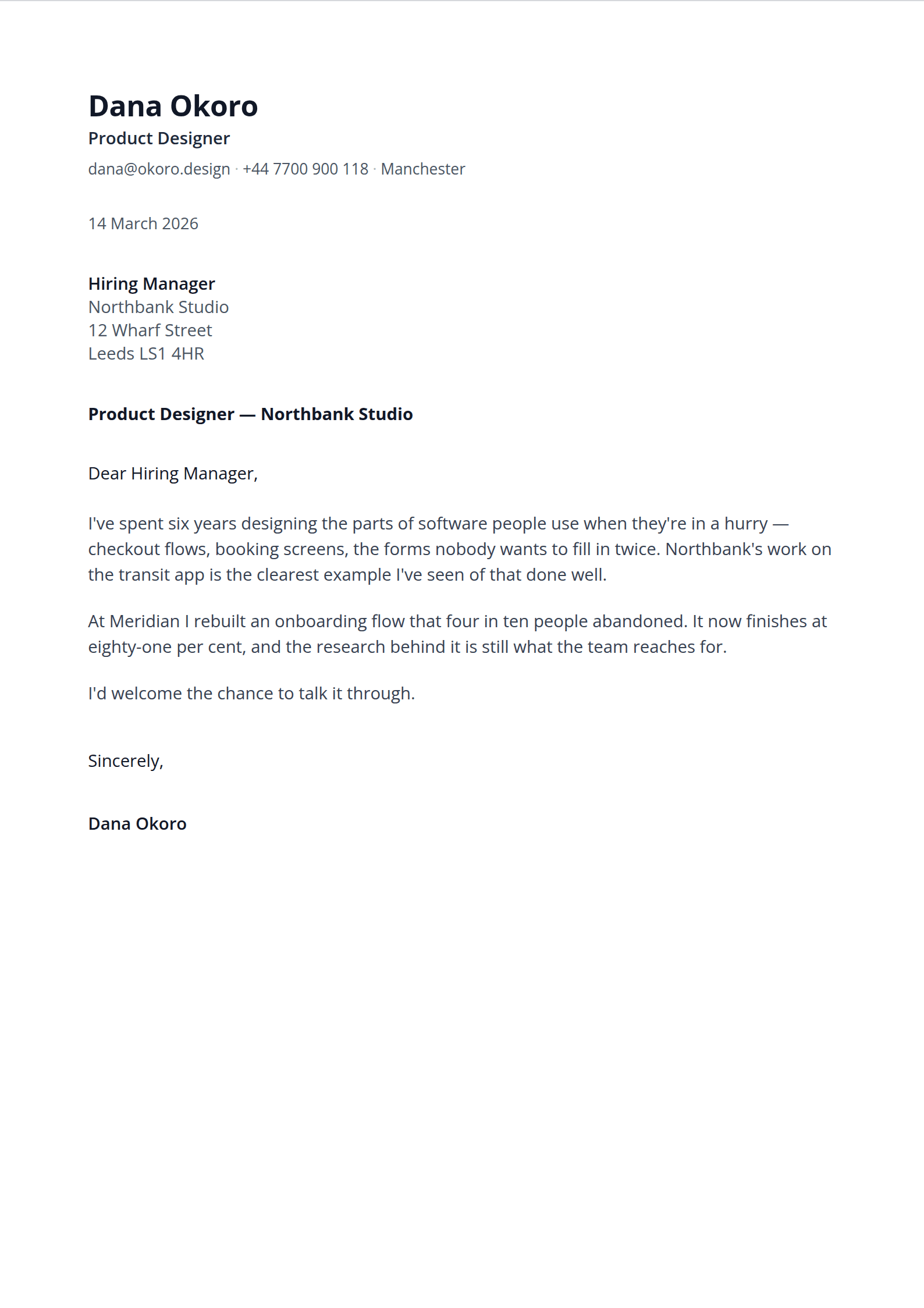
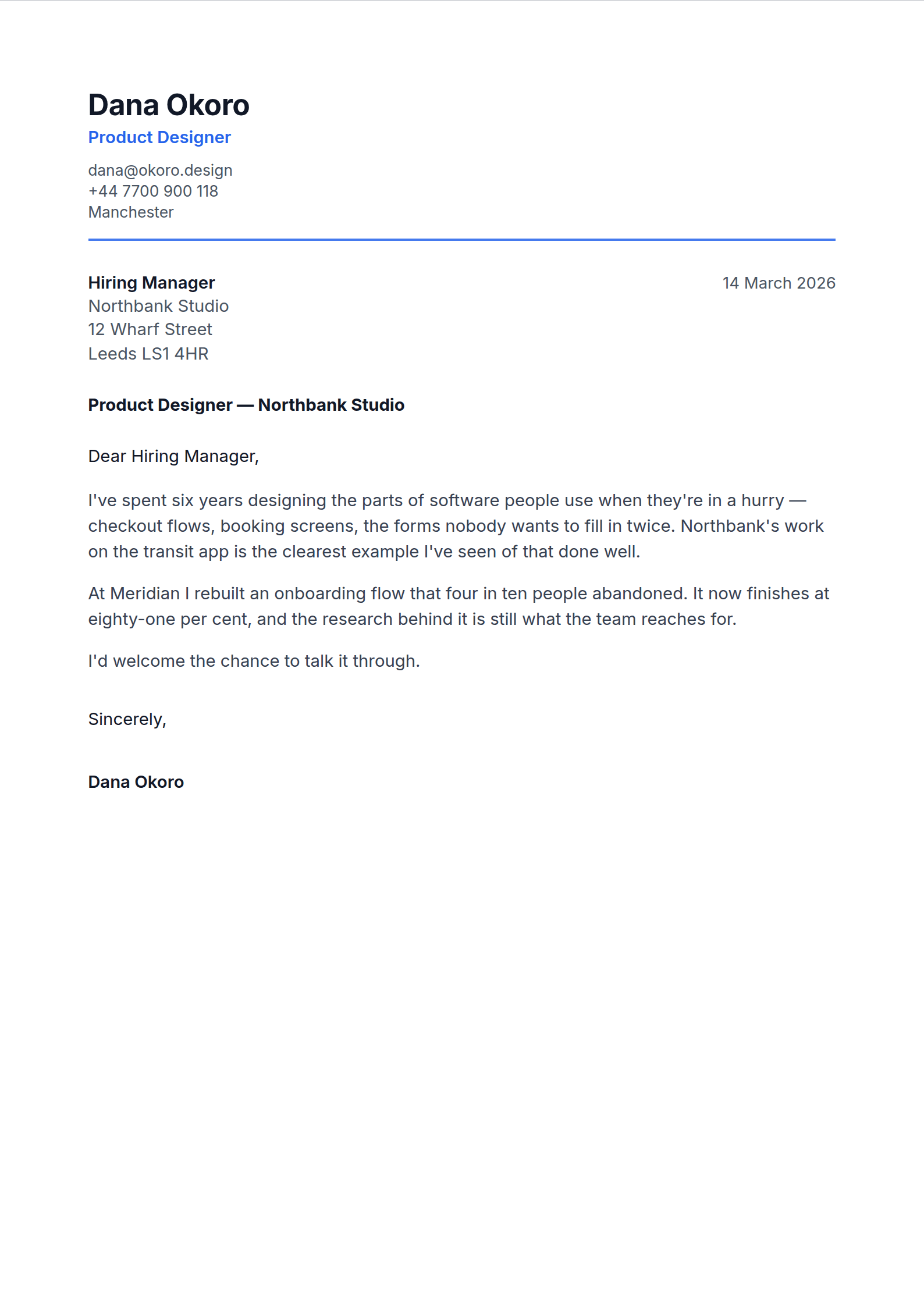
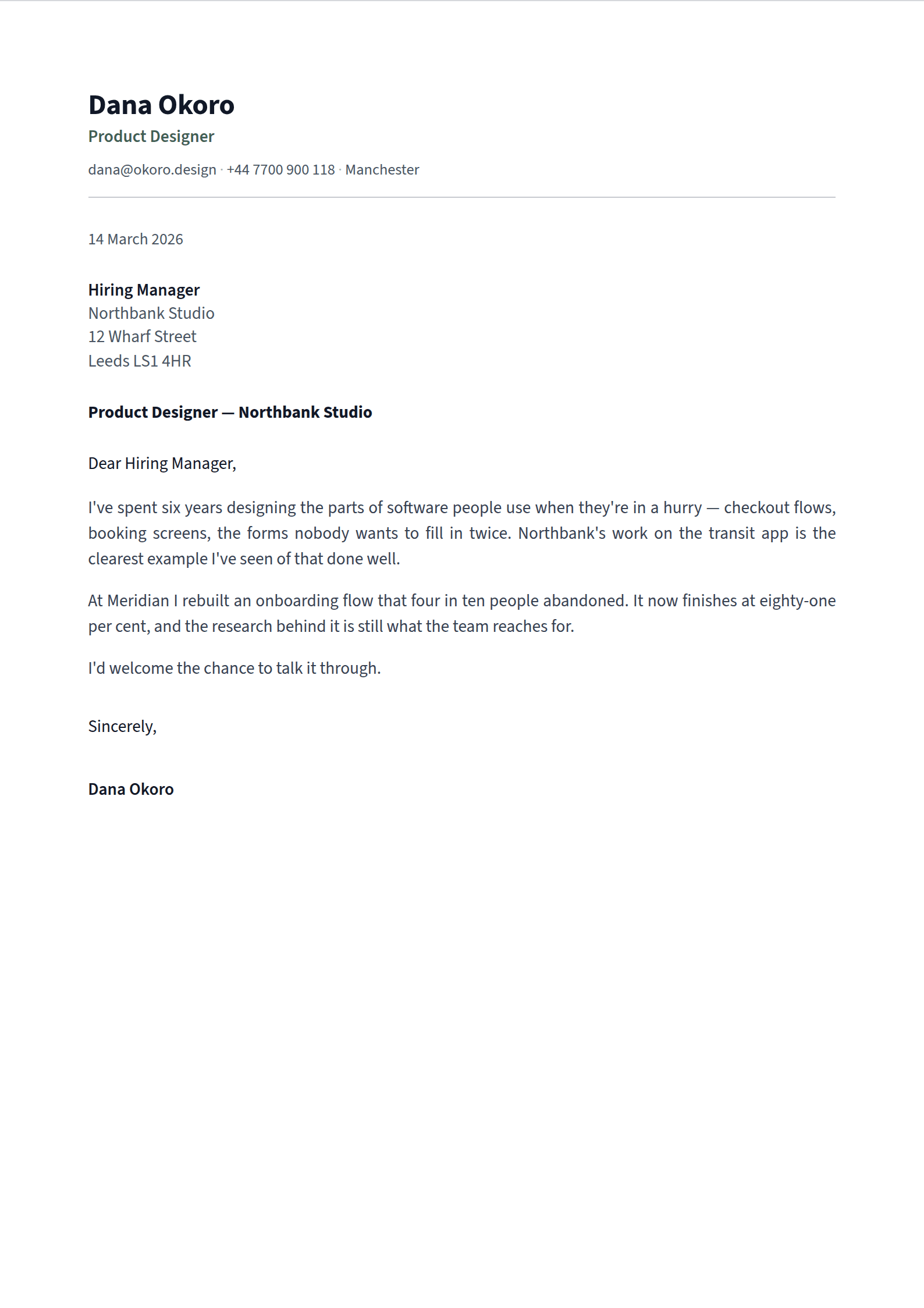
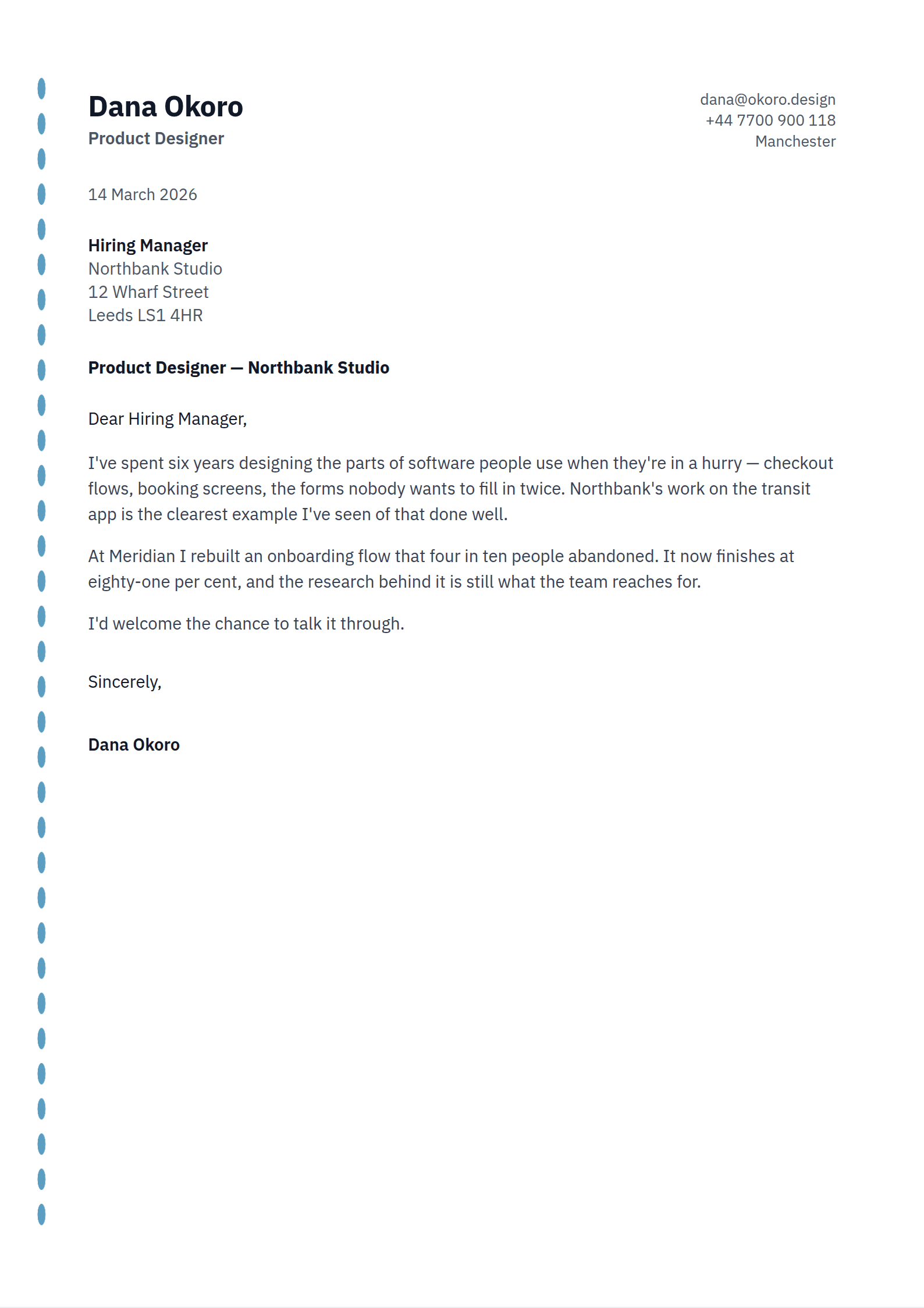
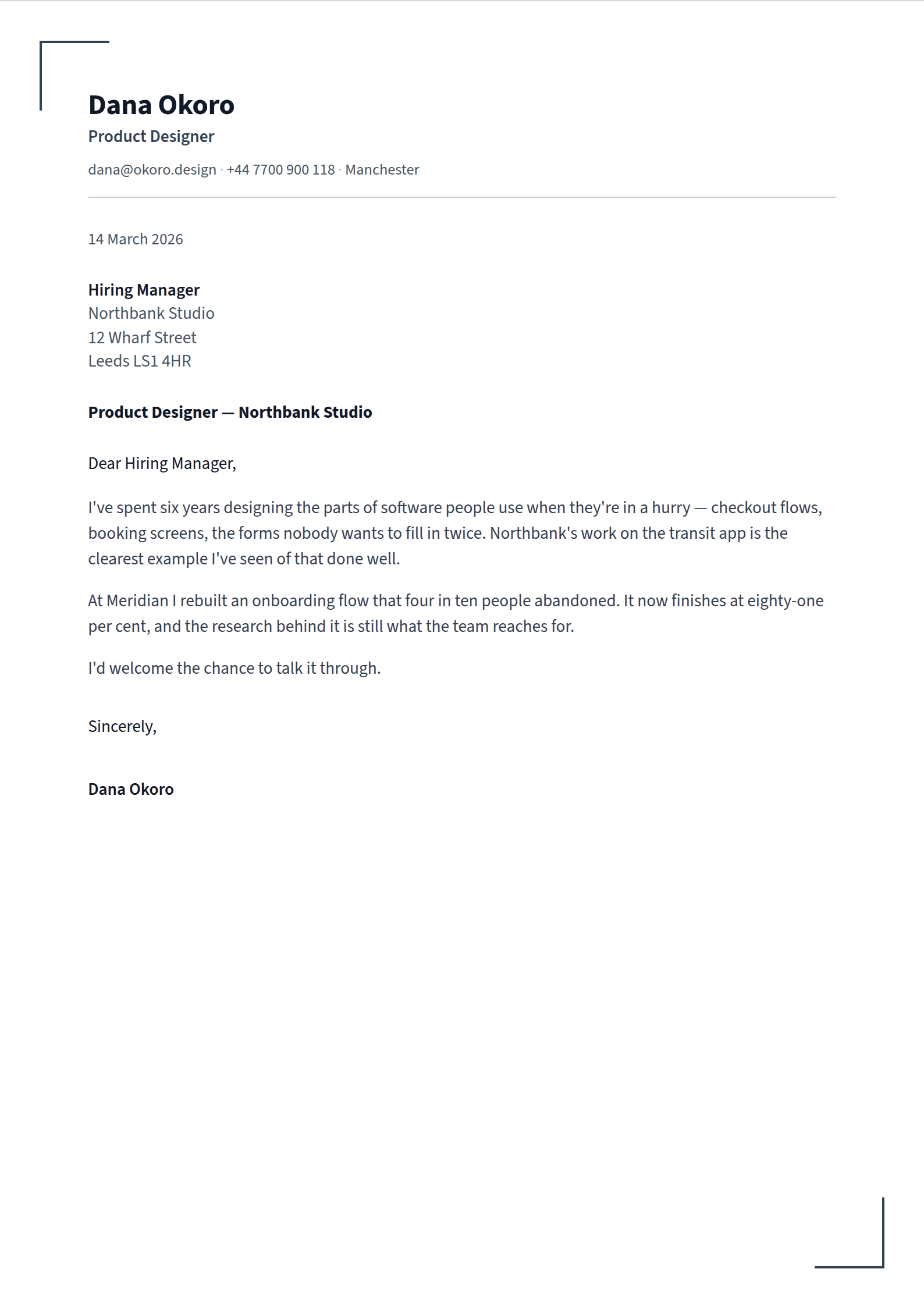
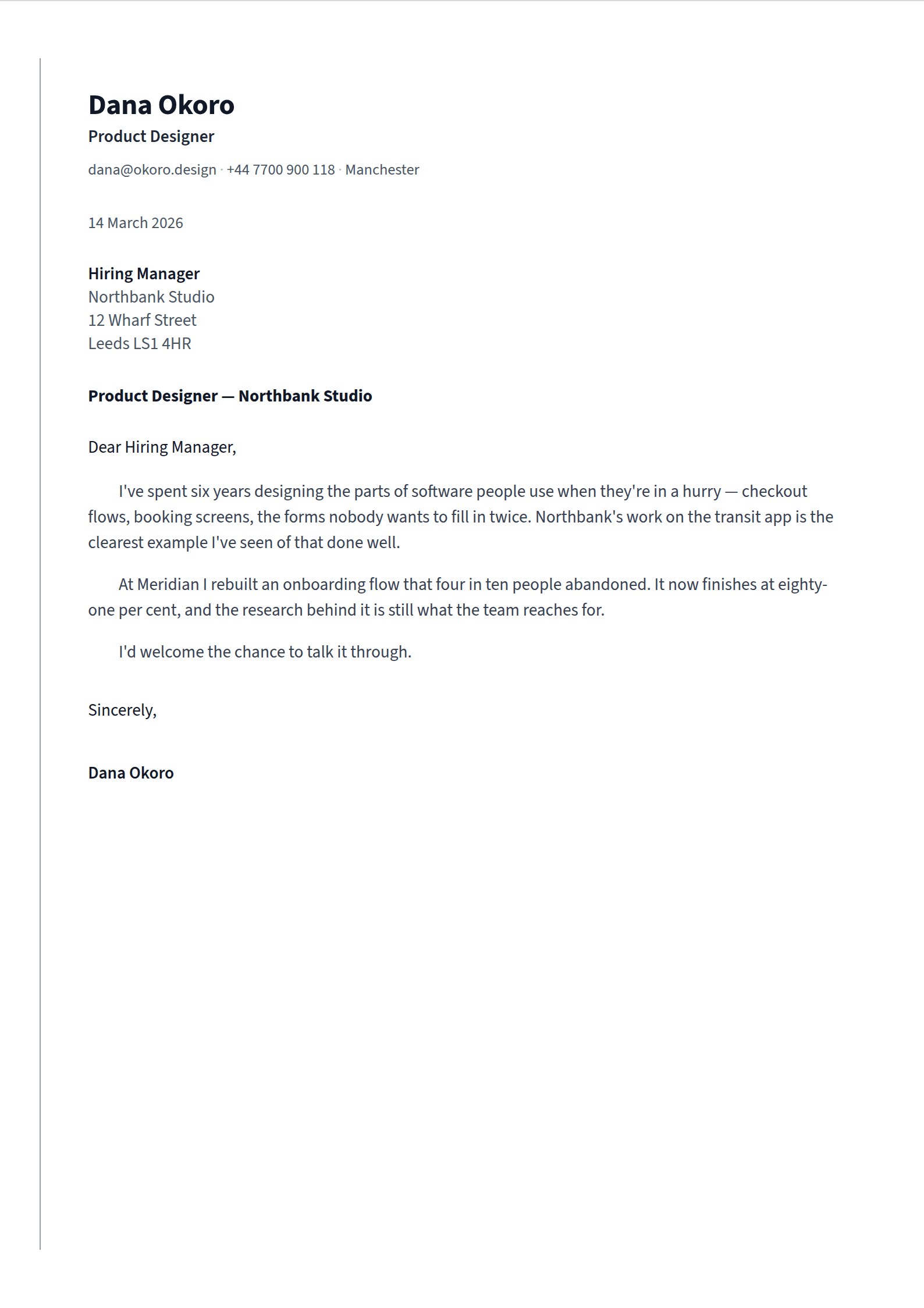
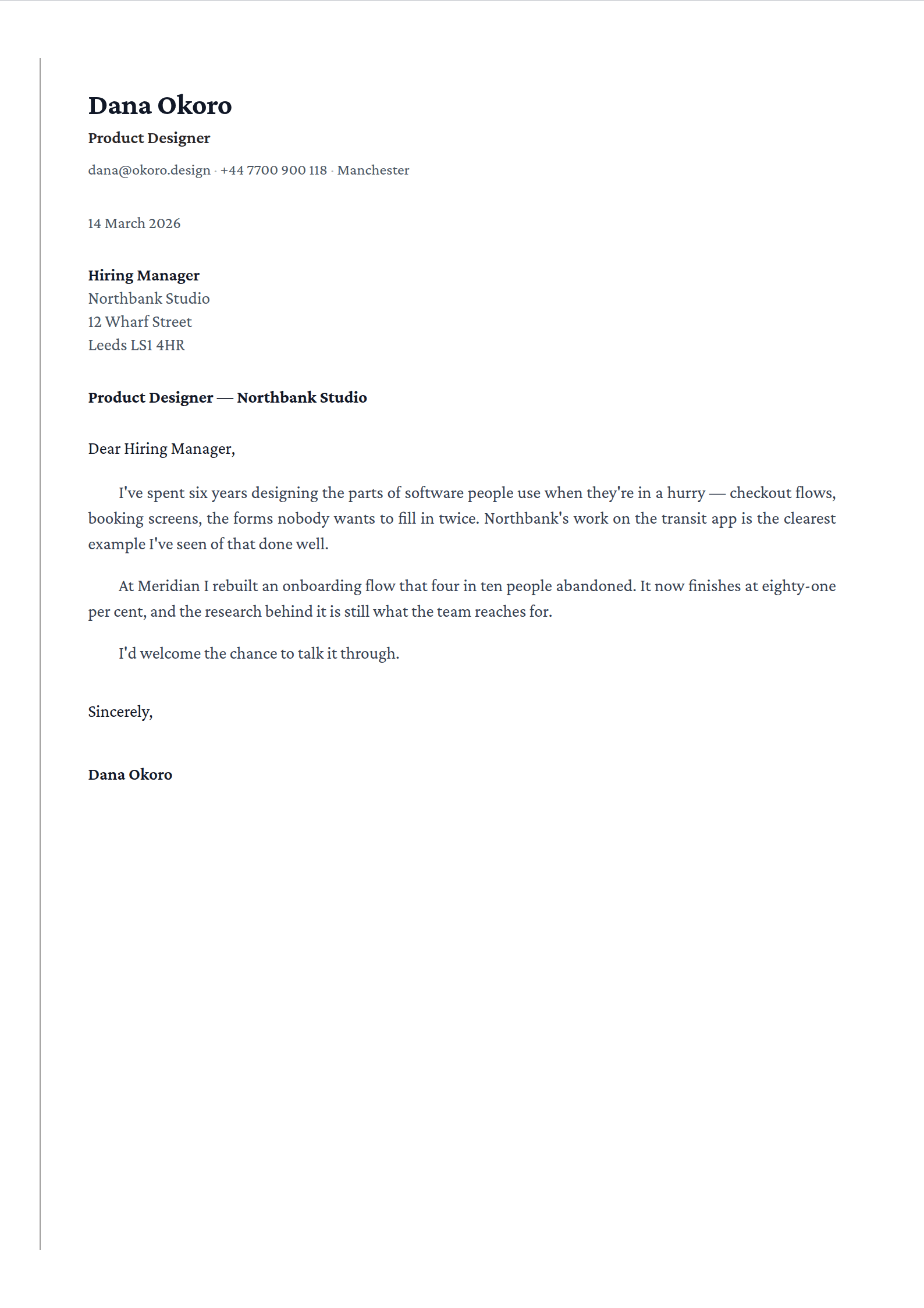
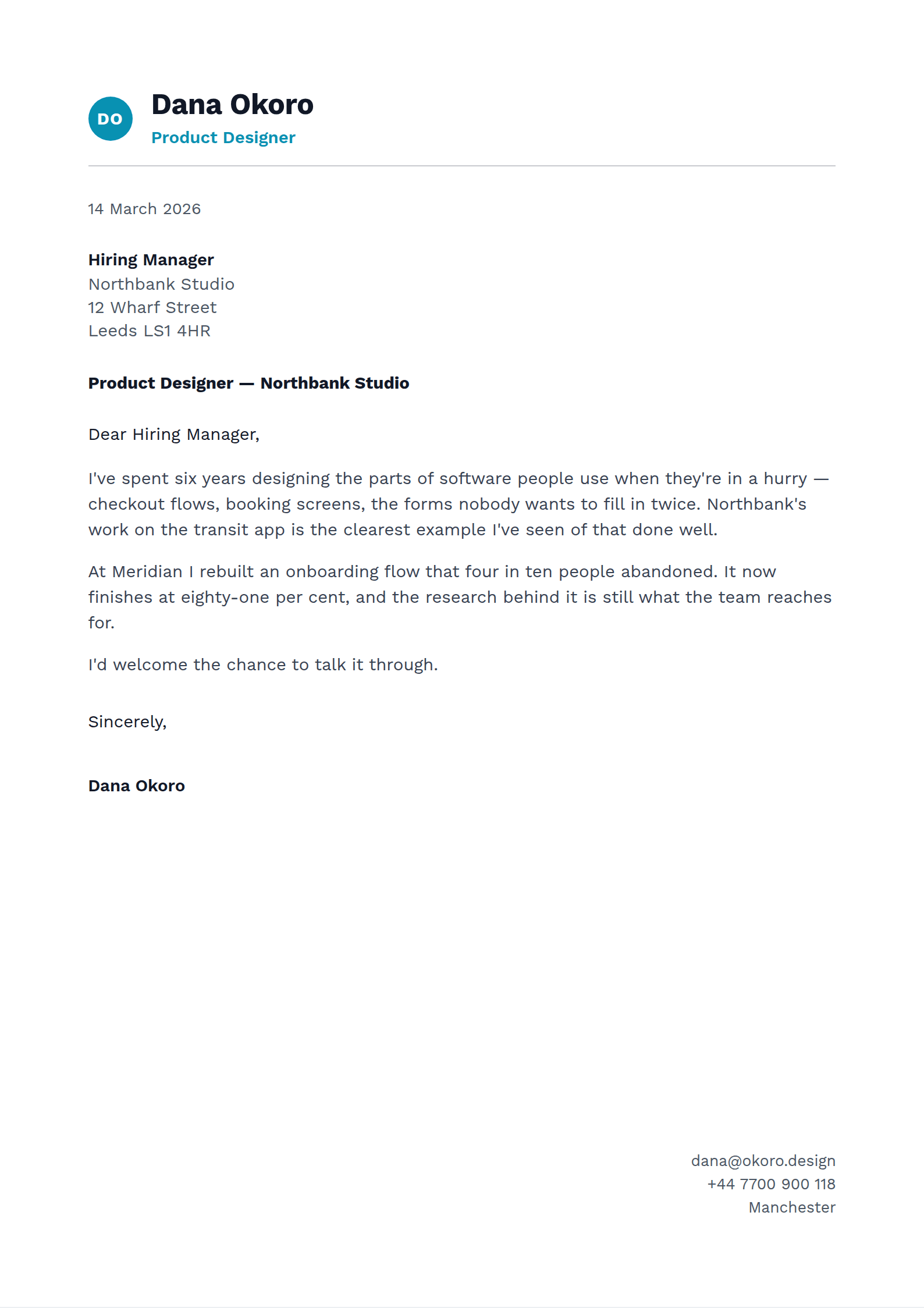
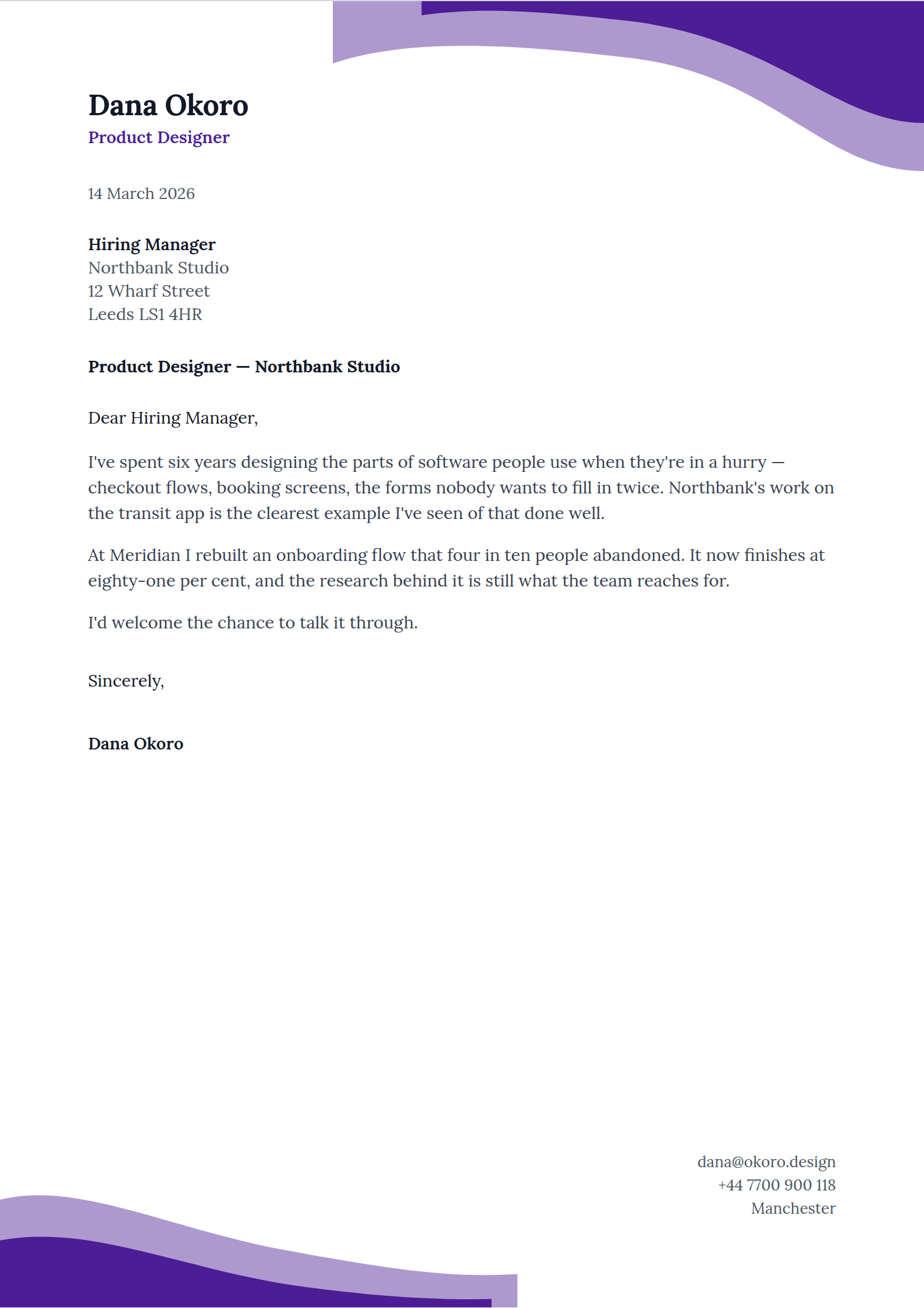
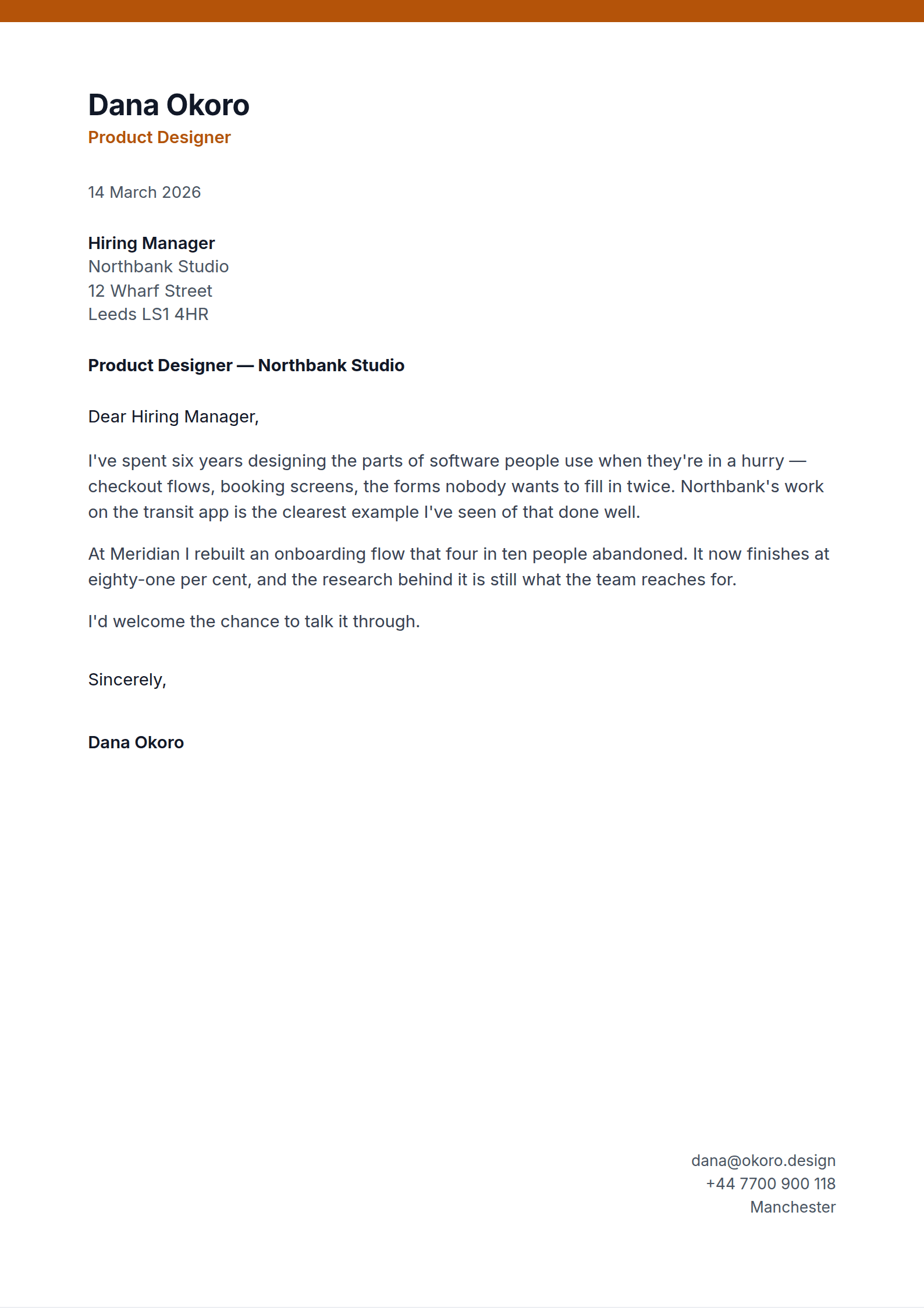
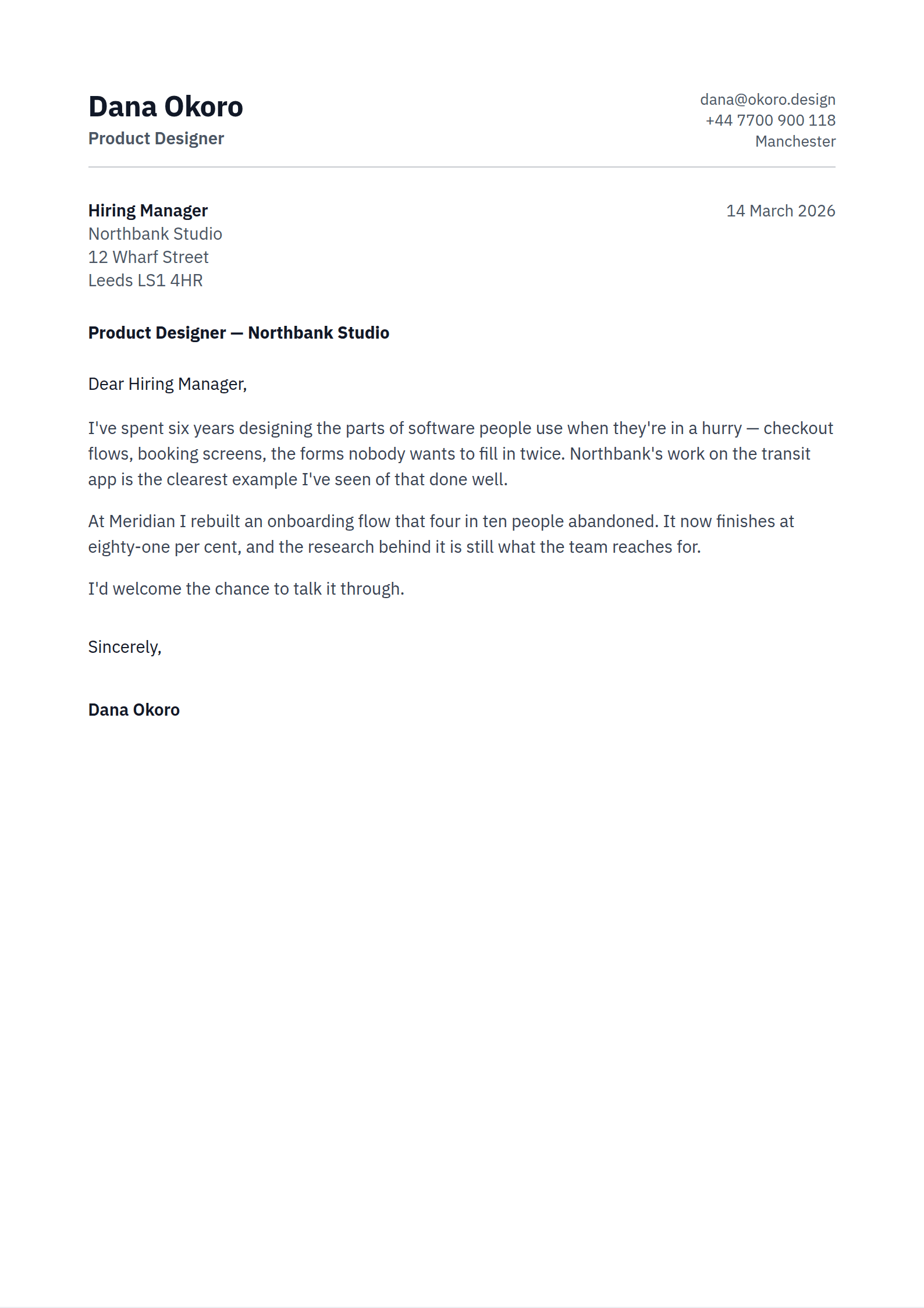
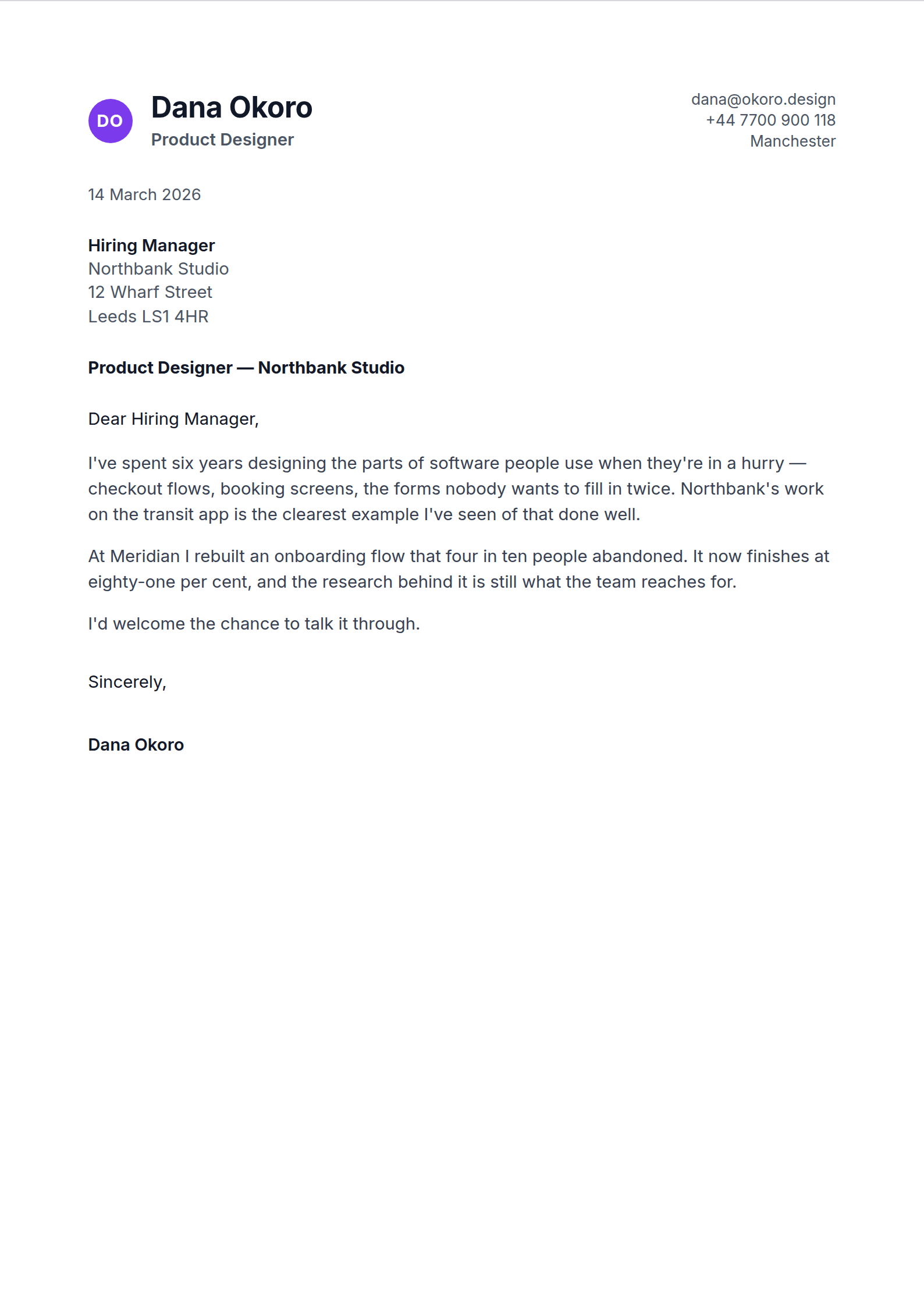
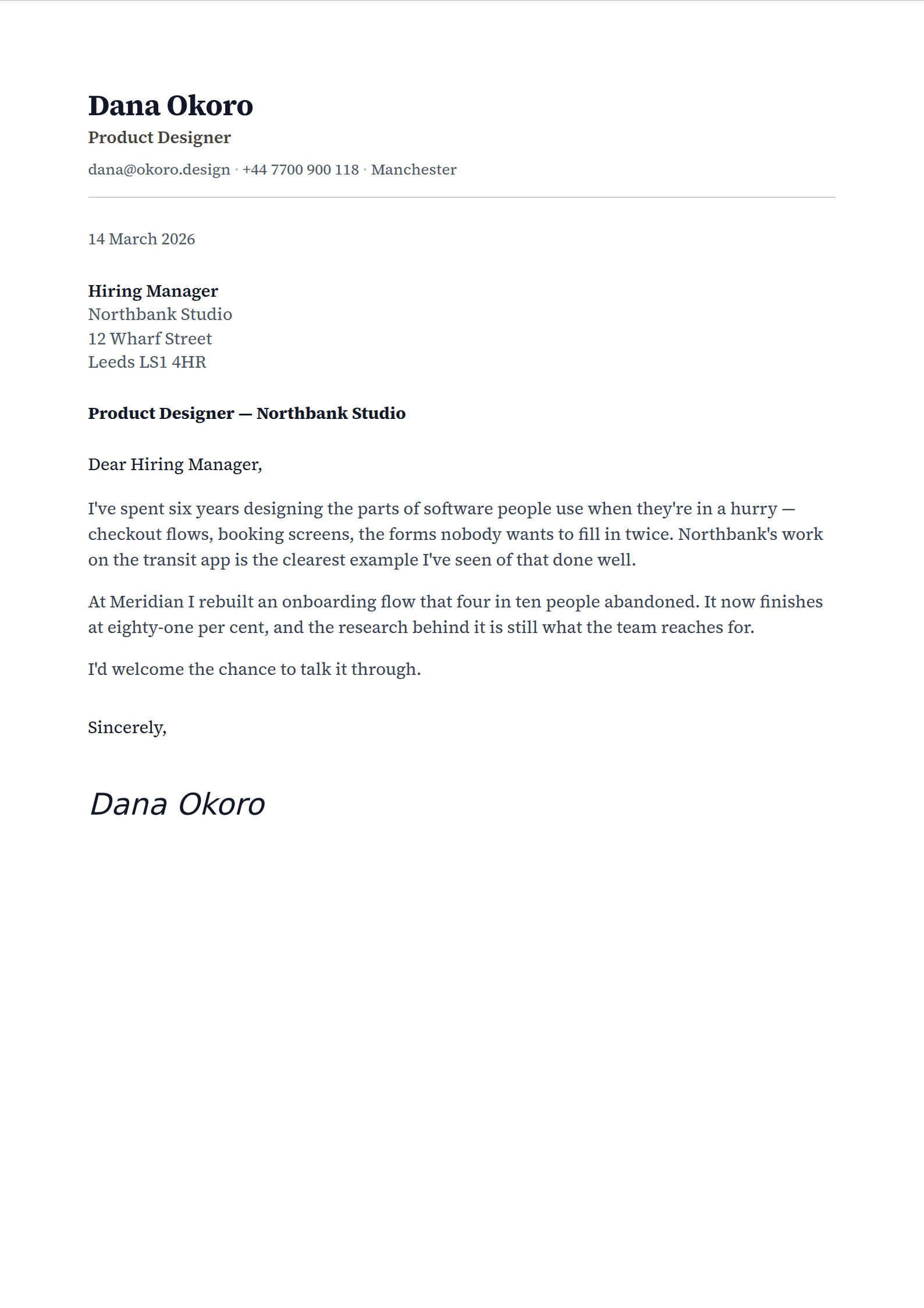
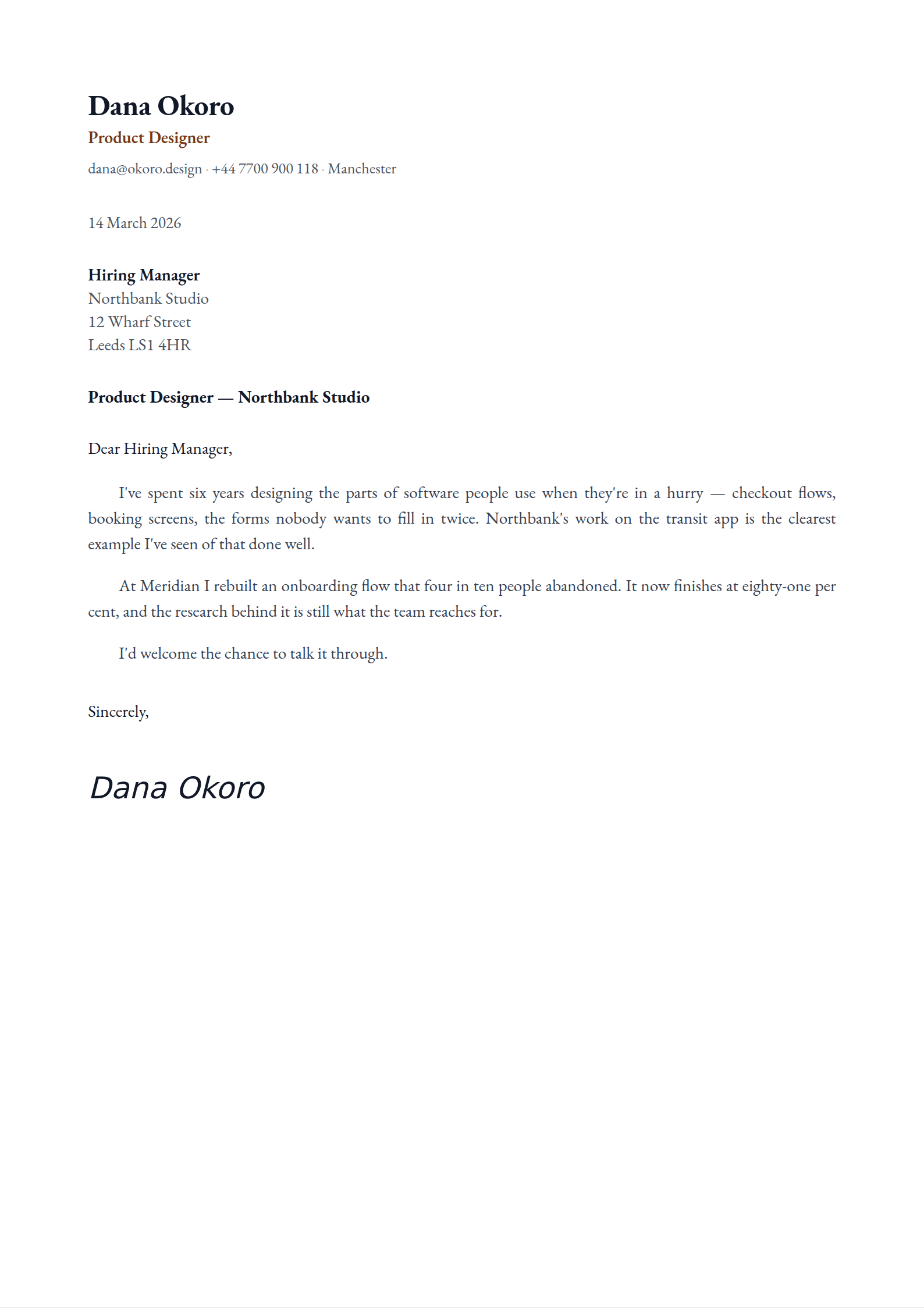
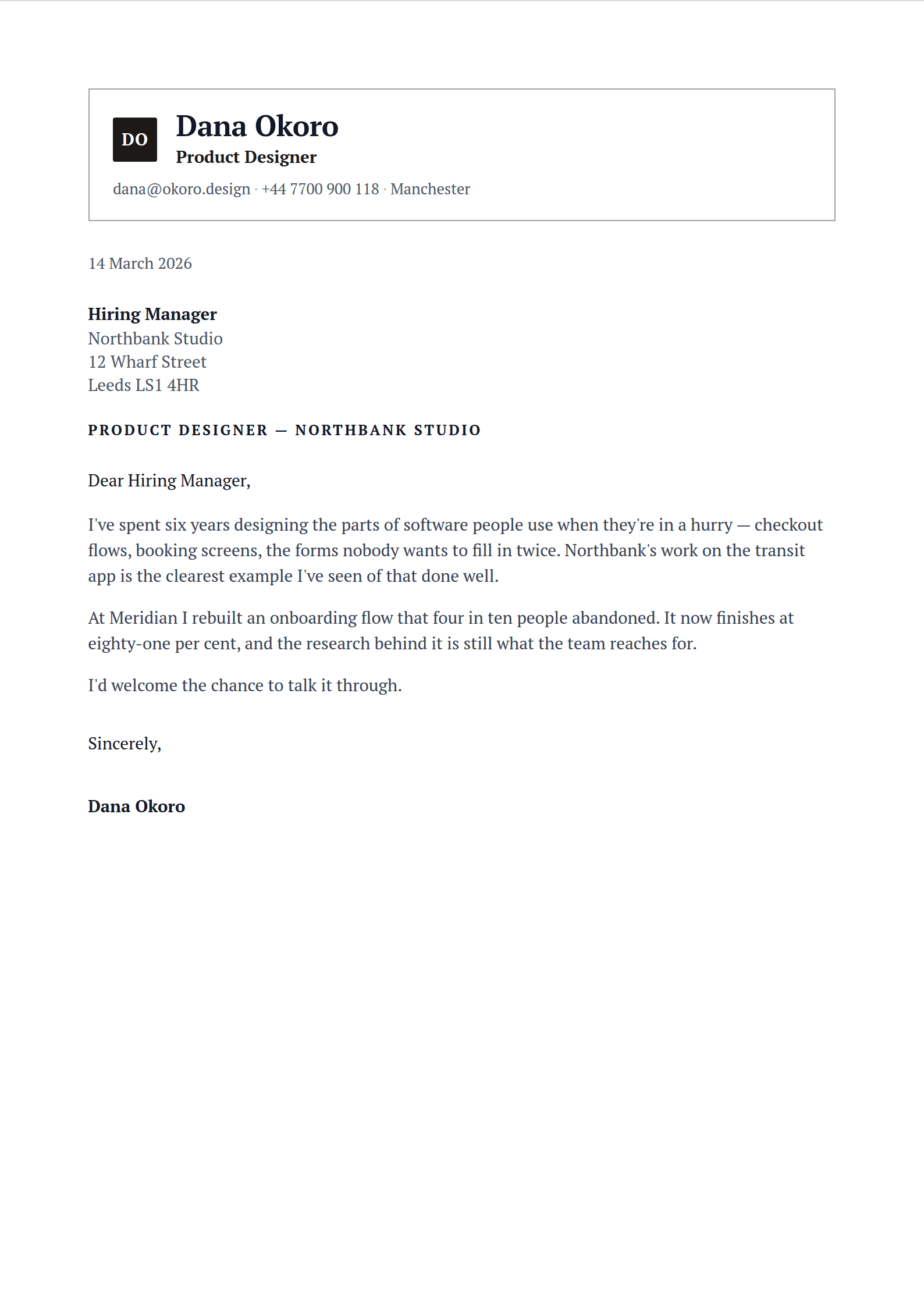
Header layouts

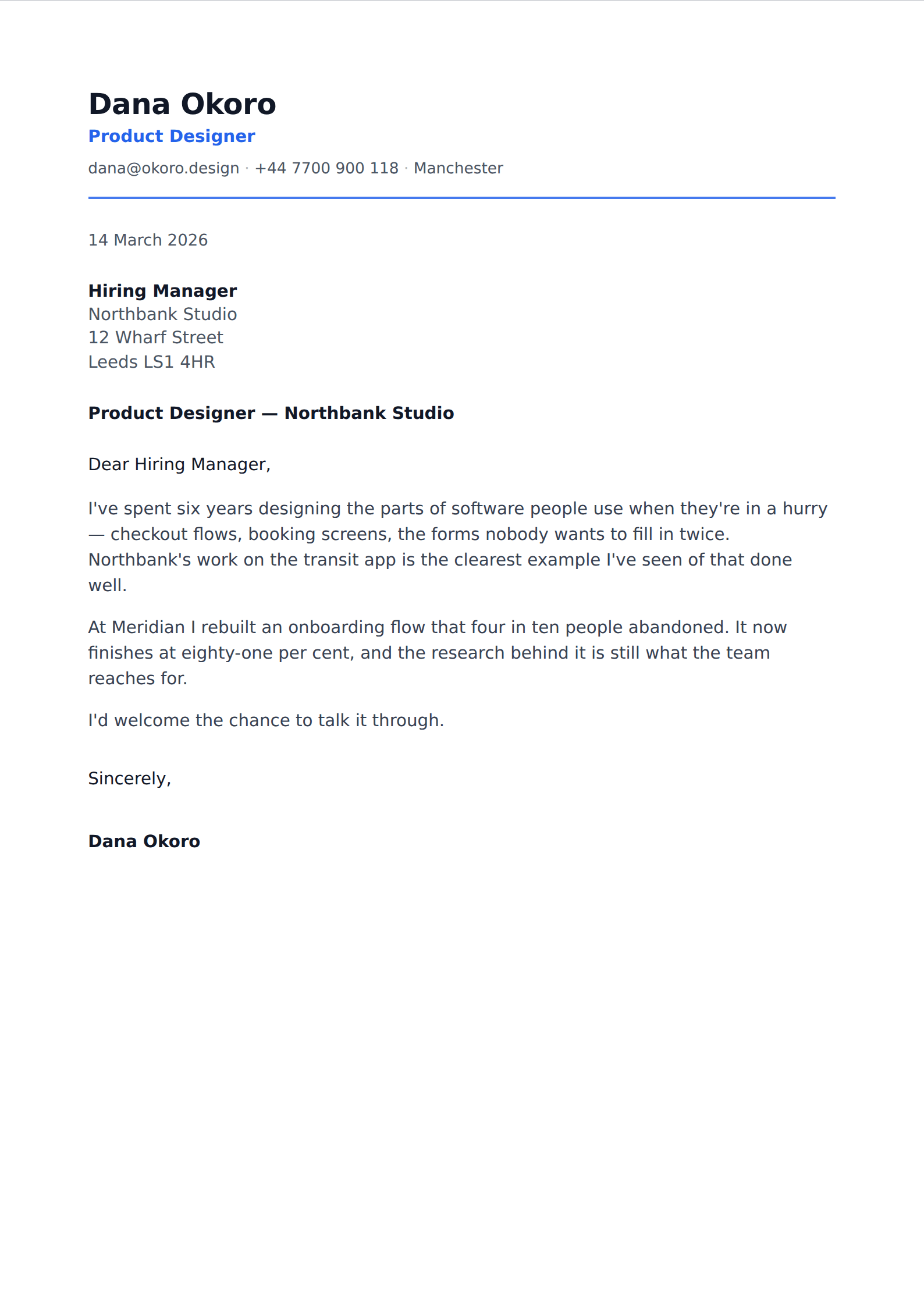
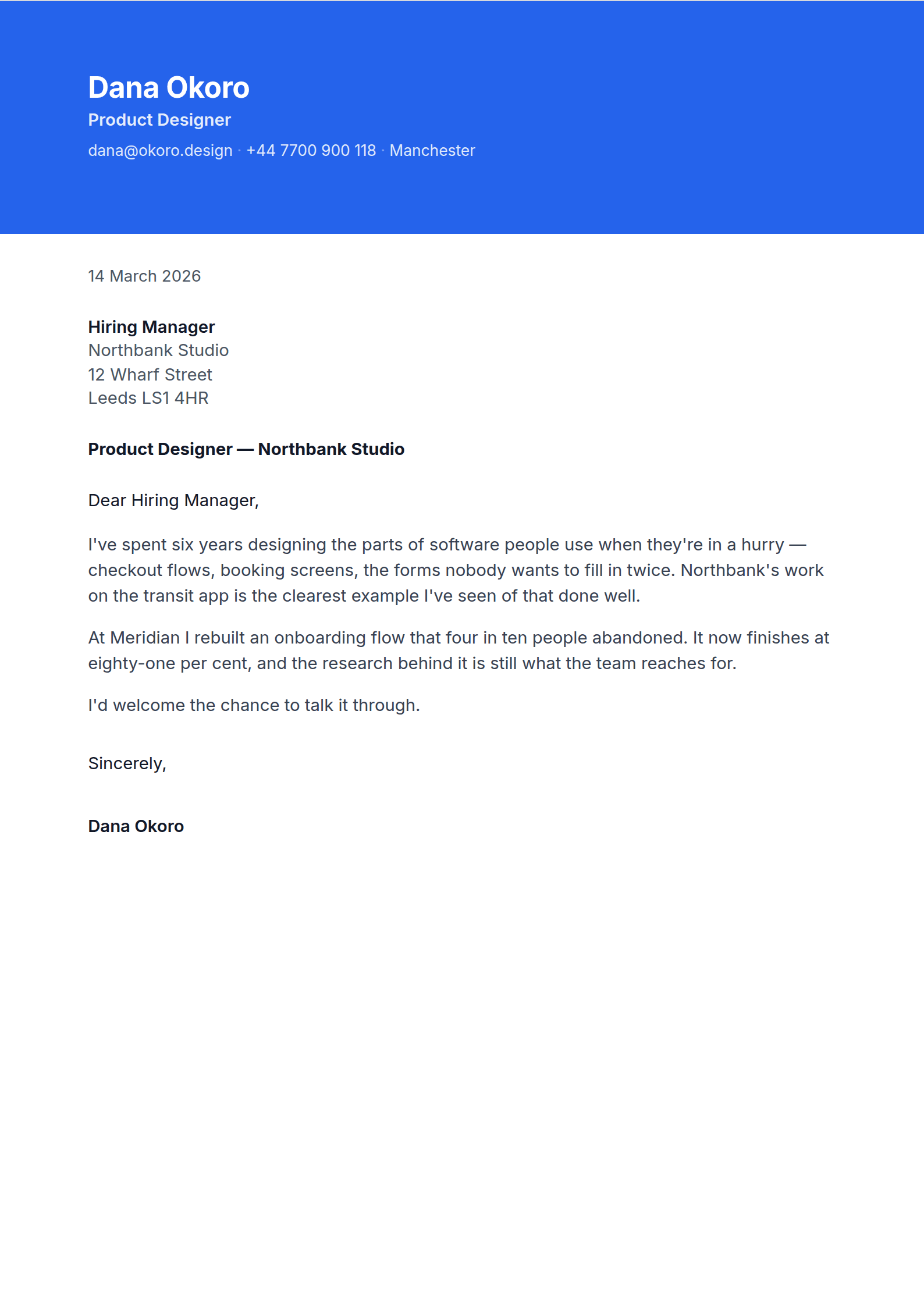
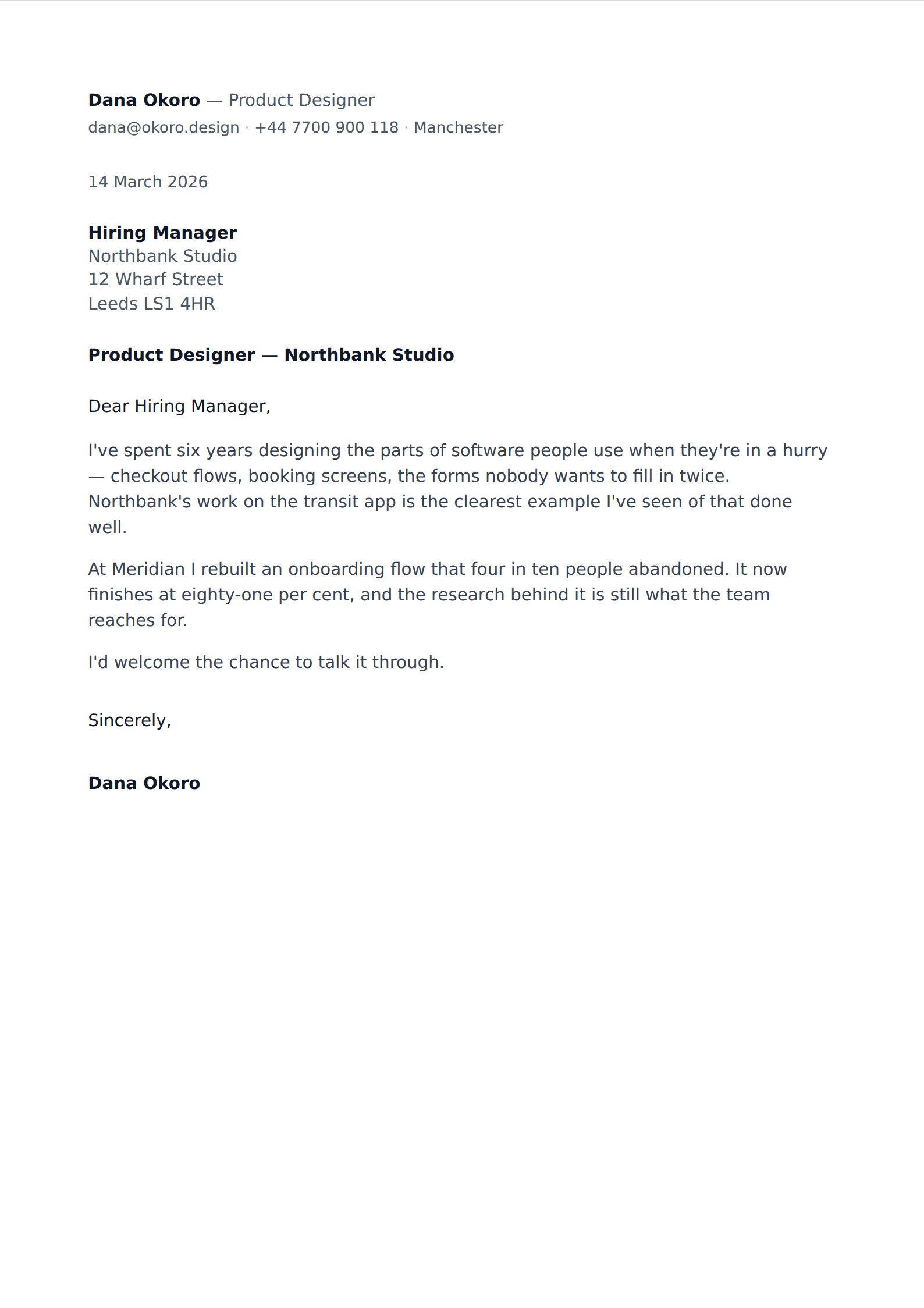
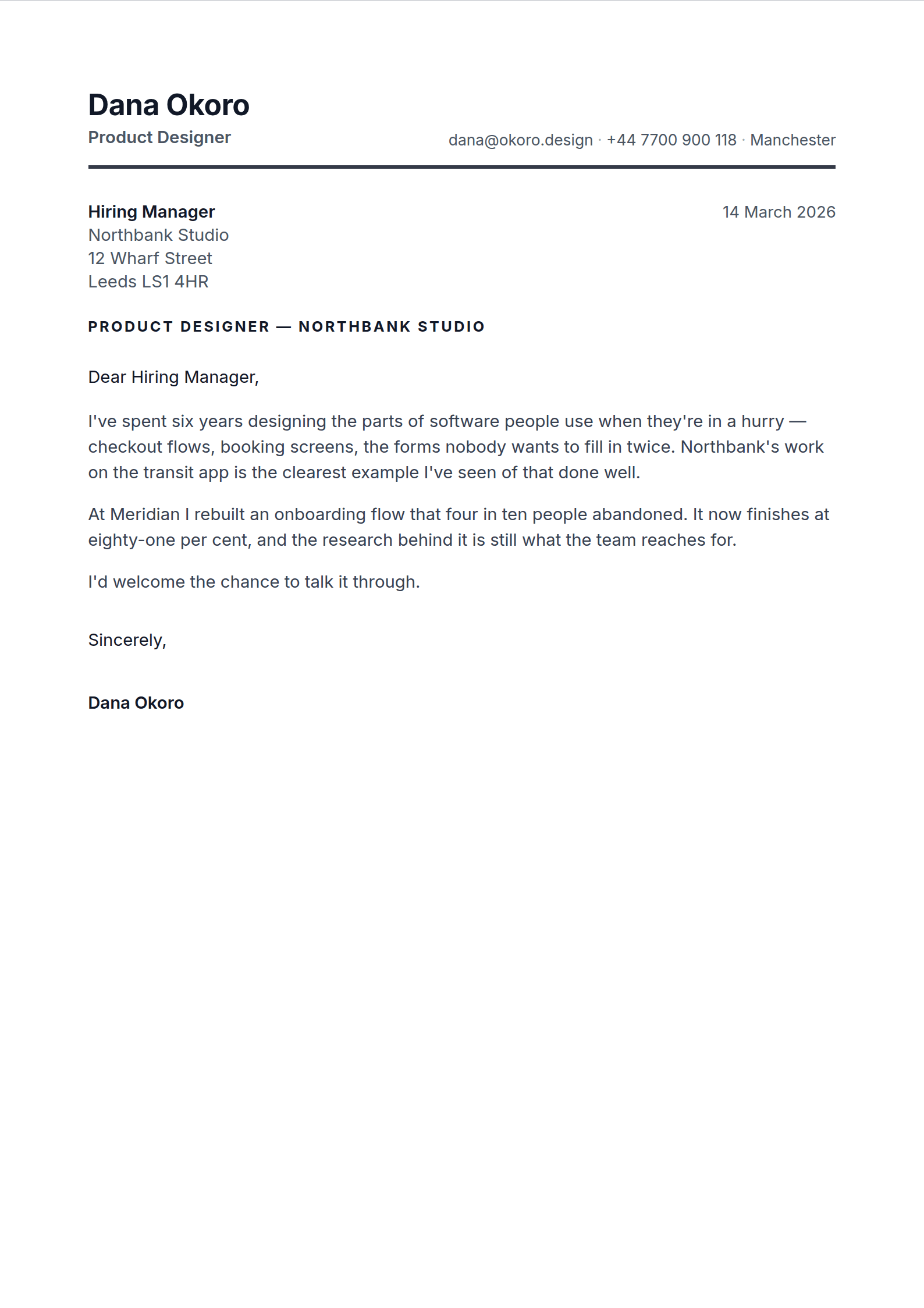
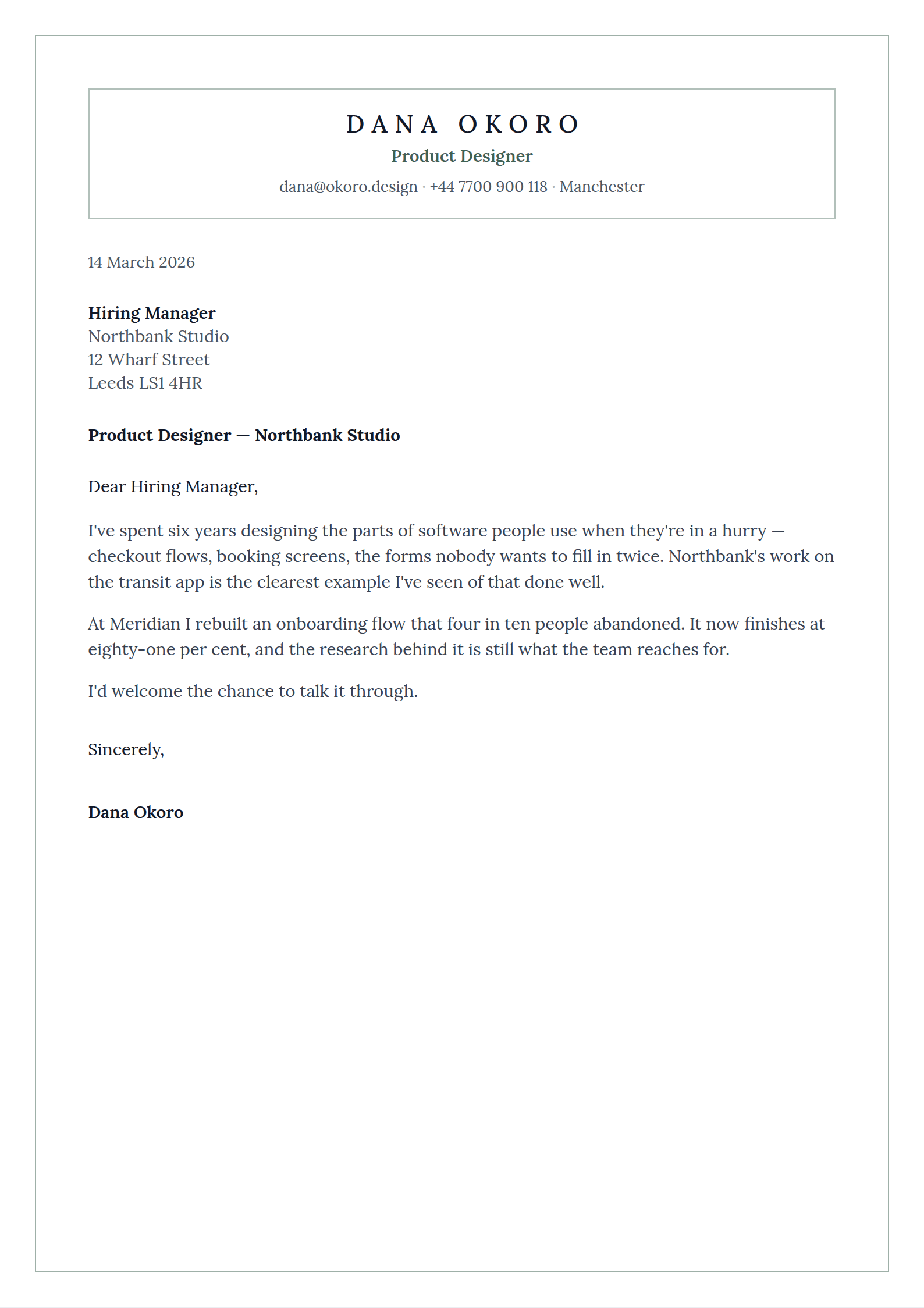
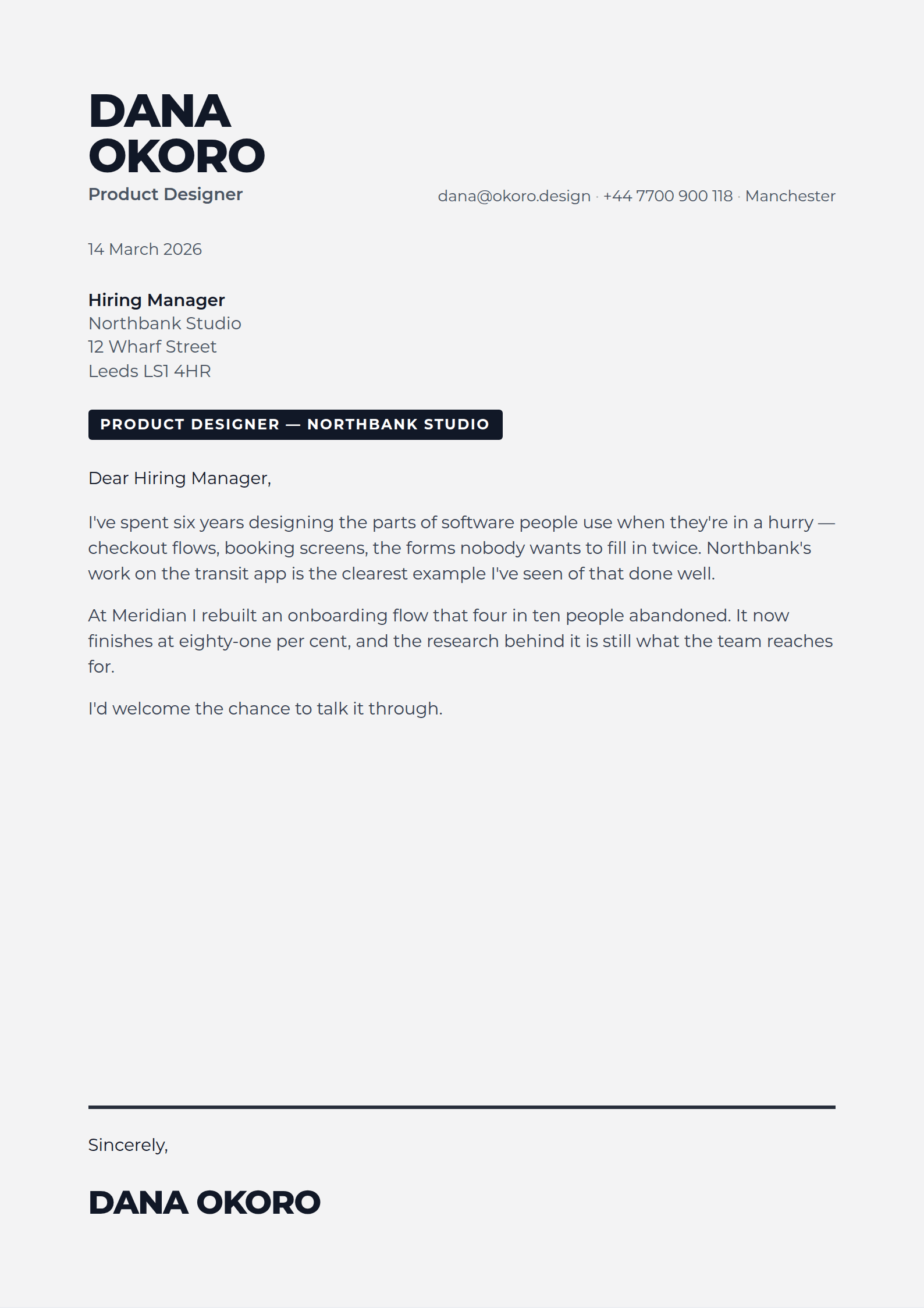
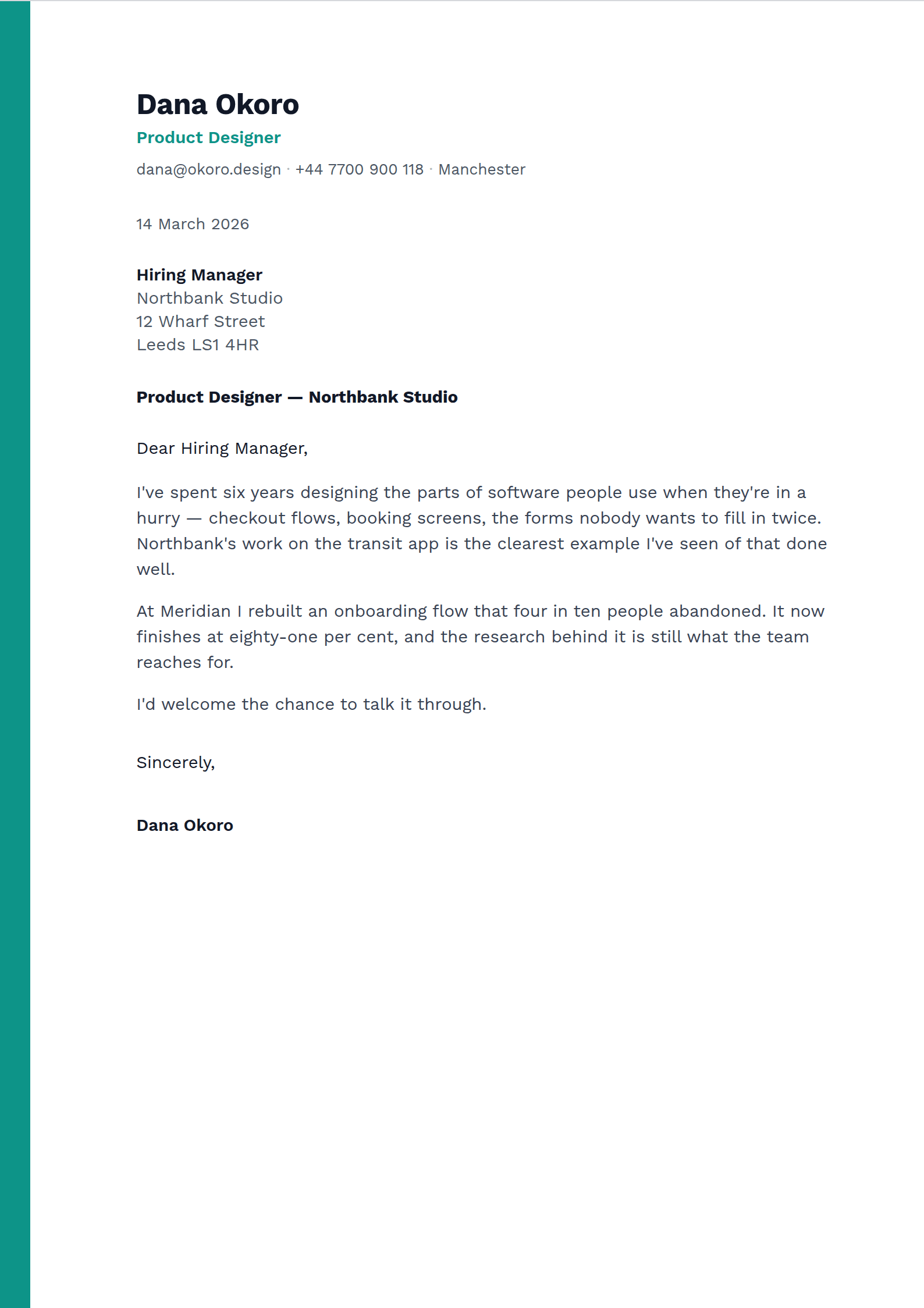
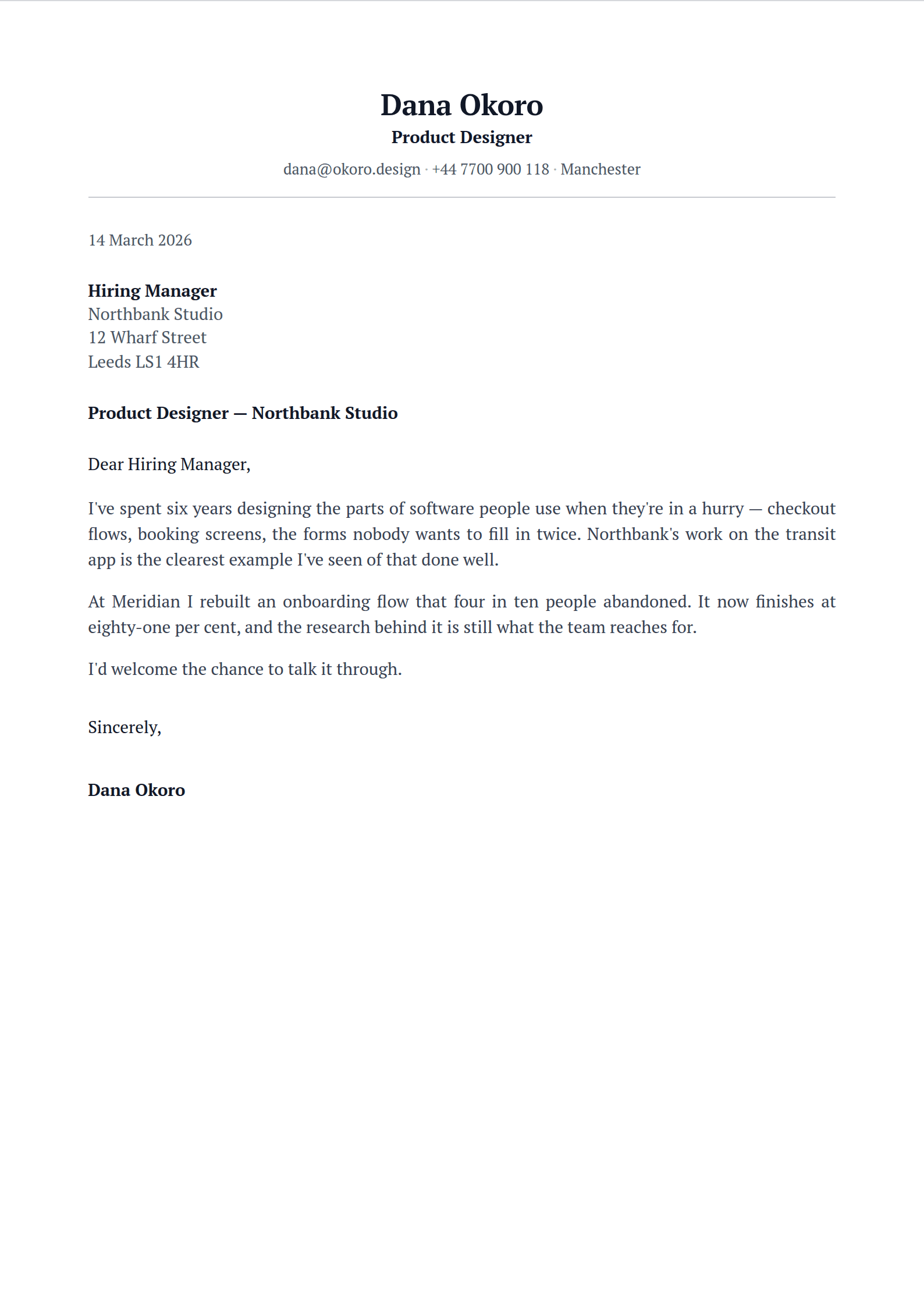
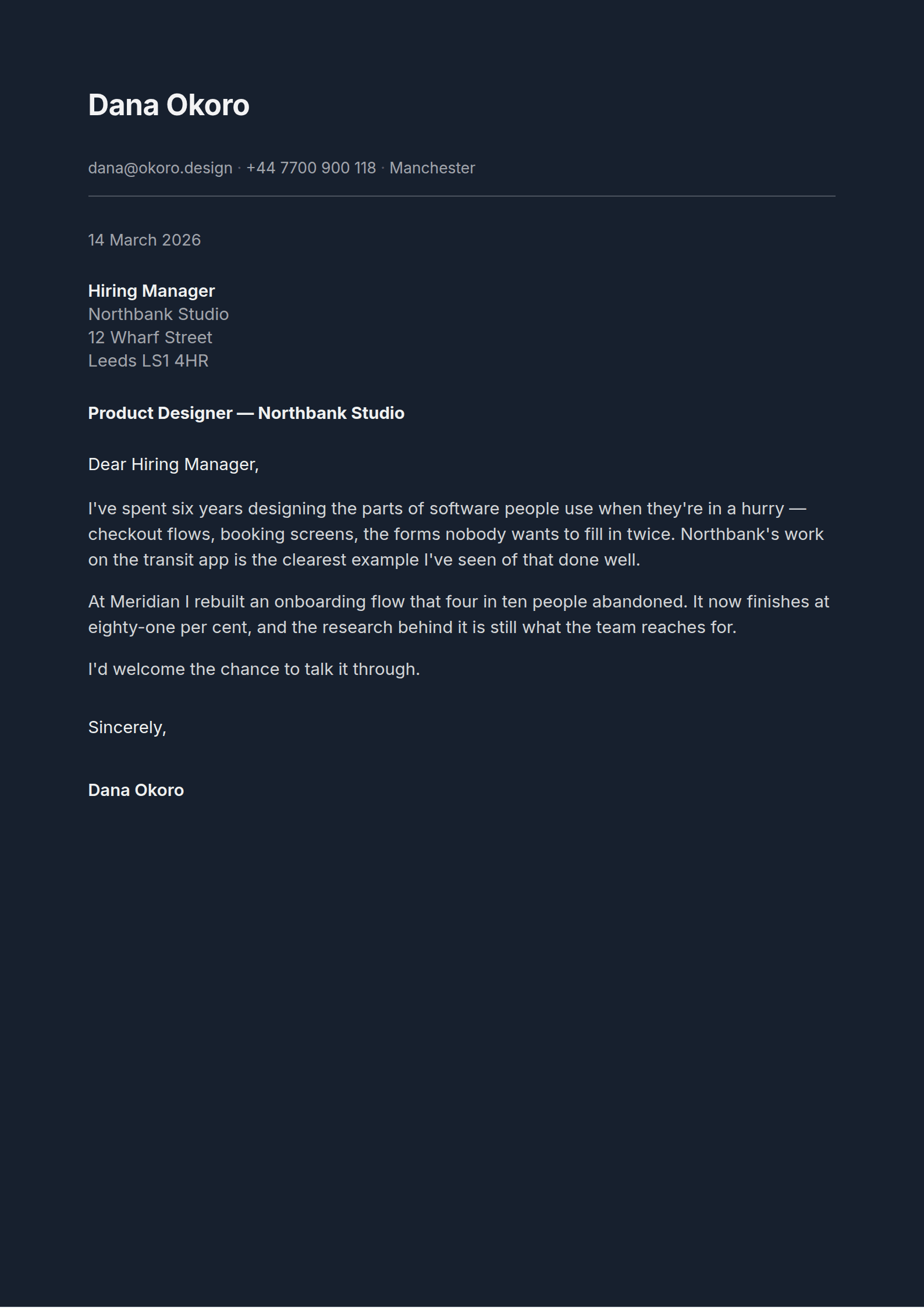
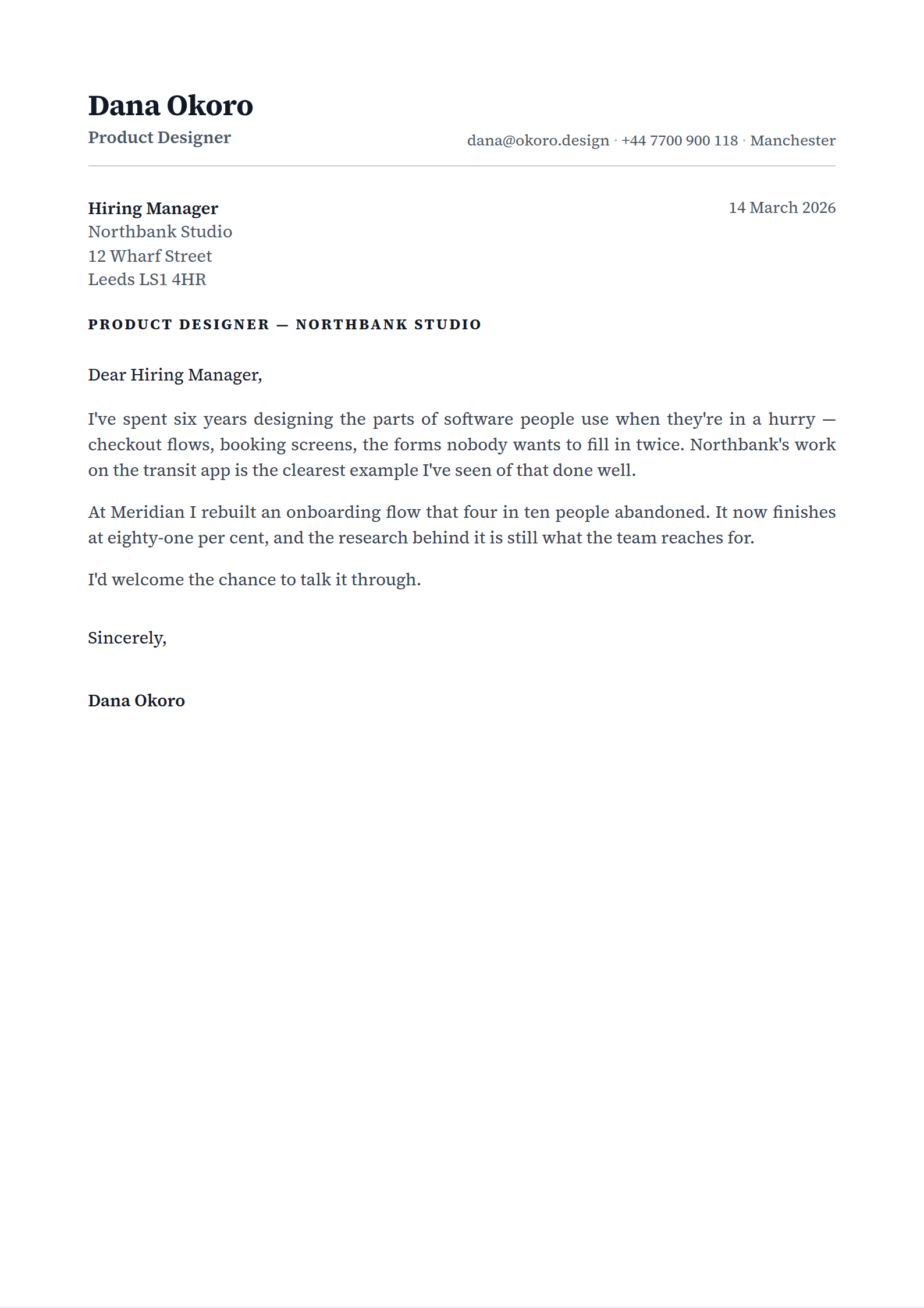
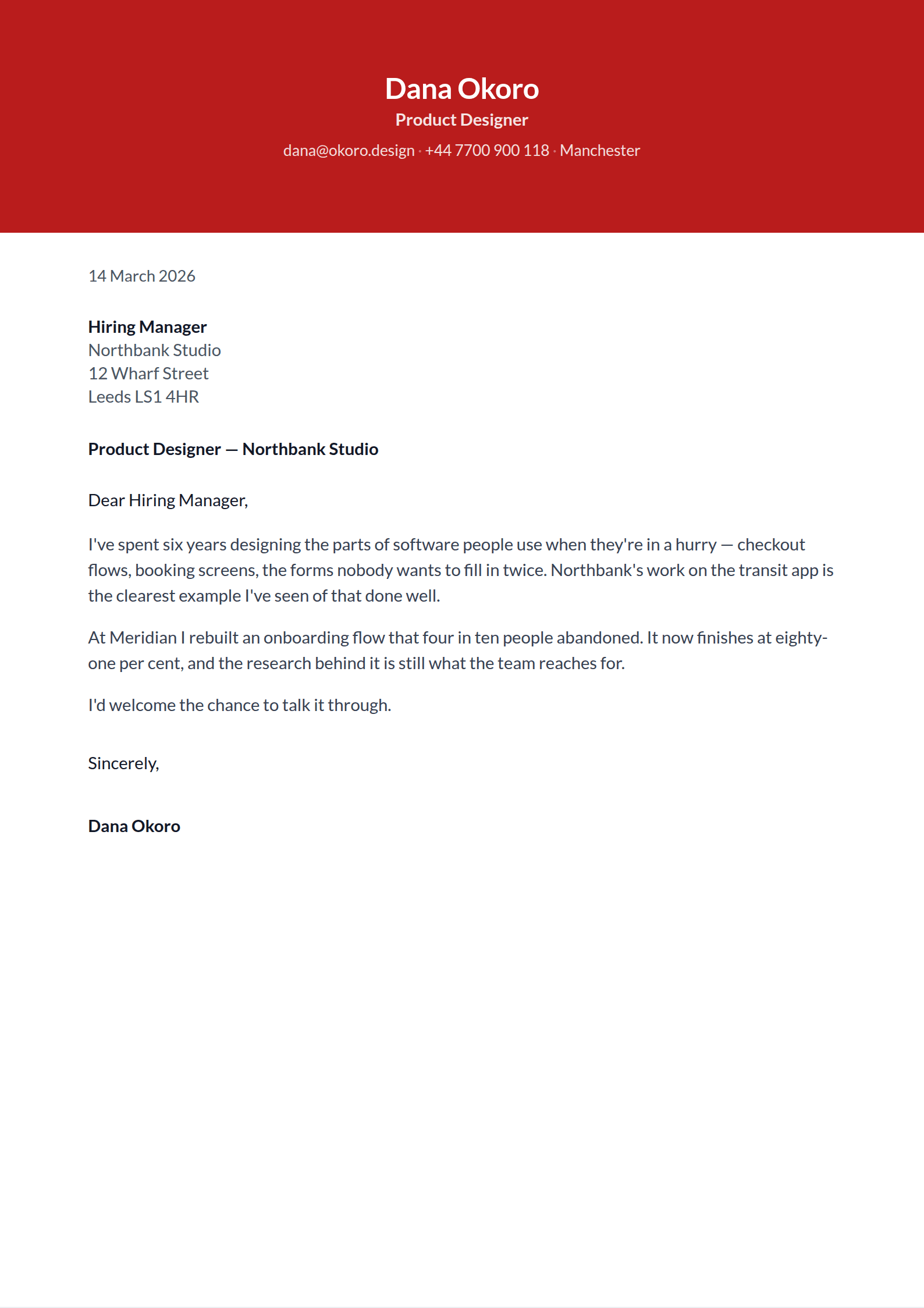
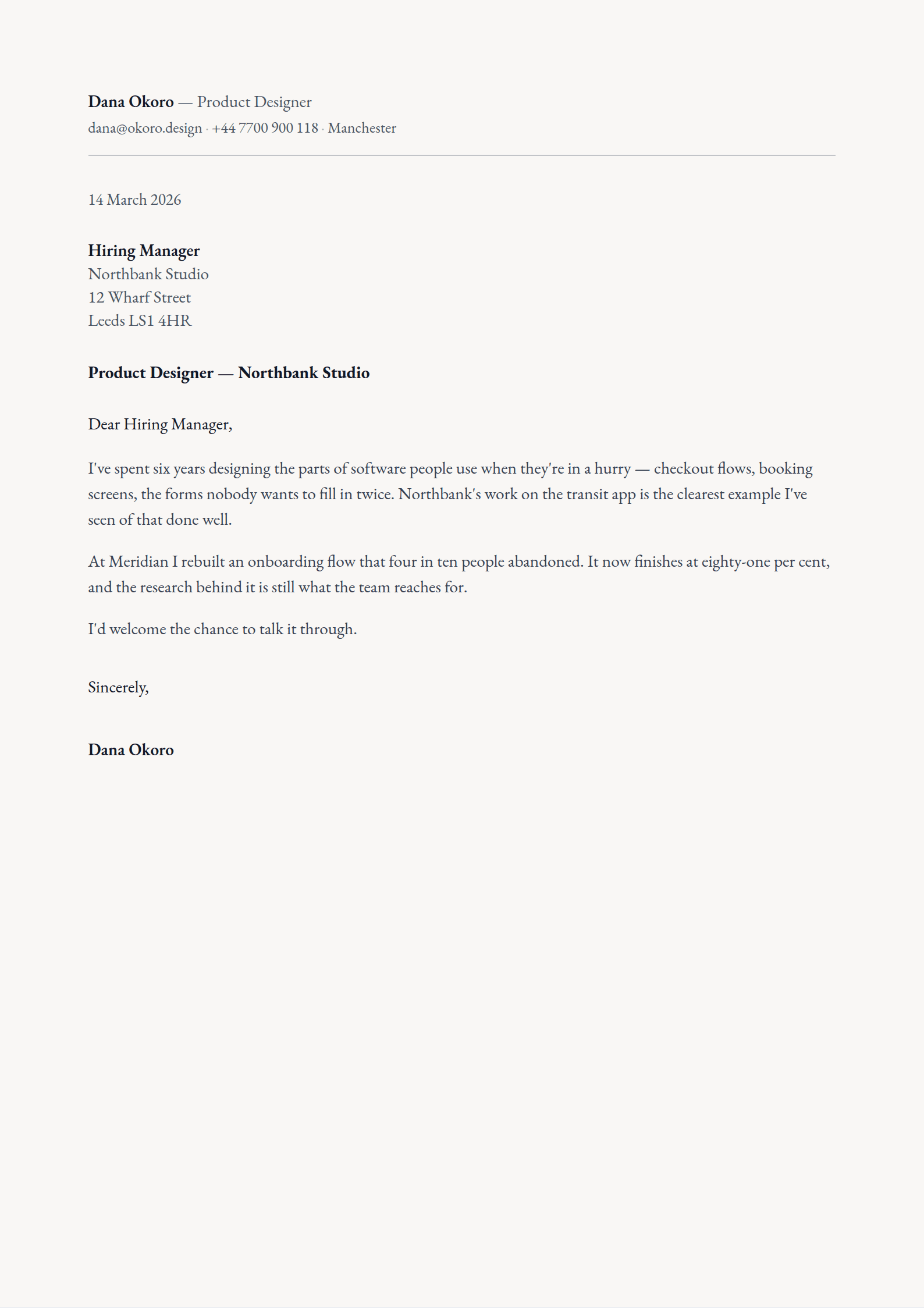
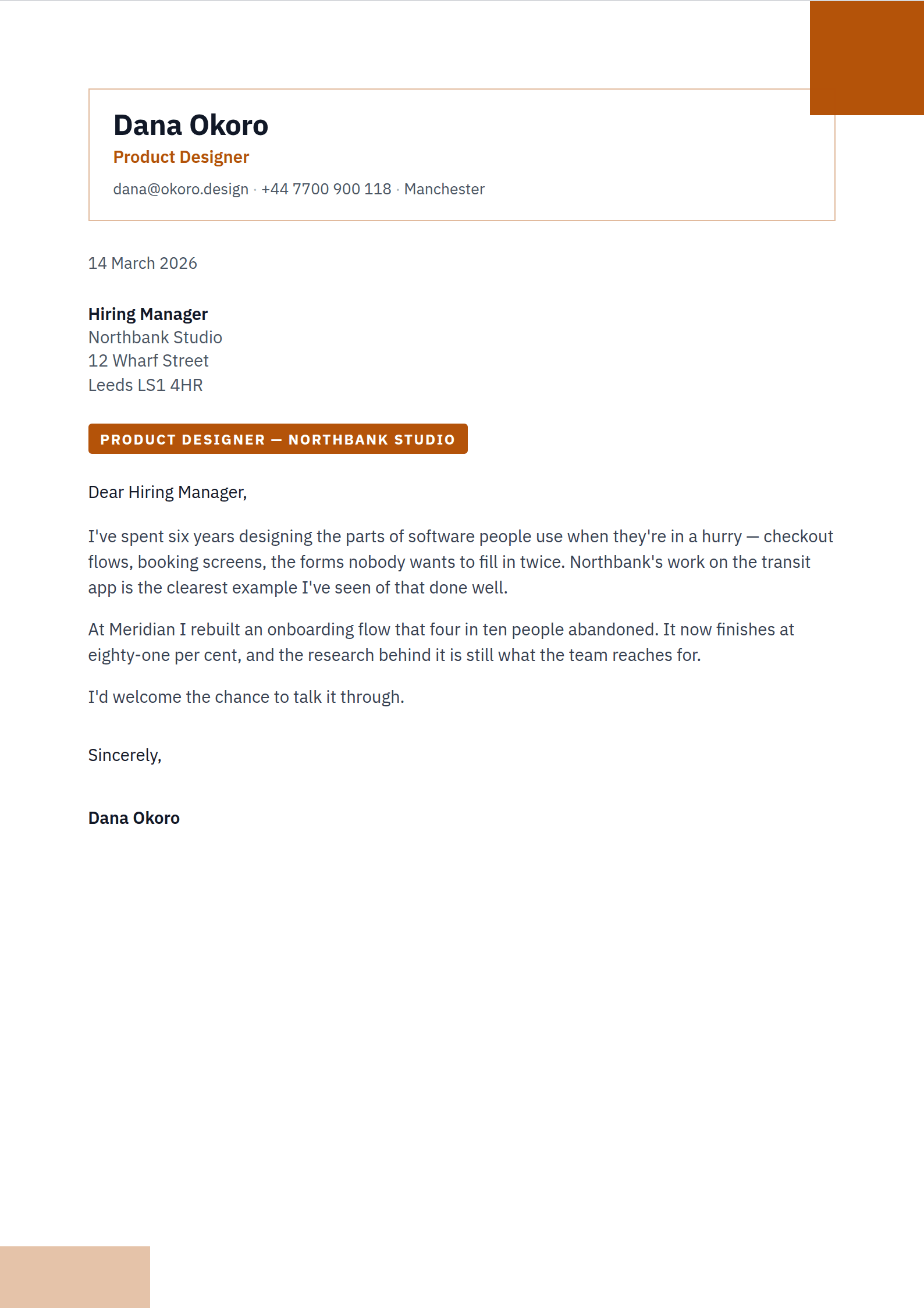
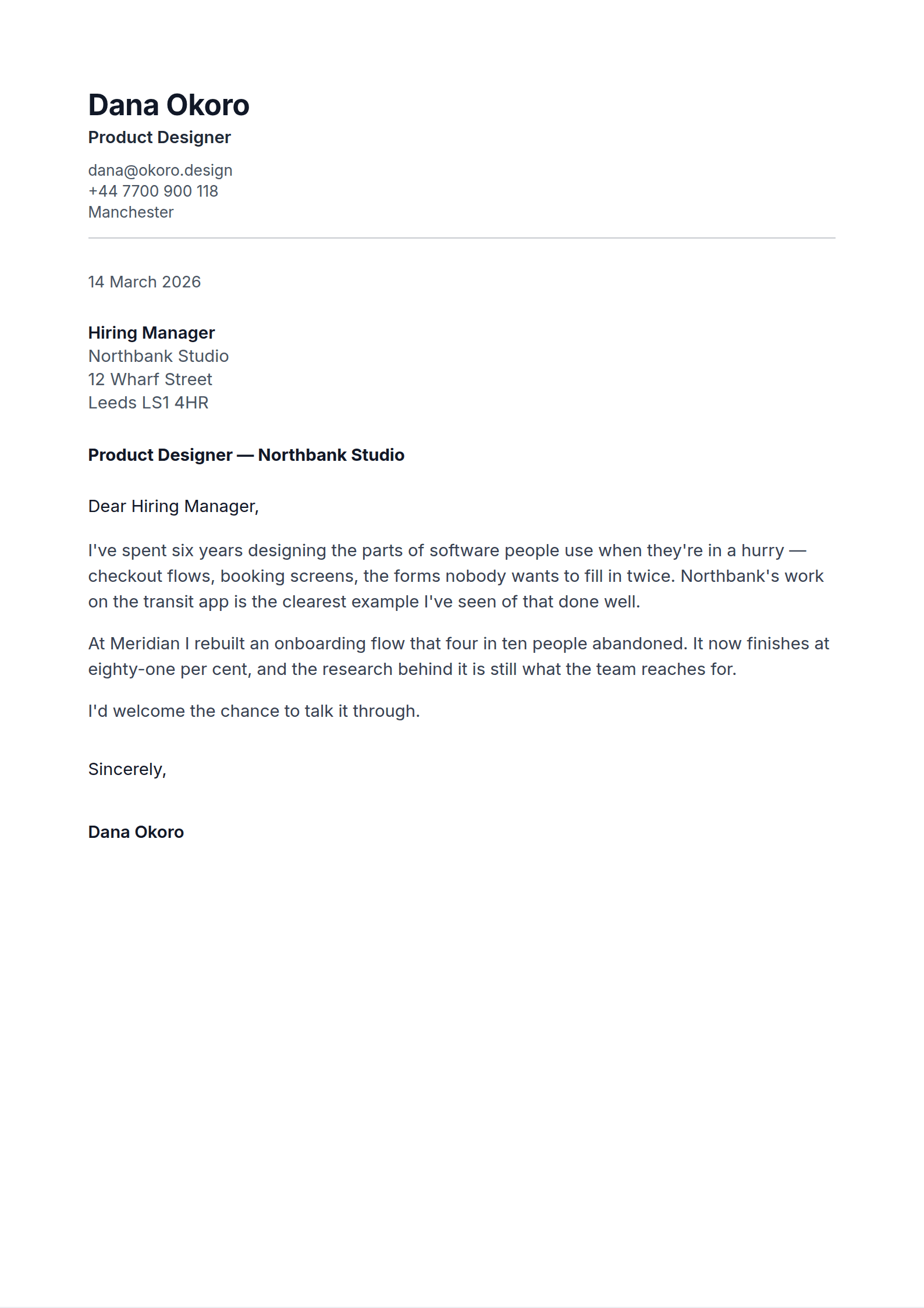
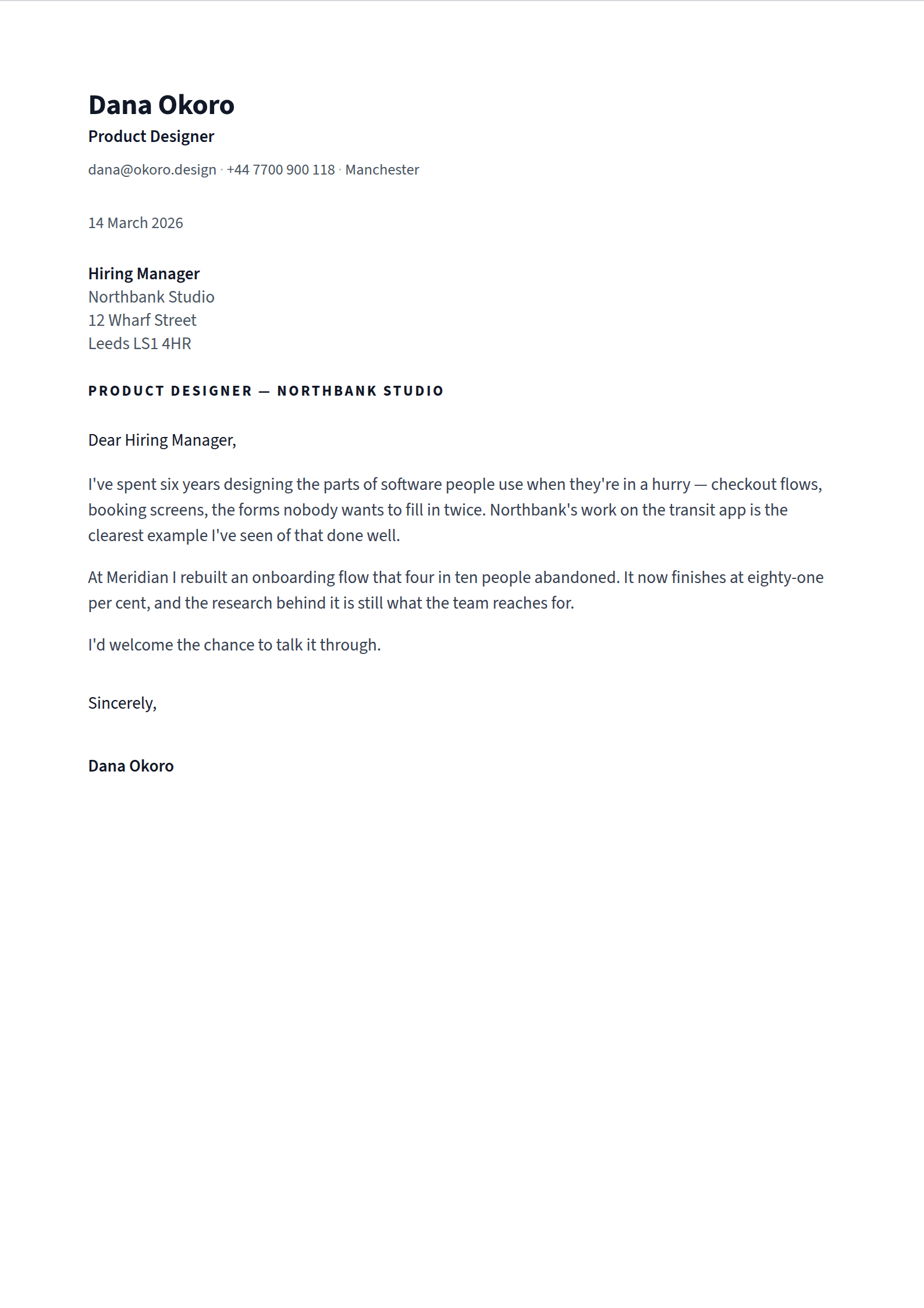
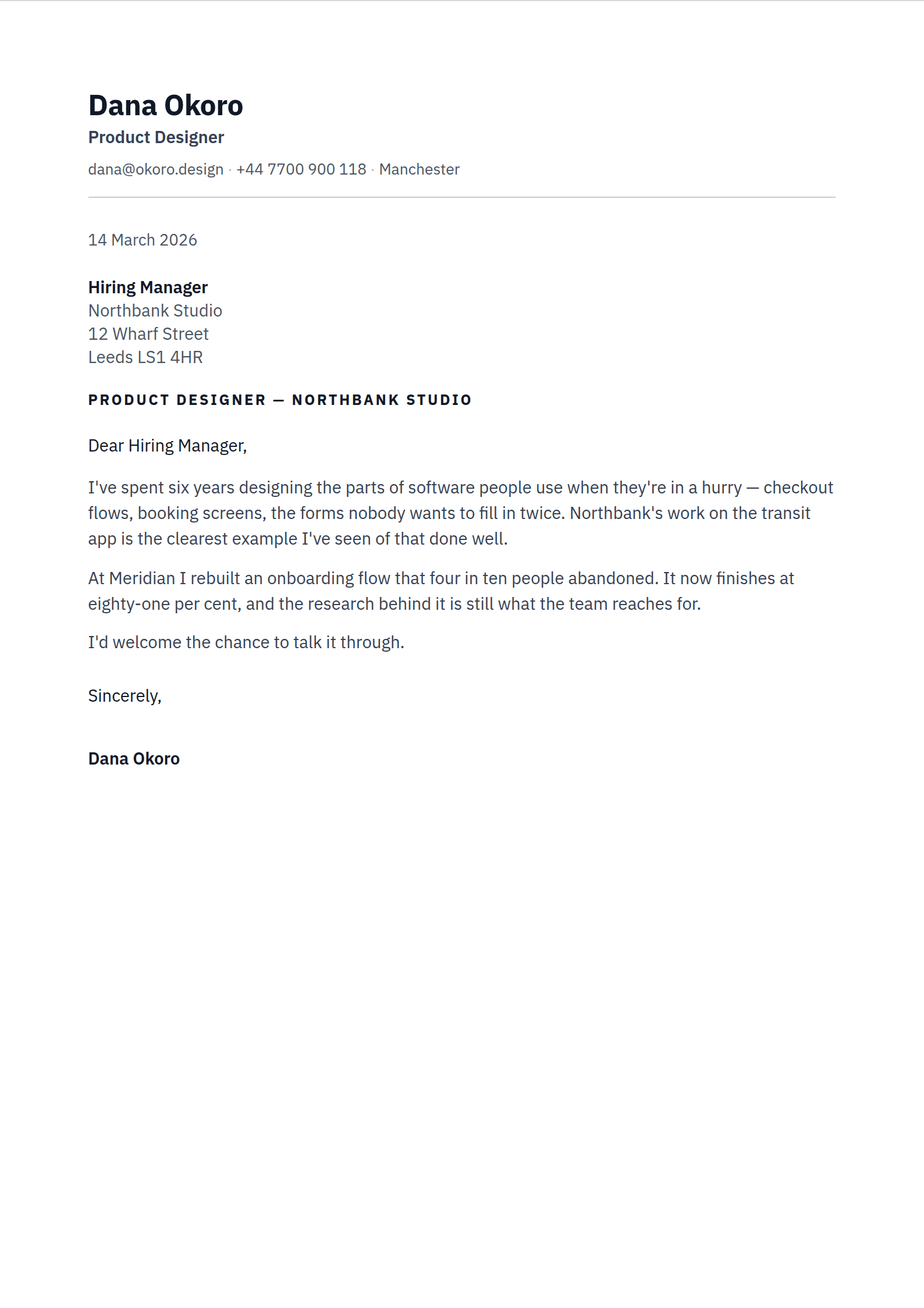
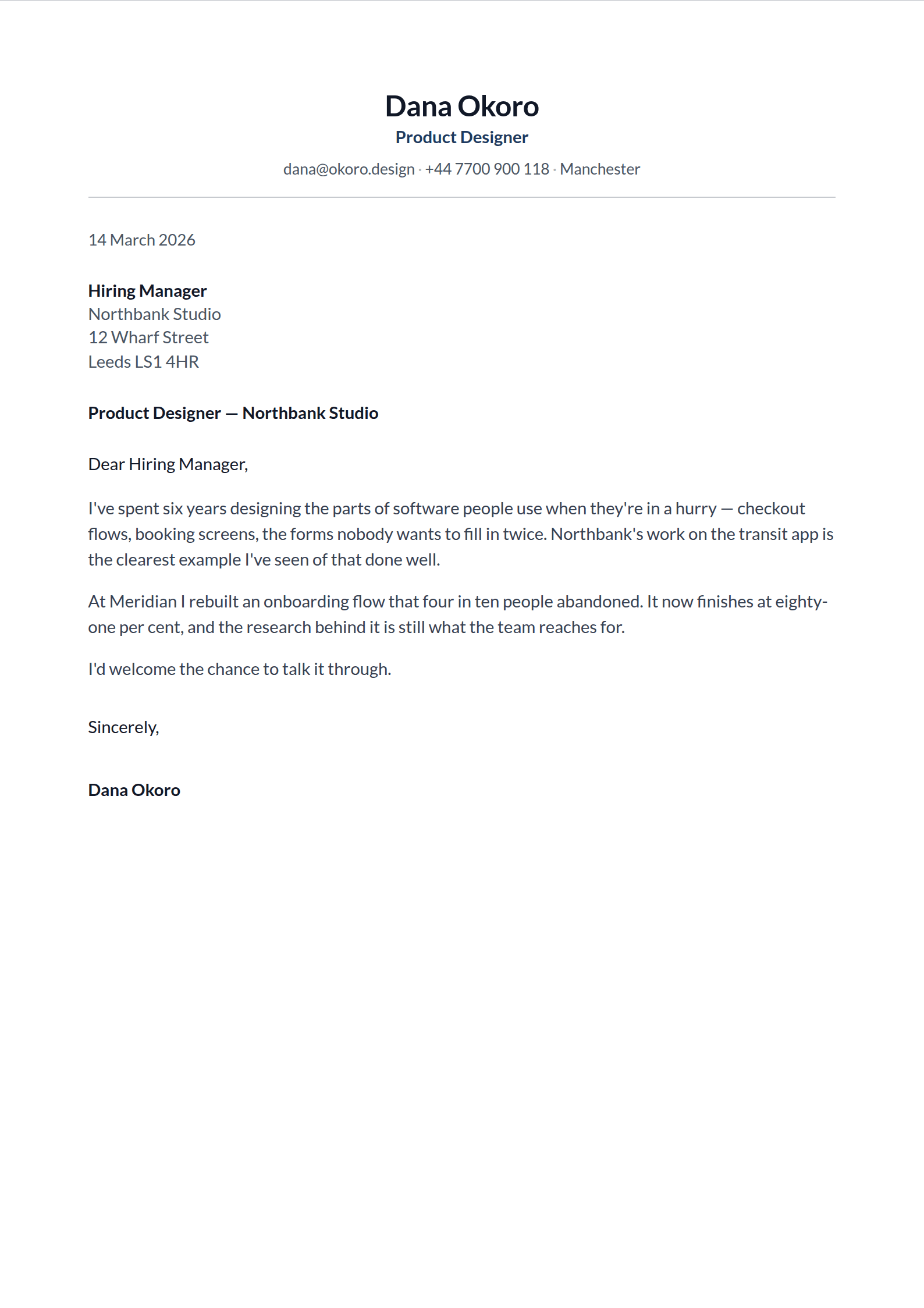
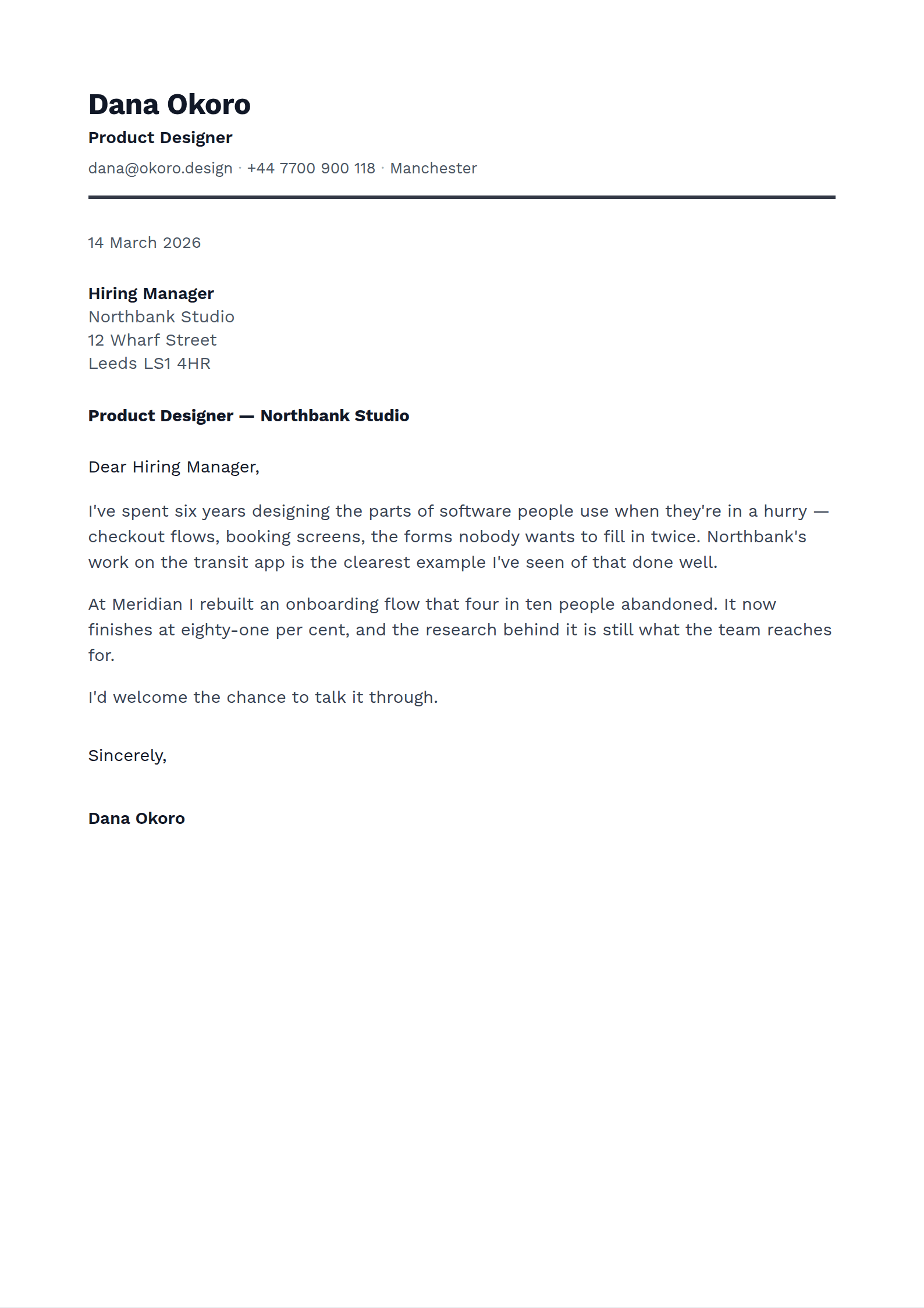
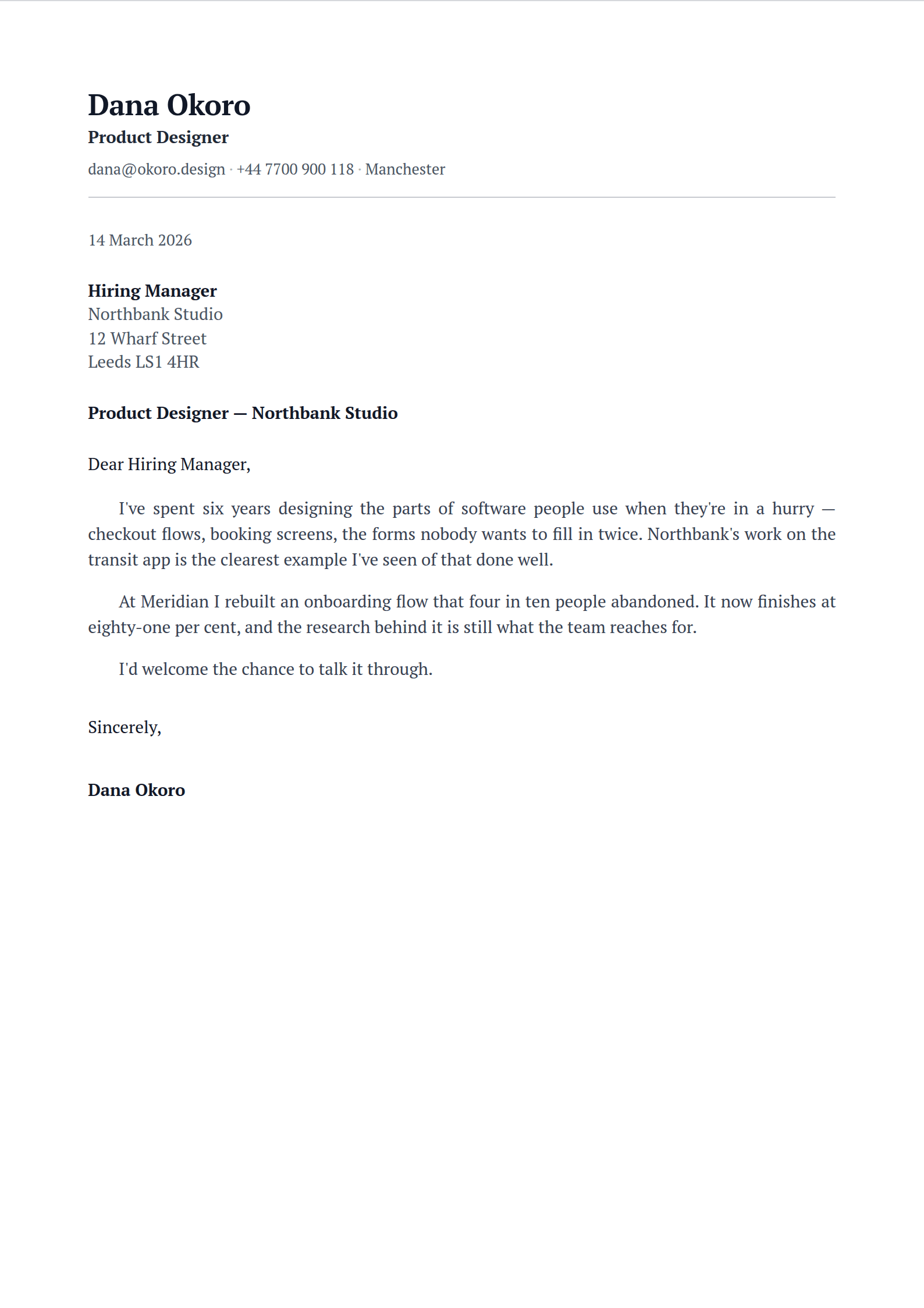
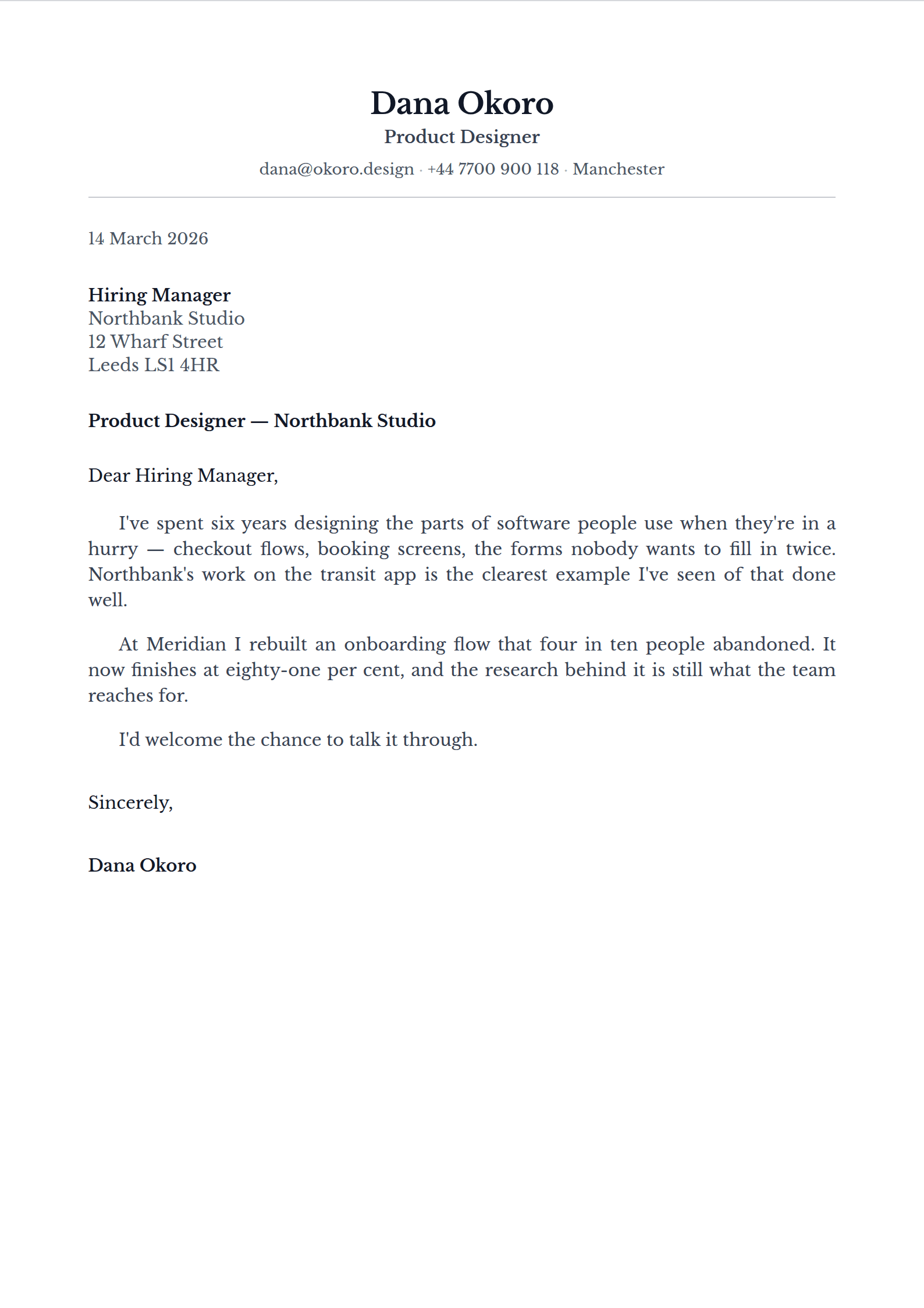
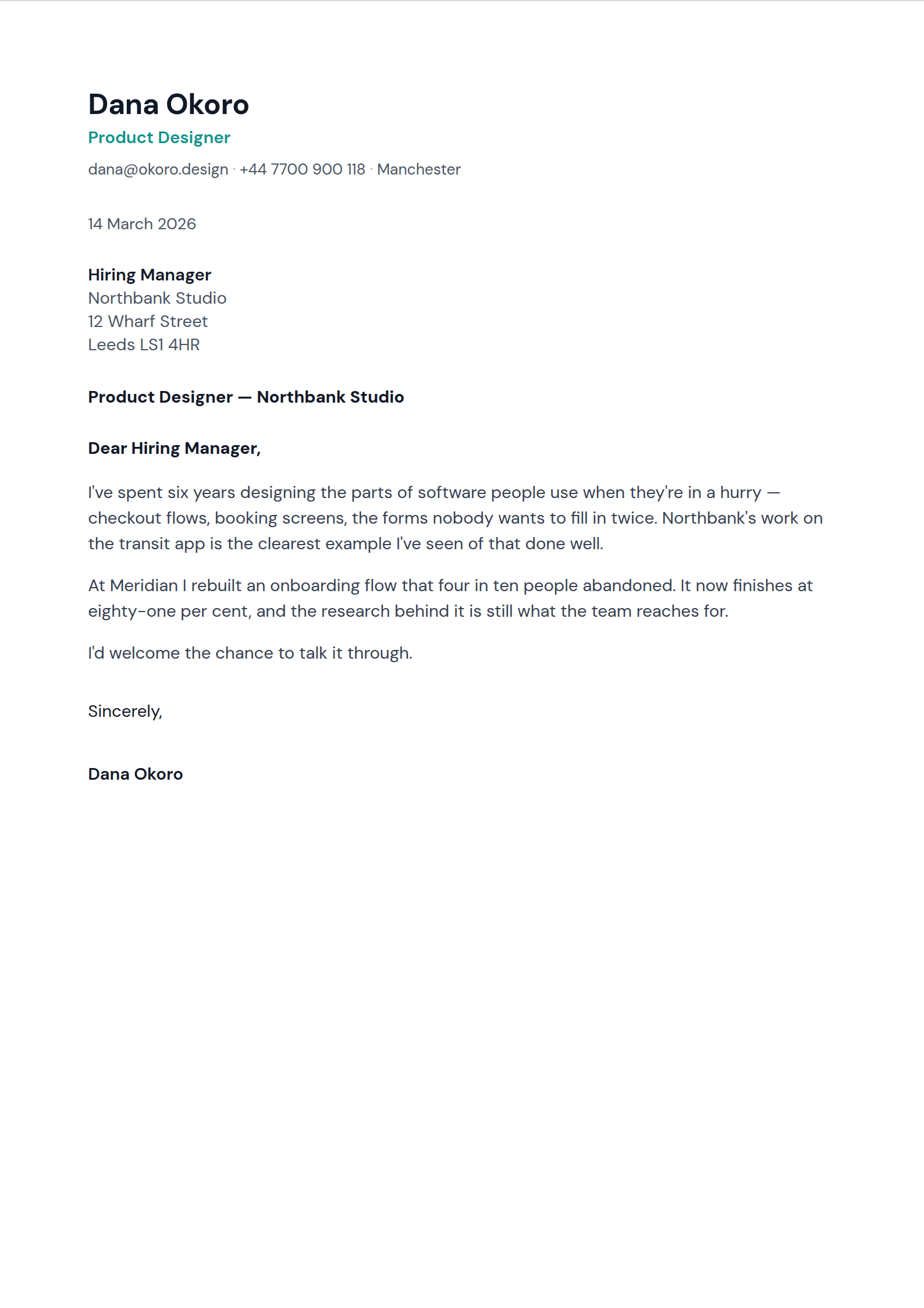
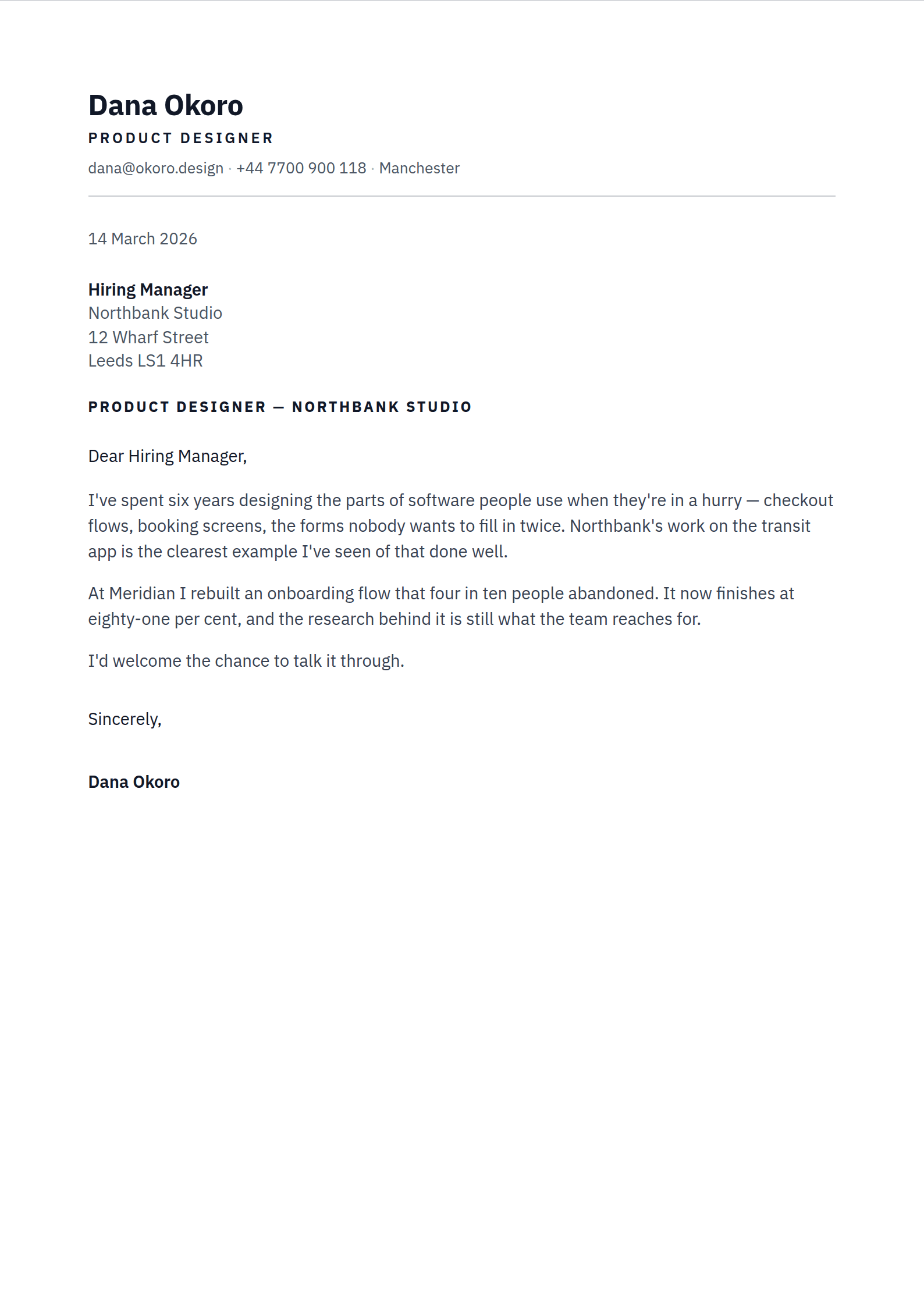
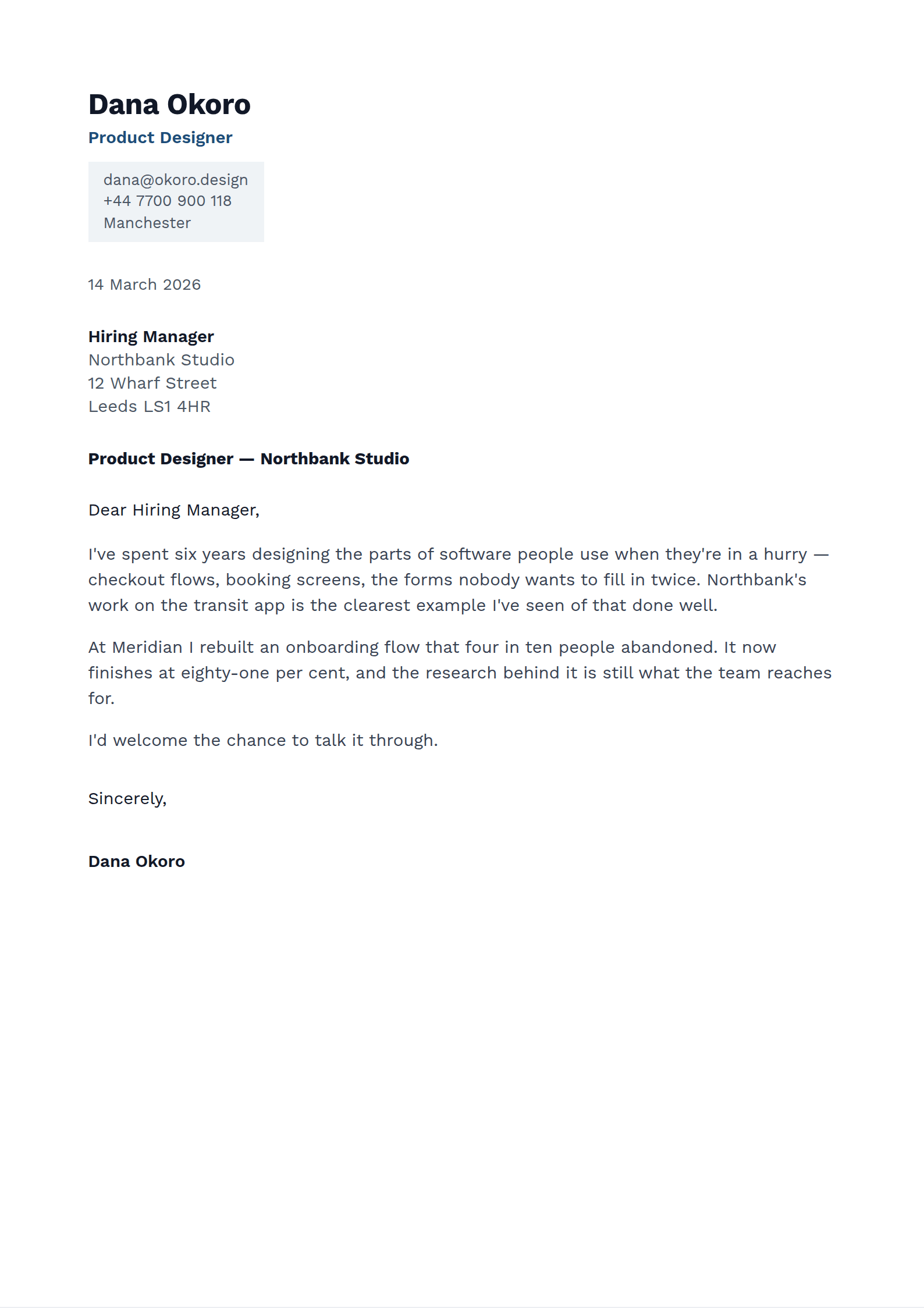
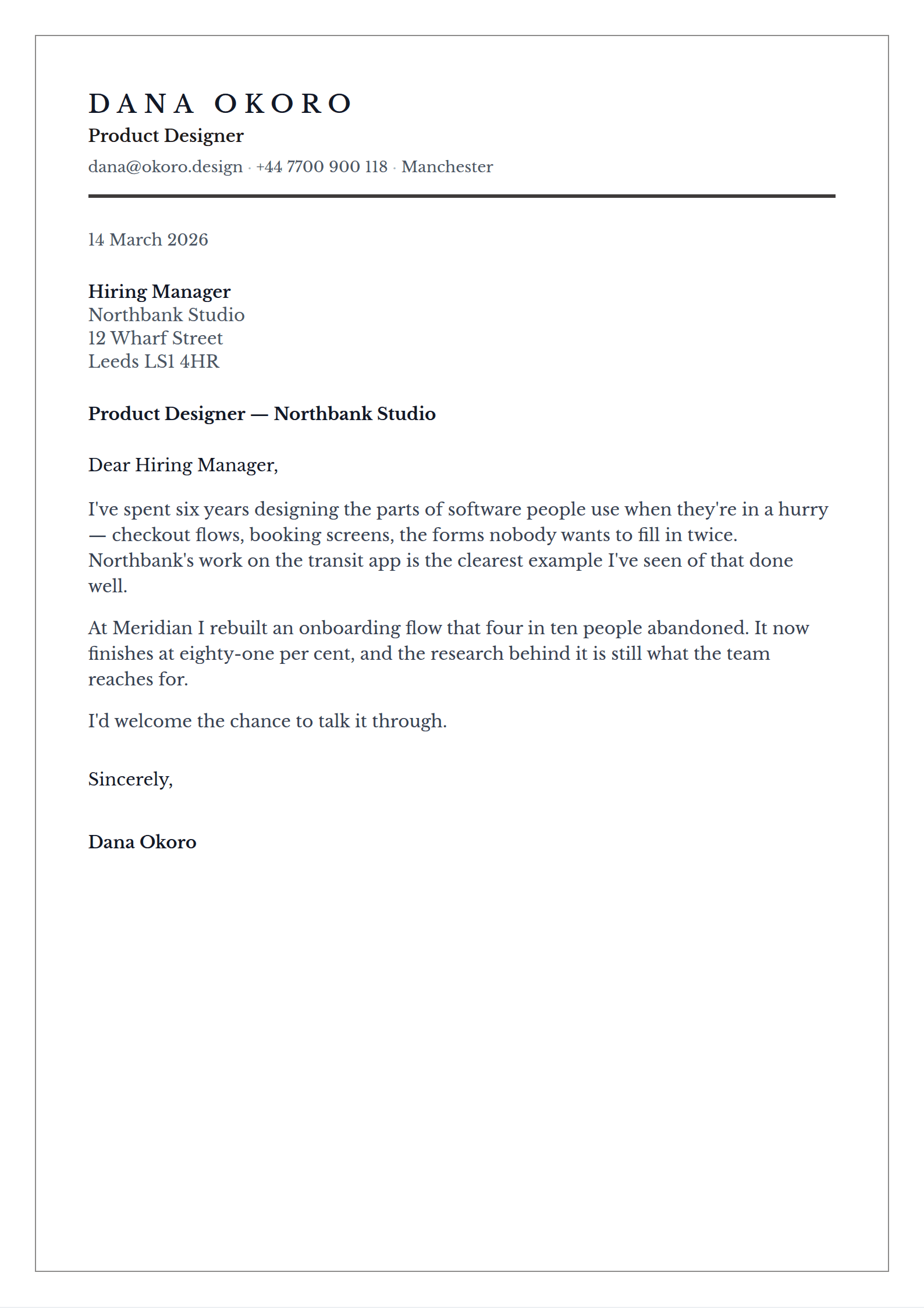
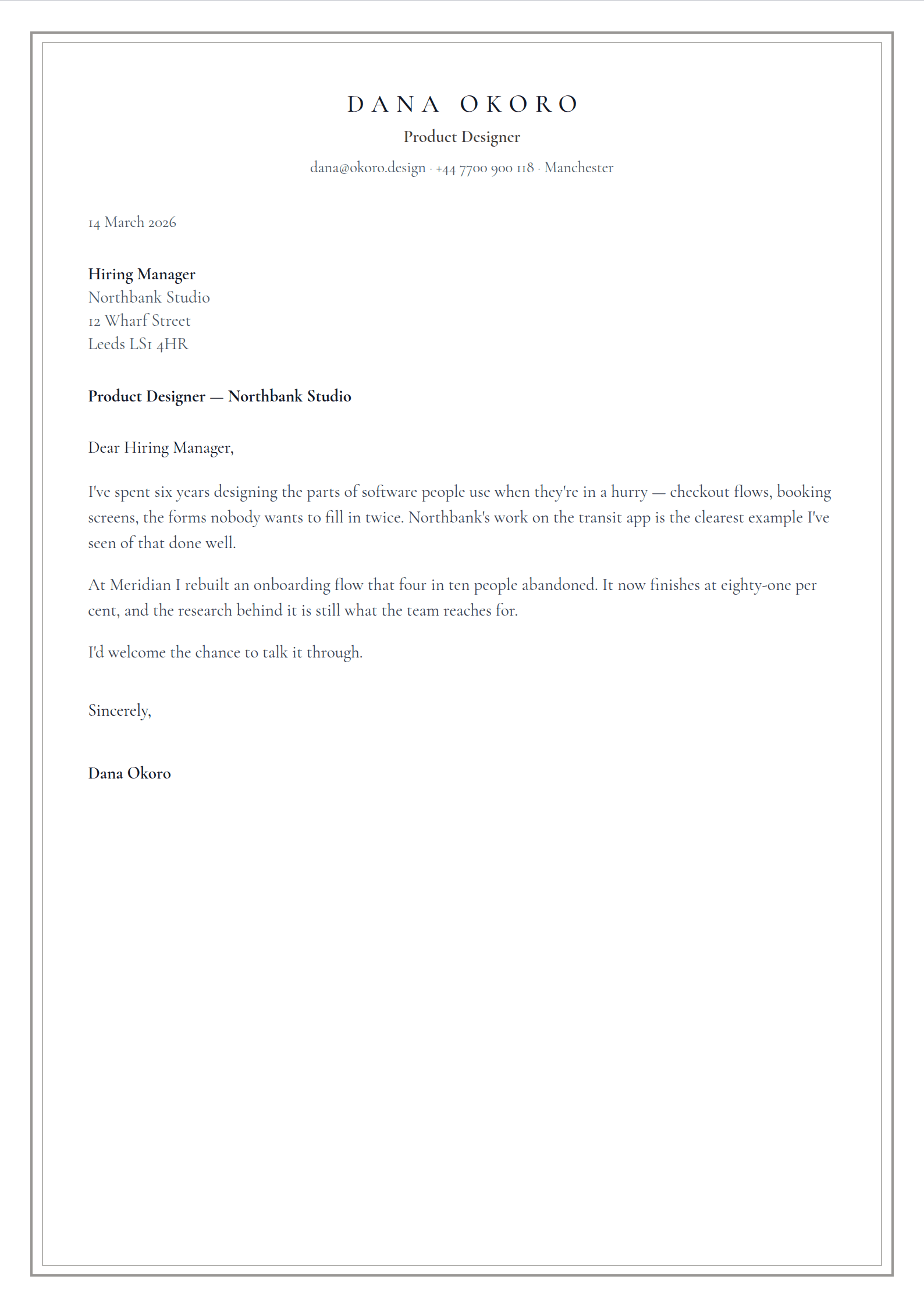
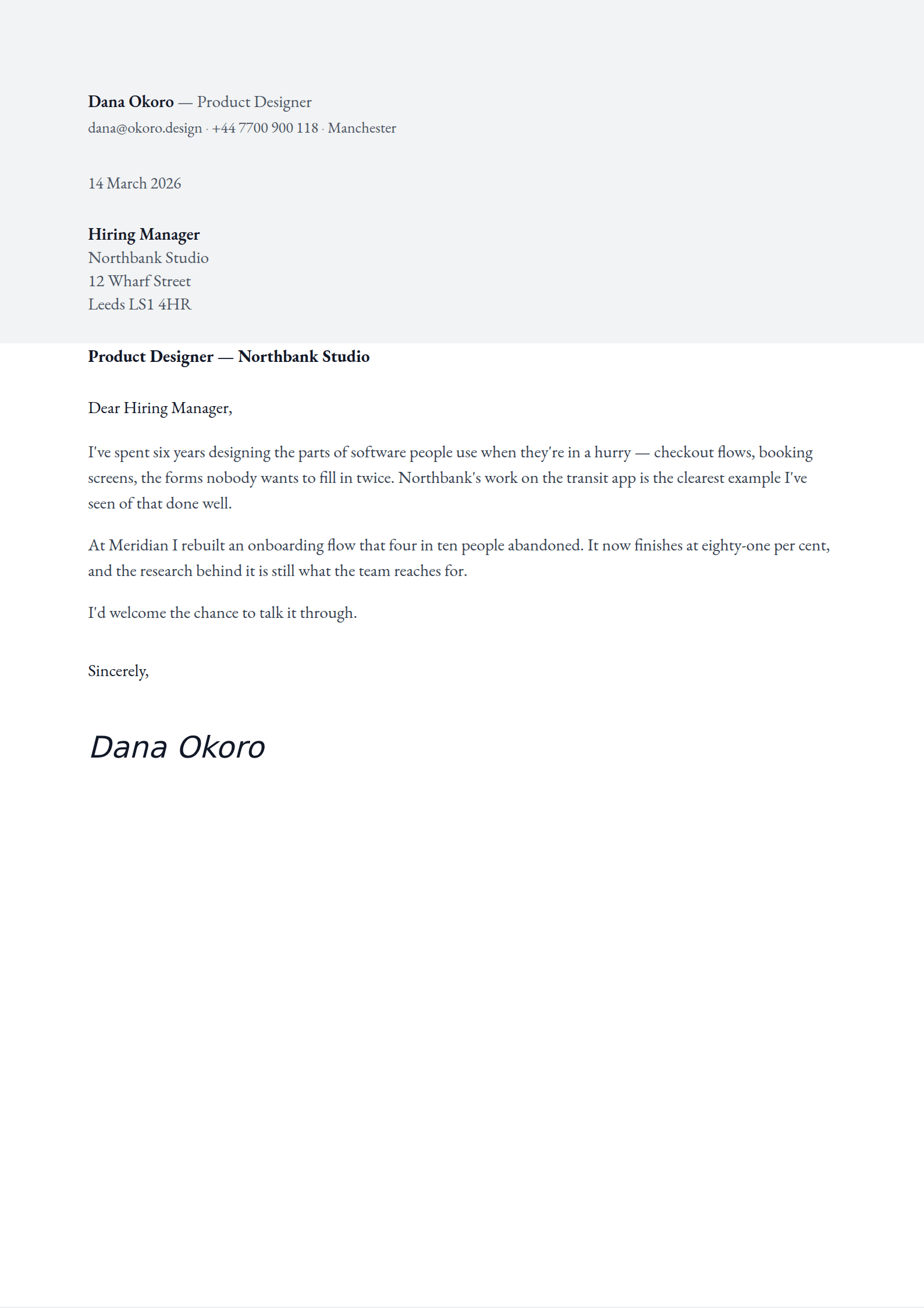
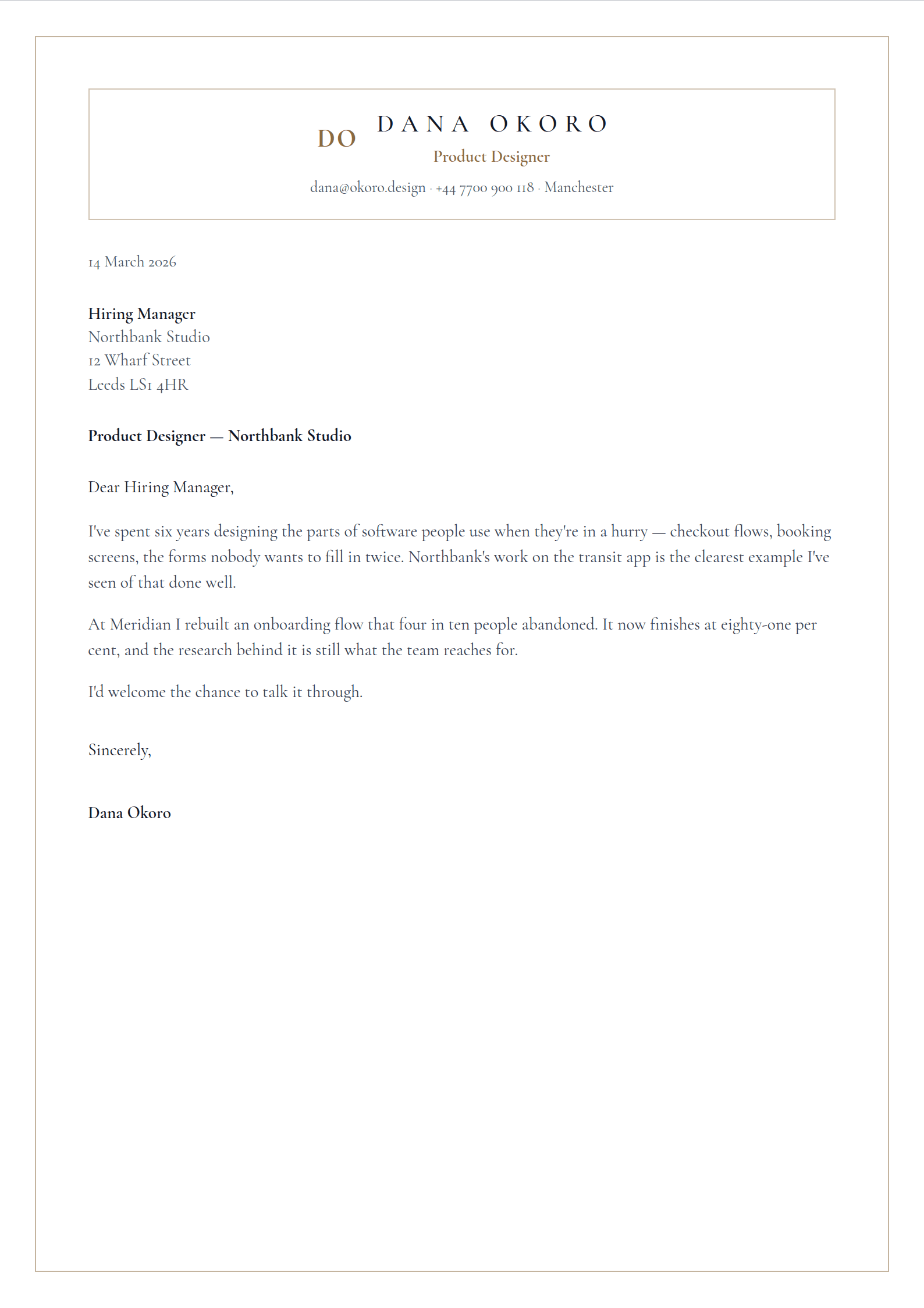
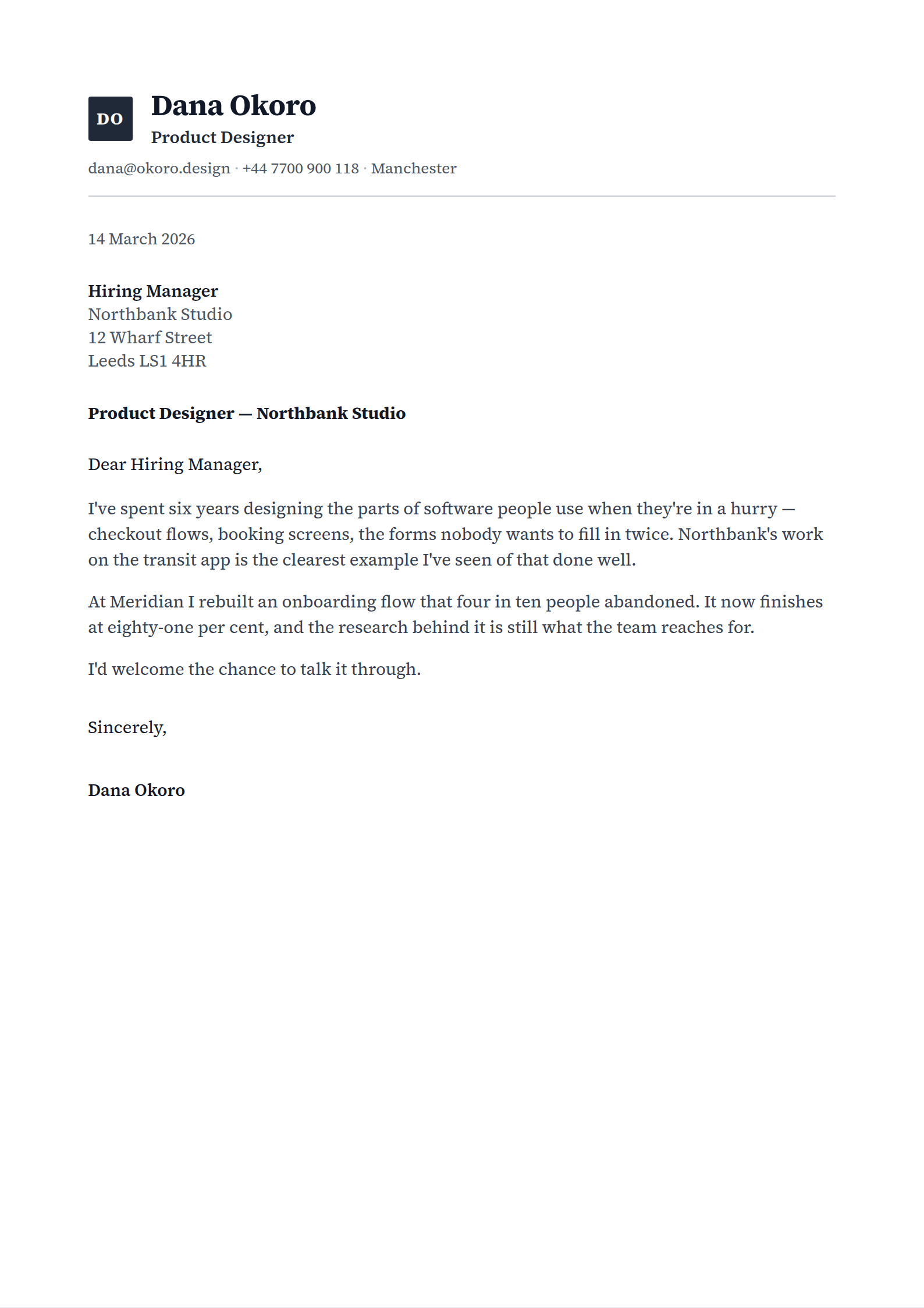
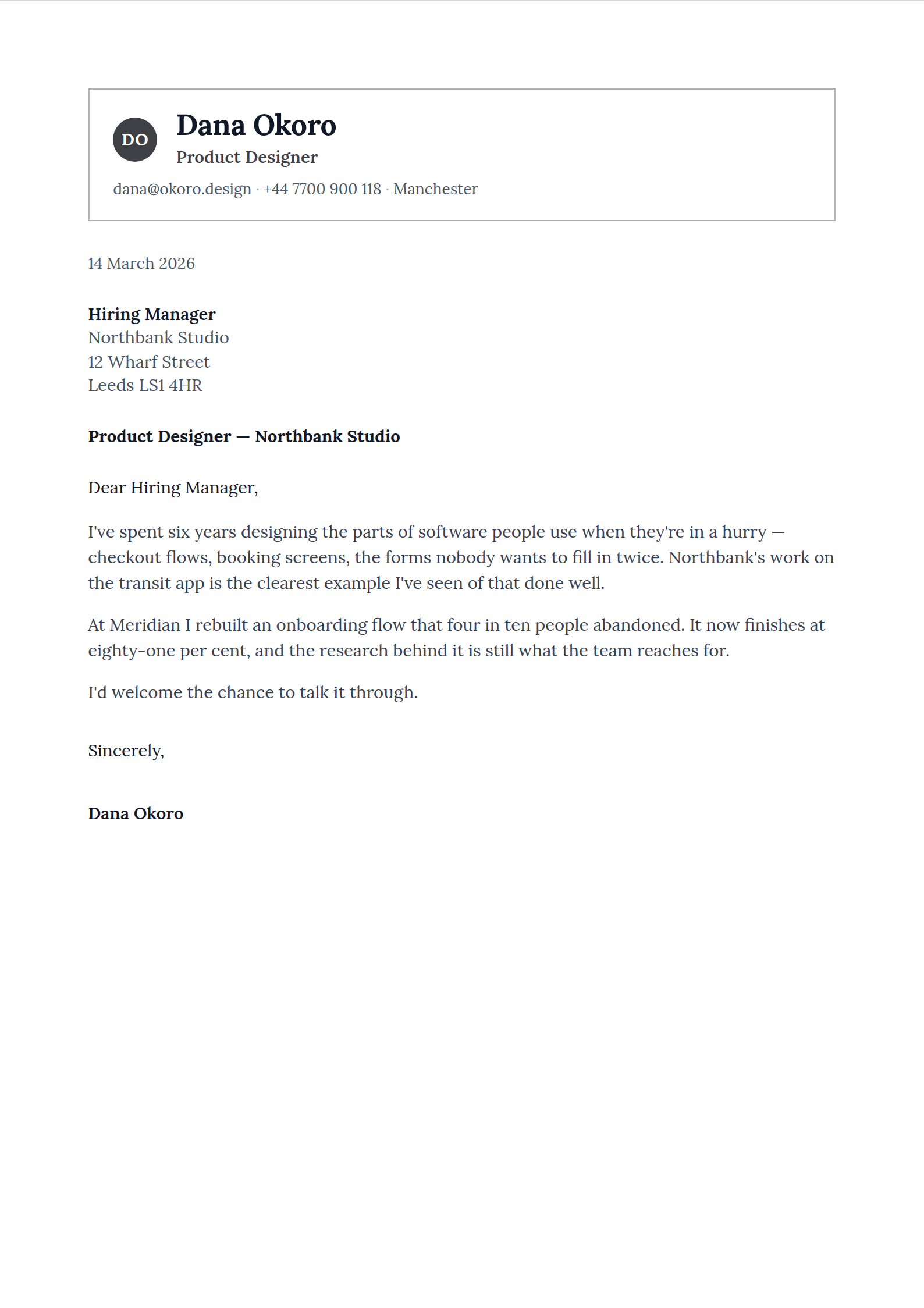
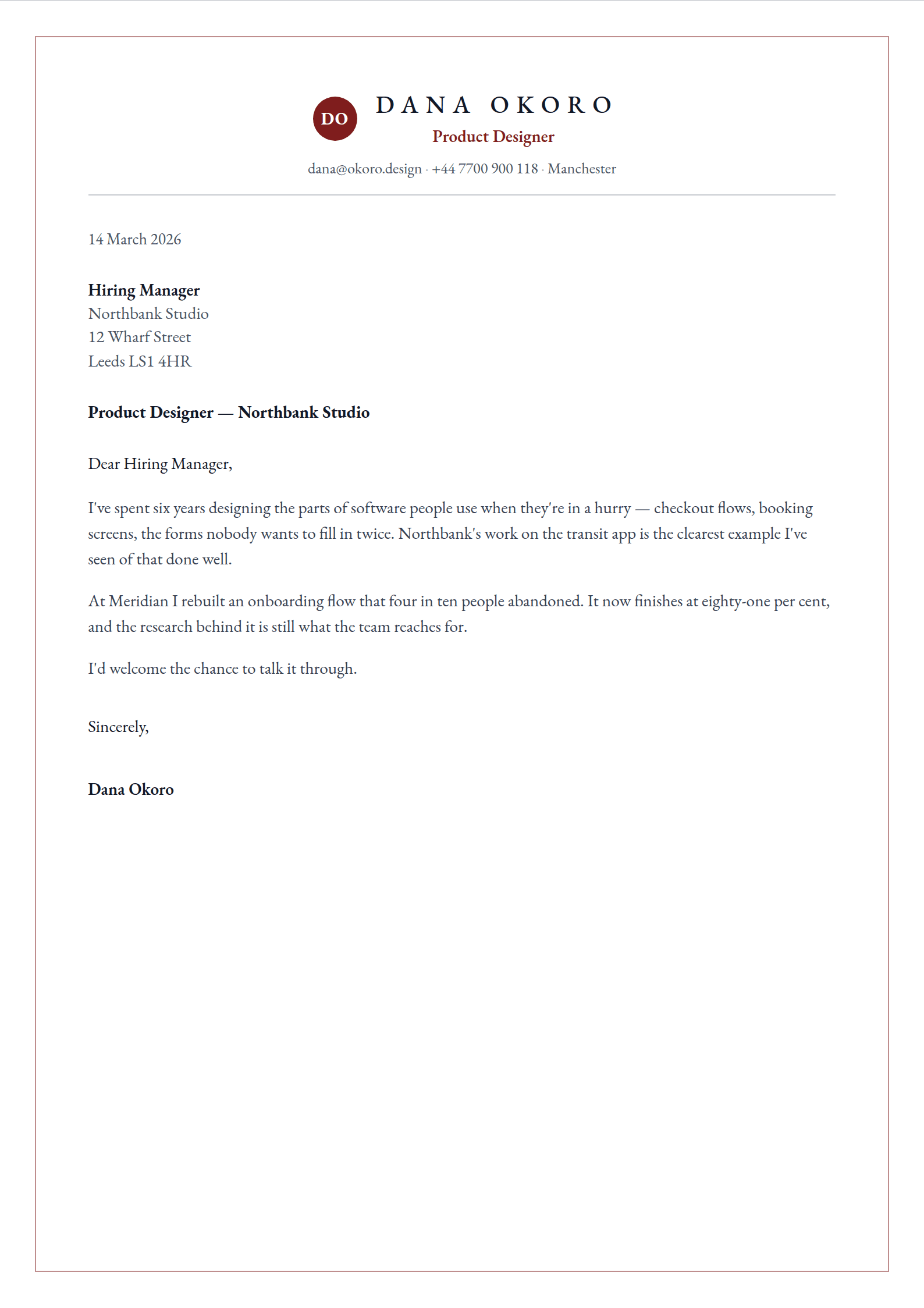
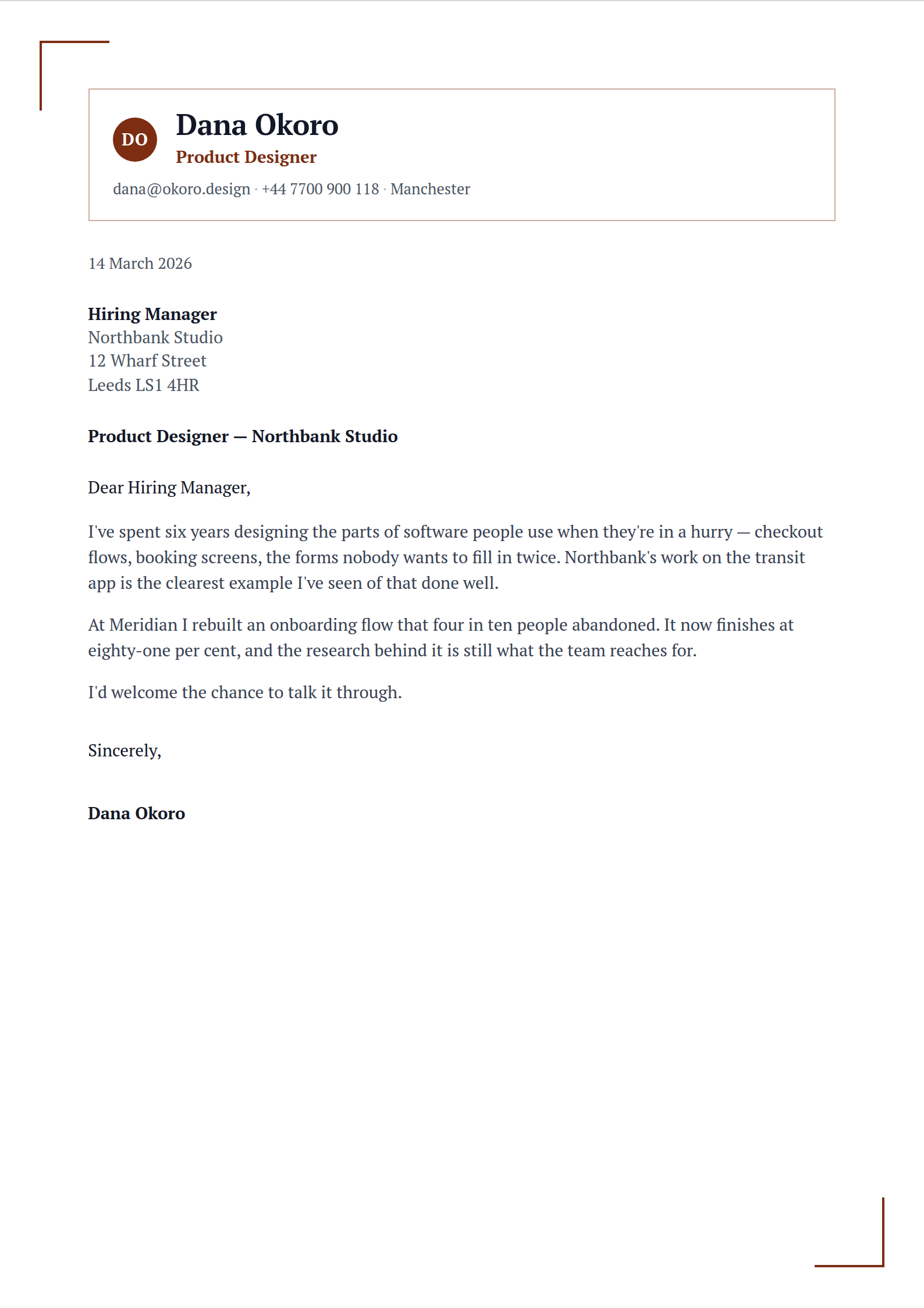
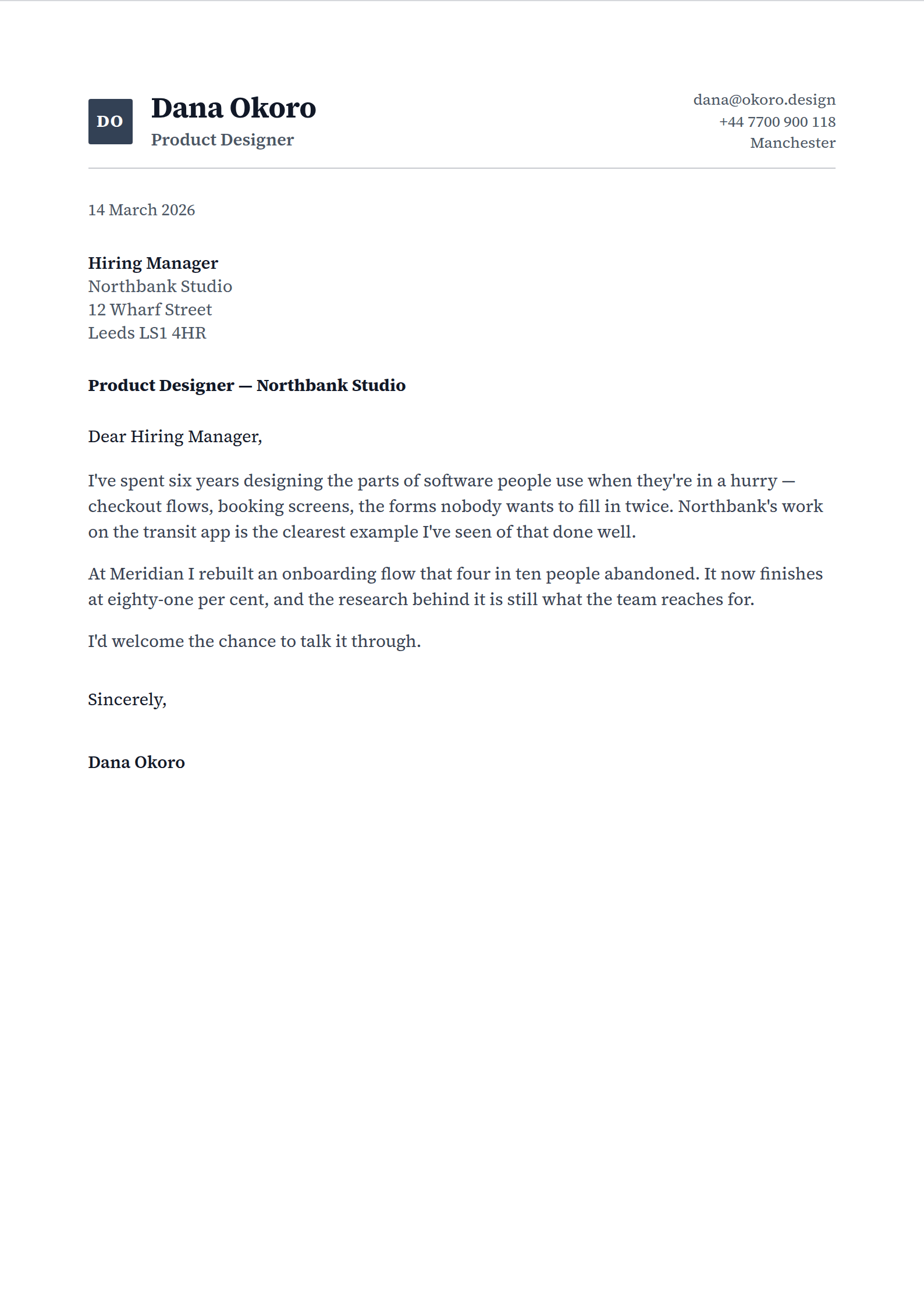
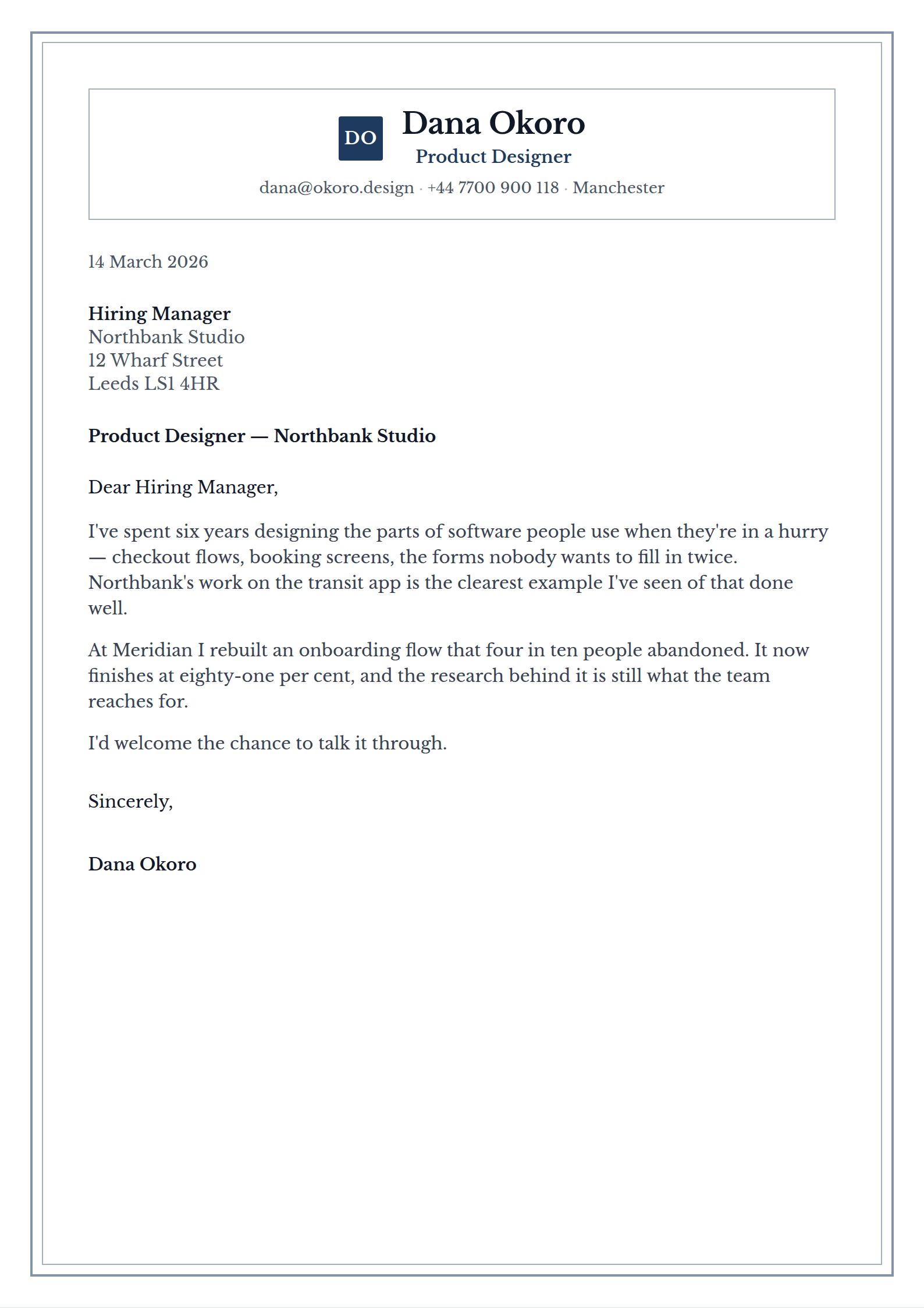
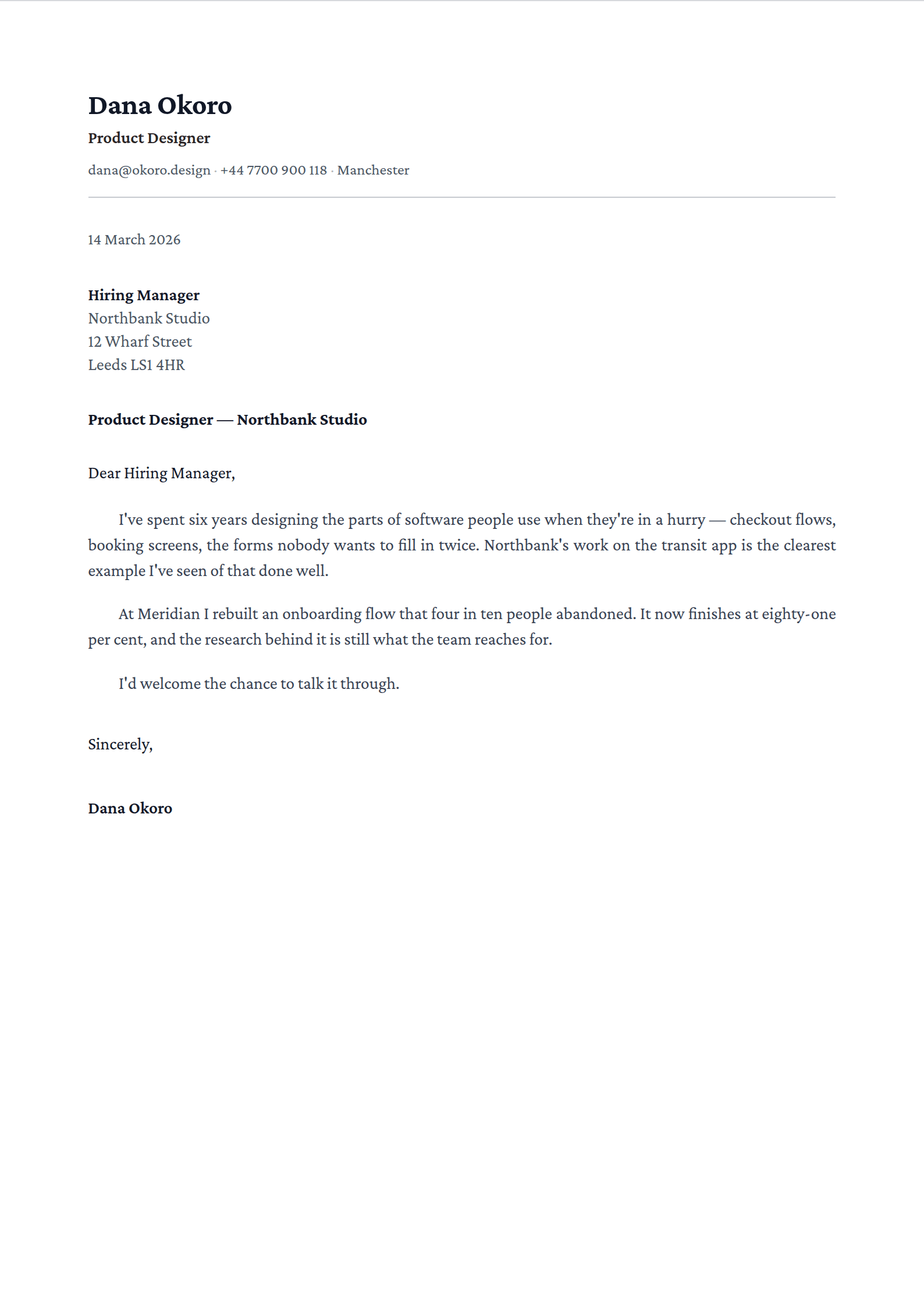
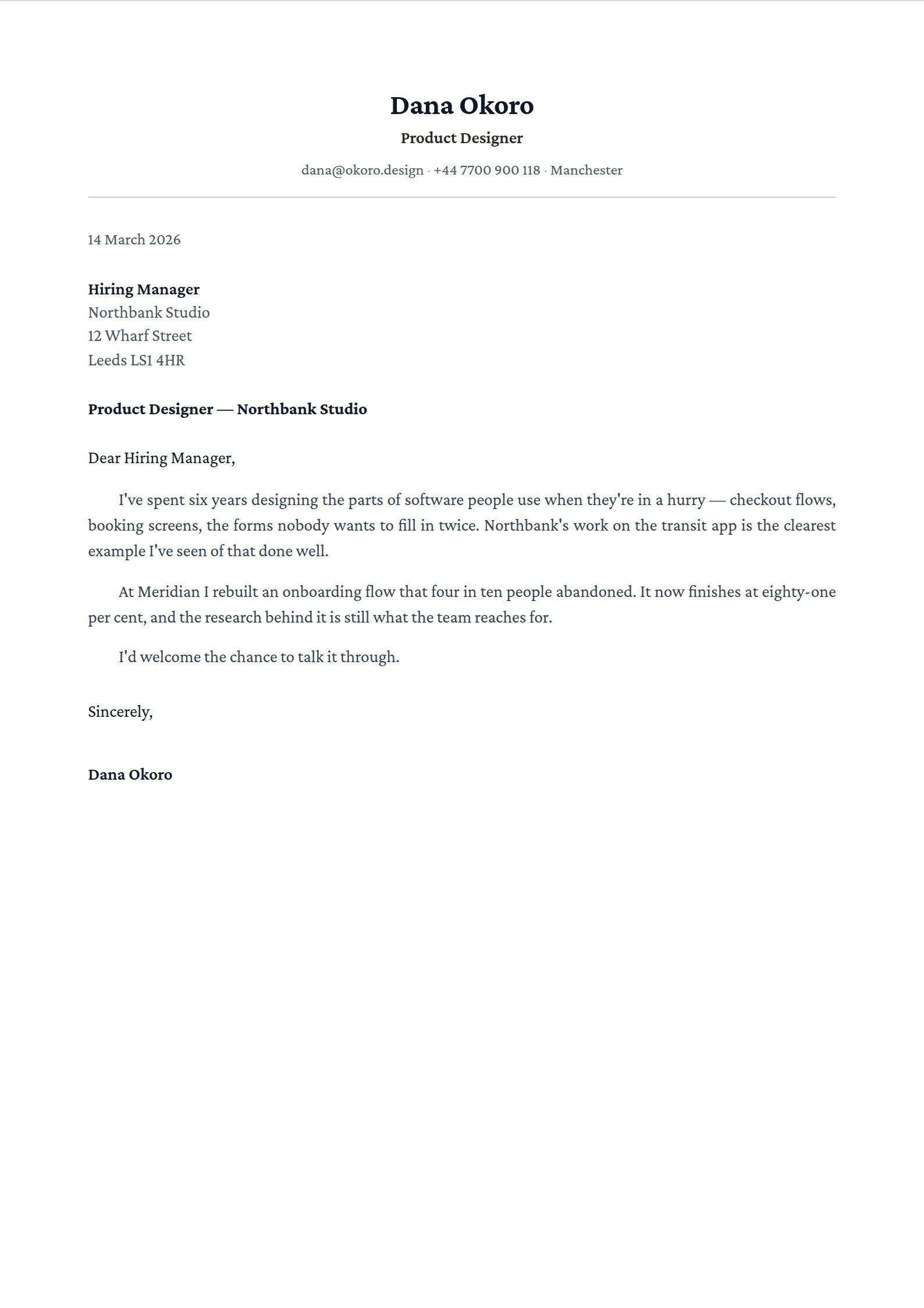
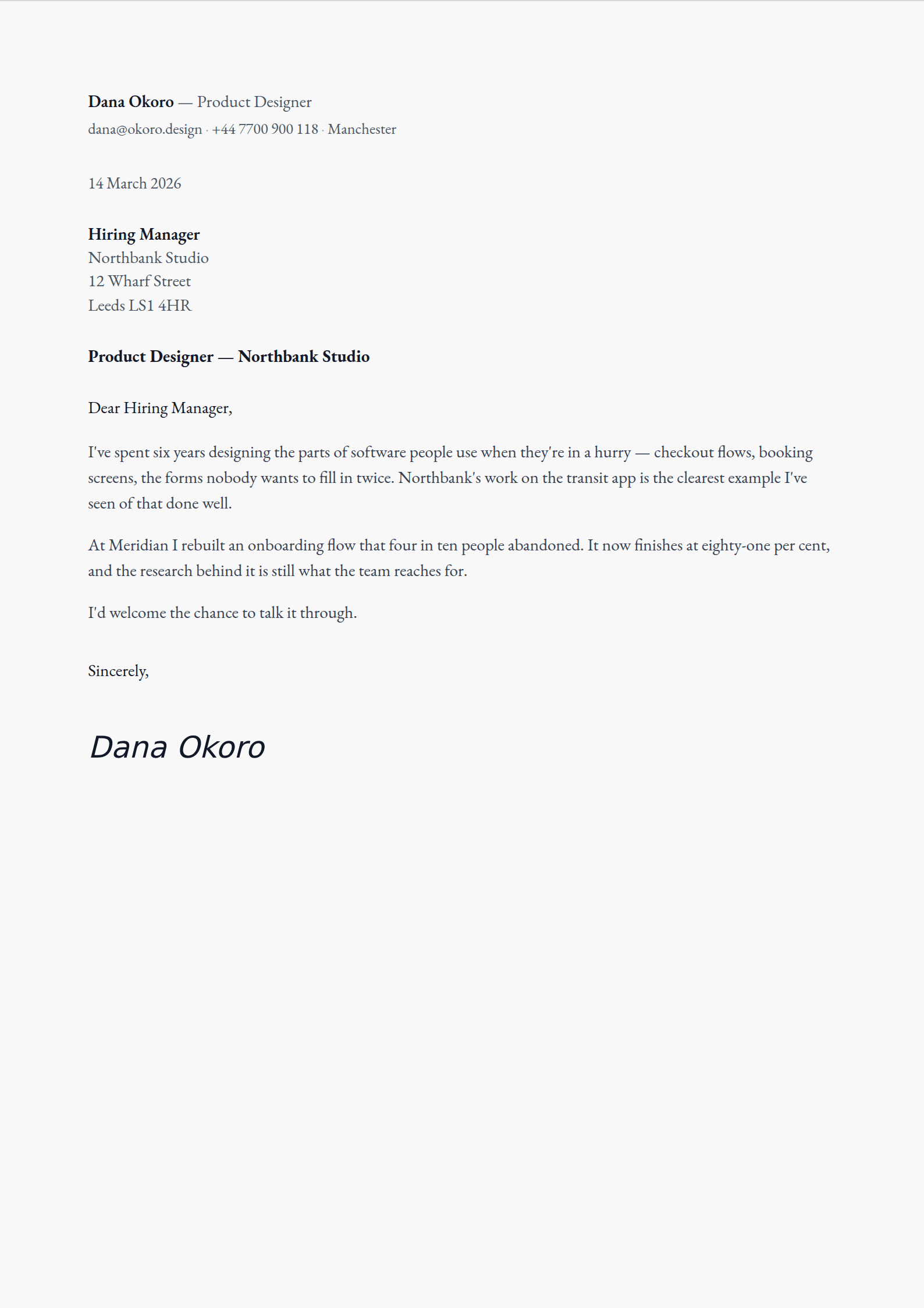
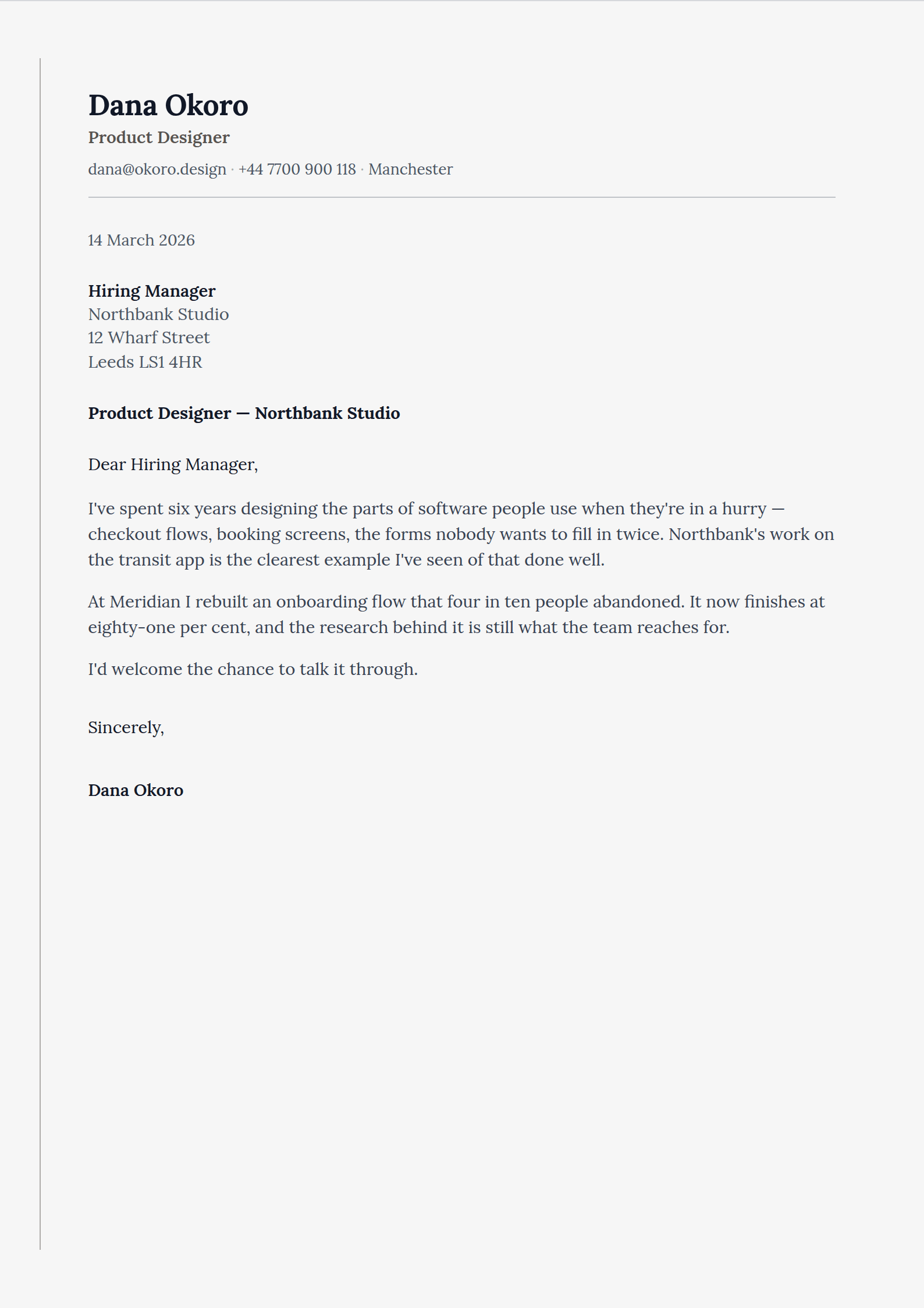
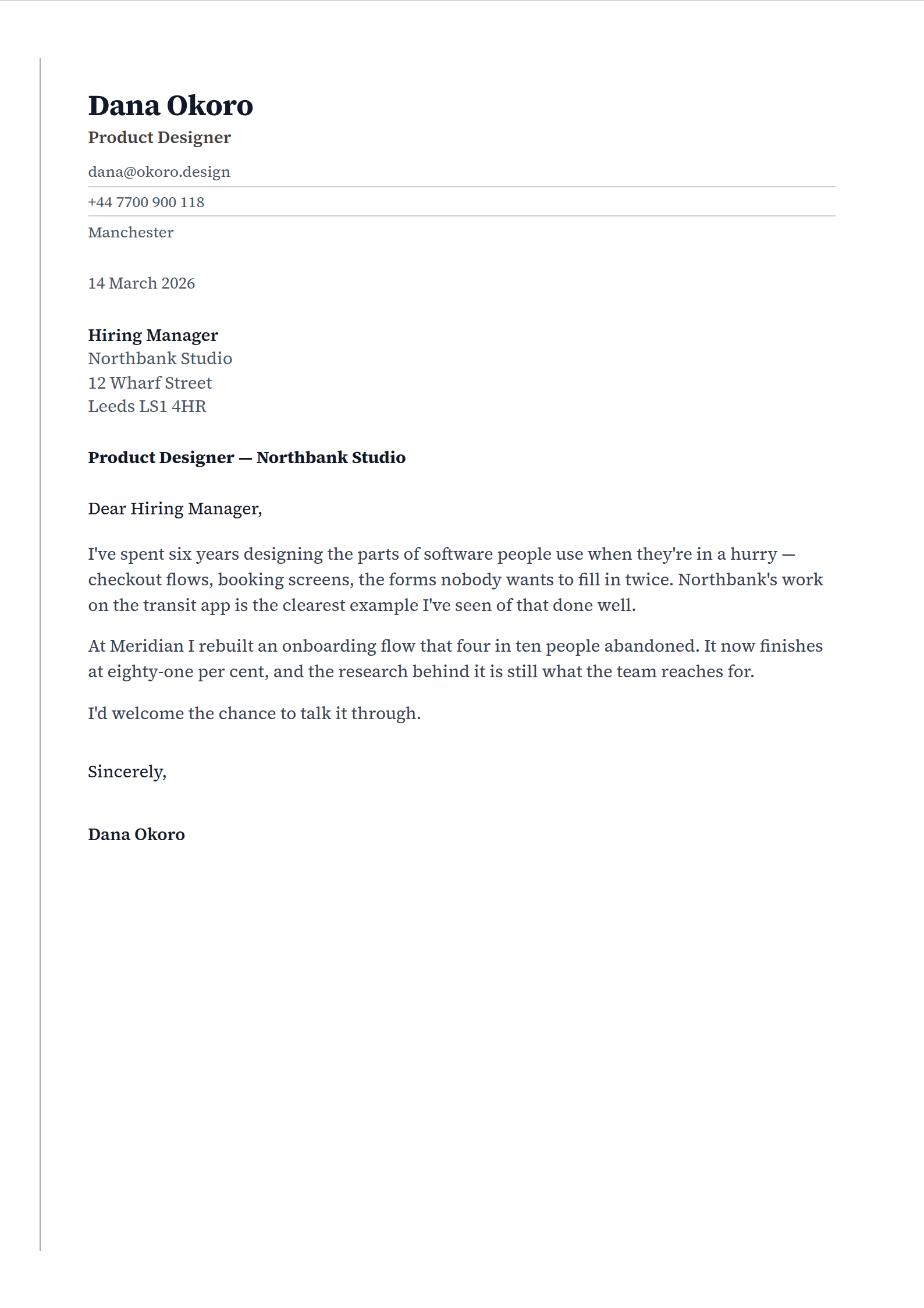
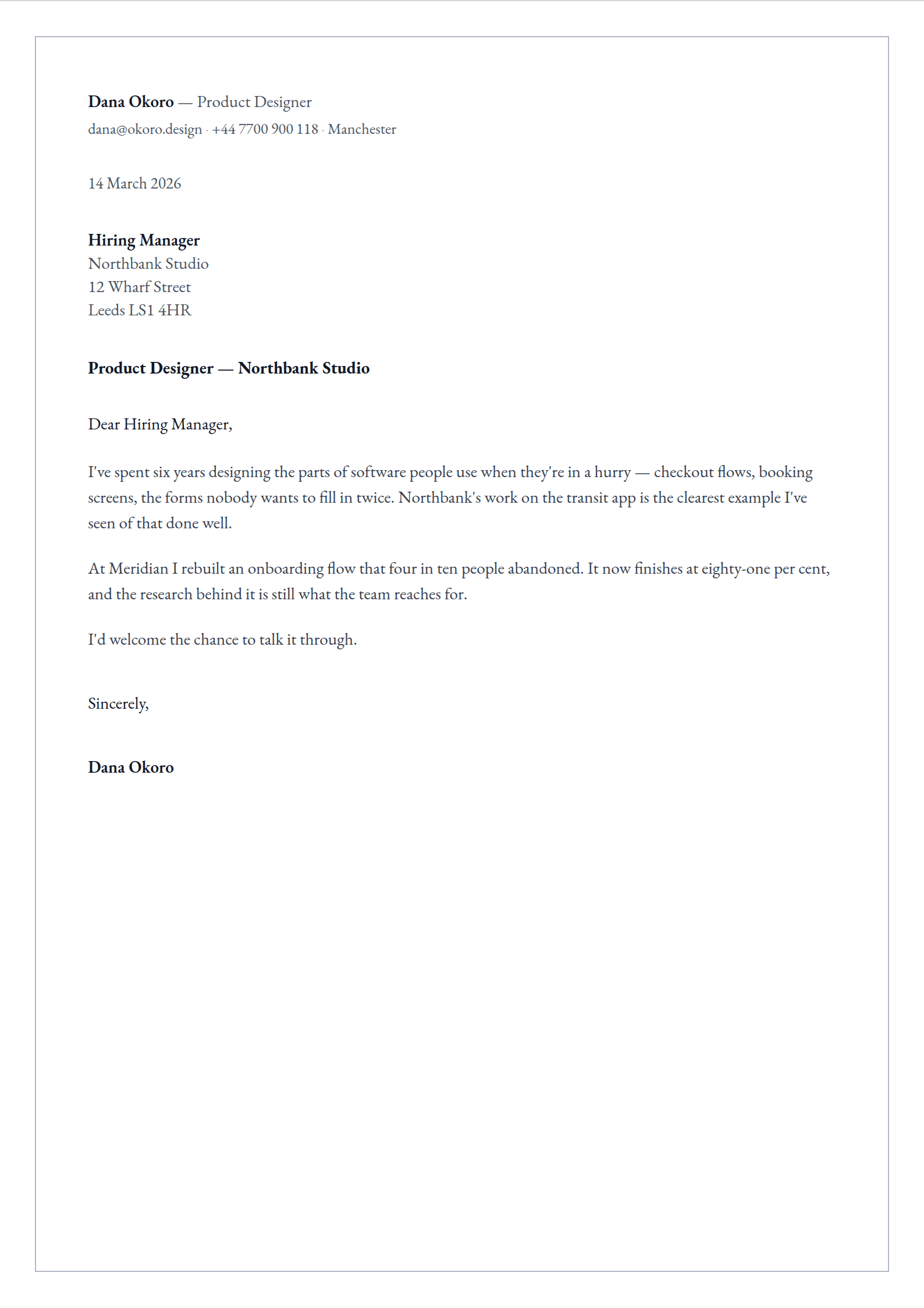
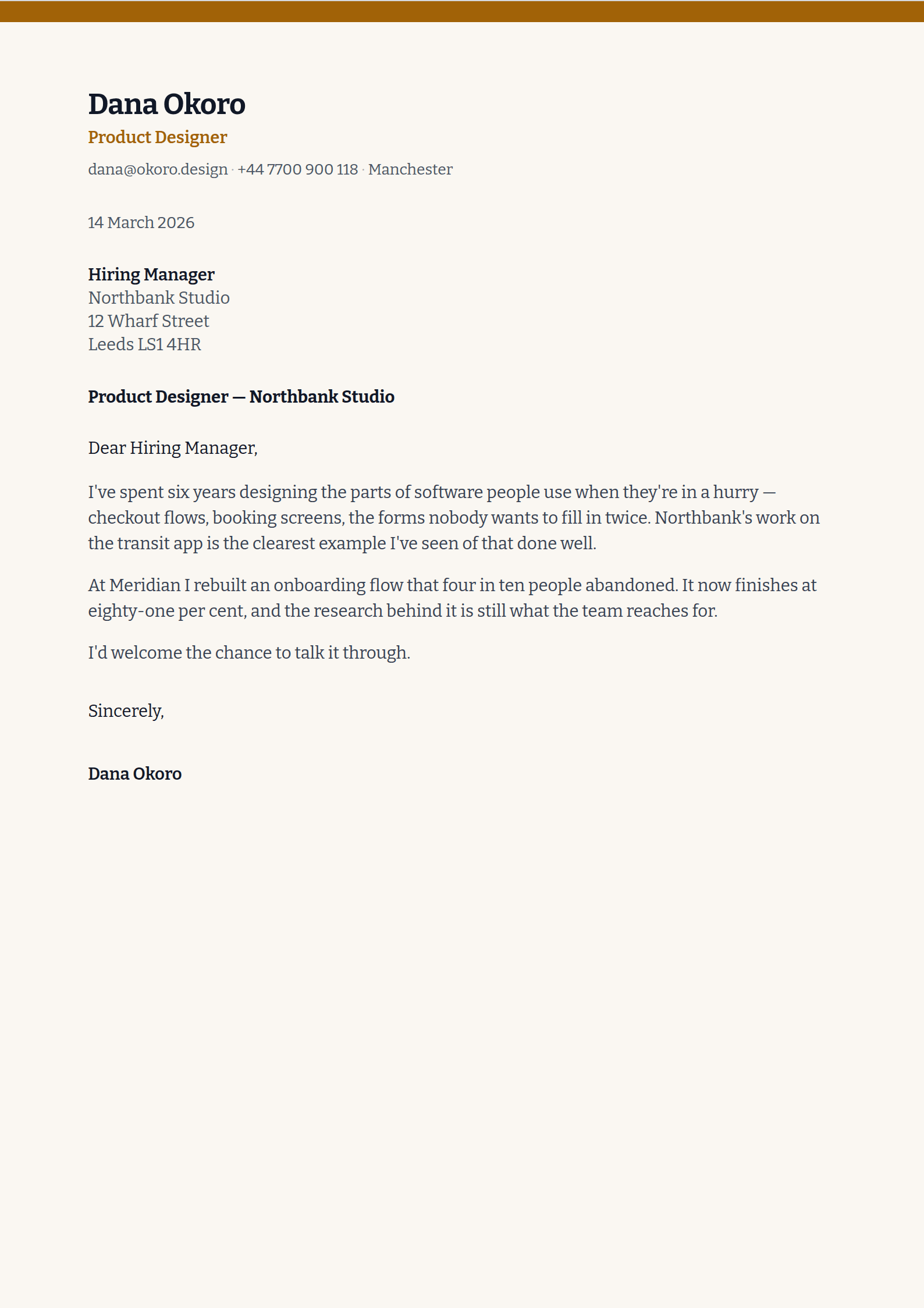
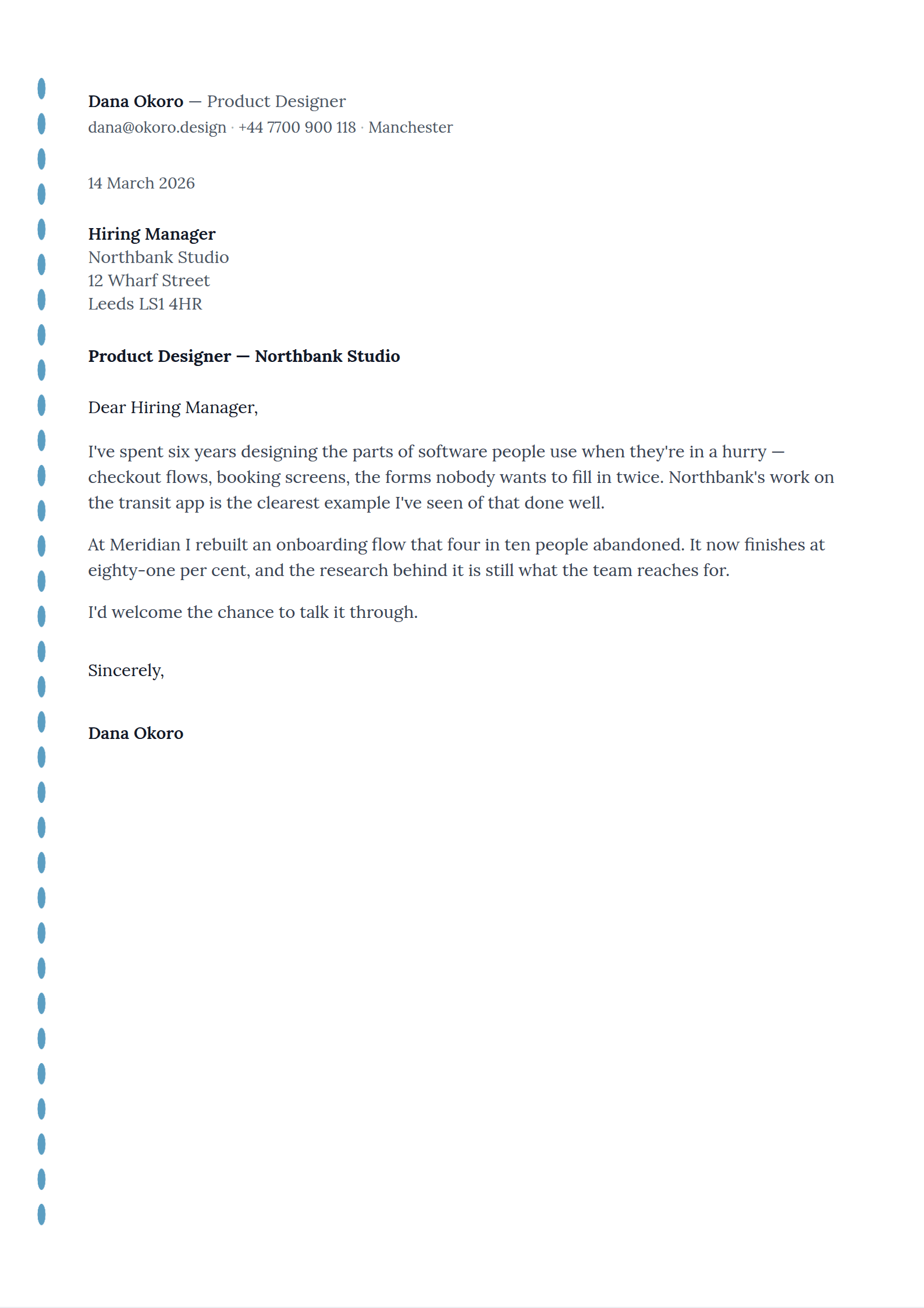
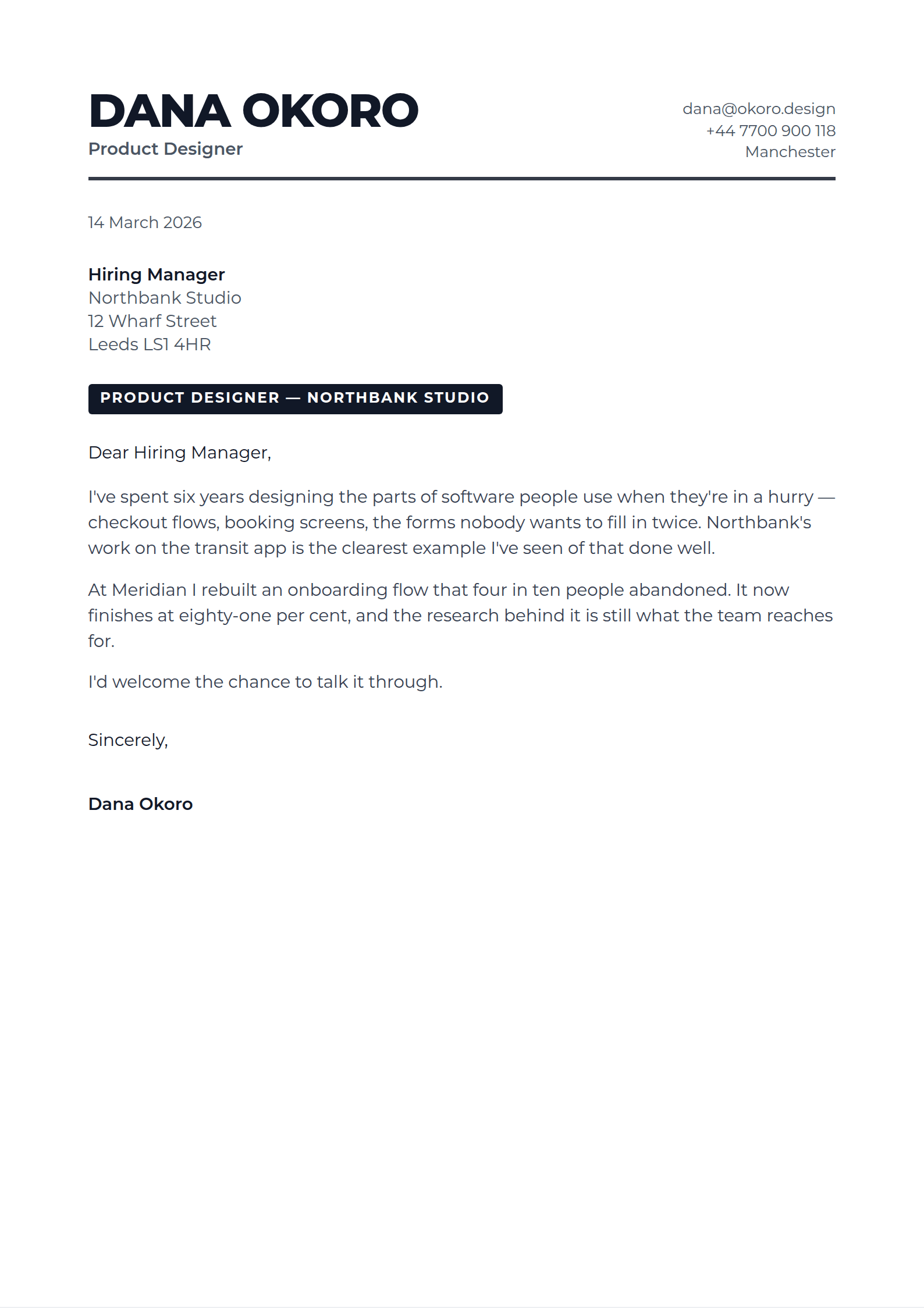
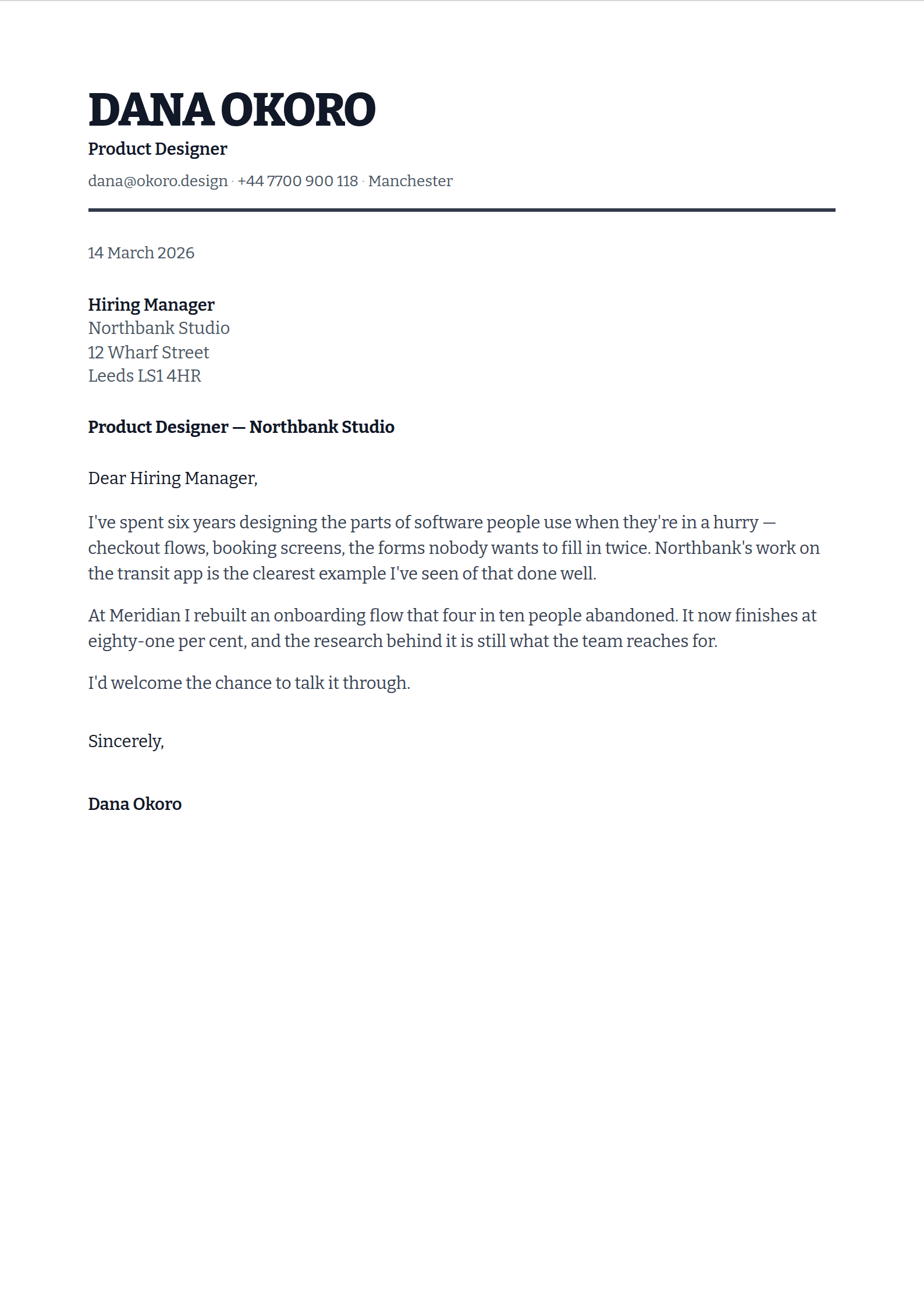
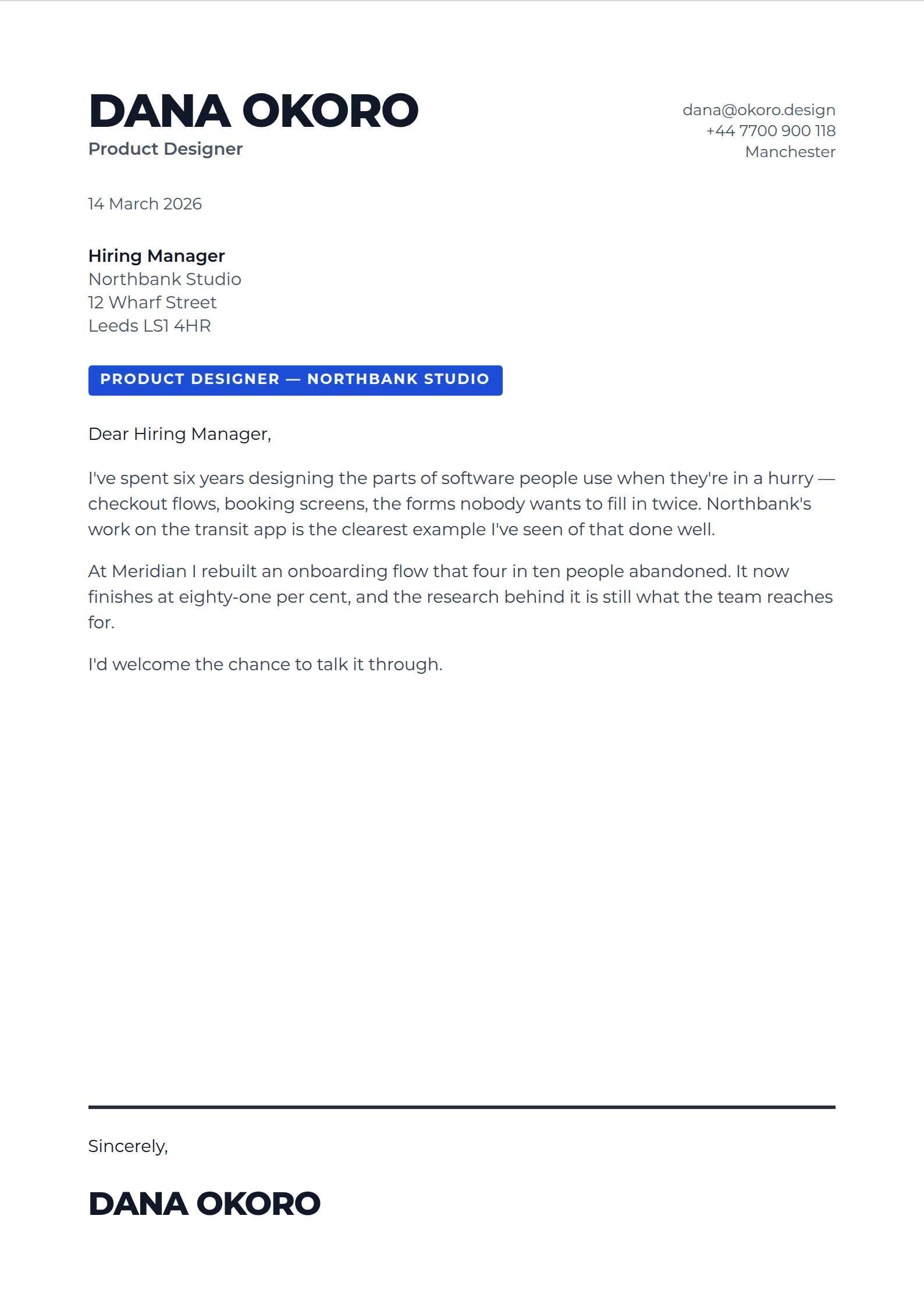
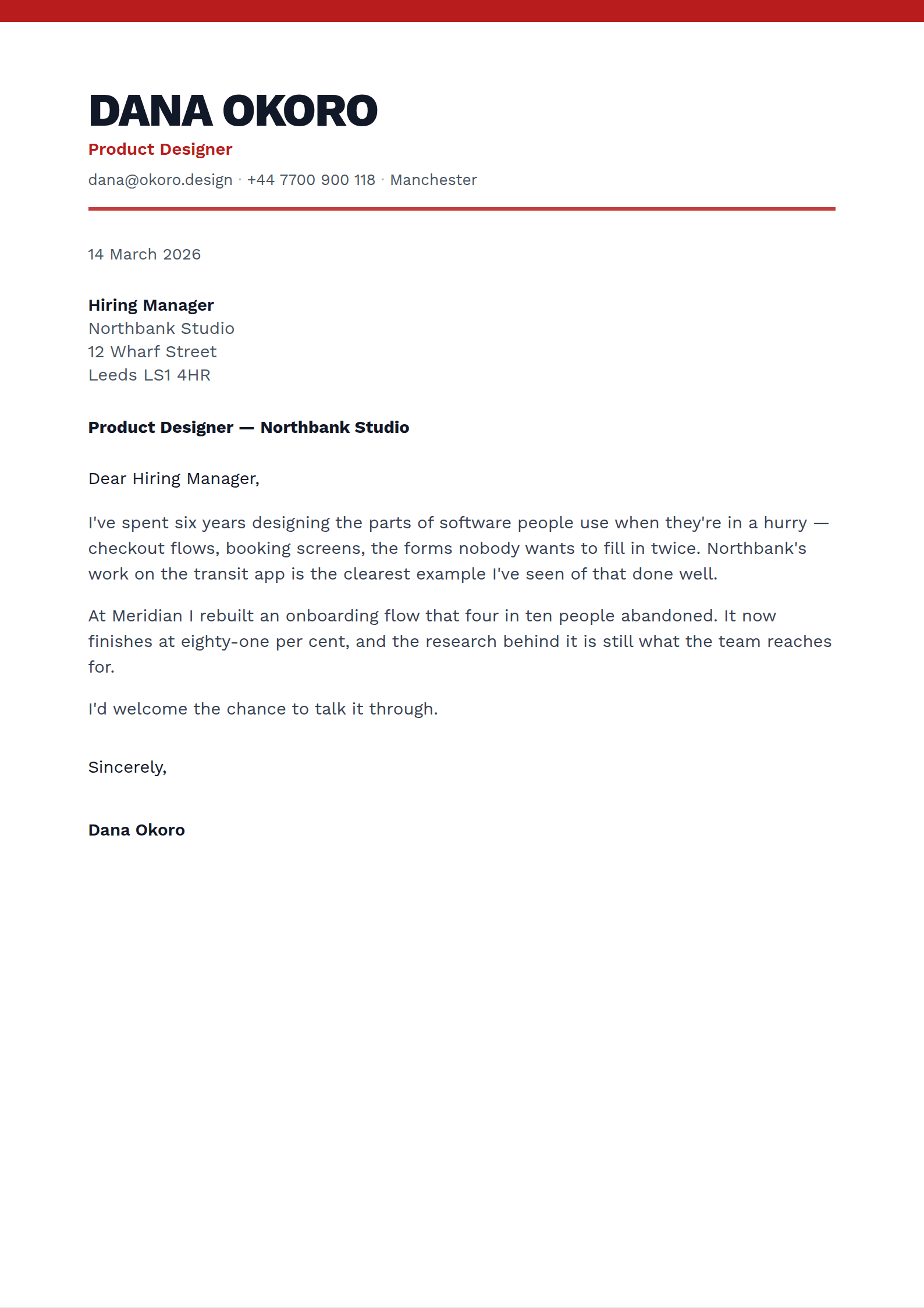
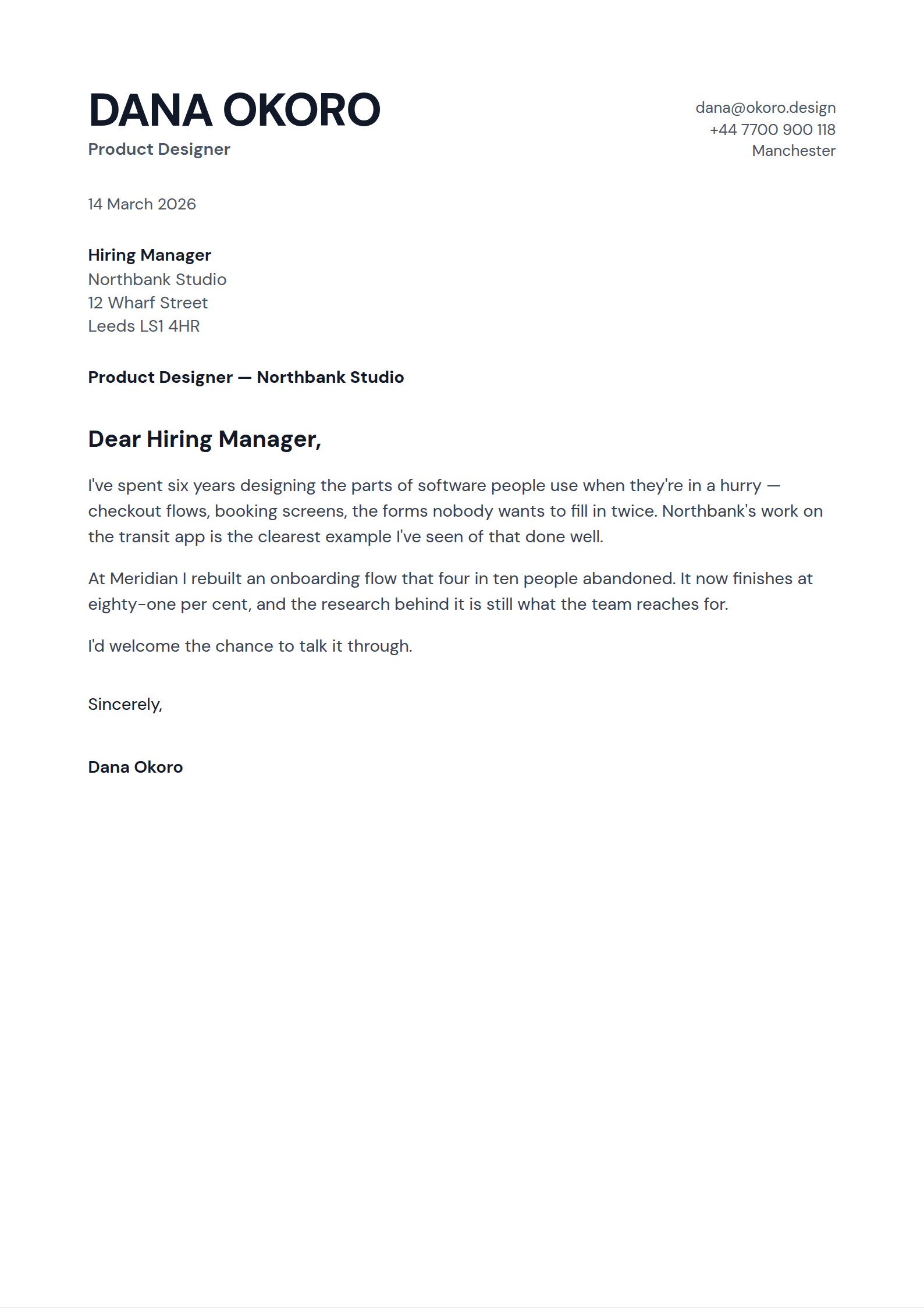
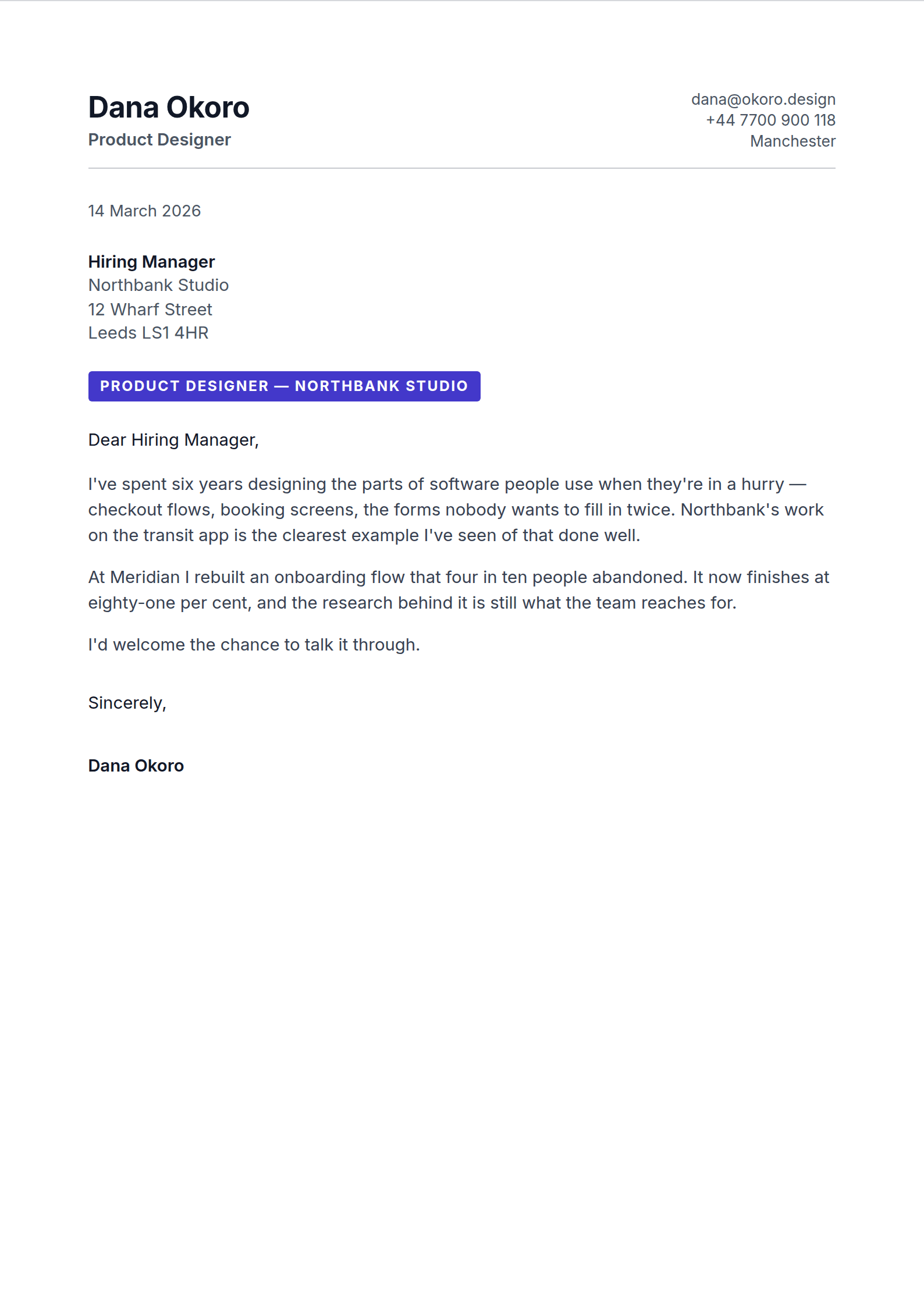
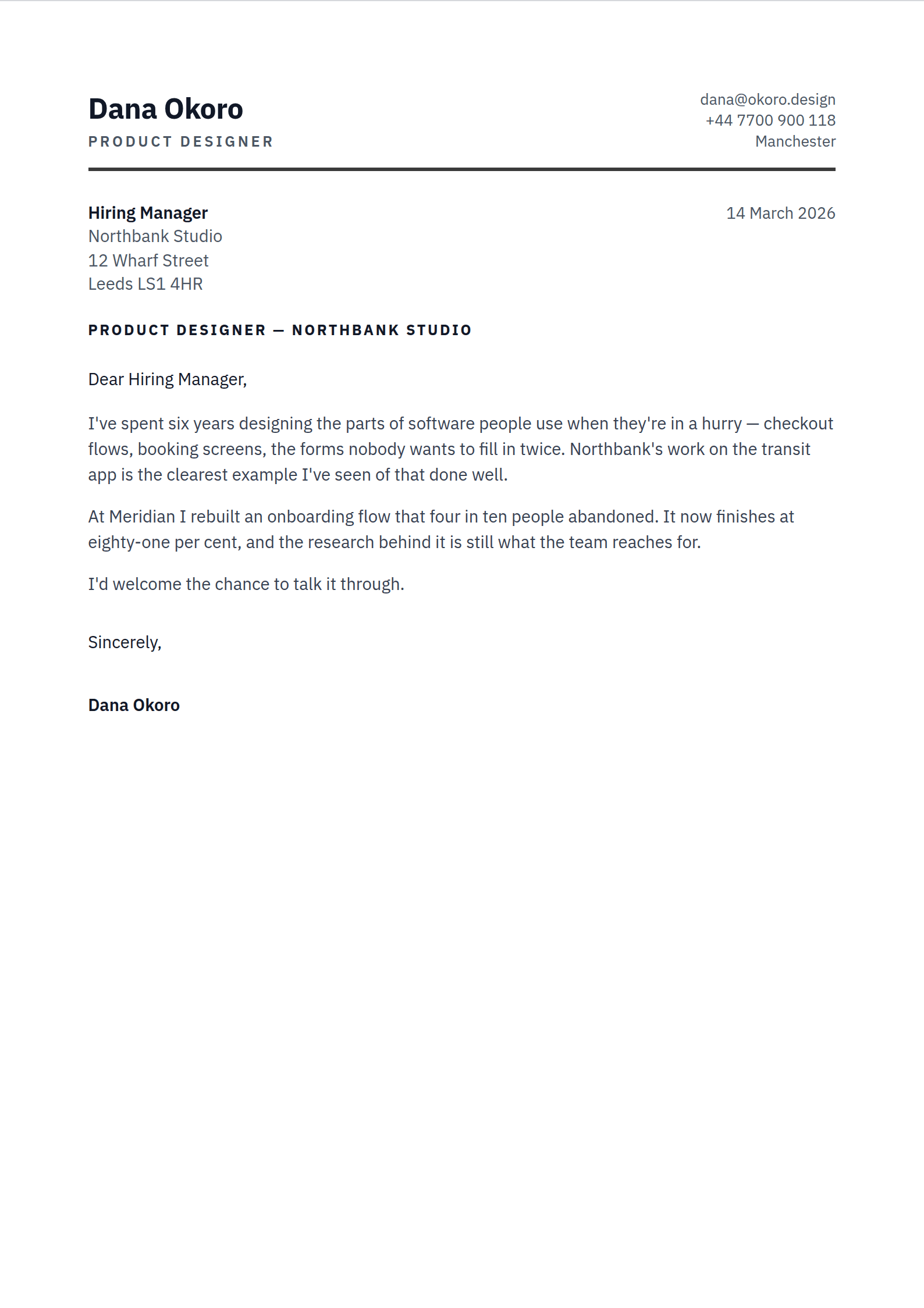
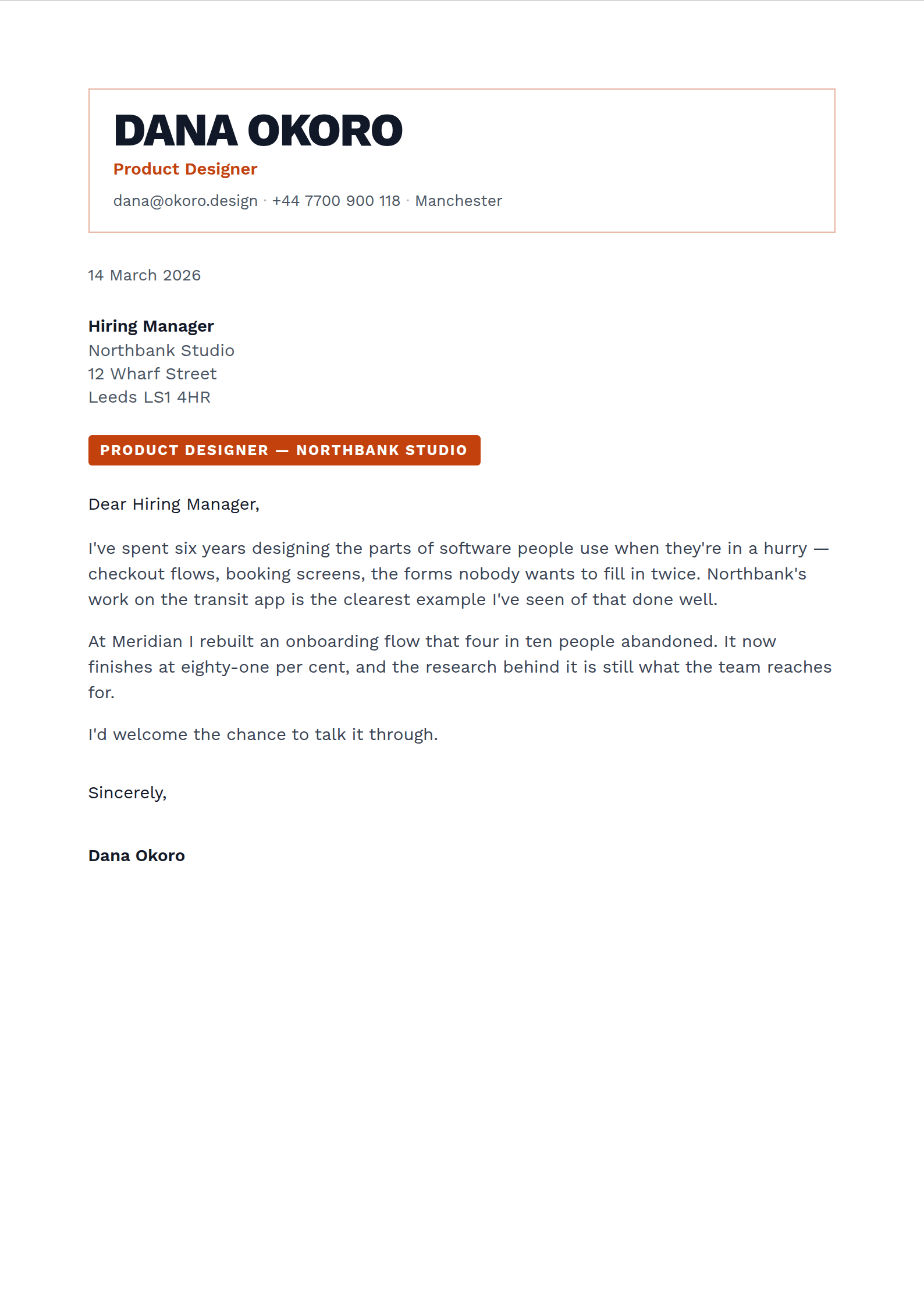
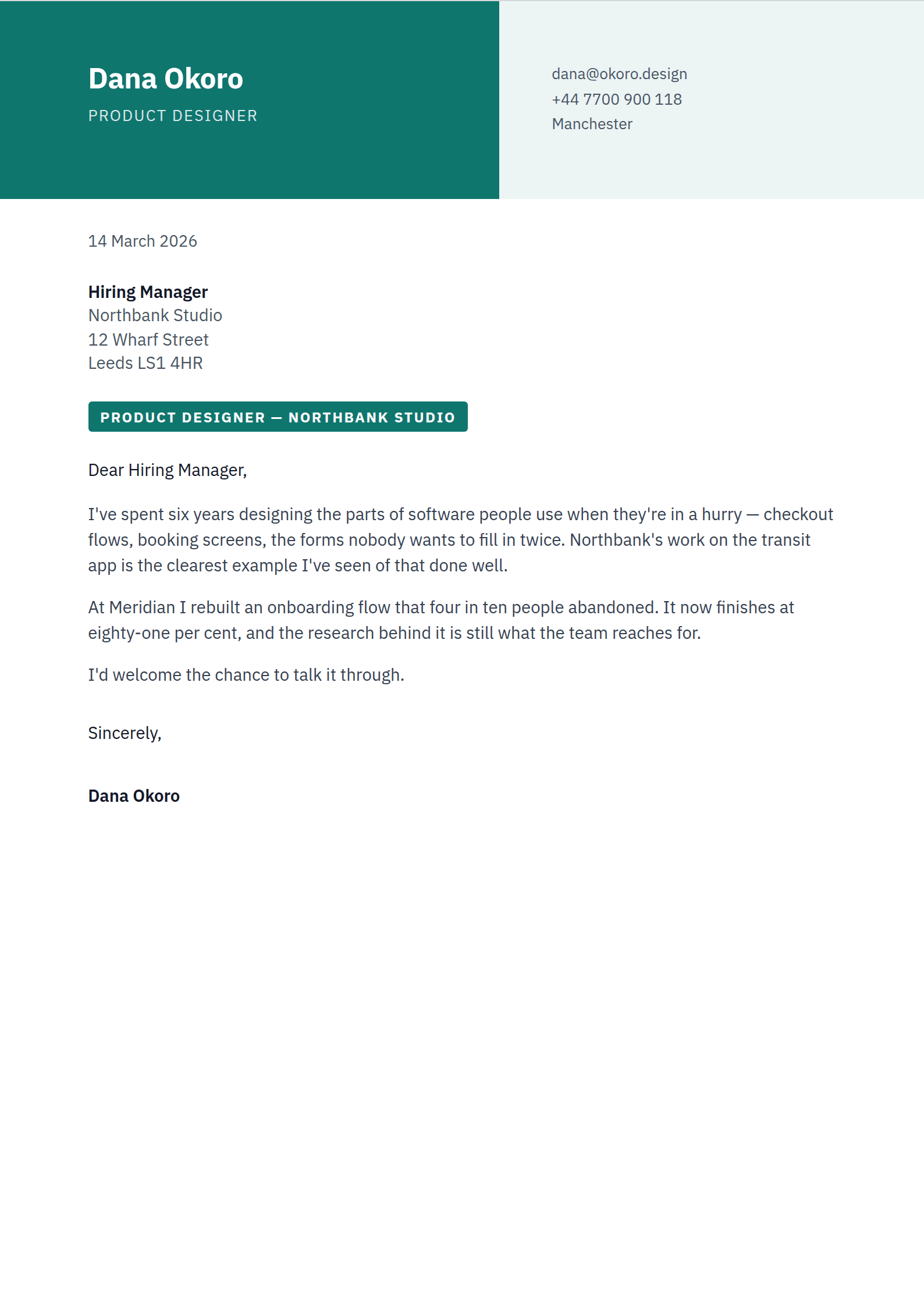
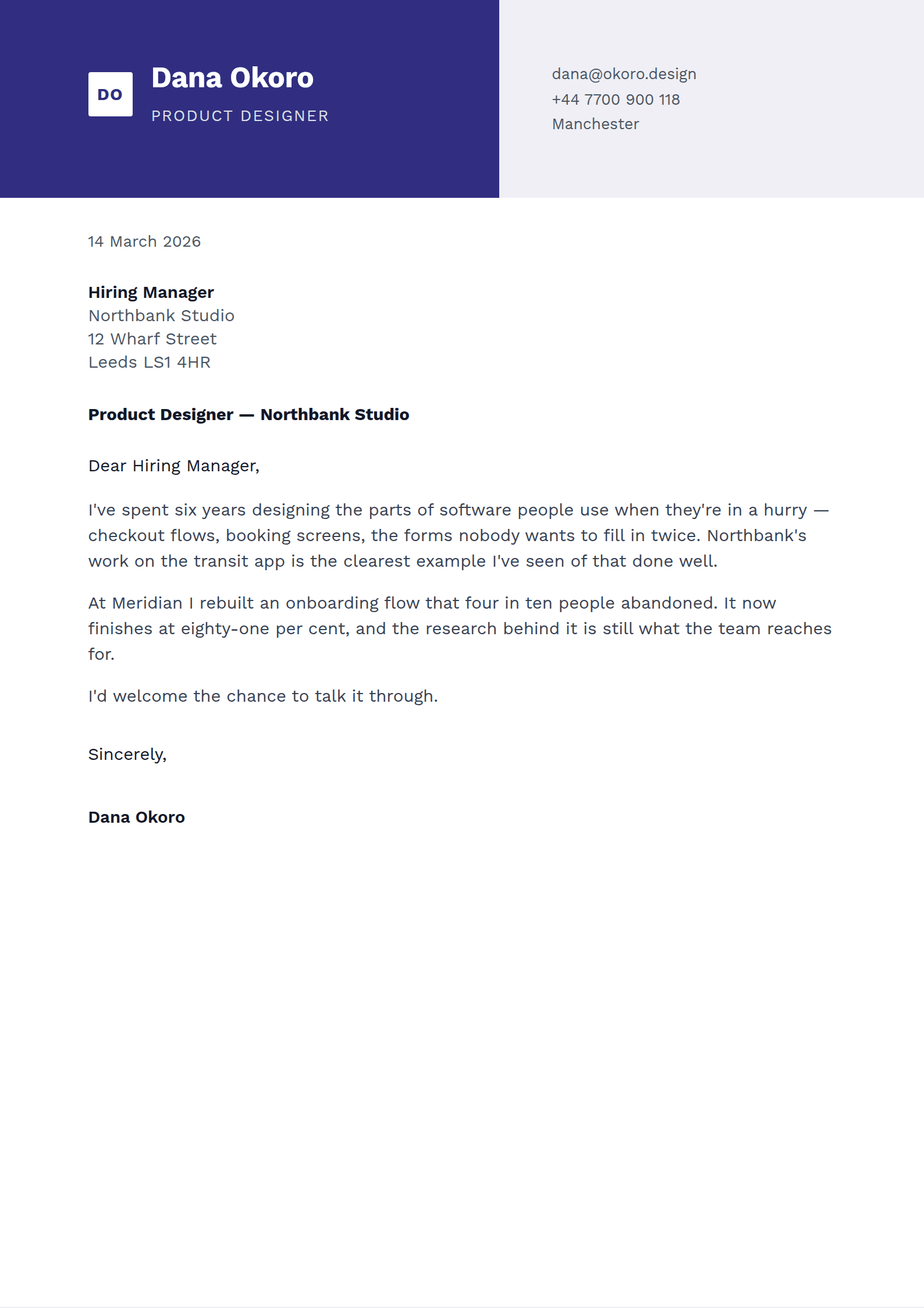
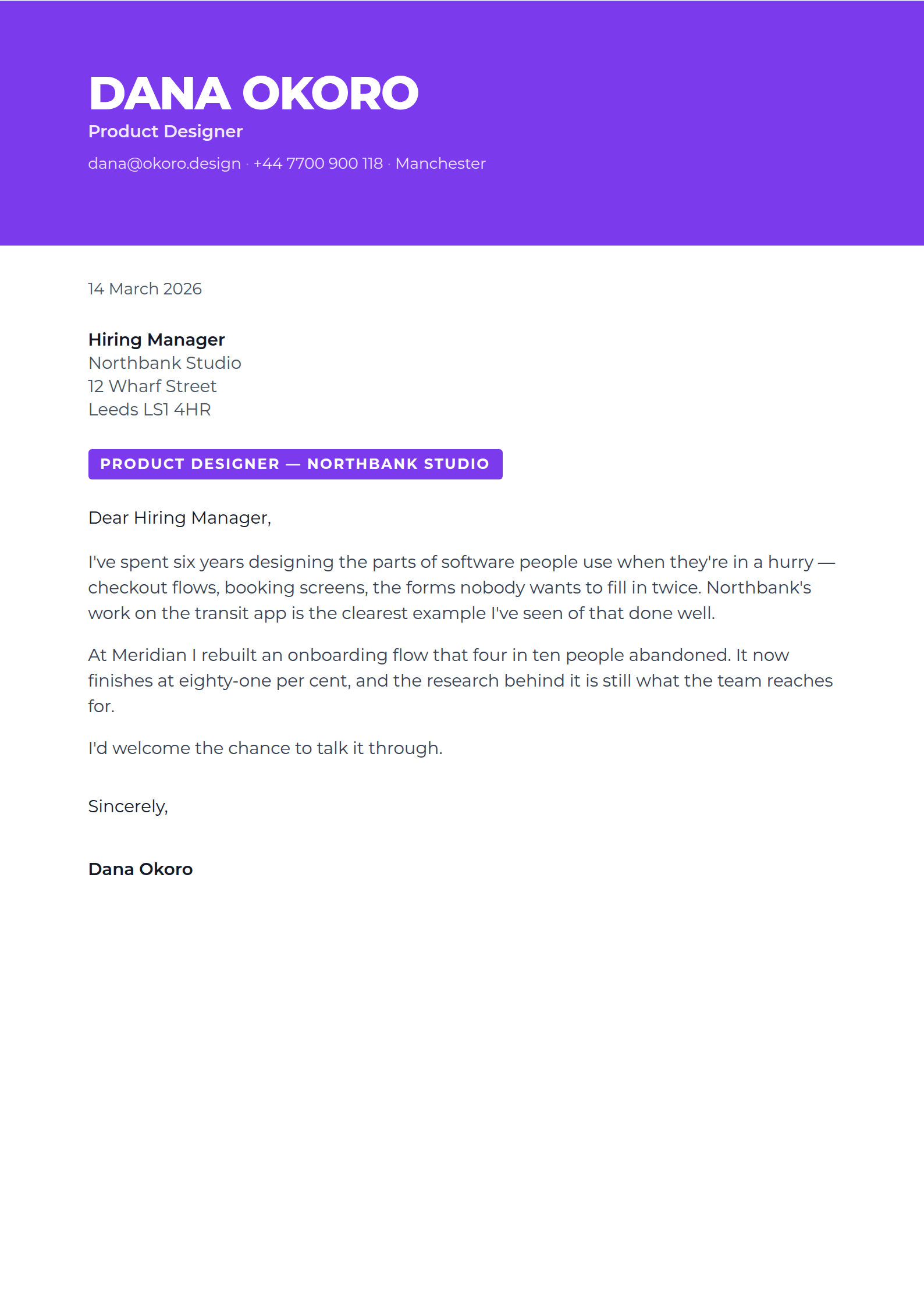
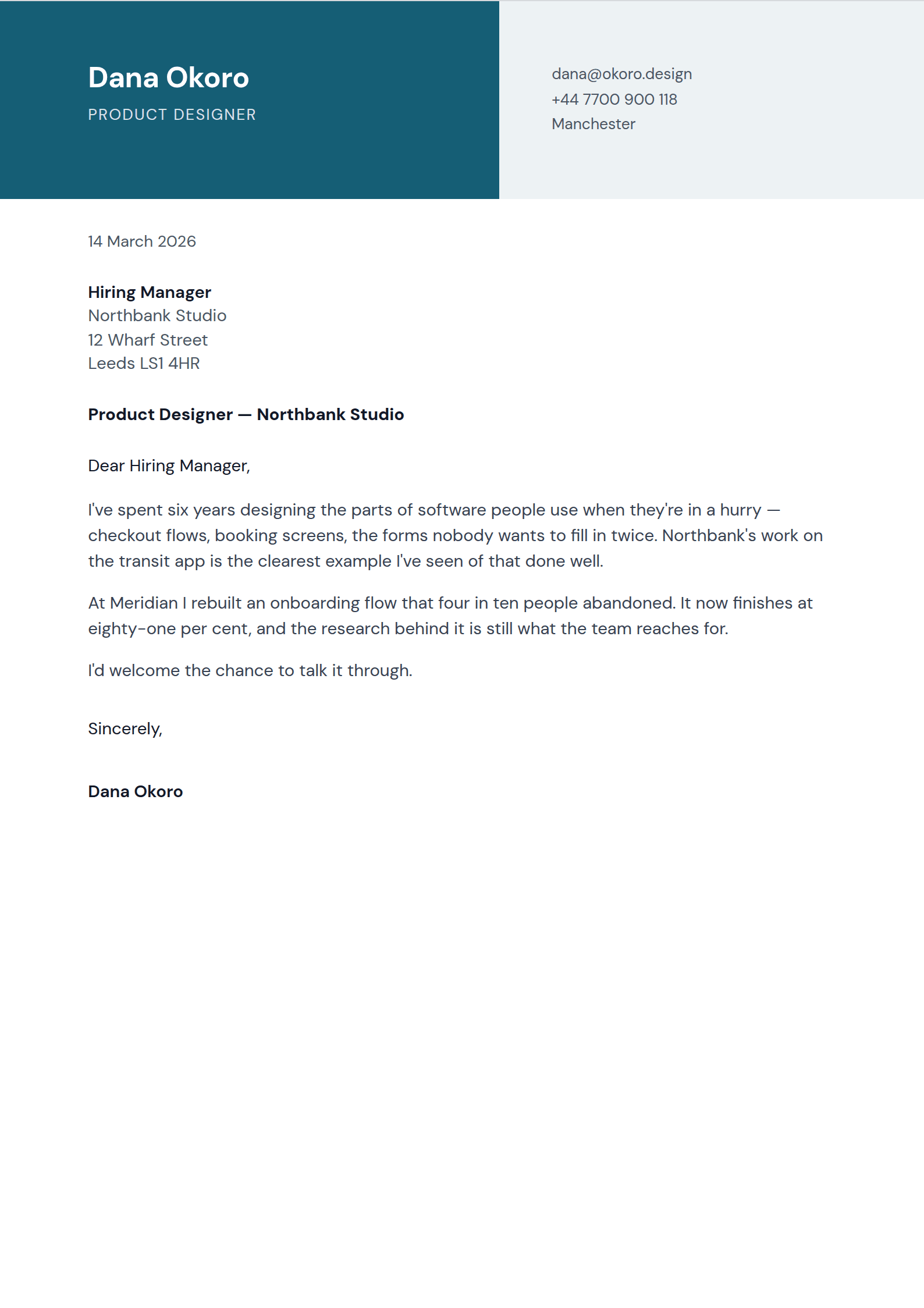
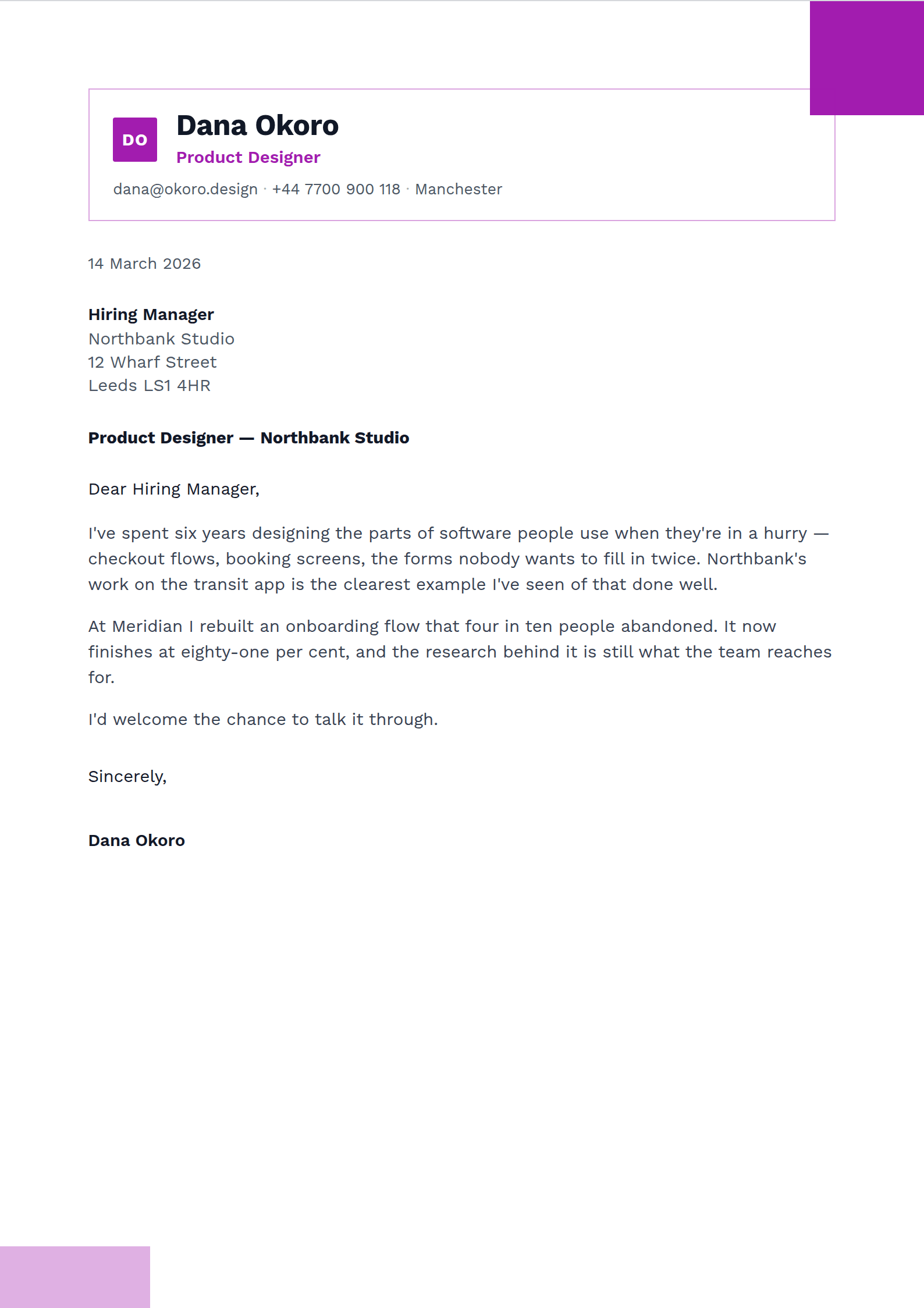
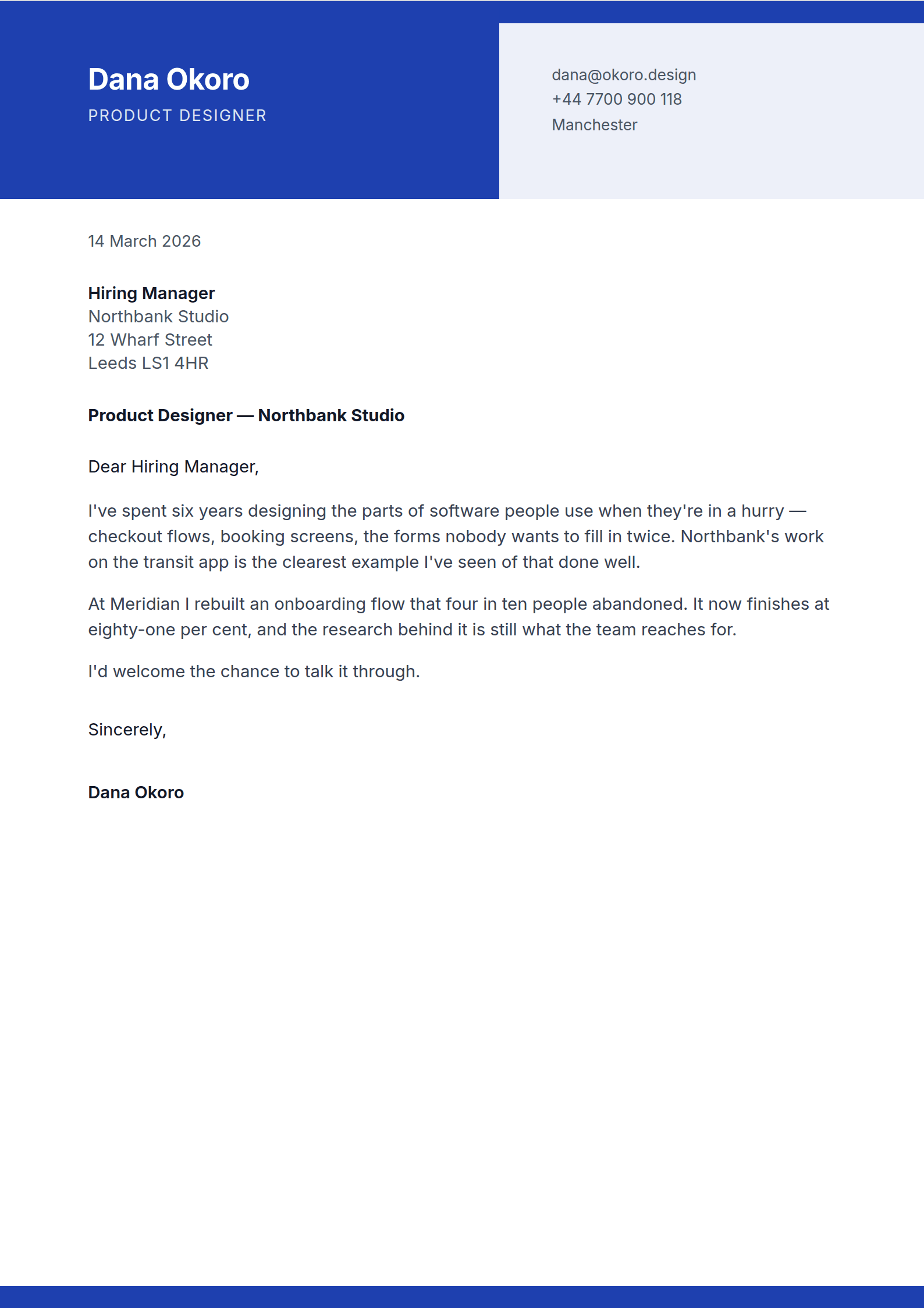
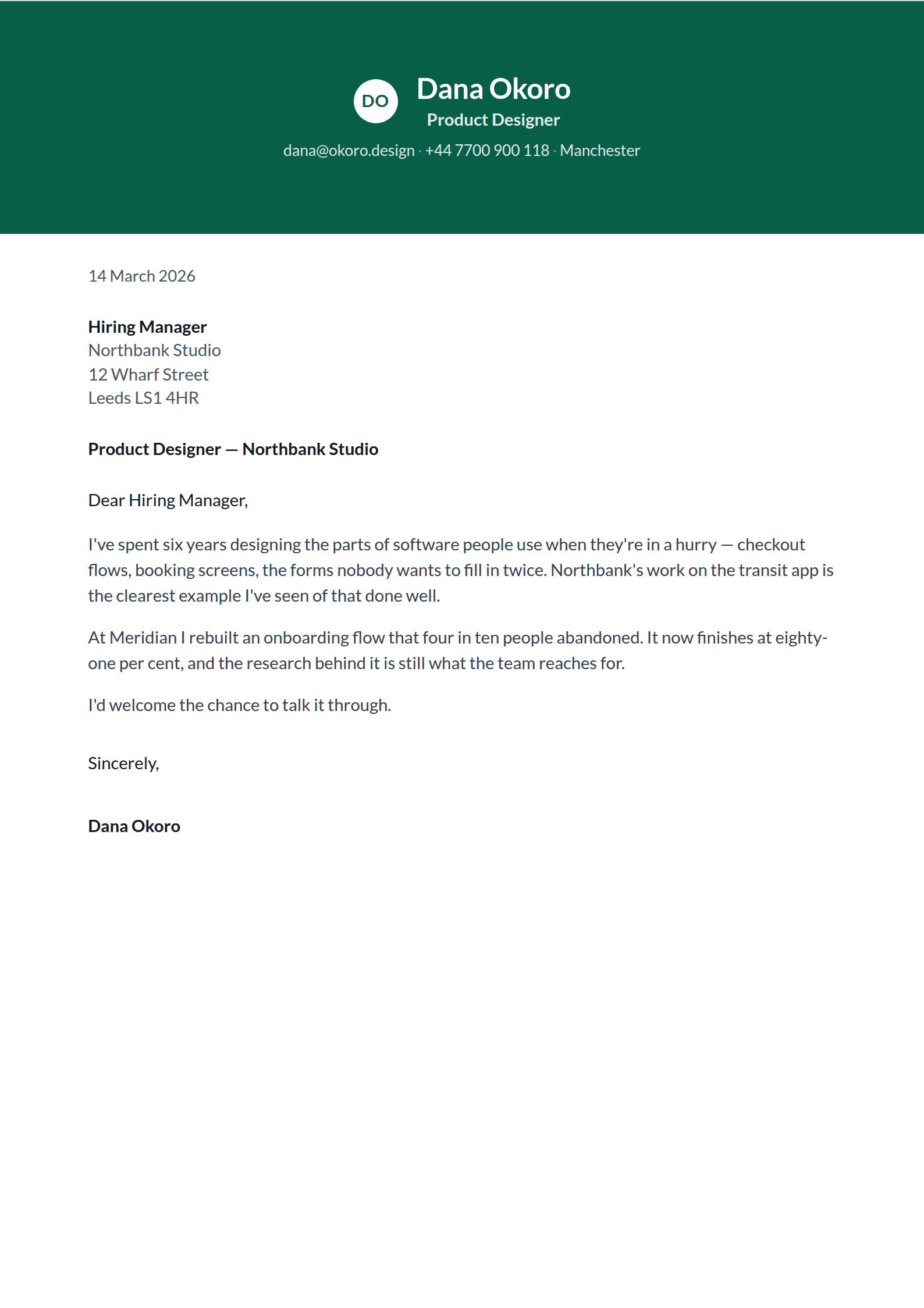
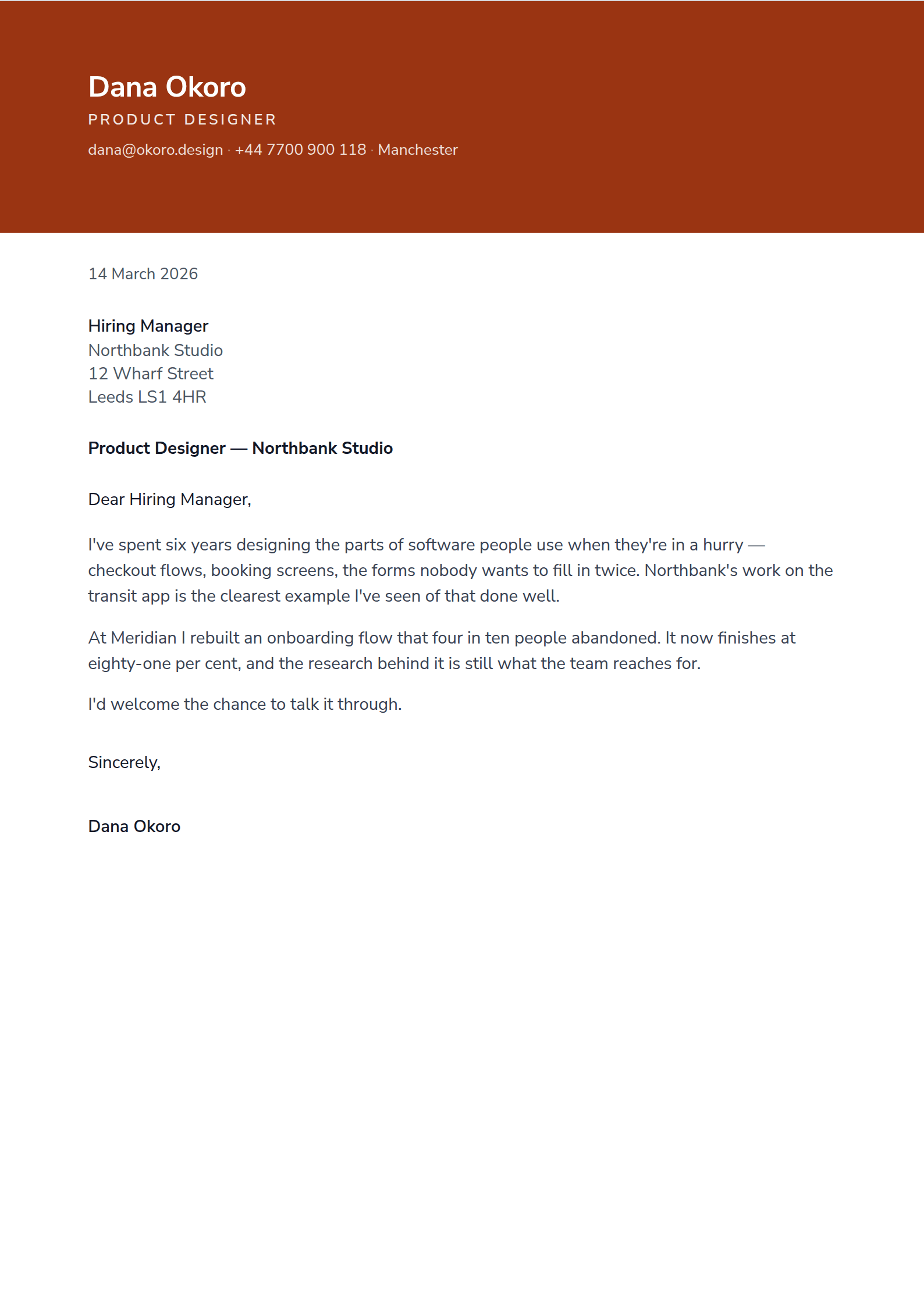
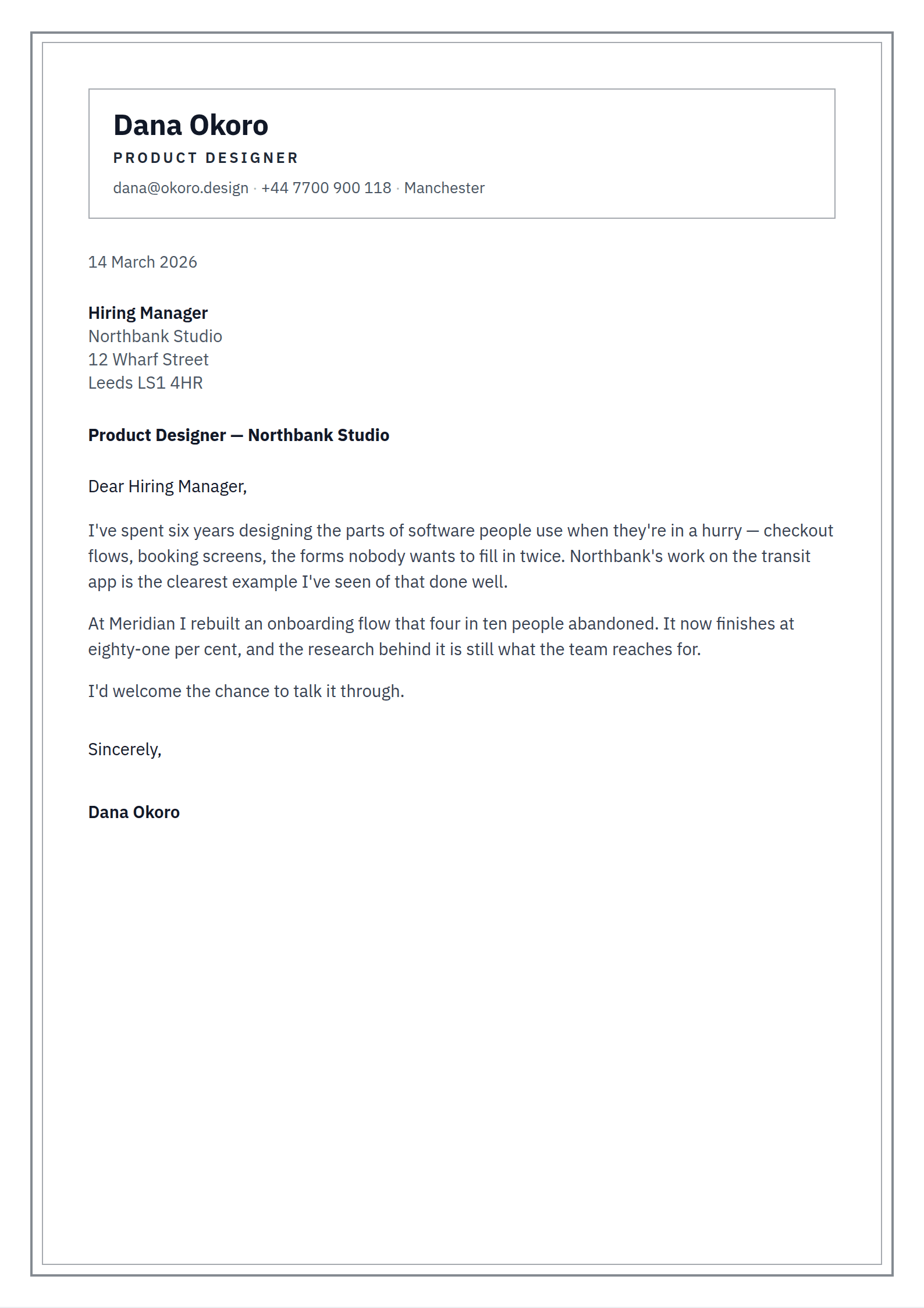
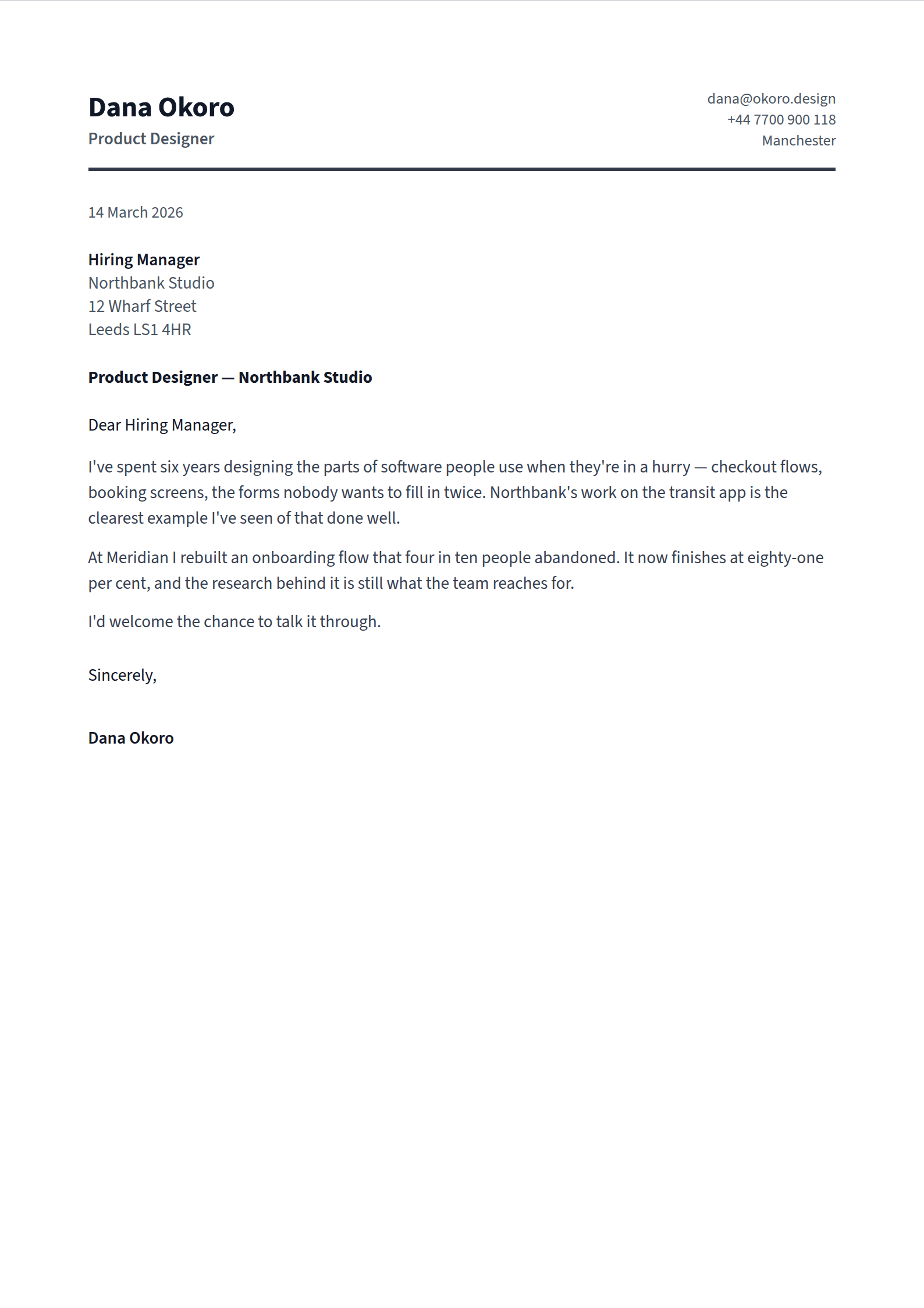
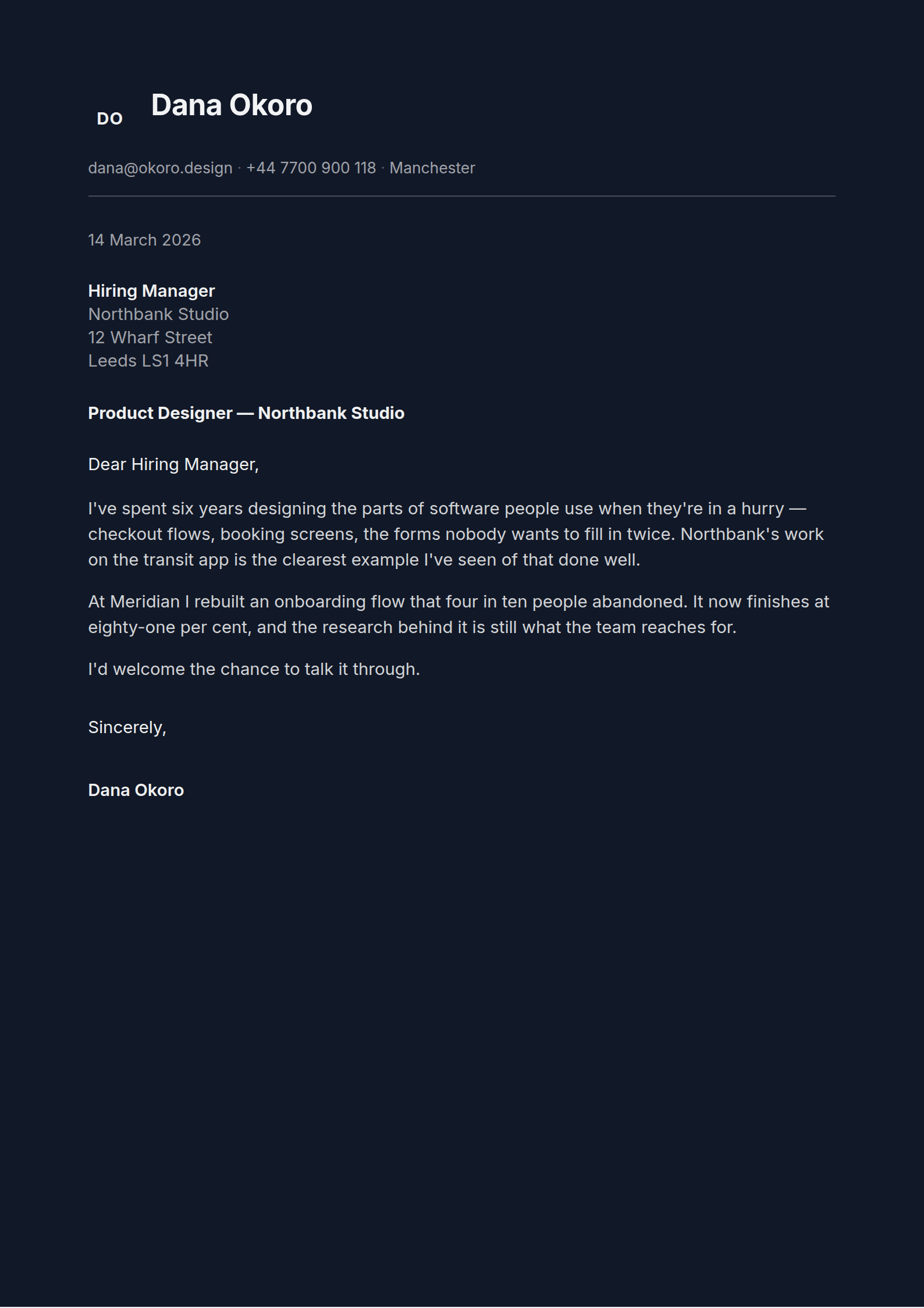
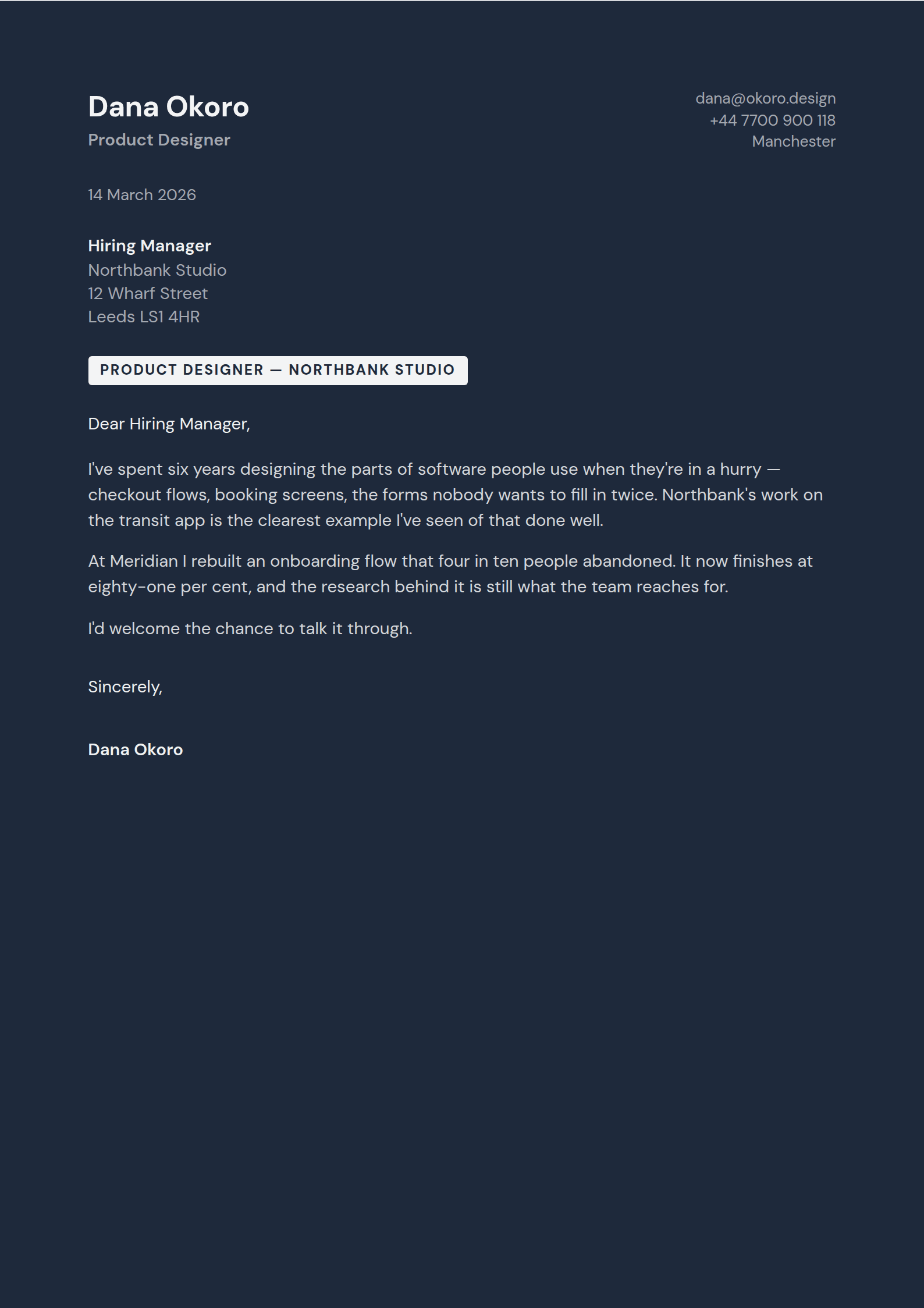
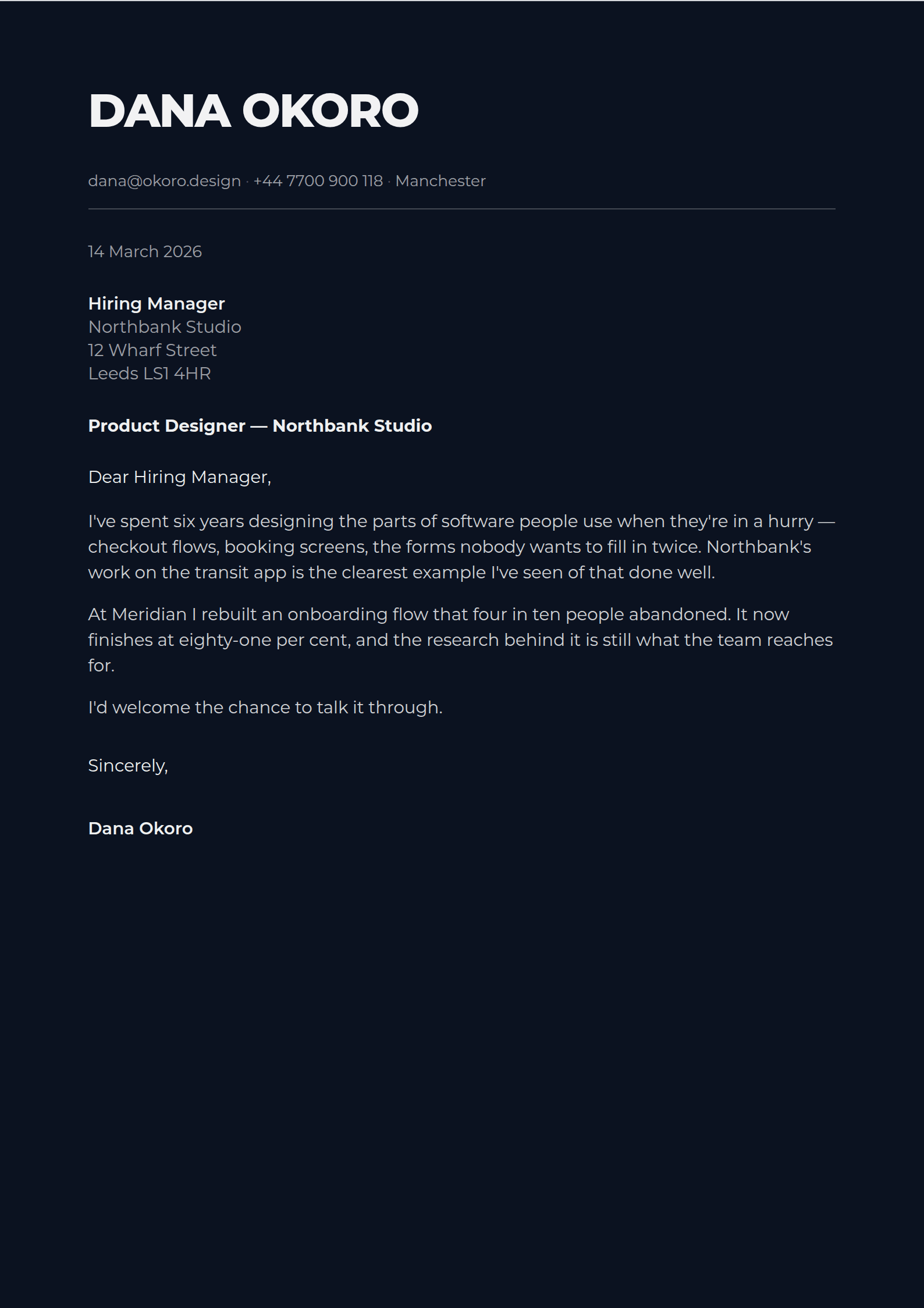
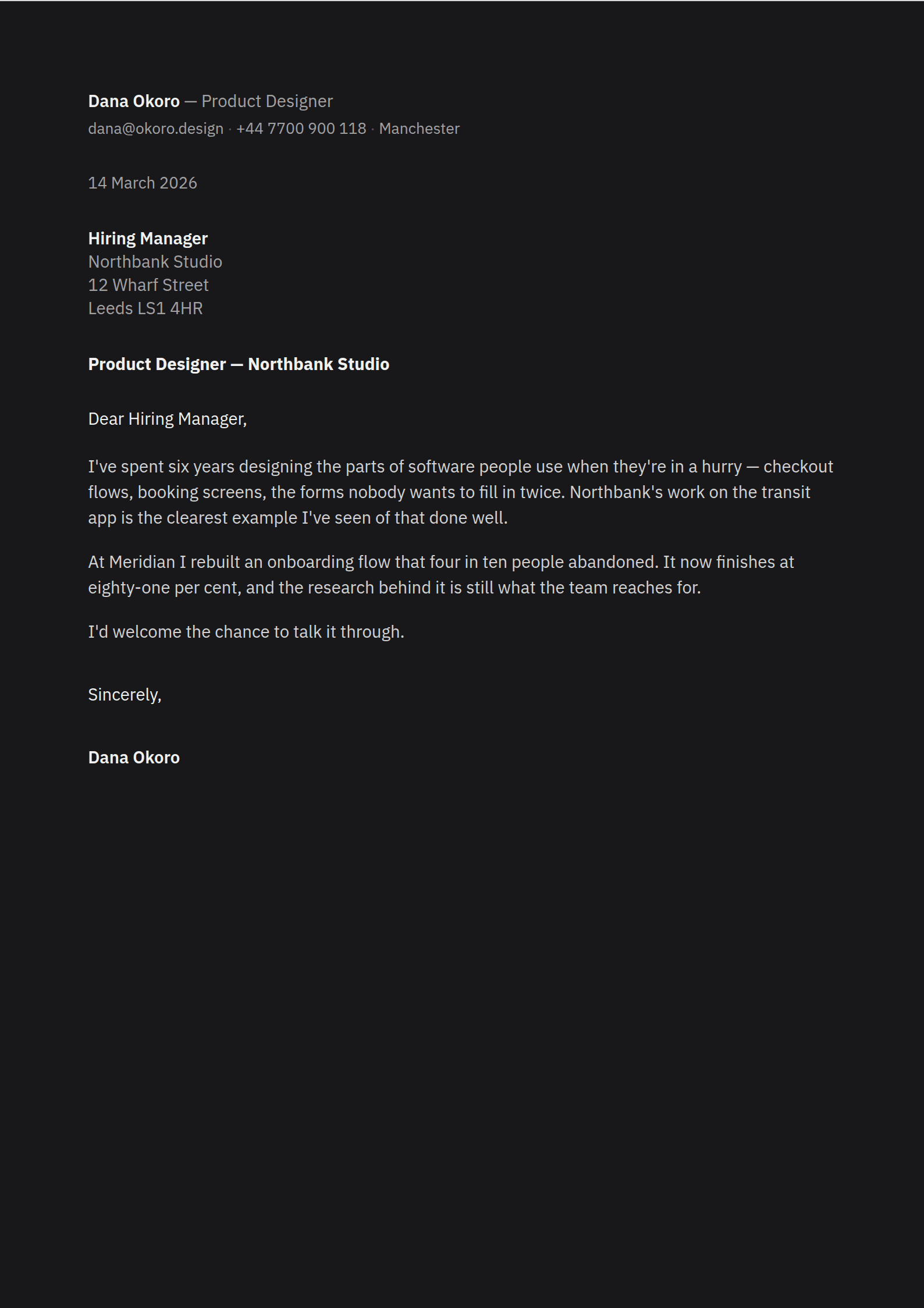
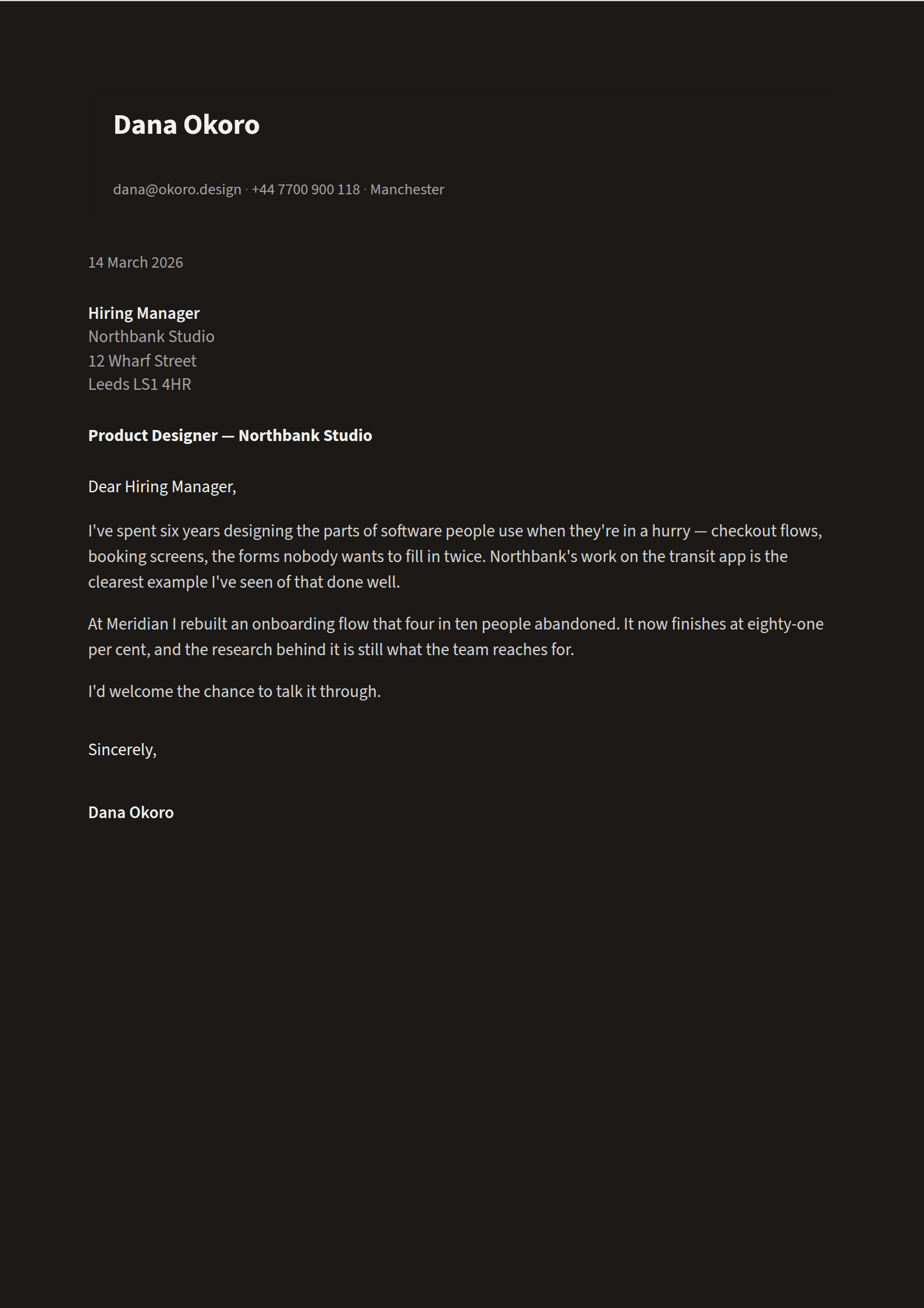
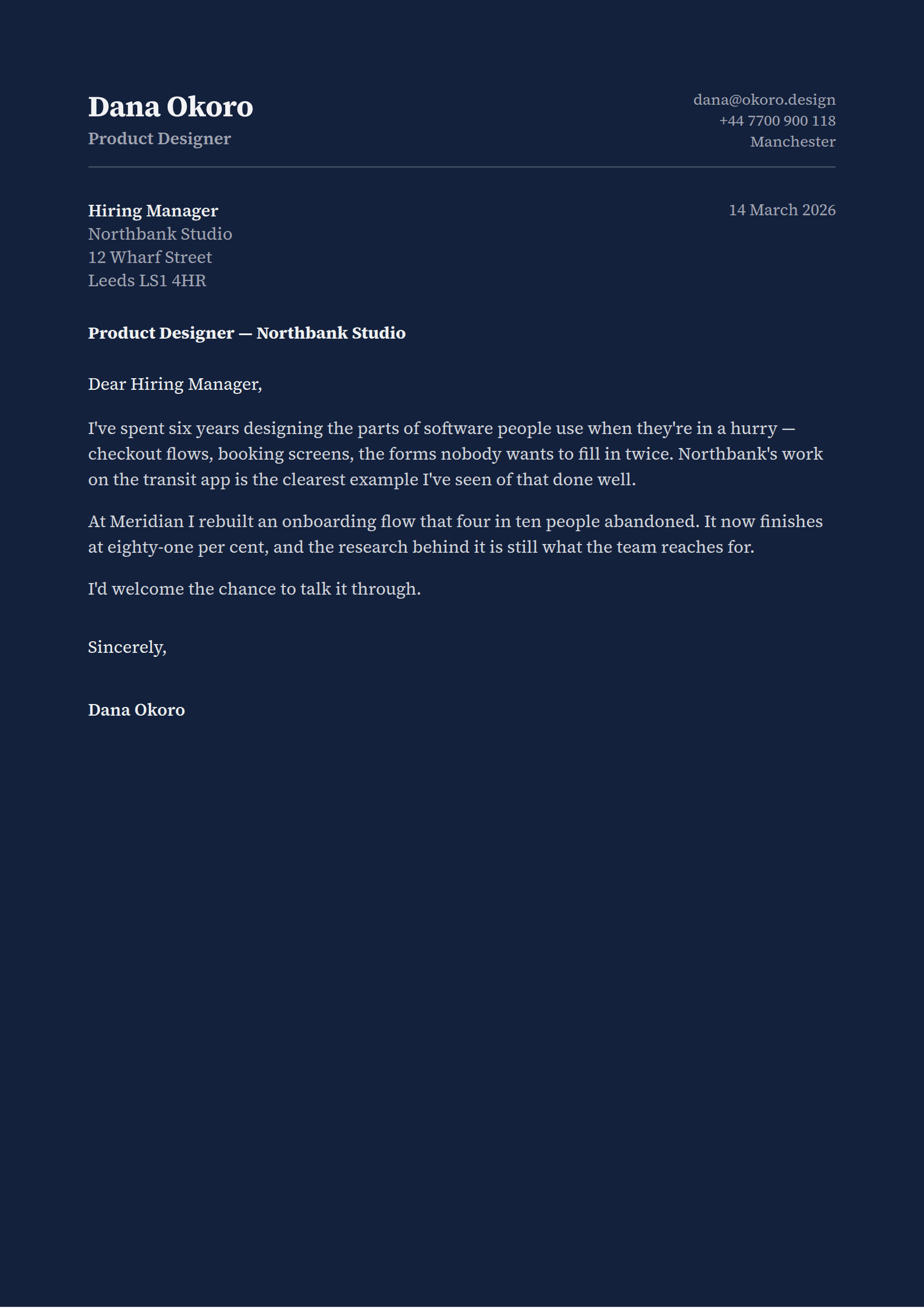
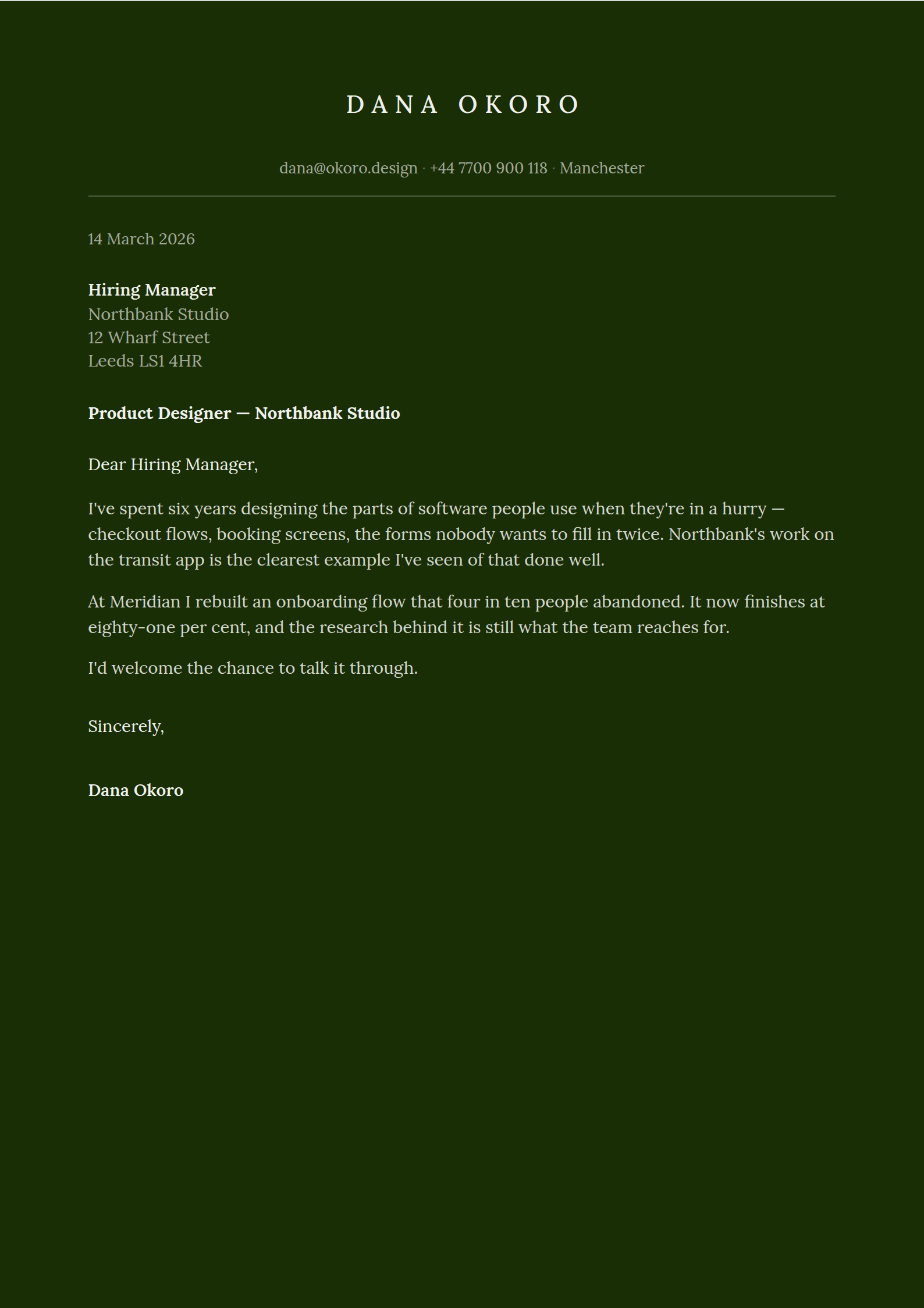
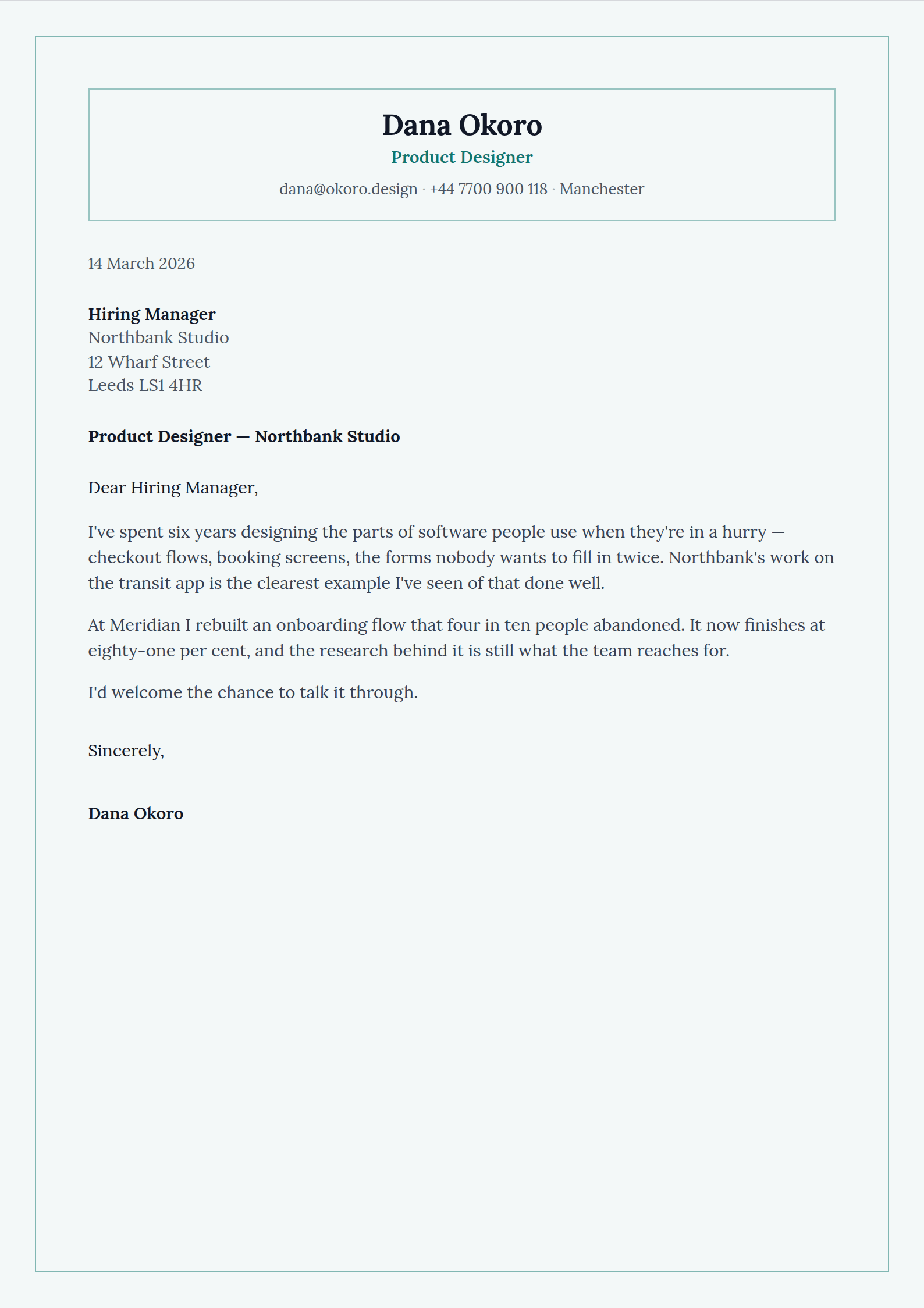
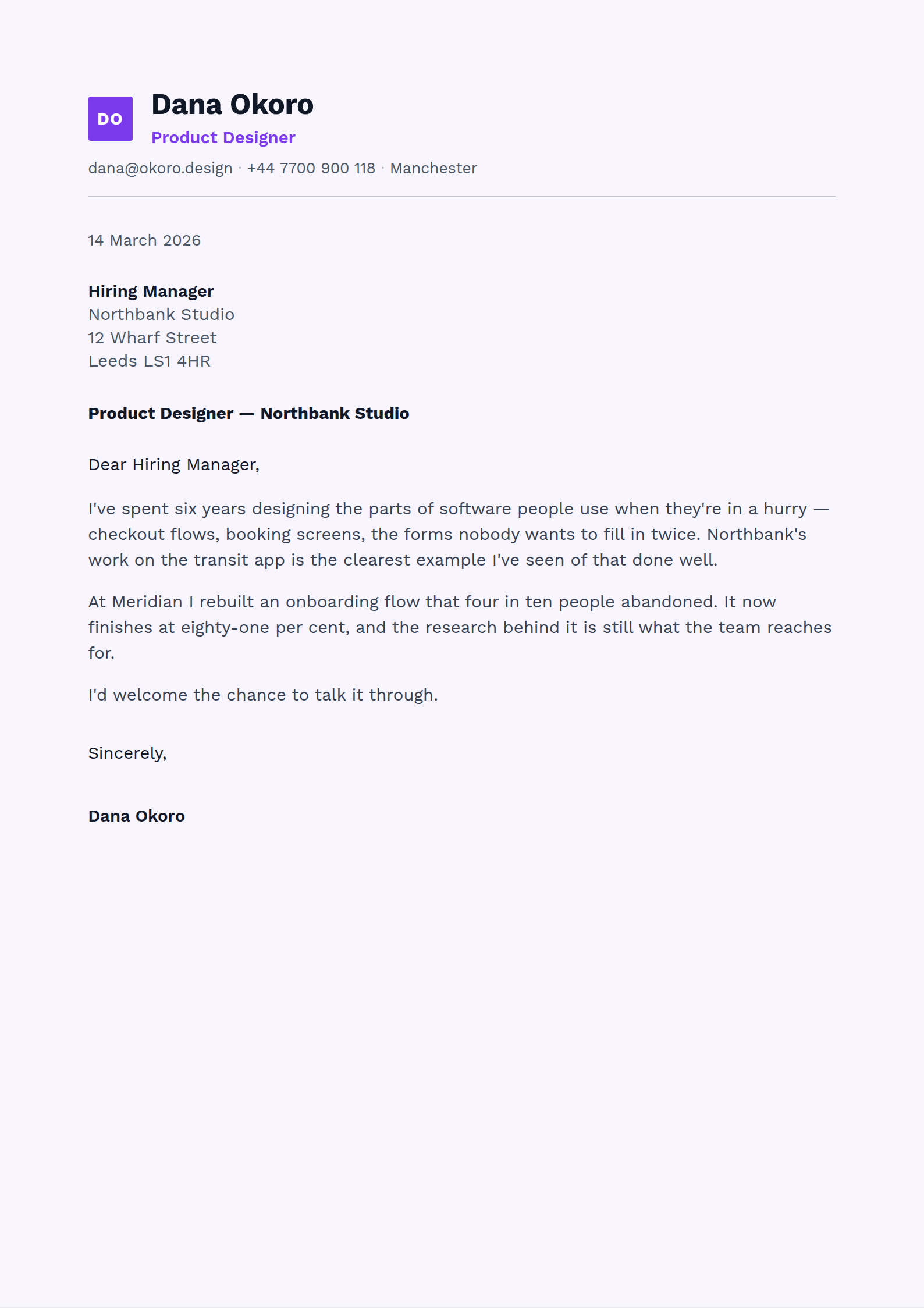
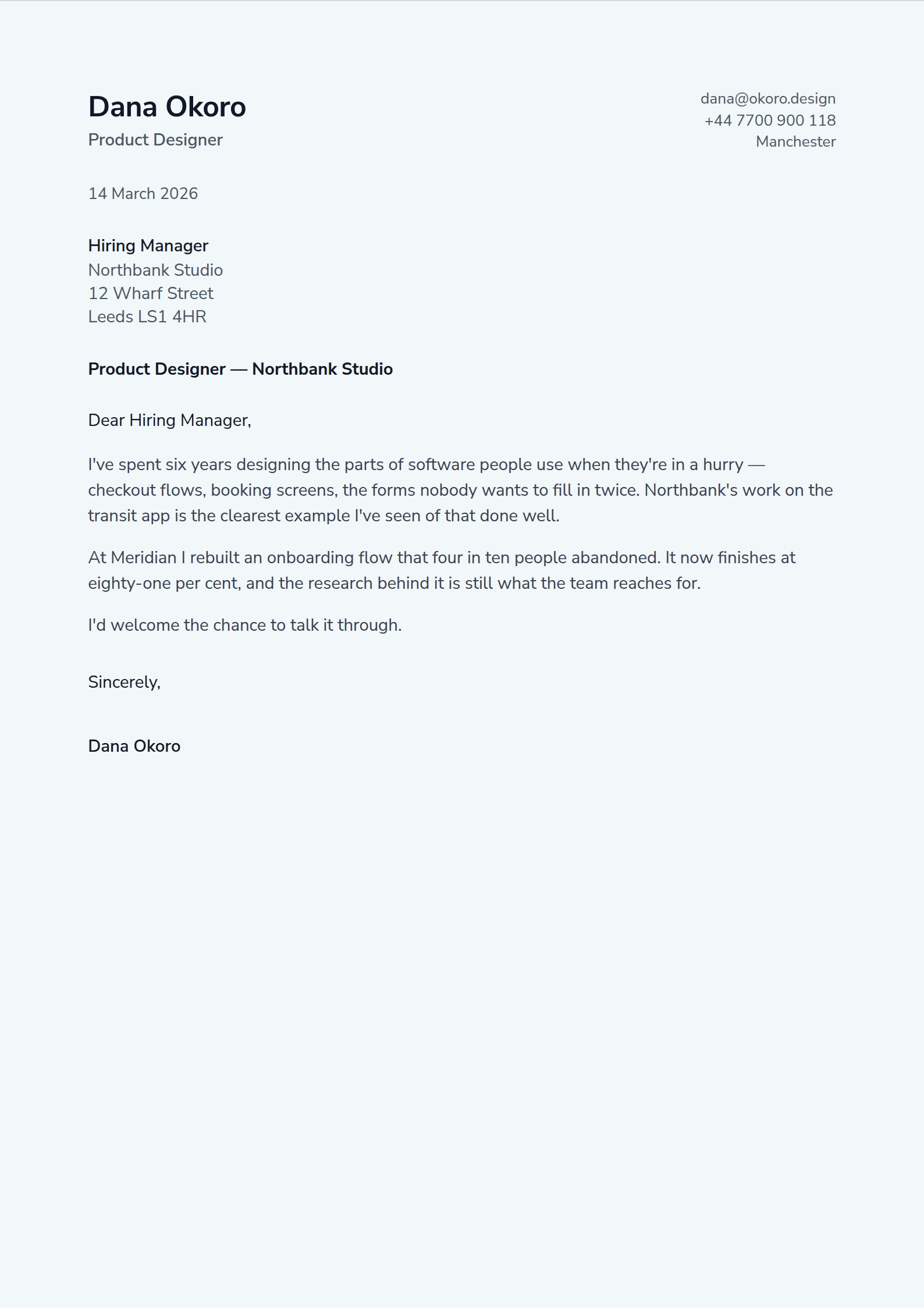
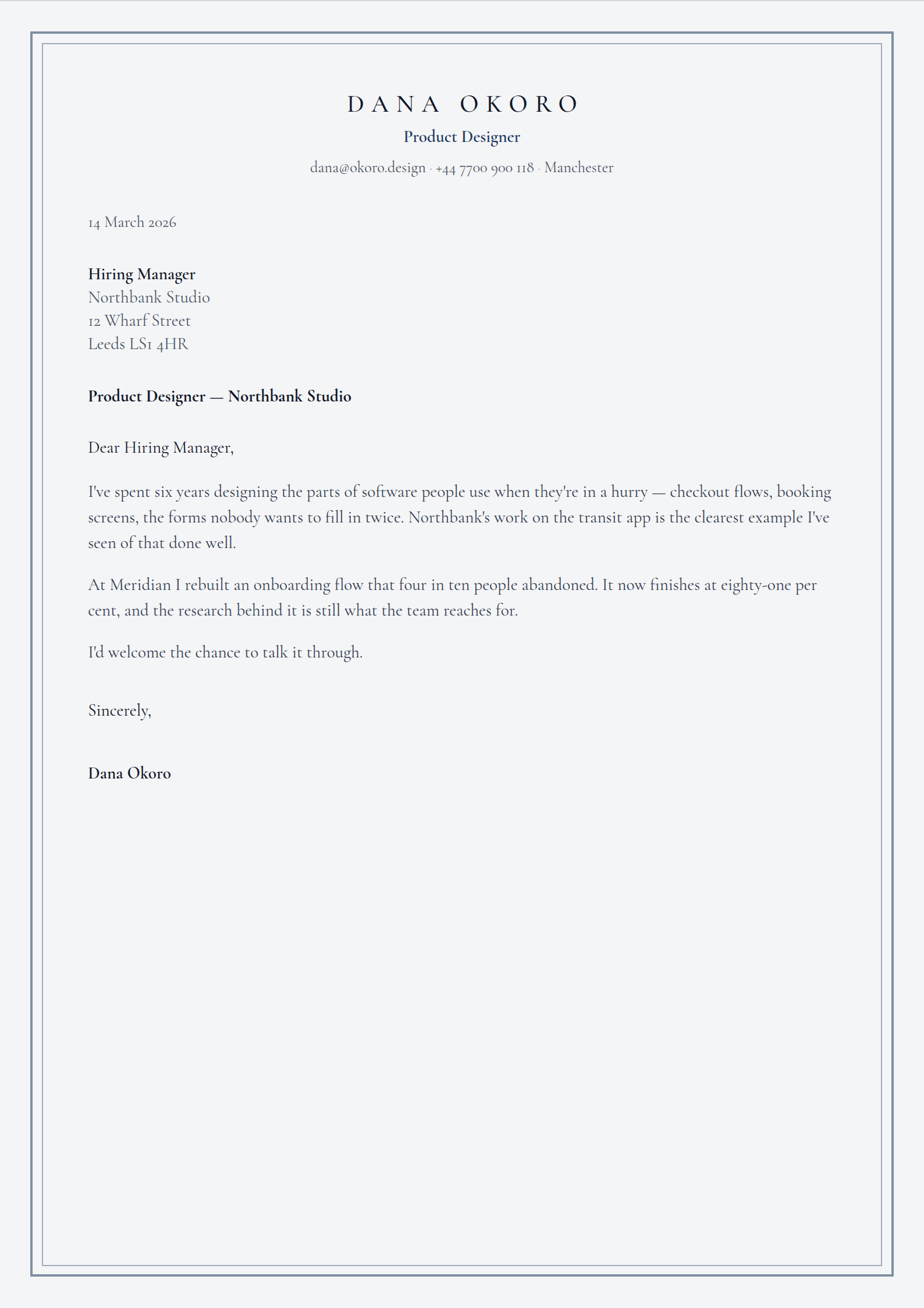
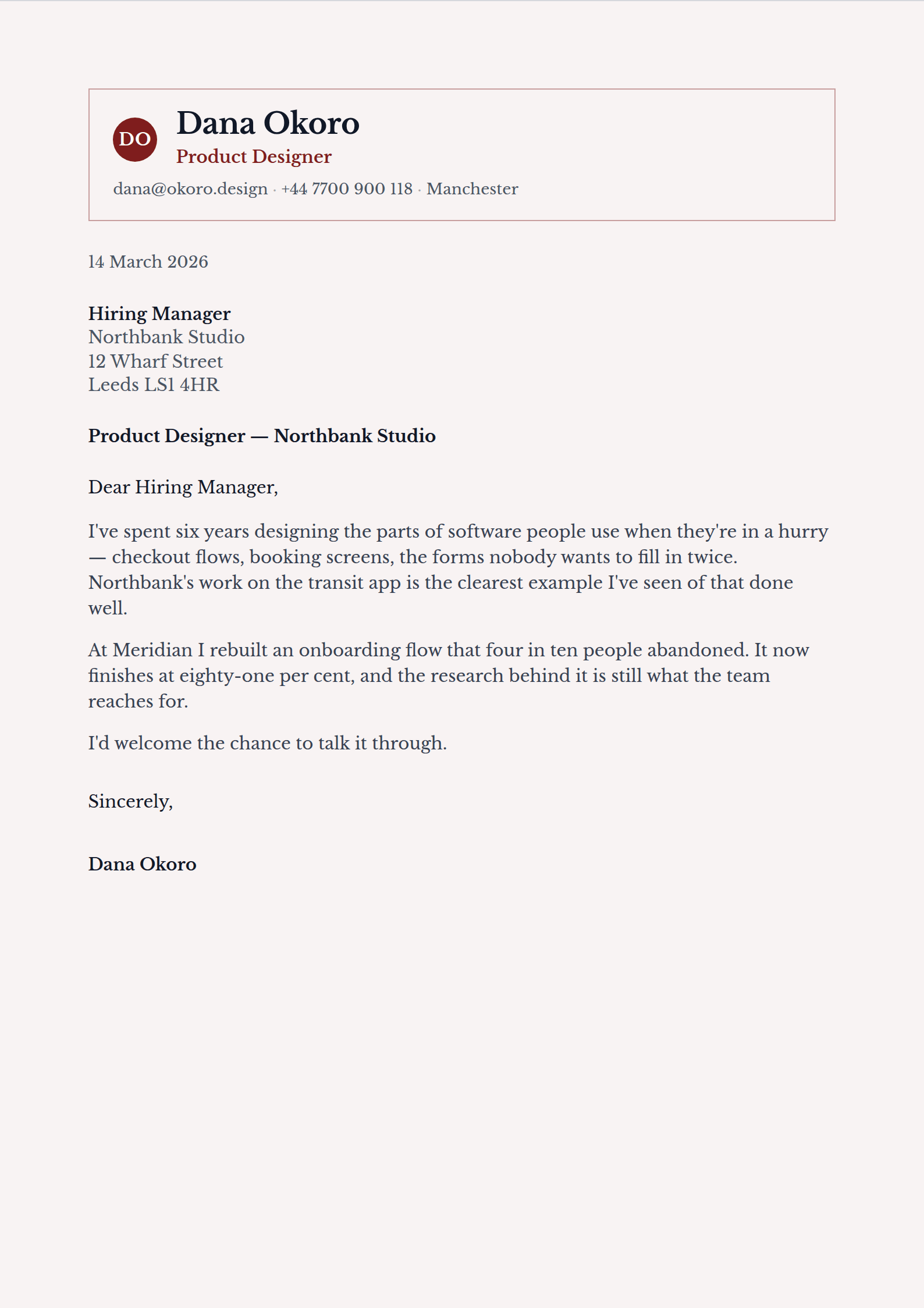
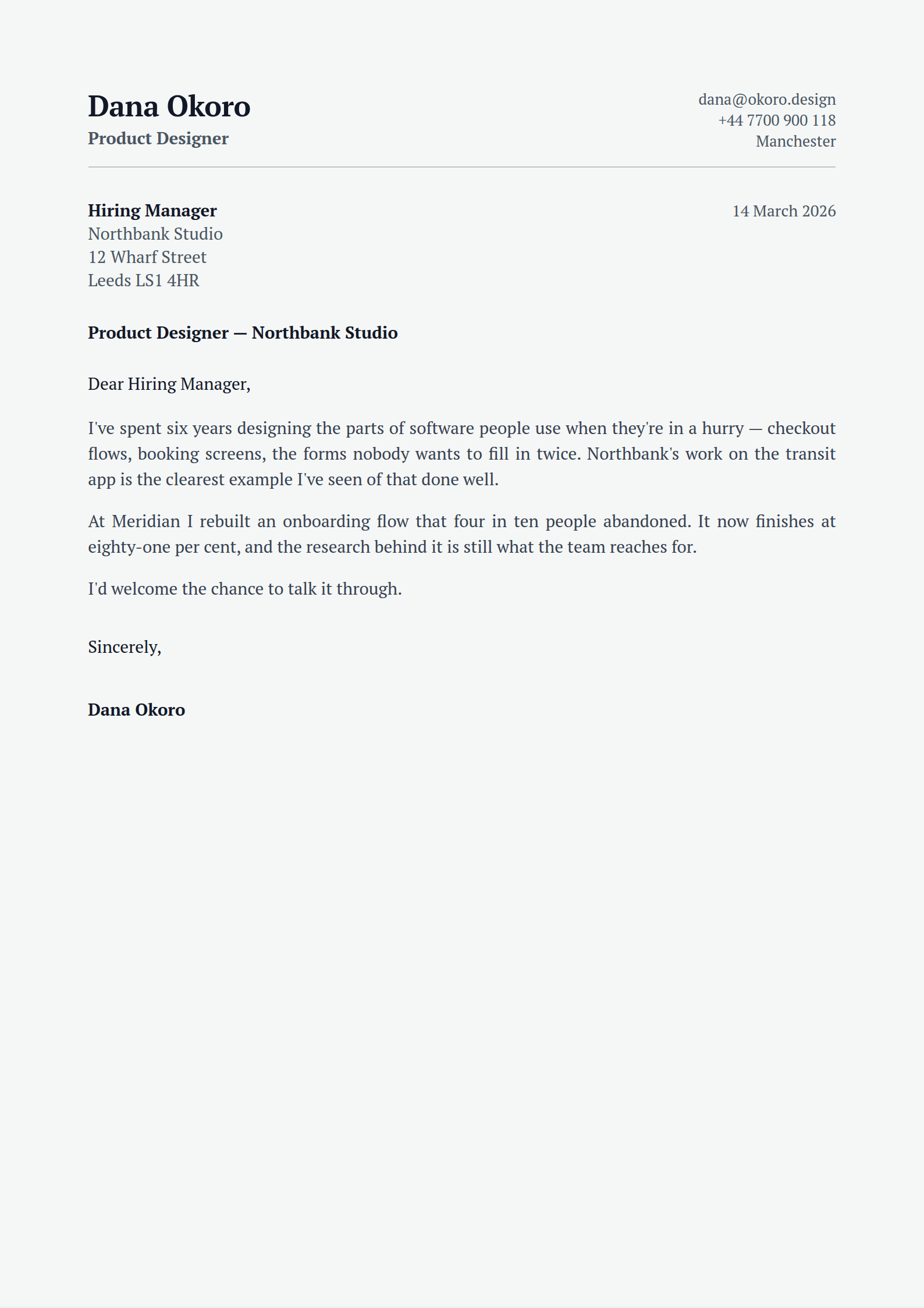
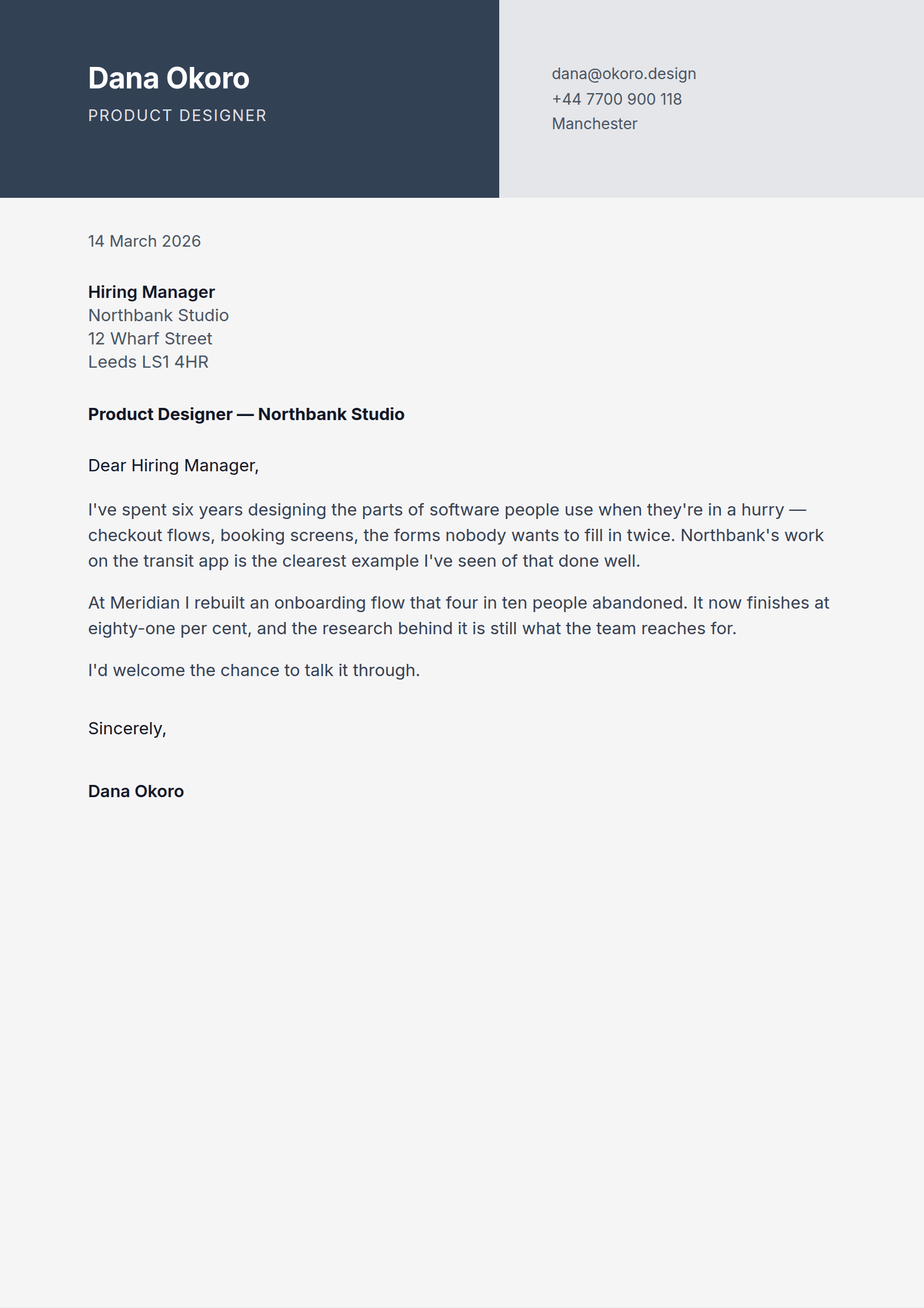
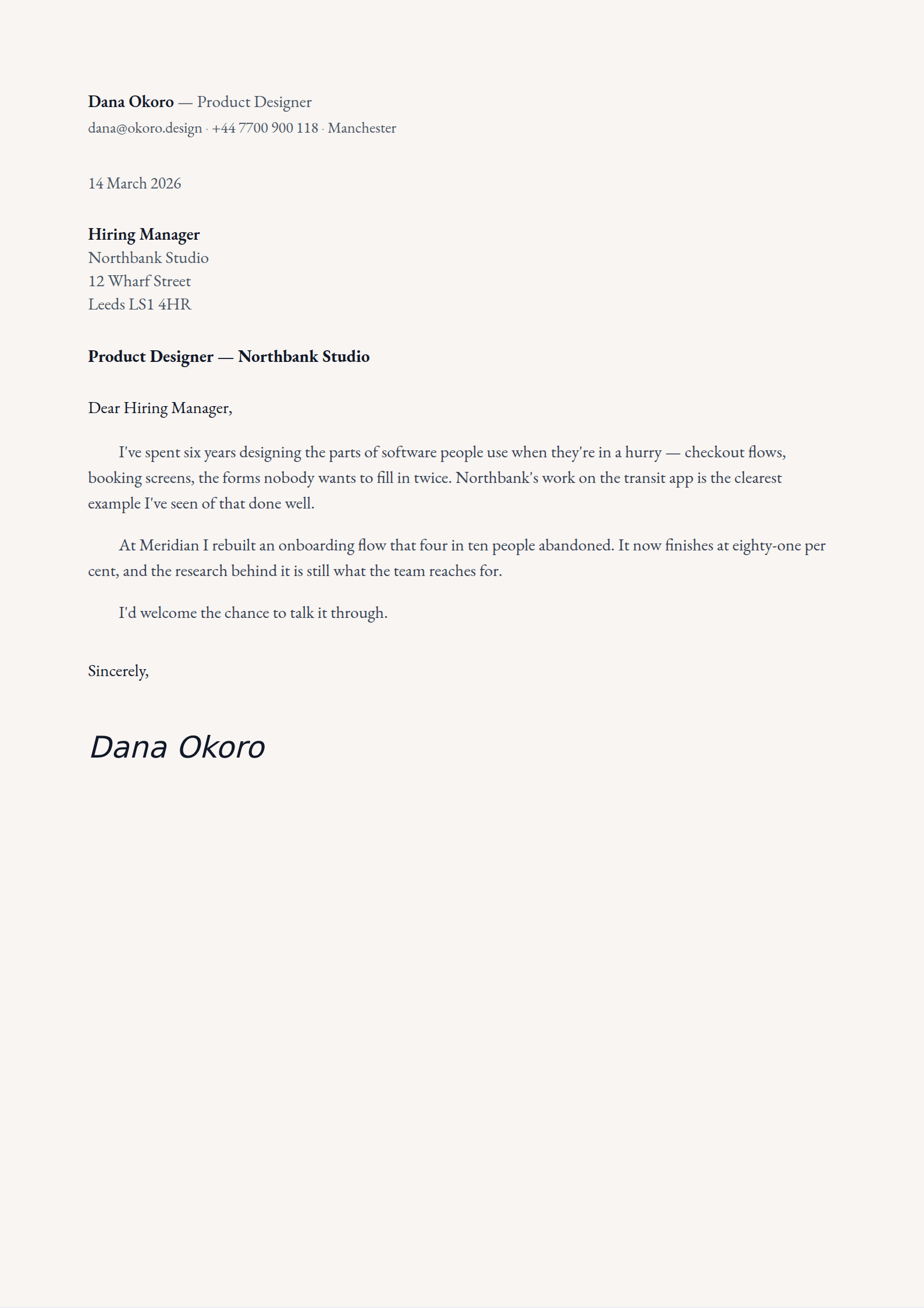
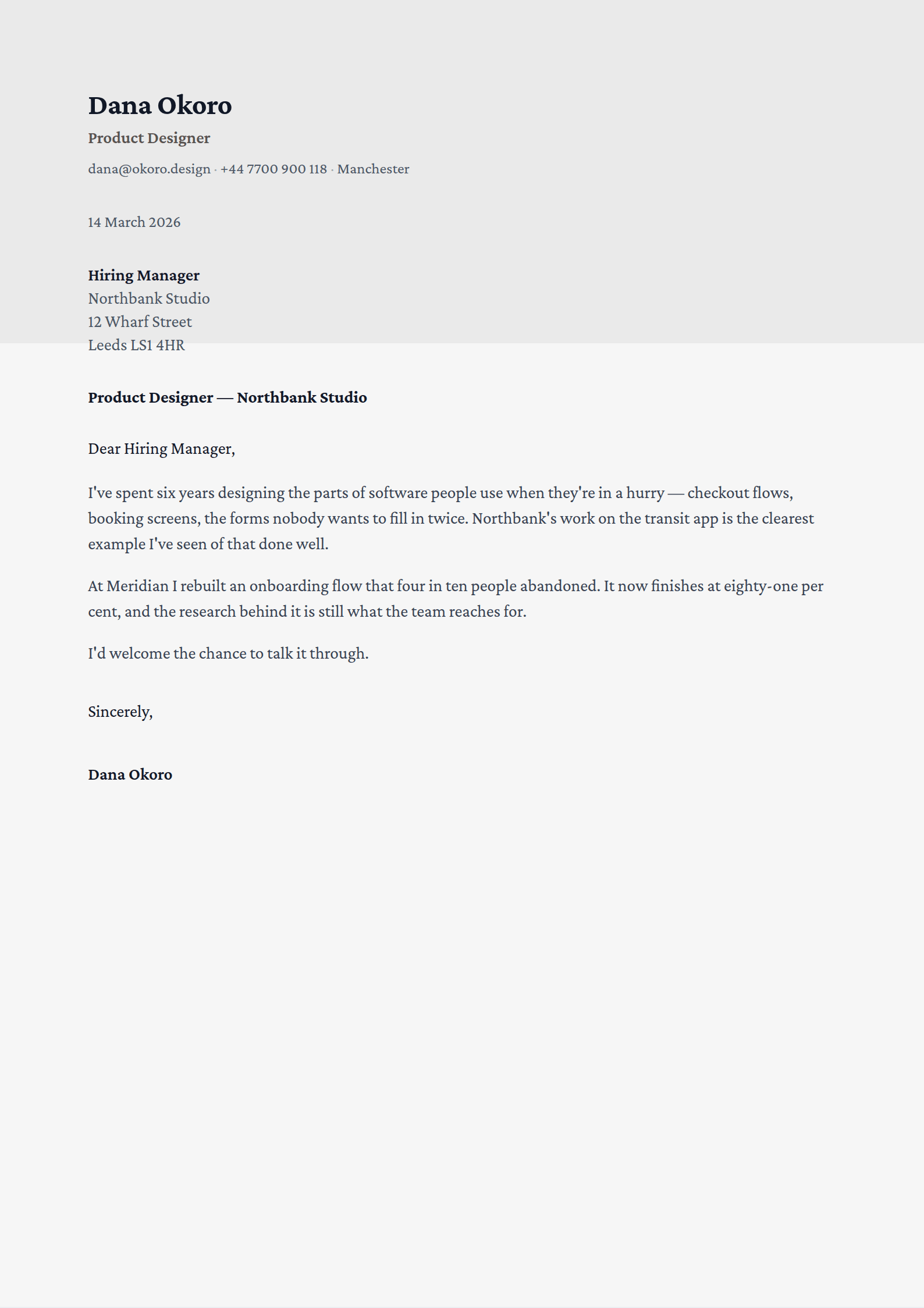
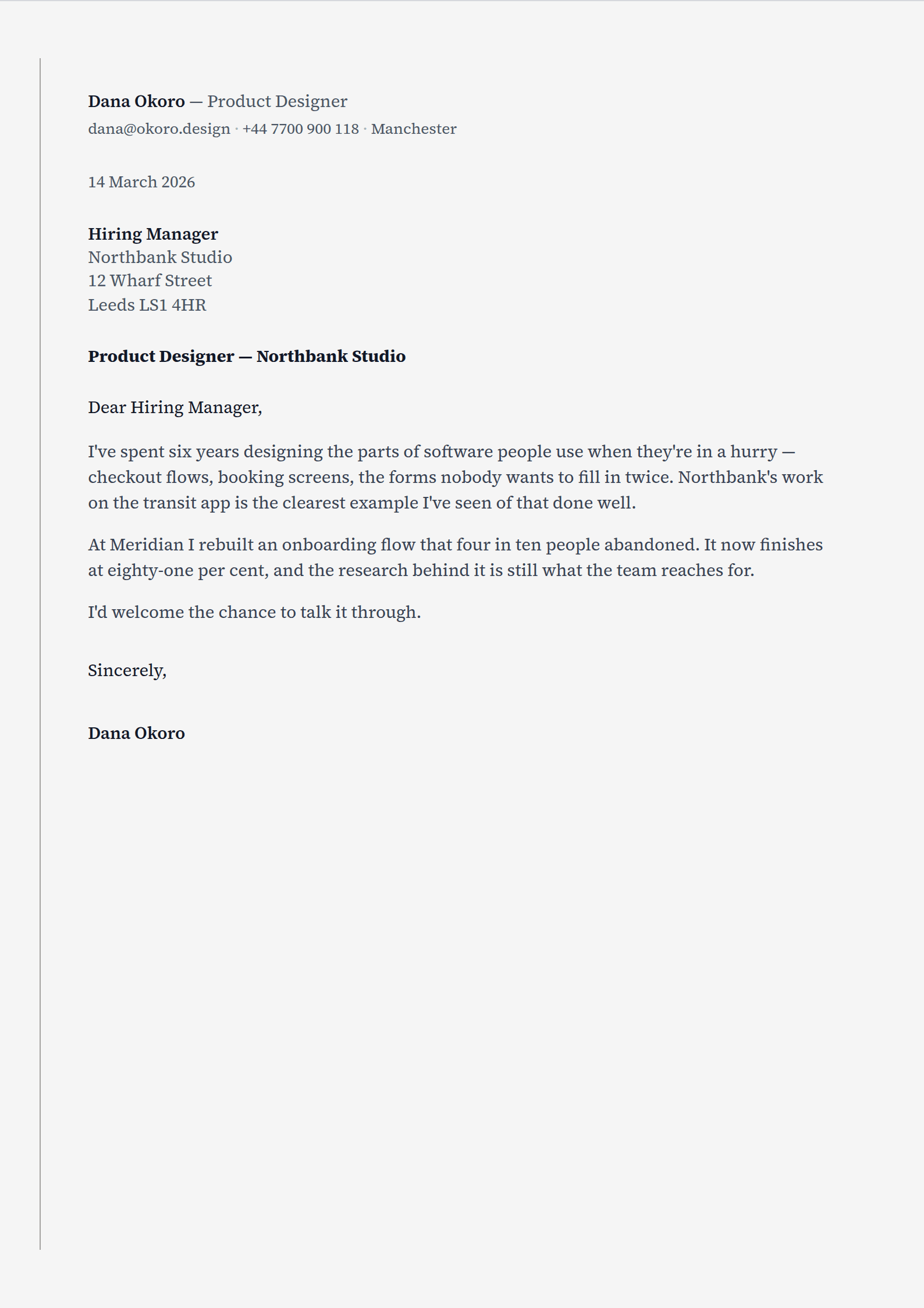
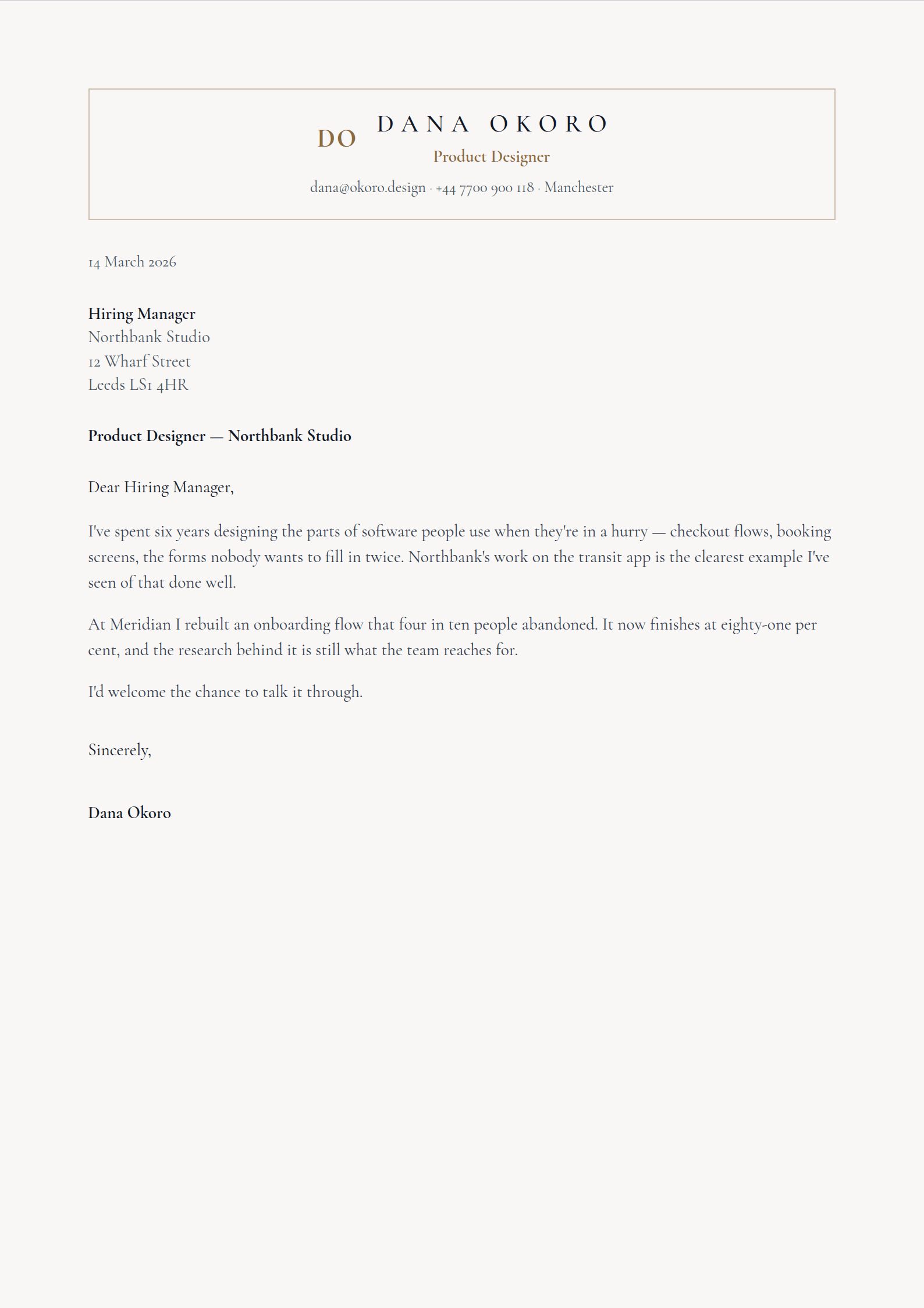
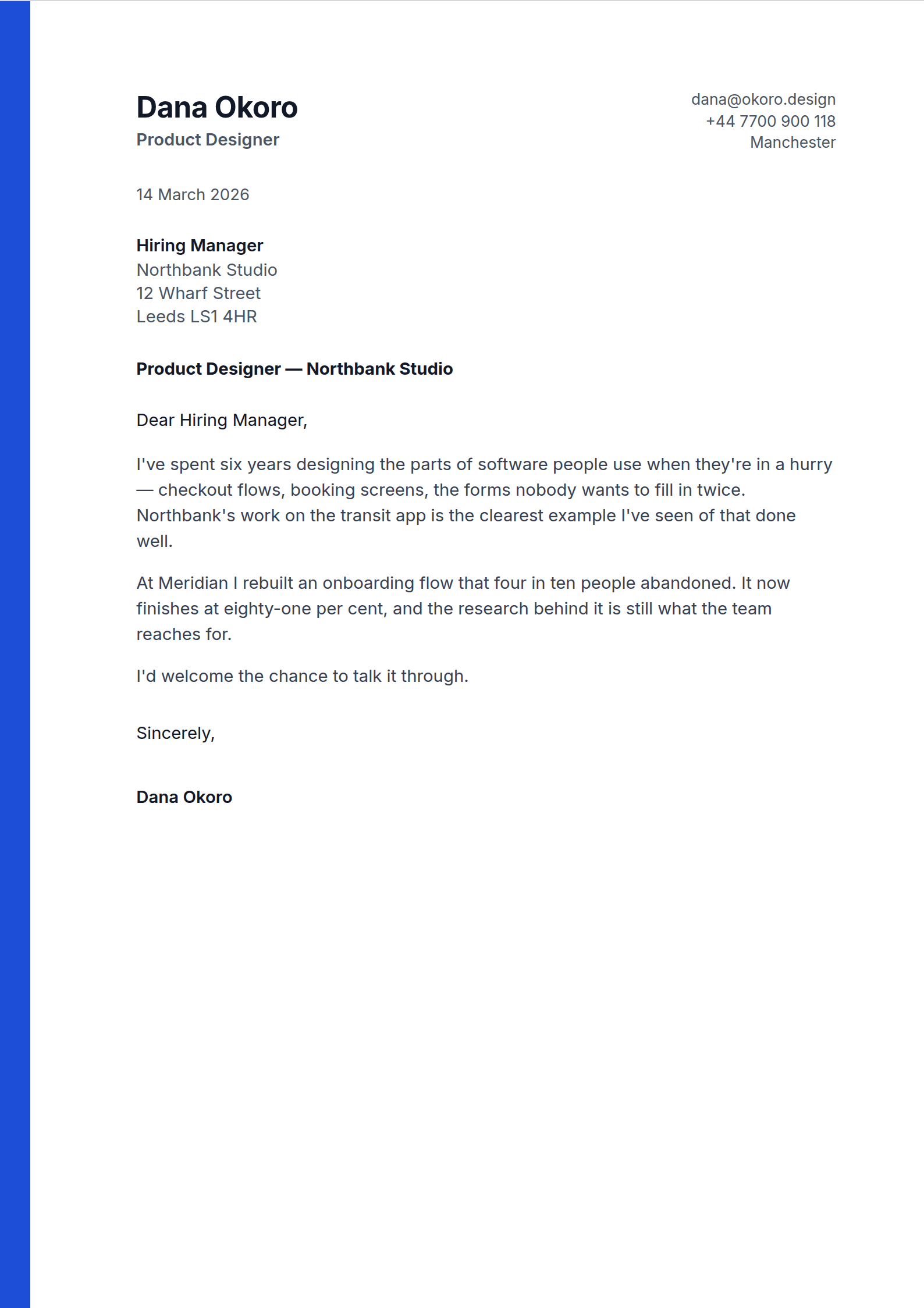
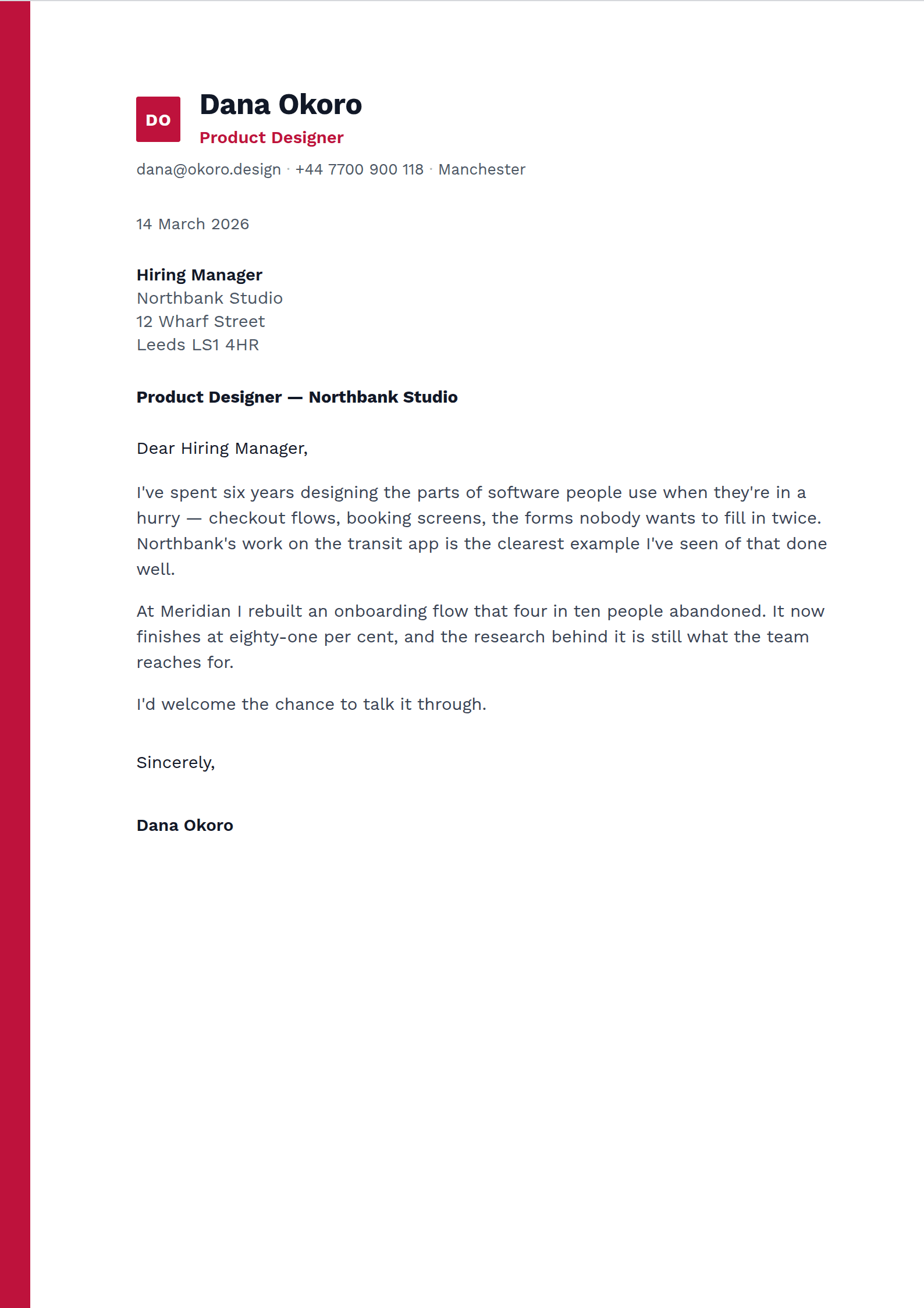
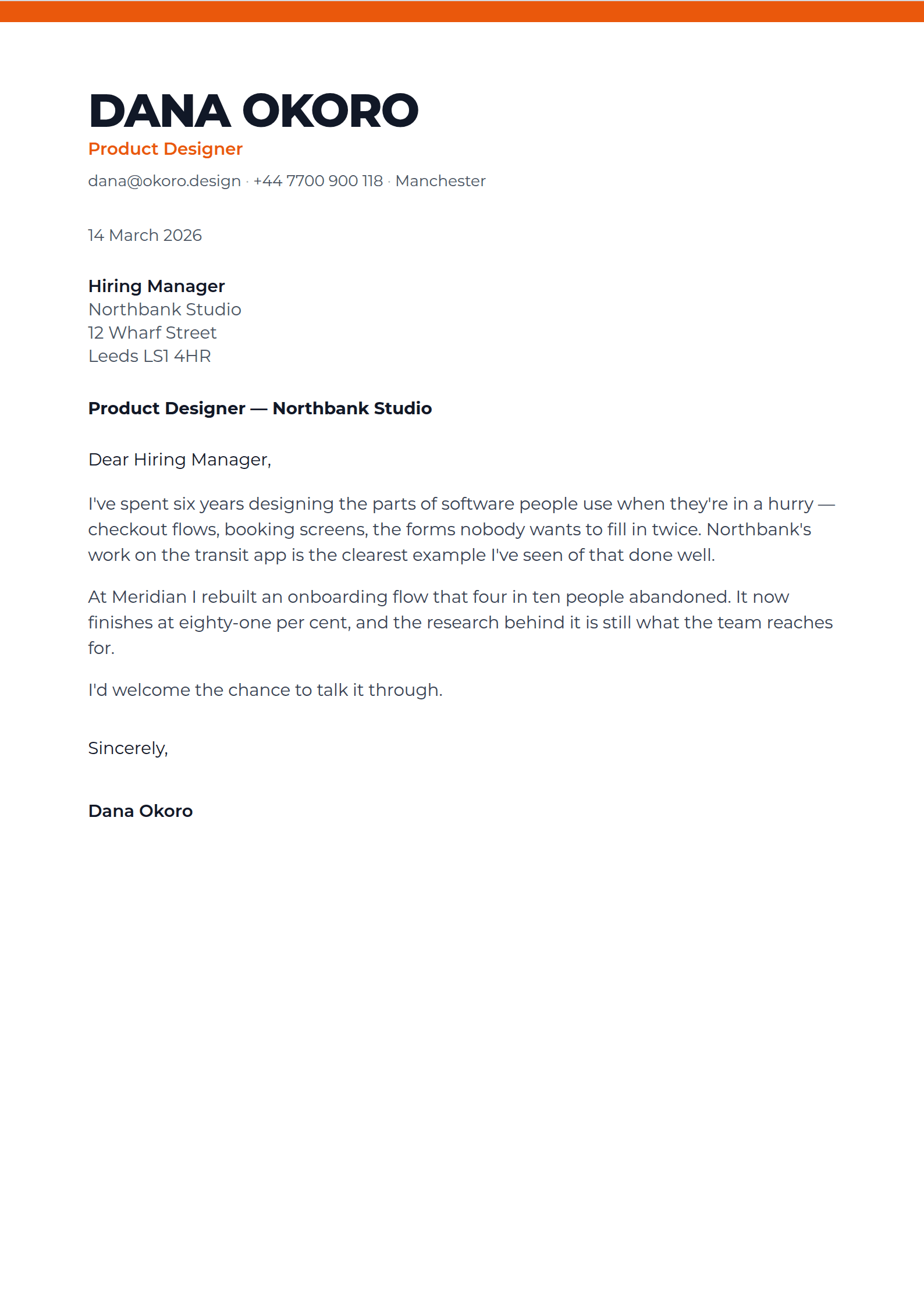
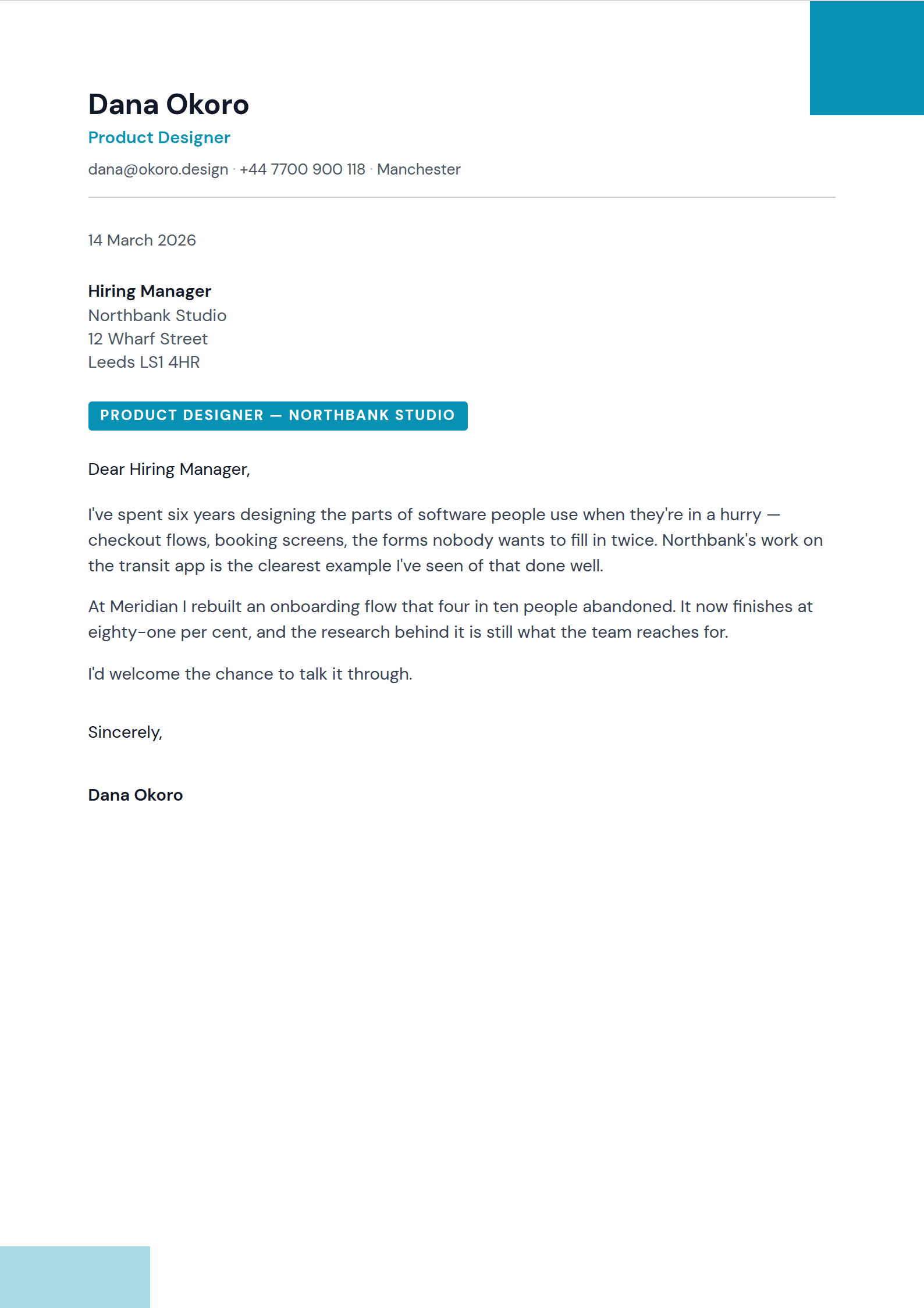
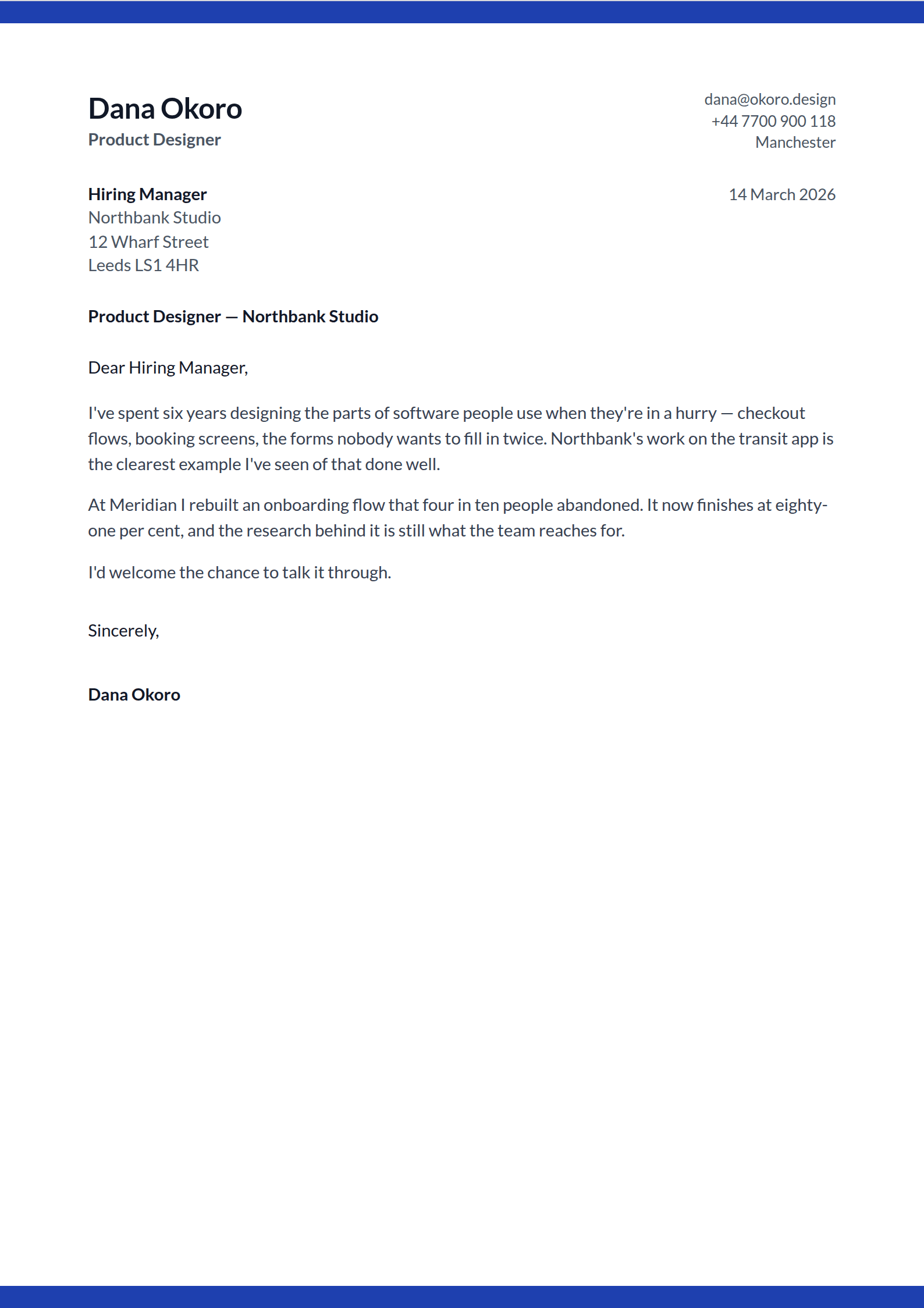
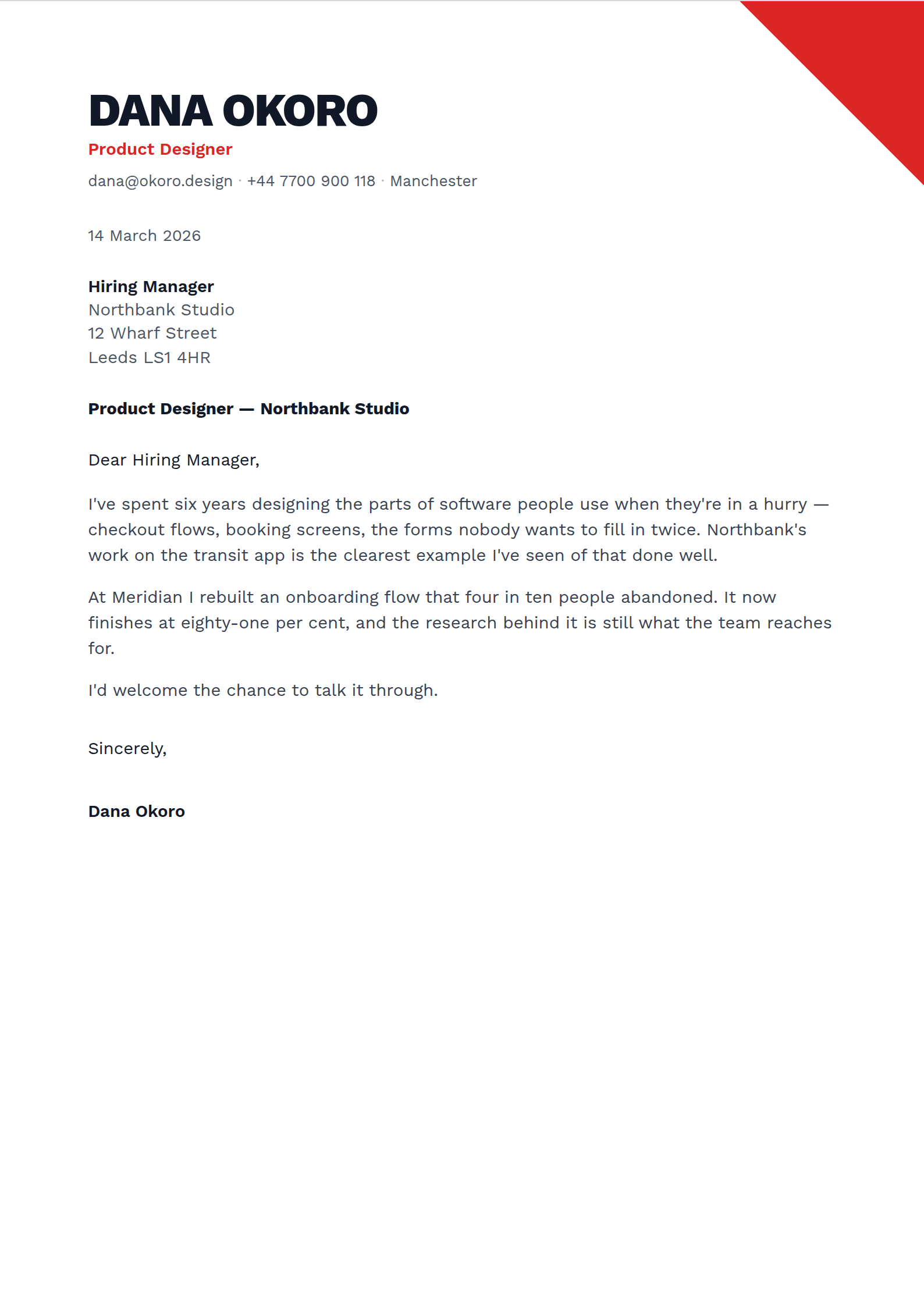
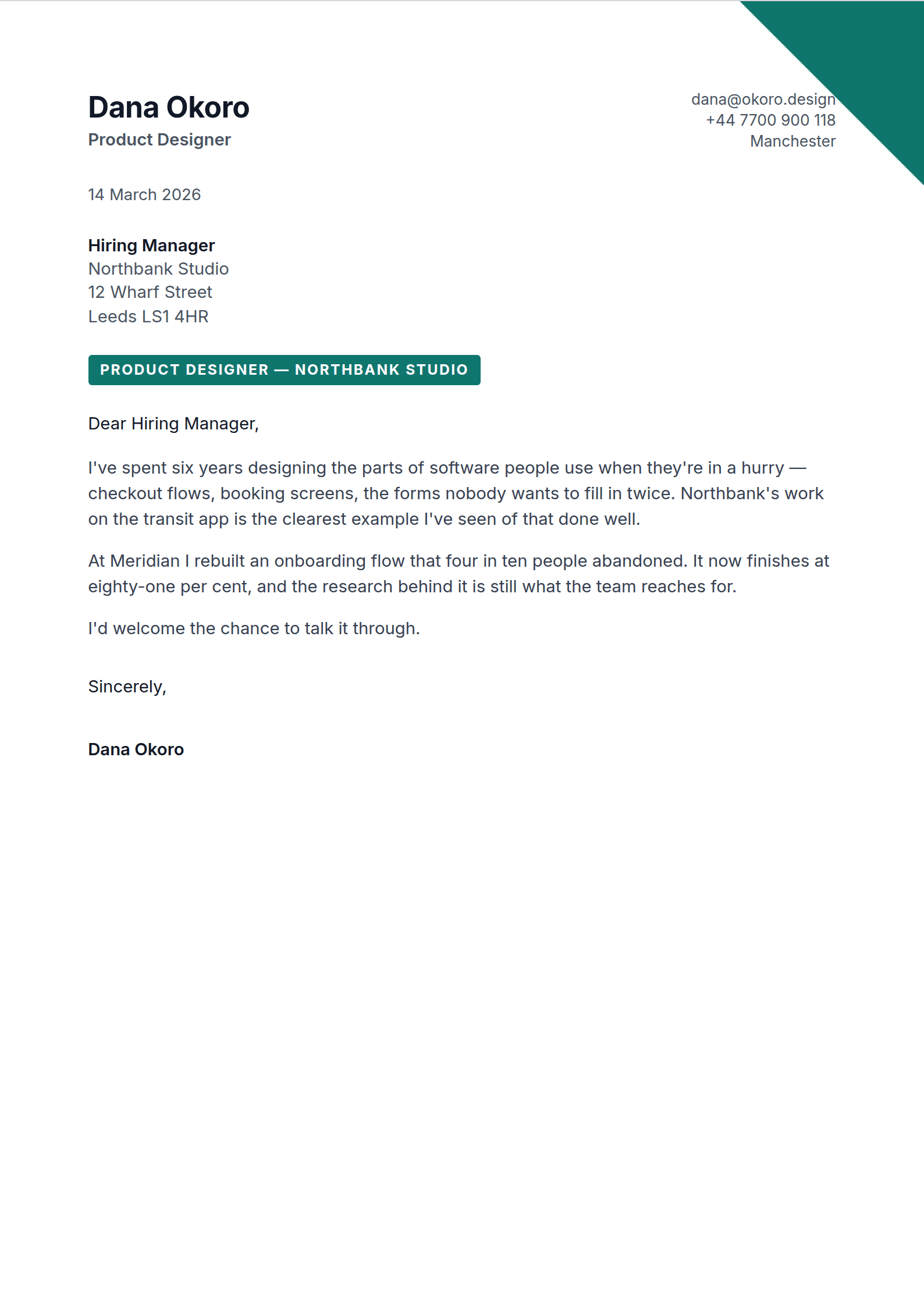
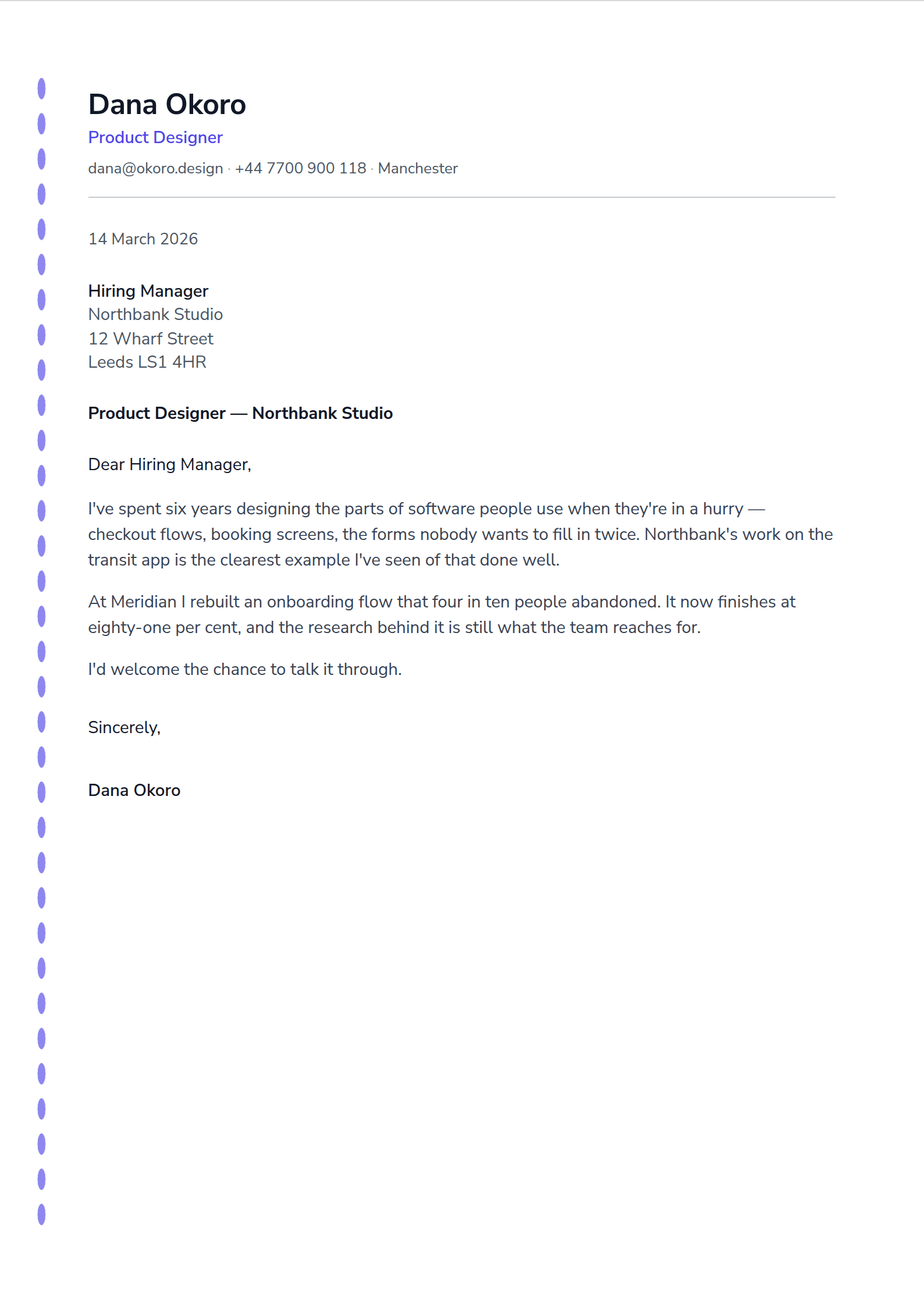
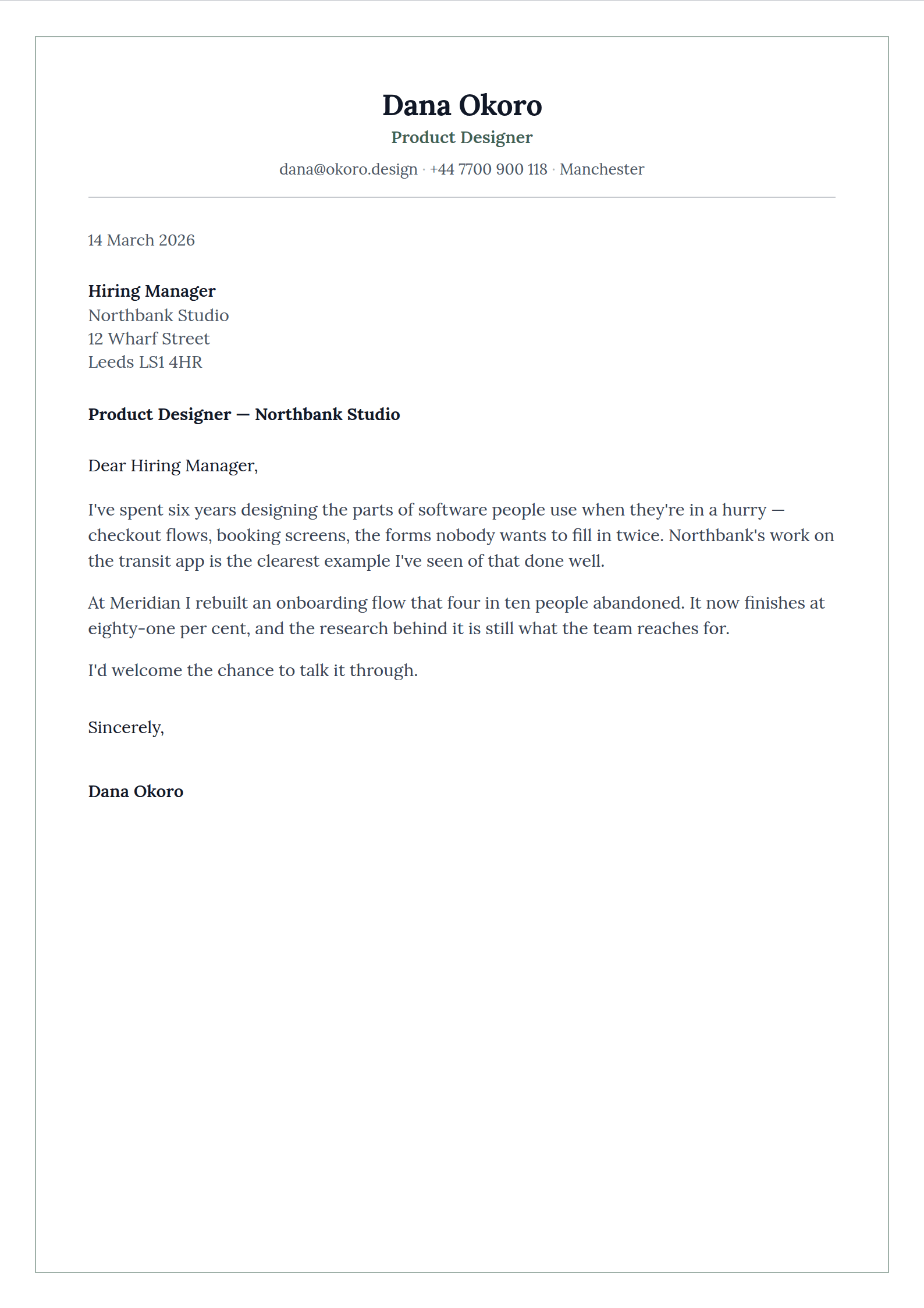
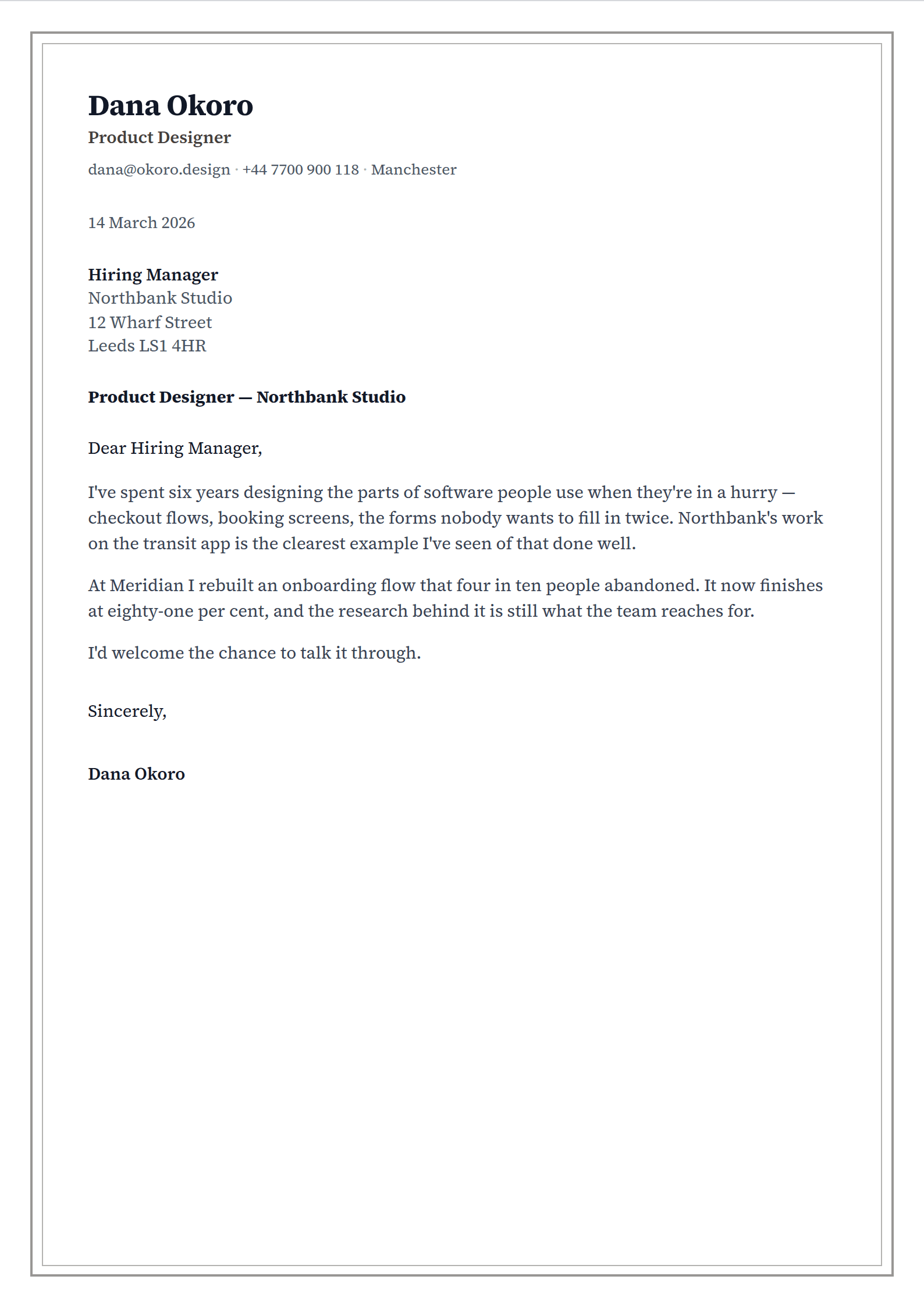
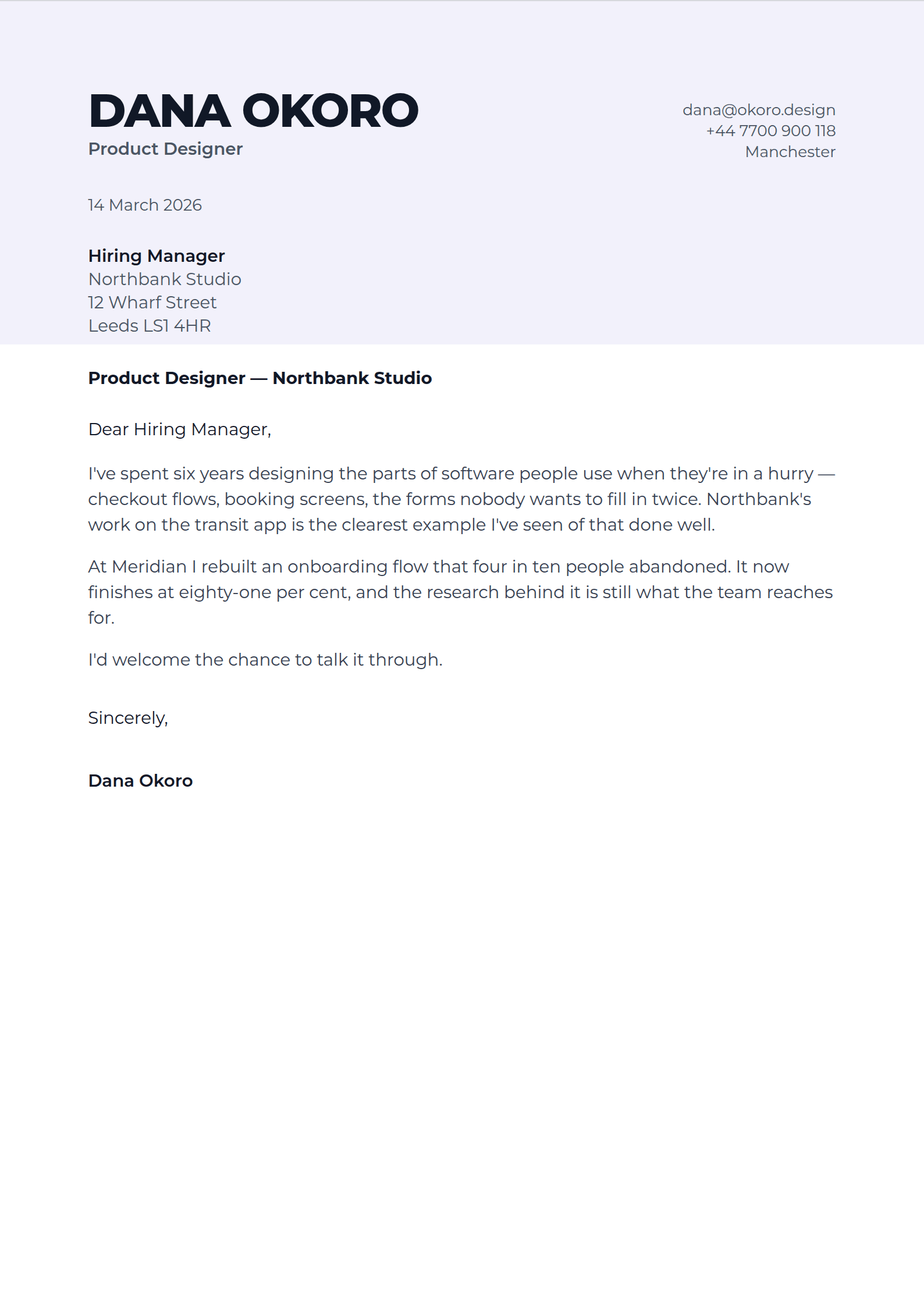
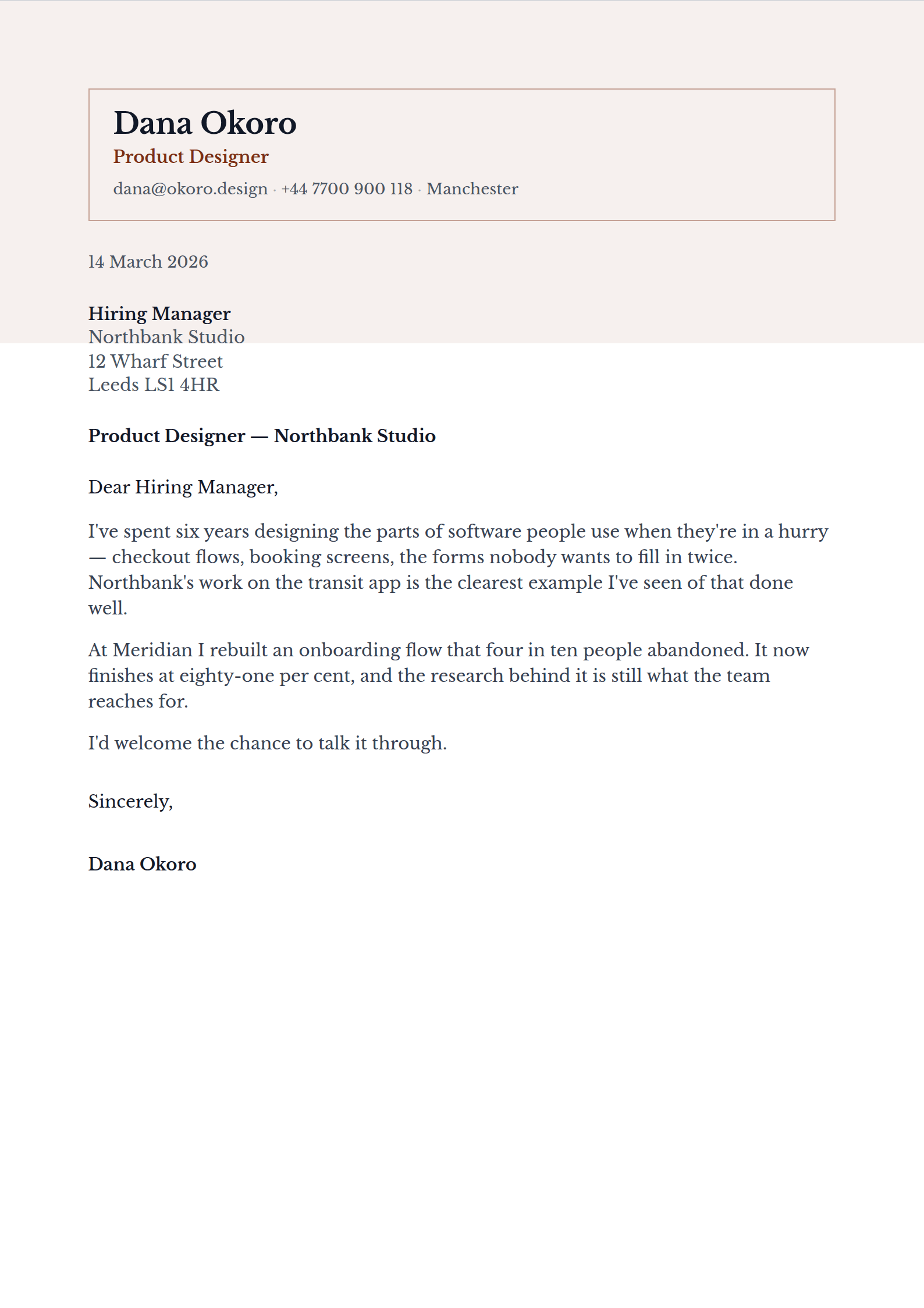
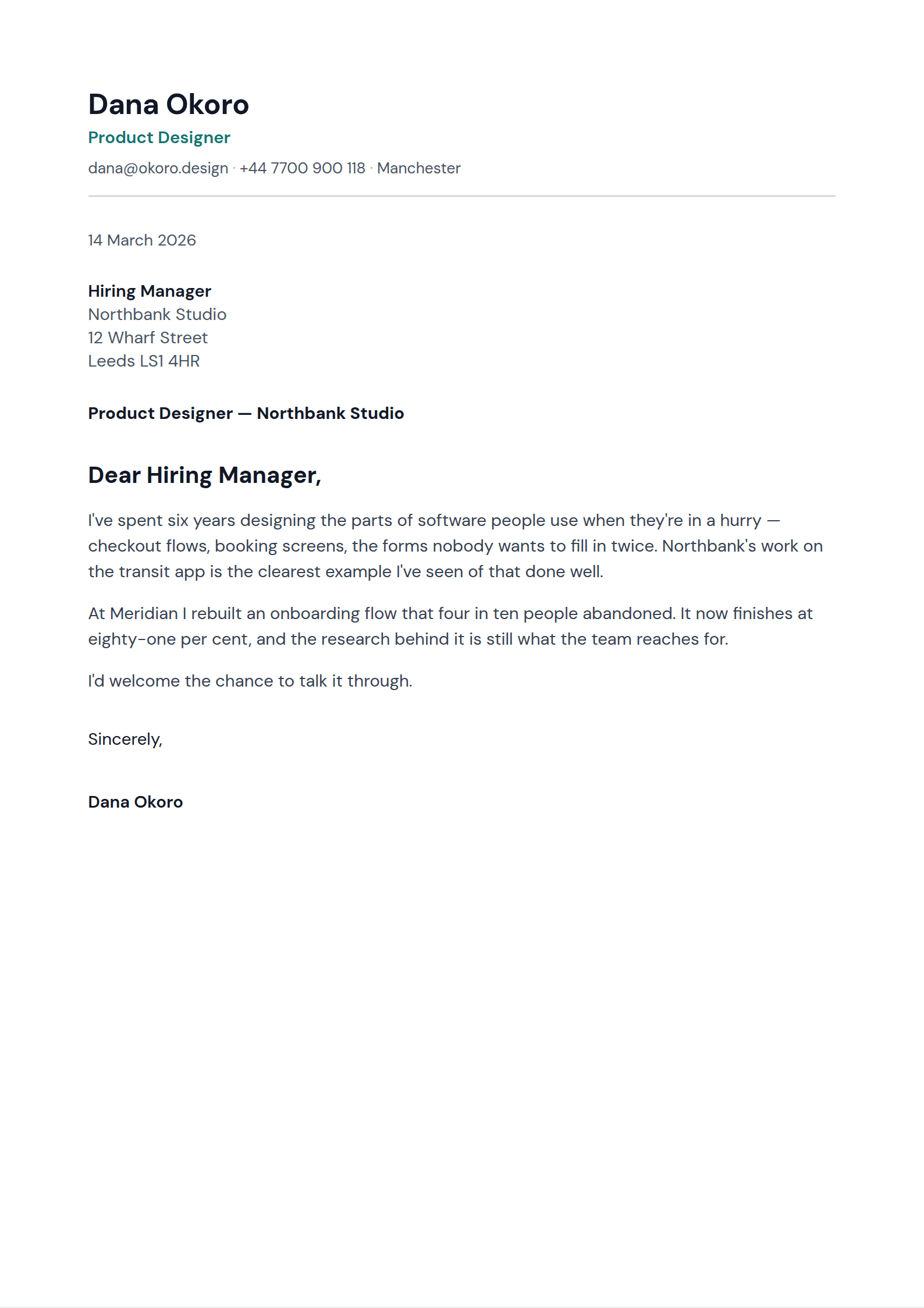
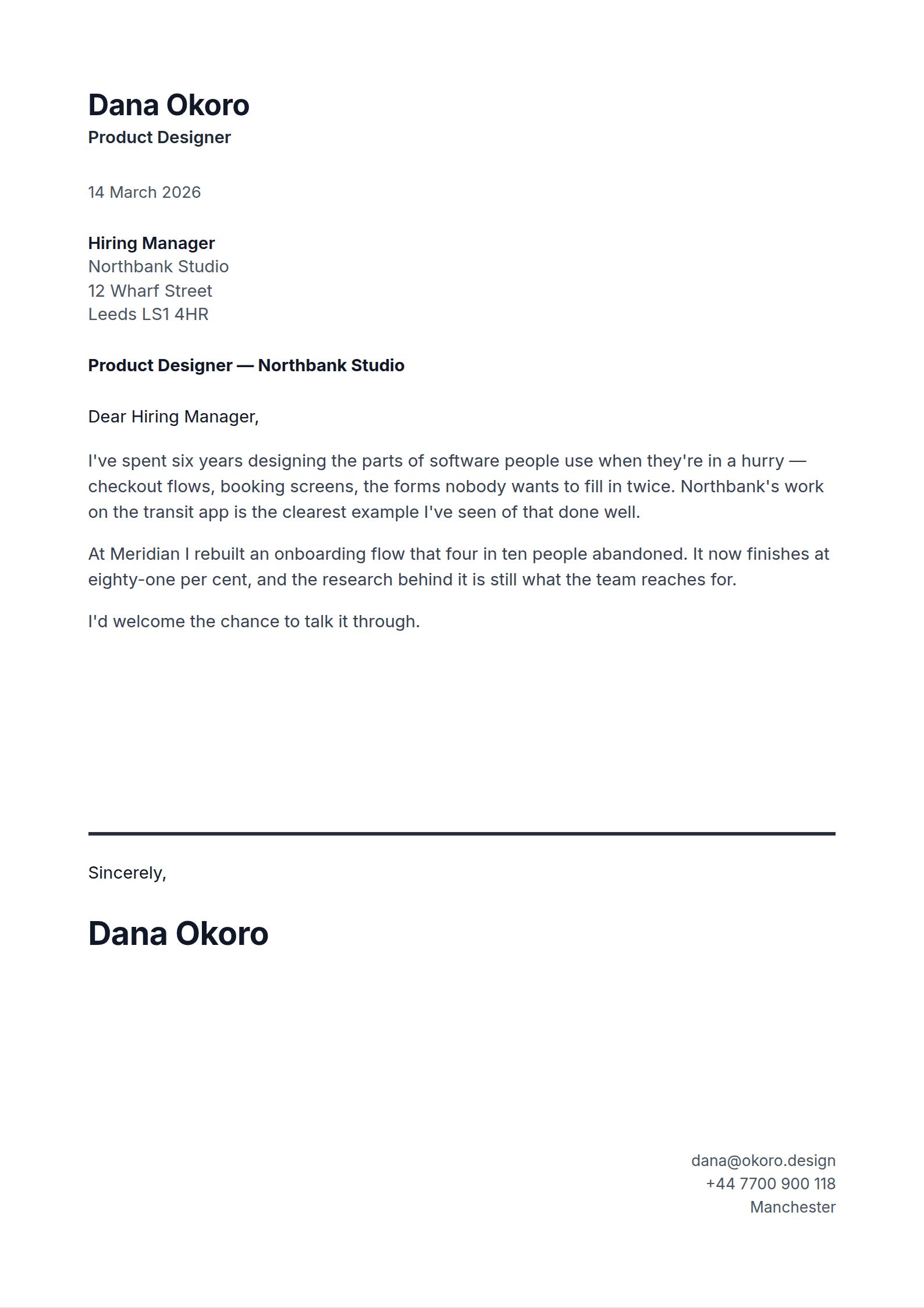
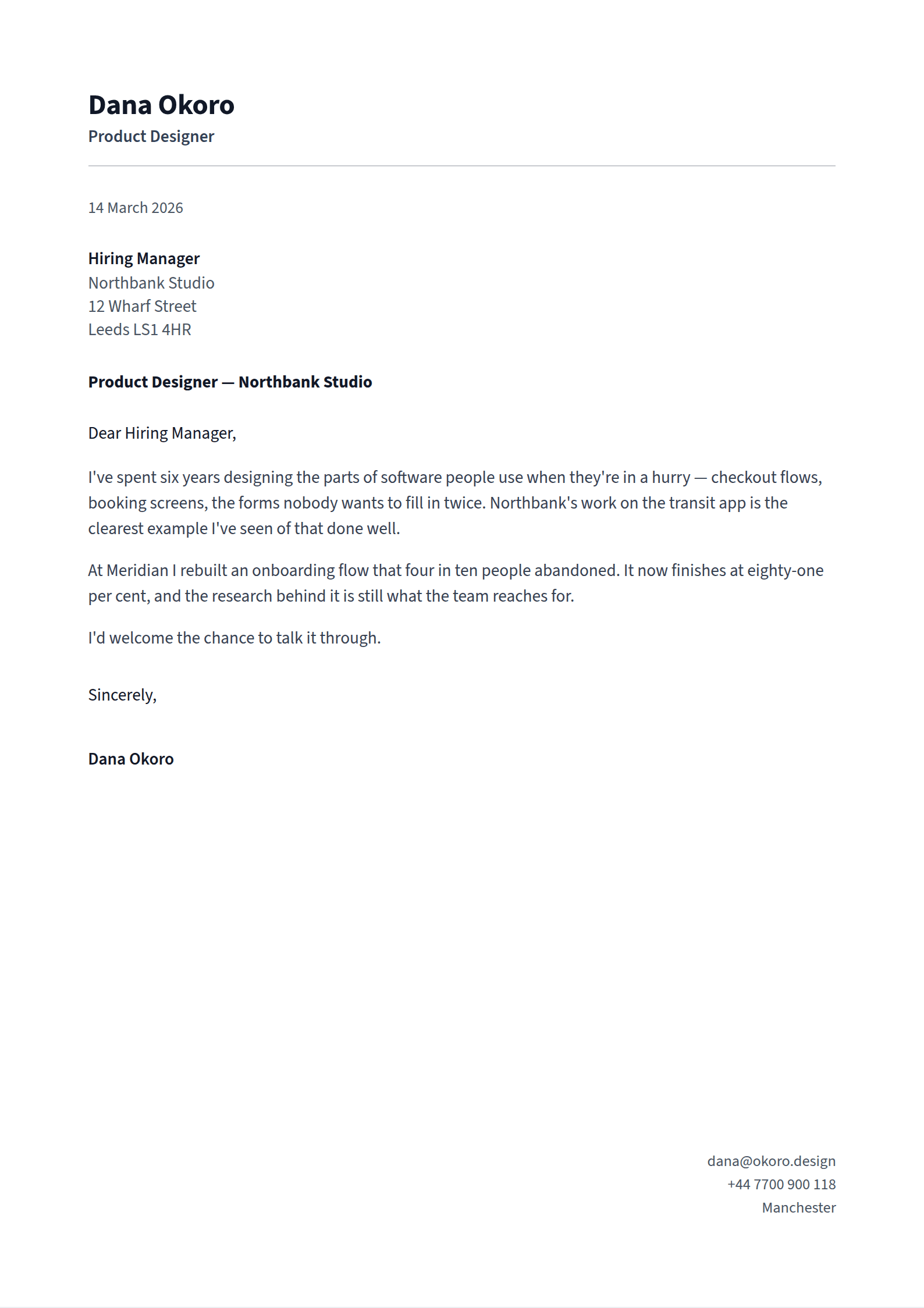
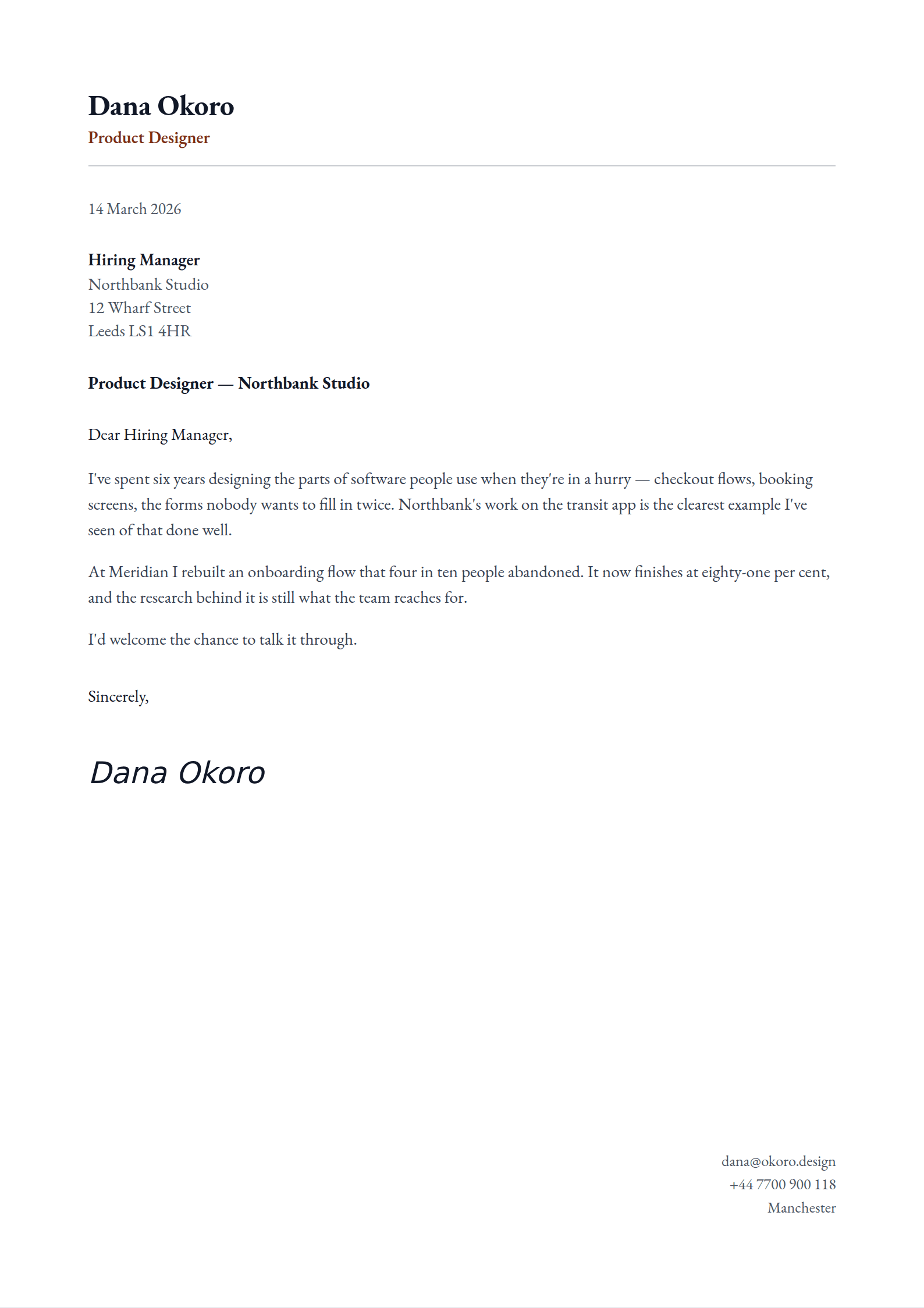
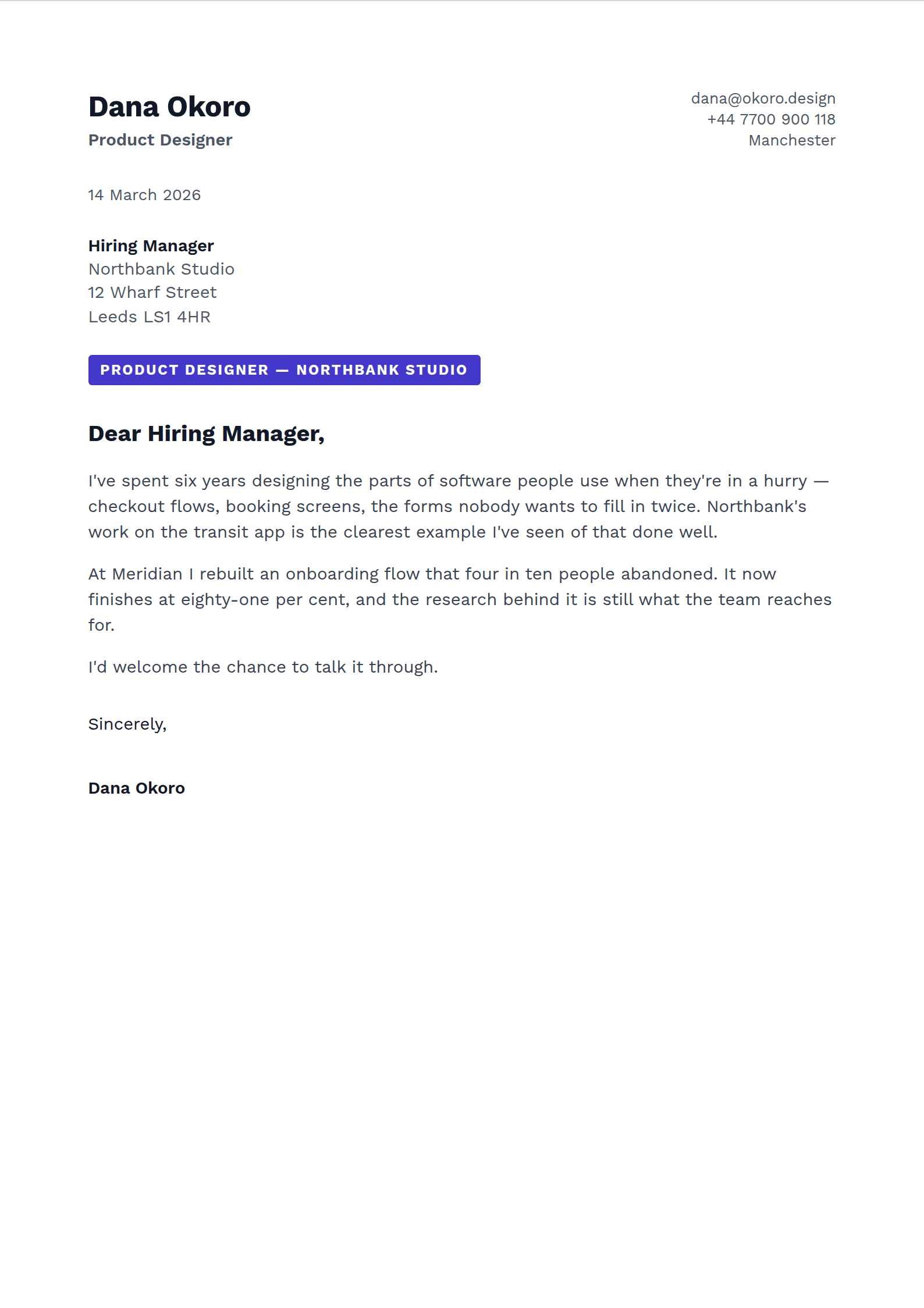
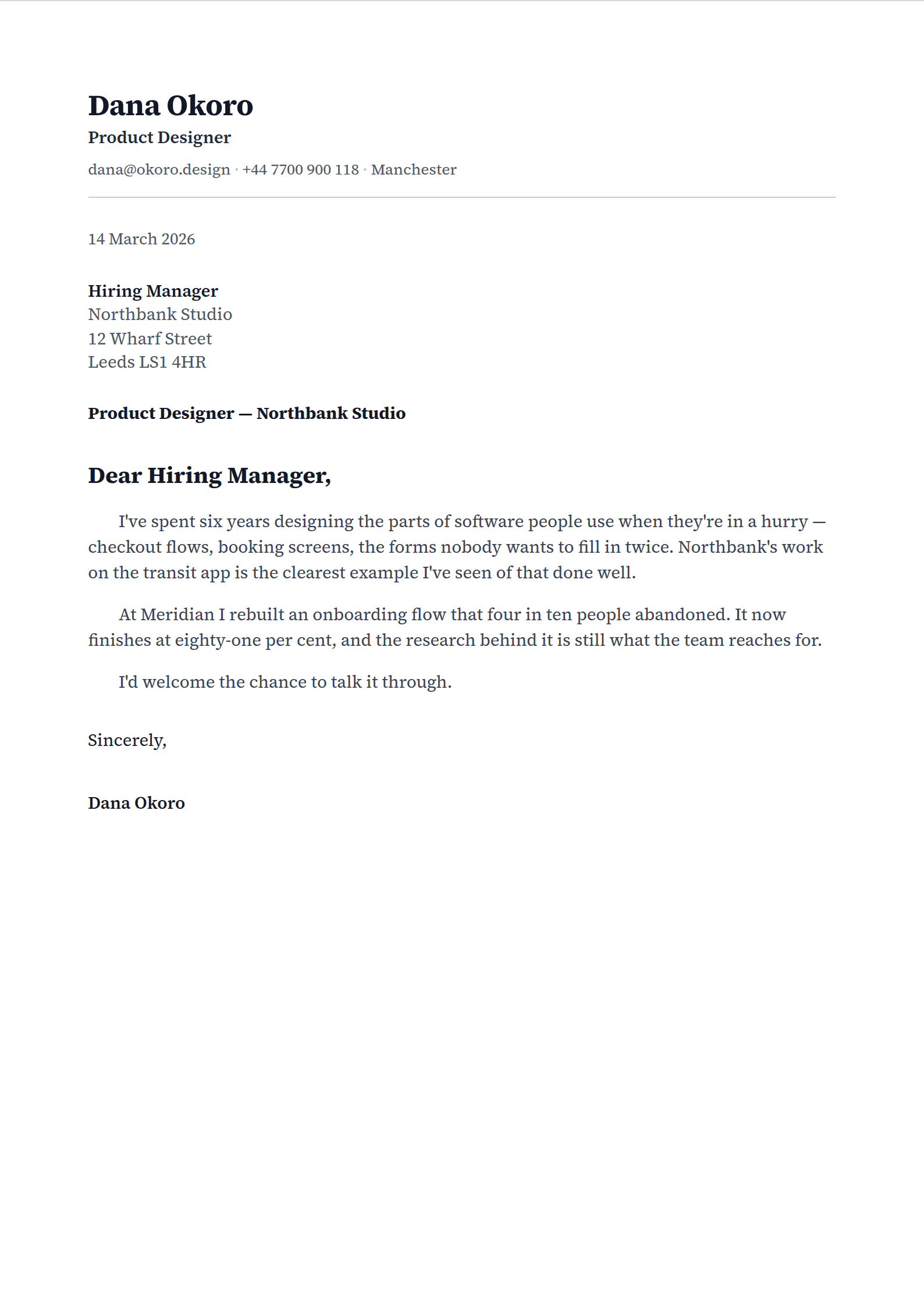
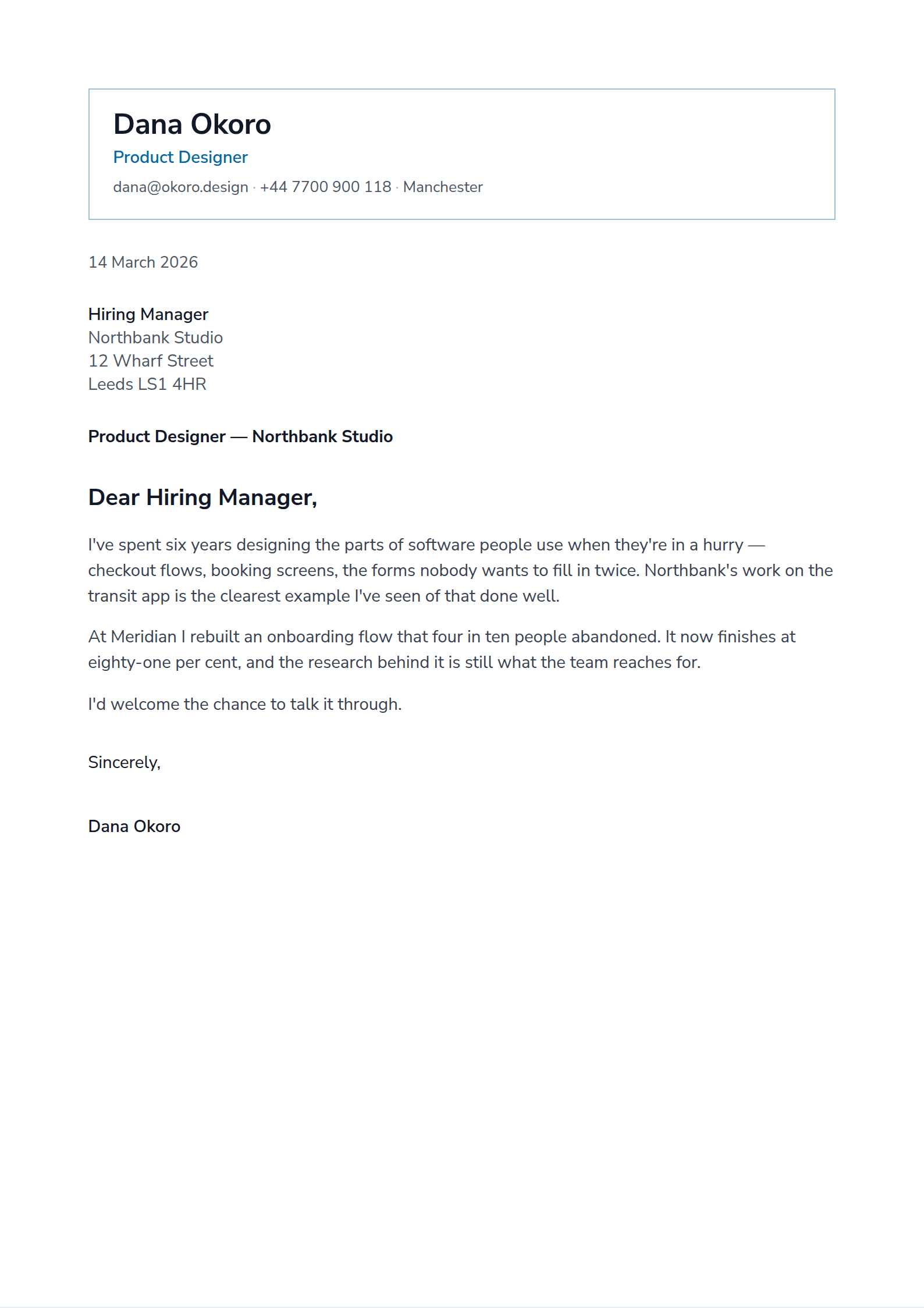
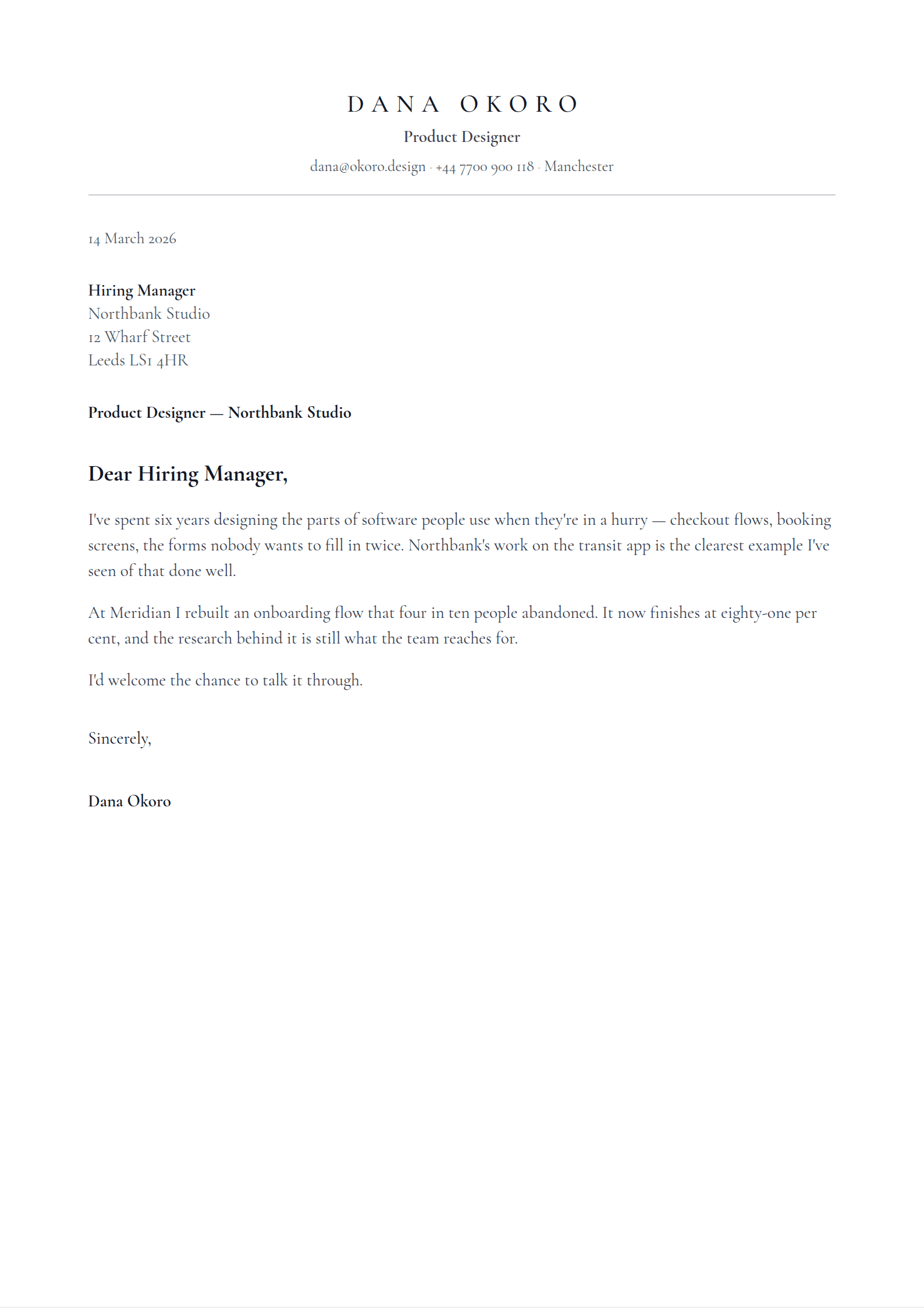
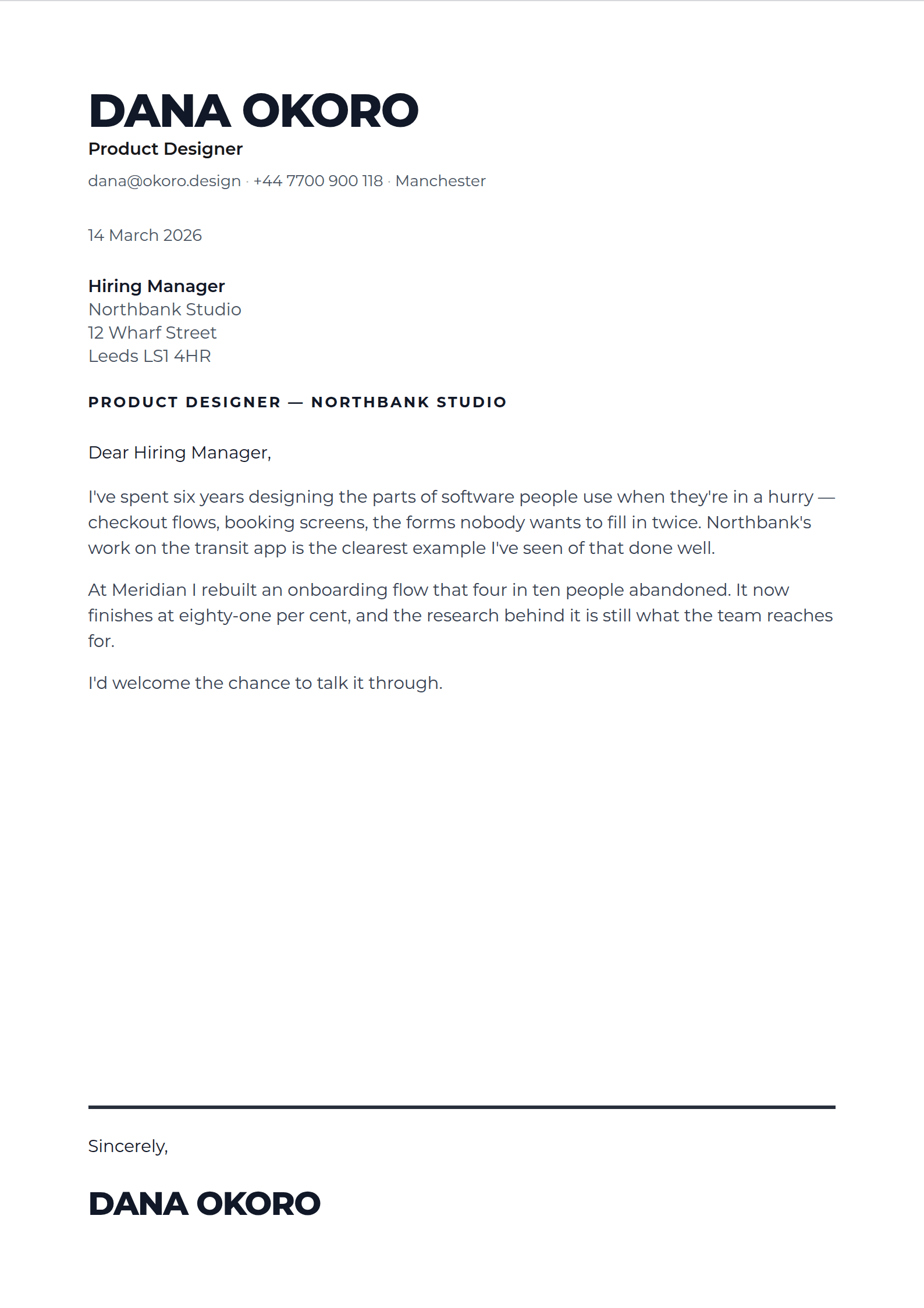
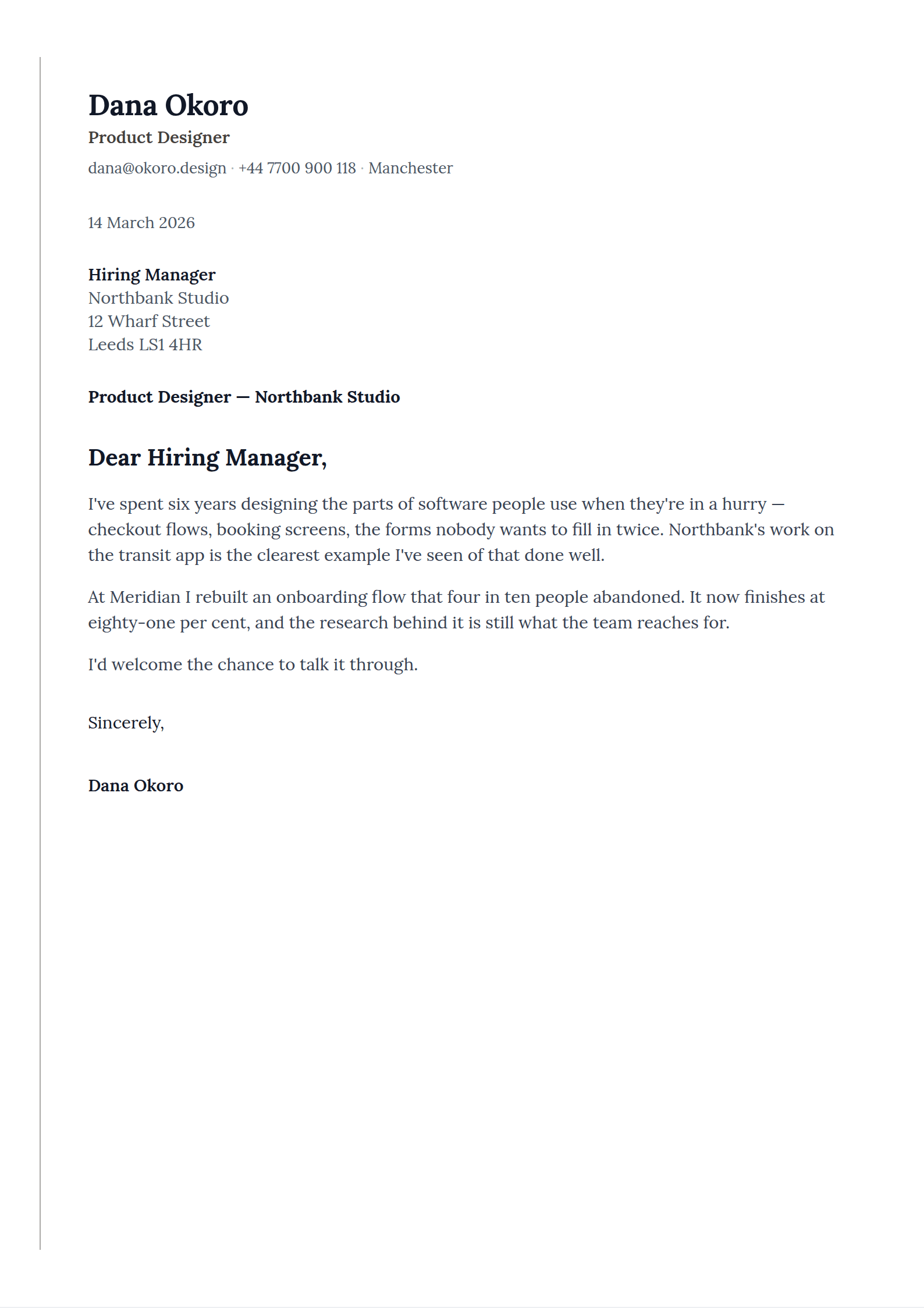
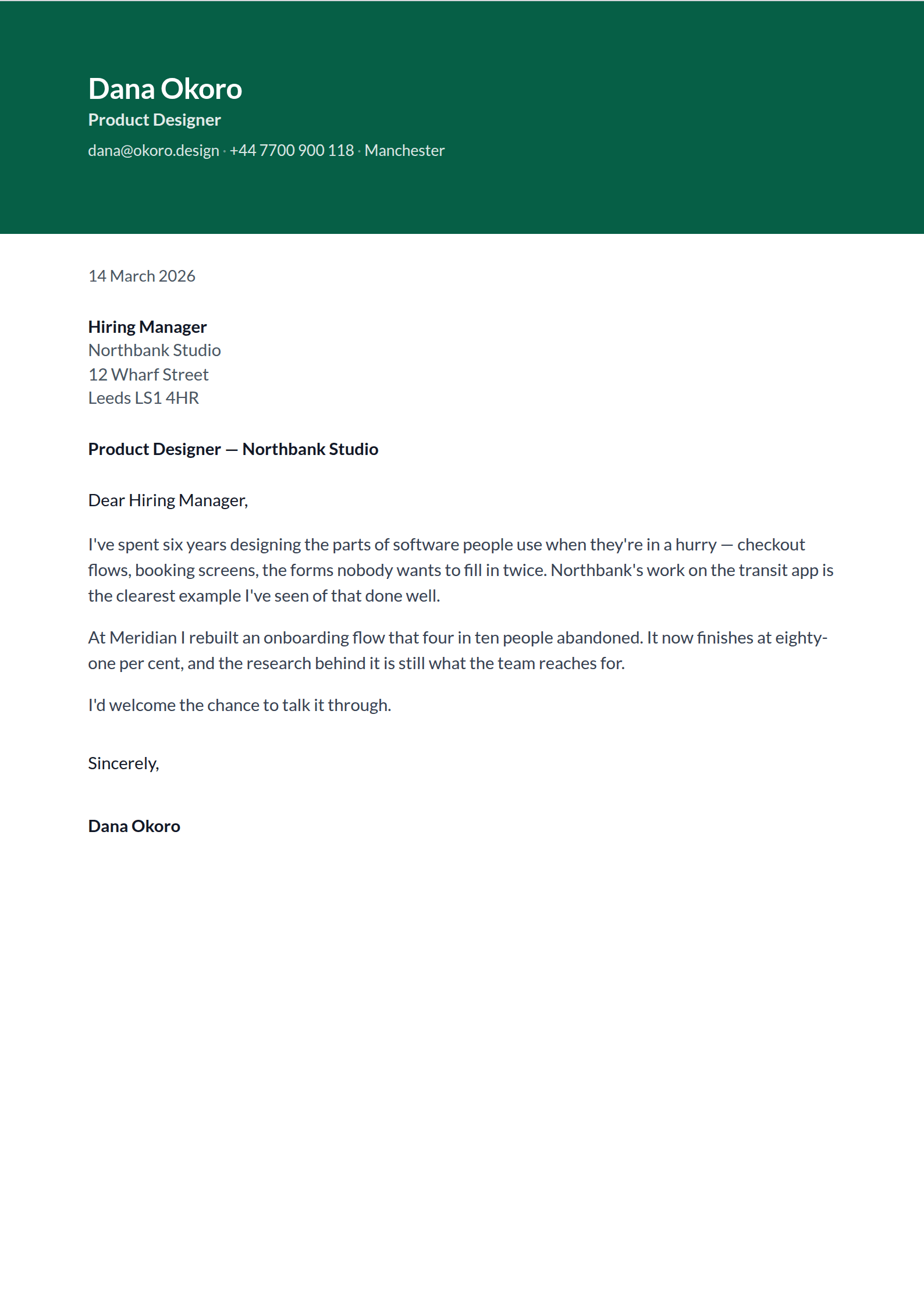
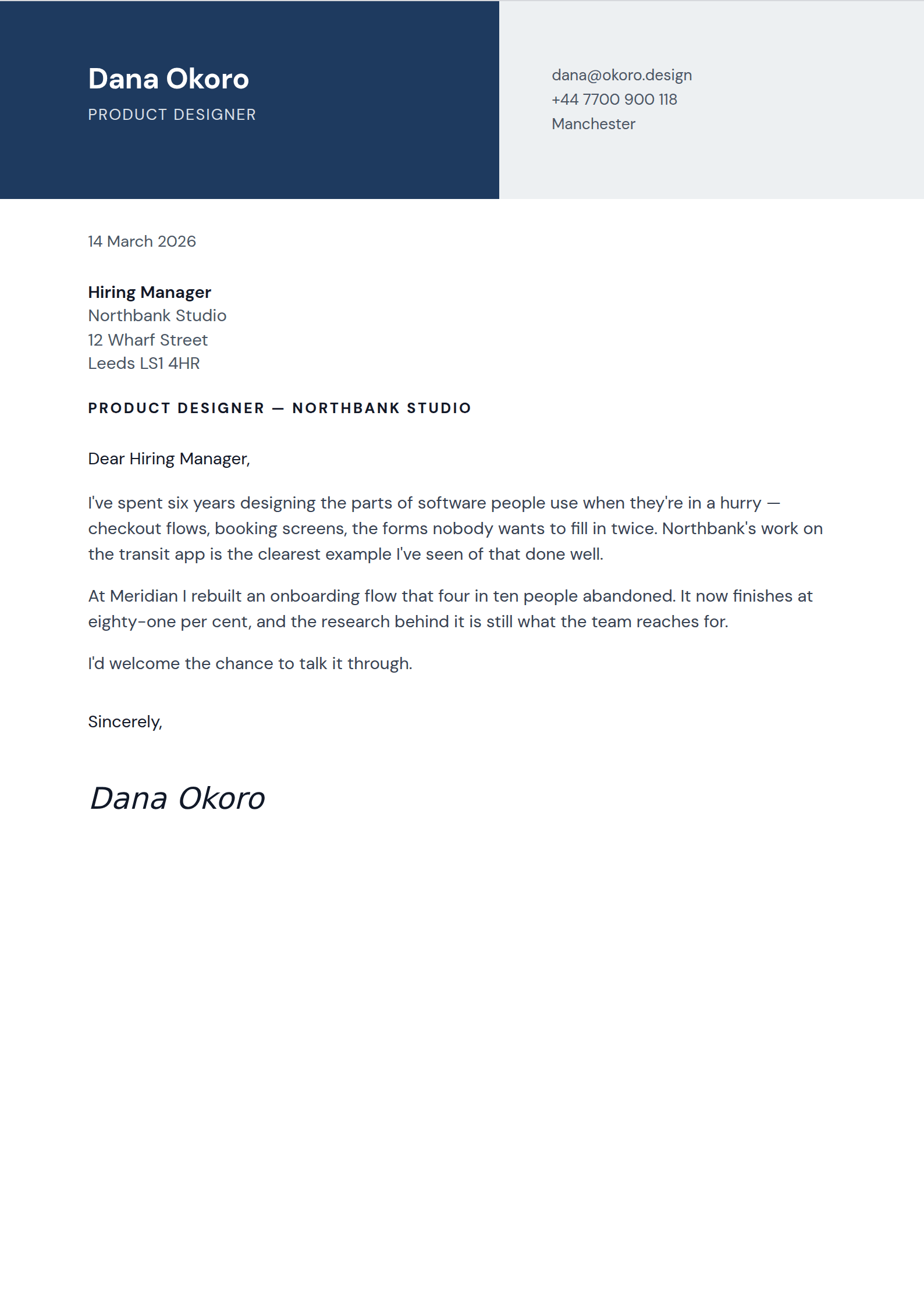
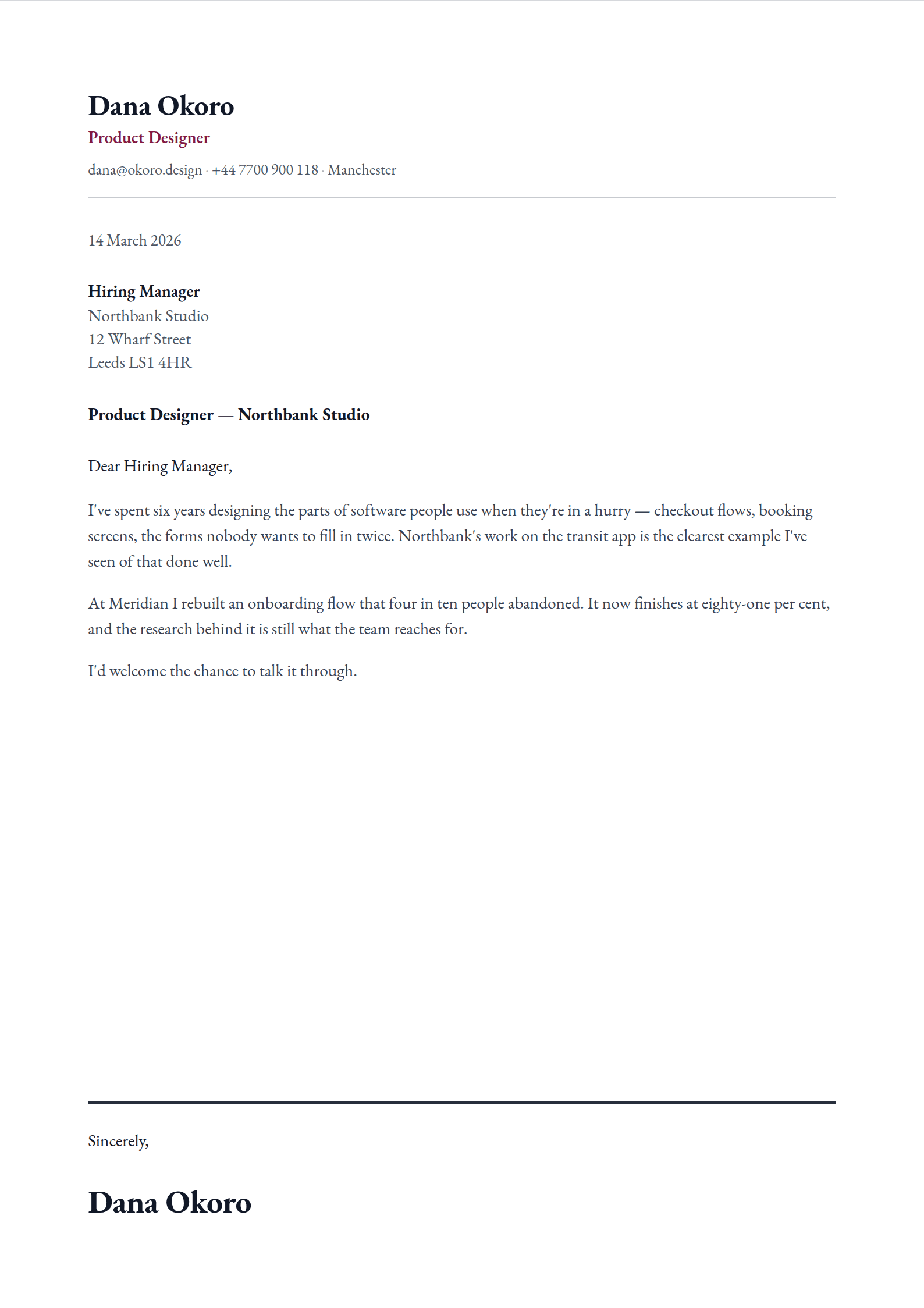
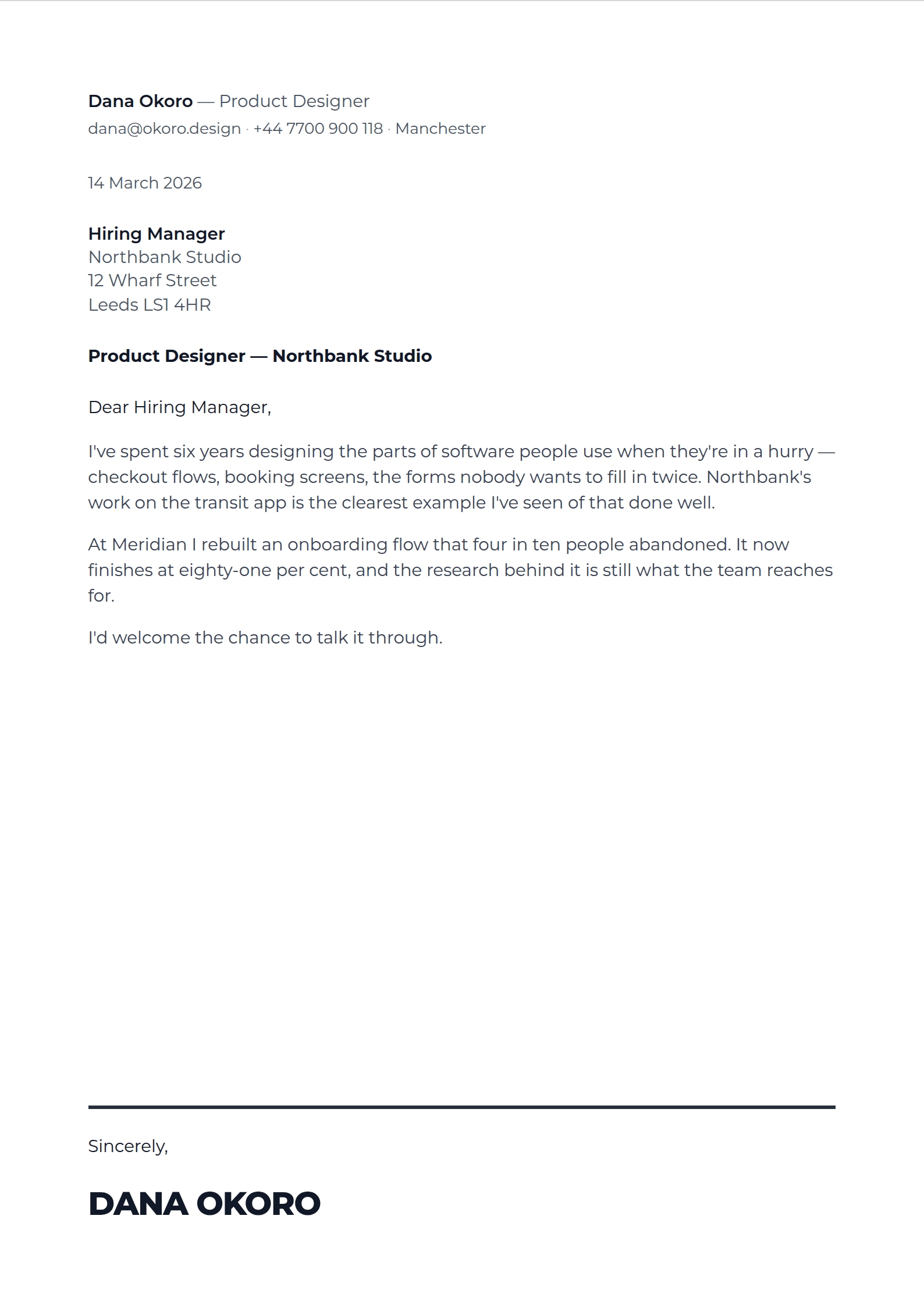
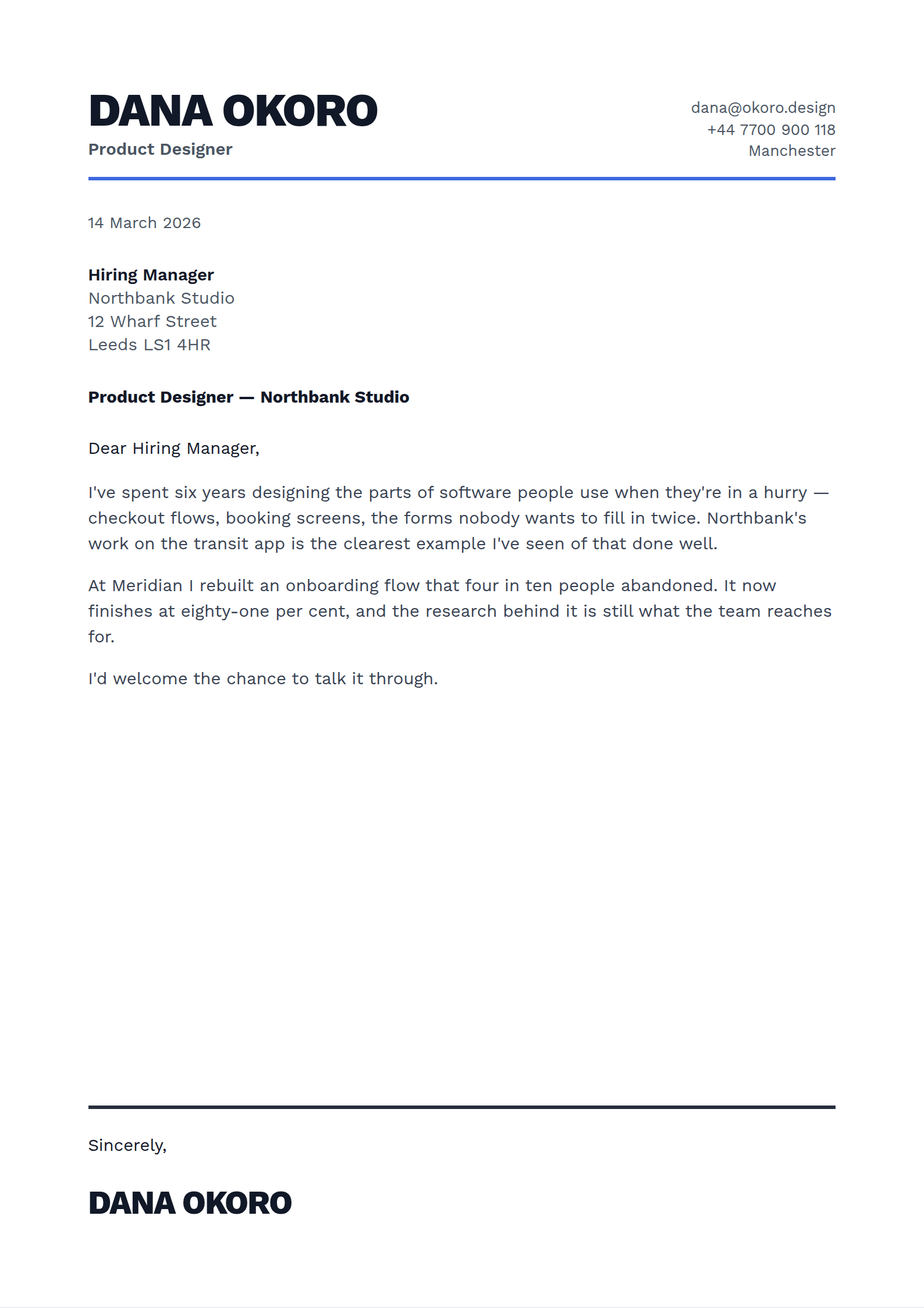
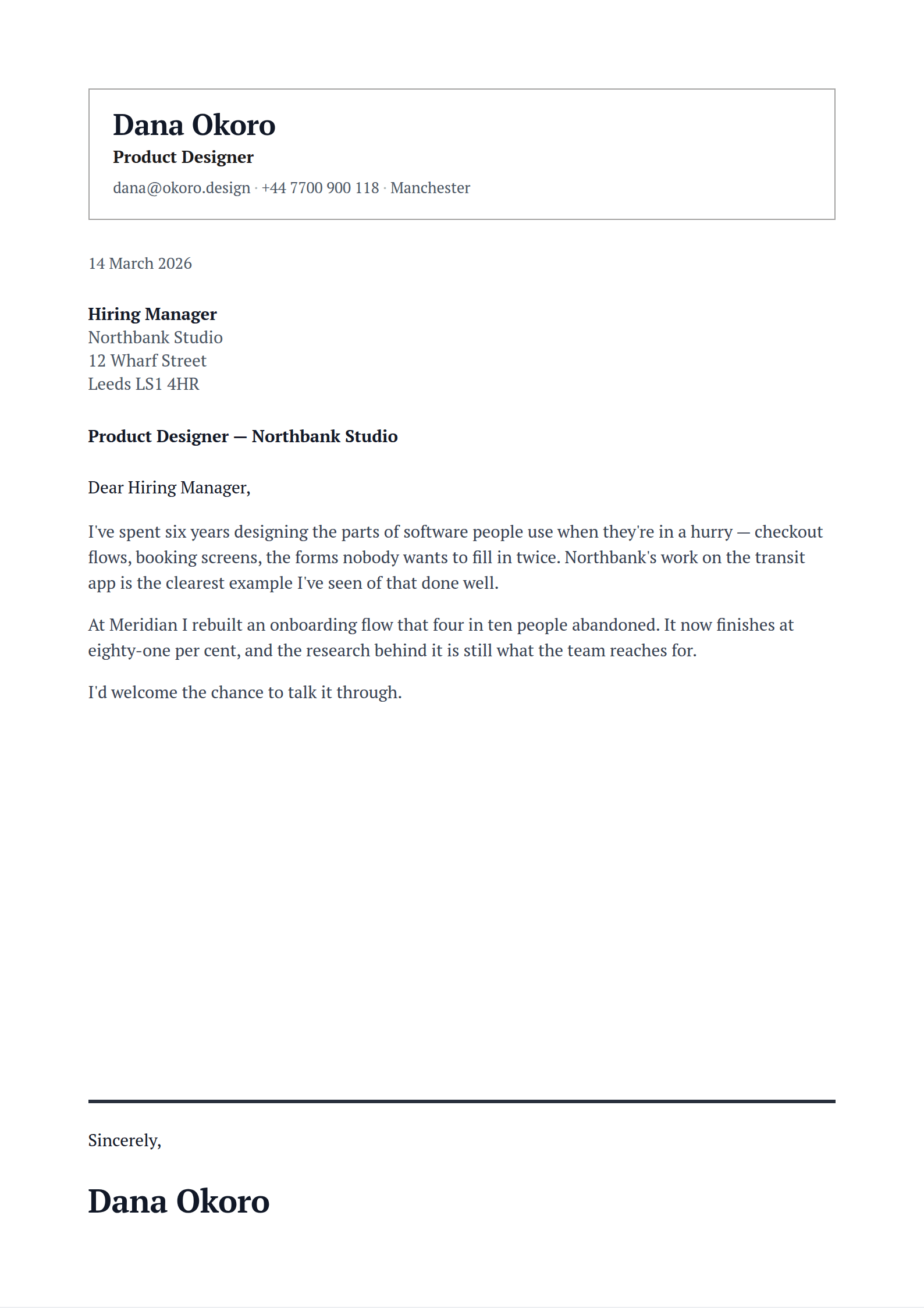
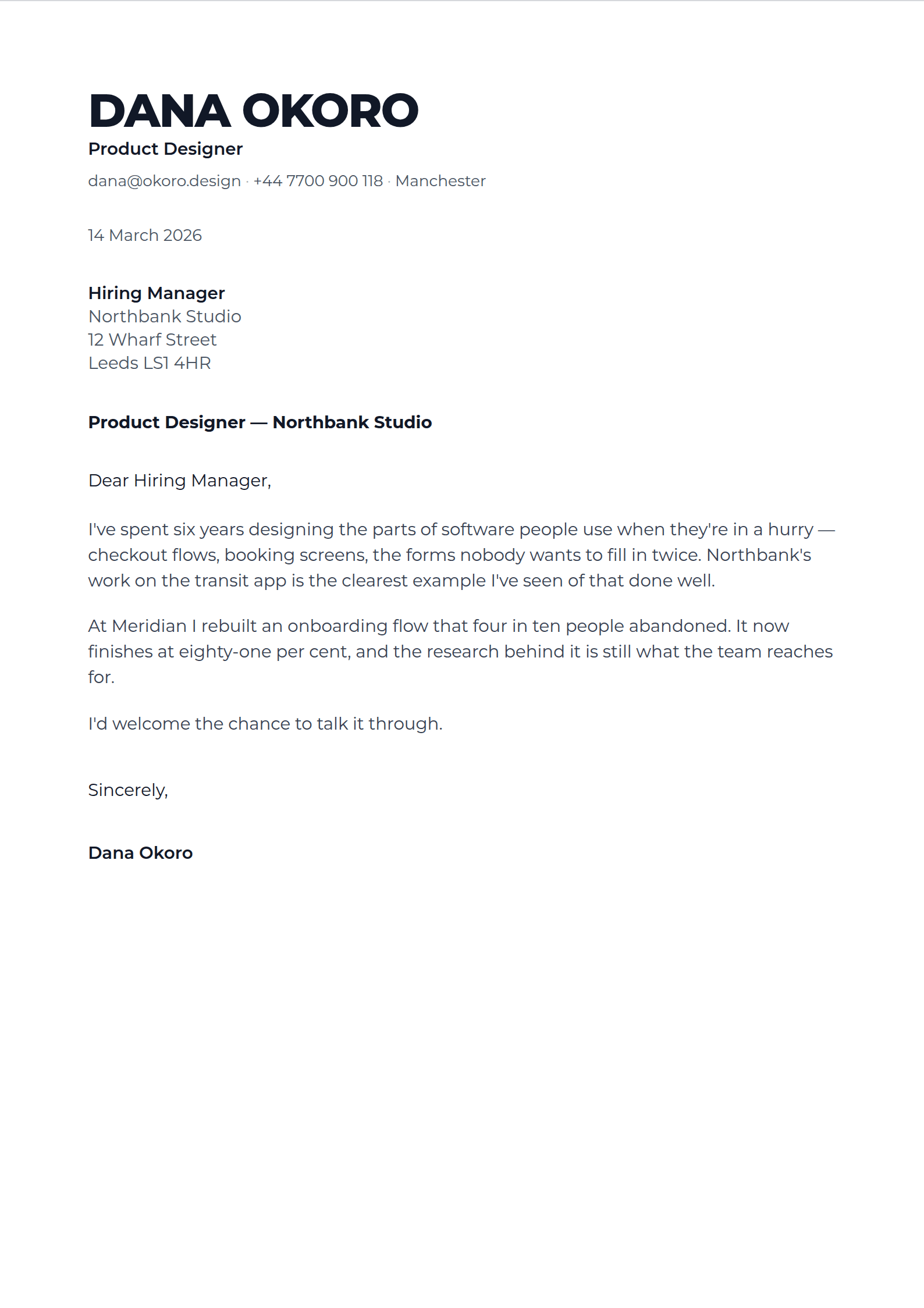
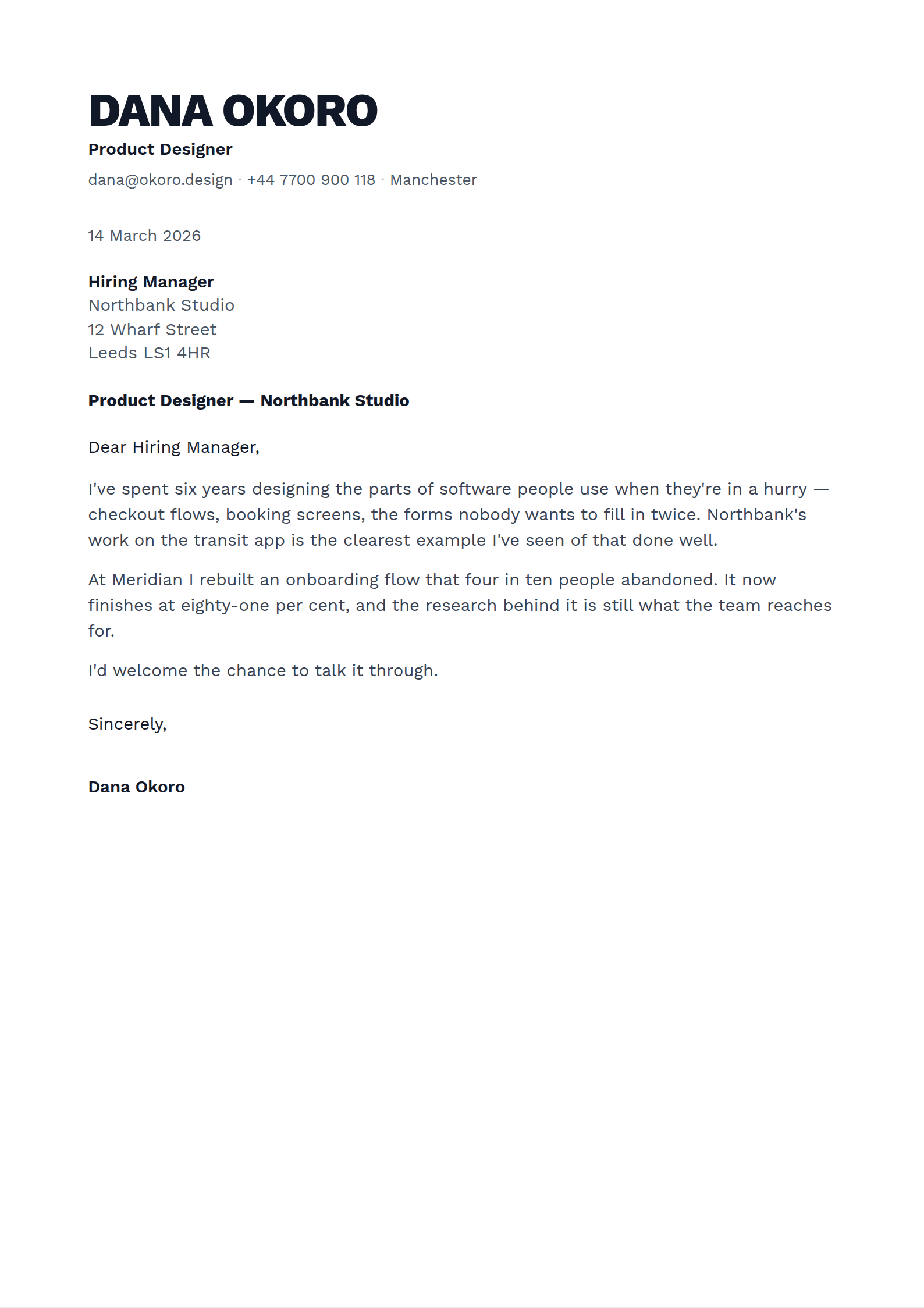
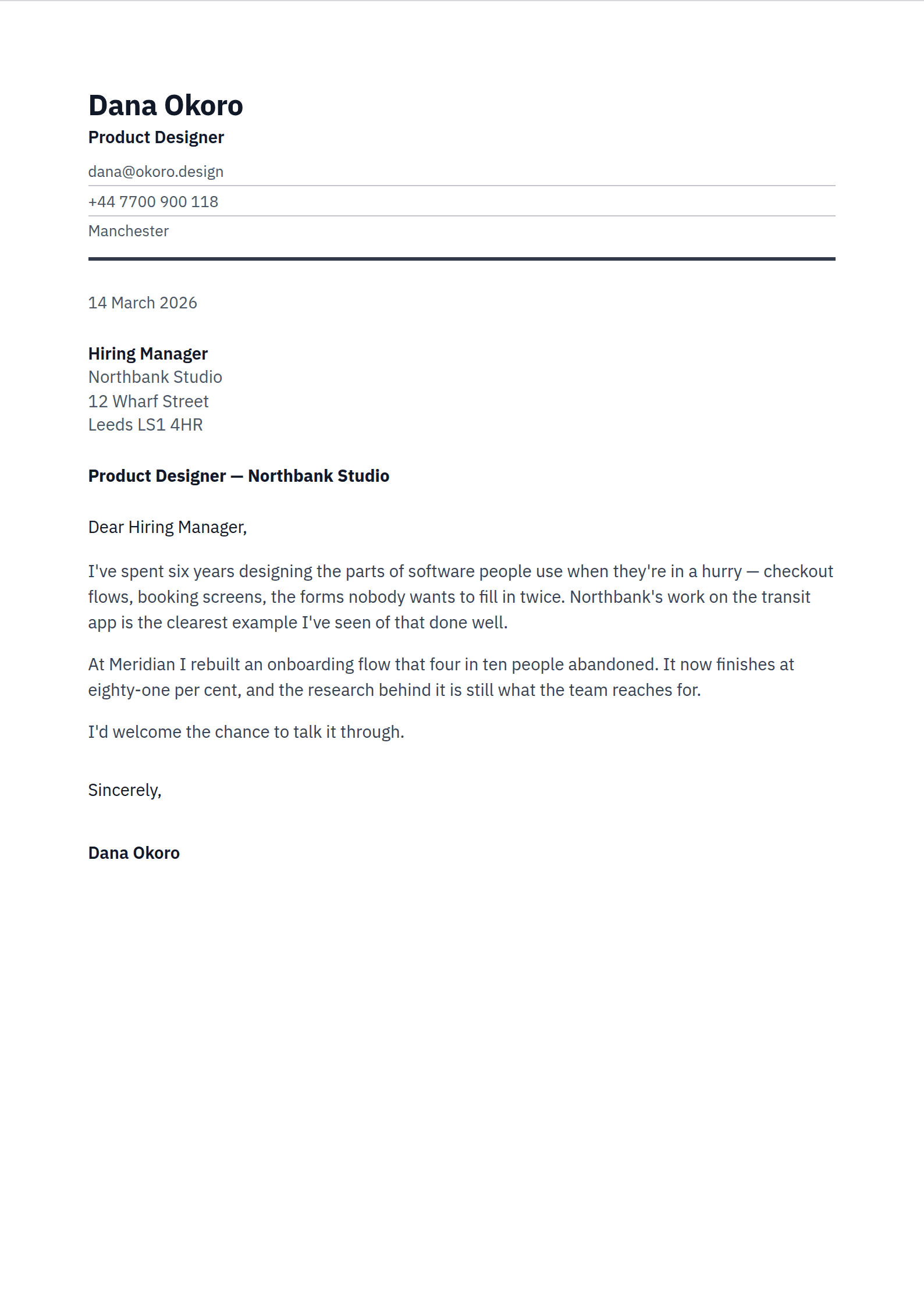
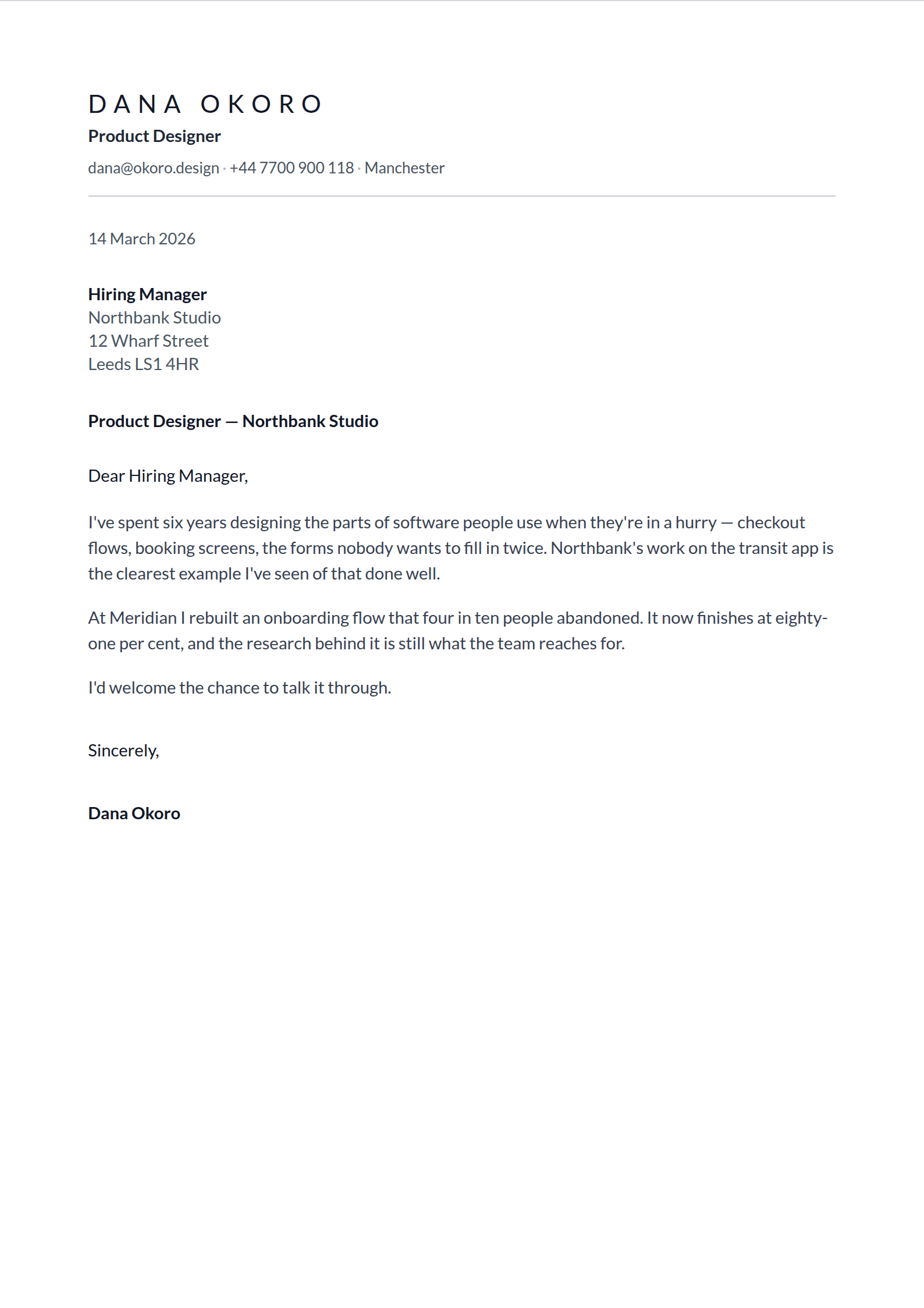
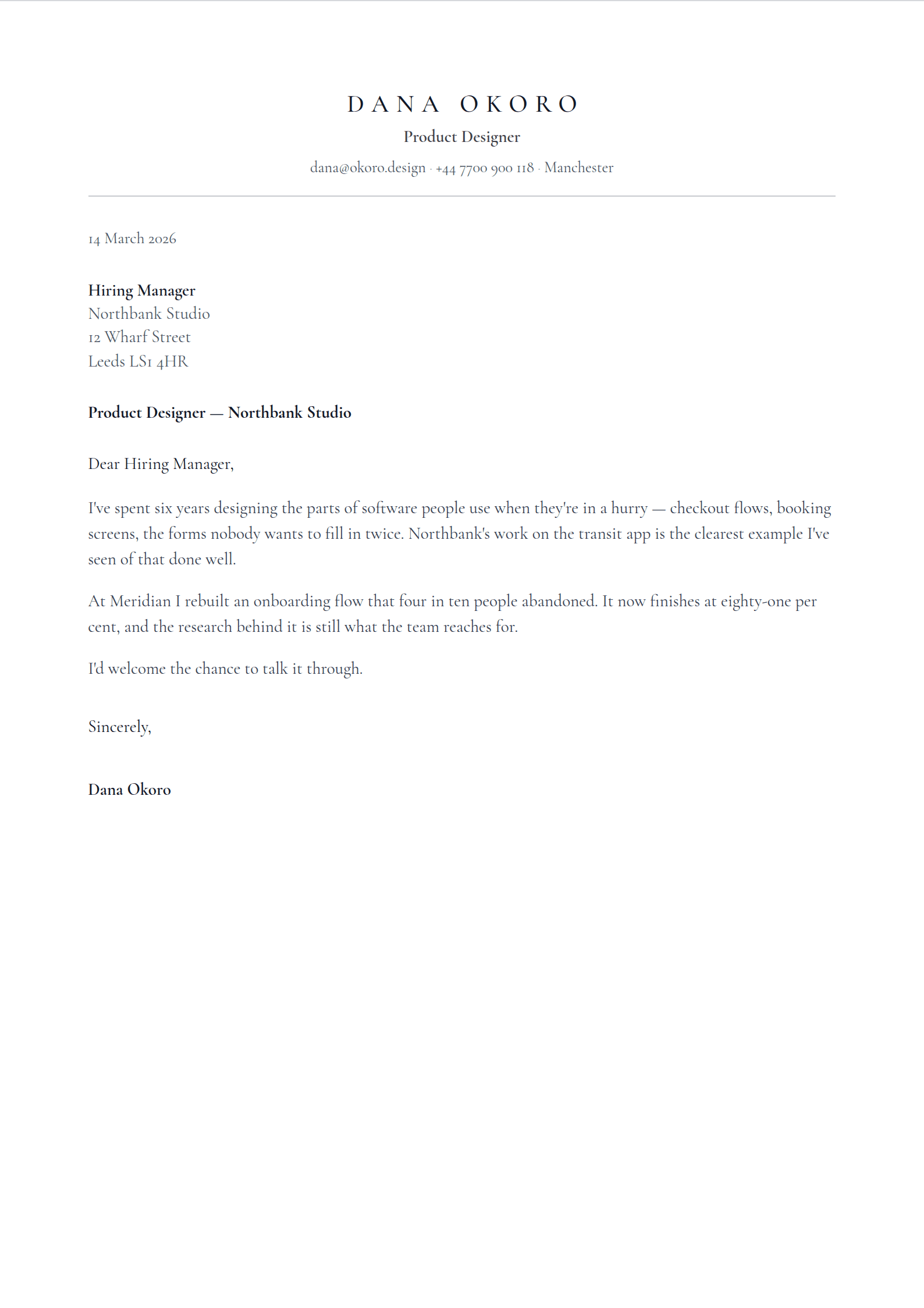
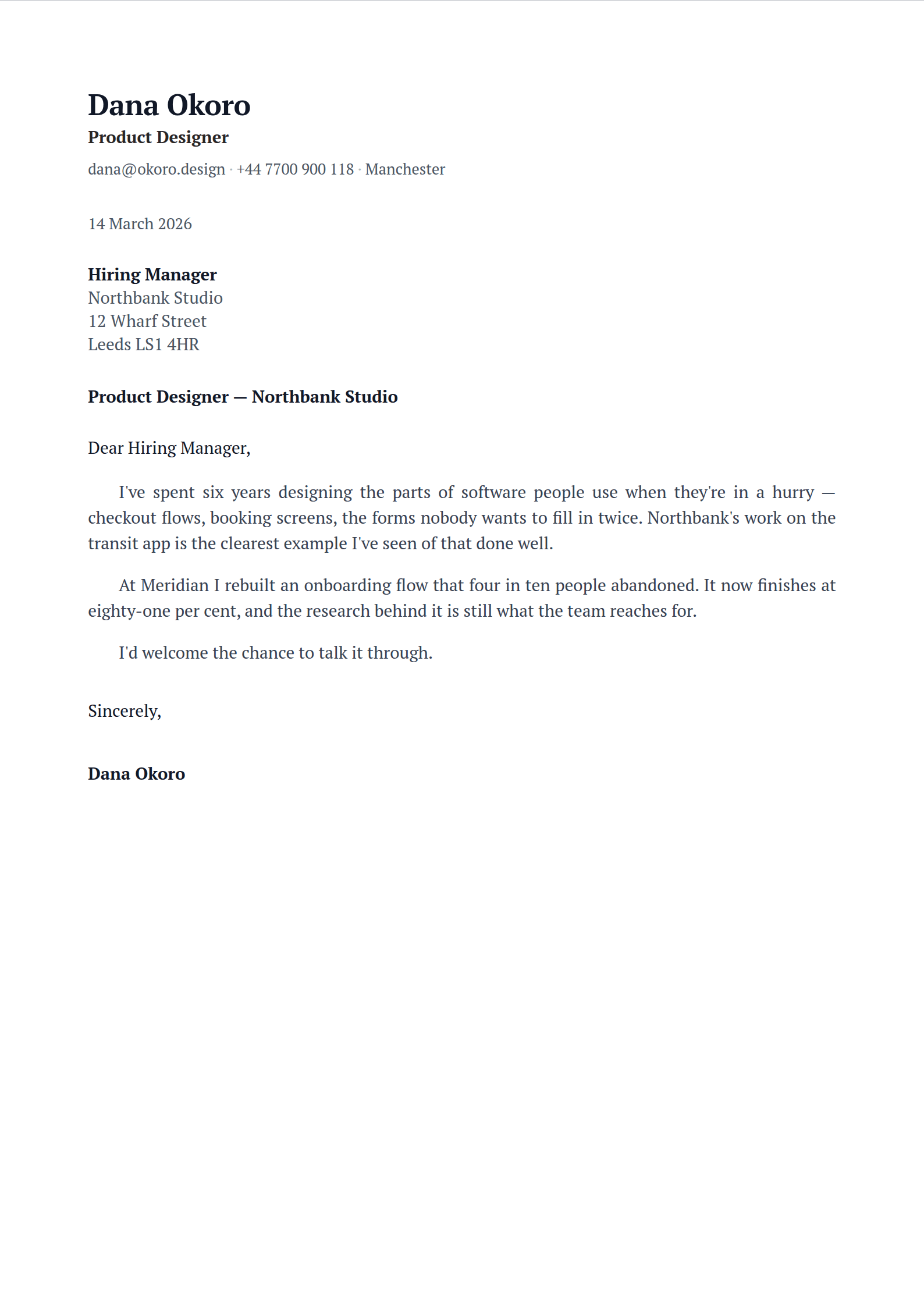
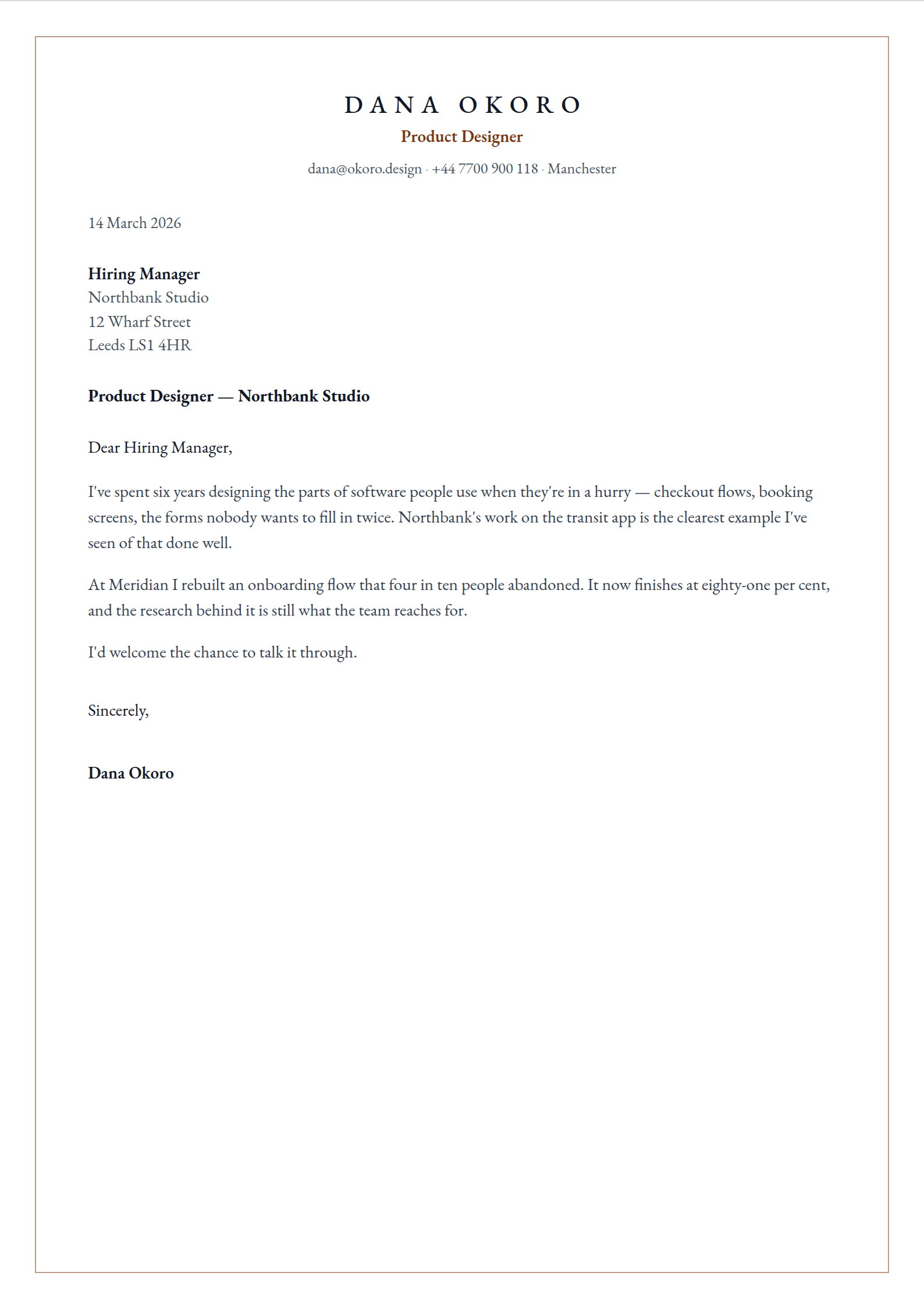
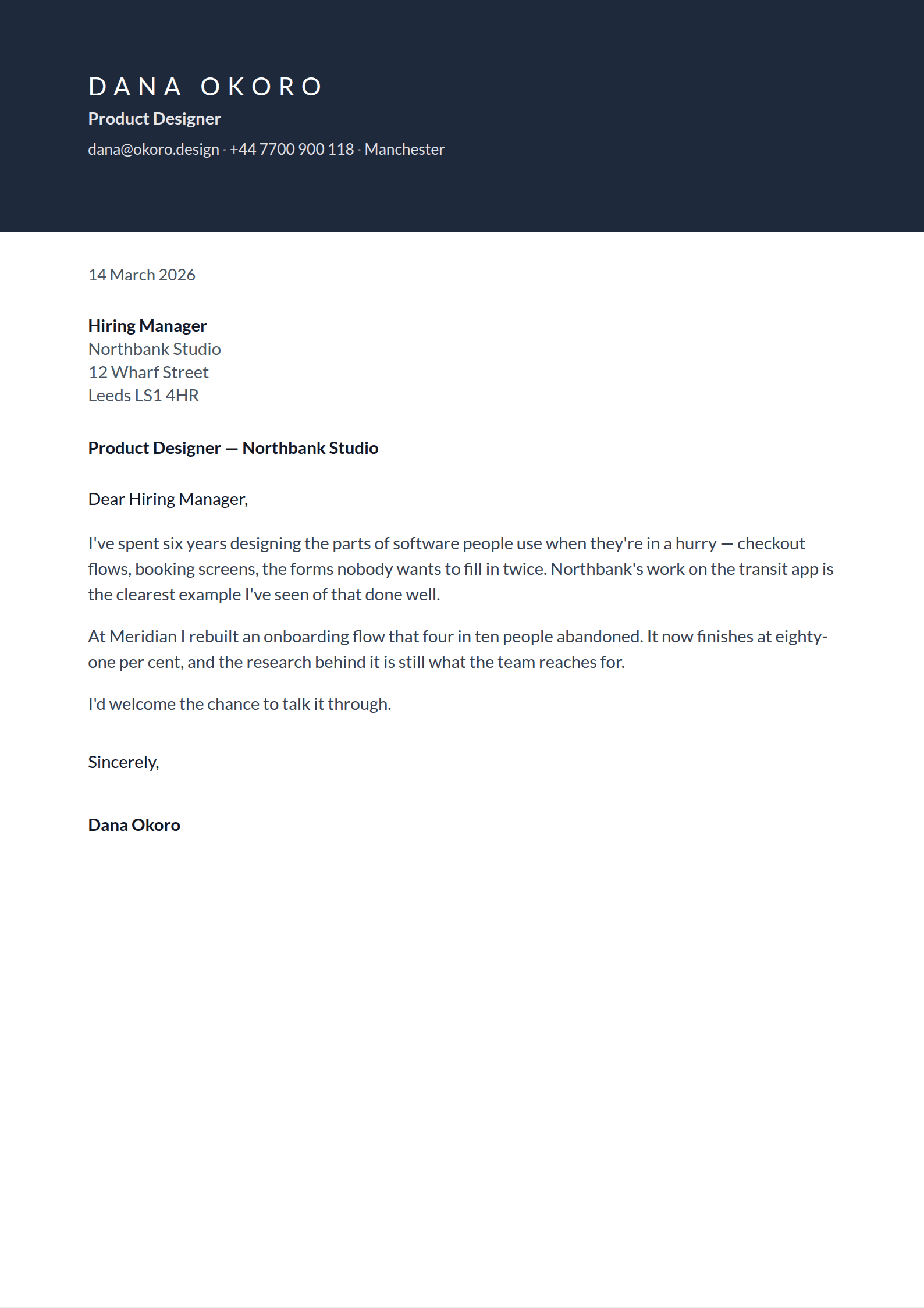
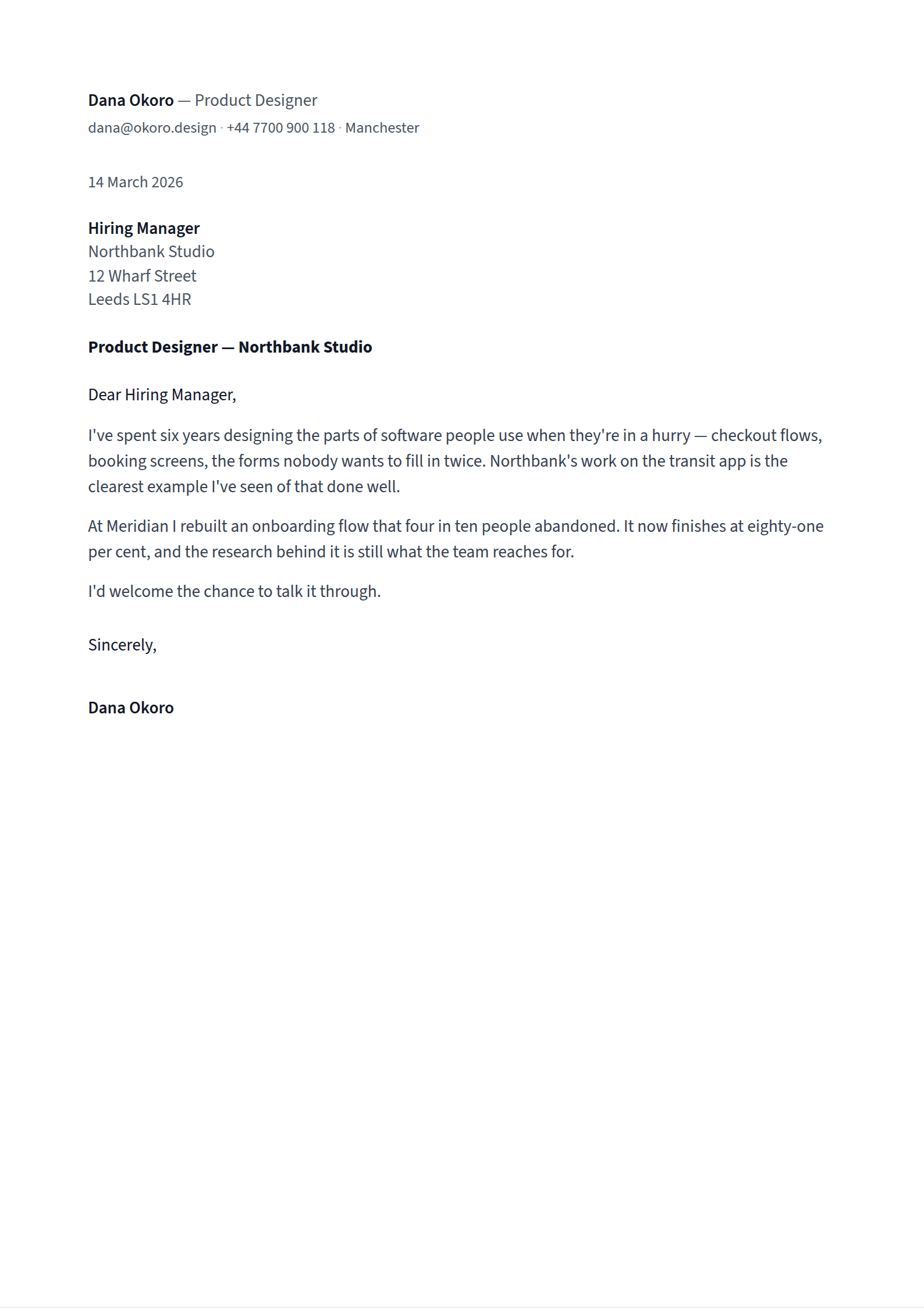
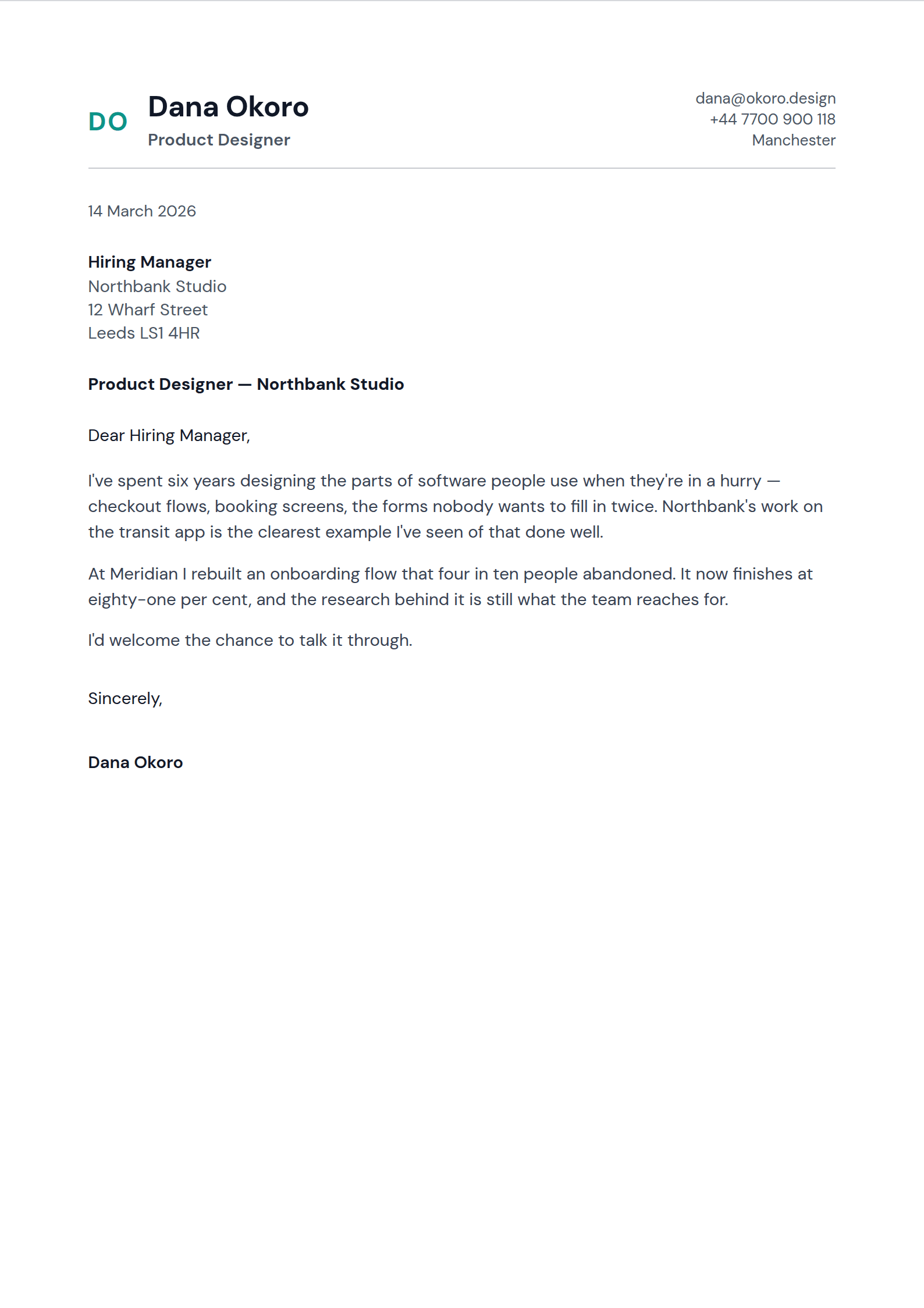
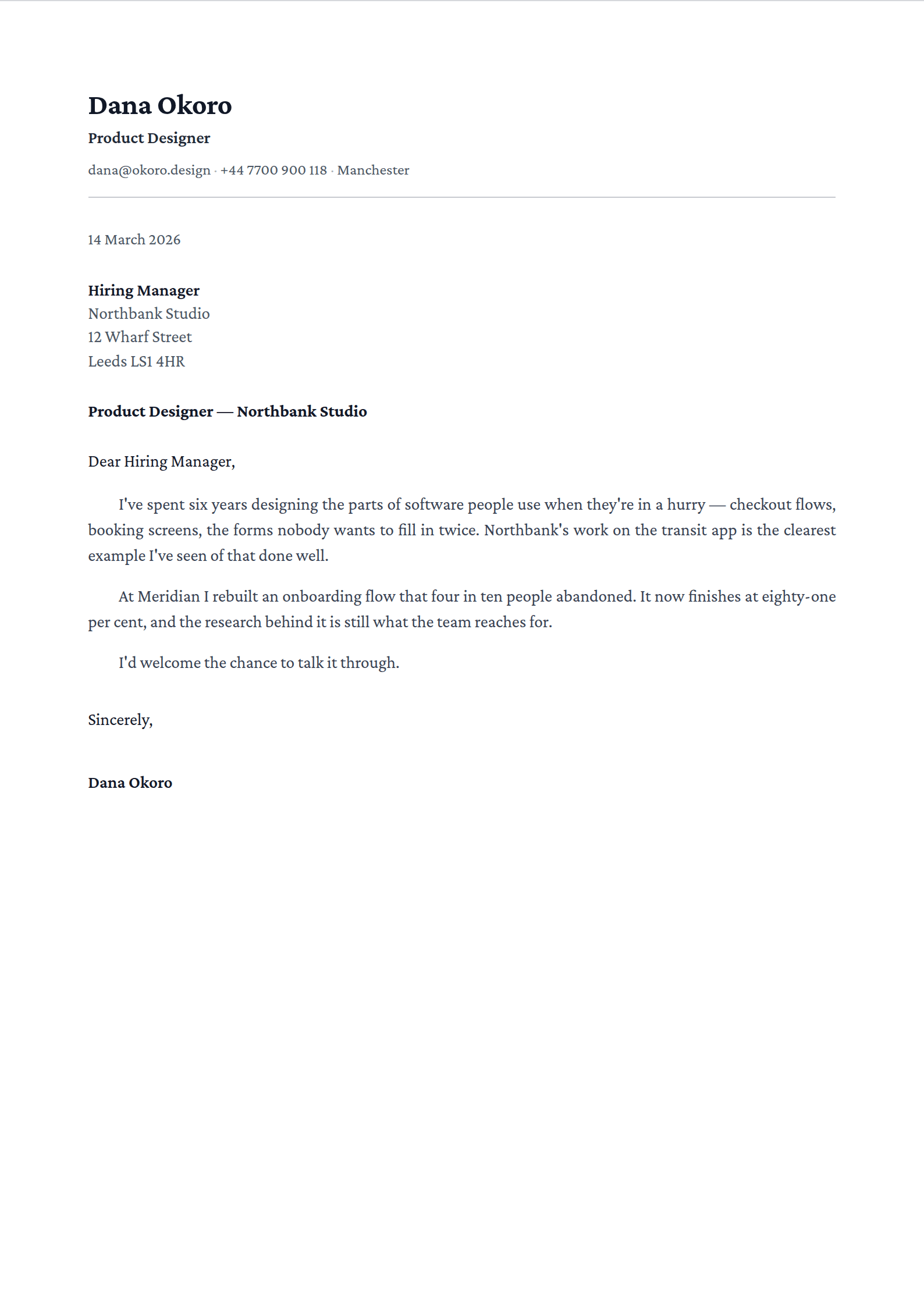
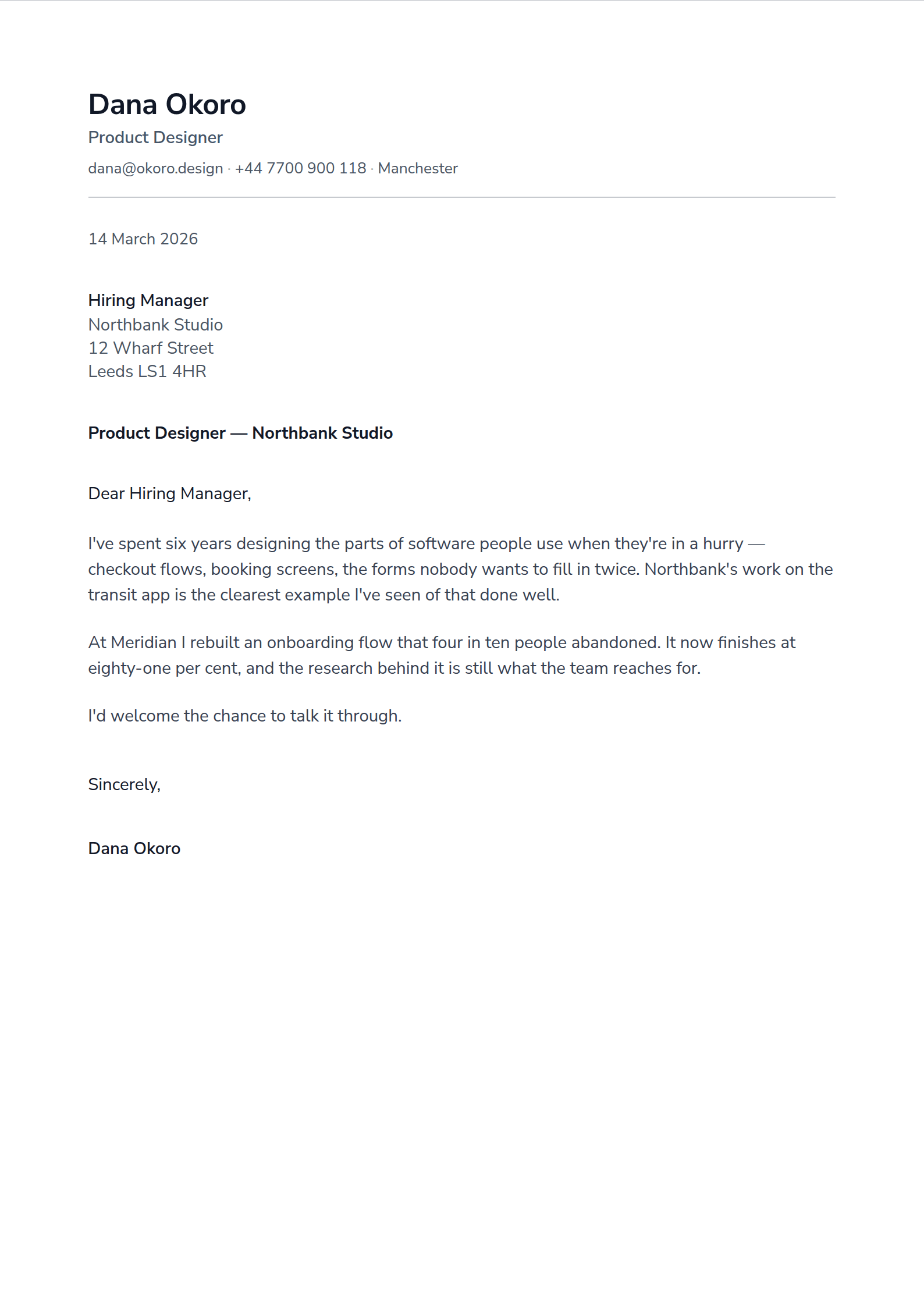
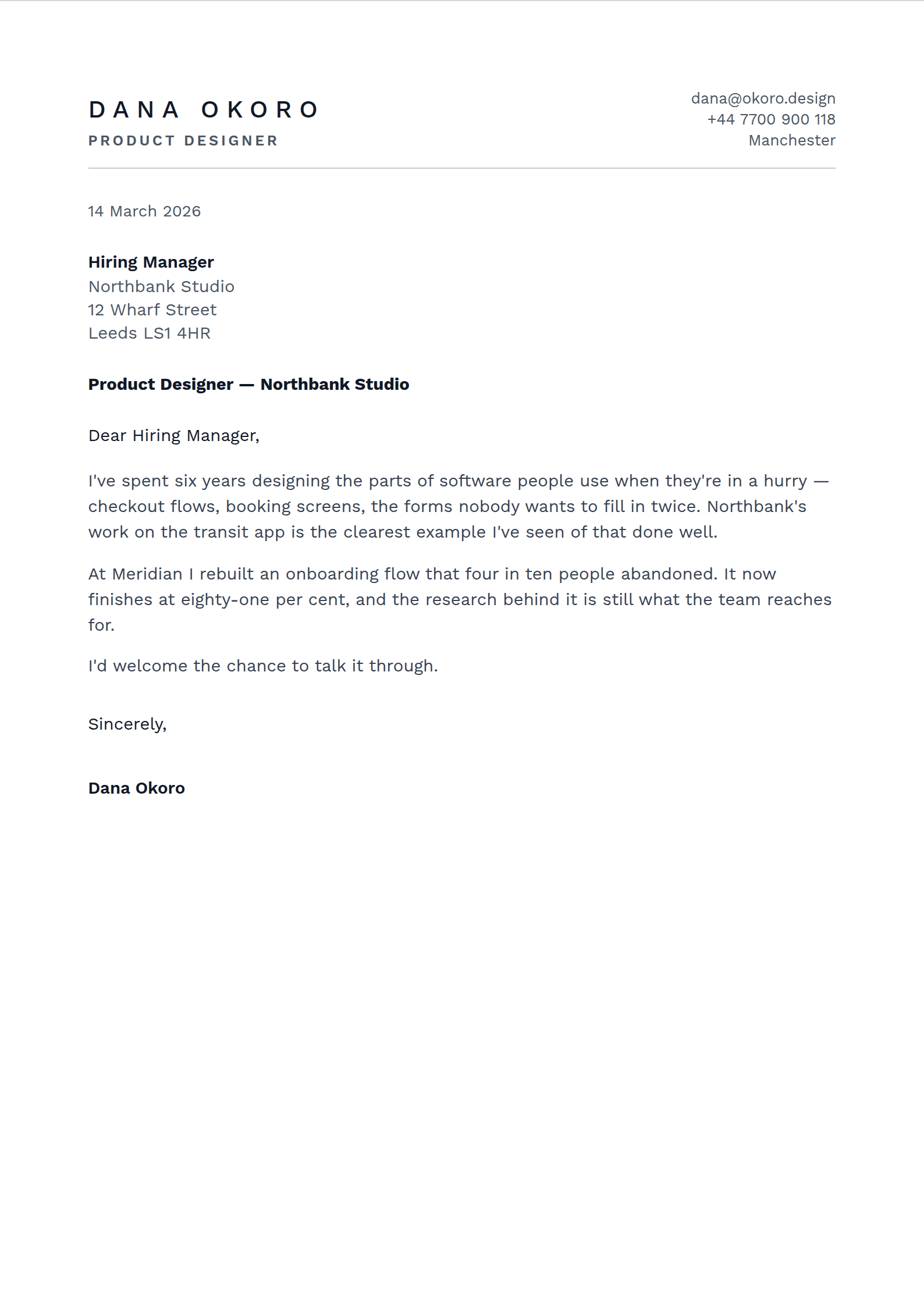
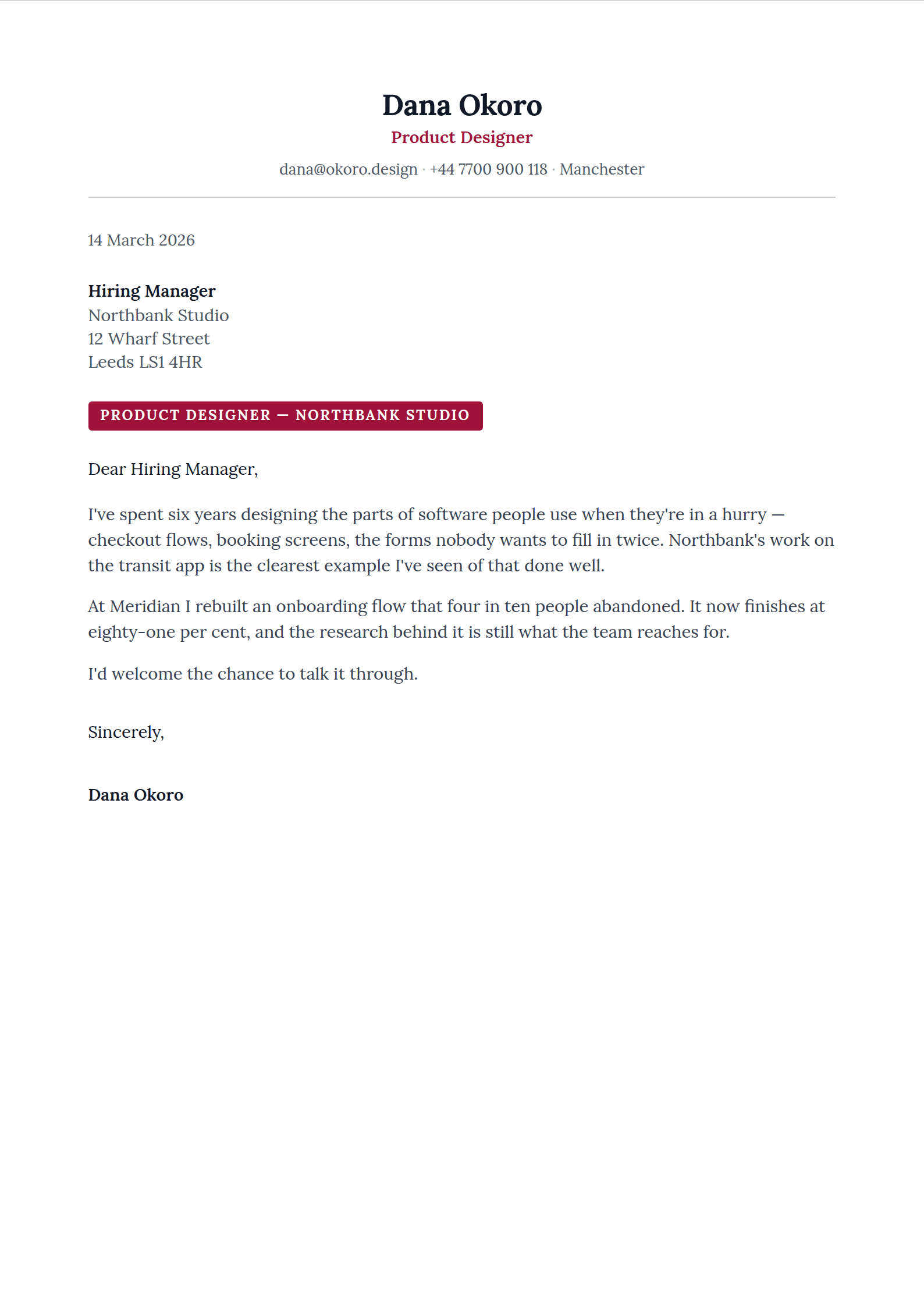
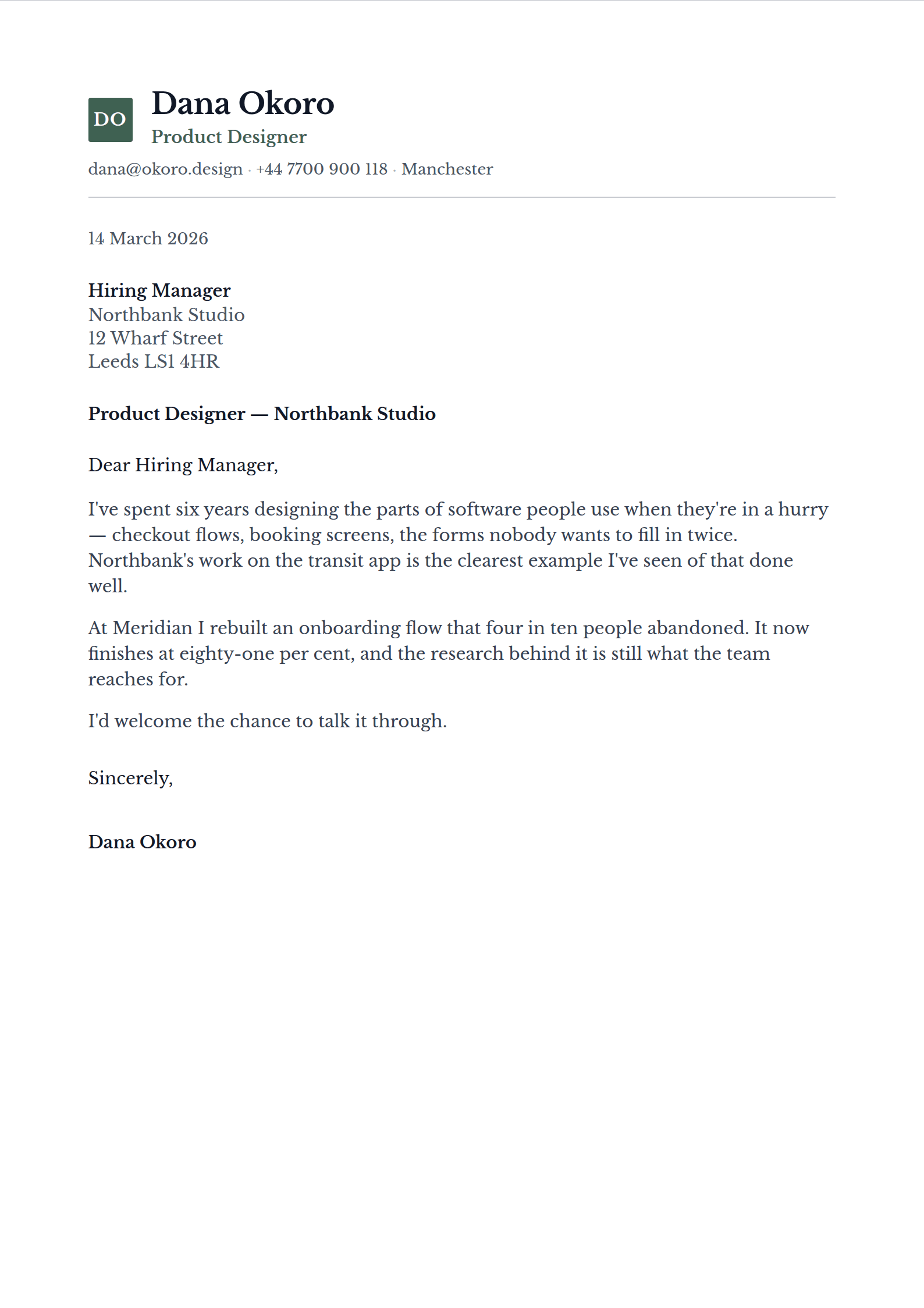
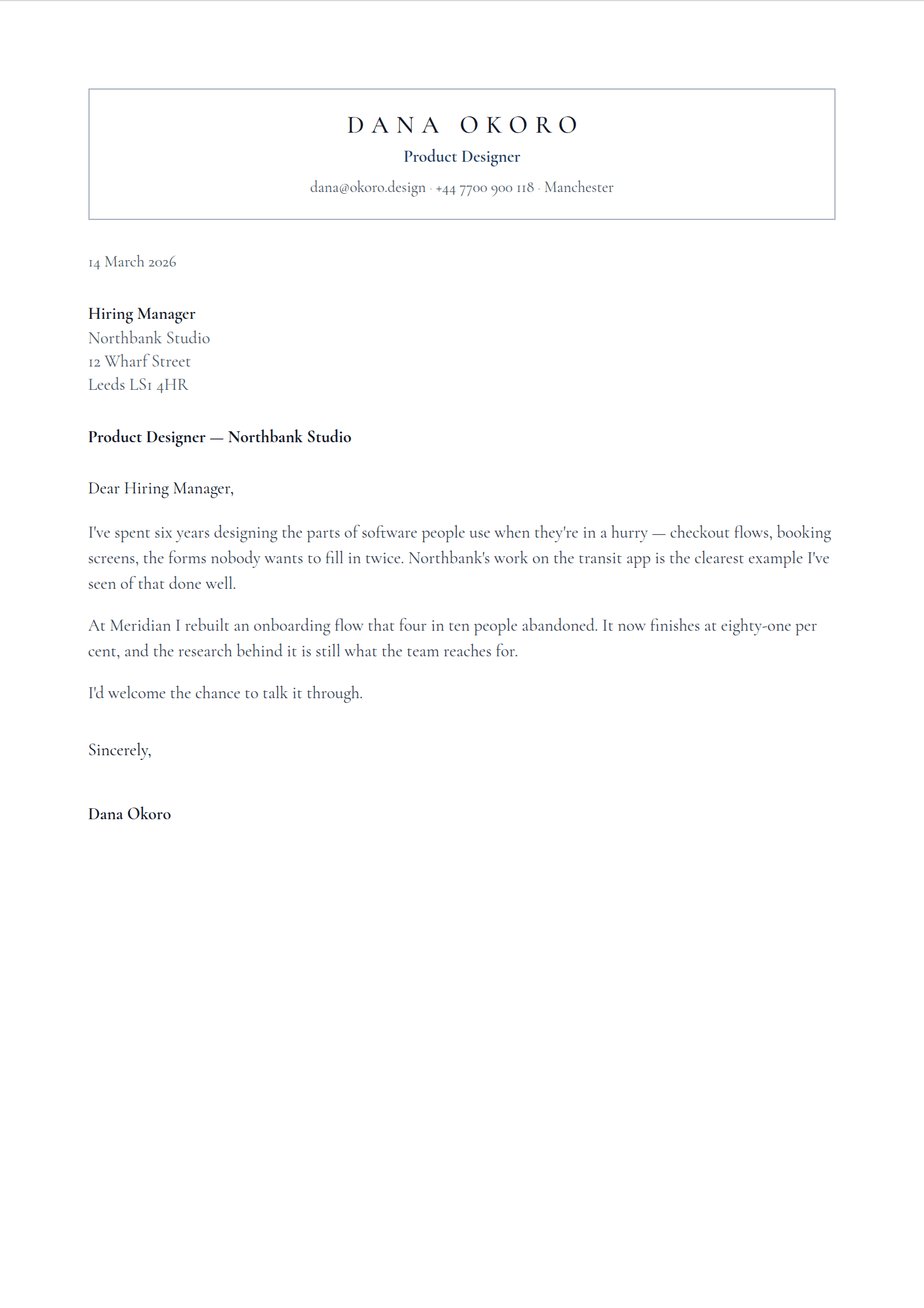
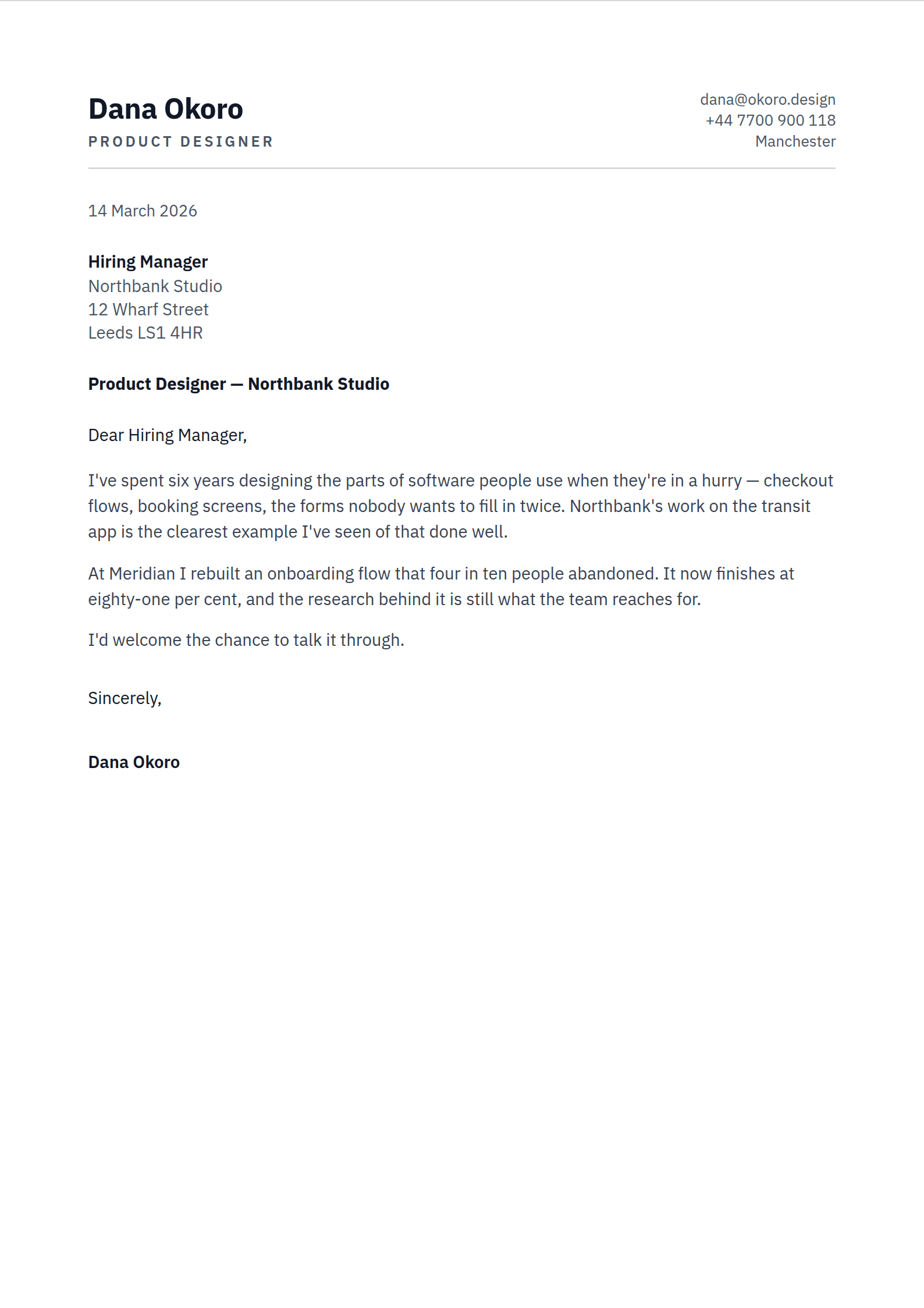
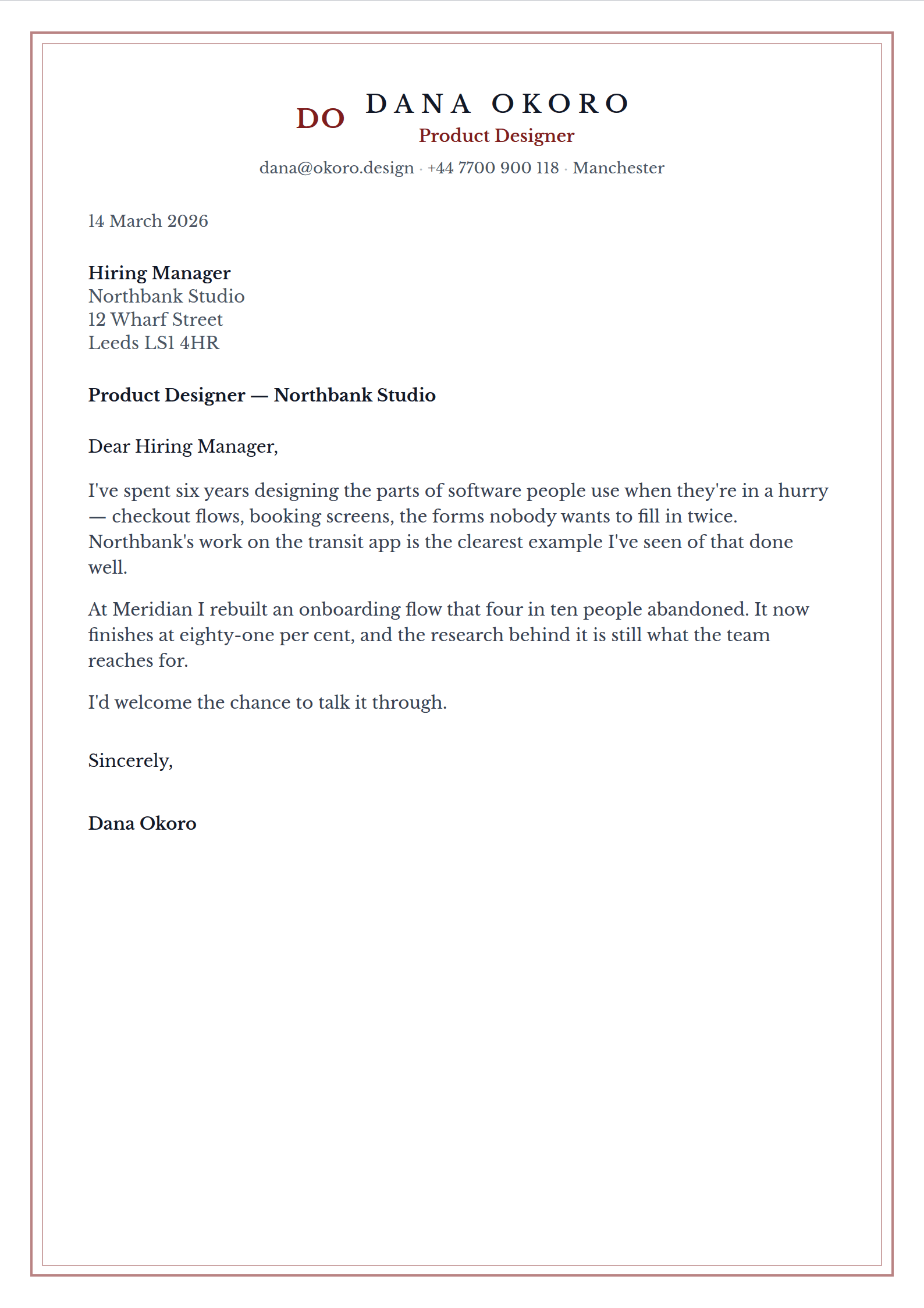
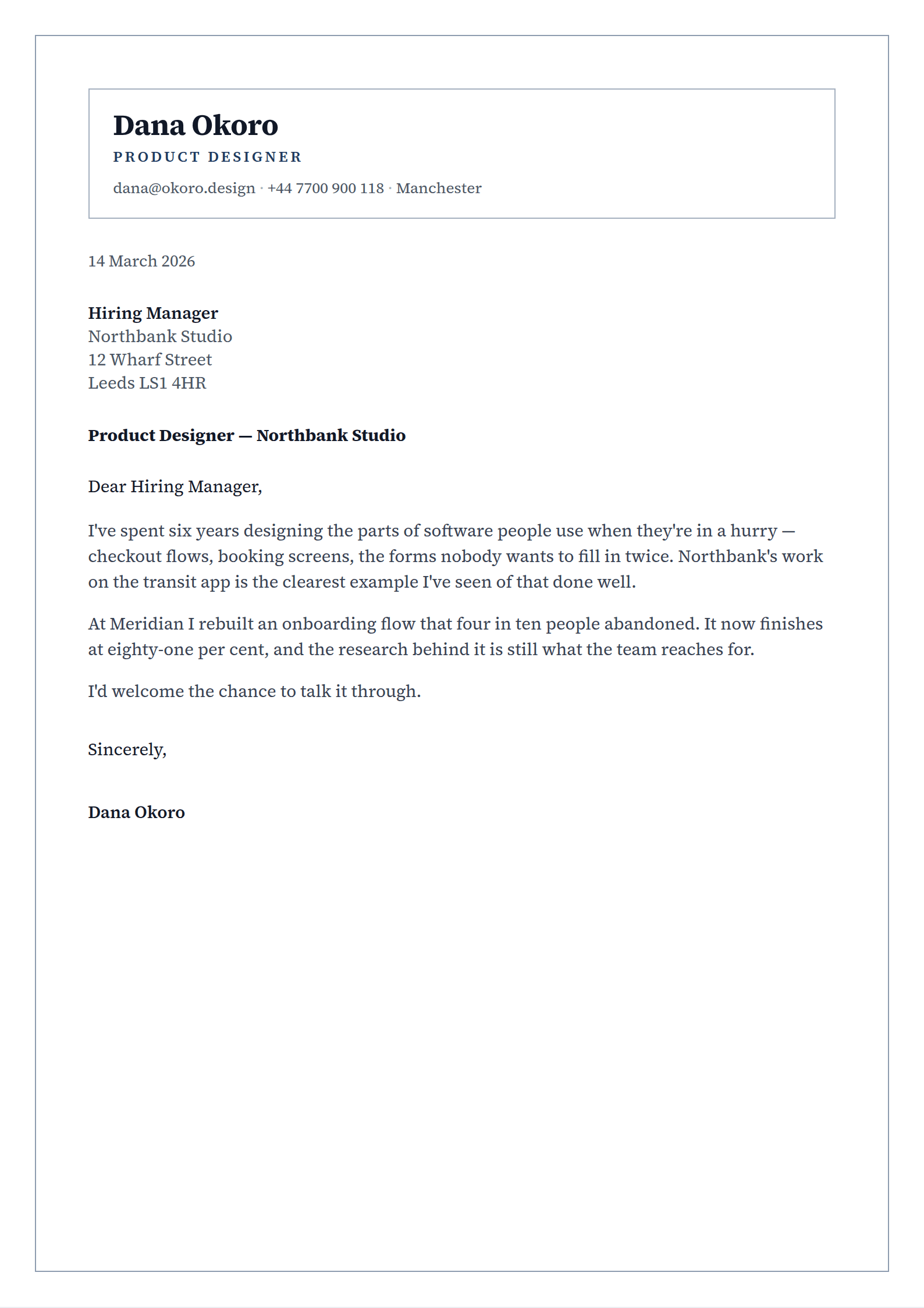
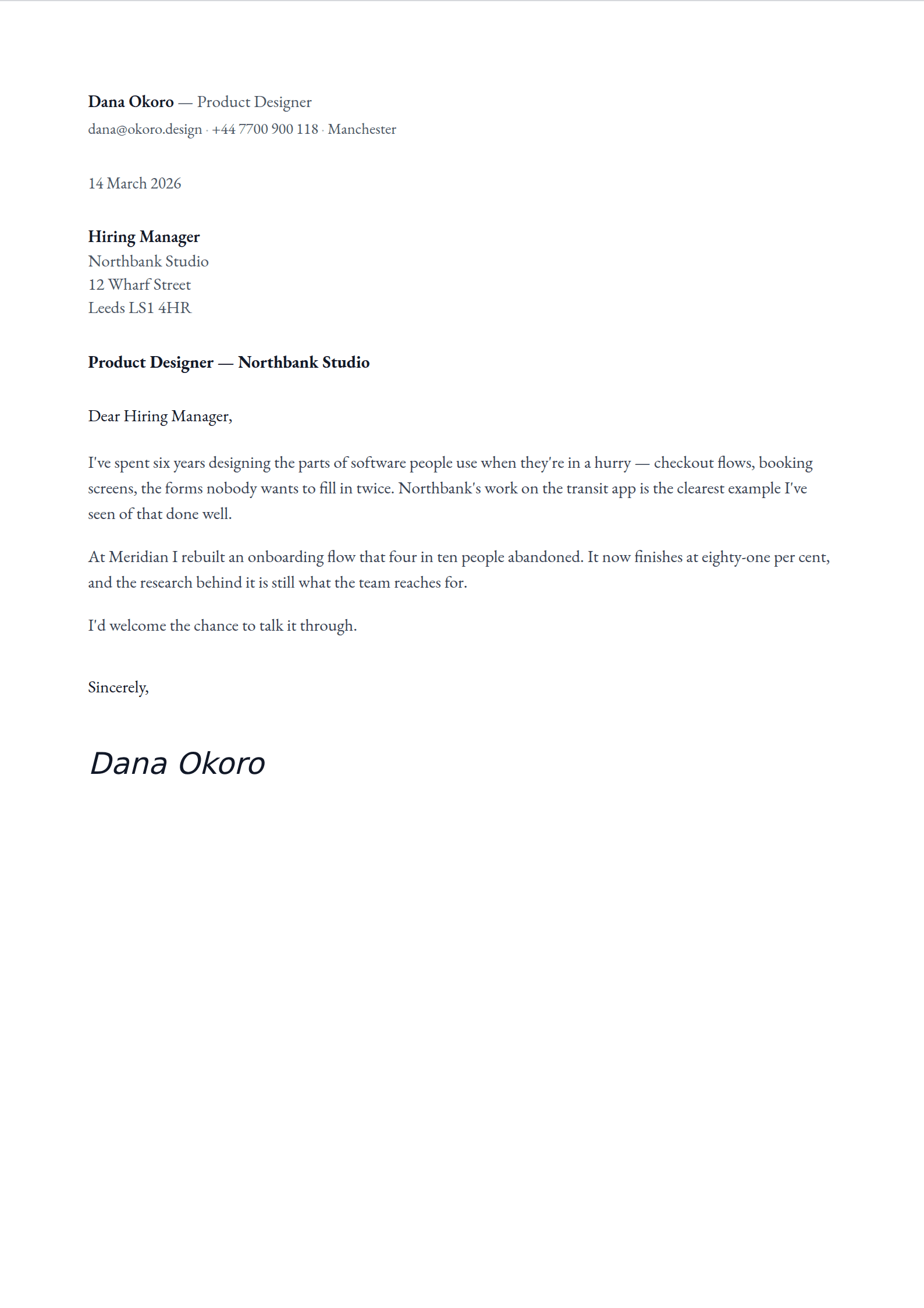
The letter builder offers three ways to set the top of the page. Everything else — typeface, accent colour, size, spacing and margins — is inherited from the resume you draft the letter against, so the two documents match without any work.

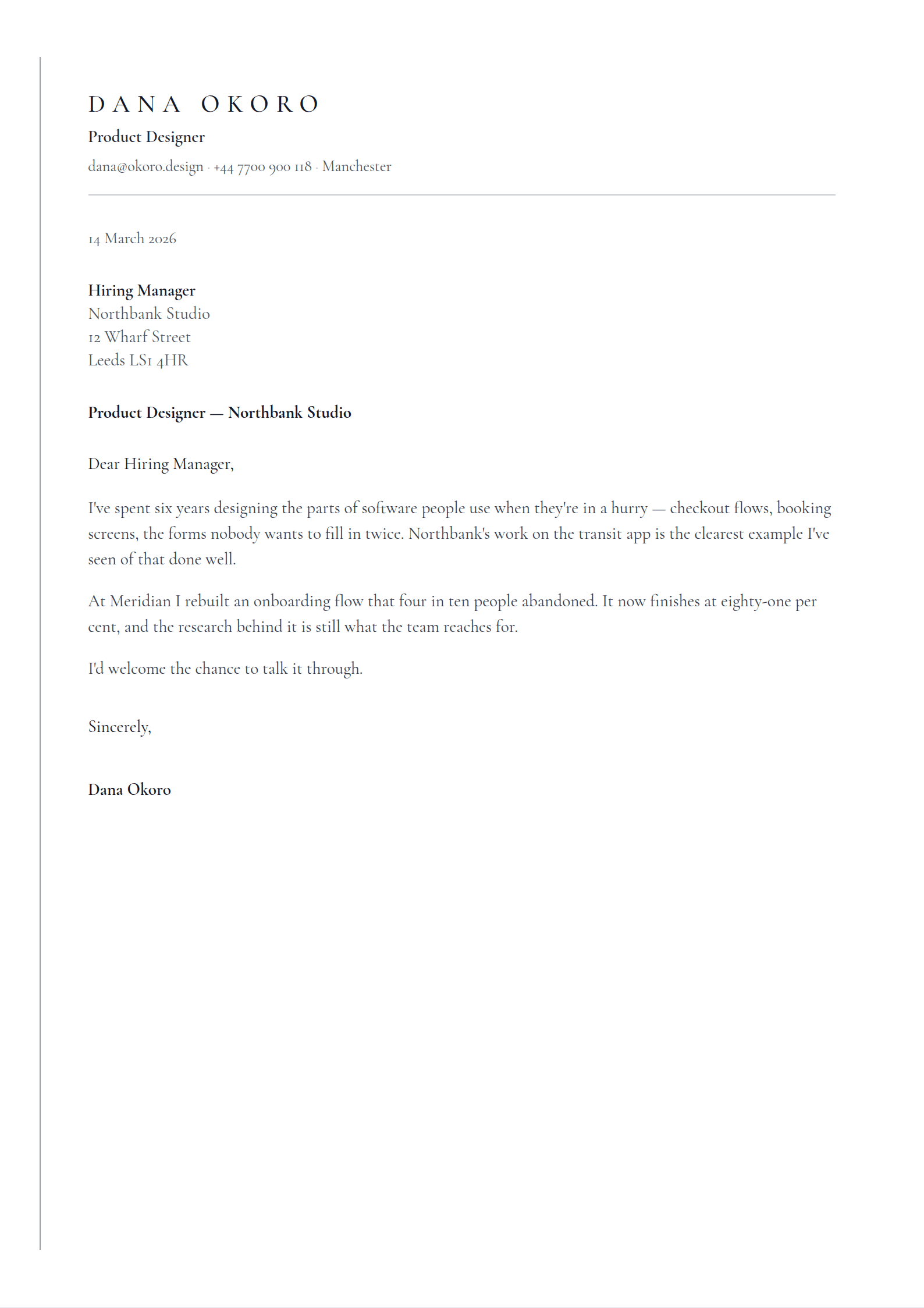
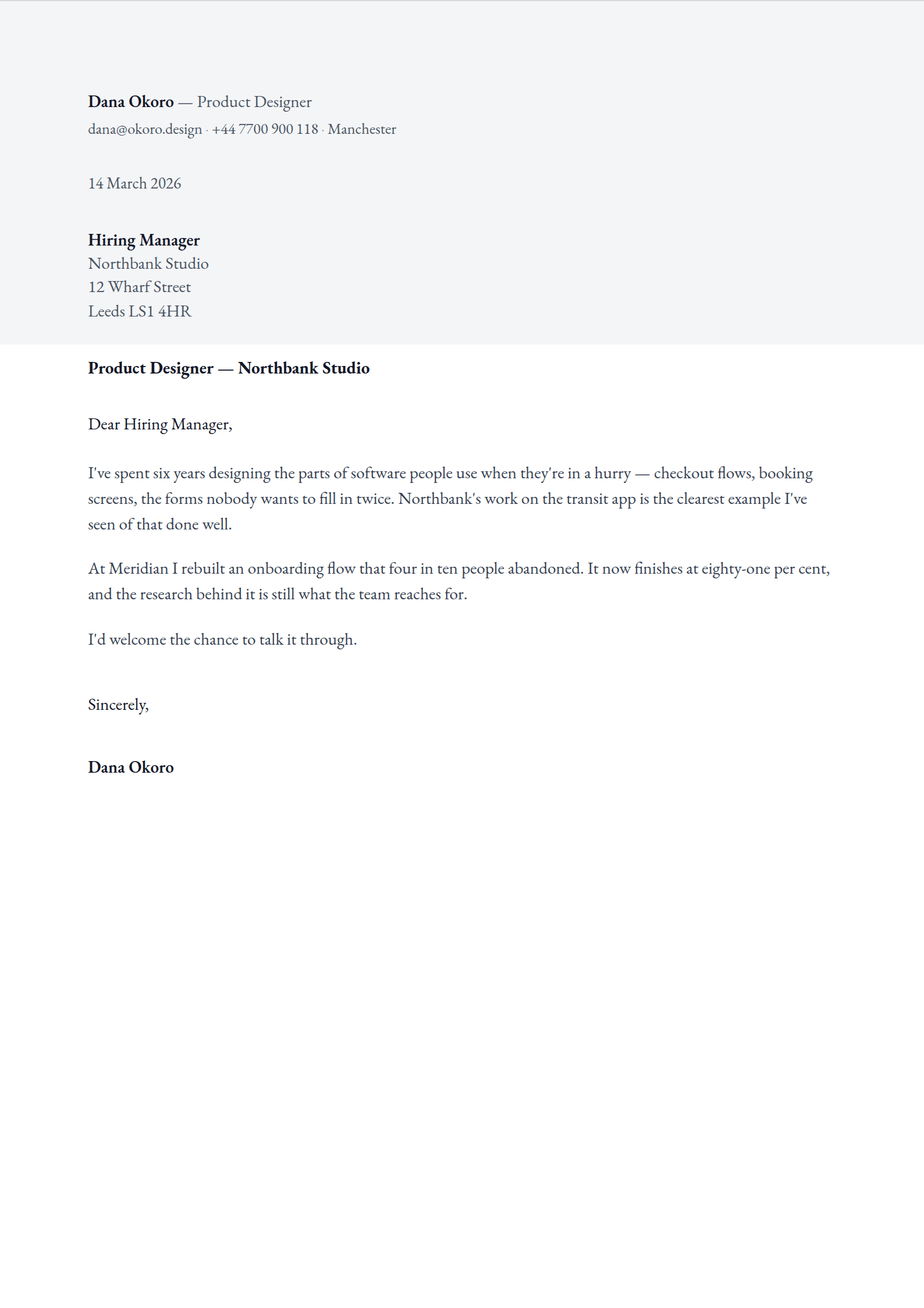
Stacked

Your name and contact details in a block at the top left, the recipient beneath. The conventional business-letter arrangement, and the safest choice for formal fields.

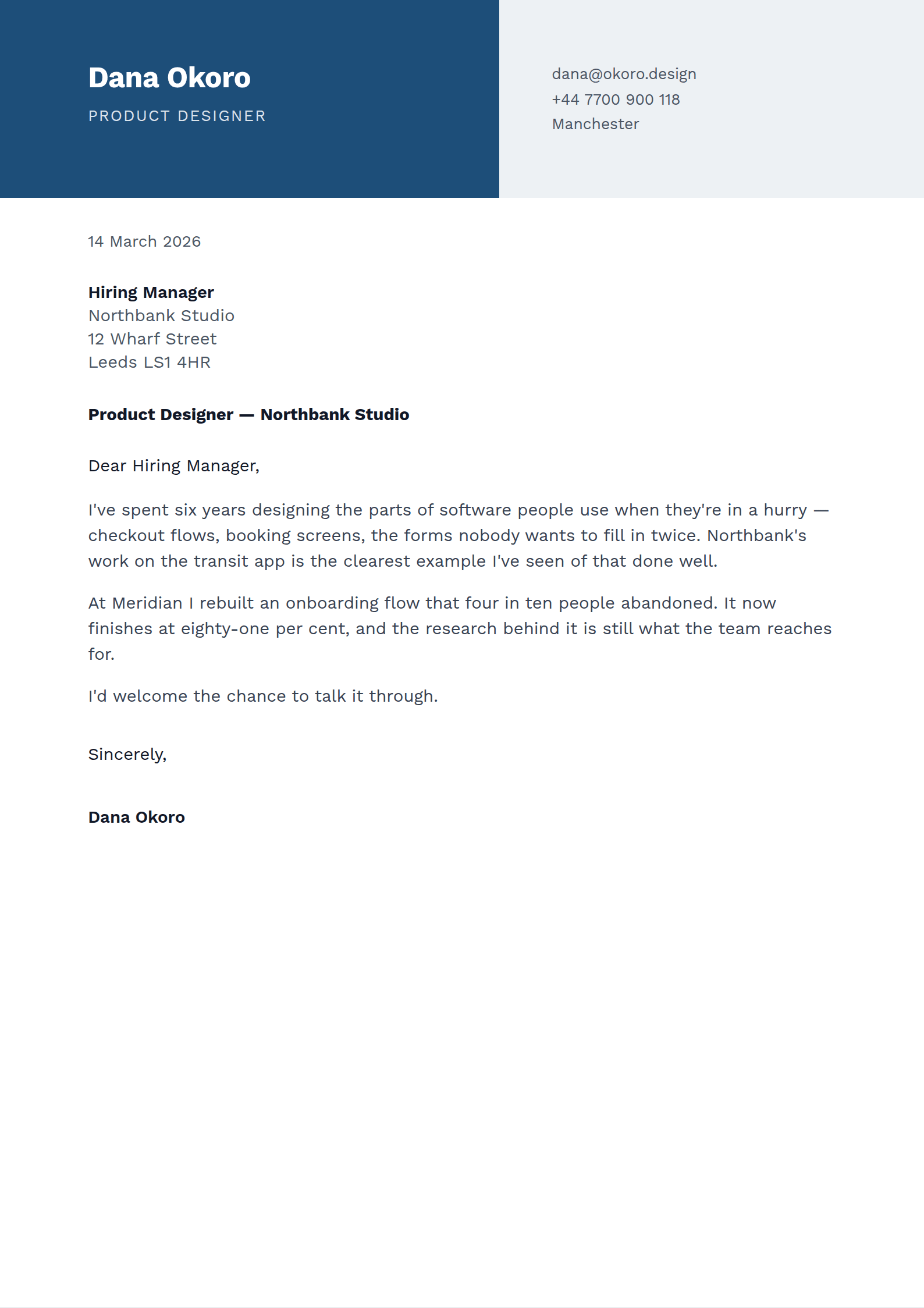
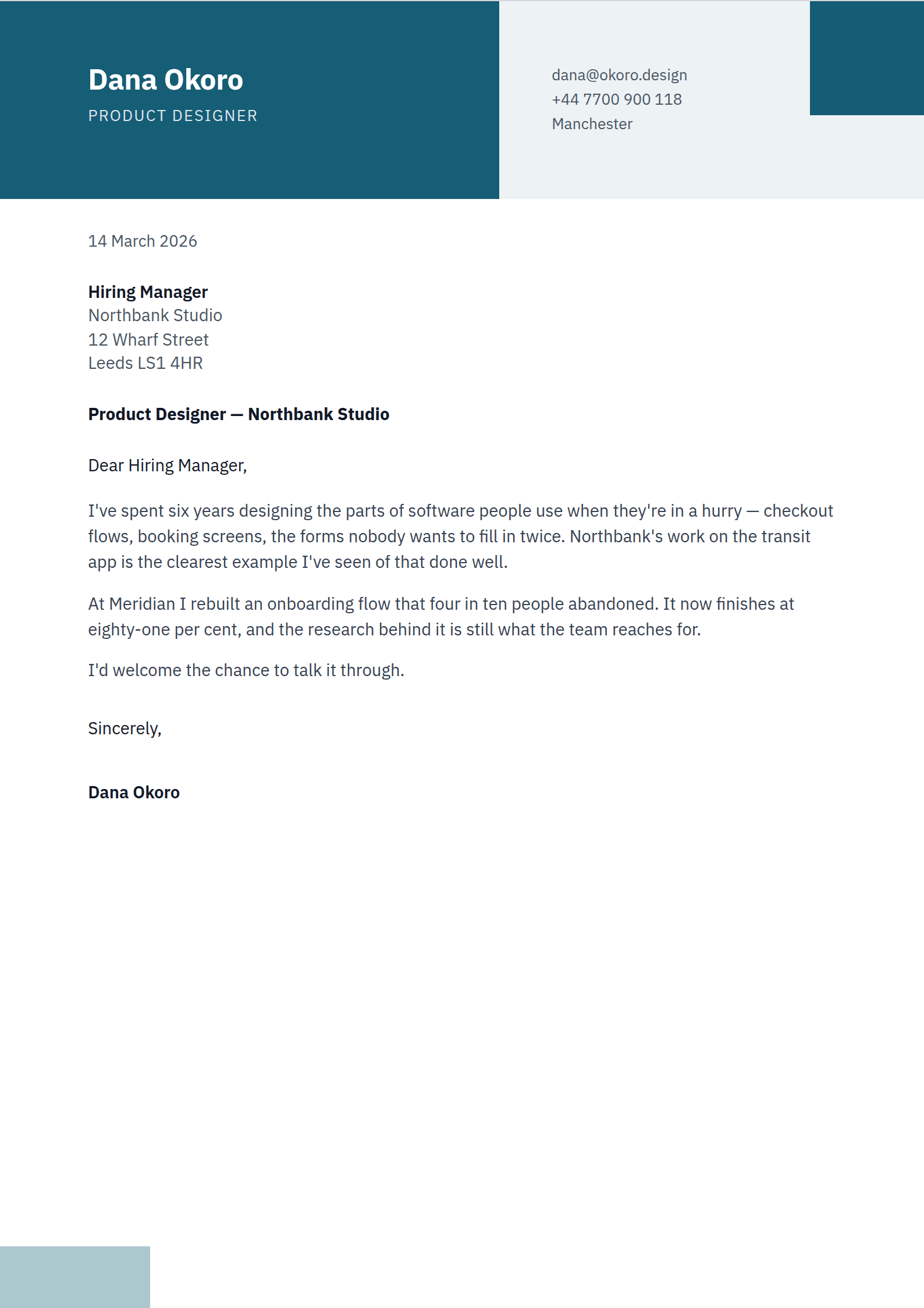
Banner

Name across a tinted band in your accent colour, contact details beneath it. Matches the resume templates with banded headers, and pairs a letter to a resume visually.

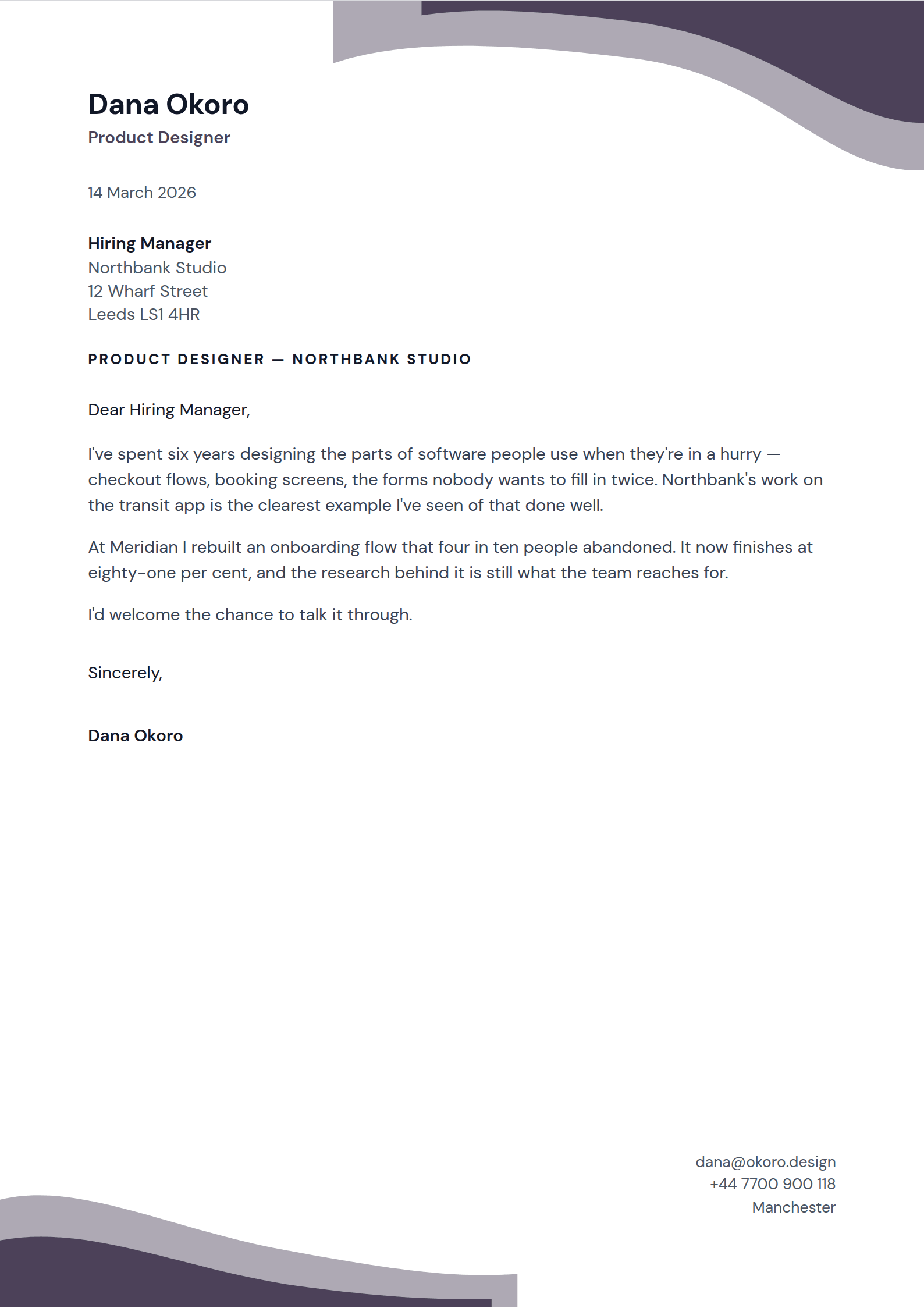
Minimal

Name and a single contact line, nothing else. Best when the letter is going into a plain-text paste box, or when you want the first thing read to be the opening sentence.

Common questions

What should a cover letter template include?

Your name and contact details, the date, the recipient and company where you know them, a greeting, three or four paragraphs, a sign-off and your name. That's the whole structure, and it hasn't changed in decades. What varies usefully is the shape of the argument inside it, which is what the patterns on this page cover.

Should my cover letter match my resume design?

Yes — same typeface, same accent colour, same margins. It's a small signal but it's read as attention to detail, and it costs nothing here because the letter builder inherits the settings from the resume you draft it against.

Can I download a cover letter as a PDF?

Yes, as a real-text PDF, the same export the resume builder produces. Cover letters are part of the Ultimate plan at $17 a month, or $5 a month billed yearly; building and exporting resumes is free.

Do cover letters go through an ATS?

Often they're stored rather than parsed and ranked, but treat them as parseable anyway: real text, no images, standard structure. The genuine risk is different — many portals have a plain-text paste box rather than a file upload, so keep a version whose meaning survives losing all its formatting.

Write it in the editor

Pick a header, draft from your resume, and export a real-text PDF that matches it.

Start your resume