
Practical

Building a resume website: when it helps and how to do it

A personal resume website is a genuinely good idea for a small number of people and a well-disguised procrastination project for everyone else. The distinguishing question is whether you have work that a page can show and a document cannot. If you do, build it in an afternoon. If you do not, the same afternoon spent rewriting your bullets will produce more interviews.

4 sections

The short version

  • Worth building if your work is visual, interactive or published. Otherwise almost nobody visits it.
  • Buy a domain that is your name — it is the part that lasts, and it costs almost nothing.
  • Keep it to one page: what you do, the work with outcomes, a condensed history, an email address.
  • It never replaces the PDF. Applications expect a file, and recruiters forward documents.
  • An abandoned site is worse than no site — it demonstrates the opposite of what you wanted.

Who it actually helps

Anyone whose work is visual or interactive, because a PDF cannot show it: designers, front-end developers, photographers, illustrators, video editors, architects. For these fields the site is not a resume in a different format, it is the portfolio, and the resume is the appendix.

Writers, researchers and consultants, where a body of published work benefits from being collected, linked and readable in a browser rather than listed.

And people building a public presence — speakers, founders, anyone who wants to be findable by name. A personal domain that ranks for your own name is worth having, and it is the one benefit that accrues over years rather than per application.

For everyone else — accountants, nurses, project managers, sales, operations — the honest answer is that almost nobody will visit it. Recruiters work from the resume and LinkedIn, and a third destination adds a click that most will not make.

What goes on it

Less than you think, and organised for someone who arrived from a link in an application and has thirty seconds.

  • A single sentence at the top saying what you do. Not a mission statement.
  • The work itself, if the work is the point — three to six pieces, each with what it was, what you did and what happened. Case studies beat thumbnails.
  • A condensed career history. Not the full resume; the shape of it, with the PDF downloadable.
  • Contact: an email address, and links to whichever profiles are current. Not a contact form nobody trusts.
  • Nothing else. No skill bars, no testimonials carousel, no blog you will abandon in six weeks, no animated hero section.

How to build it without losing a weekend

Match the tool to the point of the exercise. If the site is a portfolio, use something that lets you publish and move on — a hosted site builder, a template on a static host, or one of the personal-site services. Nobody hiring a photographer cares what the site is built with.

If you are a developer and the site is itself a work sample, then building it is the point, and a static site generator deployed to any of the free hosts is the conventional route. Keep it small. A personal site that demonstrates restraint reads better to another engineer than one that demonstrates every framework you have tried.

Buy a domain that is your name. It costs about the price of a coffee per year, it is the part that lasts, and yourname.com in a resume header looks considered in a way that a subdomain on a free host does not. Everything else about the site can be rebuilt later; the domain is the thing worth owning now.

The site does not replace the PDF

This is the mistake worth naming plainly. Applications go through systems that expect a file, recruiters forward documents to hiring managers, and hiring managers print things or read them offline. A URL in place of an attachment fails at the first automated step and irritates at every human one.

So the site is a supplement. The PDF is what you send, with the URL in the contact line beside your email — one link, in the header, where a curious reader will find it. If the site is the portfolio for a visual role, name it as one: "Portfolio: jordanalvarez.com" tells the reader what they will get.

Keep them consistent. A site listing a job the resume omits, or dates that do not match, creates exactly the sort of discrepancy that becomes a question. And if the site goes stale, take it down or update it — an abandoned personal site with a two-year-old "currently at" line is worse than no site, because it demonstrates the opposite of what you were trying to show.
Is one worth building?

Scroll the table sideways to compare →

FieldWorth it?What it should carry
Design, photography, illustrationYes — it is the portfolioThe work, large, with the resume as an appendix
Front-end and creative engineeringYes — the site is itself a work sampleSmall, fast, restrained. Restraint reads better than range
Writing, research, consultingOftenA collected, linked, readable body of published work
Accounting, nursing, operations, salesRarelyNothing — the time is better spent on the resume bullets
Speaking, founding, public workYes, for findabilityA page that ranks for your own name, kept current

Building one in an afternoon

Open your own resume beside this and work down it. Every line is something a reader or a parser acts on within the first pass.

  • A domain that is your name
  • One sentence at the top saying what you do — not a mission statement
  • Three to six pieces of work, each with what it was, what you did, what happened
  • A condensed career history, with the PDF downloadable
  • An email address, and links to whichever profiles are current
  • No skill bars, testimonial carousels, contact forms or an abandoned blog
  • The URL in your resume's contact line, labelled if it is a portfolio
  • Facts consistent with the resume and the LinkedIn profile

The PDF you still have to send

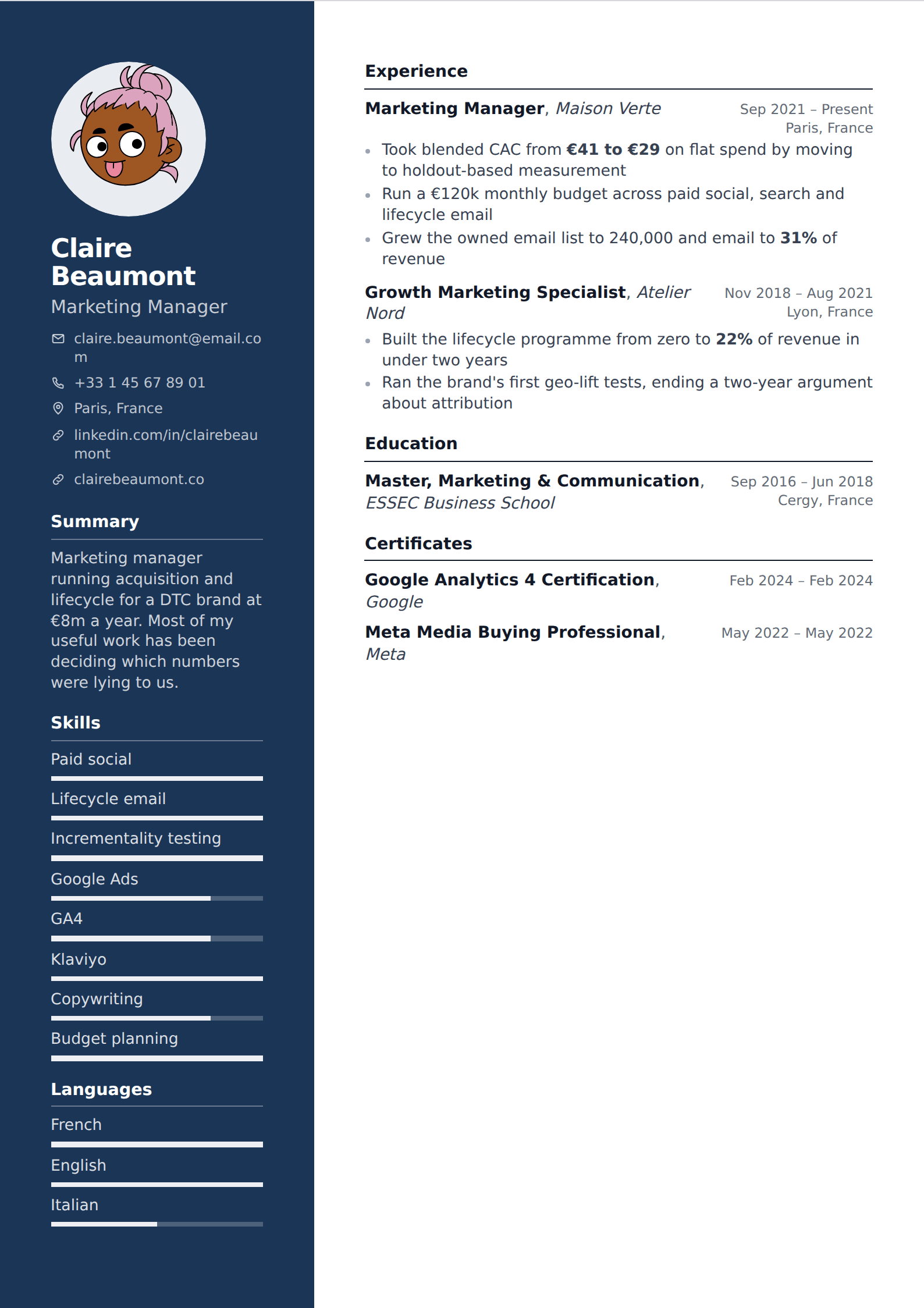
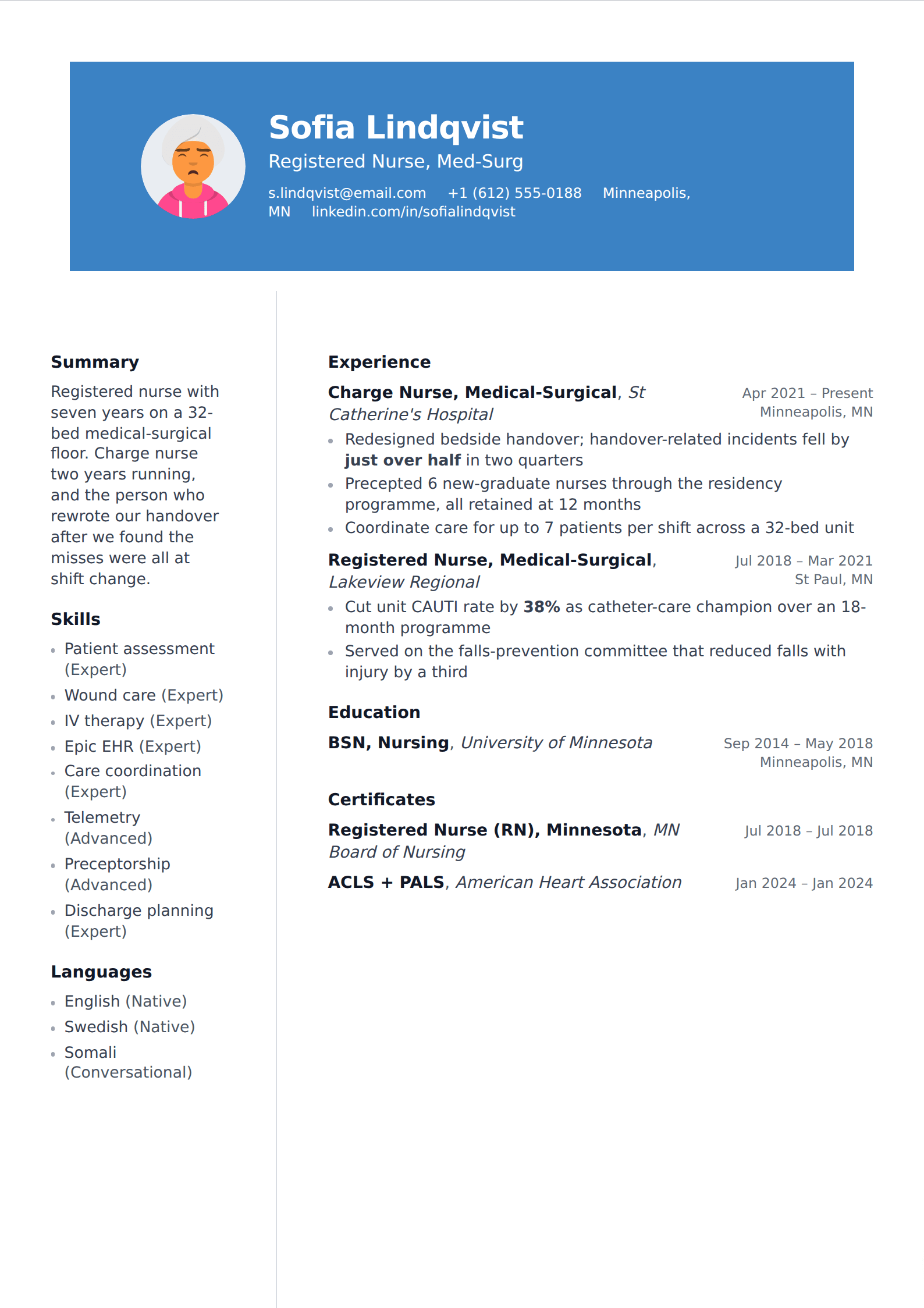
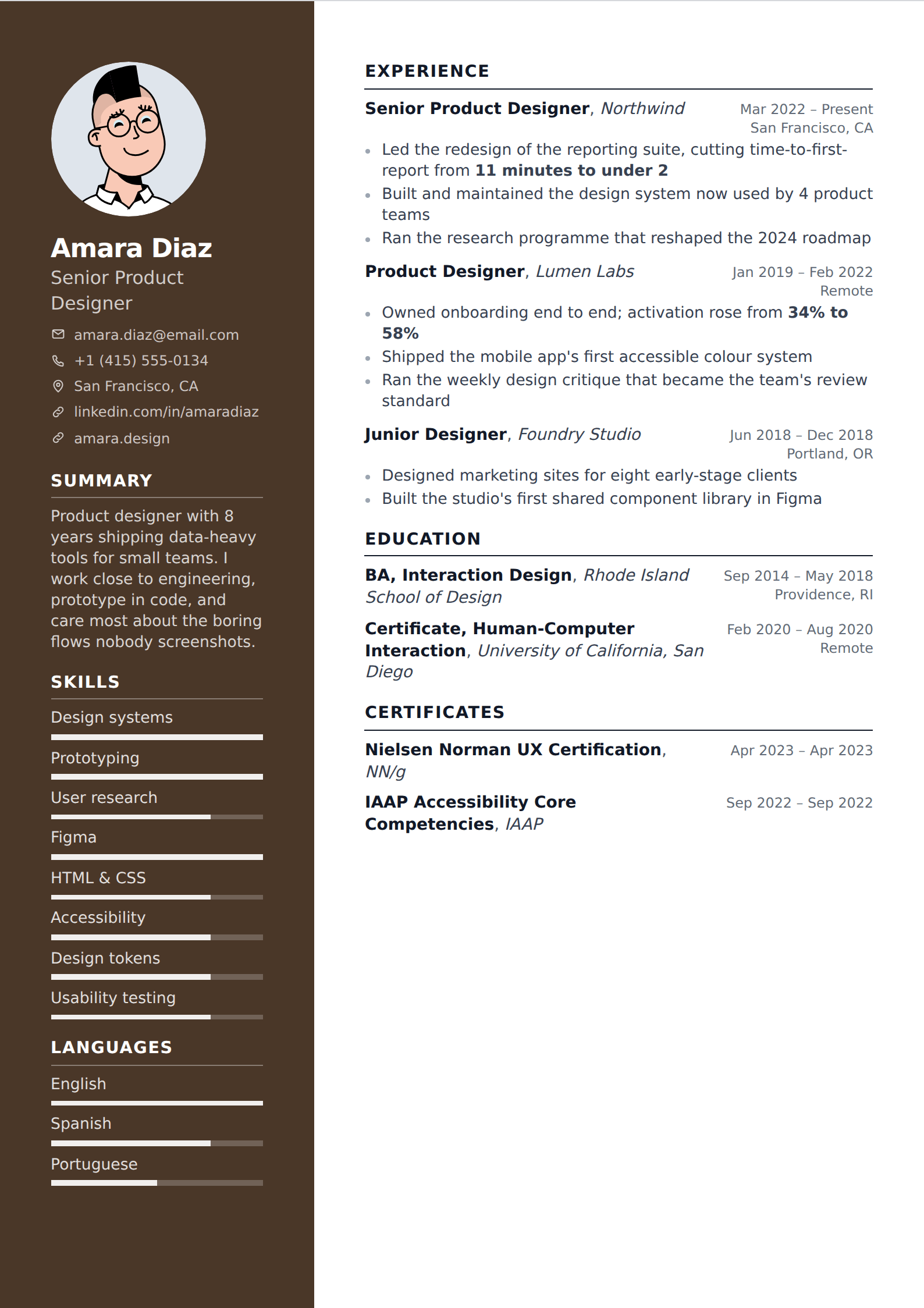
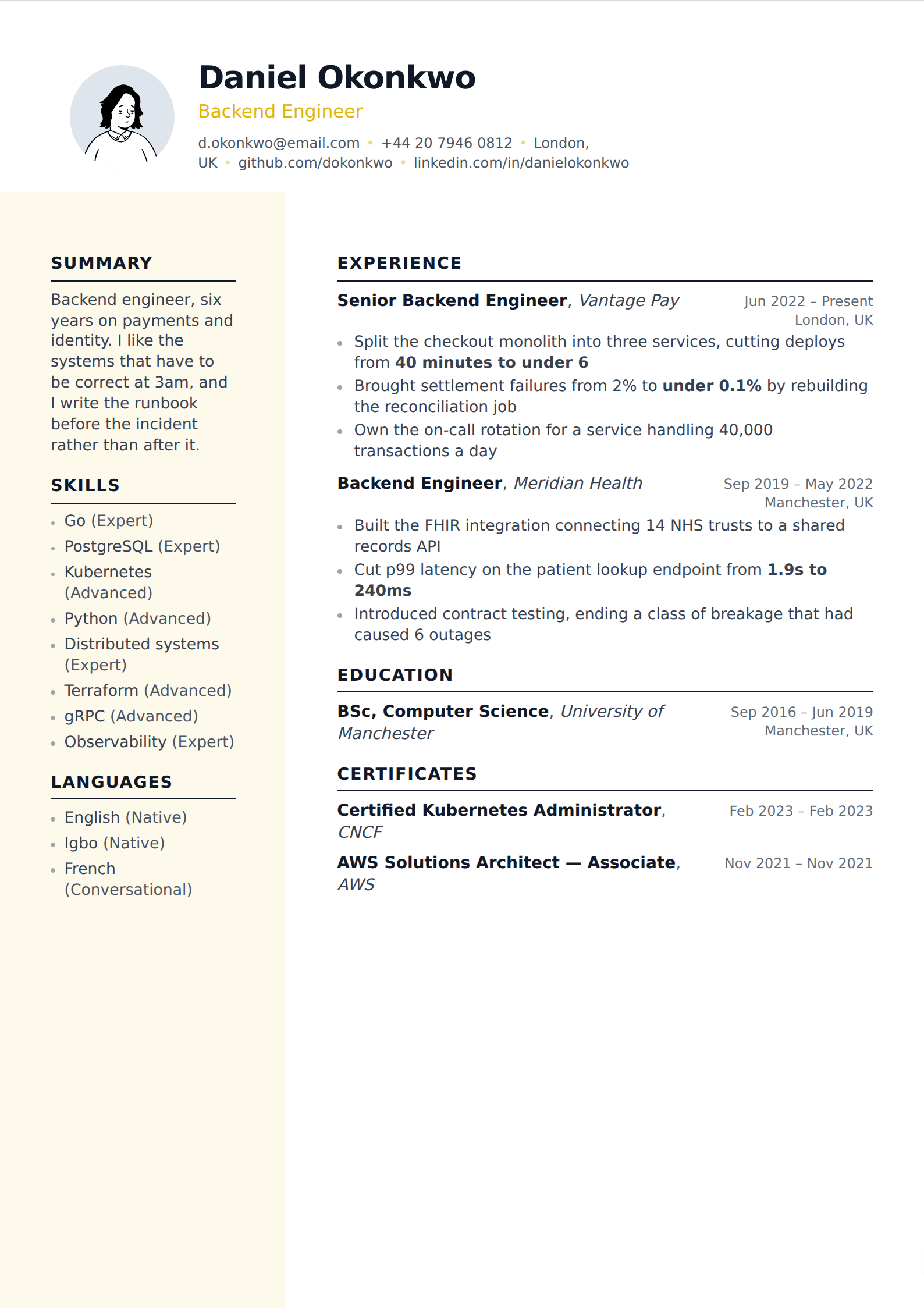
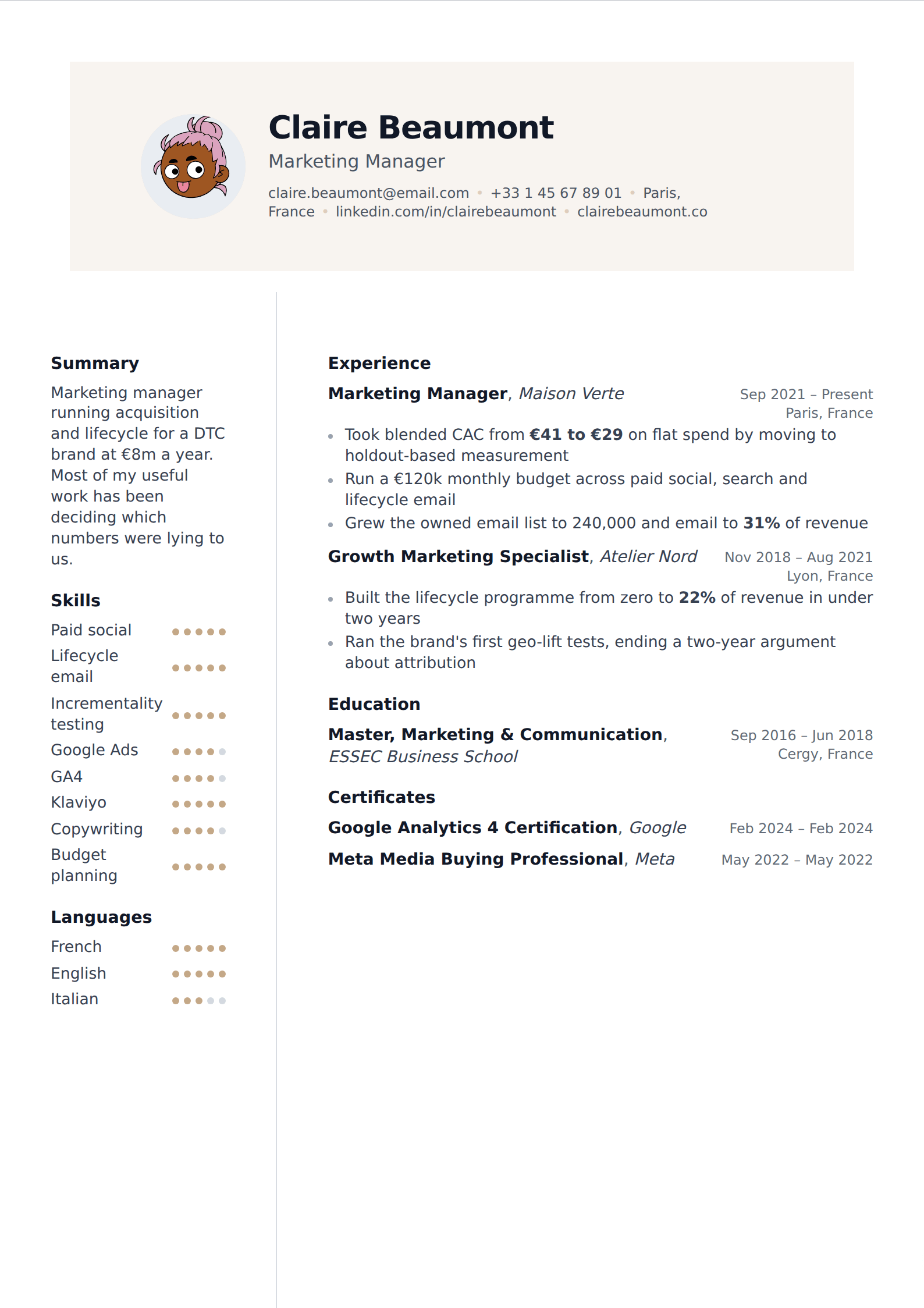
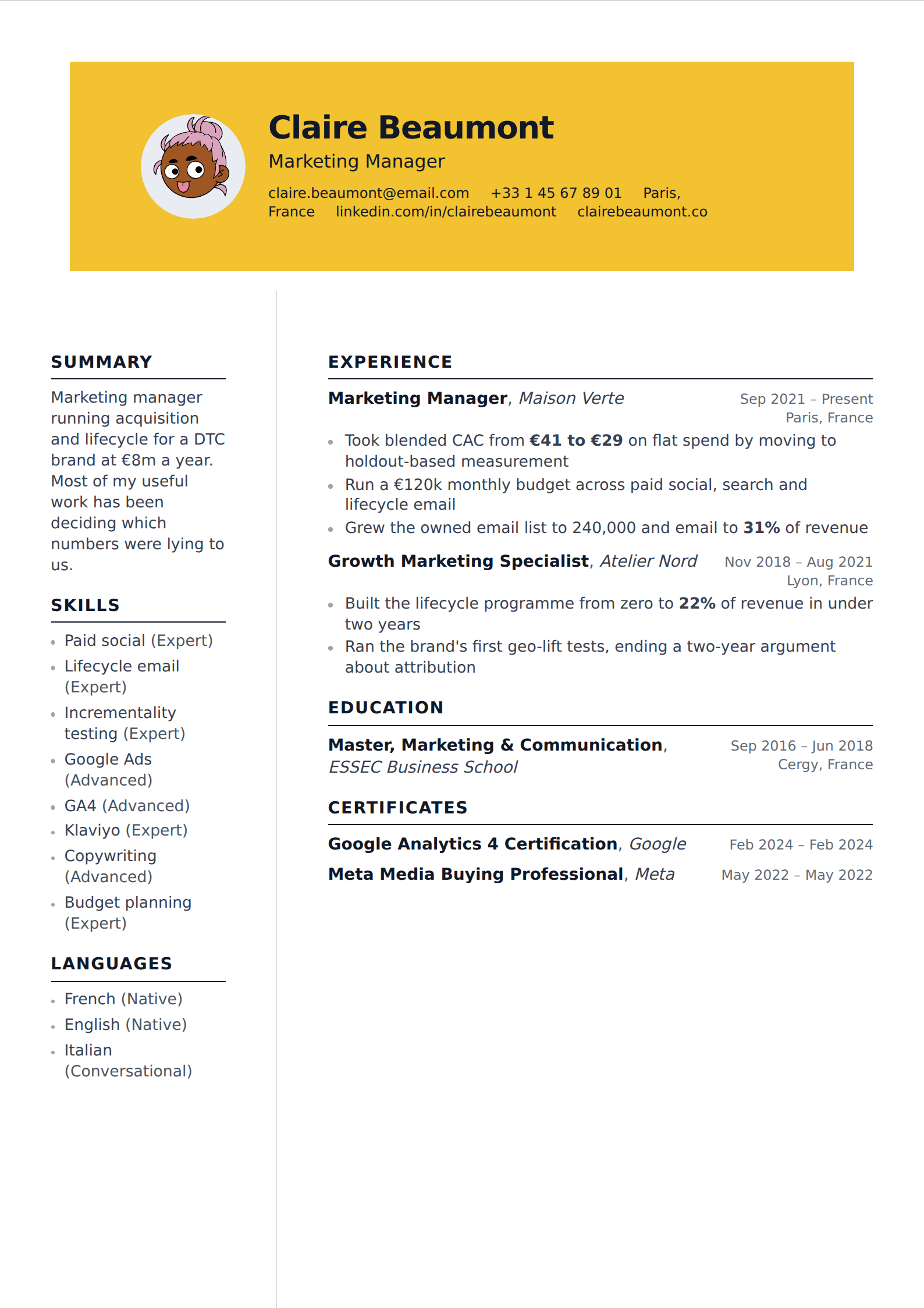
The site is a supplement; the attachment is what the application actually consumes. These are the layouts with enough visual judgement to sit alongside a portfolio without becoming one.

Common questions

Should I build a resume website?

Yes if your work is visual, interactive or published — designers, front-end developers, photographers, writers, consultants — because a page shows what a PDF cannot. For most other roles almost nobody visits it, and the time is better spent rewriting your resume bullets.

How do I build a resume website?

Buy a domain that is your name, pick a hosted builder or a static site template, and publish a single page: what you do, three to six pieces of work with outcomes, a condensed history, and contact details. If you are a developer and the site is itself a work sample, a static generator on a free host is the conventional route.

Does a resume website replace a PDF resume?

No. Applications go through systems that expect a file, and recruiters forward documents rather than links. Send the PDF and put the URL in your contact line beside your email — the site is a supplement for the reader who wants more.

What should be on a personal resume website?

One sentence saying what you do, the work itself with what you did and what resulted, a condensed career history with the PDF downloadable, and an email address. Leave off skill bars, testimonial carousels, contact forms and a blog you will not maintain.

Is a personal domain worth buying?

Yes — it costs a few pounds a year, it is the part of the setup that lasts, and yourname.com in a resume header reads as considered where a free subdomain does not. The site behind it can be rebuilt any number of times.

Related guides

Put it into practice

Start from any template above, get AI help tightening every bullet, and export an ATS-ready PDF. Free to start, and no card at any point.

Start your resume