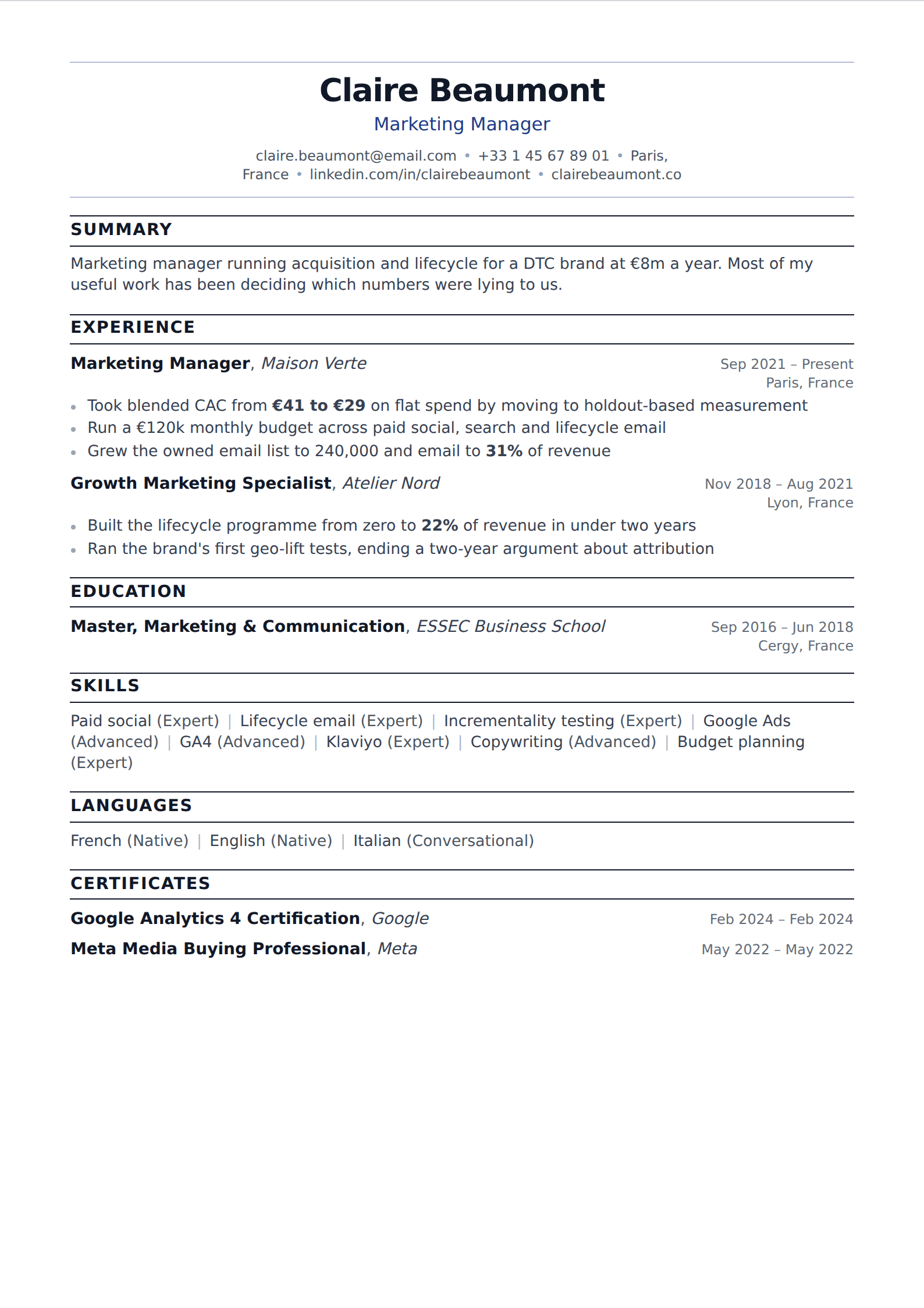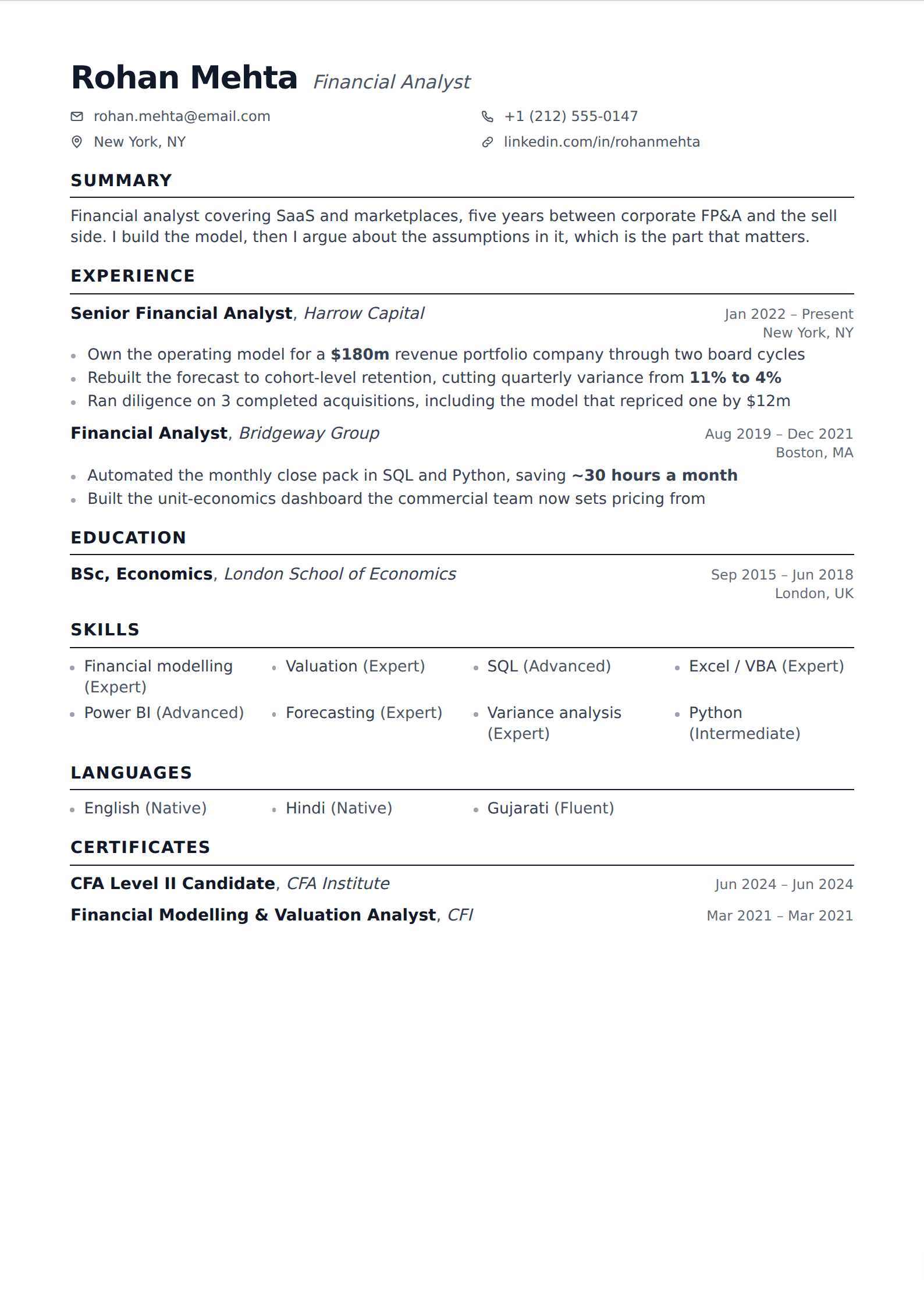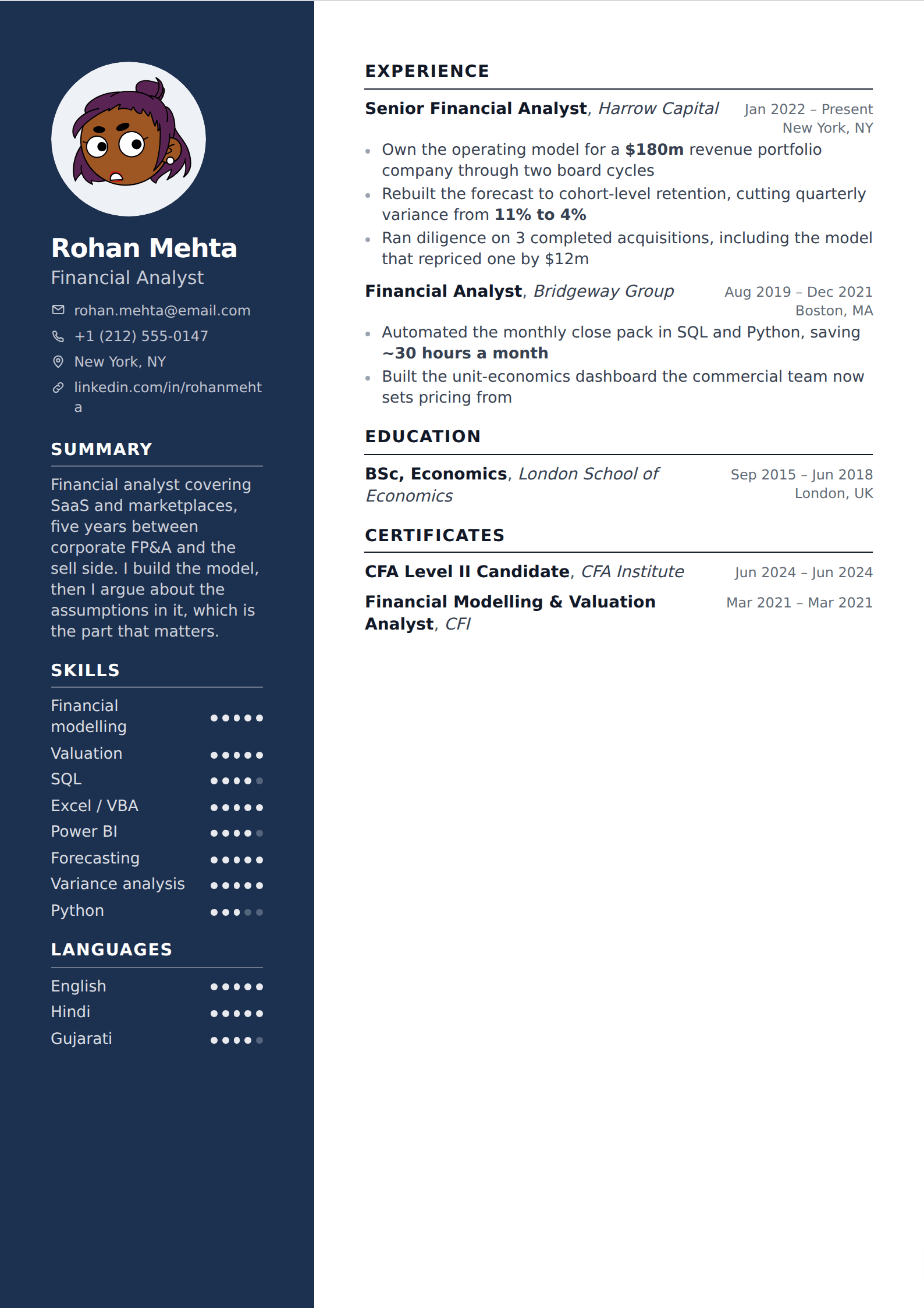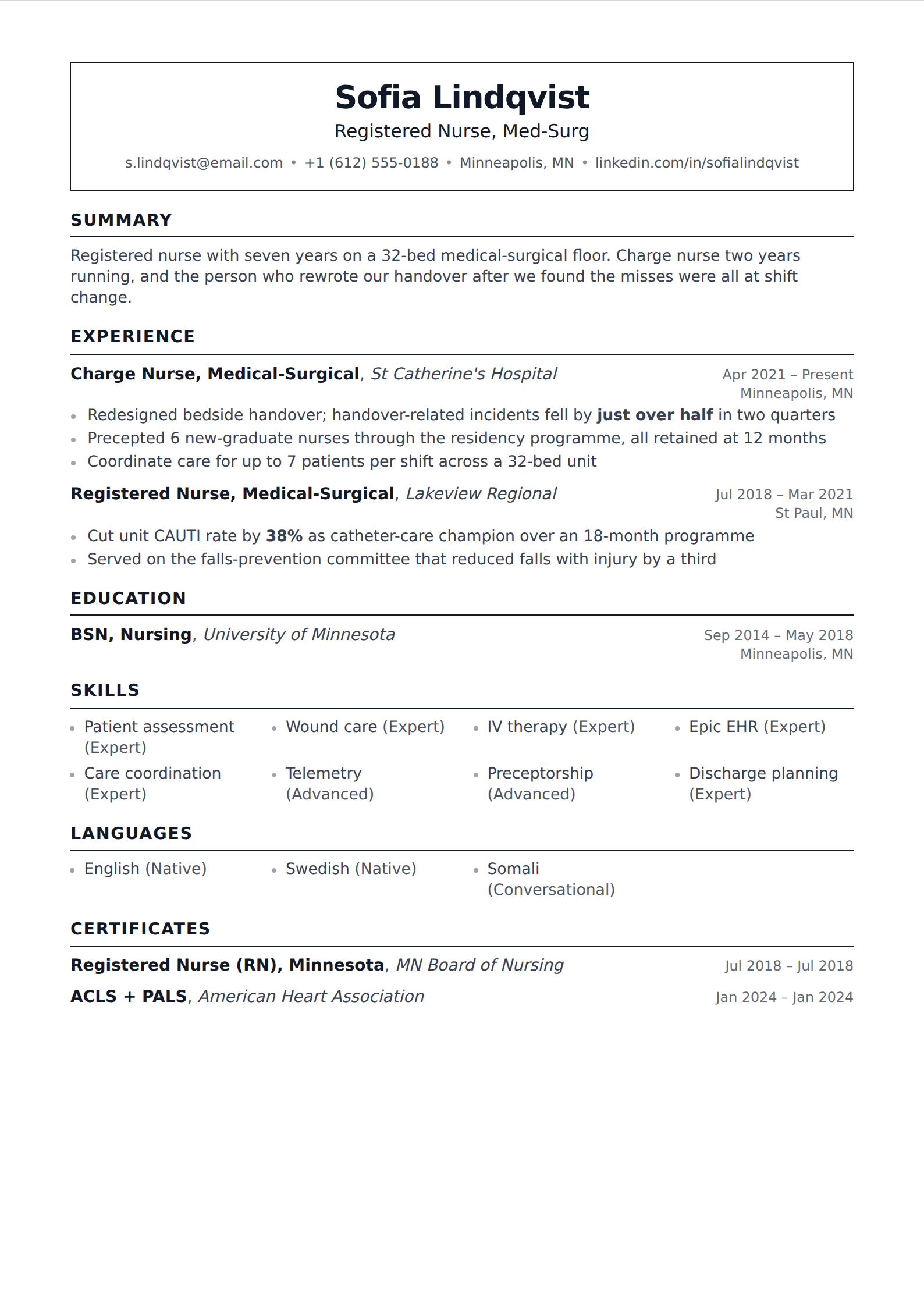

The rule, and the real rule
The conventional rule is one page up to about eight to ten years of experience, two beyond that. It is a decent approximation and it is not what actually decides the question.
The real rule is that every line has to earn its place. A two-page resume where the second page is a 2011 internship, a list of hobbies and "references available on request" is worse than a one-page resume, because you have asked for twice the attention and returned less per line. A two-page resume where both pages are dense with recent, relevant, quantified work is better than cramming the same content onto one page at eight-point type.
So the question is never "am I allowed two pages". It is "is my weakest line better than nothing". If it is not, cut it, and see what length you land on.
Where the conventions differ
Length expectations vary more by field and country than most advice admits.
- US and Canada: one page is a genuine norm for early and mid-career, and going to two is noticed. Two is fine and expected at senior level.
- UK, Ireland, Australia: two pages is the standard CV length at essentially any level. A one-page UK CV can read as thin.
- Continental Europe: two pages, plus a photo and personal details.
- Nursing and healthcare: routinely two pages, because licensure, certifications and clinical settings all have to be listed and none of it is optional.
- Academia and research: no limit. An academic CV is a complete record and can run to fifteen pages or more — a different document entirely.
- Senior technical and executive roles: two pages, occasionally three, where the scope genuinely requires it.
What to cut first
In order, because doing this in the wrong order wastes an evening. Work down the list and stop when you fit.
- "References available on request." It is assumed, it has been assumed for thirty years, and it costs you a line.
- An objective statement. Replace it with a summary that says what you do, or delete it — an objective tells the employer what you want, which is not the question they are asking.
- Interests and hobbies, unless one is genuinely relevant to the role or the employer is known to care.
- Anything older than fifteen years, compressed to one line or removed.
- The fourth and fifth bullets on your oldest roles. Nobody reads that far into a 2016 job.
- Skills you cannot discuss for two minutes. These are liabilities as well as filler.
- Only then: tighten wording, reduce margins slightly, and consider a denser template.
If you are just over
The worst outcome is a second page holding three lines. It reads as a mistake rather than as a document, and it is the one length that looks careless at a glance.
If you are two or three lines over, cut them — the material at the very bottom of a resume is by definition your weakest. If you are half a page over, take the whole second page and fill it properly, or cut back to one. Do not shrink the type to nine point and squeeze the margins to a quarter inch: a cramped one-page resume is harder to read than a comfortable two-page one, and readability is the thing you were protecting in the first place.