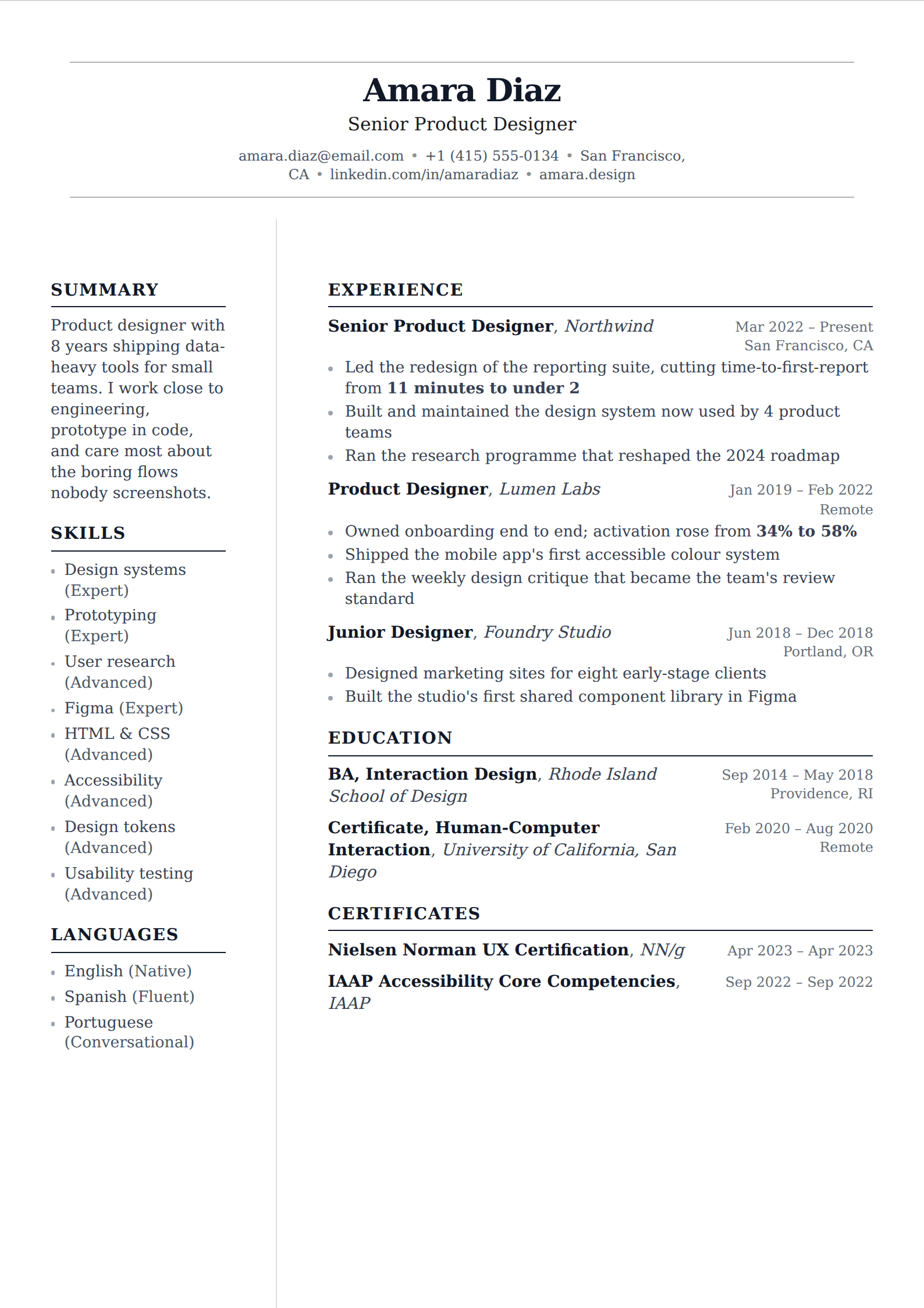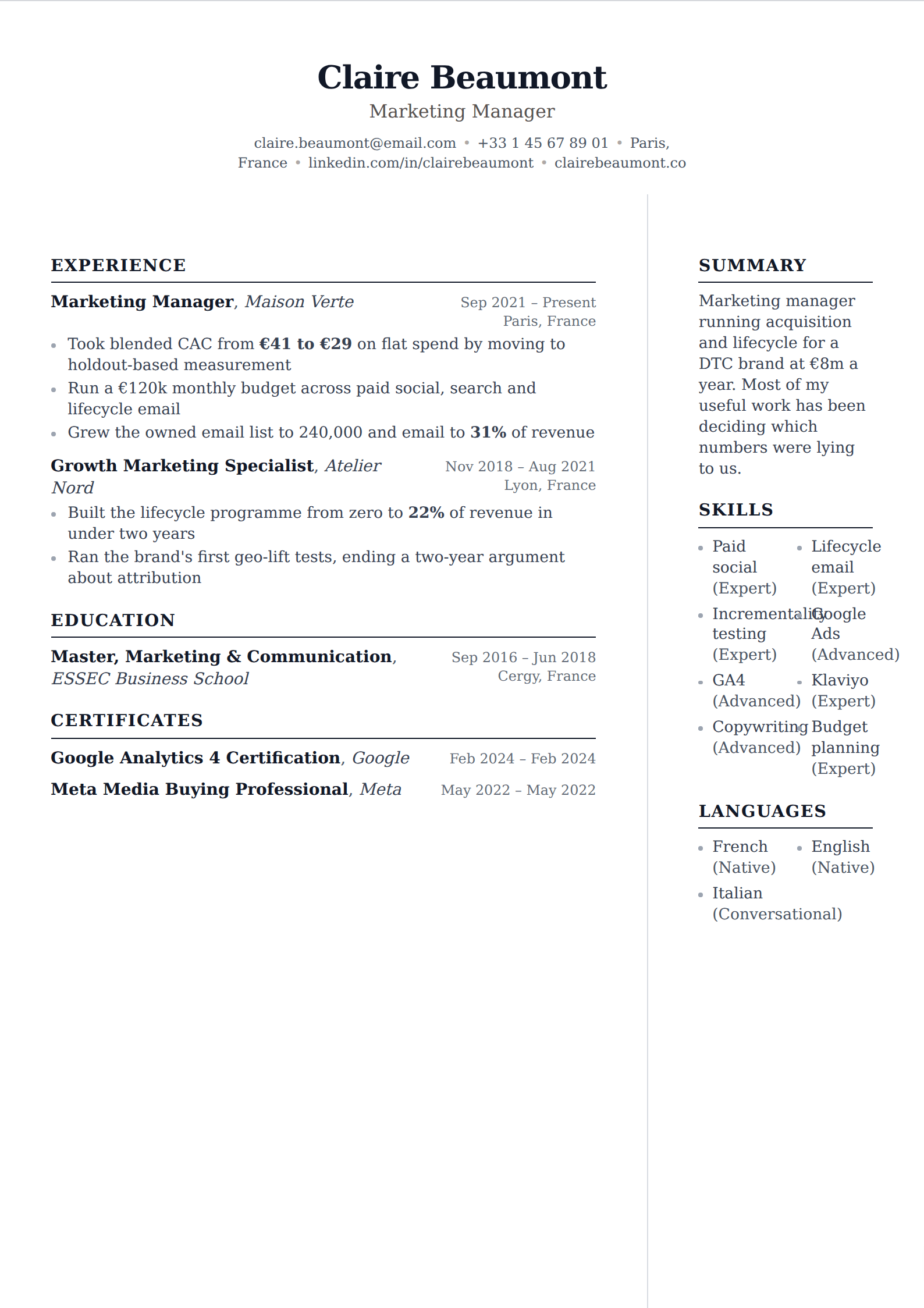

Reverse chronological
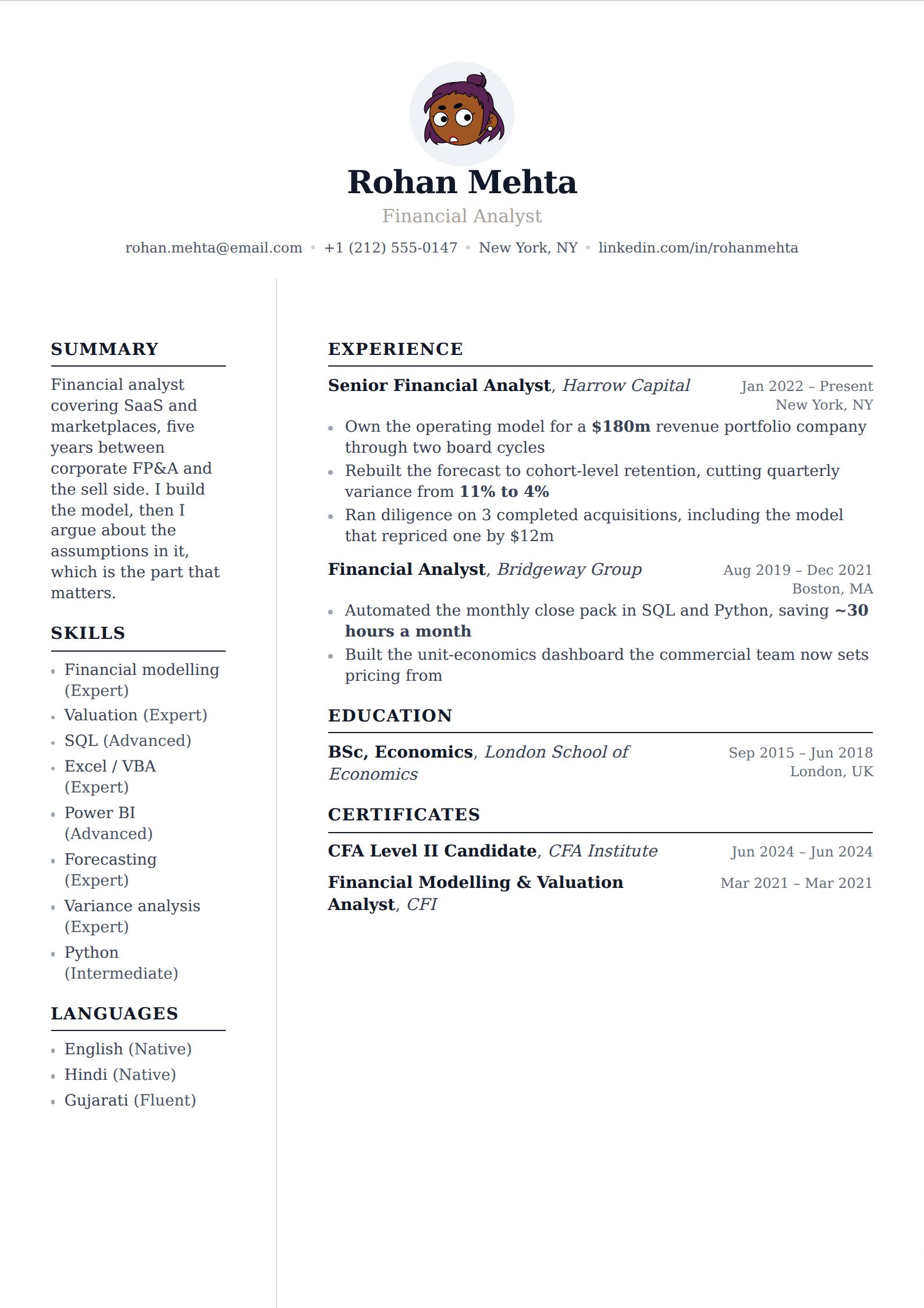
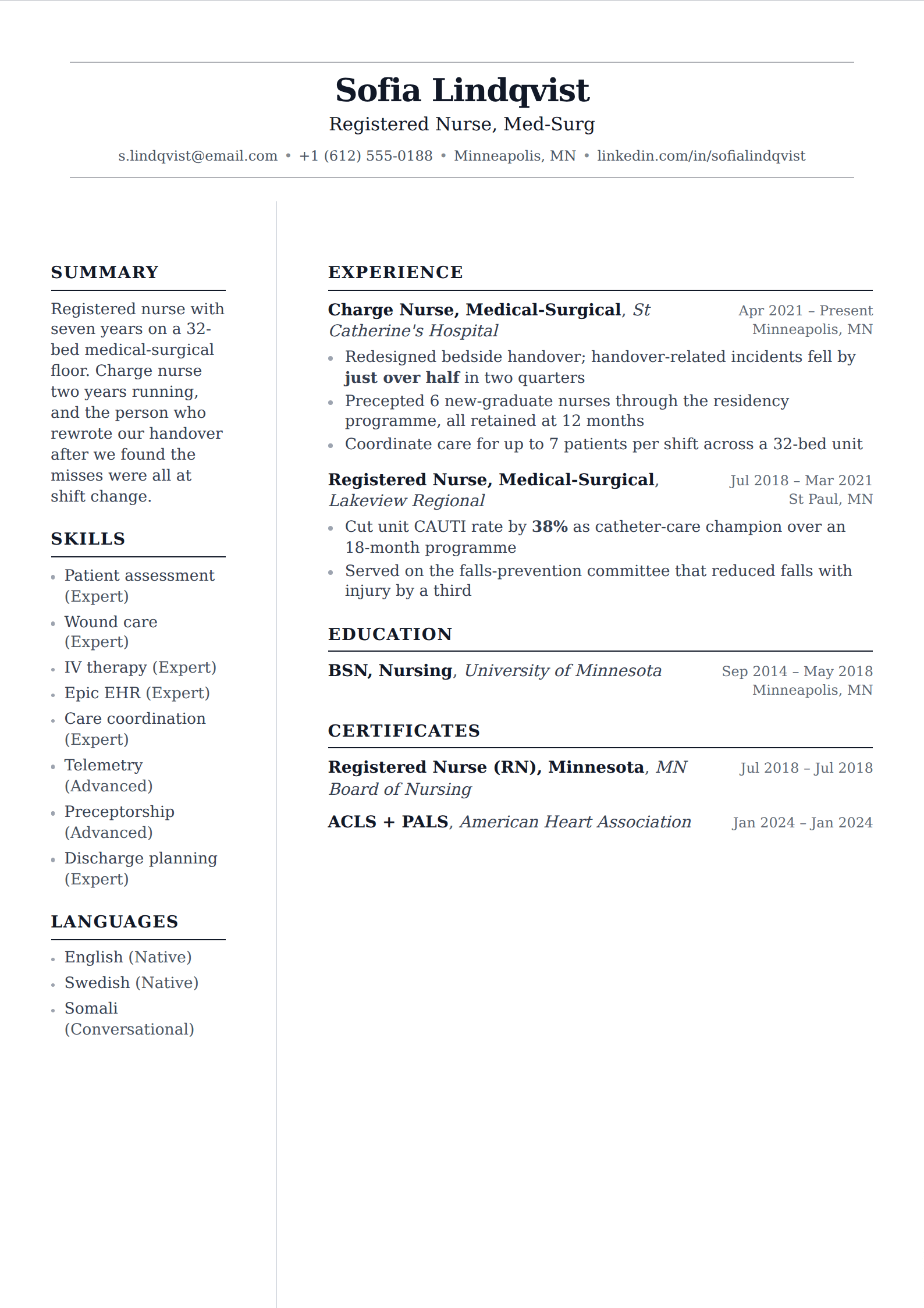
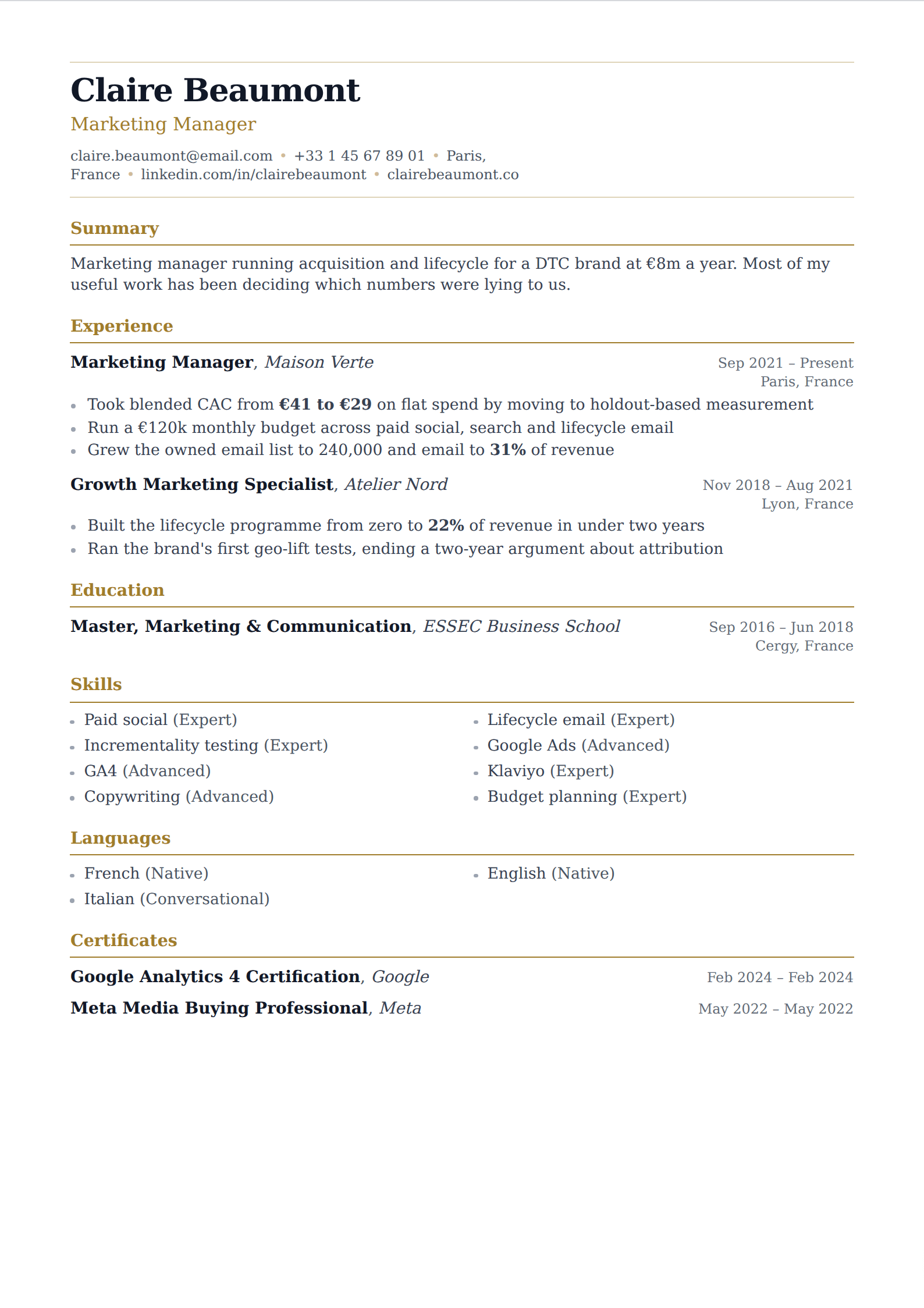
Most recent role first, working backwards. This is the default, it is what recruiters expect, and it parses cleanly. Use it unless you have a specific reason not to.
Its strength is that it answers the reader's first question — what are you doing now — immediately. Its weakness is that it makes gaps and short tenures visible, which is not a reason to avoid it so much as something to be ready to explain.
Functional
Organised by skill rather than by job, with employment history reduced to a list at the bottom. It is widely disliked by recruiters, precisely because it obscures the timeline — which means it reads as an attempt to hide something even when it isn't.
There is one situation where it genuinely helps: a portfolio career of short unrelated contracts where a chronological list would be noise. Even then, expect scepticism.
Hybrid
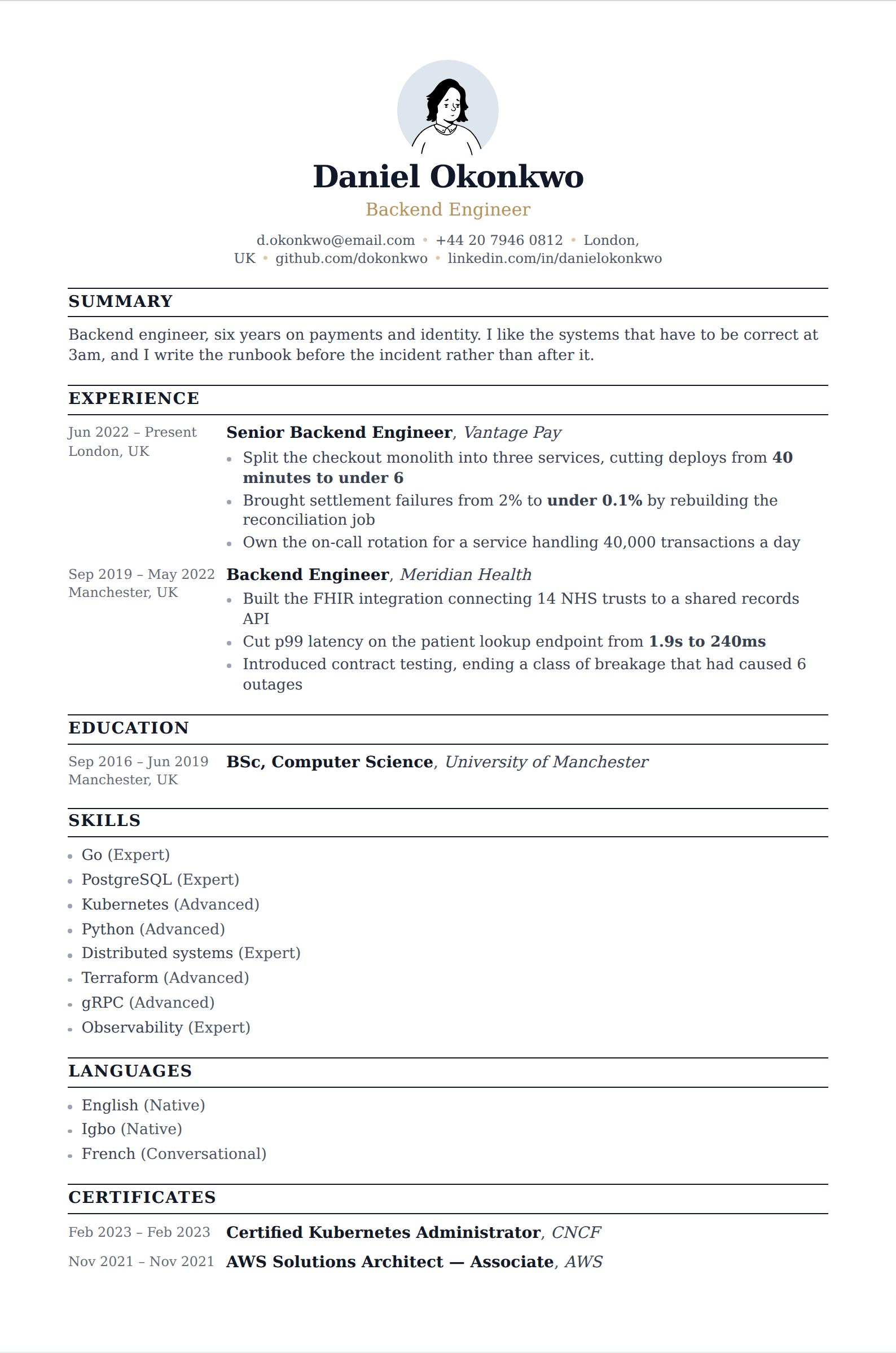
A short skills or highlights block at the top, then a normal reverse-chronological history underneath. This is the honest version of what the functional format tries to do, and it works well for career changes and for specialists whose job titles don't describe their work.
Keep the top block short — four or five lines. It is a lens for reading the history, not a replacement for it.
Decisions that follow
Length: one page under ten years, two beyond. Dates: month and year, consistently, right-aligned so the eye can scan them as a column. Section order: whatever supports the argument, with experience above education once you have a career behind you.
Name sections what they are called. "Experience", "Education", "Skills". Creativity in section naming costs you searchability and gains you nothing.