
Why the rules are different
A federal hiring specialist is not forming an impression. They are determining, against a written standard, whether you meet the qualification requirements for a specific grade — and they can only credit what is documented. If your resume does not state that you performed a duty, for how long, and at what level, it did not happen as far as the rating is concerned.
That makes omission the dominant risk. In the private sector, an unnecessary detail costs you a reader's attention; in a federal application, a missing detail costs you the job outright, and there is no follow-up question. The whole document is written defensively as a result.
This is also why length inverts. Four to six pages is normal, and applicants regularly submit more. A one-page federal resume is not tight, it is incomplete.
What must be on it
The specific fields matter, and their absence is what gets applications screened out.
- Full contact details, plus citizenship status.
- For every position: job title, employer, full address, start and end dates including month and year, and hours worked per week.
- Salary or grade for each position — GS grade and step if the role was federal.
- Supervisor's name and telephone number, and whether they may be contacted.
- Detailed duties for each role, written to match the language of the announcement rather than compressed into three bullets.
- Education with the institution's full name, location, degree, completion date and relevant coursework or credit hours.
- Certifications, licences, training courses, awards, security clearances, and any veterans' preference or eligibility you are claiming.
Reading the announcement properly
A USAJOBS announcement contains the qualification standard and the specialised experience statement, and those paragraphs are effectively the marking scheme. Whatever they describe as required specialised experience is what a rater will search your resume for, in something close to the announcement's own words.
So the correct process runs backwards from the announcement. Take each requirement, find the experience in your history that satisfies it, and write a passage that demonstrates it explicitly — using the announcement's terminology, because a rater matching "acquisition planning" will not credit your "procurement scheduling" without being sure they are the same thing.
Announcements also specify the grade you are applying at, and the qualification standard for each grade is different. Applying to several grades of the same series usually means several versions of the document, not one.
How to write the duties
Longer and more complete than a private-sector bullet, and still not a job description. The private-sector rule — verb, specifics, result — still improves a federal resume; what changes is that you cannot cut the routine duties to make room for the impressive ones, because the routine duties are what the qualification standard is written against.
So the shape is: a paragraph or a longer bullet list per role covering the full scope of what you did, with the specialised experience the announcement names appearing plainly and early, and accomplishments included rather than substituted for duties. Say both what the job involved and what you achieved in it.
Do not use acronyms without expanding them at first use, even ones that seem universal within your agency. And do not assume institutional knowledge — the rater may not be from your field.
Building and submitting it
USAJOBS provides its own resume builder that enforces the required fields, which is the safest route for a first application because it will not let you omit a mandatory item. You may also upload your own document, and many announcements accept both; where an announcement specifies one, follow it exactly, because non-compliance is an eligibility failure rather than a stylistic one.
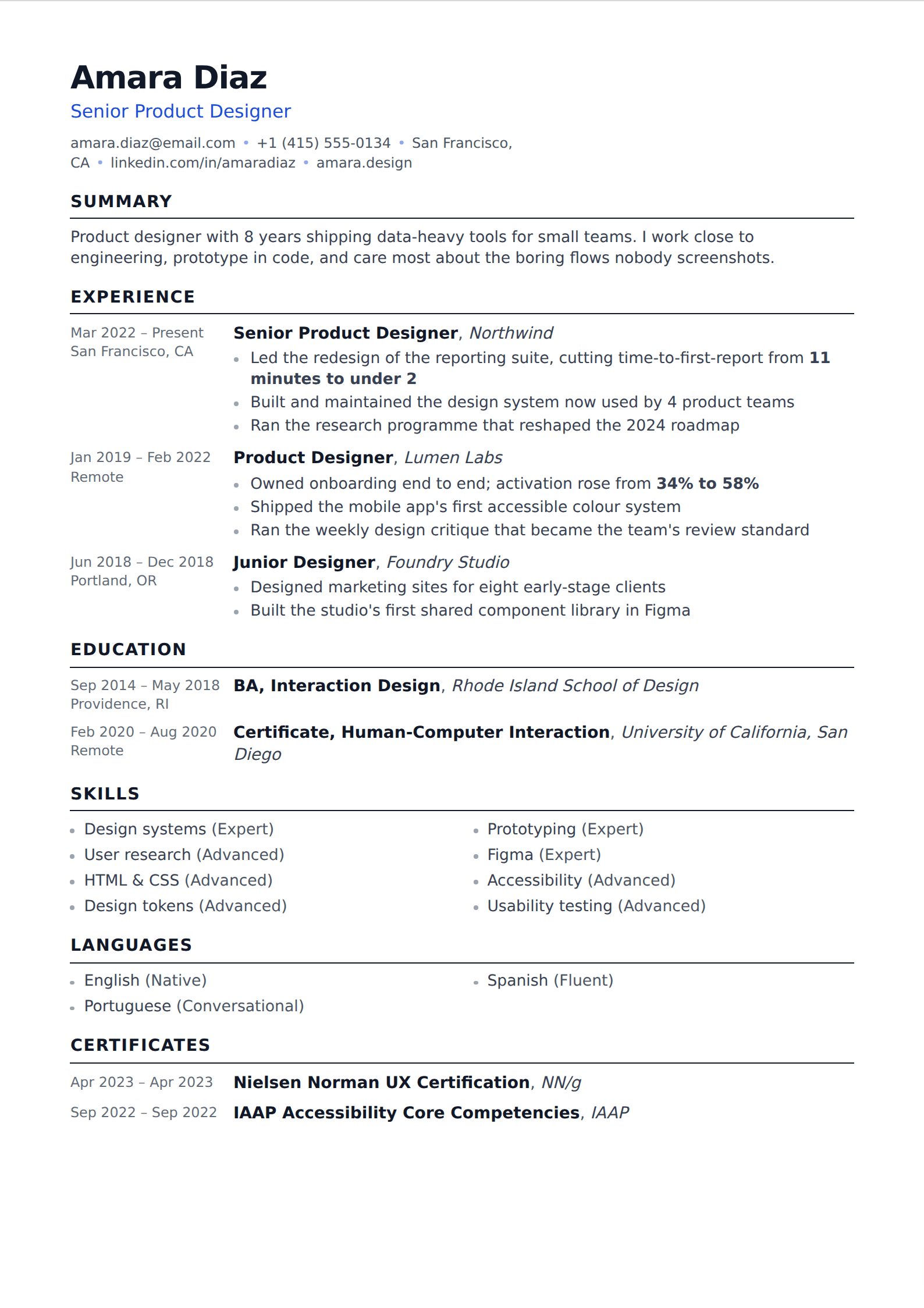
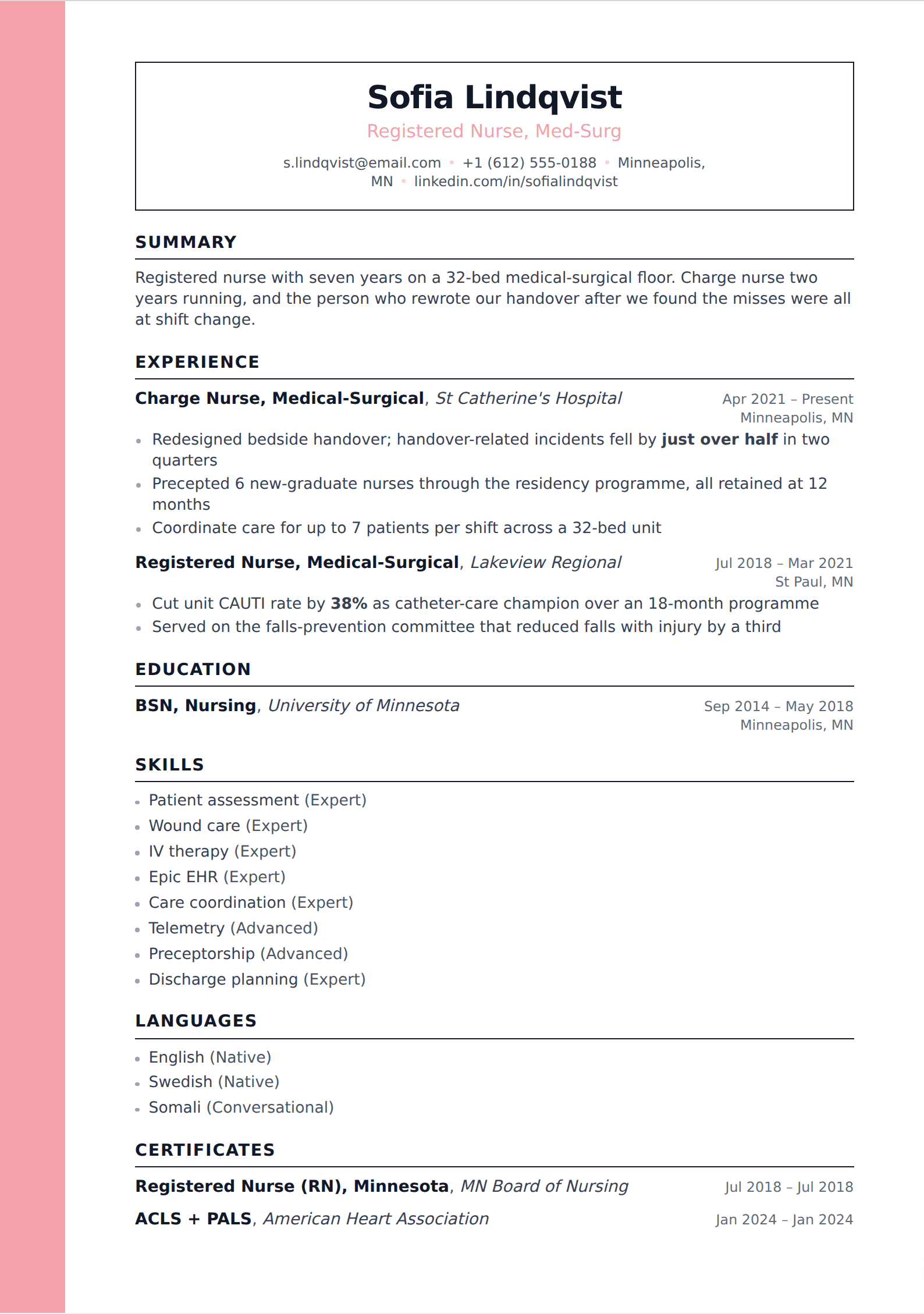
If you upload your own, a plain single-column format with clear headings and complete fields is what you want. Any of the simple templates here will produce that shape — allow it to run to several pages, and treat the length as correct rather than as something to fix.
One warning worth stating plainly: never carry classified or sensitive material into the document to demonstrate experience. Describe the function and the scope, not the content.