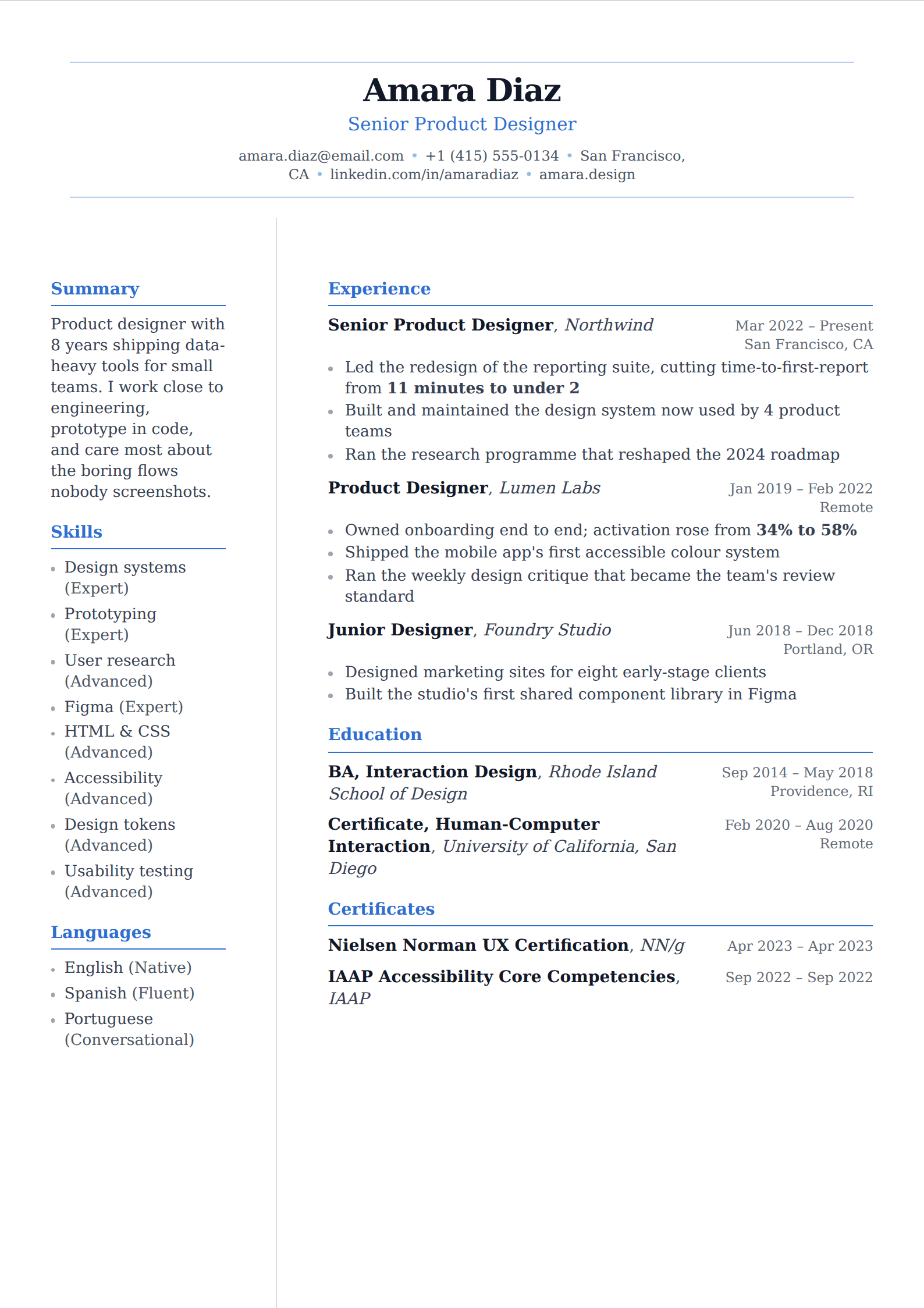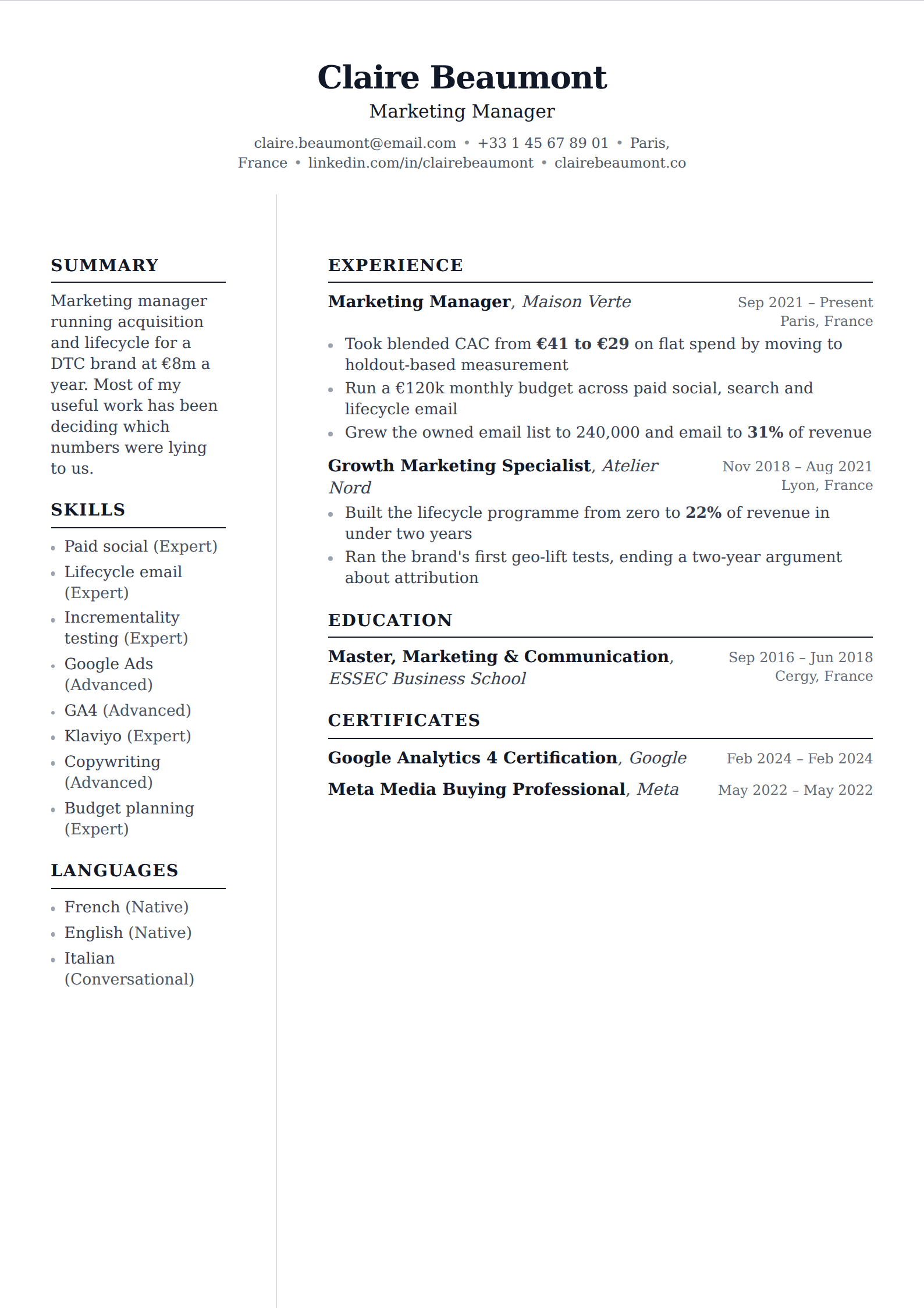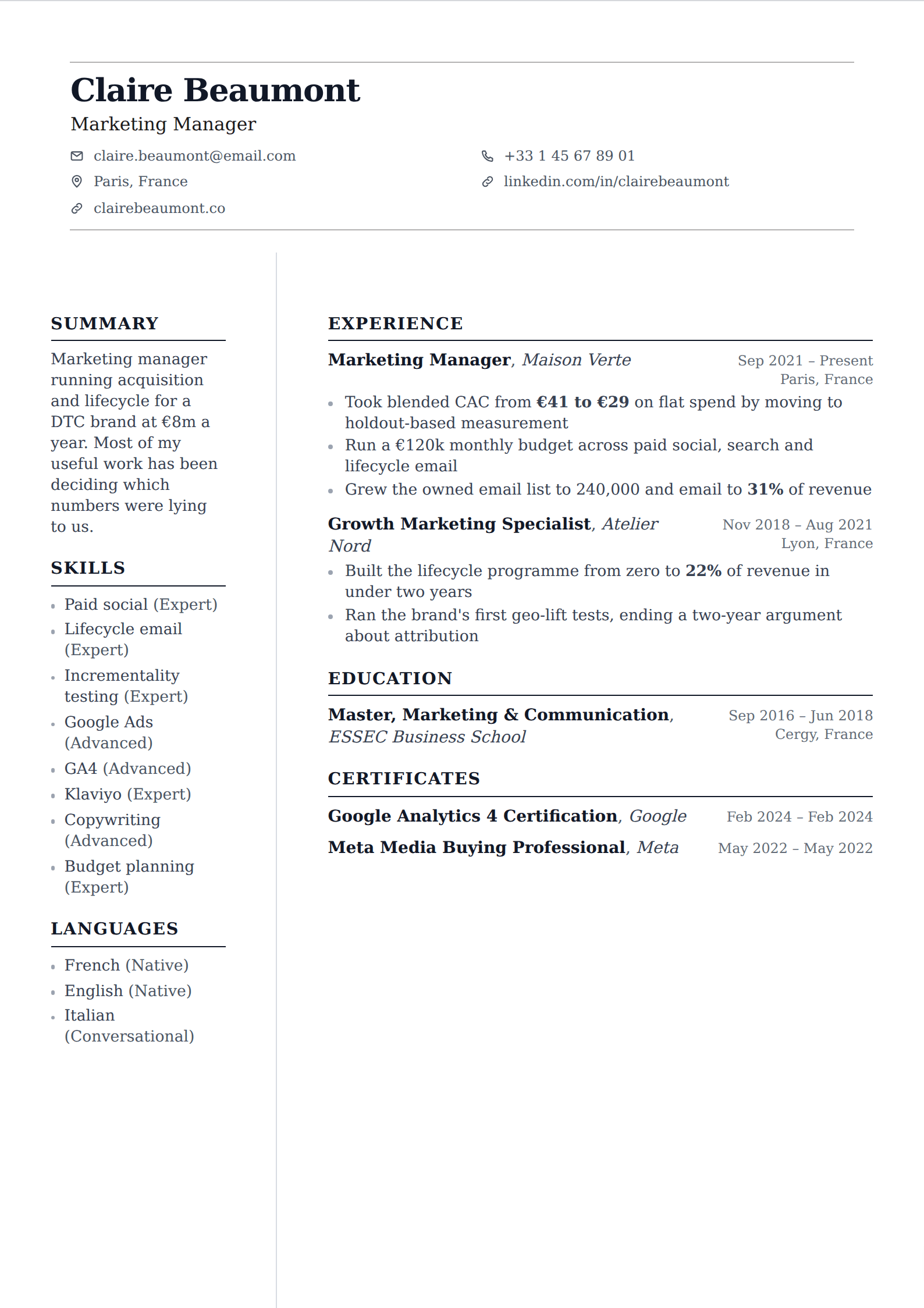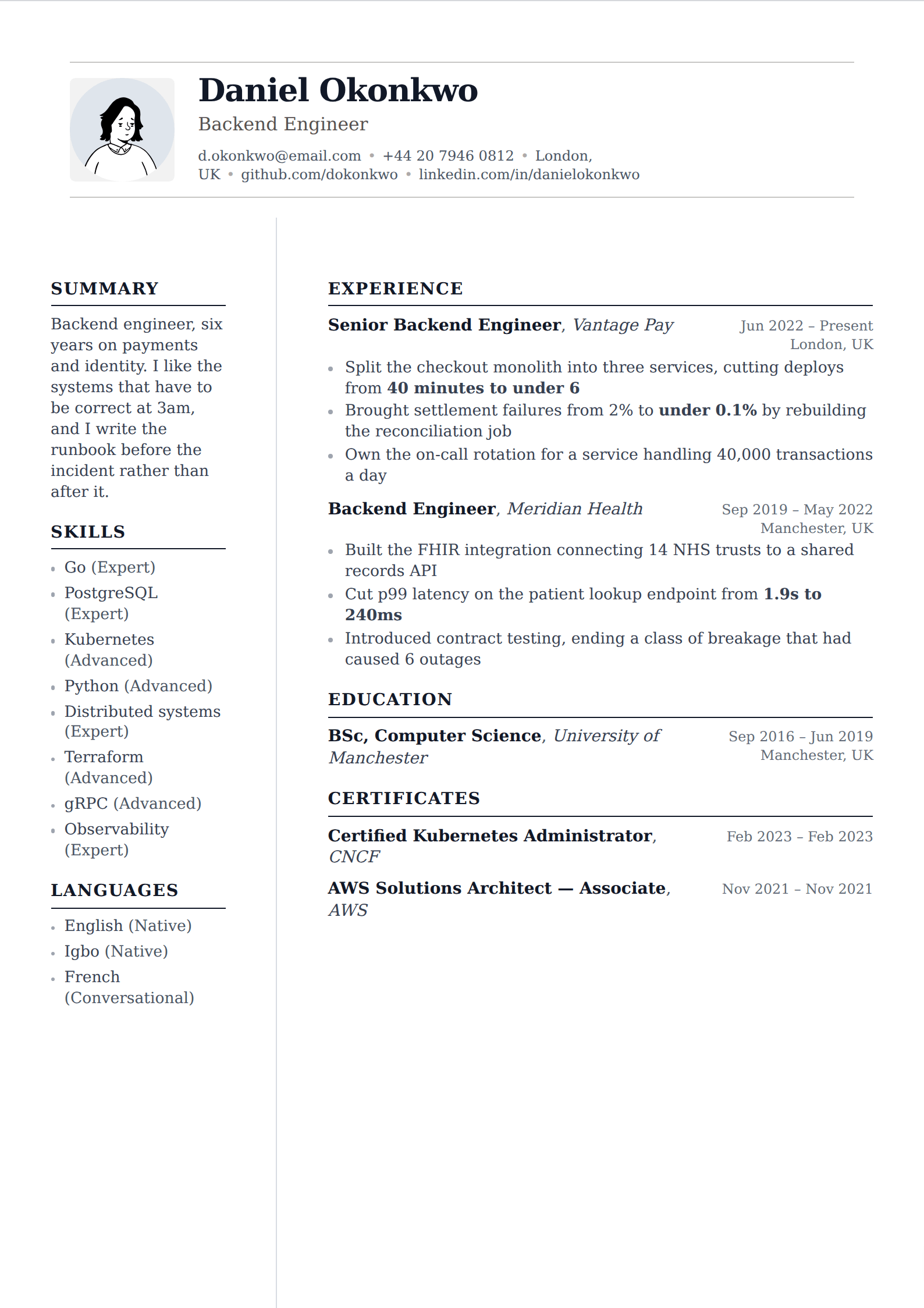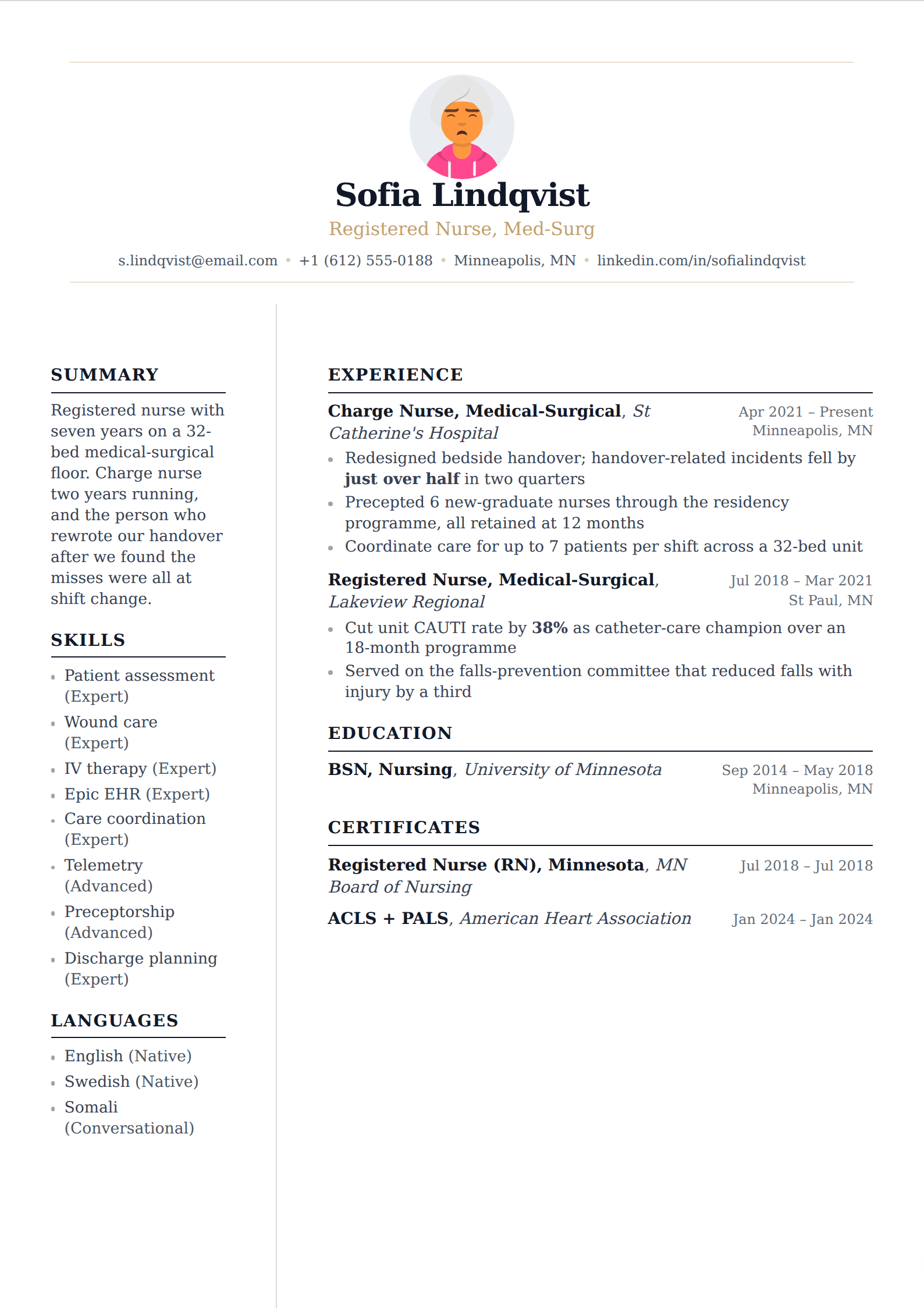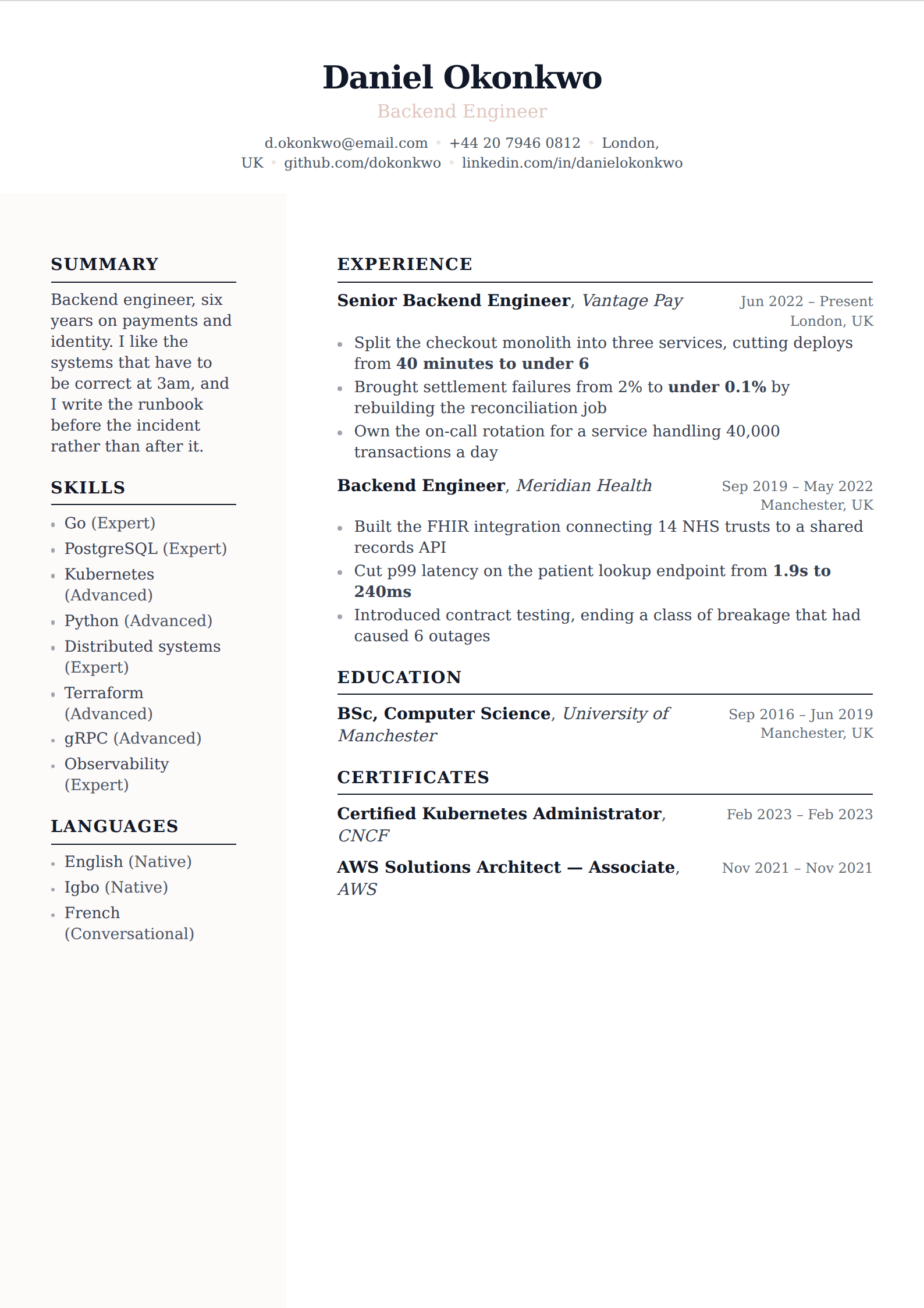

Where it goes
Above experience while you are a student and for roughly the first two years after graduating. Below experience for everyone else, permanently.
The switch is about which is the stronger argument, not about elapsed time exactly. A recent graduate's degree is the most substantial thing they have; two jobs later, it is a credential that needs to be present rather than an argument that needs to be made. Someone reading a resume with eight years of experience and a degree at the top assumes the experience is weak.
There is one exception: fields where the qualification is the gate. Medicine, law, academia and some engineering disciplines keep education prominent for longer, because the reader is checking it first regardless of your experience.
What to list at each stage
The section gets shorter as your career gets longer, and that is the correct direction.
- Current student: institution, degree, expected graduation date, GPA if strong, relevant coursework, honours, thesis topic, study abroad.
- Recent graduate (0–2 years): the same, minus coursework unless the role is technical and you have little else.
- Mid-career (3–10 years): institution, degree, graduation year. Honours if genuinely distinguishing. Nothing else.
- Senior (10+ years): institution and degree. The year becomes optional.
- Any stage: drop high school entirely once you hold a degree. It is assumed, and the line is better spent elsewhere.
GPA, honours and the graduation year
Include a GPA above roughly 3.4, or a 2:1 and above in the UK system, and only within about three years of graduating. After that it comes off regardless of how good it was — a strong GPA on the resume of someone eight years into a career reads as reaching for something.
Below that threshold, leave it out. An omitted GPA passes without comment; a weak one stated is the first thing a reader's eye lands on. Nobody has ever been rejected for not listing a GPA.
The graduation year is a genuine judgement call later in a career, because it is the clearest age signal on the page and age discrimination is real. Removing it is legitimate and common past about twenty years of experience. Removing it while listing every job since 1998 achieves nothing, so the two decisions go together — cap your experience section at ten to fifteen years and the year becomes unremarkable either way.
Unfinished, in progress, and international degrees
A degree in progress: list it with the expected completion date. "BSc Computer Science, University of Manchester, expected June 2027" is complete information and entirely normal.
A degree you did not finish: list the institution, the subject and the years attended, without implying a qualification. "Economics coursework, University of Leeds, 2018–2020" is honest and still communicates the study. Never list a degree you did not complete as though you did — this is the single most commonly verified fact on a resume and the consequence of being caught is not a rejection but a dismissal.
An international degree: give the local equivalent alongside the original name, because a reader who does not recognise a qualification cannot credit it. Convert grades to the target country's scale, or state both. If the degree needs formal recognition to practise in the country you are applying to, say where you are in that process.