
Sections

How to list certifications on a resume

A certification is one of the few things on a resume that is externally verified — someone other than you decided you passed. That makes it more valuable than most of what surrounds it, and it is routinely buried at the bottom of an education section where nobody looks. Where it goes depends on one question: is it a requirement for the job, or a supporting detail?

4 sections

The short version

  • A certification is externally verified, which makes it more valuable than most of what surrounds it.
  • If it is a requirement for the job, it goes high on the page or in the header.
  • If it is supporting, it gets its own section below experience — never buried in education.
  • Four elements per entry: credential name, issuing body, date, and expiry or licence number.
  • In progress is fine if you state the status and a date. Expired comes off unless labelled as lapsed.

Where they go

If the certification is a requirement — a nursing licence, a CPA, a CDL, a security clearance, a teaching credential, a trade licence — it goes high on the page and gets its own section, or goes in the header beside your name. A hiring manager screening for licensed applicants is looking for exactly that, and if they have to find it on page two you have made their job harder for no reason.

If it is a supporting credential — a cloud certification, a project management qualification, a course you completed — it gets its own section below experience and education. Still visible, still verified, not competing with your work history for the top of the page.

If it is neither, it may not belong at all. A completion certificate for a two-hour online course is not a credential, and listing several of them together reads as padding rather than as development.

The format

Four elements per entry: the full name of the credential, the issuing body, the date awarded, and where relevant an expiry date or licence number. Consistency across entries matters more than the exact arrangement.

  • "Registered Nurse (RN), California Board of Registered Nursing, licence #123456, active through 2027"
  • "AWS Certified Solutions Architect – Associate, Amazon Web Services, 2025"
  • "Project Management Professional (PMP), Project Management Institute, 2023"
  • Write the full name at least once, with the acronym in brackets — parsers and people both search for both forms.
  • Include the state or jurisdiction for anything licensed, because a licence is jurisdictional and a reader needs to know whether it applies where the job is.

In progress, expired, and lapsed

In progress is fine to list, provided you say so plainly and give a date. "CPA — three of four sections passed, final exam scheduled March 2026" is honest and useful. "CPA candidate" with no detail is vague enough to look like an attempt to imply more than is true, and an interviewer will ask.

Expired credentials come off, unless the underlying experience matters and you say clearly that it has lapsed. A certification that quietly expired two years ago and is still listed as current is a small dishonesty that becomes a large one if the employer verifies, which for licensed professions they always do.

For anything with continuing-education requirements, the active-through date is doing real work. State it.

Which ones are worth the space

Anything that is a legal or contractual requirement for the role, always. Anything the job posting names, always — that one is being screened for. Industry-recognised credentials that a practitioner would know by name: AWS and Azure certifications for infrastructure work, PMP and PRINCE2 for delivery, CISSP for security, Six Sigma belts in manufacturing and operations, CPA and CFA in finance.

Vendor certifications for products the employer uses are worth more than their general reputation suggests — an Epic or Salesforce certification is often the specific thing that moves an application forward, because it removes a training cost.

What is not worth the space: online course completions with no assessment, badges from platforms nobody in the field recognises, and long lists of small credentials that together suggest activity rather than expertise. Three meaningful certifications beat eleven.
Where each kind belongs

Scroll the table sideways to compare →

KindWhere it goesHow to write it
Licence required for the roleHeader or a section near the top"Registered Nurse (RN), California BRN, licence #123456, active through 2027"
Industry credentialOwn section below experience"AWS Certified Solutions Architect – Associate, Amazon Web Services, 2025"
In progressSame section, labelled"CPA — three of four sections passed, final exam March 2026"
ExpiredOff the page, or labelled as lapsedOnly if the underlying experience matters to this role
Course completion, no assessmentUsually nowhereSeveral together read as padding rather than as development

How each entry should read

Open your own resume beside this and work down it. Every line is something a reader or a parser acts on within the first pass.

  • Full credential name, with the acronym in brackets at least once
  • The issuing organisation named — several bodies certify the same thing
  • Date awarded, and expiry or active-through date where one exists
  • Jurisdiction stated for anything licensed
  • Licence number where it is normally quoted
  • Requirements near the top of the page; supporting credentials below experience
  • In-progress entries carry a status and a date
  • Nothing expired presented as current

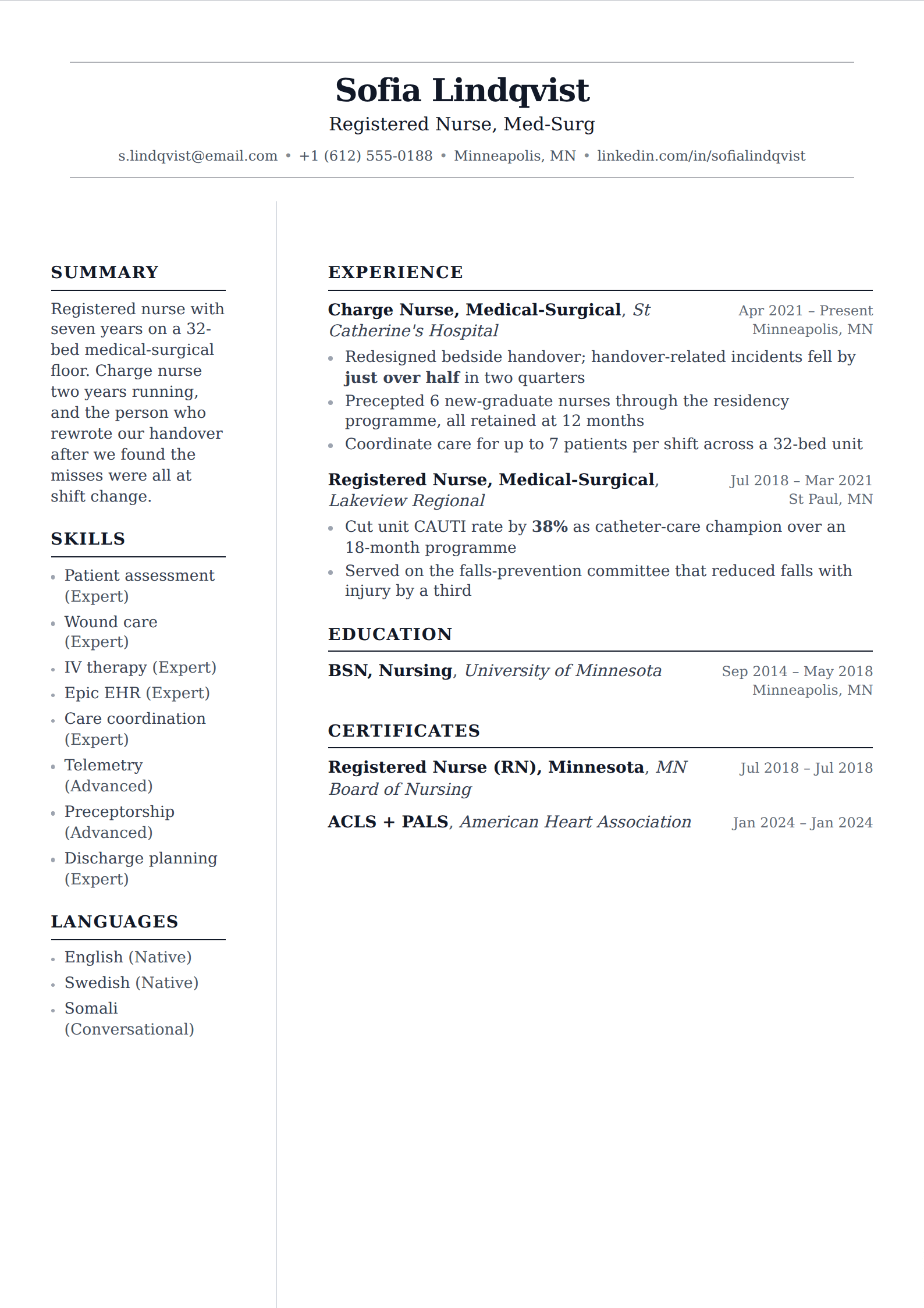
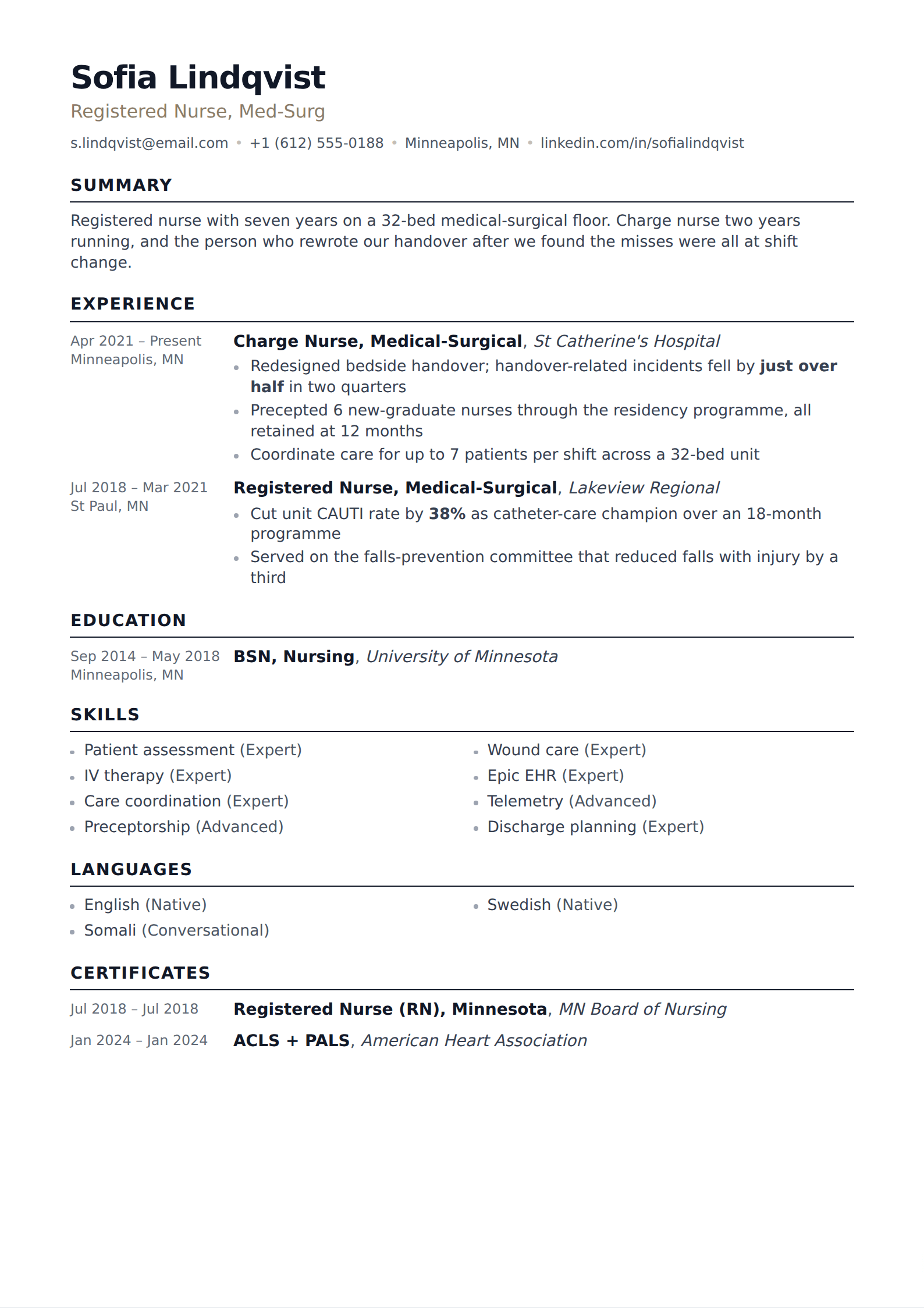
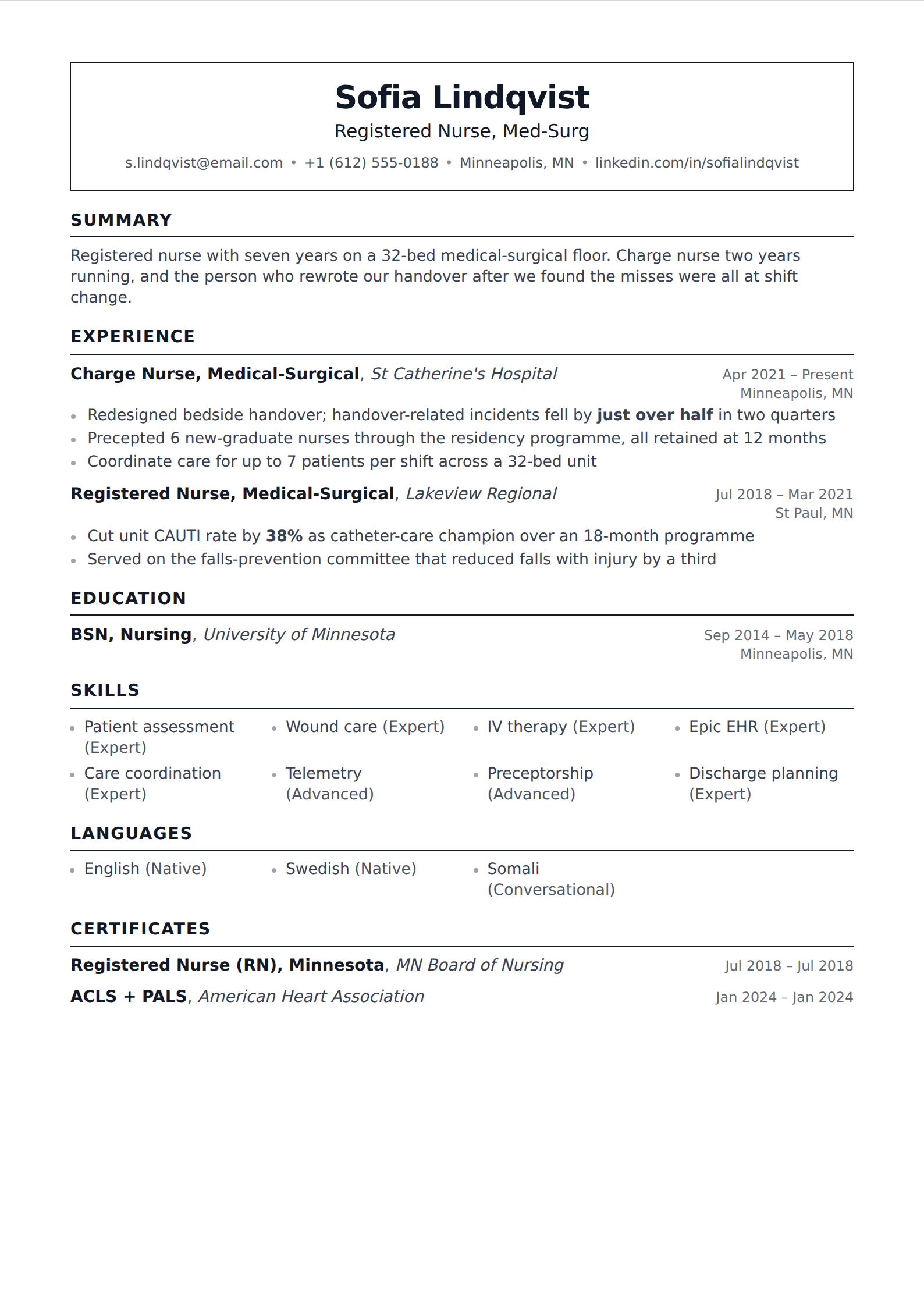
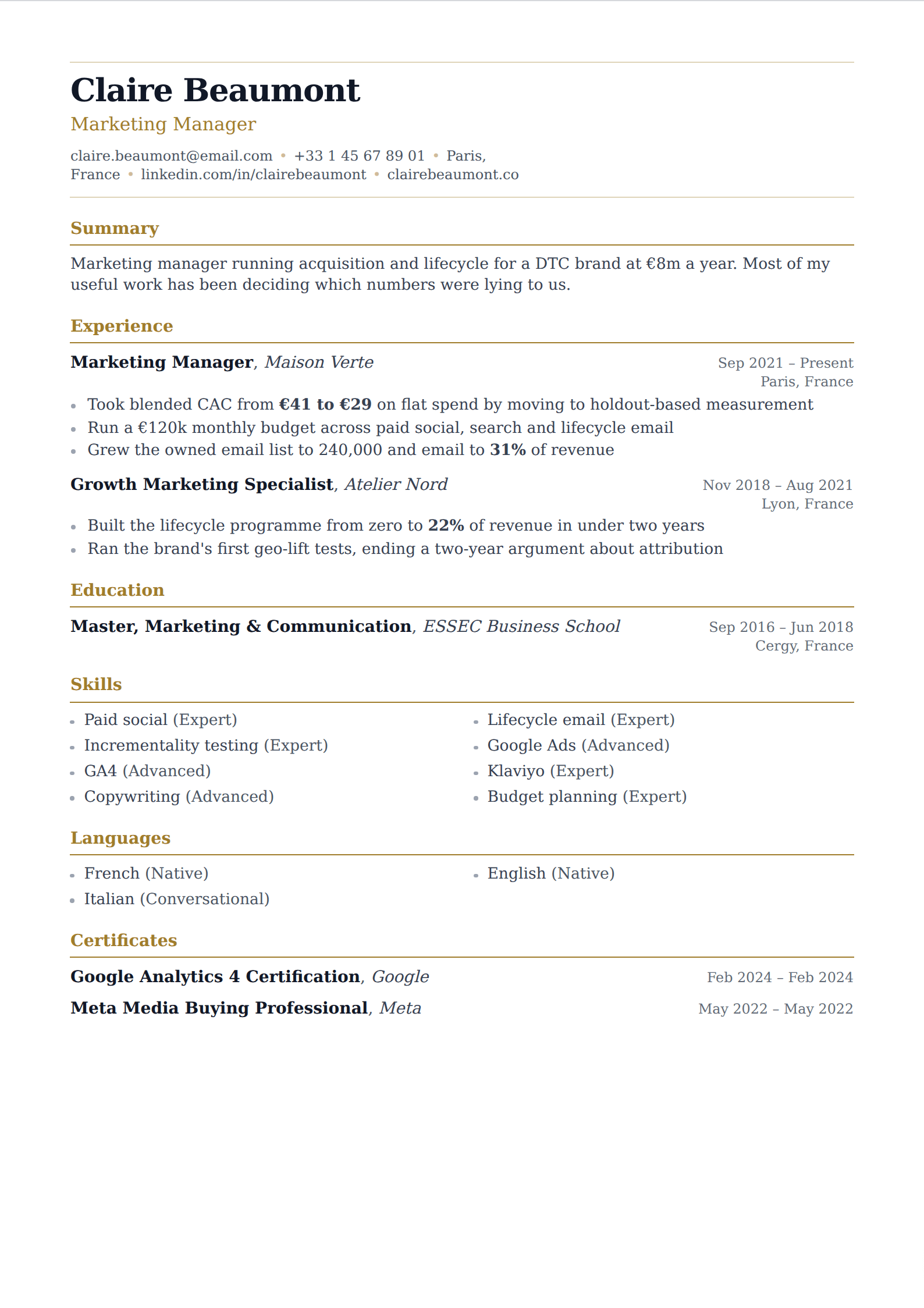
Templates with a proper credentials section

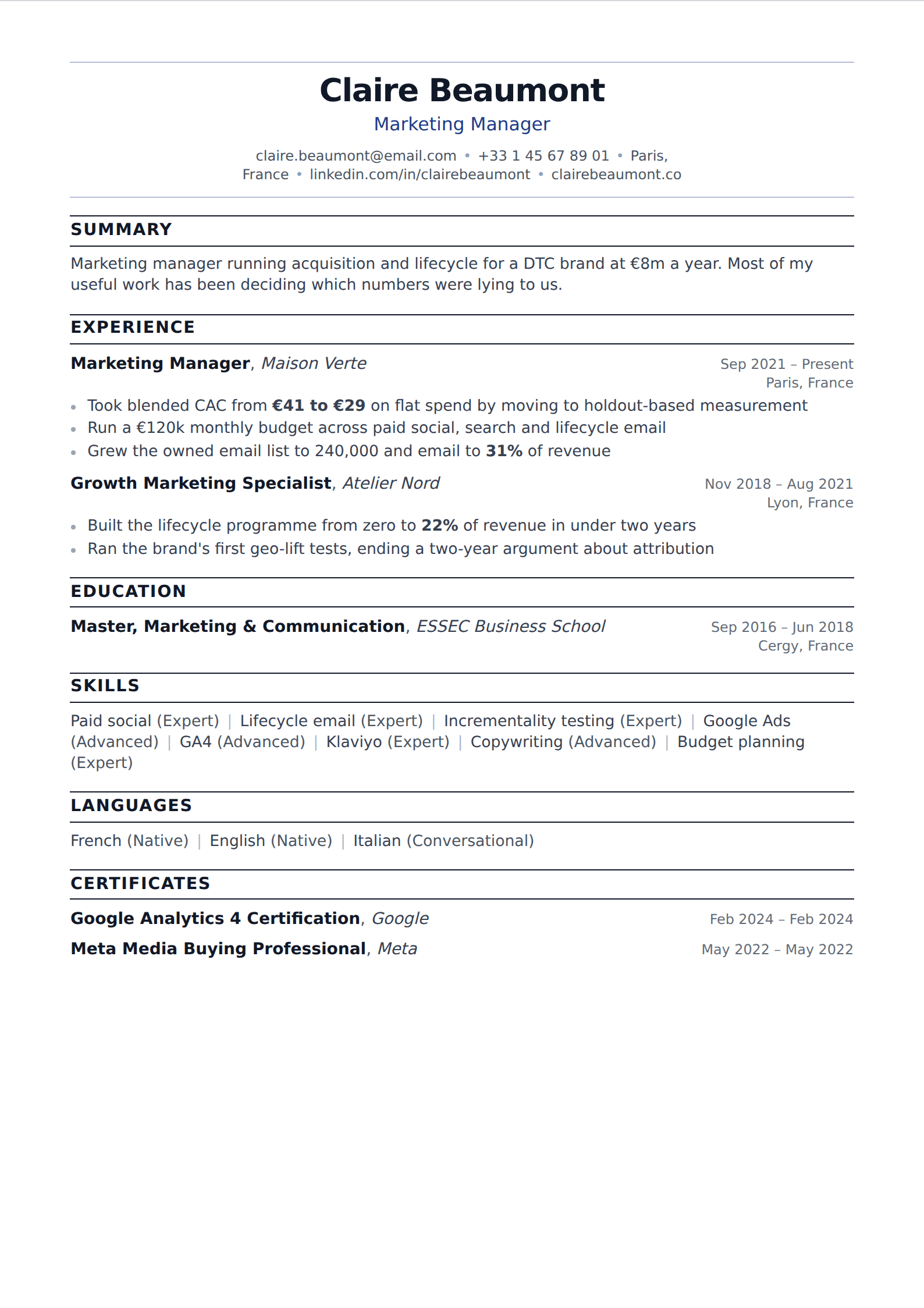
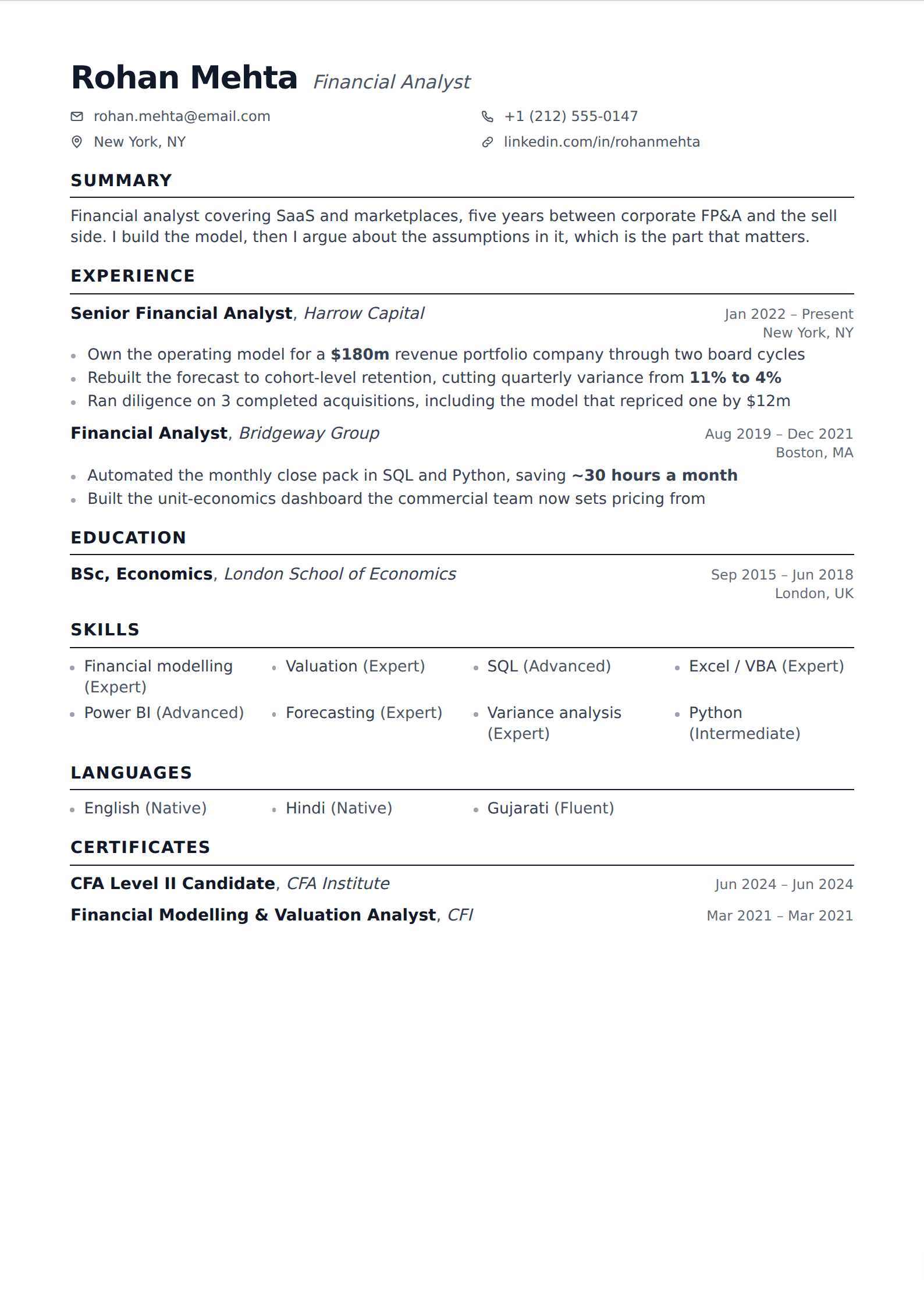
Formal layouts that carry a certifications block near the top without it looking bolted on — which is what licensed fields need, since the credential is the eligibility gate rather than a supporting detail.

Common questions

Where do certifications go on a resume?

In their own section below experience for supporting credentials, and high on the page — a dedicated section near the top, or beside your name in the header — when the certification is a requirement for the role, like a nursing licence, CPA or trade licence.

How do you list certifications on a resume?

Full credential name, issuing organisation, date awarded, and expiry or licence number where relevant. Write the full name with the acronym in brackets at least once, and include the jurisdiction for anything licensed, since a licence only applies where it was issued.

Should I list certifications I am still working on?

Yes, if you state the status and a date — "three of four sections passed, final exam March 2026". Vague phrasing like "candidate" with no detail reads as an attempt to imply more than is true, and it is the first thing an interviewer will probe.

Should I include expired certifications?

Generally no. Include one only if the underlying experience matters to the role and you label it as lapsed. An expired credential presented as current is a small dishonesty that becomes serious when verified, and licensed professions verify every time.

Do certifications go in the education section?

Not if they matter. Education is where a reader looks for degrees, and a licence buried there is doing a fraction of the work it should. Give certifications their own section so they are findable in a scan.

Related guides

Put it into practice

Start from any template above, get AI help tightening every bullet, and export an ATS-ready PDF. Free to start, and no card at any point.

Start your resume