
Formats

The acting resume, and how it differs from every other kind

An acting resume is not a resume in the sense the rest of this site means. It is a credits list, stapled to the back of a headshot, read in about four seconds by someone deciding whether to see you. Chronology does not matter, outcomes do not matter, and the conventions are specific enough that getting them wrong marks you before a single credit is read.

5 sections

The short version

  • One page, trimmed to 8x10 inches, stapled to the back of the headshot.
  • Credits are grouped by medium and ordered by strength — not chronologically.
  • Film and TV take the billing level; theatre takes the character name. Mixing them is a tell.
  • Never list background or extra work. Casting reads its presence as a signal.
  • Special skills is genuinely searched. You must be able to perform every one on the day.

The shape of the document

One page, always, trimmed to 8x10 inches so it sits flush against the back of the headshot it is stapled to. Not two pages, not a page and a half, and not a full letter page with an inch hanging off the edge — that last detail is small and it is noticed immediately.

At the top: your name in large type, your union status if you have one, and your contact details. In practice that means your agent's contact details if you are represented, and your own email and phone if you are not. Never a home address.

Under that, your physical stats — height, hair, eyes, and vocal range for musical theatre. Not weight, and not age. Casting works in playable age ranges, and stating a number narrows you for no benefit.

Credits, organised by medium

The central section, and it is grouped by medium rather than by date. Film, then television, then theatre, is the conventional order for screen-focused work; theatre first for a stage career. Within each, list your strongest and most recognisable work first — this is the one resume that is explicitly not chronological.

Each credit is three columns: the production, the role type, and the company or director. What goes in the role column differs by medium, and this is where amateurs are spotted.

  • Film and TV: the role's billing, not the character name — Lead, Supporting, Co-Star, Guest Star, Recurring, Featured. Then the production company or director.
  • Theatre: the character name, then the theatre and the director. This is the opposite convention to screen and it matters.
  • Never list background or extra work. It is understood as a signal that you have nothing else, and casting directors regard listing it as a tell.
  • Do not pad with student films you were barely in, or with a role you auditioned for and did not get. Both get found out.

Training and special skills

Training carries real weight, particularly early on. List the institution or teacher, the discipline, and the years — "Meisner technique, two years, with [teacher]" is far more informative than "acting classes". Named teachers and recognised programmes are read closely by people who know the field.

Special skills is the section people treat as a joke and casting genuinely uses. It is searched. Dialects with the specific accents named, instruments with your actual level, sports, stage combat certification, driving licences including manual transmission and motorcycle, languages spoken fluently, dance styles.

The rule is that you must be able to do it on the day, on camera, without warning. Listing a skill you half-have is how you end up on a set being asked to demonstrate it. "Conversational French" is a fine entry; "French" when you did two years at school is not.

The conventions that mark an amateur

A short list, and every one of them is avoidable.

  • A resume not trimmed to 8x10 and stapled to the headshot.
  • Background or extra work listed as a credit.
  • Character names in a film or TV credit instead of the billing level.
  • Age, date of birth or weight anywhere on the page.
  • A home address.
  • Inflated credits — a co-star role described as a lead. The industry is small and this gets checked.
  • An objective statement or a summary paragraph. Neither belongs on an acting resume.

Building one

Any plain single-column template gives you the structure — name block, a stats line, then grouped sections with three-column entries — and the whole document is a credits table, so simplicity is the correct choice. No colour, no design, no photo on the resume itself, because the headshot is the photo.

Keep a master version with every credit and cut a submission version per project, exactly as you would for any other kind of application. A resume aimed at a comedy audition should not lead with your Chekhov.

One practical note: because the document is a table of credits rather than prose, most general resume advice on this site does not apply to it. What does carry over is the discipline of not inflating anything, which matters more in a field this small than in any other.
The two credit conventions

Scroll the table sideways to compare →

Film & televisionTheatre
Middle column holdsThe billing levelThe character name
ExamplesLead, Supporting, Co-Star, Guest Star, Recurring, FeaturedHamlet, Blanche DuBois, Ensemble
Right column holdsProduction company or directorTheatre and director
OrderingStrongest and most recognisable firstStrongest and most recognisable first
Common tellListing the character name instead of the billingListing a billing level instead of the character

Before it goes out

Open your own resume beside this and work down it. Every line is something a reader or a parser acts on within the first pass.

  • Trimmed to 8x10 and stapled to the headshot
  • Name, union status and contact details at the top
  • Agent's details if represented; your own if not. Never a home address
  • Height, hair, eyes and vocal range — no age, no date of birth, no weight
  • Credits grouped by medium, strongest first within each group
  • Billing level for screen; character name for theatre
  • No background or extra work anywhere
  • Training with institution, discipline and years
  • Every special skill performable on demand, on camera, without warning

Templates for a credits page

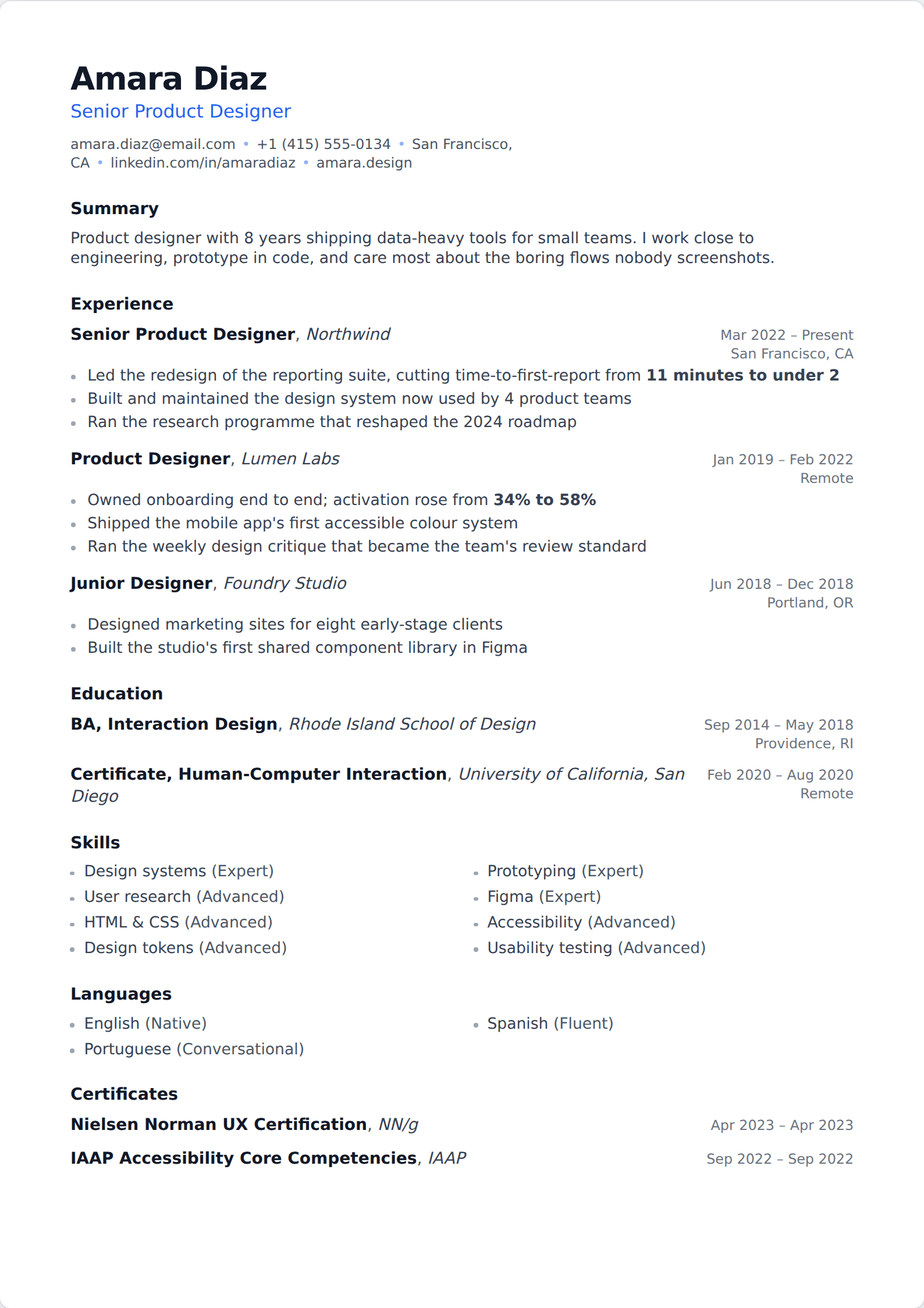
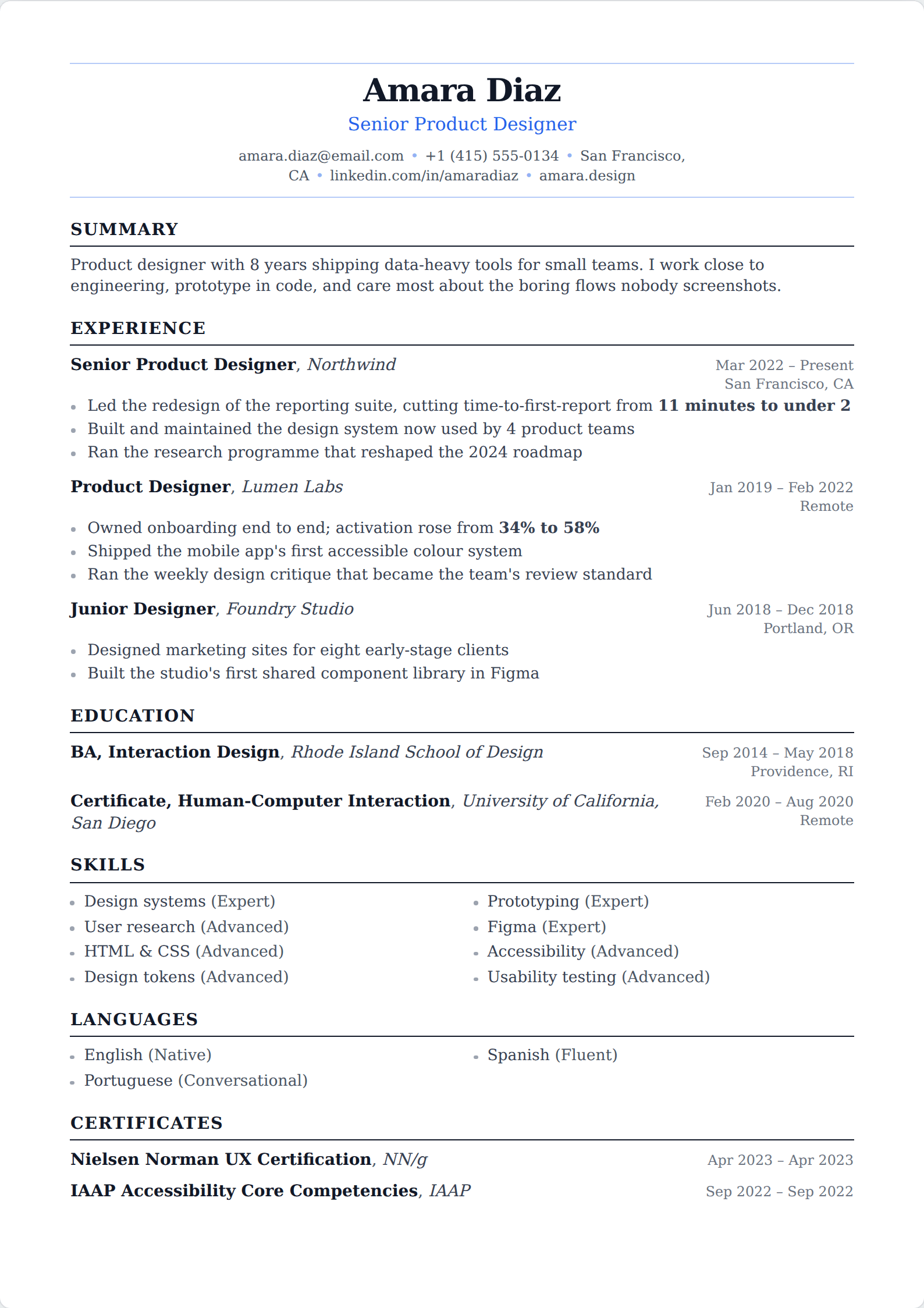
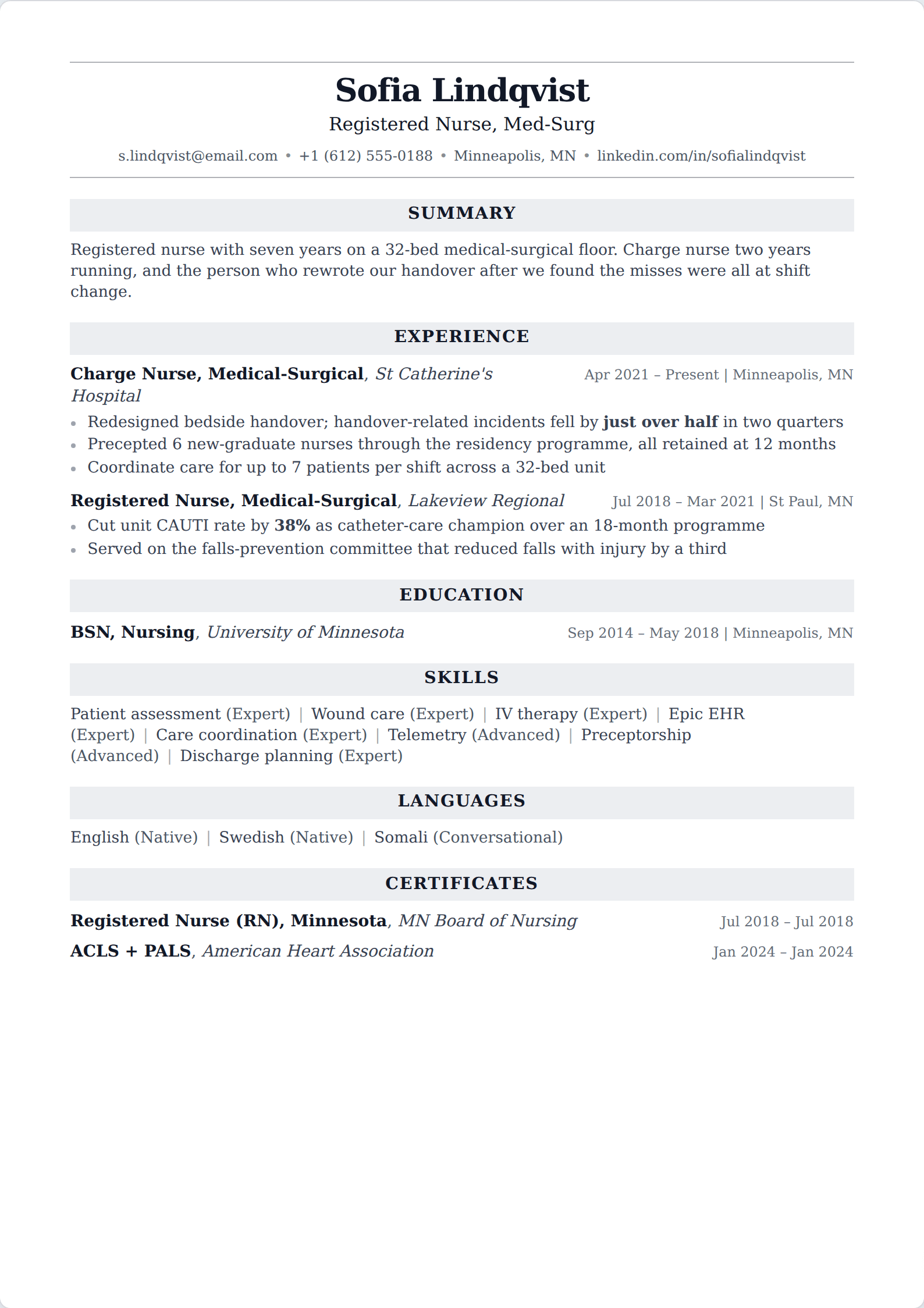
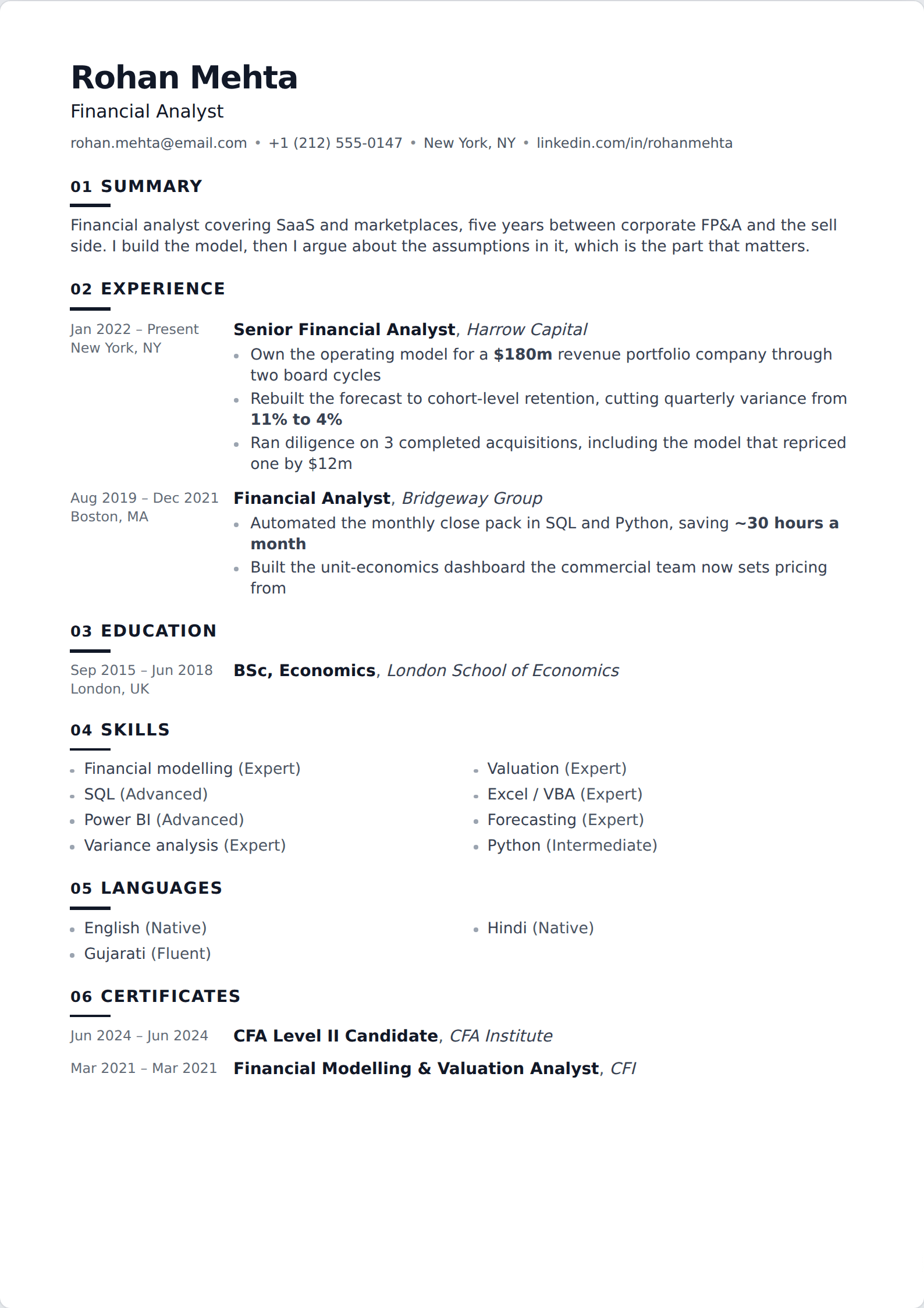
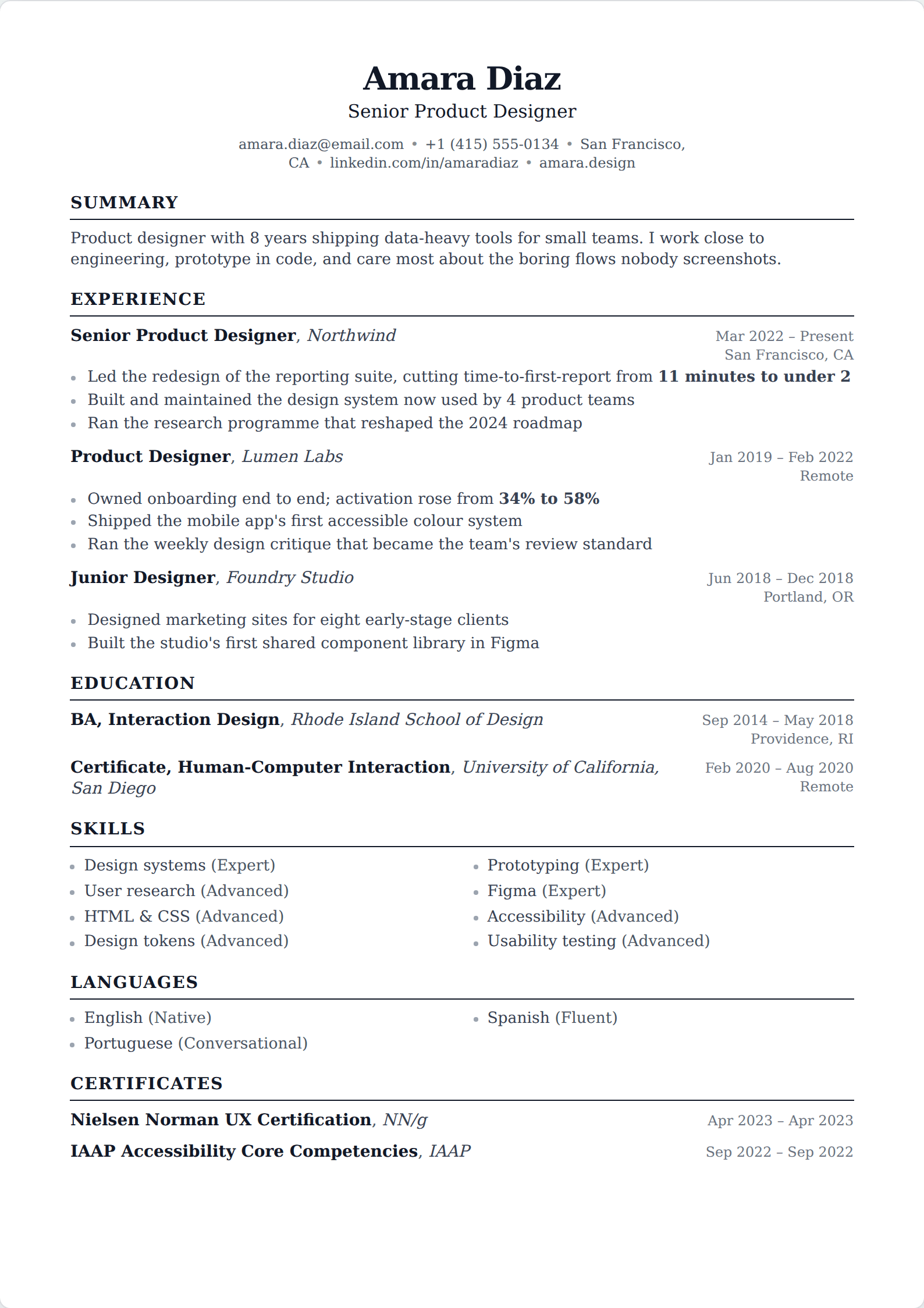
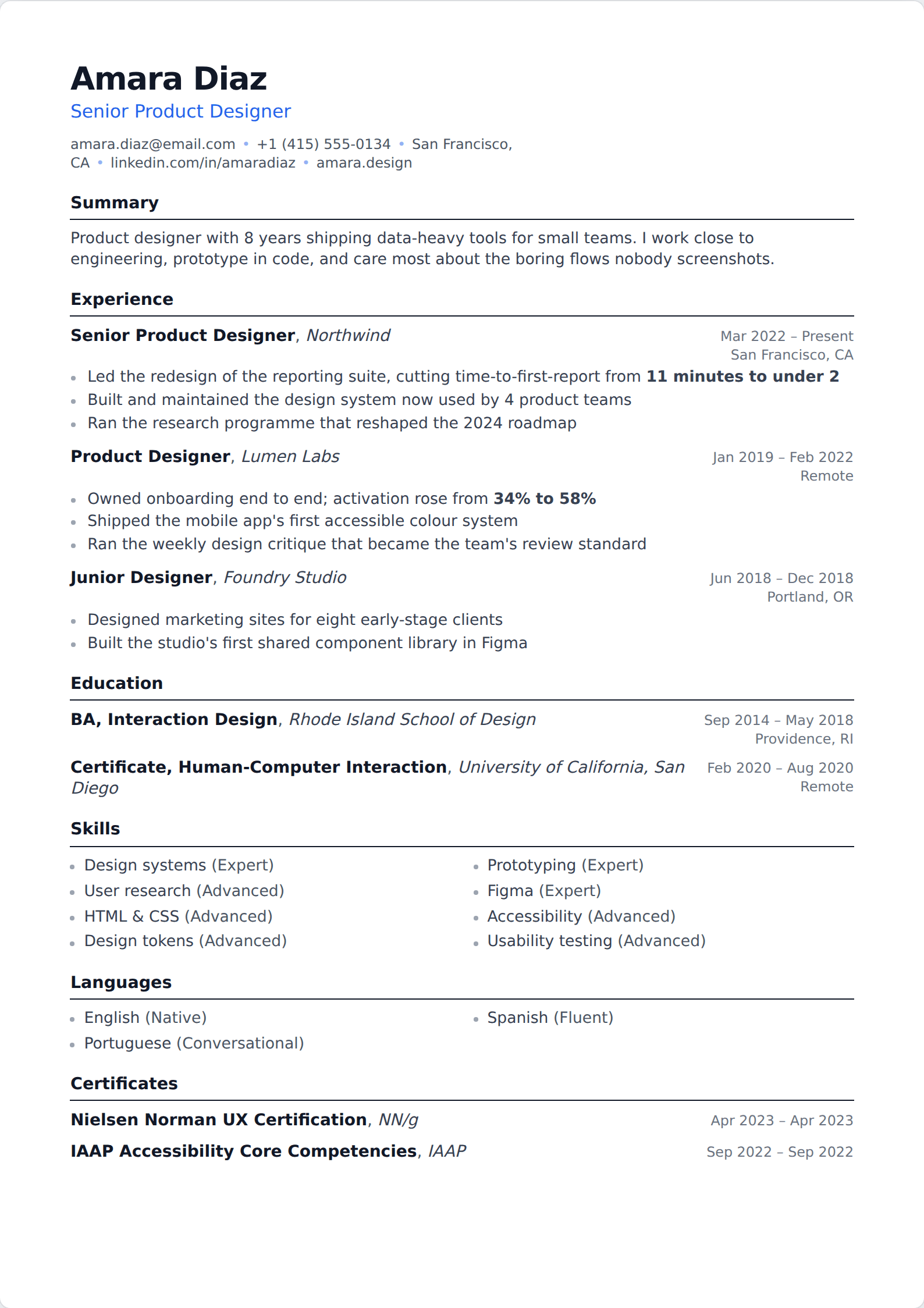
The document is a table of credits, so plain is correct — no colour, no design, and no photo on the resume itself, because the headshot is the photo. These are the stripped-back layouts that suit it.

Common questions

What should be on an acting resume?

Name, union status and contact details at the top; height, hair, eyes and vocal range; credits grouped by medium — film, television, theatre — with the production, the role level or character, and the company or director; then training and special skills. One page, trimmed to 8x10.

How do you list credits on an acting resume?

By medium, not by date, with your strongest work first within each group. For film and television, list the billing level — Lead, Supporting, Co-Star, Guest Star — rather than the character name. For theatre, list the character name with the theatre and director. Mixing those two conventions is a common tell.

Should I put extra work on my acting resume?

No. Background and extra credits are read as evidence that you have nothing else to list, and casting directors treat their presence as a signal rather than as experience. Leave the section shorter instead.

What are special skills on an acting resume?

Anything you can perform on demand, on camera, without preparation: named dialects, instruments with your real level, sports, stage combat certification, driving including manual and motorcycle, languages, dance styles. The section is genuinely searched, and listing something you half-have is how you get caught out on set.

Should an acting resume include my age?

No — not your age, date of birth or weight. Casting works in playable ranges, and a stated number narrows the roles you will be considered for without giving anyone information they need.

Related guides

Put it into practice

Start from any template above, get AI help tightening every bullet, and export an ATS-ready PDF. Free to start, and no card at any point.

Start your resume