
Vocabulary

CV vs resume: the difference, and which one you were asked for

Almost every explanation of this starts with "a CV is longer" and stops there, which is wrong often enough to cost people applications. The honest answer is that CV and resume are not two documents — they are one word that means different things in different countries, plus a genuinely separate academic document that happens to share the name. Sort out which of the three you have been asked for and the rest of the decision makes itself.

5 sections

The short version

  • In the UK, Ireland, Australia and most of the Commonwealth, a CV is a resume. Same document, different word.
  • In the US and Canada outside academia, a CV request almost always means a resume.
  • A real academic CV is an unabridged record with no length limit — a genuinely different document.
  • The only structural difference is selection: a resume is edited for one job, an academic CV is complete by design.
  • Continental Europe expects the same two pages plus a photo, and often nationality and date of birth.

The short answer

In the United States and Canada, a resume is a one-to-two-page summary of your career aimed at a specific job, and a CV means an unabridged academic record — publications, grants, teaching, committees — used almost exclusively for university, research and medical posts. Outside academia, an American employer who writes "CV" almost always means resume.

In the UK, Ireland, Australia, New Zealand, South Africa and most of the Commonwealth, CV is simply the word for the document. It is two pages, it is tailored to the job, and it is what an American would call a resume. Nobody there says resume. There is no separate shorter document that a CV is being contrasted with.

In continental Europe, a CV is that same two-page document plus a photo and, in many countries, your nationality and date of birth. In Germany it is a Lebenslauf and it is expected to account for your time rather than edit it down.

  • US / Canada, industry: they mean a resume. One to two pages, tailored.
  • US / Canada, academia or research: they mean a real CV. No length limit.
  • UK, Ireland, Australia, NZ, India, South Africa: CV is the word for a resume.
  • Germany, France, Spain, Italy, Netherlands: CV, with a photo, often two pages.
  • Anywhere, if the posting says "resume": send a resume, whatever your local word is.

The one real difference: selection

Strip away the vocabulary and there is exactly one structural difference between an academic CV and everything else on this page, and it is not length. It is whether you are allowed to leave things out.

A resume — and a British CV, and a German Lebenslauf — is an argument. You are selecting the material that makes the case for this job and cutting the rest, and a reader assumes anything present is there because it was relevant. An academic CV is a record. Every paper, every conference, every course you taught, in full, because the reader is assessing a body of work rather than a fit for one post. Editing an academic CV down for brevity does not make it a better document; it makes it an incomplete one.

This is why the length rule keeps failing people. The academic CV is long because it is complete, not because CVs are long. A two-page British CV is short because it is selective, and it is still called a CV.

How to tell which one a posting wants

Read the employer, not the noun. A software company in Berlin asking for a CV wants two pages with a photo. A software company in Austin asking for a CV wants a resume and used the wrong word. A university department in either city asking for a CV wants the full academic record, and will usually say so somewhere else in the posting by asking for a publication list or a research statement.

The tiebreaker that almost always works: look at what else is being requested. Cover letter, references and a portfolio point at an industry application. Publication list, teaching statement, research statement or names of three academic referees point at a real CV. If a job asks for a CV and a one-page cover letter and nothing else, it is not asking for fifteen pages.

When you genuinely cannot tell, send the two-page version. An American reader receiving a tight two pages sees a normal resume. An academic reader receiving one will ask for more. The reverse — sending fifteen pages to a recruiter — ends the application without a reply.

What changes when you cross a border

Personal details are the part that surprises people most. A US resume carries no photo, no date of birth, no marital status and no nationality, and including them can route your application into a slower compliance path or get it discarded. A Spanish or Italian CV that omits all of them reads as incomplete.

Dates and grades need translating too, not just words. "GPA 3.8" means nothing to a British reader and "2:1" means nothing to an American one. Give the local equivalent, or state the classification and the scale together.

The pragmatic approach for anyone applying across markets is one master document and a cut per market, rather than a single file trying to satisfy every convention. A document that hedges between them reads as belonging to none of them.

  • Photo: continental Europe yes, UK and North America no.
  • Date of birth and nationality: normal in much of Europe, never in the US or UK.
  • Length: two pages almost everywhere except a genuine academic CV.
  • References: "available on request" is dead everywhere — omit the line entirely.
  • Grades: convert to the local scale or state both.

What to actually do next

Whichever word the posting used, the writing problem is the same for everything except an academic CV: two pages at most, reverse-chronological, and every bullet ending in something that changed. The template you choose matters far less than whether your history is selected for this job.

If you are writing for the UK or Europe, the CV templates here are built for those conventions, with and without a photo. If you are writing for the US, the same templates with the photo left off are a resume — because, structurally, that is all the difference amounts to.
What actually changes between them

Scroll the table sideways to compare →

US resumeUK / European CV
LengthOne page under ten years, two beyondTwo pages is standard, and normal rather than indulgent
PhotoNo — many employers strip or reject themNo in the UK and Ireland; yes across most of continental Europe
Personal detailsName, email, phone, city. Nothing elseOften date of birth and nationality in Germany, France, Spain and Italy
SelectionEdited hard for one specific postingAlso edited, except in Germany where the record is expected to be complete
GradesGPA, where it is strong and recentDegree classification — a 2:1, a first — on the local scale
The word usedResume. "CV" means the academic documentCV. Nobody says resume, and there is no shorter document it contrasts with

Before you send either one

Open your own resume beside this and work down it. Every line is something a reader or a parser acts on within the first pass.

  • You have worked out which of the three documents was actually requested
  • Length matches — two pages for industry, unabridged only for academia
  • Photo included or removed to match the country the job is in
  • Date of birth and nationality present only where they are conventional
  • Grades converted to the local scale, or both stated
  • No "references available on request" — the line is dead in every market
  • Dates in the local order, and a phone number with a country code

CV and resume templates

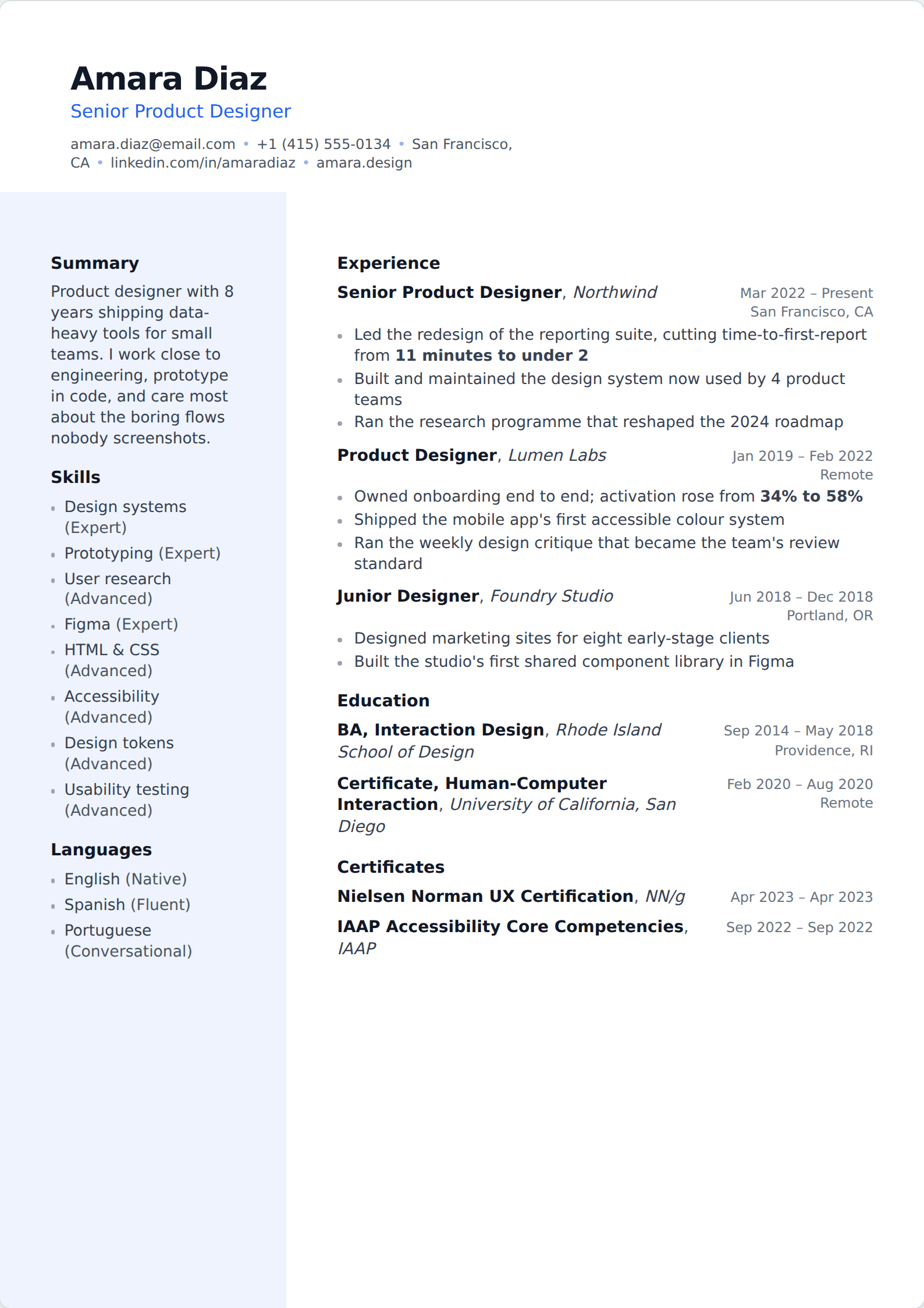
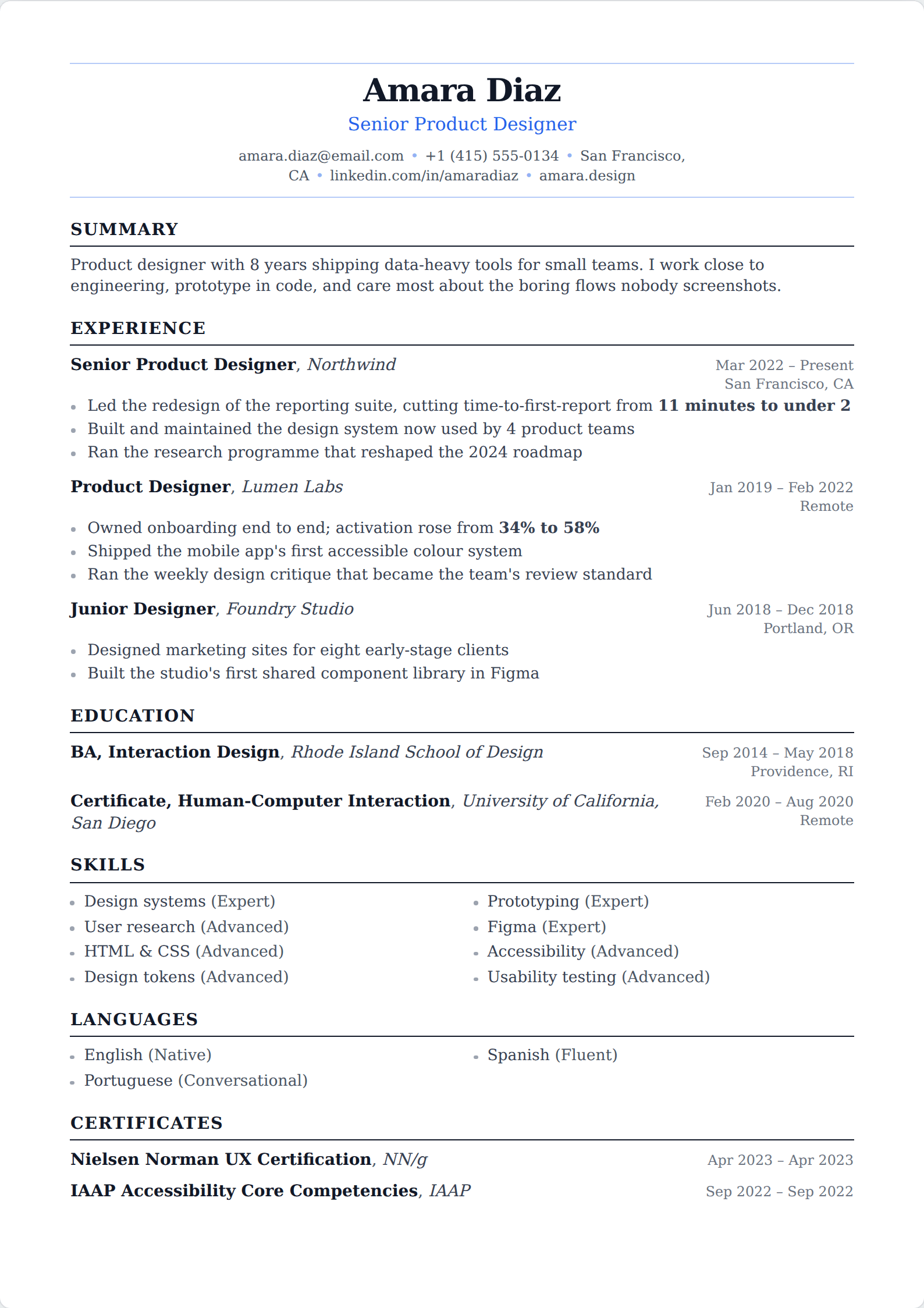
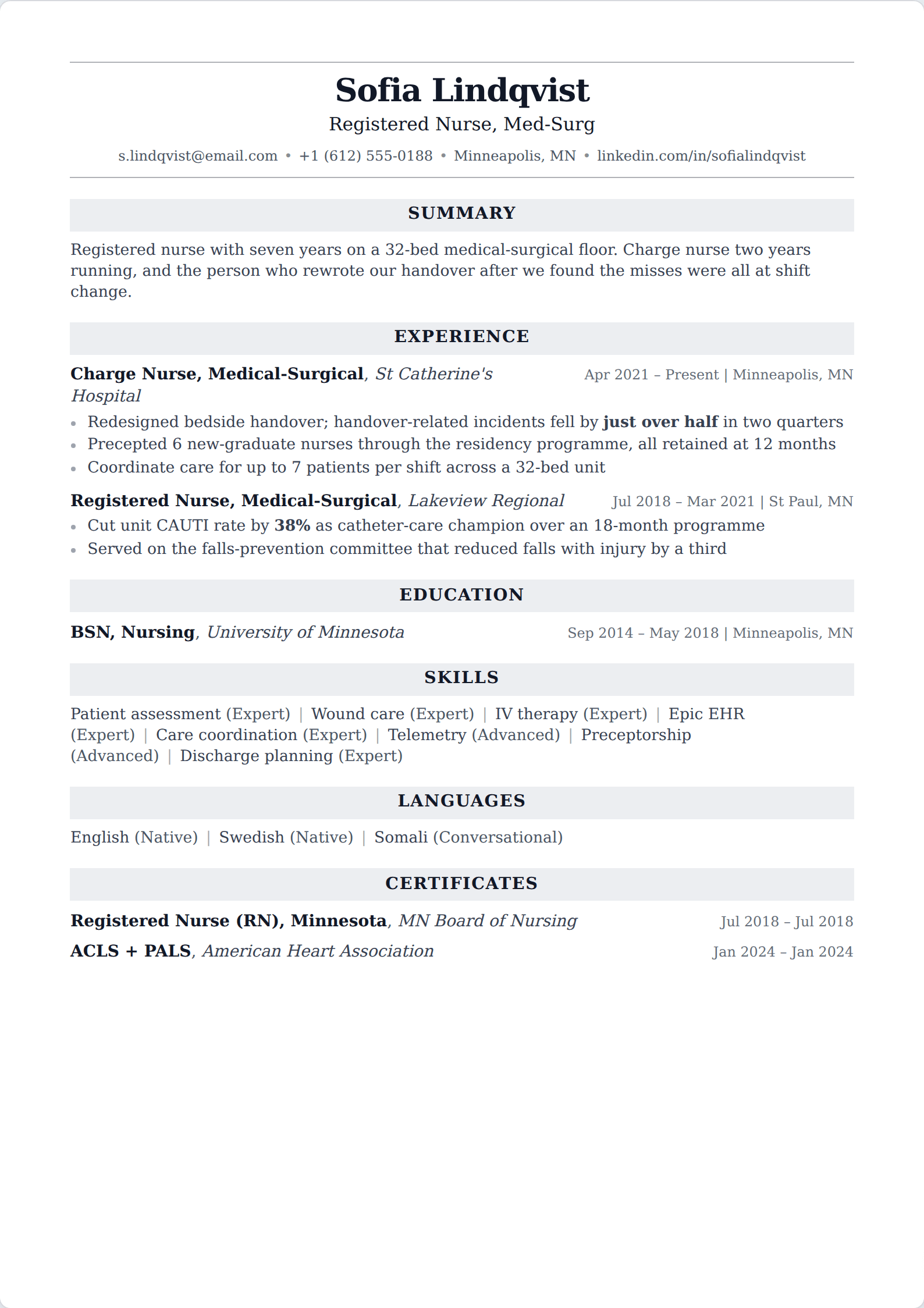
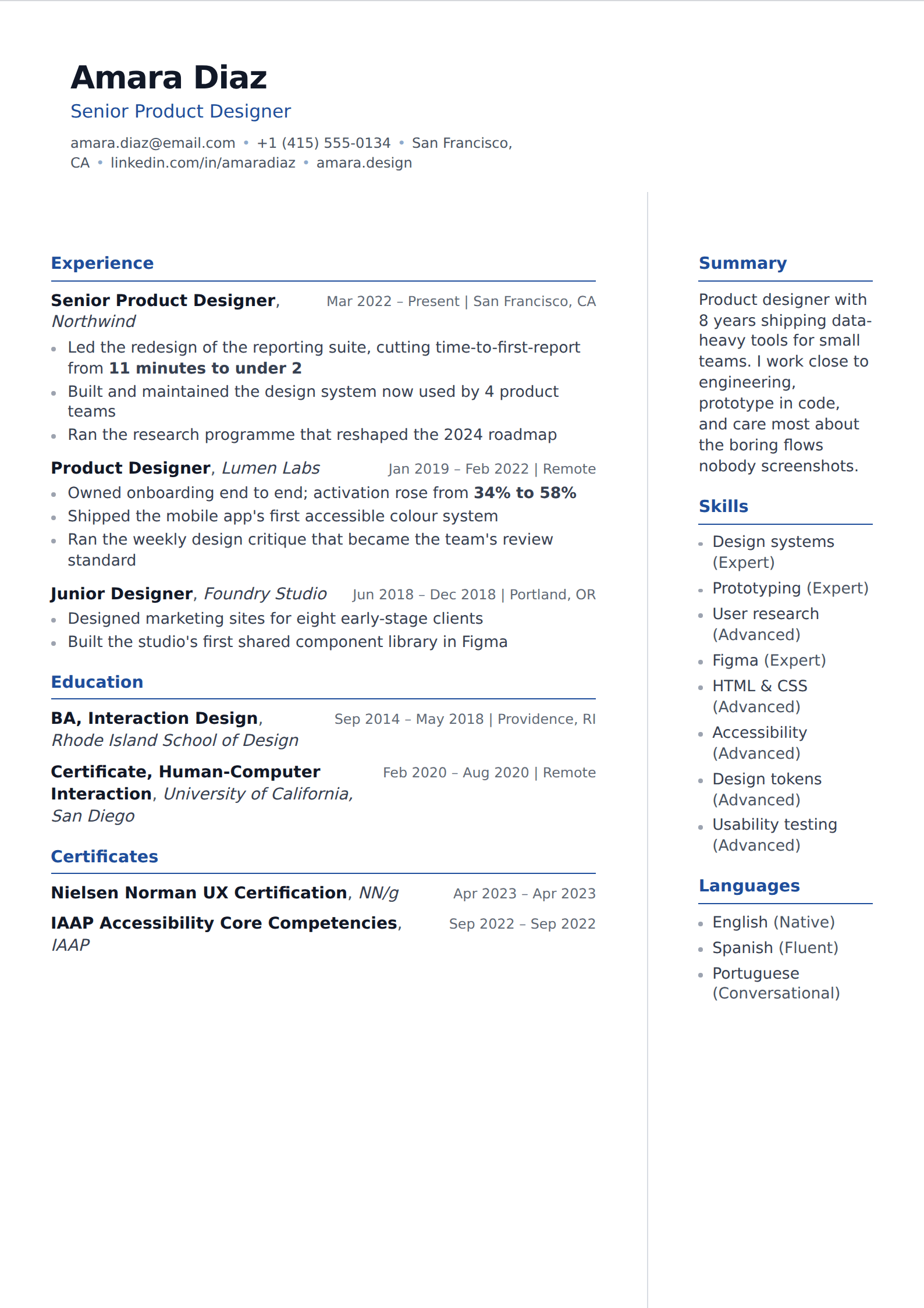
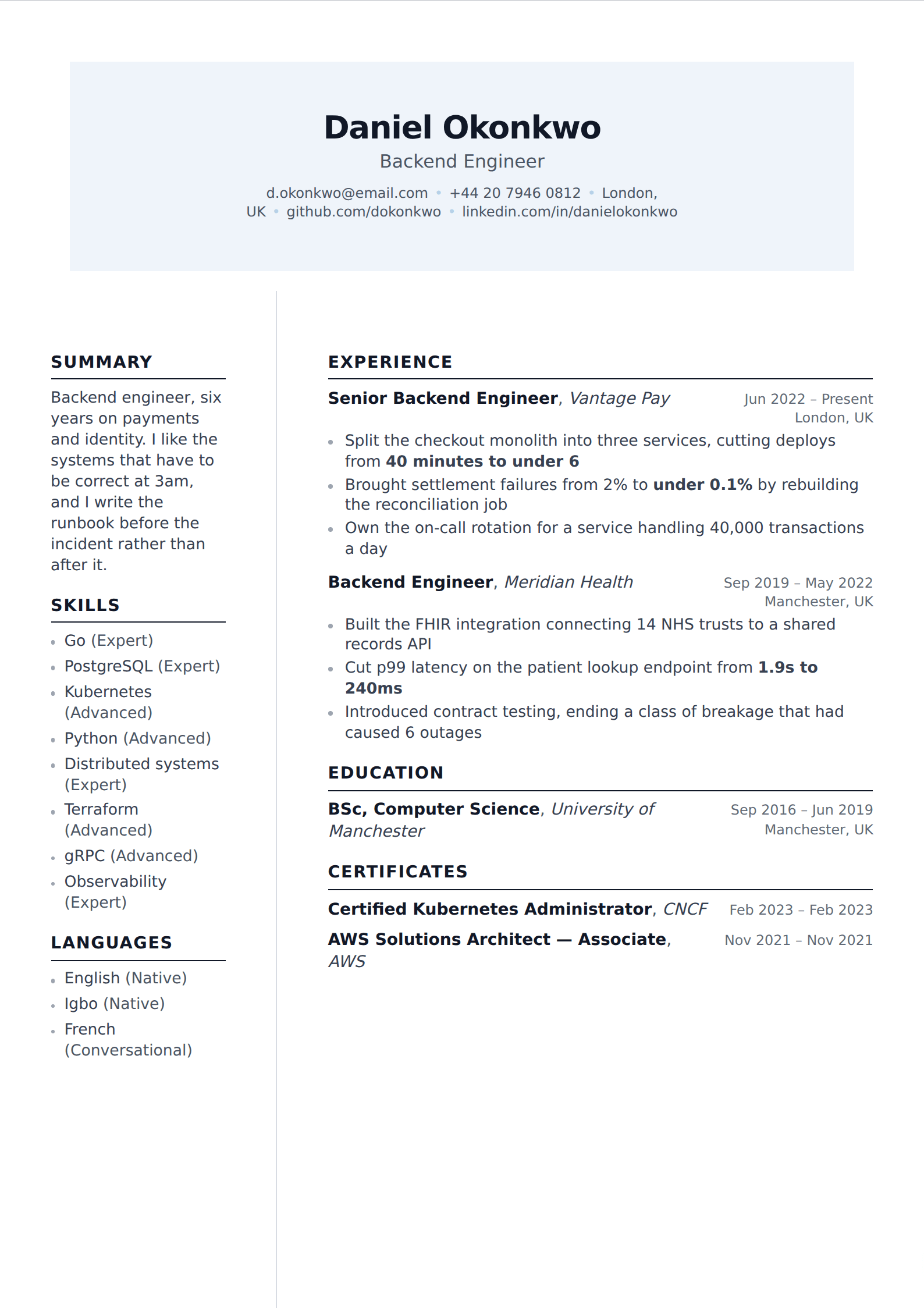
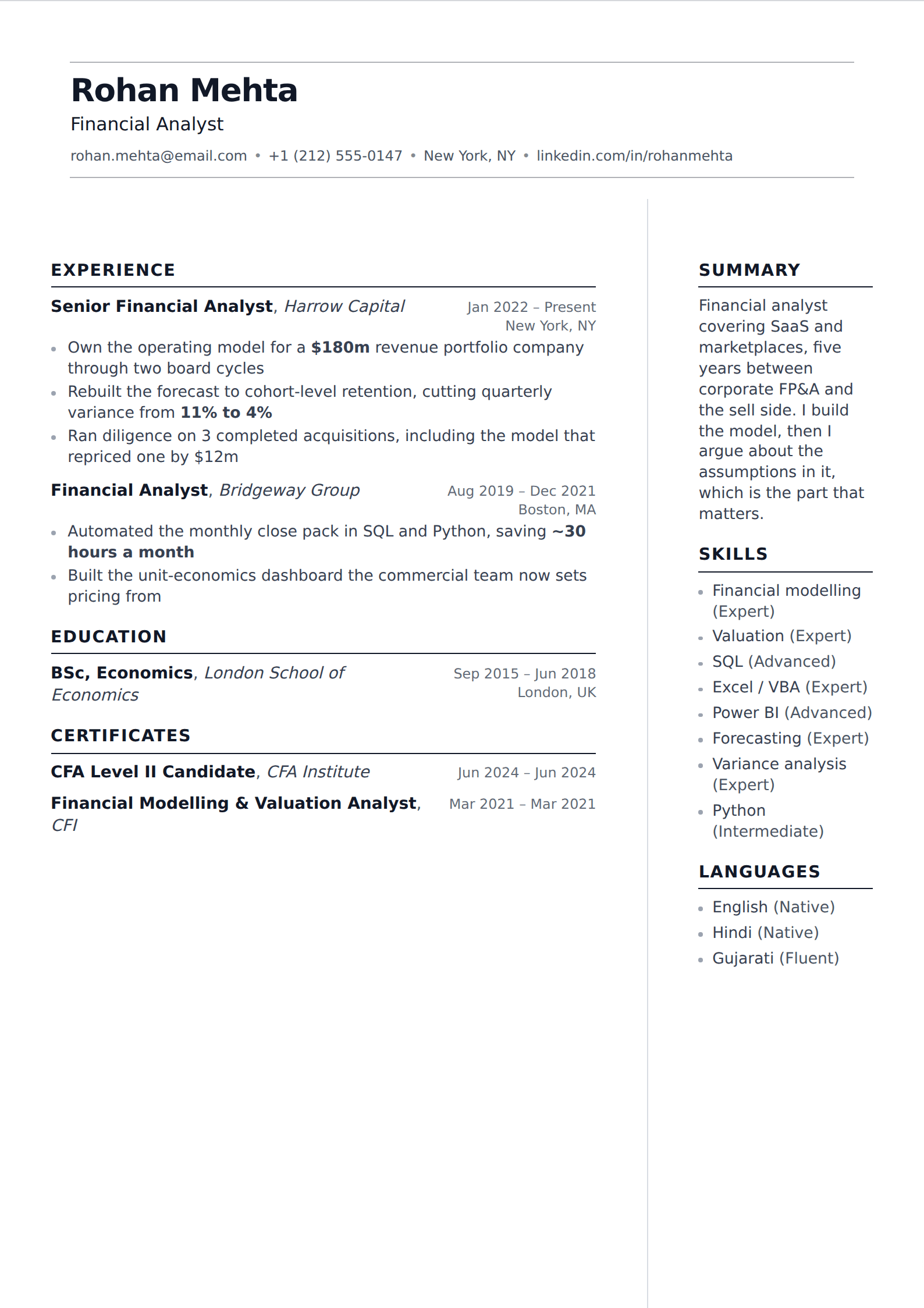
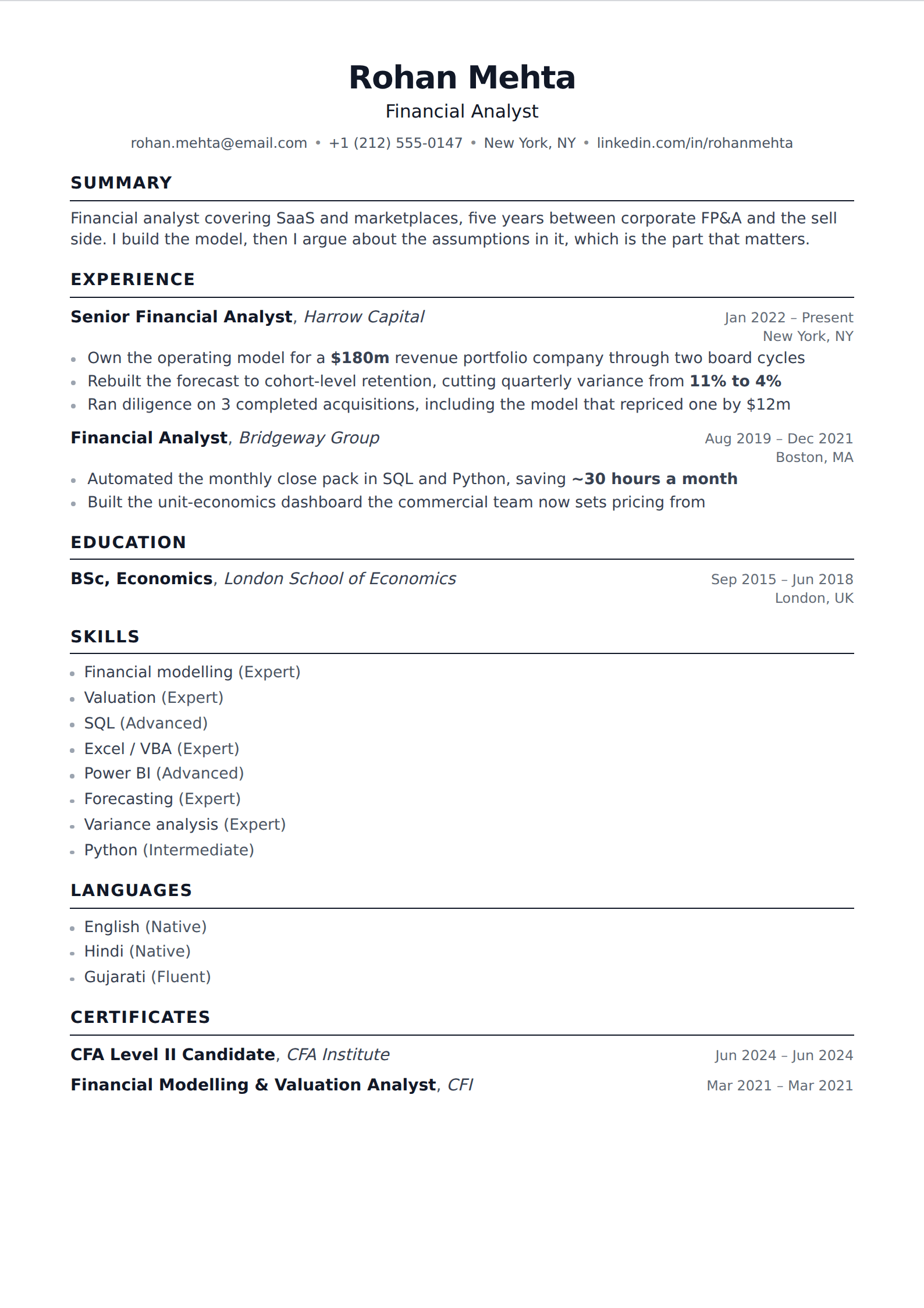
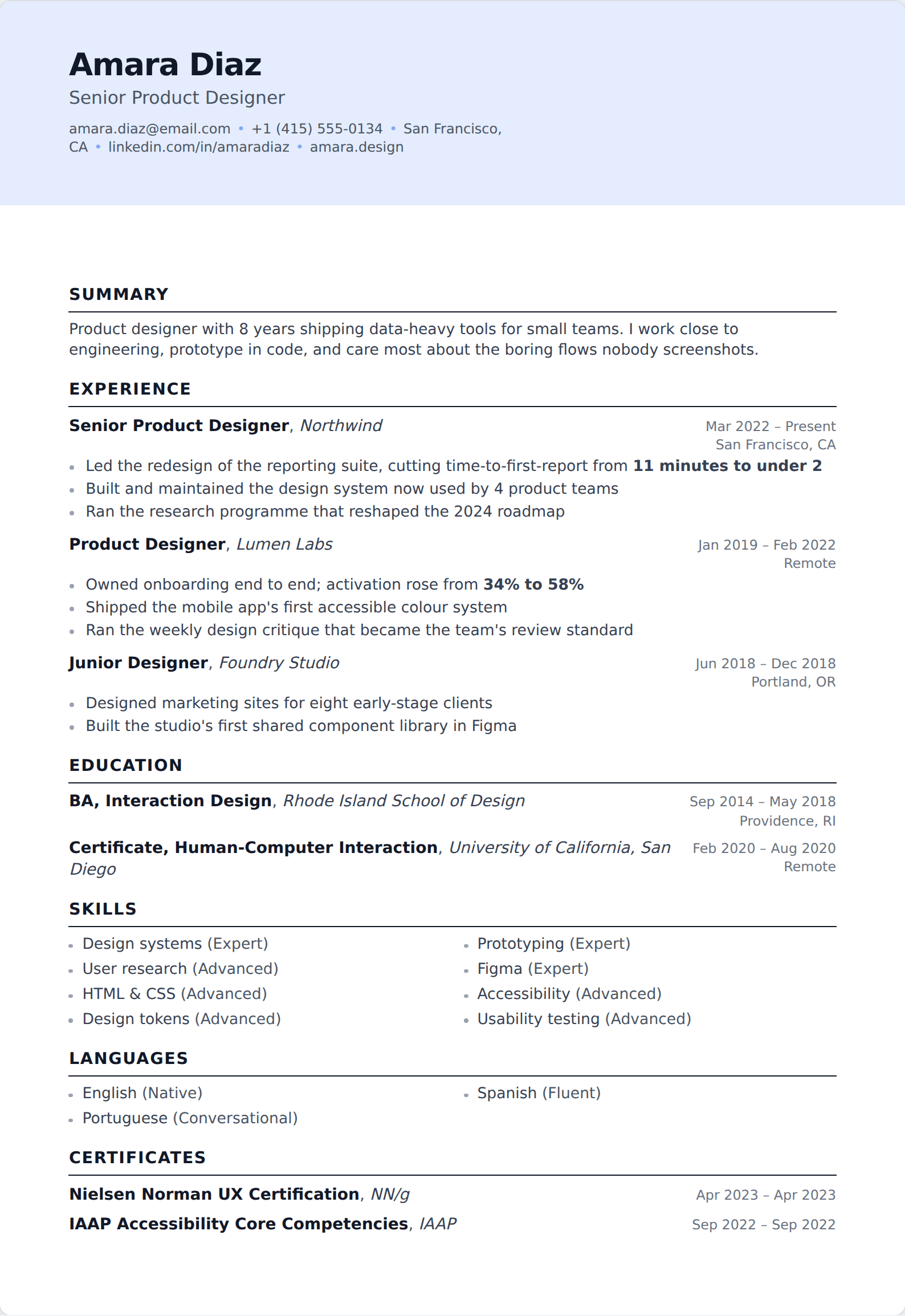
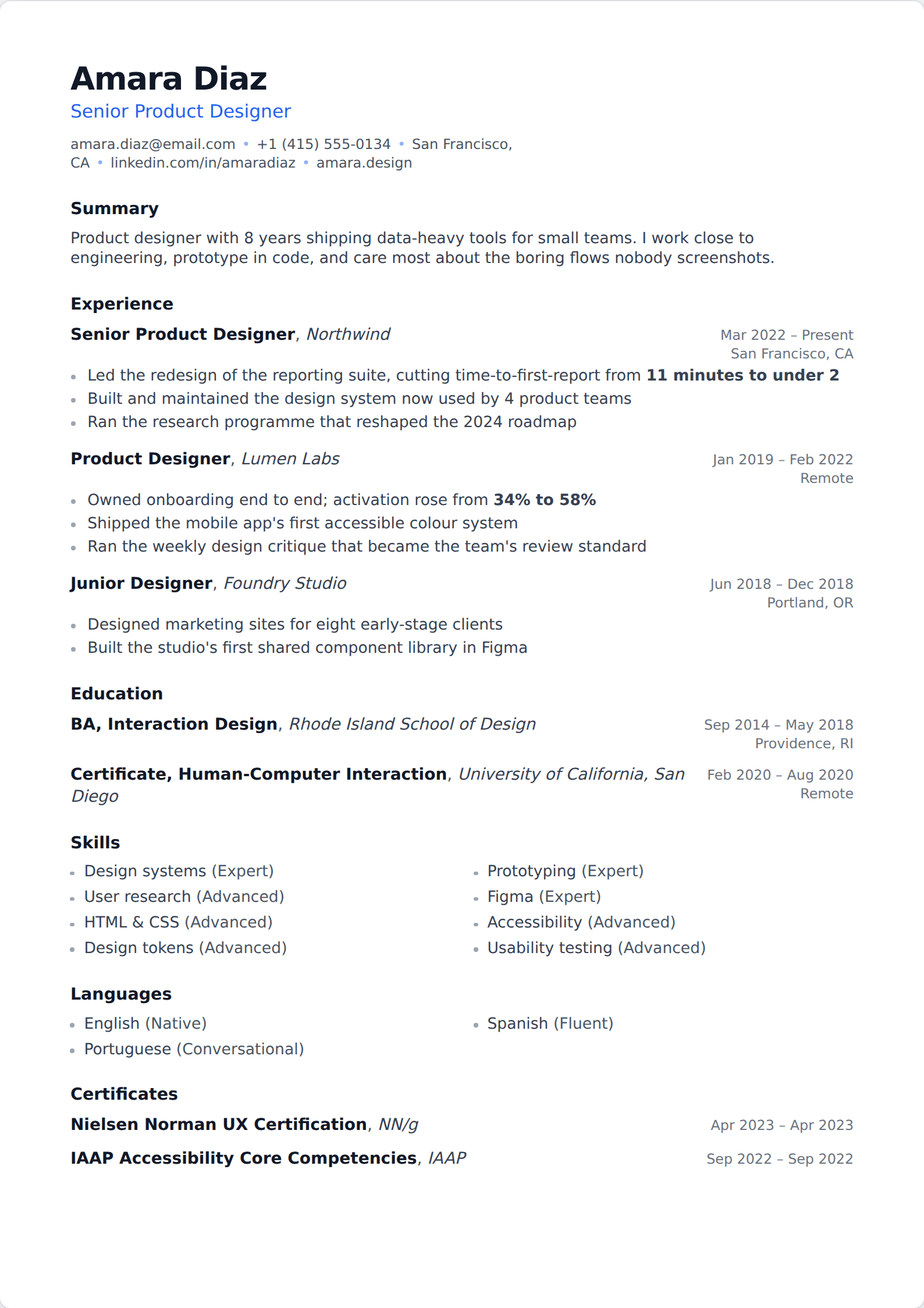
The same templates serve both, which is the practical proof of everything above — one document under two names. The photo is the only structural thing that changes, and it is a setting rather than a different template.

Common questions

What is the difference between a CV and a resume?

It depends on where you are. In the UK, Ireland, Australia and most of the Commonwealth, a CV is a resume — same two-page document, different word. In the US and Canada, a resume is the one-to-two-page career summary used for every industry job, and a CV means the unabridged academic record used for university and research posts. The real difference is selection: a resume is edited for a specific job, an academic CV is complete by design.

Is a CV the same as a resume?

Outside North America, yes — they are two words for the same document and you can use whichever one the posting used. Inside North America and inside academia anywhere, no: a CV there is a complete record of your scholarly work with no length limit, and sending one to a corporate recruiter will end the application.

What does CV stand for?

Curriculum vitae, Latin for "course of life". The full phrase is worth knowing mainly because it explains the academic version — a document meant to record a career rather than pitch for one job. In everyday British and European use it has lost that sense entirely and just means resume.

Should I send a CV or a resume to a US employer?

A resume, unless the role is academic, research or clinical faculty. If a US industry posting asks for a CV, it is using the word loosely — send one to two pages, no photo, no date of birth, tailored to the posting. Nobody has ever been rejected for sending a good resume to a request for a CV.

Is a CV longer than a resume?

Only the academic one. A British or European CV is two pages, which is exactly the length of an American resume. The "CVs are longer" rule comes from comparing an academic CV to an industry resume and generalising from it, which is why it misleads so consistently.

Can I use the same document for both?

For a British CV and a US resume, yes — take the photo and personal details off and you have converted it. For an academic CV, no. That is a genuinely different document with different content and no length limit, and the two-page version is not a shortened form of it.

Related guides

Put it into practice

Start from any template above, get AI help tightening every bullet, and export an ATS-ready PDF. Free to start, and no card at any point.

Start your resume