Translate the content, not the proper nouns
Job titles, responsibilities, and section headings should be in the target language. Employer names, product names, universities and technologies should not — "Kubernetes" is Kubernetes everywhere, and translating a company name makes it unsearchable.
Where a qualification has no equivalent, give the original and a short gloss: the reader needs to know roughly what level it represents, not a false equivalence to their own system.
Conventions that change by country
These vary more than people expect, and getting them wrong is a visible signal that you didn't research the market.
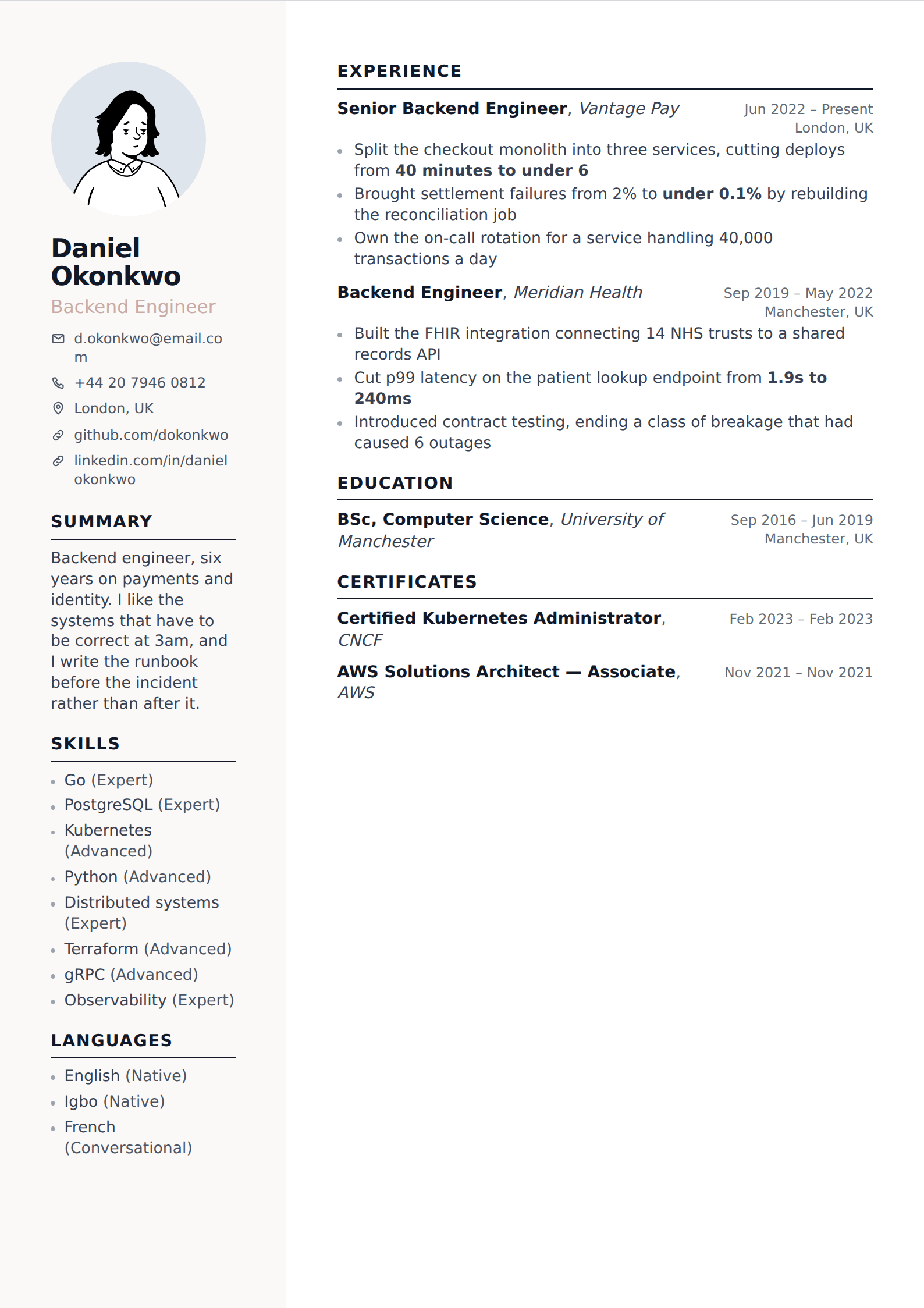
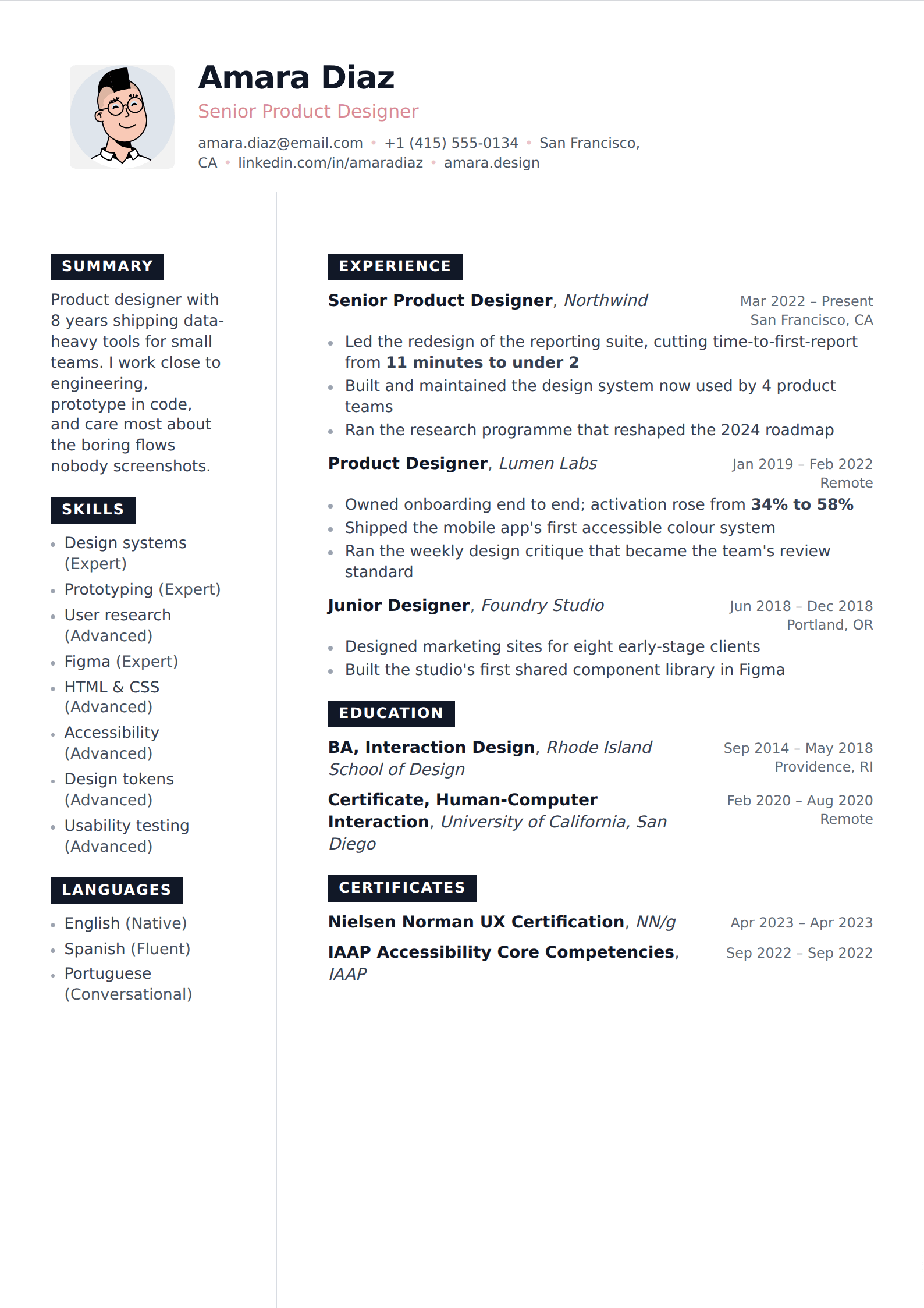
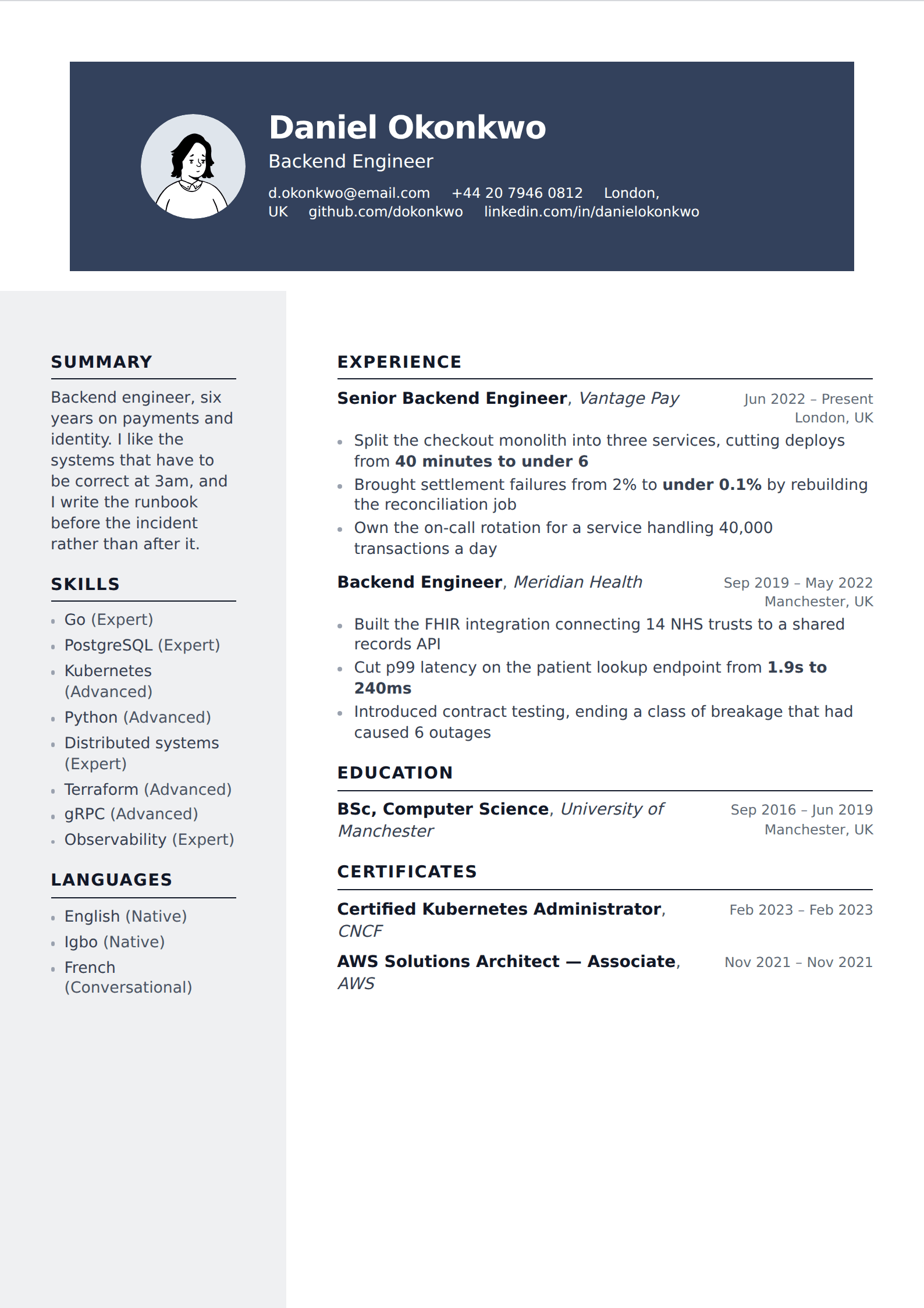
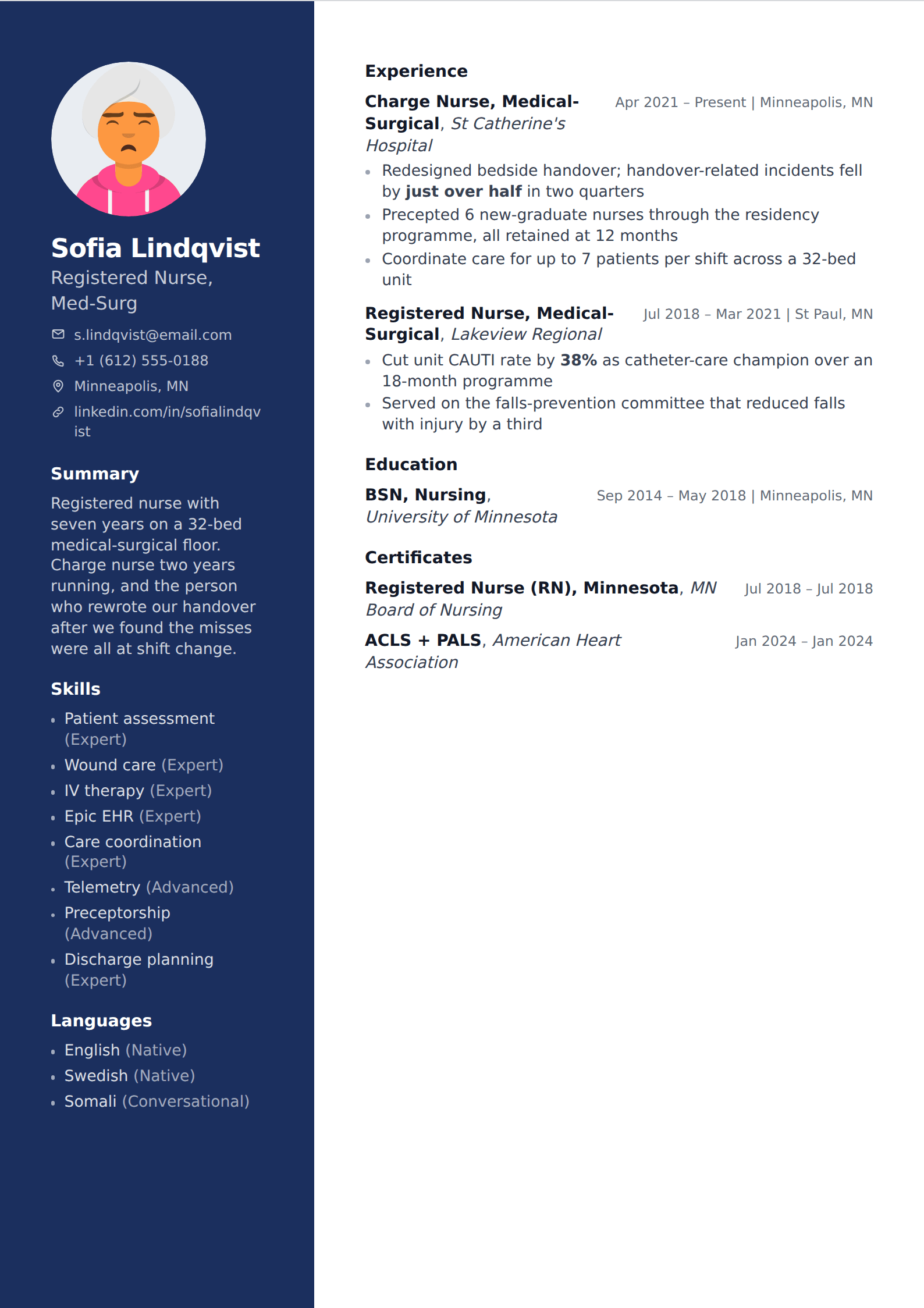
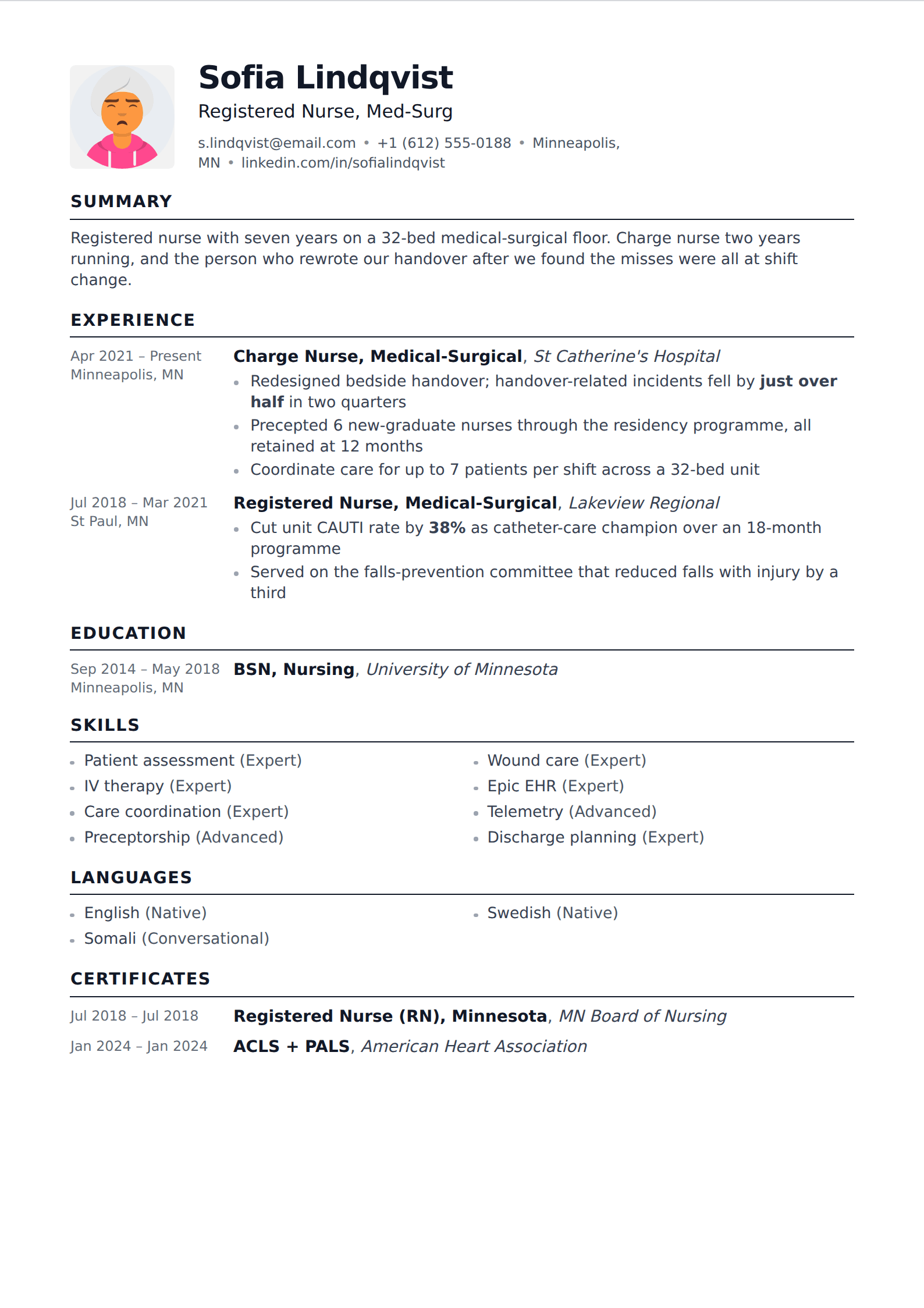
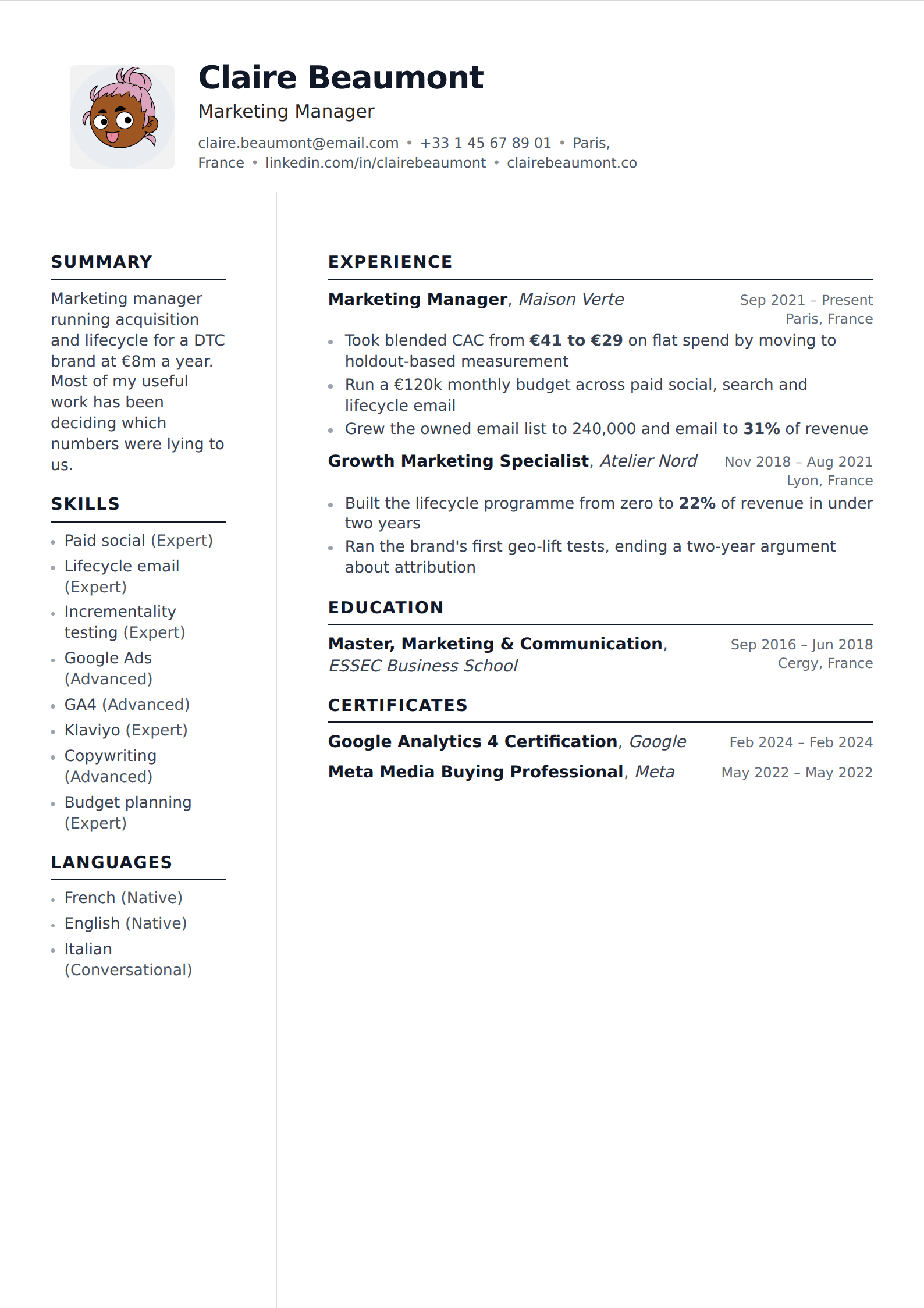
- Photos: normal in Germany, France, Spain and much of the Middle East; discouraged in the US, UK, Canada and Australia
- Date of birth and marital status: still common in parts of Europe and Asia, never included in the US or UK
- Length: two pages is standard in Germany; one page is the norm in the US
- Signature and date: expected on a German Lebenslauf, unheard of elsewhere
- The word itself: "CV" means a short resume in the UK and a long academic document in the US
Register matters
Resume language is more formal in French and German than in American English, where a direct, achievement-forward tone is expected. A literal translation of punchy US bullets into French can read as brash.
This is the part machine translation misses most reliably. Read the result and ask whether it sounds like a document written in that language, or a document translated into it.
Say what your language level actually is
If you list languages, use a recognised scale rather than a personal estimate. In Europe the CEFR levels (A1 through C2) are widely understood; elsewhere "native", "fluent", "conversational" and "basic" are clear enough.
Be honest about it. Overstating a language is the one exaggeration that gets discovered in the first thirty seconds of a phone screen.