
Skills

Technical and computer skills on a resume

Technical skills are the part of the skills section that can genuinely differentiate you, and the part most often written in a way that cannot. "Microsoft Office, good computer skills, familiar with databases" is three lines that survive no scrutiny. The fix is not more items. It is naming the specific thing, at the specific depth, that a person doing the job would recognise.

4 sections

The short version

  • Name the system, not the category. "Microsoft Office" has been assumed for fifteen years.
  • State depth by grouping into tiers, never with a rating bar on an undefined scale.
  • Let the experience section carry the proof — depth demonstrated beats depth asserted.
  • In non-technical roles, naming the specific platforms is the cheapest differentiation available.
  • Leave off anything universal, anything obsolete, and anything you could not survive ten minutes on.

Name the system, not the category

"Microsoft Office" has been assumed for fifteen years and listing it now reads as padding. "Excel — Power Query, pivot tables, index-match, VBA macros for the monthly close" describes a person who can do something. Same underlying skill, different amount of information.

This generalises. "Databases" says nothing; "PostgreSQL, query optimisation, partitioning on 200m-row tables" says a great deal. "CRM experience" says nothing; "Salesforce — custom objects, flow automation, admin certified" says what you would actually be doing. The rule is to write the term someone hiring for the role would search for, which is almost always the product name and the specific capability, not the category above it.

The category is only right when the category is the skill — "cloud infrastructure" is a real competency when it is followed by which clouds and what you ran on them.

Stating depth without a rating bar

The reason people reach for five-dot meters is a real problem: "Python" flattens the difference between a semester of coursework and eight years of production work. The meter is the wrong solution, because the scale is undefined and self-assigned. Two things work better.

Group by depth. A skills section split into "Daily" and "Working knowledge" — or "Core" and "Familiar" — conveys the same gradient in words the reader can interpret, and it is honest about where the boundary is.

Or let the experience section do it. If Python appears in two job bullets doing real work, no reader needs a rating; if it appears only in the list, they will assume the coursework level, which is usually correct. Depth demonstrated is always more credible than depth asserted.

  • Group into two or three tiers rather than rating each item.
  • State versions and scale where they change the meaning: "React 18", "Kubernetes across 40 services".
  • Put the skills you would want to be interviewed on first — order is read as priority.
  • If a skill appears nowhere in your experience, expect to be asked why.

What to leave off

Anything universal, anything obsolete, and anything you could not survive ten minutes of questioning on.

  • "Microsoft Office", "email", "internet research", "typing" — assumed, and listing them signals a thin section rather than a broad one.
  • Technologies you touched once in a bootcamp exercise. The interview will find them.
  • Long-dead versions, unless the job is maintaining them — in which case say so, because COBOL and AS/400 experience is valuable precisely where it is wanted.
  • Rating bars, star ratings and percentage meters, for the reasons above.
  • Certifications inside the skills list. Those are credentials and they earn their own section, with issuer and date.

Non-technical roles with technical requirements

This is where naming specifics pays best, because the competition is not doing it. An administrative role that lists "Concur, Coupa, Workday, Navan, Google Workspace admin" beats one that lists "proficient with computers" by a wide margin, and both people may be equally capable — one of them just made it checkable.

The same applies to nursing ("Epic, Cerner, Meditech"), teaching ("Canvas, PowerSchool, Google Classroom"), warehouse work ("SAP EWM, RF scanners, Manhattan WMS") and finance ("NetSuite, Blackline, Hyperion"). Every field has a small set of systems the job actually runs on. Those names are the highest-value words in your skills section, and they are the ones a search over a database of applicants is most likely to be run against.
Before and after

The same facts, written twice. Nothing has been added to the right-hand column that was not already true on the left — which is the whole point, and the reason this is editing rather than invention.

Analyst

Before

Microsoft Office, good computer skills, familiar with databases

After

Excel — Power Query, pivot tables, index-match, VBA macros for the monthly close. PostgreSQL — query optimisation on 200m-row tables. Power BI, dbt

Administrative

Before

Proficient with computers and office software

After

Microsoft 365, Google Workspace admin, Concur, Coupa, Navan, Workday, Asana, DocuSign

Both describe the same person. Only one of them contains terms a recruiter would search a candidate database for.

Stating depth

Before

Python ●●●○○ JavaScript ●●●●○ SQL ●●●●●

After

Core: Python, SQL, Go. Working knowledge: TypeScript, Terraform, Kotlin

The meter uses a scale nobody has defined and invites a question you cannot win. Two named tiers say the same thing in words a reader can interpret.

Rewriting your technical list

Open your own resume beside this and work down it. Every line is something a reader or a parser acts on within the first pass.

  • Every entry is a product or a capability, not a category above it
  • Versions and scale stated where they change the meaning
  • Grouped into two or three tiers rather than rated individually
  • The skills you most want to be interviewed on come first
  • No "Microsoft Office", "email" or "internet research"
  • Certifications moved out into their own section with issuer and date
  • Anything from a single bootcamp exercise has been removed
  • The systems your target employer actually runs are named explicitly

Templates for a dense technical list

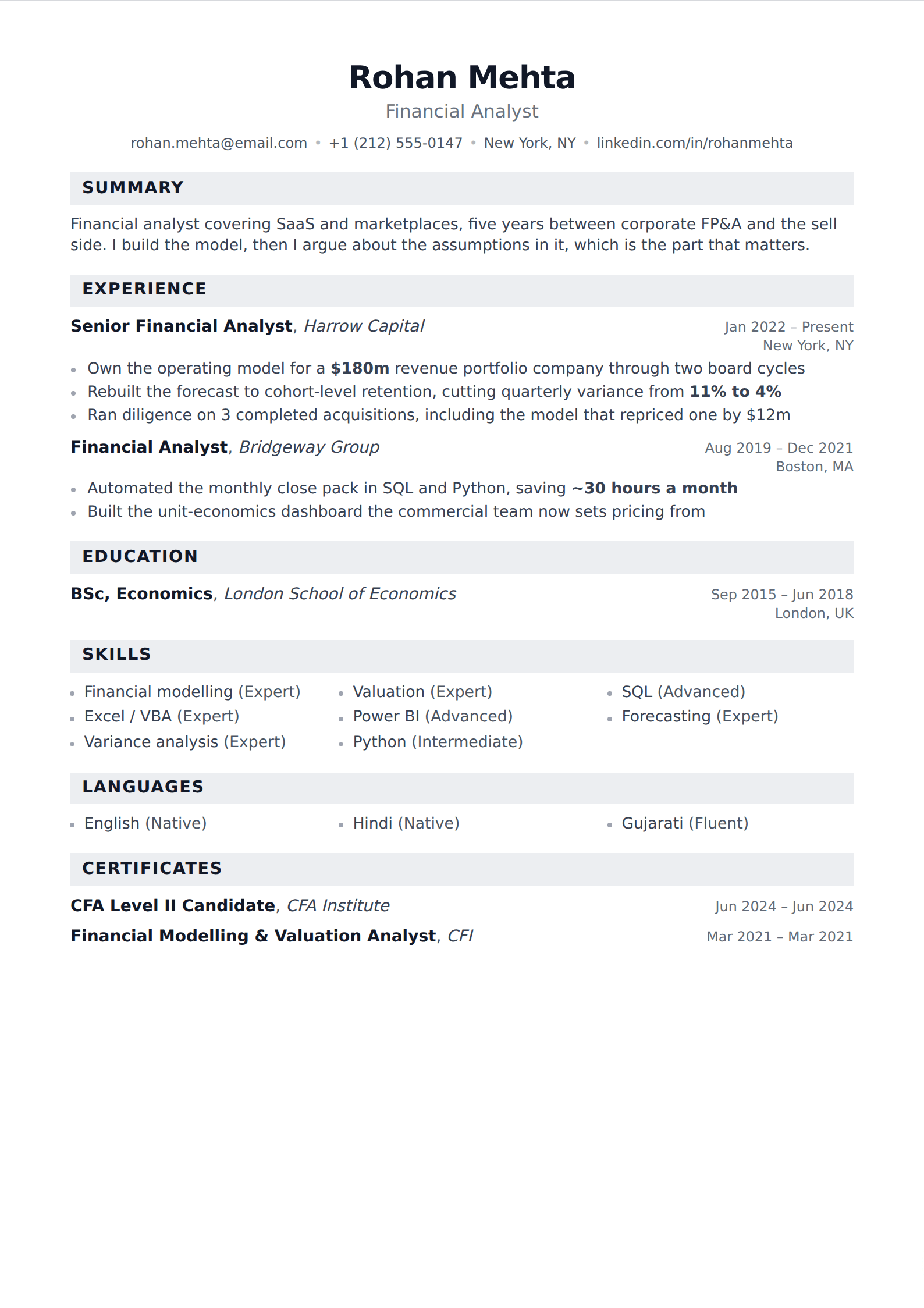
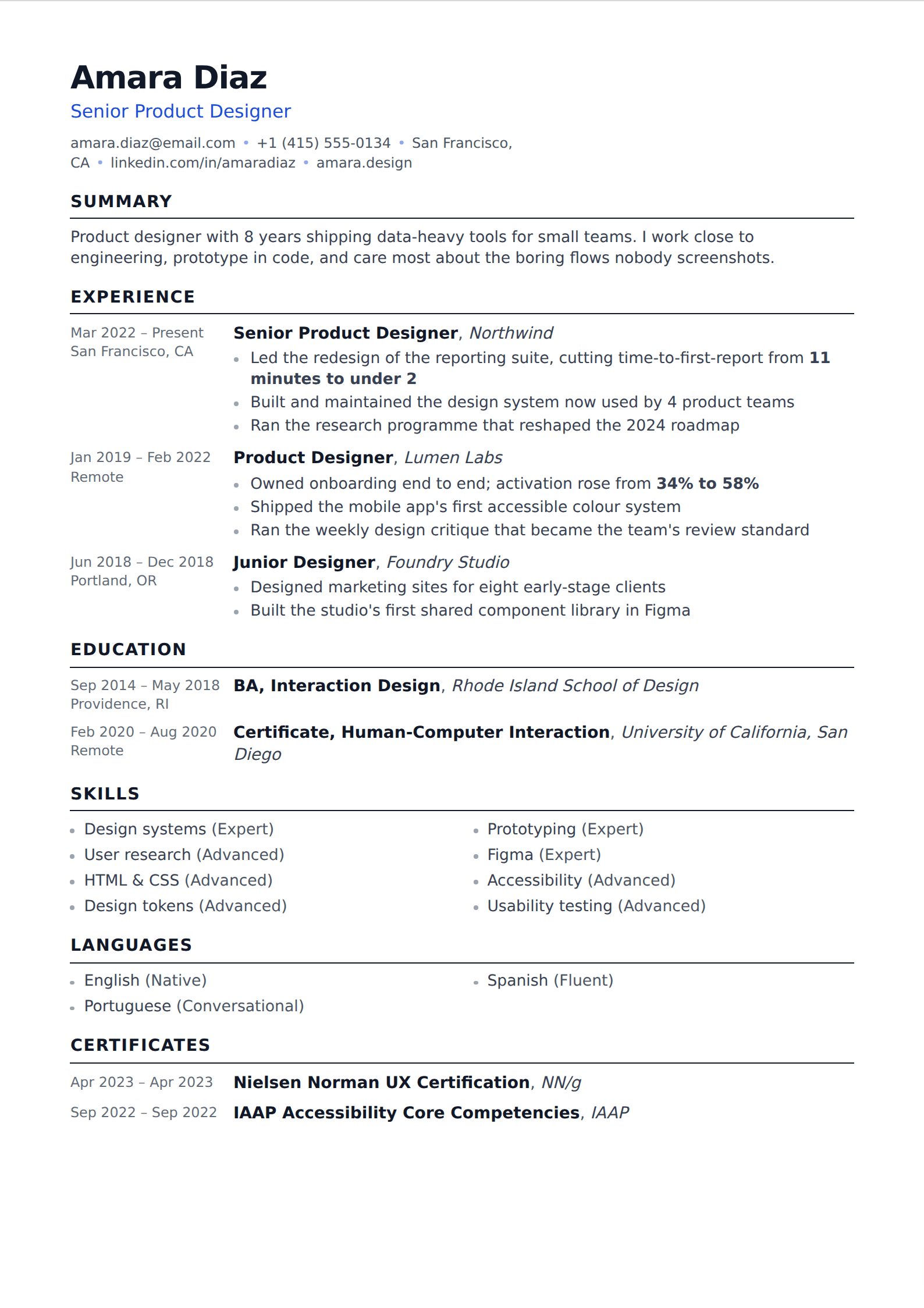
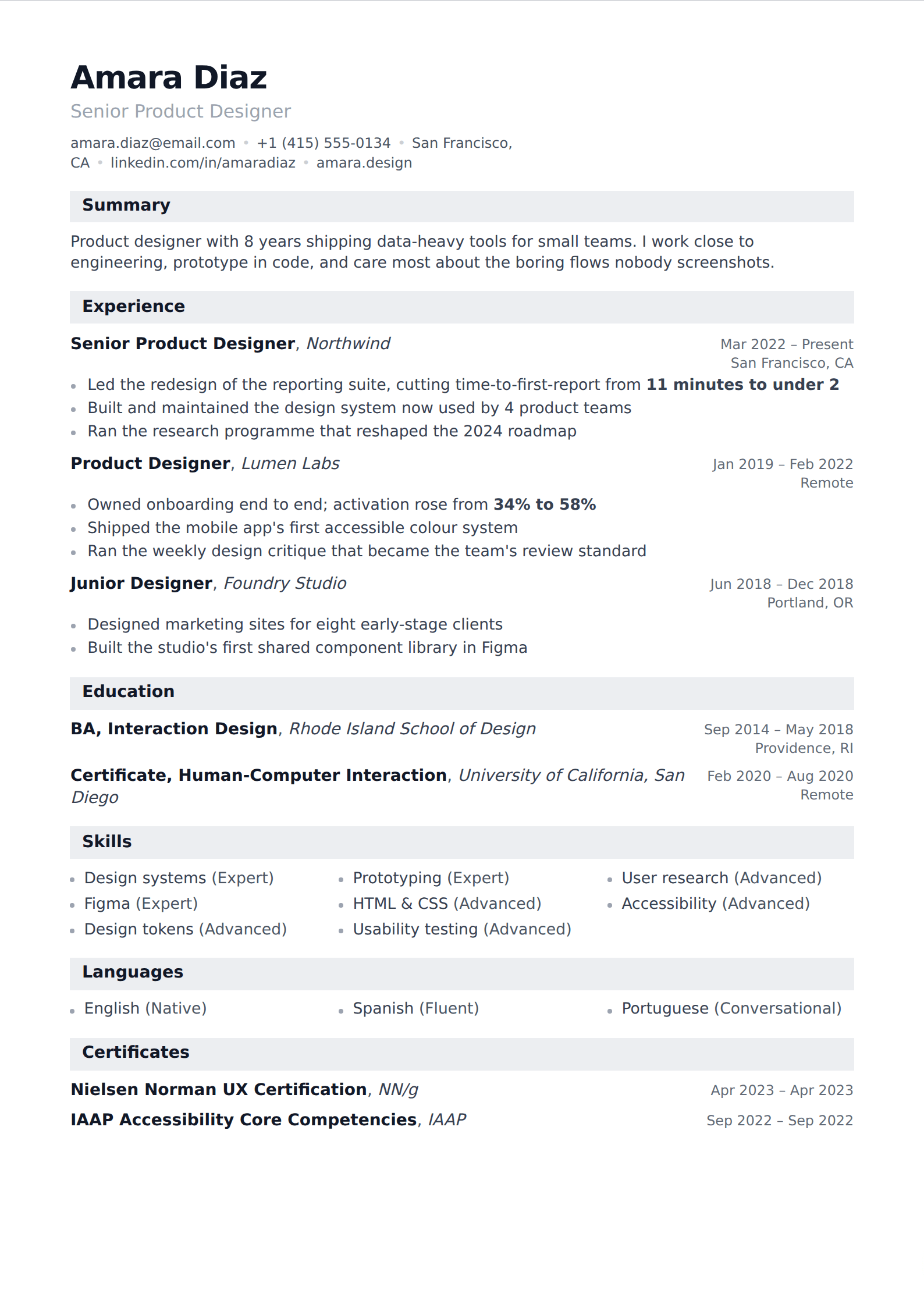
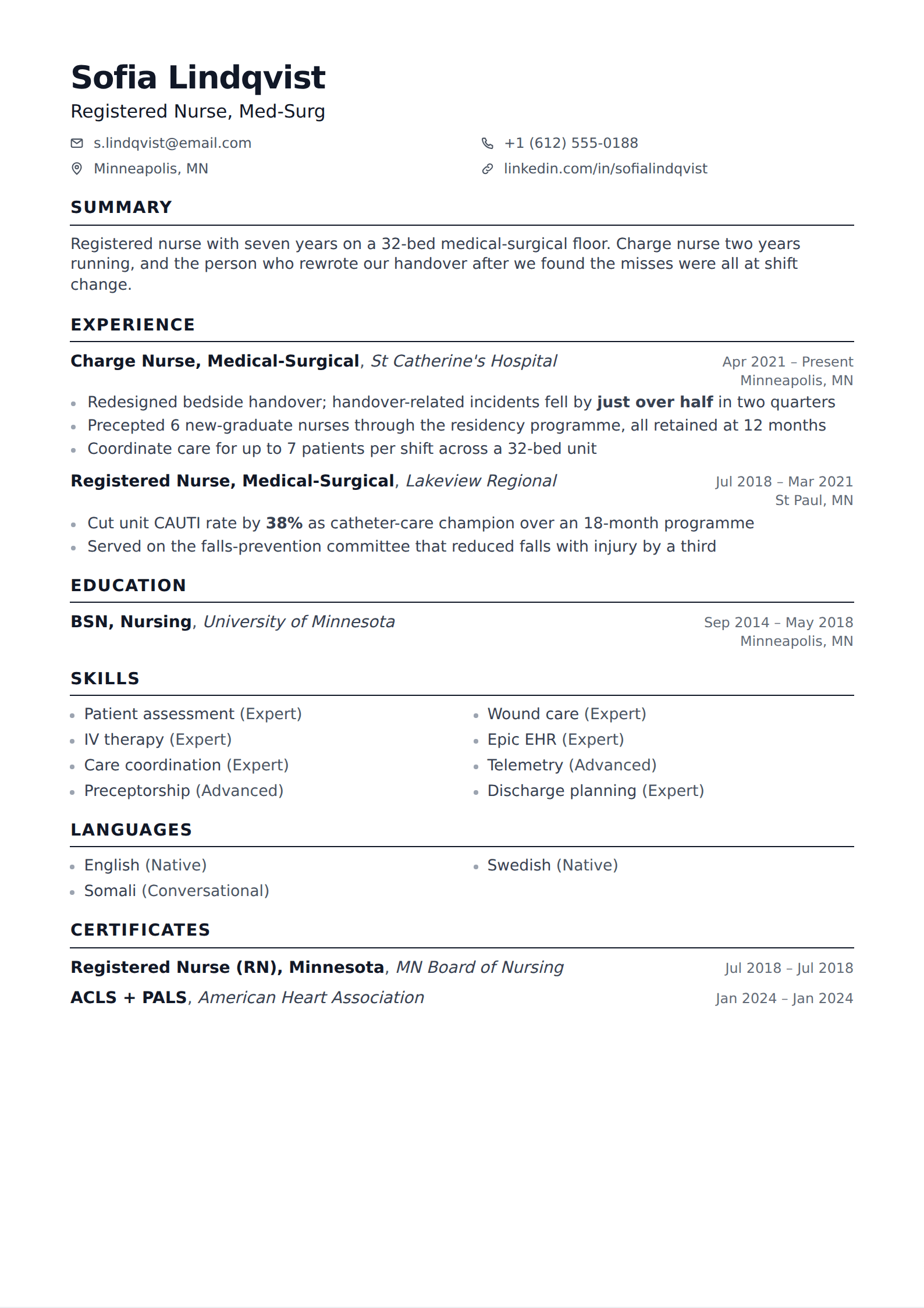
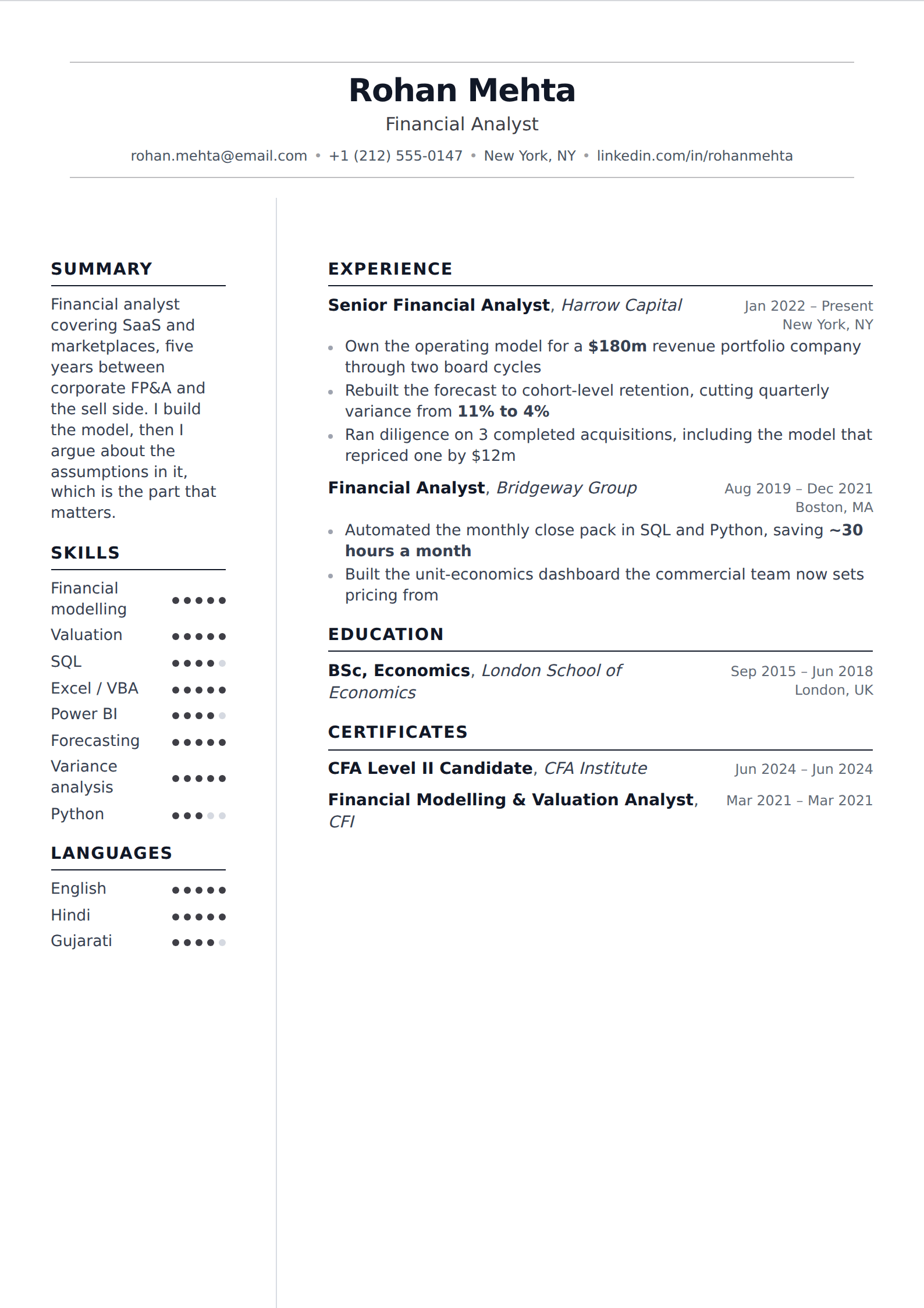
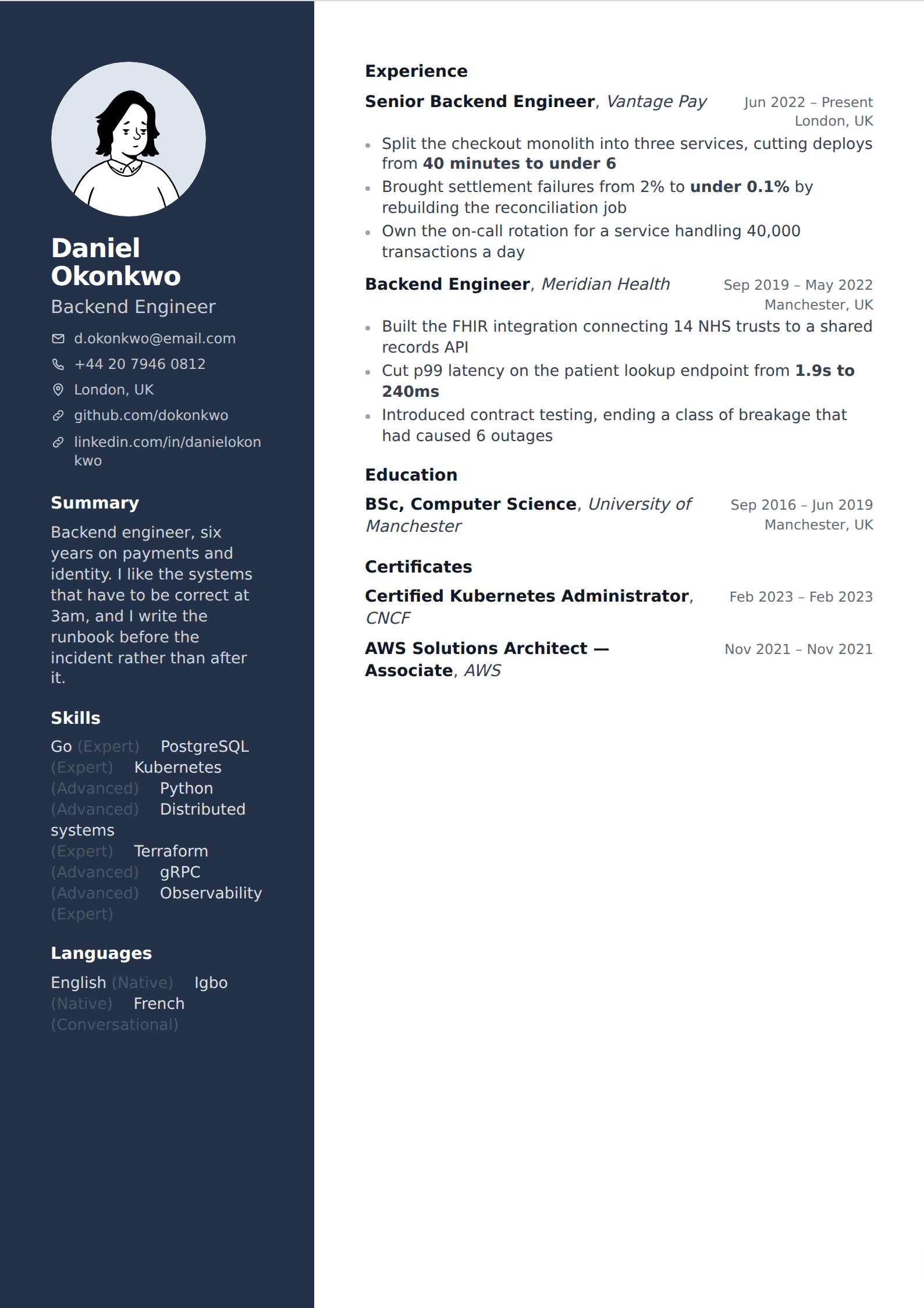
A grouped stack takes room. These compact layouts hold twenty named systems plus a full history at a readable size, which is the alternative to shrinking the type to make it fit.

Common questions

What are computer skills for a resume?

The specific software and systems you can operate, named individually — Excel with the functions you actually use, the CRM or ERP by product name, the design or clinical or scheduling tools your field runs on. "Microsoft Office" and "good computer skills" are assumed and add nothing.

Should technical skills go first on a resume?

Yes, when they are what the role is hiring for and your recent job titles do not already say it — engineers, analysts, technicians, and career changers all benefit from a skills block above experience. If your titles already establish the technical level, put experience first and let the section index the details.

How do I show my level in a skill without rating bars?

Group into tiers — "Core" and "Working knowledge", or "Daily" and "Familiar" — and let your experience bullets carry the proof for anything you claim at the top tier. A self-assigned score out of five uses a scale the reader cannot interpret, and invites a question you would rather not be asked.

Should I list Microsoft Office on a resume?

Only when the specific capability is unusual. "Microsoft Office" is assumed for any professional role. "Excel — Power Query, VBA, model builds for a 12-entity consolidation" is a genuine skill and worth the line it takes.

Related guides

Put it into practice

Start from any template above, get AI help tightening every bullet, and export an ATS-ready PDF. Free to start, and no card at any point.

Start your resume