
Skills

Hard skills and soft skills: which to list and which to prove

The distinction is usually taught as a taxonomy — hard skills are technical, soft skills are interpersonal — and then nobody says what to do with it. The useful version is a rule about placement. Hard skills can be listed, because they are checkable. Soft skills cannot, because everyone claims them and nobody can verify a claim. That single asymmetry decides where each belongs on the page.

5 sections

The short version

  • Hard skills have a right answer — a language, a licence, a system. They can be listed.
  • Soft skills are judgements about how you work. Everyone claims them, so a list of them proves nothing.
  • The rule: list the hard ones, demonstrate the soft ones in your experience bullets.
  • In roles that are mostly soft skills, this matters more rather than less.
  • The check: could you give an example in five seconds? If not, it is not evidence.

The distinction that matters

A hard skill is something with a right answer. You can write SQL or you cannot; you hold an active RN licence or you do not; you have closed a set of books under IFRS or you have not. Because it is checkable, listing it is meaningful — a reader can confirm it in an interview, and a parser can match it against a posting.

A soft skill is a judgement about how you work: communication, leadership, adaptability, conflict resolution. Nobody self-assesses these accurately, everybody claims them, and no reader has ever changed their mind about a candidate because the word "collaborative" appeared in a list. That is not because soft skills are unimportant. They are frequently the thing that actually decides the hire. It is because a list is the wrong instrument for them.

The rule: list the hard, demonstrate the soft

Hard skills go in the skills section, named specifically, grouped. Soft skills come out of the skills section entirely and go into your experience bullets, where they turn into events.

"Excellent communication skills" is worth nothing. "Wrote the runbook the on-call rotation still uses, cutting escalations to the team by about half" is communication, demonstrated, and it also happens to be a better bullet. "Leadership" is worth nothing; "Took over a team of six mid-project after the lead left and shipped on the original date" is leadership, and no reader needs the abstract noun once they have the sentence.

This is why deleting your soft-skill list usually improves a resume twice over — it frees a line, and it forces the evidence into the section where evidence belongs.

Where each one lives

Concrete placement, since the abstract rule is easy to nod at and hard to apply.

  • Hard skills — skills section: programming languages, software by name, machinery, licences, certifications, methodologies, languages spoken with a stated level, regulatory frameworks.
  • Soft skills — experience bullets: leadership, mentoring, communication, negotiation, conflict resolution, prioritisation under pressure, stakeholder management.
  • Borderline cases — either, if named specifically: "technical writing" is a hard skill; "writing" is not. "Incident command" is a hard skill; "stays calm under pressure" is not. "Stakeholder management across four business units" reads as concrete; "stakeholder management" alone does not.

When soft skills are the job

Some roles are mostly soft skills: management, sales, teaching, therapy, customer service, HR. The rule does not change — it gets more important, because in those fields everybody's skills list says the same six words and the résumés that stand out are the ones with incidents in them.

For a customer service role, the bullet that wins is not "strong de-escalation skills". It is "Handled the escalation queue for a 2m-user product, resolving about 40 cases a week with a 94% satisfaction score". Same claim, made in a form that can be interrogated. If a hiring manager cannot ask a follow-up question about it, it was not evidence.

The interview check

Run this over every skill on your page: what would you say if someone asked "can you give me an example?" If a real answer comes to mind in five seconds, the skill is defensible and it should stay. If what comes to mind is a rephrasing of the skill itself, it is not evidence and it is taking up a line.

That check catches the two failures that matter — soft skills with nothing behind them, and hard skills you listed because they were on the posting rather than because you have used them. The second is worse. A skills list that overstates gets you into an interview you then fail on the first technical question.
Hard and soft, side by side

Scroll the table sideways to compare →

Hard skillsSoft skills
What they areSpecific, checkable capabilities with a right answerJudgements about how you work with people and pressure
Where they goThe skills section, named and groupedExperience bullets, as things that happened
ExamplesSQL, Epic, CPA licence, AutoCAD, IFRS, Spanish (C1)Leadership, communication, negotiation, prioritisation
Why the splitA reader can verify them in an interviewEveryone claims them, so the claim carries no information
Done badlyListing a language you used once for an assignment"Excellent communication skills" as a line in a list
Done well"PostgreSQL — query optimisation on 200m-row tables""Wrote the runbook the on-call rotation still uses, halving escalations"

Sorting your own list

Open your own resume beside this and work down it. Every line is something a reader or a parser acts on within the first pass.

  • Every entry in the skills section is checkable by someone else
  • No abstract qualities sitting in the list — communication, leadership, adaptability
  • Each soft skill you care about appears as an incident in a job bullet
  • Borderline items are named specifically: "technical writing", not "writing"
  • Nothing was listed because it appeared on the posting rather than in your career
  • Every hard skill would survive a first technical screen
  • The soft-skill bullets have a number, a scale or a consequence in them

Templates that separate the two properly

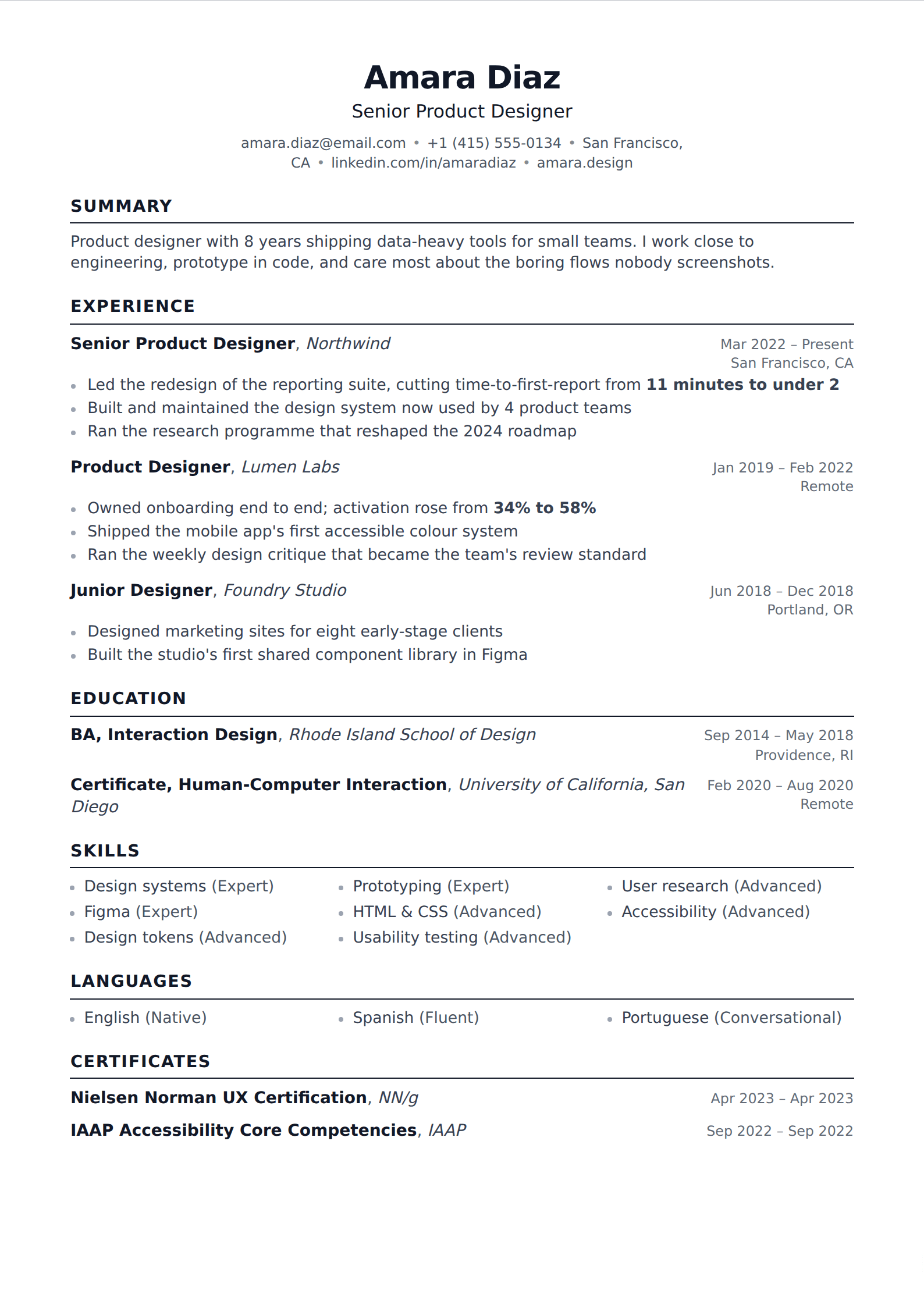
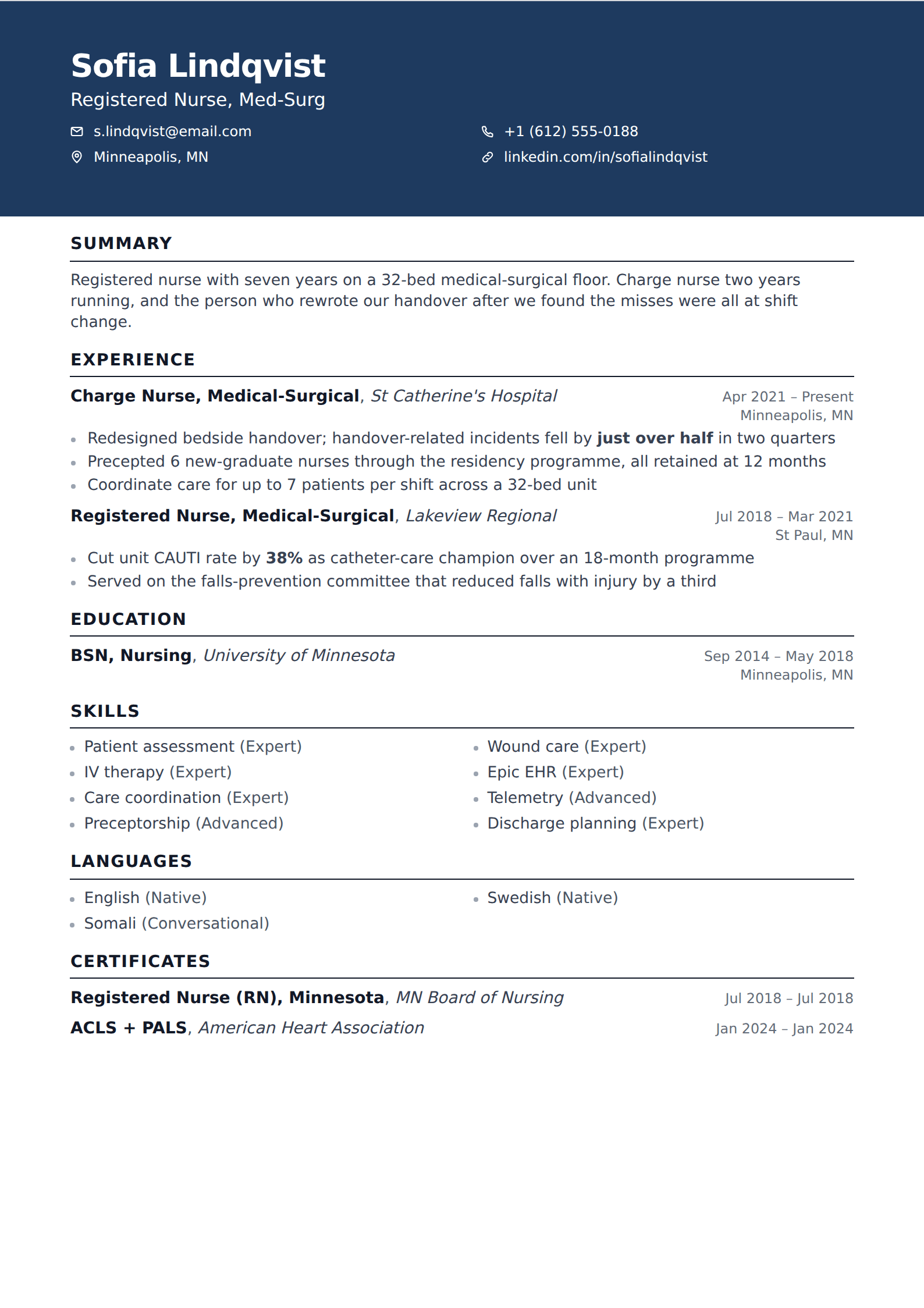
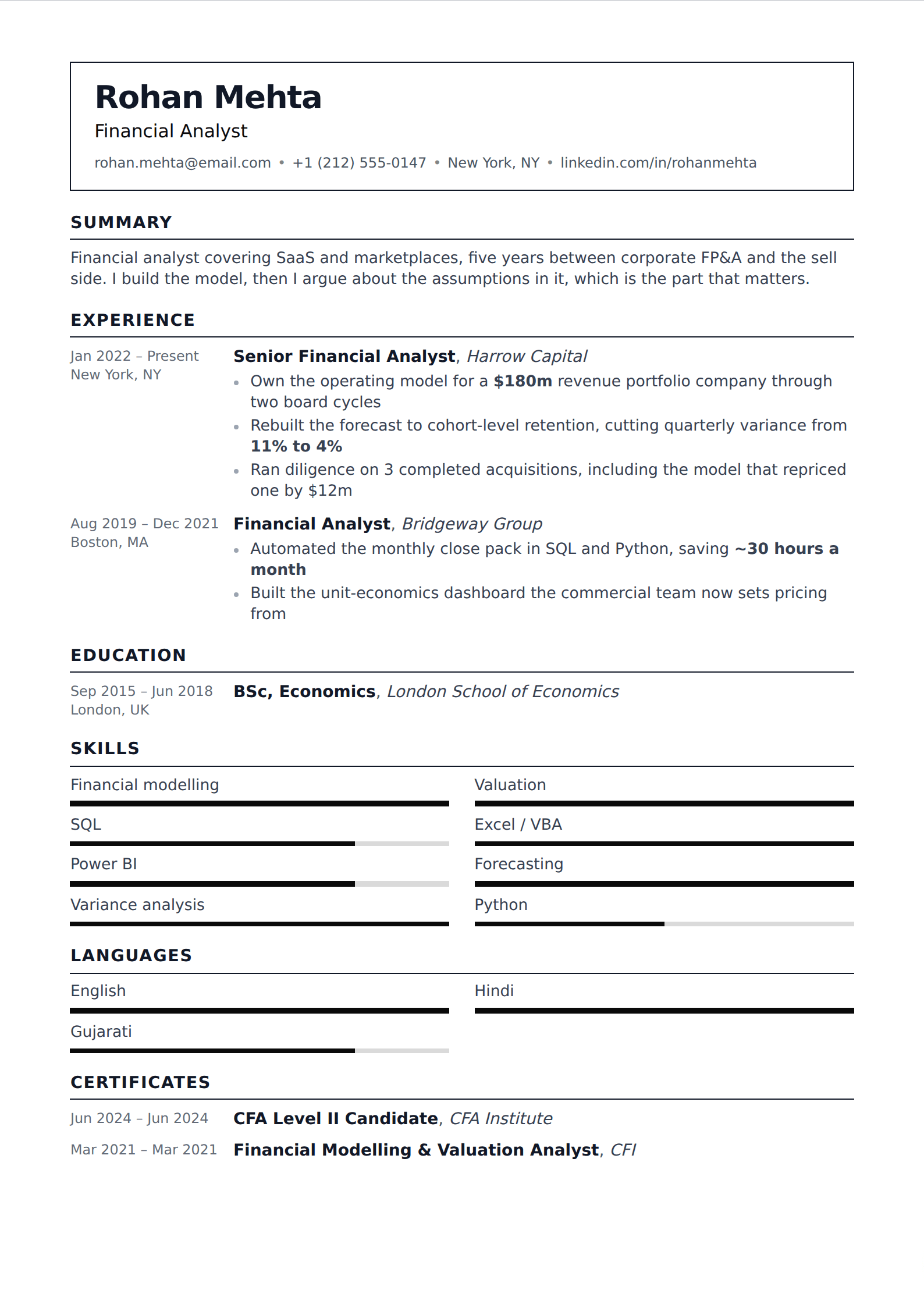
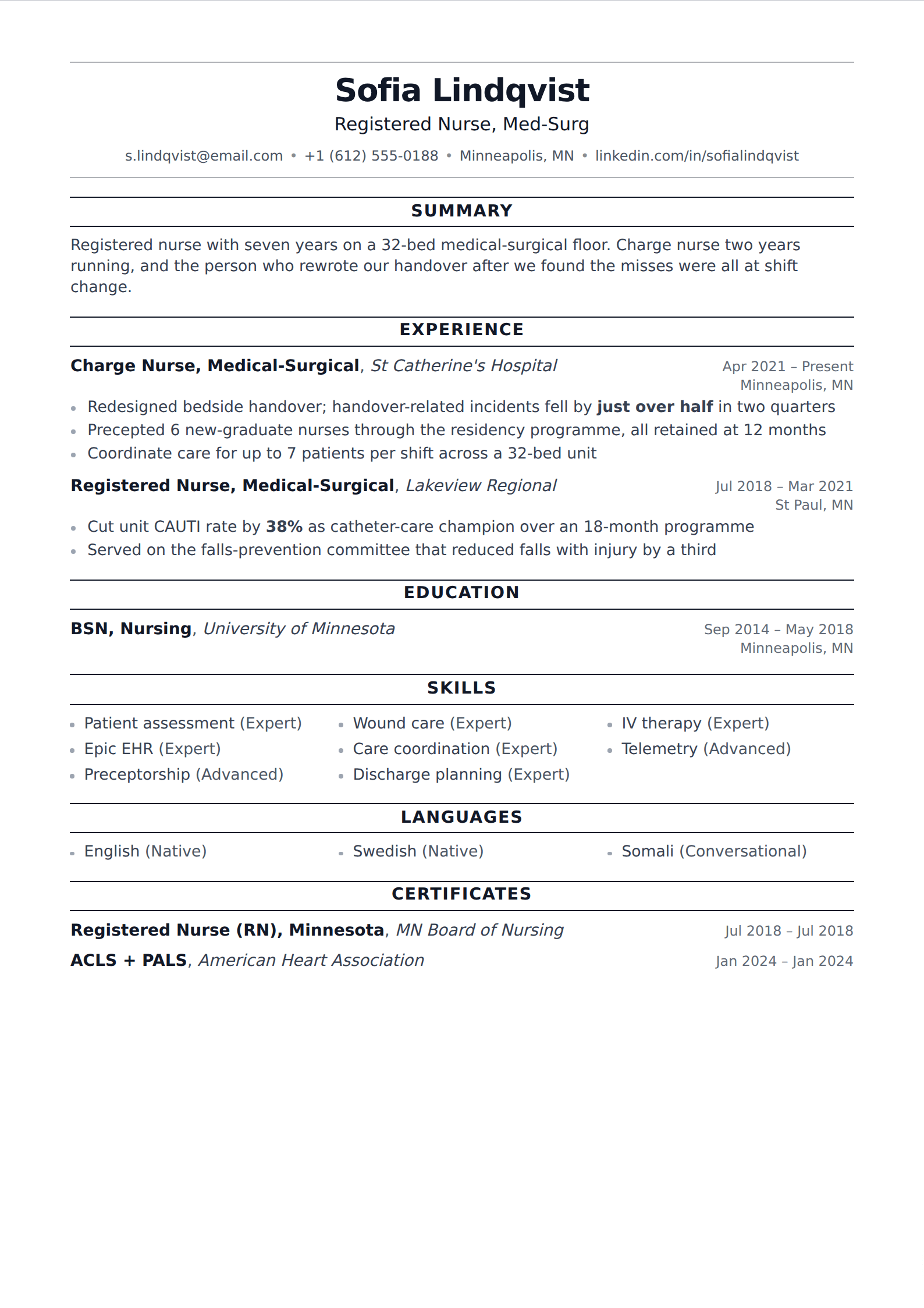
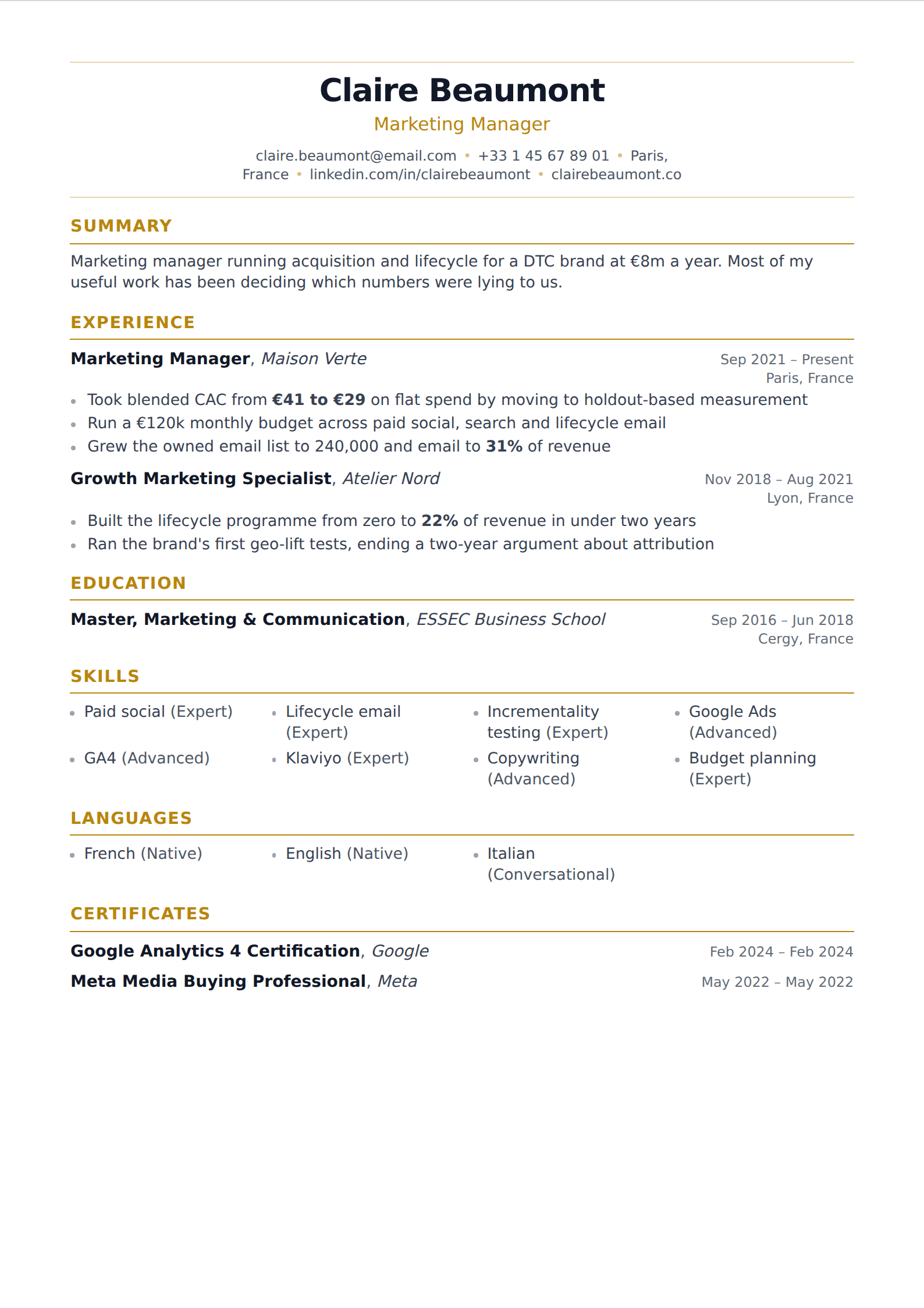
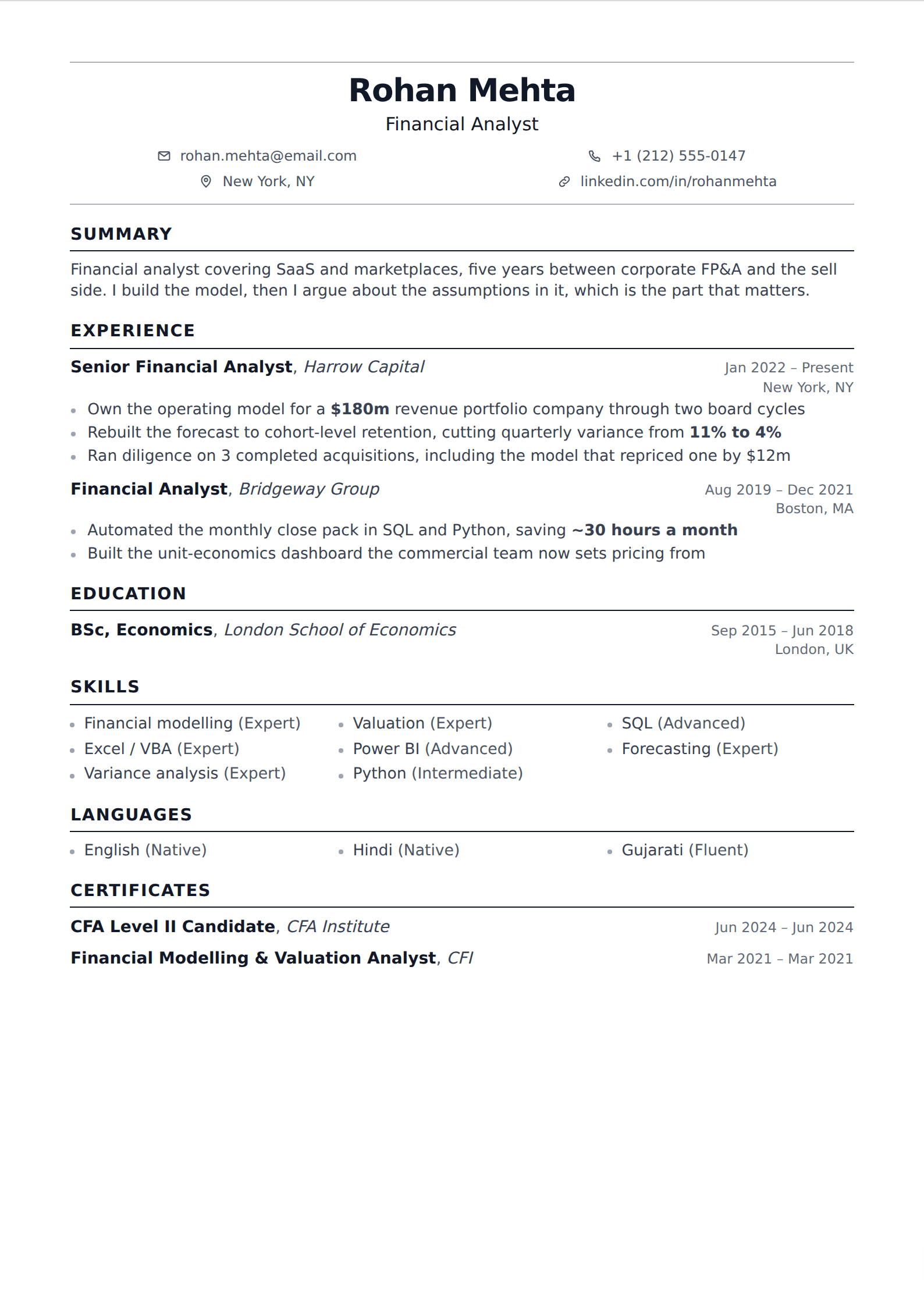
A clean skills block for the hard ones, and roomy bullets for the soft ones to be demonstrated in. These layouts give both what they need without a skills chart in sight.

Common questions

What is the difference between hard skills and soft skills?

Hard skills are checkable and specific — a language, a system, a licence, a method. Soft skills are judgements about how you work, like communication or leadership. The practical consequence is placement: hard skills can be listed because a reader can verify them, and soft skills should be demonstrated in your experience bullets because a list of them proves nothing.

Should I list soft skills on my resume?

Not as a list. Every candidate claims the same handful and no reader is persuaded by the words themselves. Convert each one into the incident that demonstrates it and put it in the relevant job — the claim becomes checkable and the bullet gets stronger at the same time.

What are examples of hard skills?

Programming languages, SQL, financial modelling, named software (Epic, Salesforce, SAP, AutoCAD), machinery operation, a nursing or CPA licence, a second language at a stated level, regulatory frameworks like GAAP or GDPR, and specific methods like A/B testing or root cause analysis.

Are soft skills important to employers?

Frequently they are the deciding factor, especially in management, sales, teaching and support roles. That is an argument for evidencing them properly rather than for listing them — the more a hire turns on soft skills, the more carefully hiring managers discount unsupported claims about them.

Related guides

Put it into practice

Start from any template above, get AI help tightening every bullet, and export an ATS-ready PDF. Free to start, and no card at any point.

Start your resume