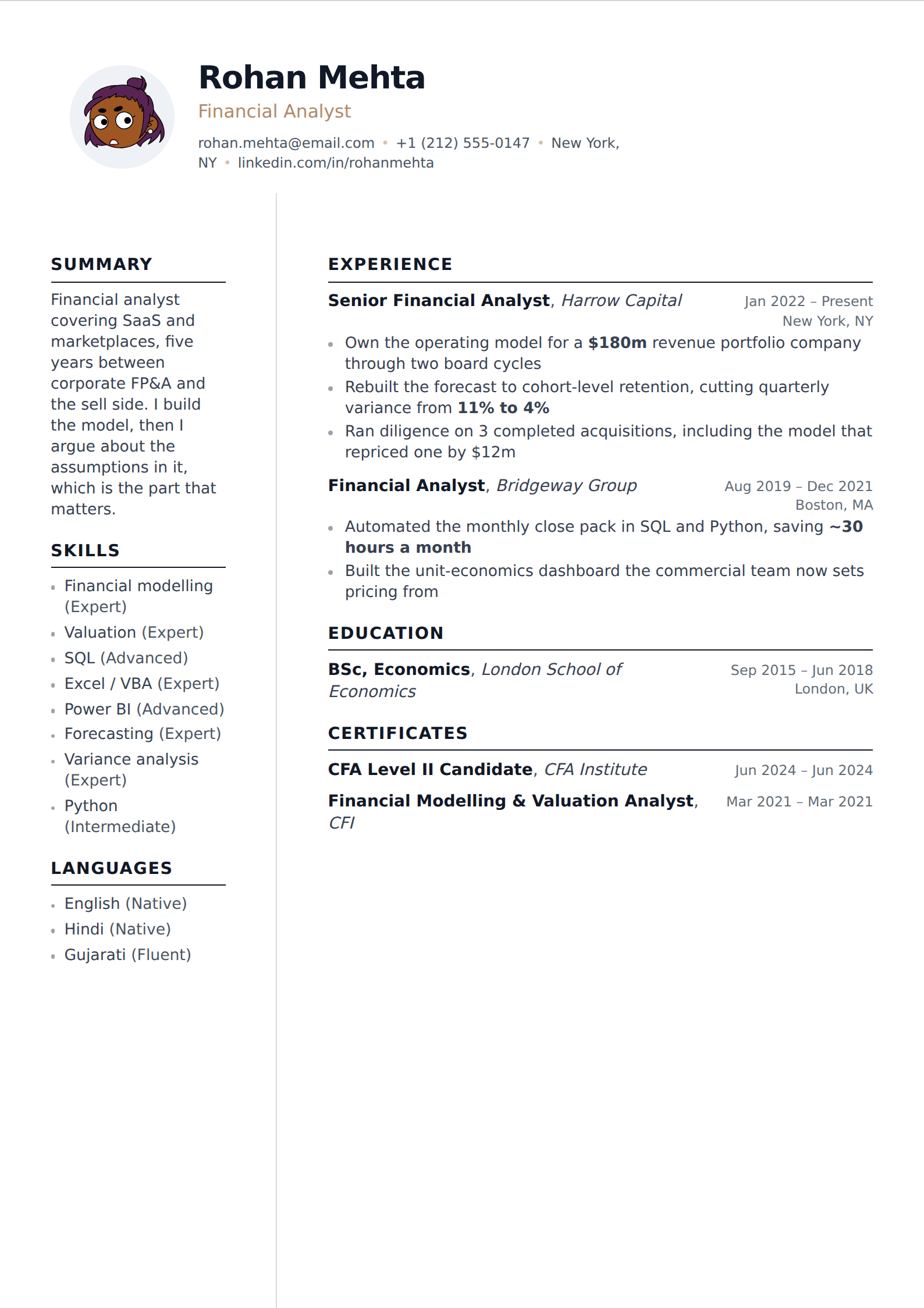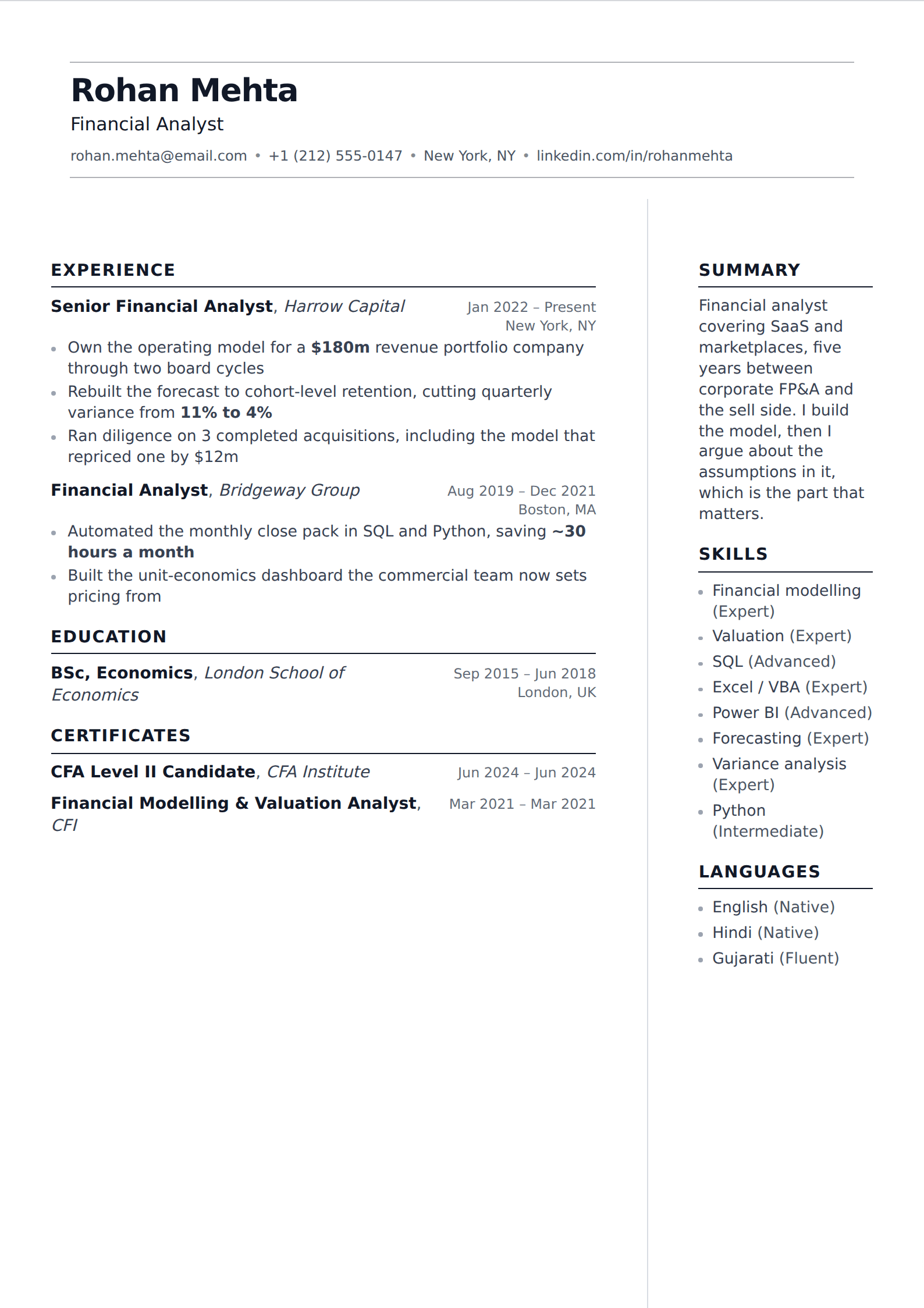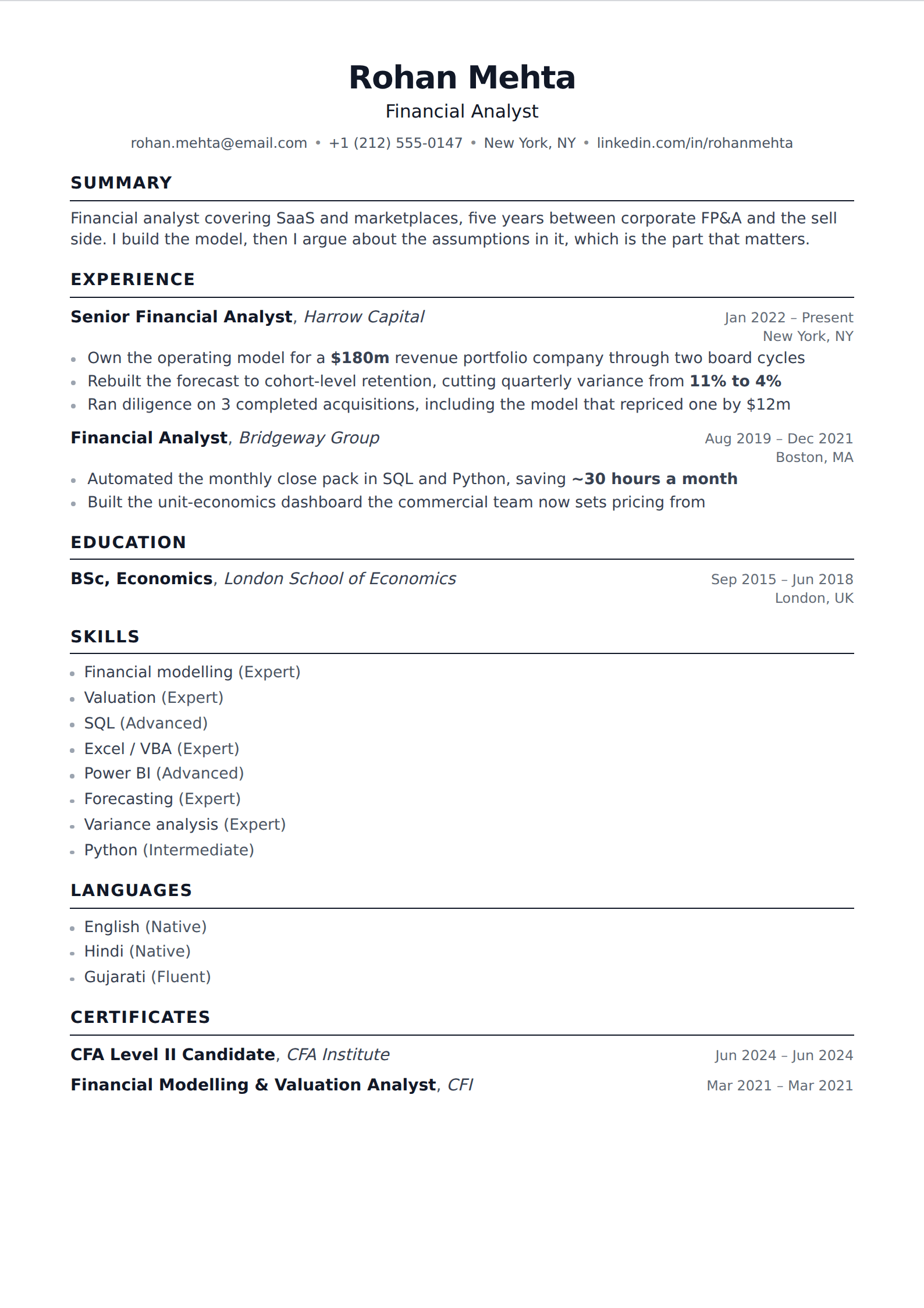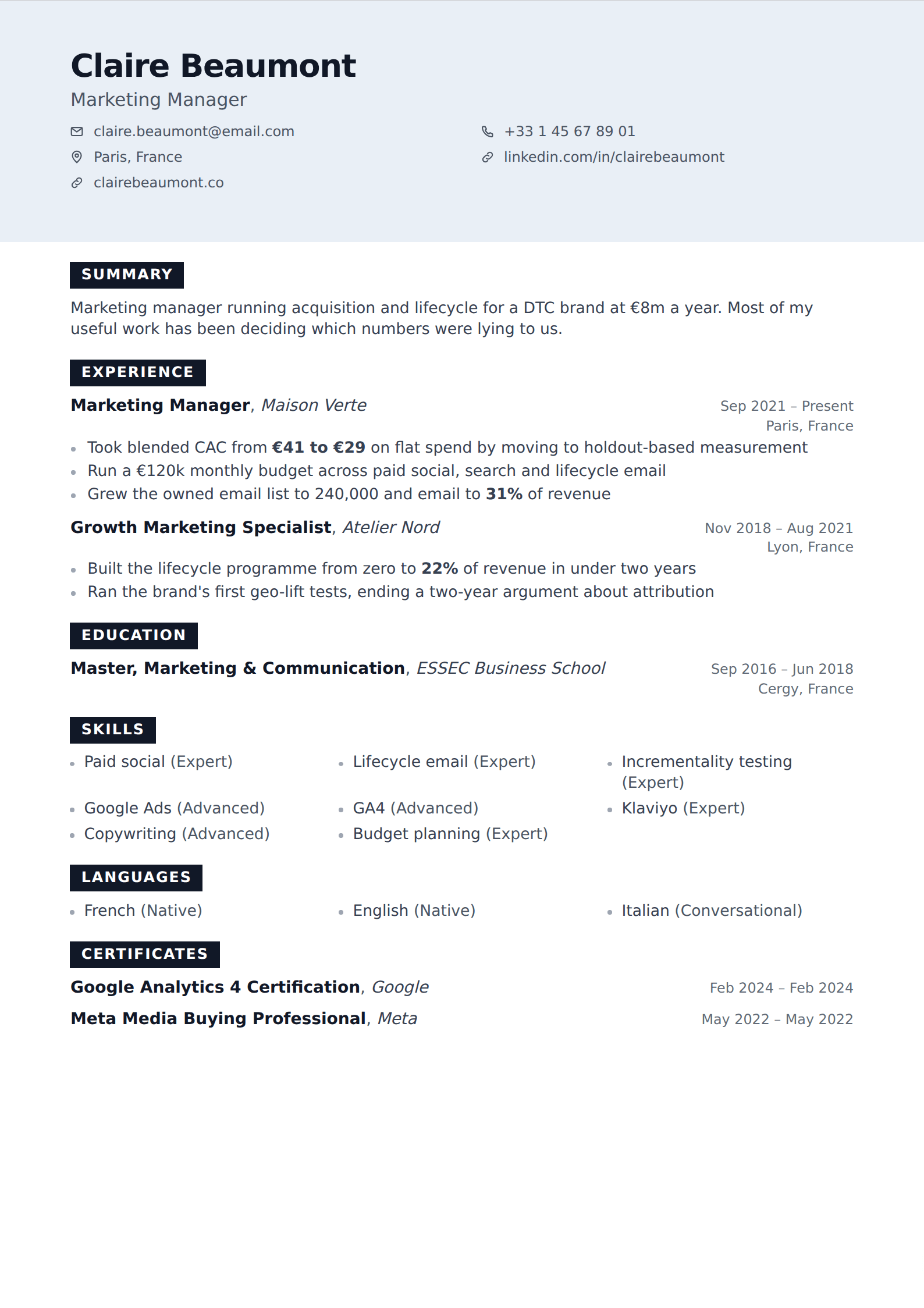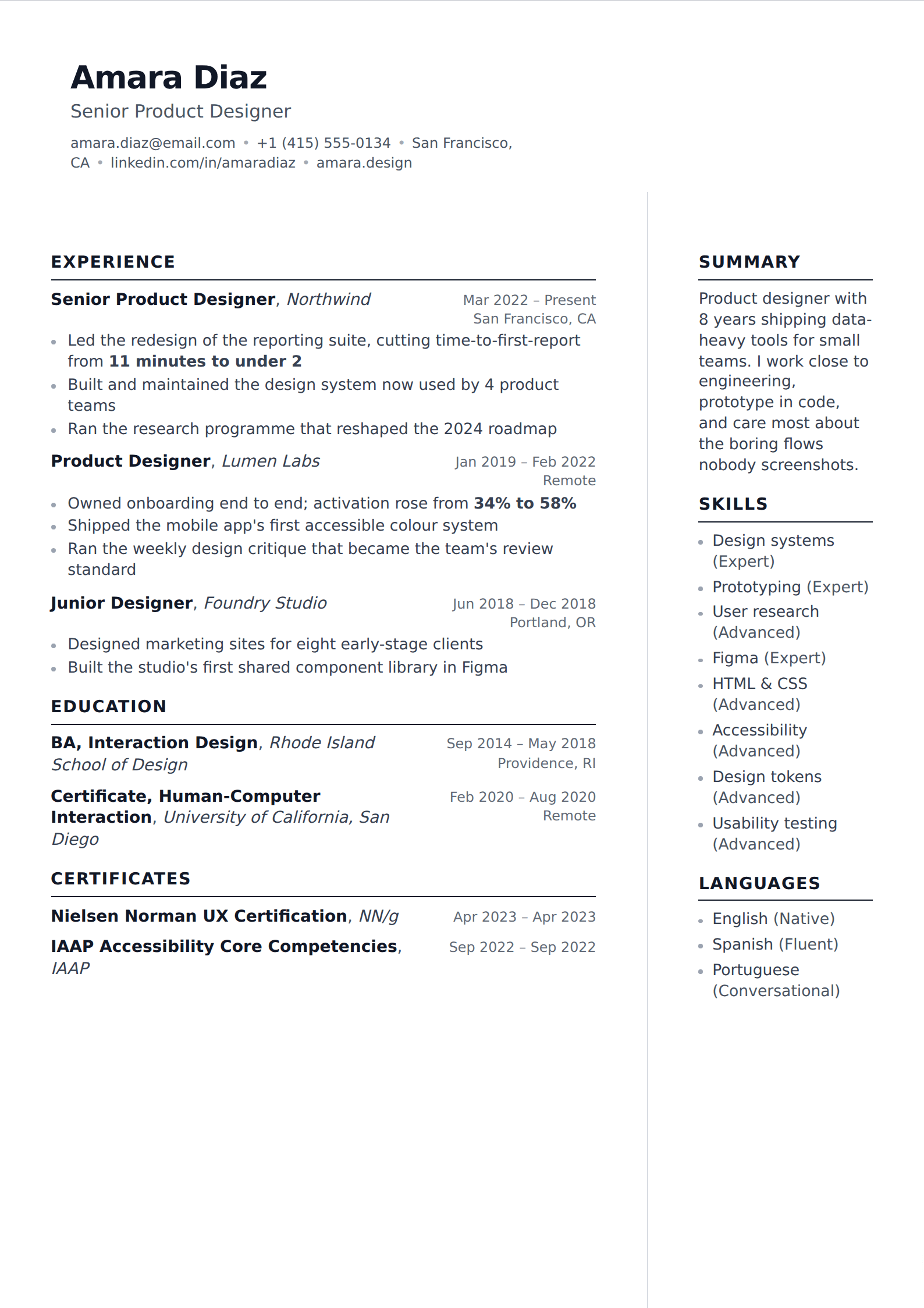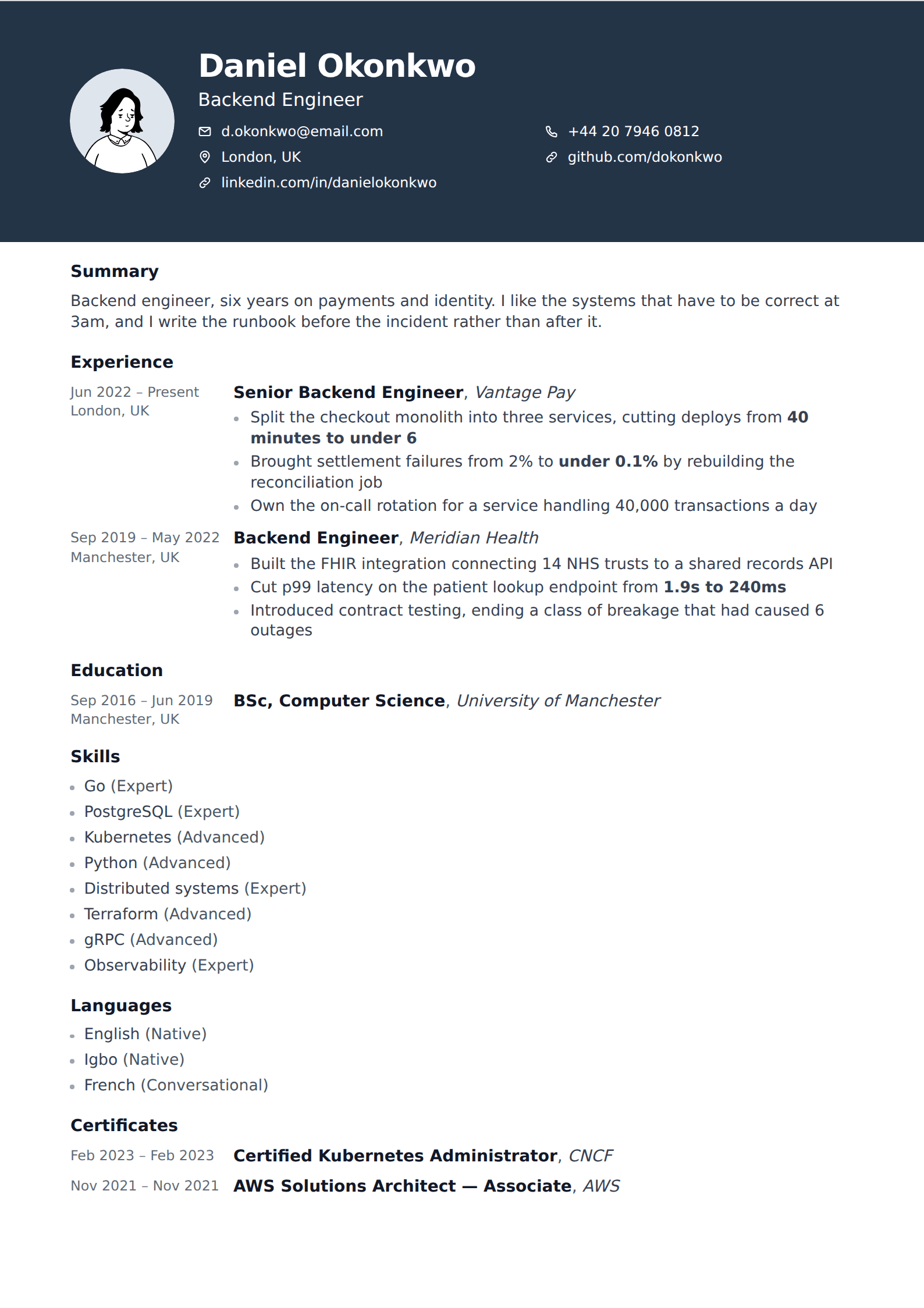

The actual difference
An objective states what you want. "Seeking a challenging position with a growth-oriented company where I can utilise my skills." A summary states what you offer. "Operations manager, eight years in third-party logistics, most recently running a 60-person warehouse through a WMS migration."
That is the whole distinction, and it explains why one died. Nobody screening two hundred applications is reading for what the applicant wants — they are reading for whether this person can do the job. An objective spends the most valuable four lines on the page answering a question nobody asked.
"Profile" and "professional summary" are just other names for the summary. Nothing turns on which label you use, so use whichever your template offers and spend your attention on the sentences.
When an objective still works
Rarely, and only when your goal is genuinely not obvious from the rest of the page. In those cases, stating it prevents a misreading rather than wasting space.
- A career change, where your history points somewhere other than the job you are applying for.
- A relocation, where your address suggests you are in the wrong country or city for the role.
- A first job or an internship, where you have little history and the direction is the information.
- A deliberate step down or sideways, which otherwise reads as an error.
- Even then, write it as a summary with the objective folded in — what you bring, then what you are aiming at — rather than as a request.
Writing the three sentences
A summary is three sentences and should be readable in about eight seconds. Sentence one: what you are and at what level, with a number of years. Sentence two: your most relevant evidence — the thing you would most want this employer to know. Sentence three: what you are aiming at, if it is not obvious.
"Registered nurse with six years in acute medical-surgical care, currently on a 32-bed unit at a Level II trauma centre. Charge nurse two shifts a week and precept new graduates; Epic superuser for the unit. Looking for a permanent day-shift role in an urban teaching hospital."
Every clause there is checkable. Compare it with the version that says "compassionate and dedicated nursing professional with a proven track record of delivering high-quality patient care", which is true of everyone applying and therefore describes no one.
When to leave it out entirely
If your summary would only restate your job title and years of experience, delete it. "Software engineer with five years of experience" adds nothing that the first line of your experience section does not already say, and the four lines are better spent on a bullet.
The test: cover the summary with your hand and read the rest of the page. If nothing was lost, it was not doing anything. A summary earns its place when it says something the chronology cannot — a specialism, a scale, a direction, a reason the next role is a step rather than a jump.
For students and career changers it almost always earns its place, because in both cases the chronology actively misleads and the summary is the correction.