
Sections

References: leave them off, and prepare them anyway

Two questions get conflated here. Whether references belong on your resume — no, and the line saying they are available on request should go too. And whether you need references at all — yes, absolutely, and the work of preparing them is real. Getting the first one right takes ten seconds; the second is what actually affects whether you get the offer.

4 sections

The short version

  • Do not list referees on the resume, and delete "references available on request" as well.
  • Provide them as a separate page, matching your resume's header, when they are asked for.
  • Three to four names, each with title, organisation, relationship and contact details.
  • The best referee managed you directly and recently. Proximity beats seniority.
  • Brief them with the job description. A referee caught cold gives generic praise, which is worthless.

Take them off the resume

Do not list referees on the resume itself. It spends space on contact details for other people at the stage where the reader is deciding whether to spend six more seconds on you, and it hands out your former colleagues' phone numbers to every organisation you apply to — which they did not agree to and which is a real privacy problem in a document that gets forwarded.

Delete "references available on request" as well. It is universally assumed, it has been for twenty years, and the line spends a full row of a page you are trying to fit onto one or two saying something no reader learns anything from. Recruiters have described it as the clearest single sign that a resume was written from a template last updated in 1998.

The space it frees is not nothing. On a crowded one-page resume, that line is a bullet you could not fit.

The separate reference page

When references are asked for — usually late, often after an interview, sometimes as part of an application form — provide them as a separate document. It should match your resume's header exactly, same name block, same typeface, so the two obviously belong together.

Three to four referees, and for each: name, current job title, organisation, relationship to you, and how to reach them. "Direct manager at Acme, 2021–2024" tells the reader what kind of reference this will be, which is the single most useful thing you can add.

Some applications, particularly academic and government ones, specify how many referees and of what kind — a supervisor, an academic referee, a professional character reference. Follow that exactly. Substituting a colleague for a required line manager is treated as non-compliance rather than as a near enough.

  • Three to four names, all of whom have said yes.
  • Name, title, organisation, relationship, email and phone.
  • Same header and typography as your resume.
  • Order them so the most relevant referee is first.
  • One page, and no explanation of why each was chosen — the relationship line does that.

Choosing and preparing referees

The best referee is someone who managed you directly, recently, on work resembling the job you are applying for. Seniority is worth less than proximity: a team lead who saw your work daily gives a far better reference than a director who knows your name.

Ask before you list anyone, every time, and ask in a way that gives them room to decline — "would you be comfortable giving me a strong reference for this kind of role" rather than "can I put you down". A lukewarm reference from someone who felt obliged is worse than no reference, and phrasing the question properly is how you find out in advance.

Then brief them. Send the job description, tell them what the role is and which parts of your work are most relevant, and let them know roughly when a call might come. A referee who knows what is being assessed gives specific, useful answers; one caught cold gives generic praise, which is nearly worthless.

What references are actually for

Increasingly, less than people assume. Many large employers now restrict what they will confirm about a former employee to dates and job title, on legal advice, so a formal reference from a big company may be a two-line confirmation regardless of how they felt about you.

That has shifted the weight onto informal and back-channel checks — a hiring manager who knows someone at your last employer and asks quietly. You cannot control those, but you can be aware that they happen, particularly in small industries, and that they are why leaving well matters more than any document.

It also means the referees you choose should be people who will pick up the phone and speak freely, which often points towards a former manager who has since moved on rather than one still bound by their employer's policy.
On the resume, or on a separate page

Scroll the table sideways to compare →

On the resumeOn a separate page
Space costA full row, at the stage where every line competesNone — it is a different document
PrivacyYour colleagues' numbers go to every employer you apply toShared only with employers who reached the reference stage
When the reader wants itThey do not, at this stageLate, usually after an interview
"Available on request"Universally assumed since about 2005Not needed there either

Preparing your references

Open your own resume beside this and work down it. Every line is something a reader or a parser acts on within the first pass.

  • Nothing about references appears on the resume itself
  • A separate one-page document with the same header and typeface
  • Three to four referees, ordered most relevant first
  • Each one: name, title, organisation, relationship to you, email and phone
  • Every one of them has said yes, asked in a way that let them decline
  • Each has the job description and knows roughly when a call might come
  • Any application-specified referee type — supervisor, academic — followed exactly

Templates whose header you can reuse

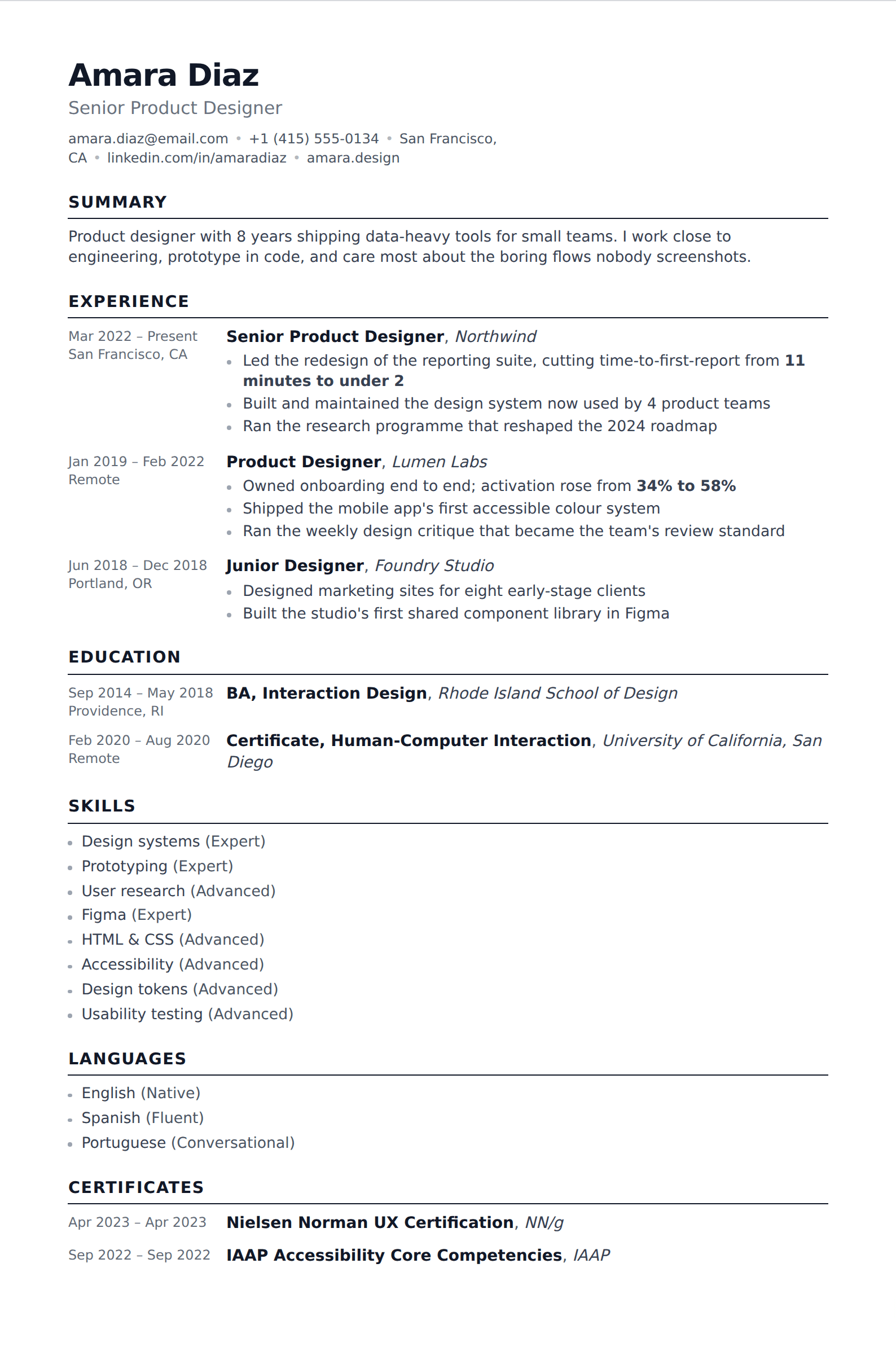
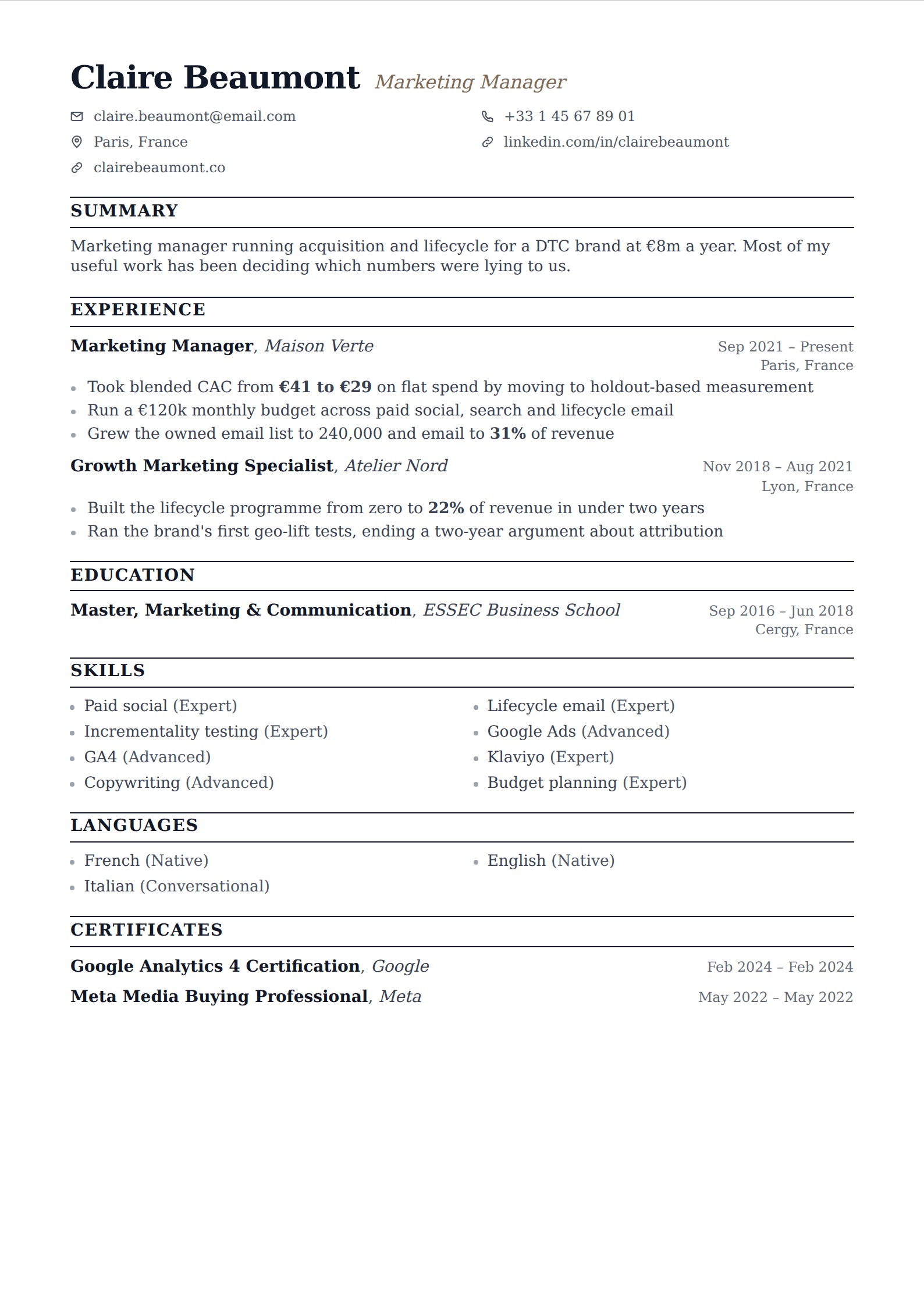
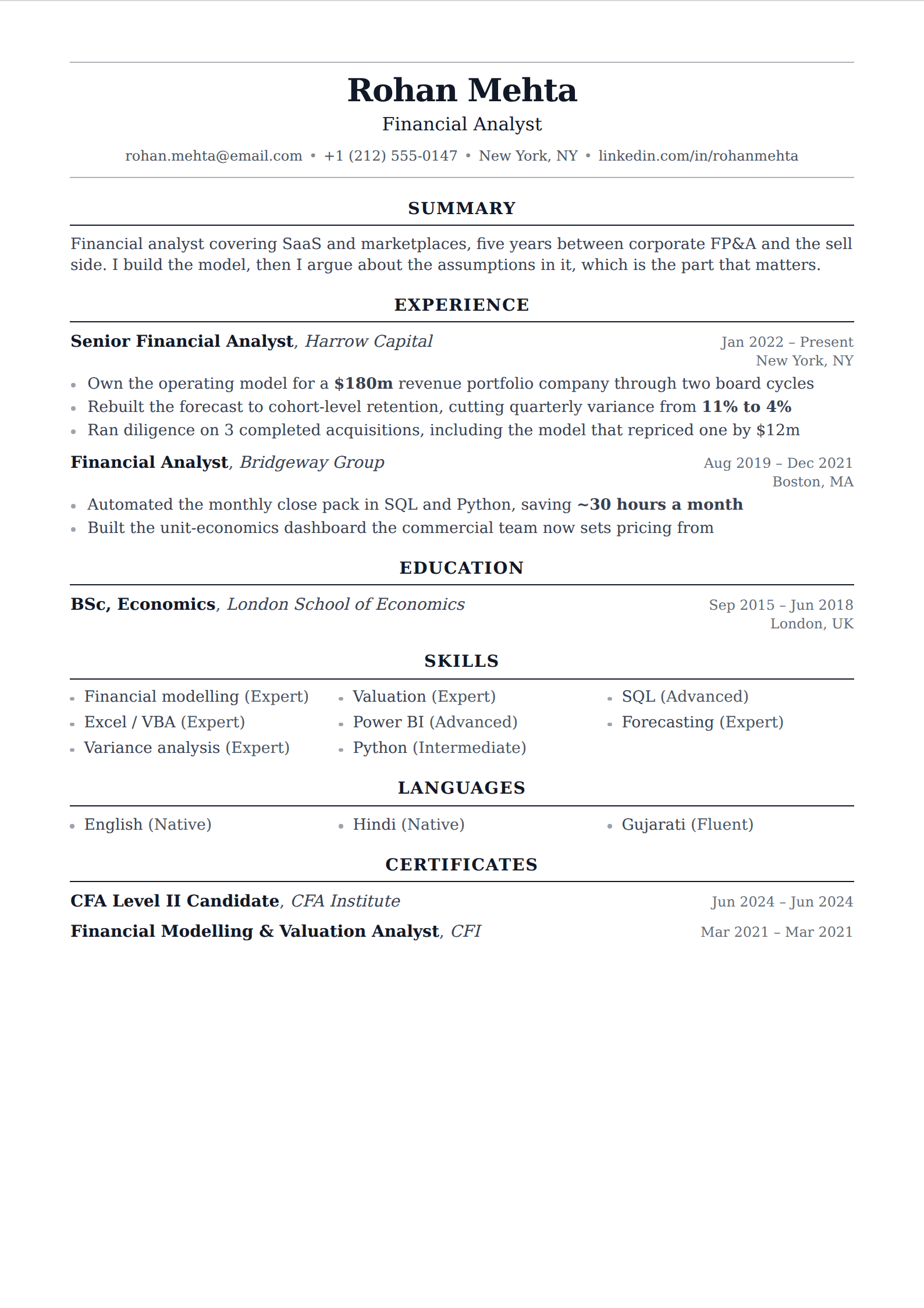
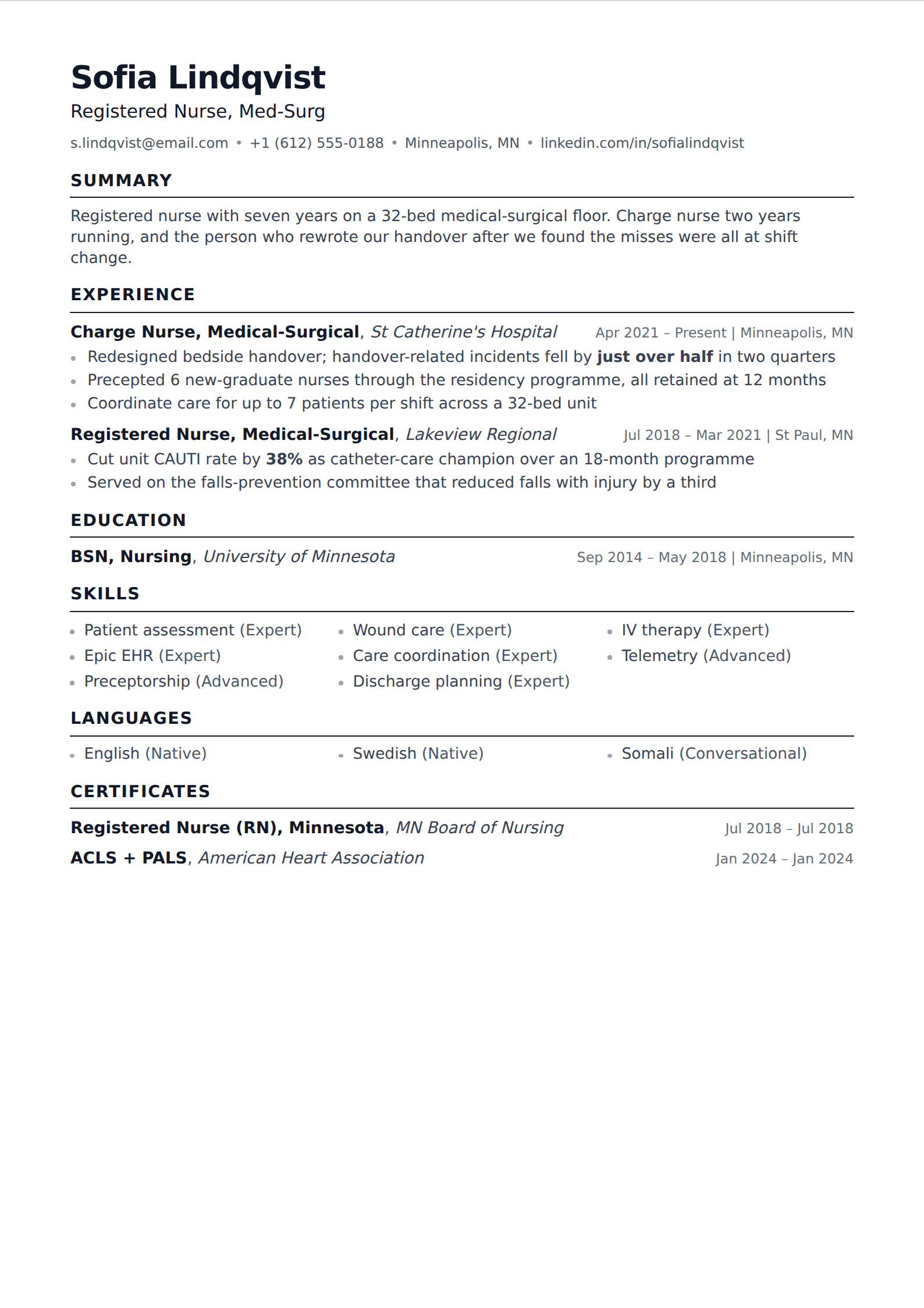
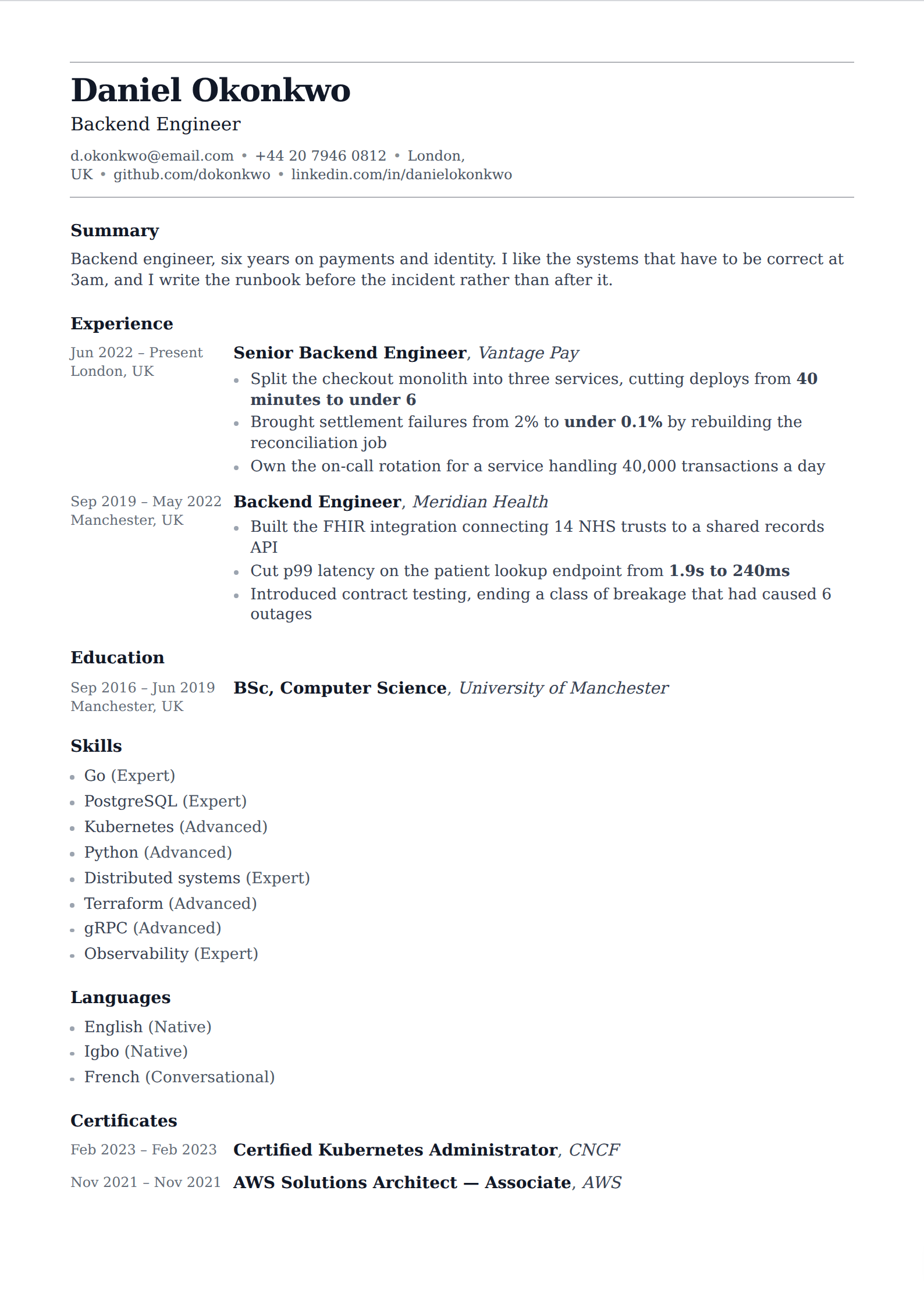
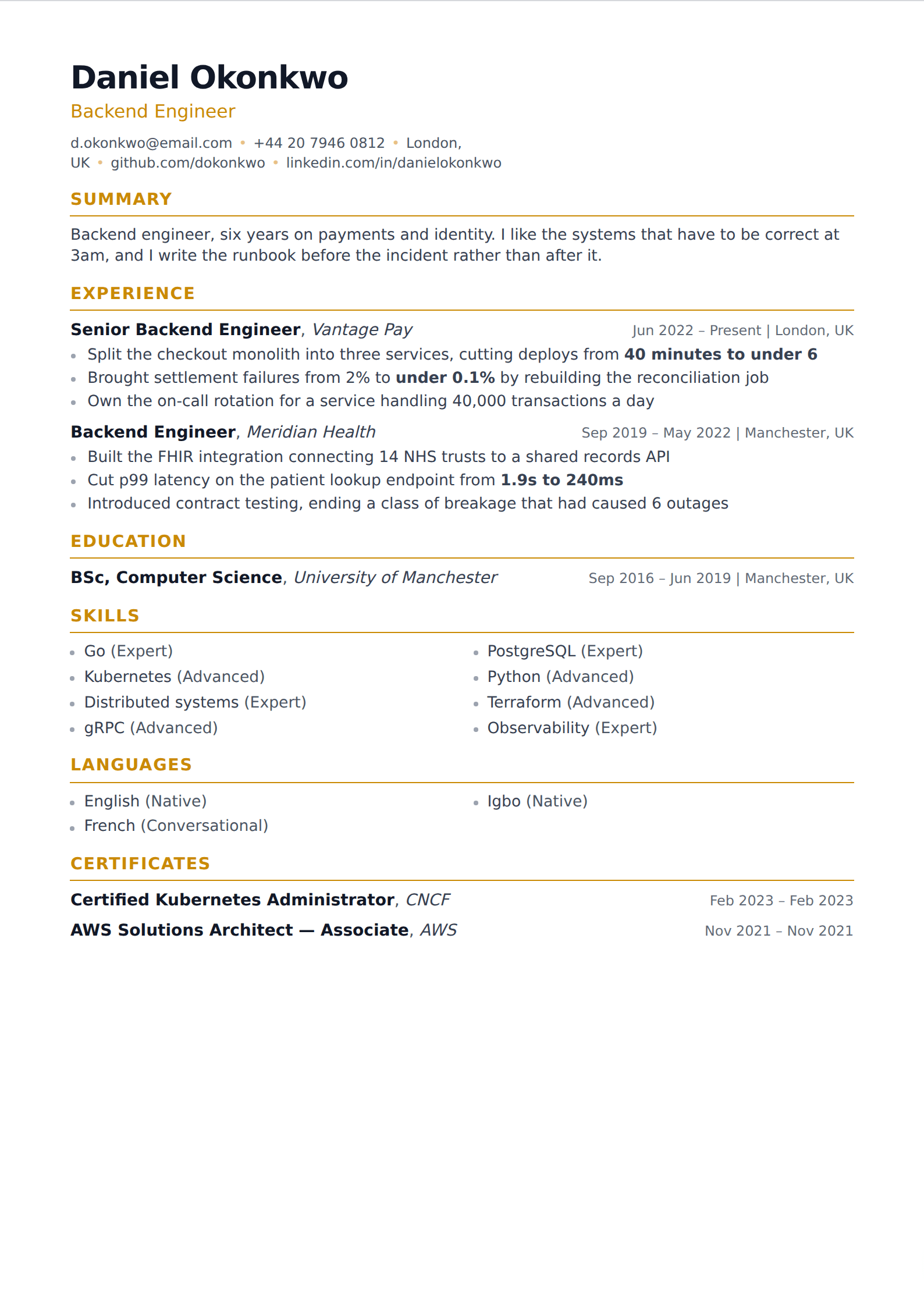
A reference page should look like it belongs to your resume. Any of these gives you a header block you can lift verbatim onto a second document, so the two obviously came from the same person.

Common questions

Should you put references on a resume?

No. Listing referees spends space on other people's contact details at the stage where a reader is deciding whether to keep reading, and it exposes your former colleagues' numbers to every employer you apply to. Provide them separately, when asked.

Should I write "references available on request"?

No. It has been universally assumed for two decades, so the line conveys nothing, and it is one of the clearest signals that a resume was built from an outdated template. Delete it and use the row for a bullet.

How do I write a reference page?

One page, matching your resume's header exactly. Three to four referees, each with name, job title, organisation, your relationship to them and their contact details. Order them with the most relevant first, and make sure every one of them has agreed in advance.

How many references do I need?

Three is standard, four is comfortable, more is unnecessary. If the application specifies a number or a type — a direct supervisor, an academic referee — follow that exactly, because those requirements are checked for compliance rather than judged.

Who should I ask to be a reference?

Someone who managed you directly and recently, on work similar to the job you are applying for. Proximity beats seniority — a team lead who saw your work every day gives a far more useful reference than a director who knows your name. Ask in a way that lets them decline, then brief them with the job description.

Related guides

Put it into practice

Start from any template above, get AI help tightening every bullet, and export an ATS-ready PDF. Free to start, and no card at any point.

Start your resume