
Formatting

Should you put a photo on your resume?

This question has a definite answer and it is not the same answer everywhere. A photo on a resume is conventional across much of continental Europe, Asia and Latin America, and actively discouraged in the US, UK, Canada and Australia. Neither position is about aesthetics, and the reasons behind each are worth understanding — because the decision changes per application, not per person.

5 sections

The short version

  • A regional convention, not a matter of taste — and the decision changes per application.
  • Expected across continental Europe, much of Asia and Latin America.
  • Discouraged in the US, UK, Canada, Ireland and Australia, for discrimination-exposure reasons.
  • Parsers ignore images entirely. What breaks things is text rendered inside one.
  • Keep two versions. The content is identical and the photo is a template setting.

Where a photo is expected

Germany, France, Spain, Italy, Austria, Switzerland, Portugal, Belgium, the Netherlands and most of continental Europe. Much of Asia, including Japan, South Korea and China, where the photo is often on a prescribed form. Much of Latin America and the Middle East.

In those markets, a CV without a photo is not neutral — it reads as incomplete, and in Germany a Lebenslauf without one is noticeably unusual. The photo usually sits top-right or in a header block, and it is expected to be a formal portrait rather than a candid.

The same countries typically expect date of birth and nationality alongside it. If you are including the photo because of local convention, include the rest of the convention too; a half-adapted document reads as neither.

Where it works against you

The United States, the United Kingdom, Canada, Ireland and Australia. In these markets many employers actively prefer resumes without a photo, and the reason is legal rather than stylistic: a photo introduces protected characteristics into a screening decision, which creates discrimination exposure the employer would rather not have.

The practical consequences vary and none of them help you. Some larger organisations strip photos before a recruiter sees the file. Some route photo-bearing applications through a slower compliance path. Some recruiters at agencies will ask you to resend without it, because their client will not accept it. And a handful discard the application rather than handle the risk.

There is no upside to weigh against that. In these markets a photo does not make you more memorable in any way that helps; the reader's job is to assess evidence, and the photo is not evidence.

What parsers do with it

Nothing. An image in a PDF contributes no characters to the extracted text, so a photo is neither a positive nor a negative signal to an applicant tracking system. The widespread claim that photos break ATS parsing is not right.

What genuinely breaks things is text inside the image. If your name, job title or contact details are rendered as part of a graphic — a designed header block, a banner — that text does not exist to any parser, and you have just made your own name unsearchable. This is a real and application-ending mistake, and it is entirely separate from whether a photo is present.

The check is the usual one: export the PDF, select all the text, paste it somewhere plain. If your name is not in what comes out, the header is an image.

If you are including one

A bad photo is worse than no photo, and the bar is a professional identification portrait rather than a portrait session.

  • Head and shoulders, facing the camera, plain uncluttered background.
  • Even natural light. No harsh shadow, no flash, no filter.
  • Neutral or slight expression. Dressed roughly as you would for the interview.
  • Recent — within a couple of years, and recognisably you.
  • Not a cropped group photo, not a holiday shot, not a selfie, not a photo with someone else's arm in it.
  • Never text inside the image.

Applying across regions

Keep two versions. This is the whole answer for anyone applying in more than one market, and it costs almost nothing — the content is identical and the photo is a template setting rather than a rewrite.

The decision is made per application, by the country the job is in, not the country you are in. A British applicant applying to a Munich office should include a photo; a German applicant applying to a London office should not. Follow the reader's convention, because they are the one whose expectations shape how the document reads.
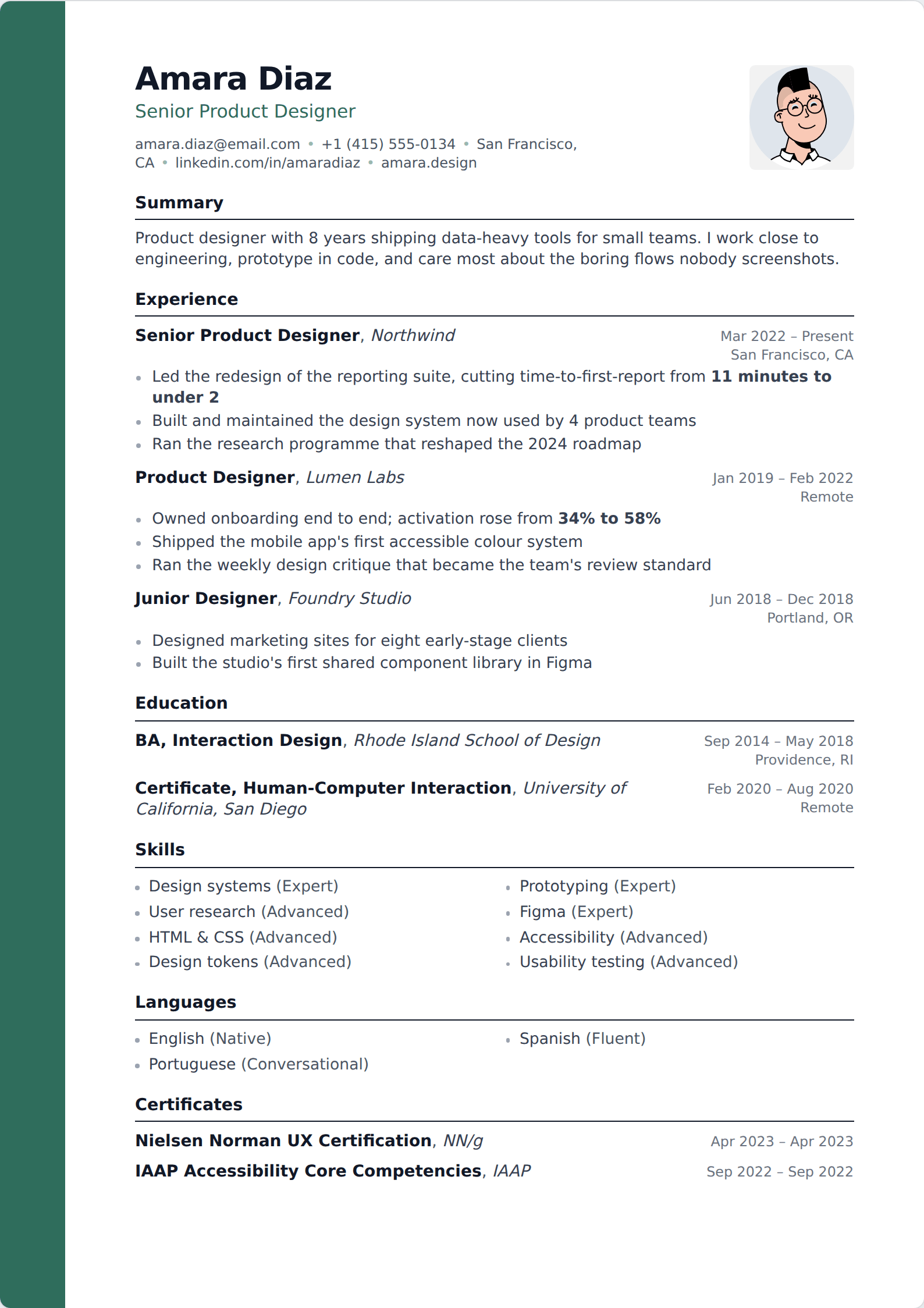
Where a photo helps and where it costs you

Scroll the table sideways to compare →

RegionPhoto?Also conventional
Germany, Austria, SwitzerlandYes — its absence is noticedDate of birth, sometimes nationality and marital status
France, Spain, Italy, PortugalYesDate of birth, nationality
UK and IrelandNoNothing beyond name, email, phone and city
US and CanadaNo — some systems strip it, some employers discard itNothing. No age, no nationality, no marital status
Australia and New ZealandNoNothing beyond the basics
Much of Asia and Latin AmericaYes, often on a prescribed formVaries by country — check the specific market

If you are including one

Open your own resume beside this and work down it. Every line is something a reader or a parser acts on within the first pass.

  • The country the job is in expects one — not the country you are in
  • Head and shoulders, facing the camera, plain background
  • Even natural light, no flash, no filter
  • Neutral or slight expression, dressed as you would for the interview
  • Recent within a couple of years, and recognisably you
  • Not a cropped group photo, a holiday shot or a selfie
  • No text of any kind inside the image
  • Date of birth and nationality included too, where the same convention expects them

Templates with a photo

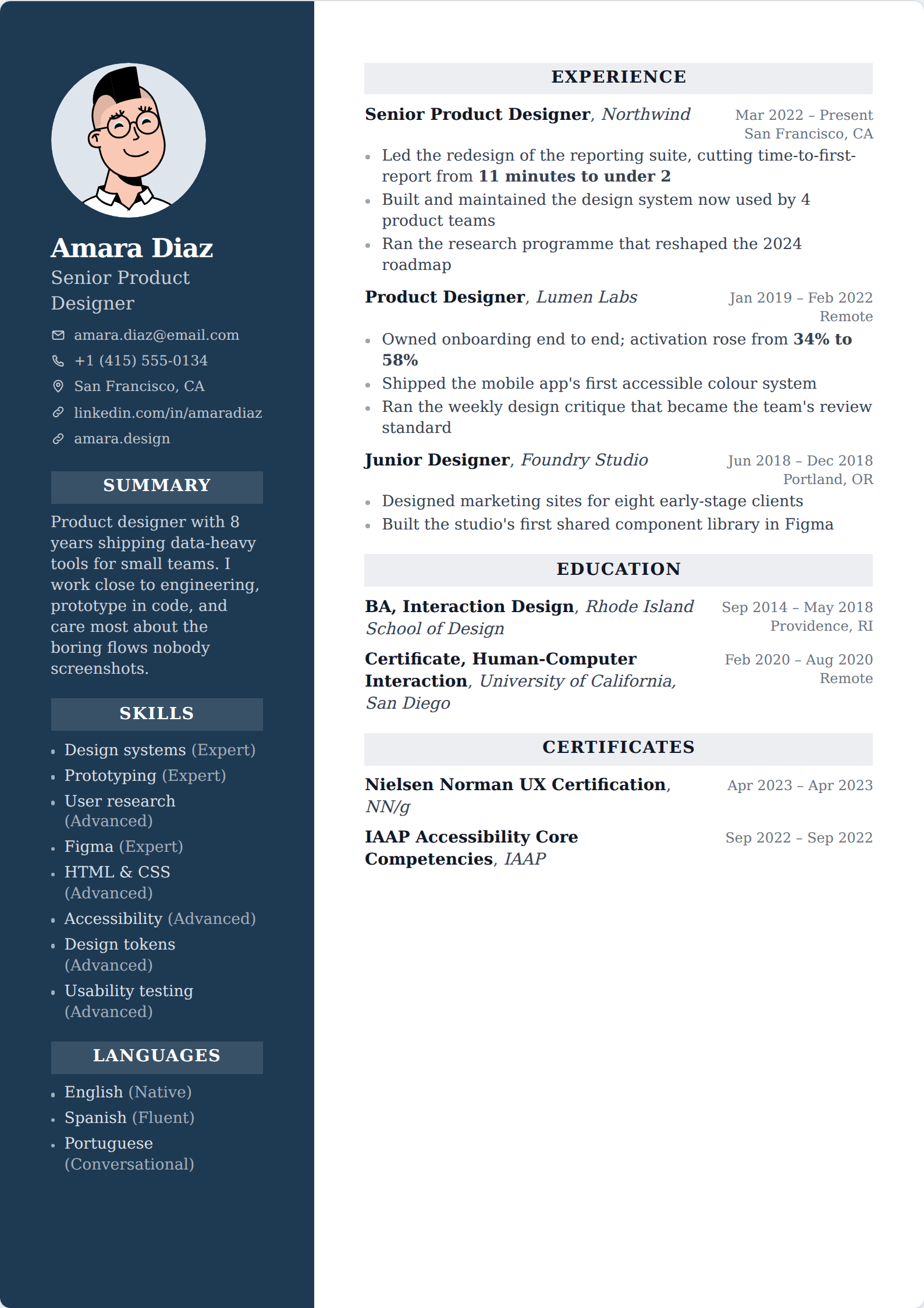
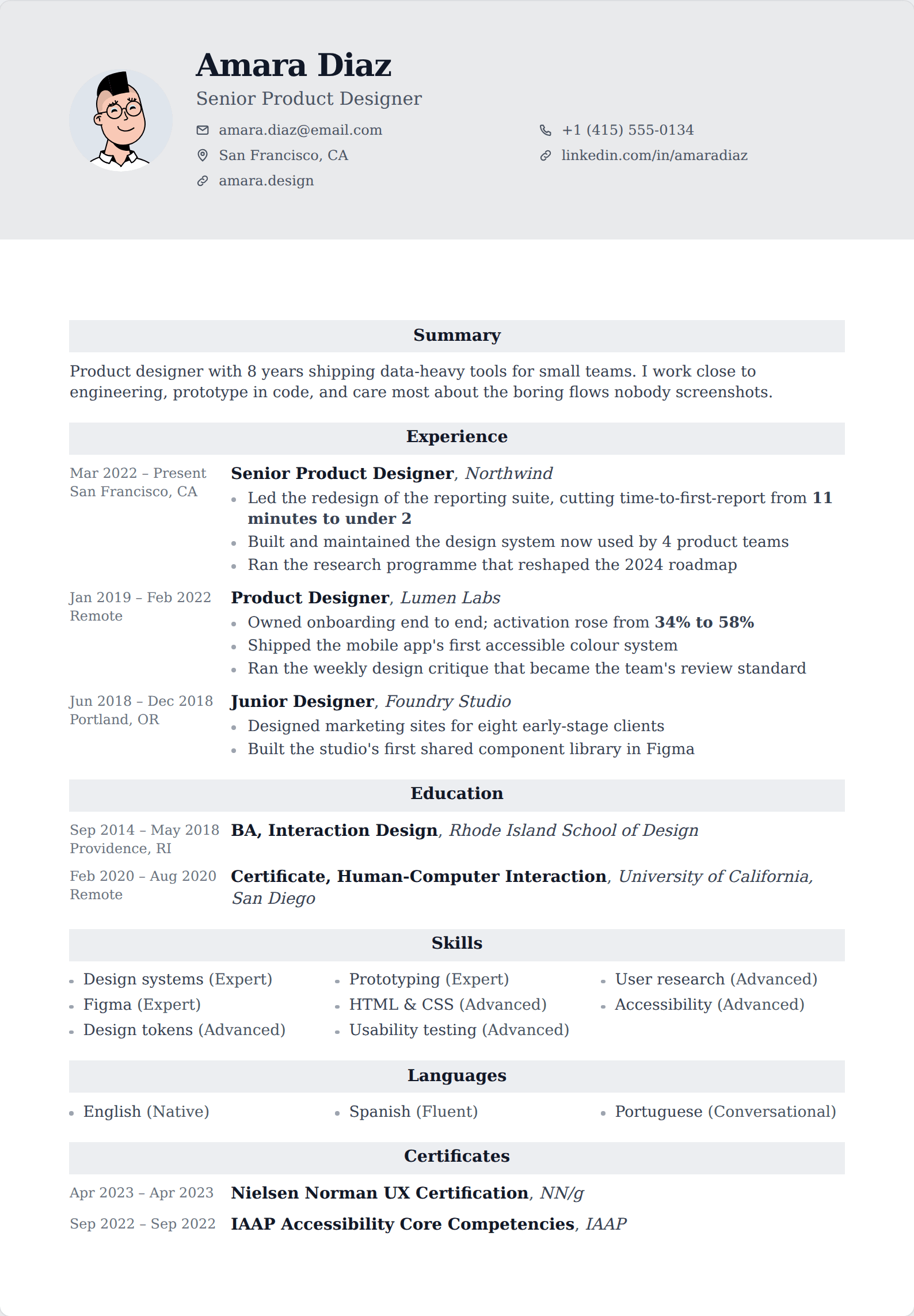
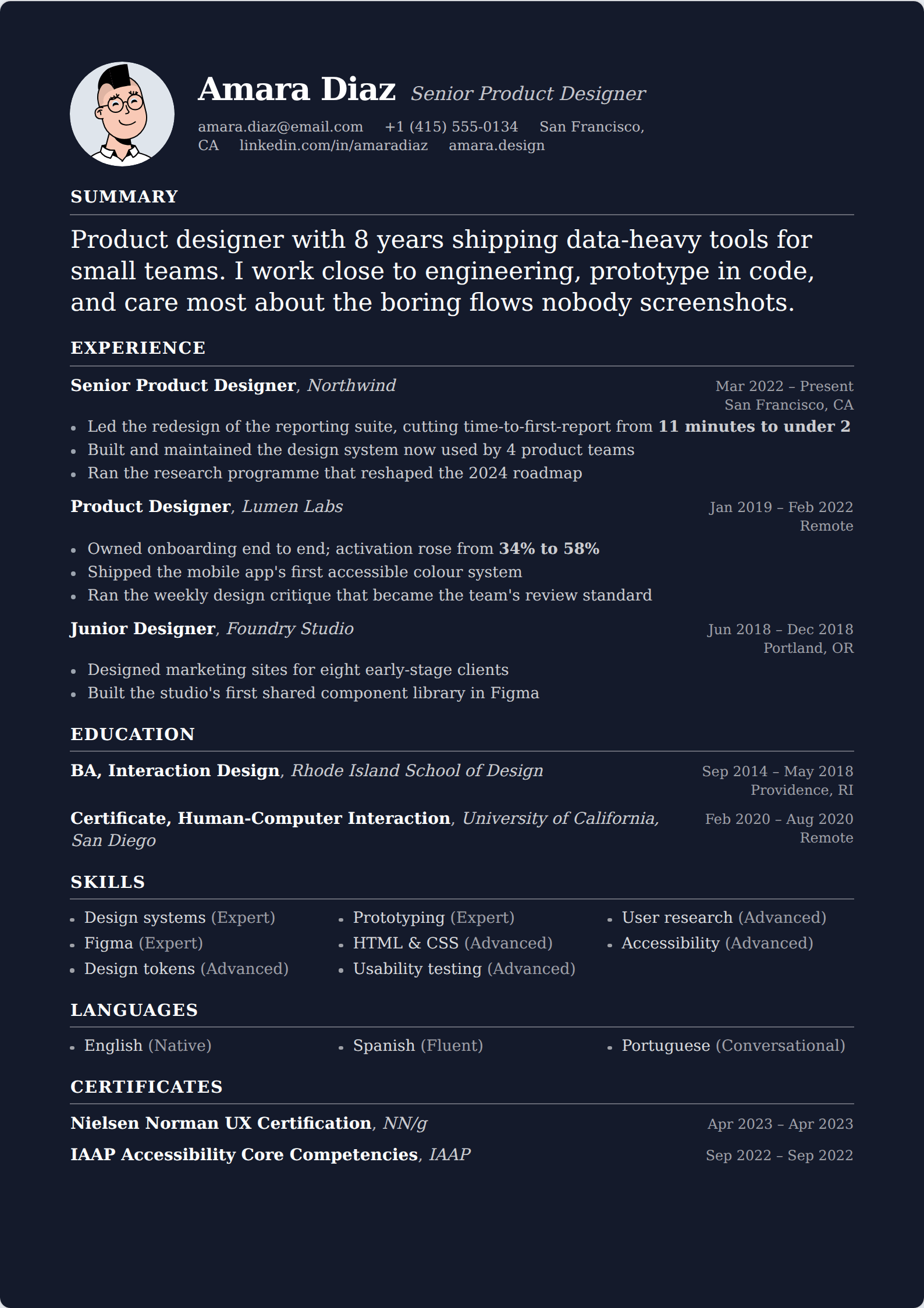
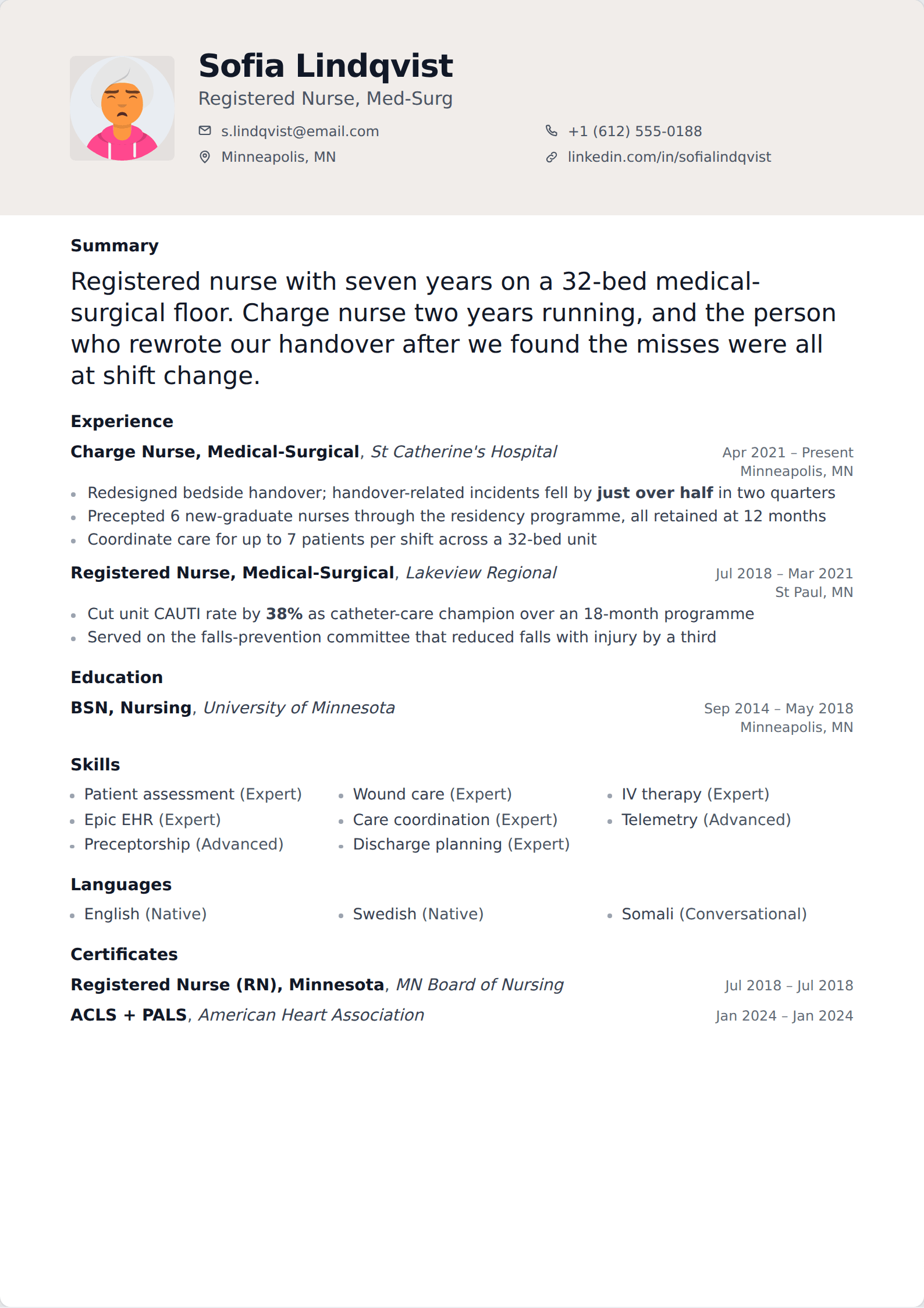
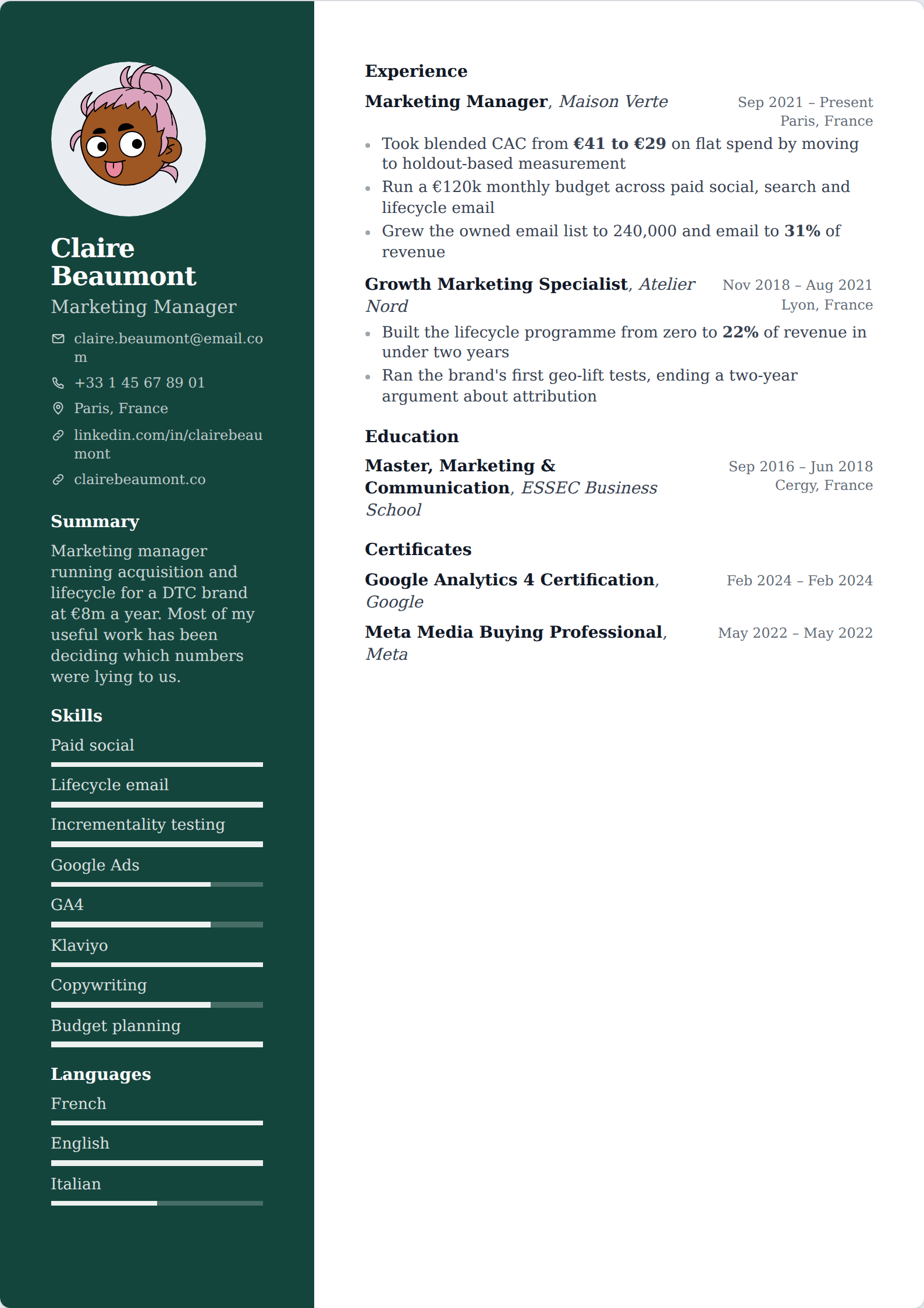
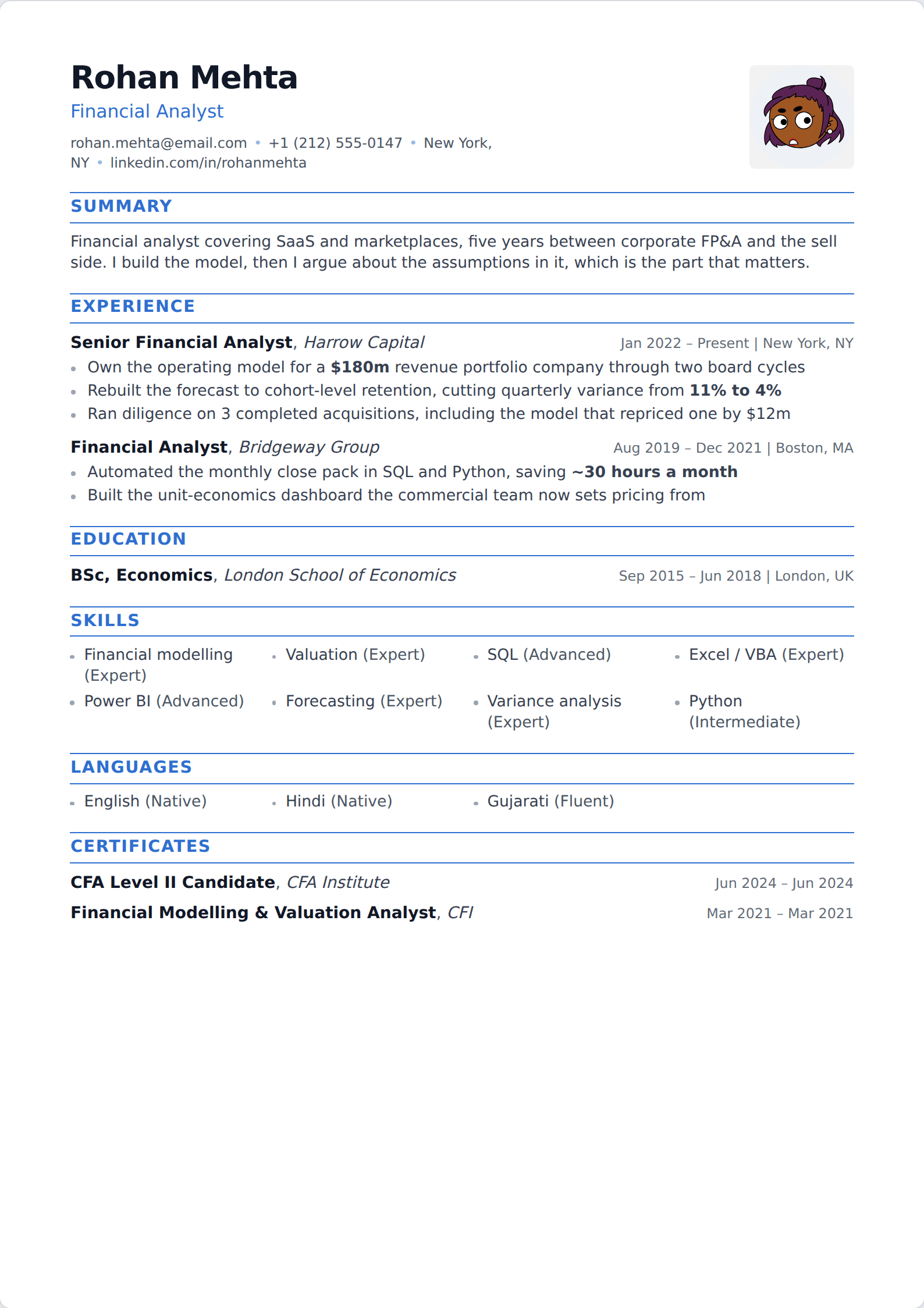
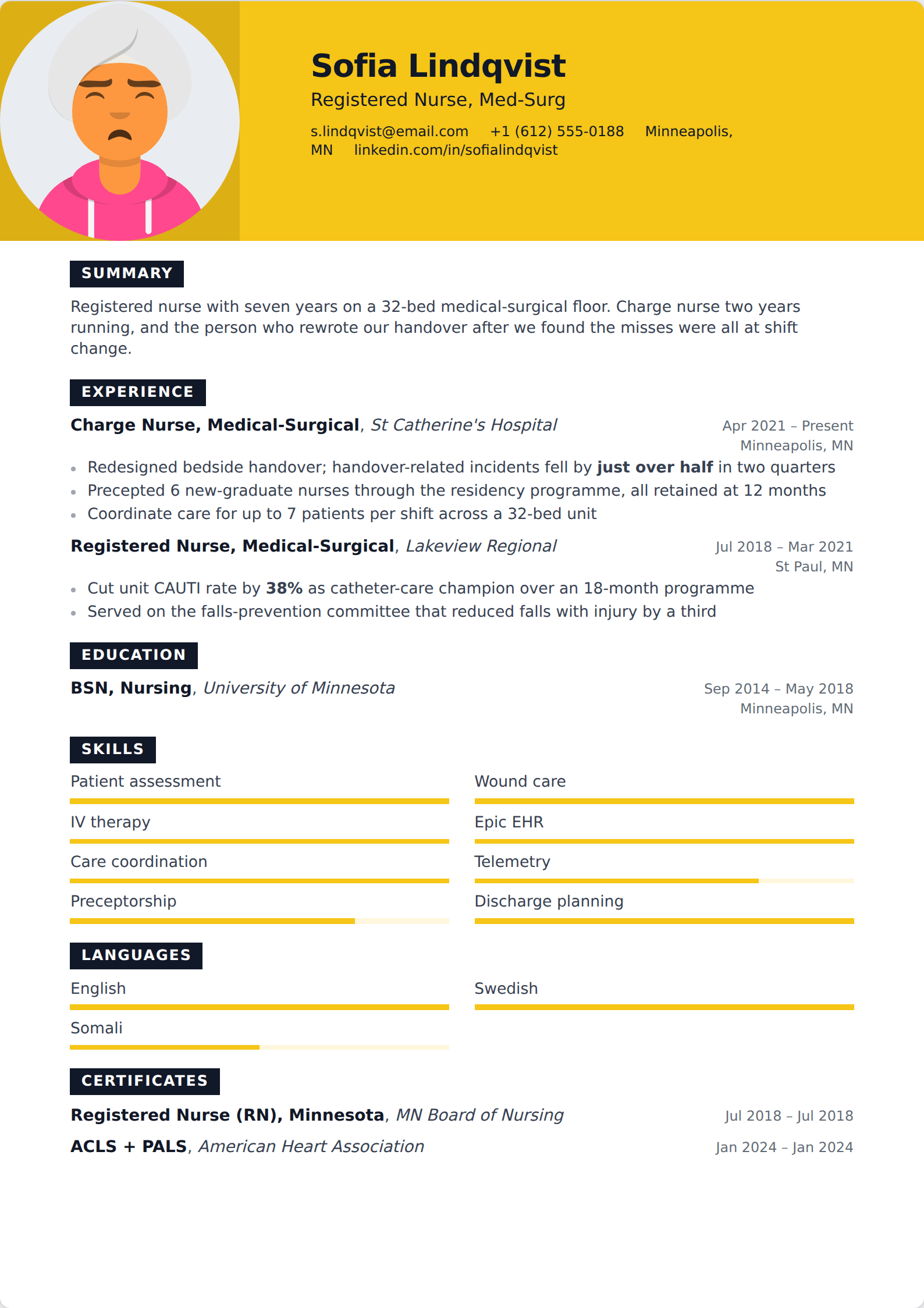
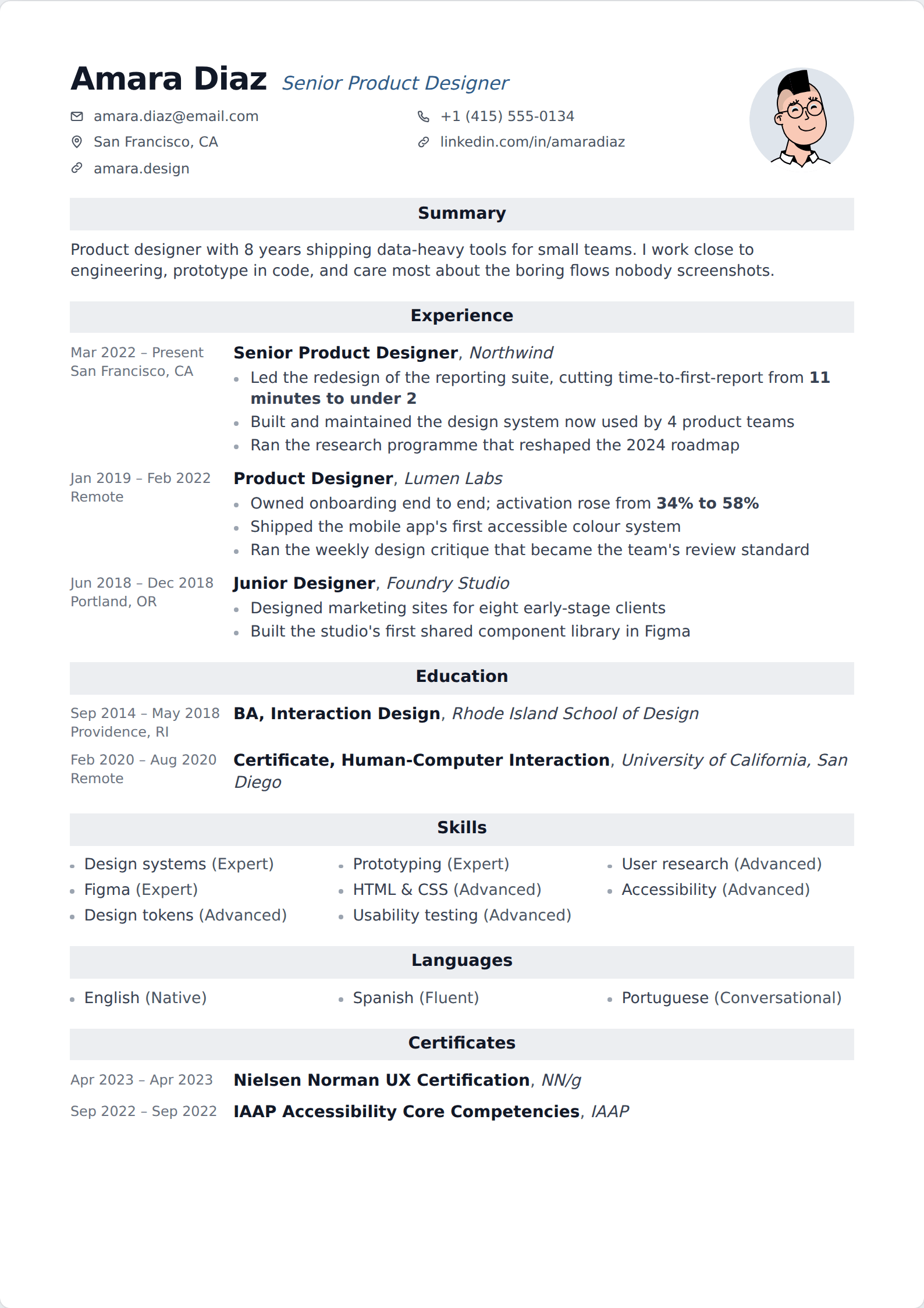
Layouts that make room for a portrait properly rather than dropping one into a corner — which is what a German, French, Spanish or Italian application expects. Switch to a plain one for the US or UK and keep the content.

Common questions

Should you put a photo on your resume?

It depends entirely on where you are applying. Include one for continental Europe, much of Asia and Latin America, where it is conventional and its absence is noticed. Leave it off for the US, UK, Canada, Ireland and Australia, where many employers prefer resumes without one and some strip or reject them.

Do you put a photo on a resume in the US?

No. US employers generally prefer resumes without one, because a photo introduces protected characteristics into a screening decision and creates discrimination exposure. Some organisations remove photos before review, and a few discard the application rather than handle it.

Does a photo affect ATS parsing?

No — an image contributes no text, so it is invisible to a parser in both directions. What does break parsing is text rendered inside an image, such as a designed header containing your name. That text does not exist to any system reading the file.

What kind of photo should I use?

Head and shoulders, plain background, even natural light, neutral expression, dressed as you would for the interview, and recent enough to look like you. The standard is a professional identification photo, not a portrait session and not a cropped social photo.

Do resumes need an image or graphics?

No. Nothing on a resume needs to be an image, and in the markets where photos are discouraged the whole page is better as plain text. Where you do include a photo, everything else — name, contact details, headings — should still be real text.

Related guides

Put it into practice

Start from any template above, get AI help tightening every bullet, and export an ATS-ready PDF. Free to start, and no card at any point.

Start your resume