
What LaTeX actually buys you
Typographic consistency you do not have to maintain. Spacing, alignment, hyphenation and vertical rhythm are handled by the engine rather than by you nudging things, so a LaTeX resume does not drift out of alignment when you add a bullet — which is the single most common way a Word resume degrades over five years of edits.
Plain-text source. The document is a text file, so it lives in git with a real history, diffs sensibly, and can be regenerated identically in ten years. For anyone who already keeps their life in version control, that is genuinely valuable.
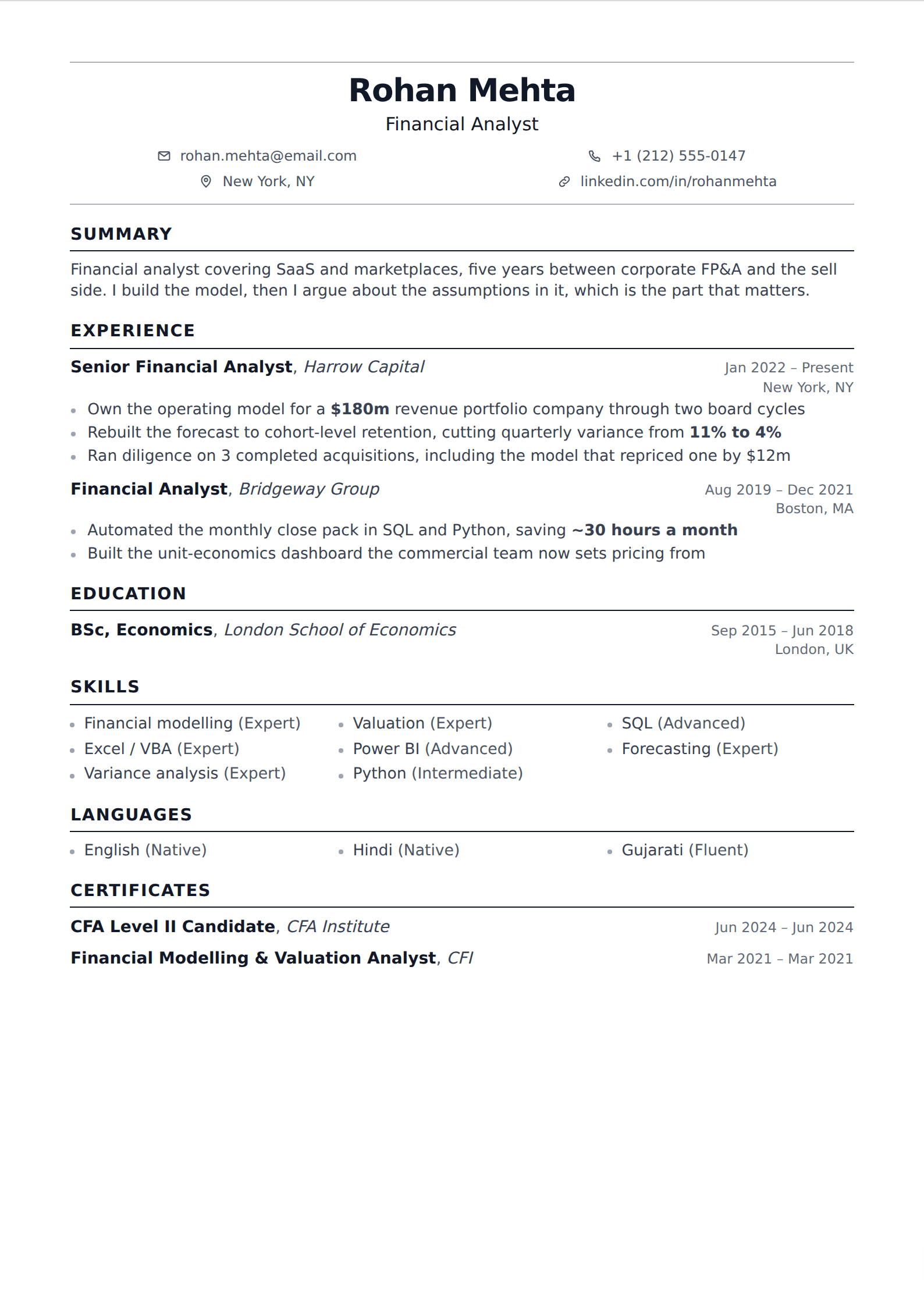
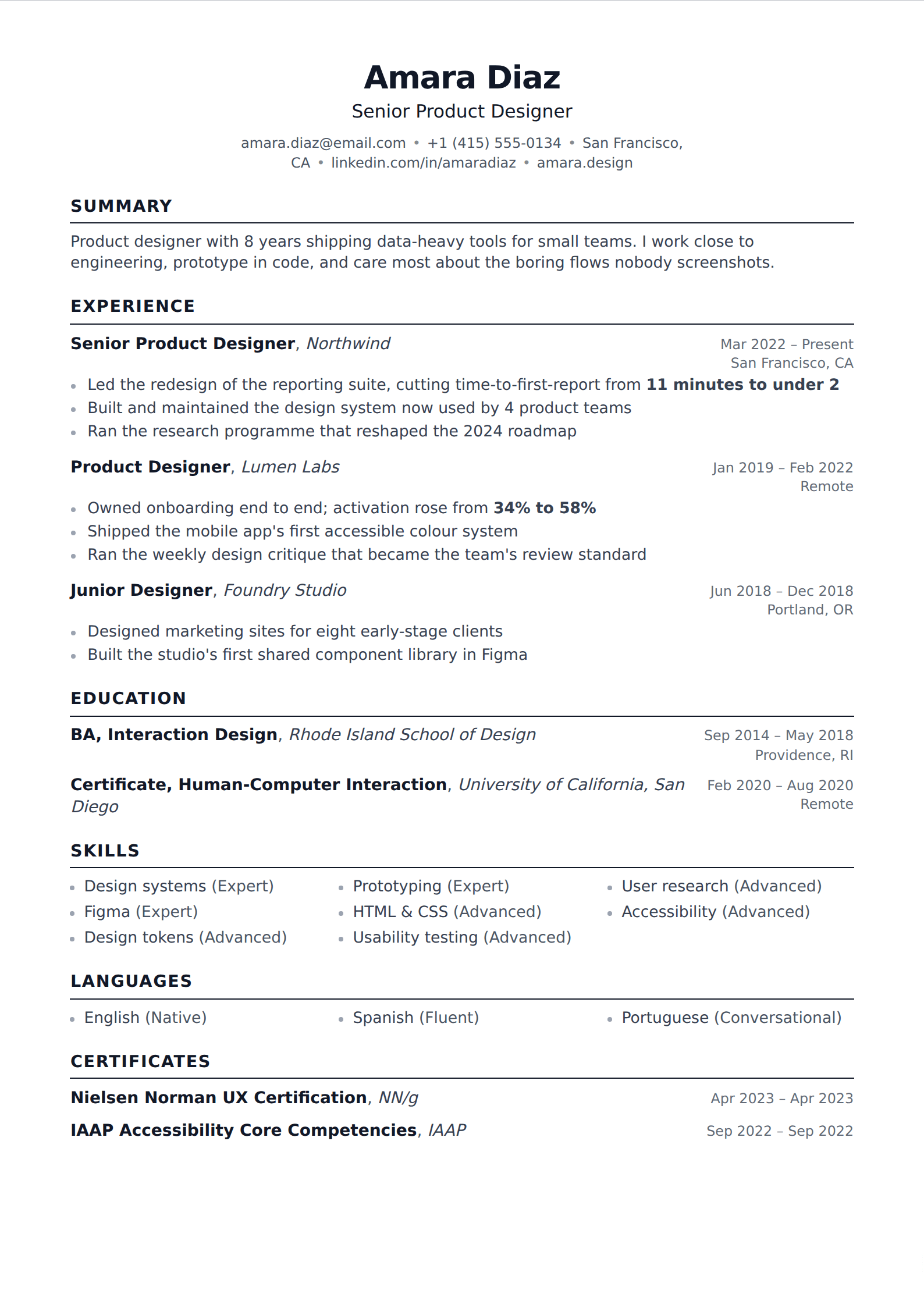
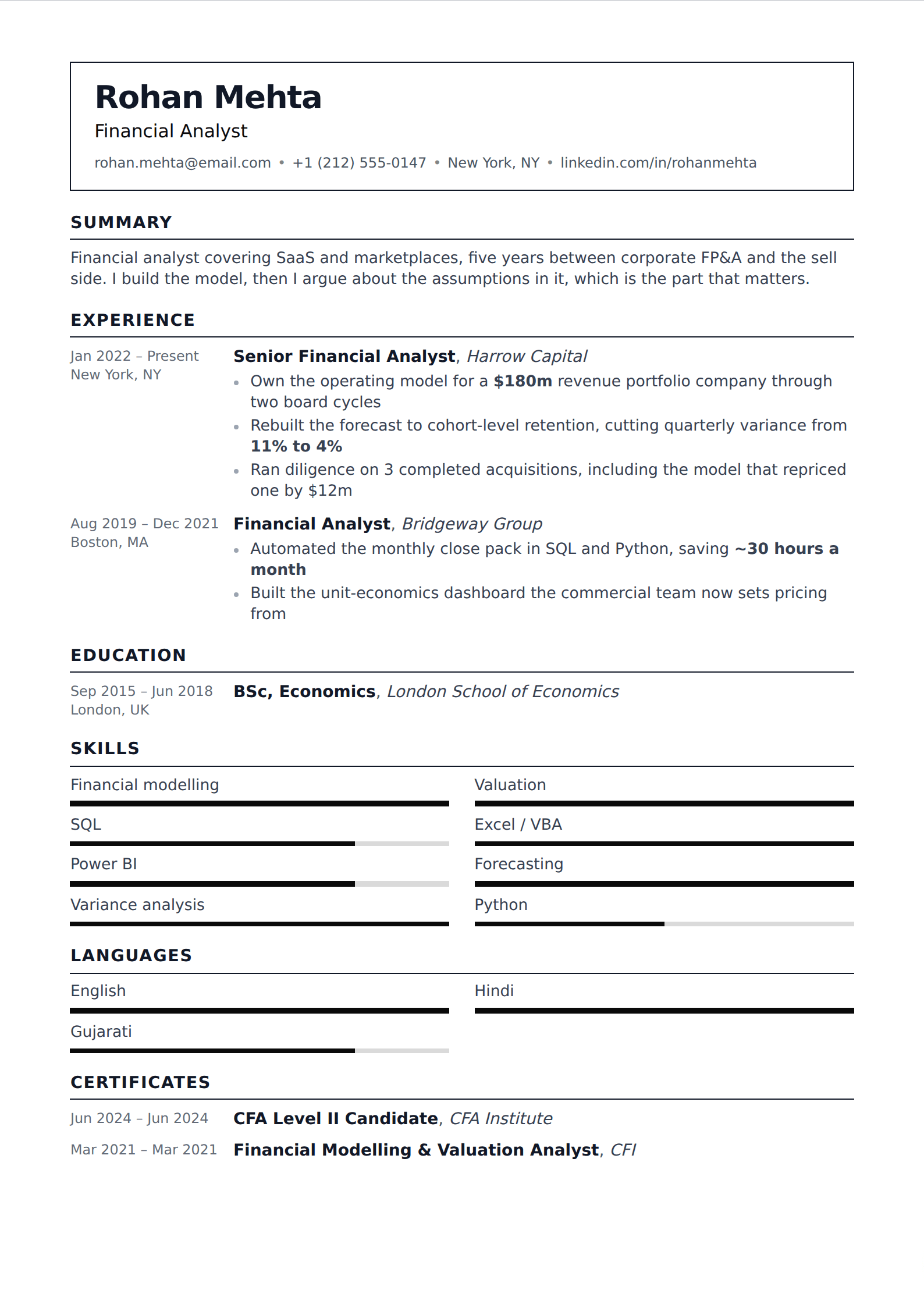
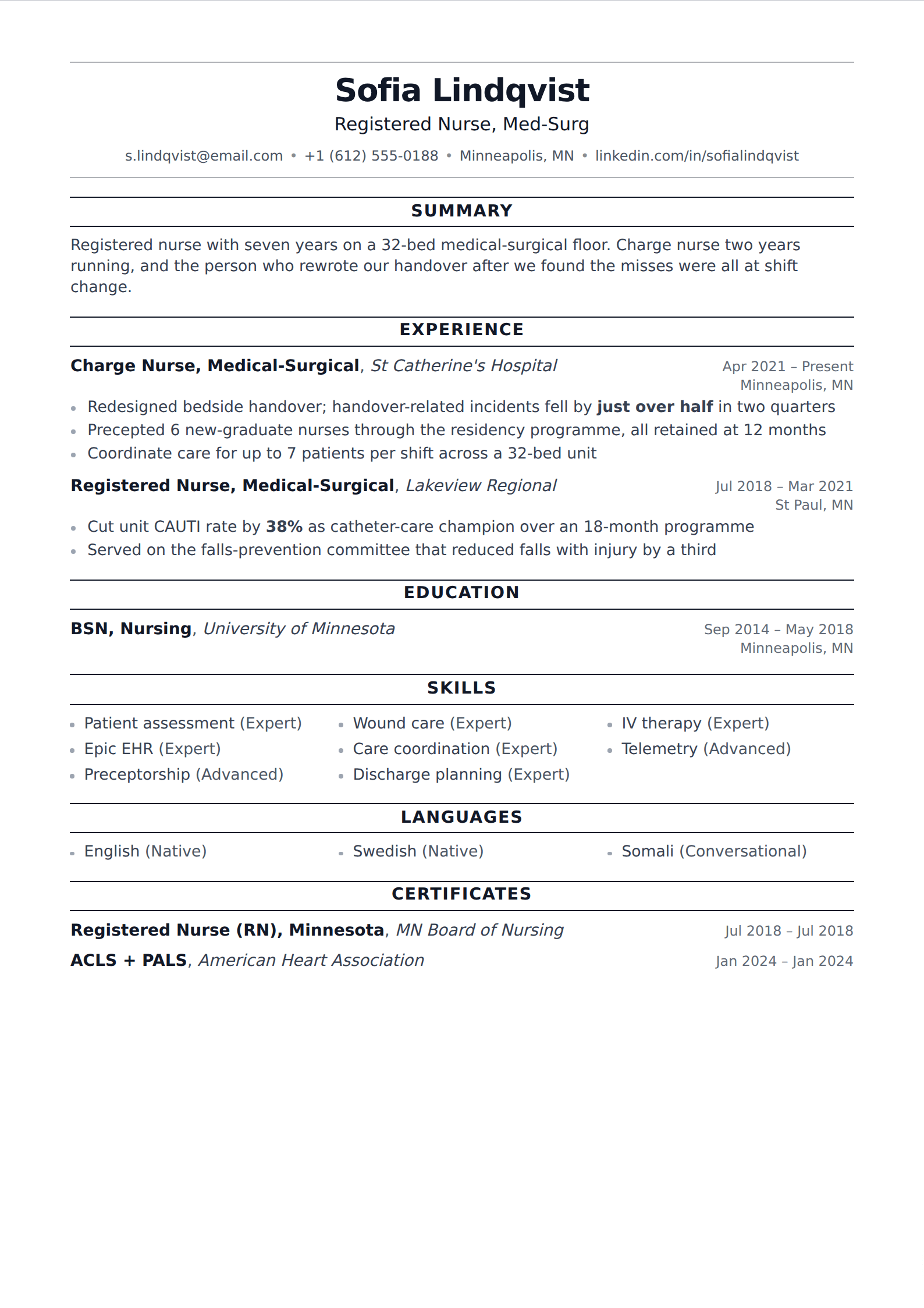
And a specific look. LaTeX resumes are recognisable — tight, dense, Computer Modern or a close relative, no colour — and in the fields where they are common that look reads as fluent rather than as plain.
What it costs
A language, for a layout. Changing the spacing above a section heading in a template you did not write means reading someone else's macros. Adding a section that the template did not anticipate can mean an hour with documentation. None of that is hard if you write LaTeX weekly; all of it is disproportionate if you do not.
It is also unforgiving about length. Getting a LaTeX resume from a page and a tenth down to exactly one page is a real editing session, where a word processor lets you nudge a margin. That is arguably a feature — it forces you to cut rather than compress — but it is a feature that costs time.
And nothing about the output is better for the reader. A well-set resume from any editor and a LaTeX one are indistinguishable to a recruiter, and identical to a parser. The benefits are all on your side of the process, which is why the honest answer for most people is that it is not worth learning for this.
Overleaf and the common templates
Overleaf is a browser-based LaTeX editor with a compiler attached, and it is how most people who use LaTeX resumes actually use them — no local toolchain, no package installation, a preview beside the source. Its template gallery is where the well-known resume templates circulate.
The ones you will encounter repeatedly: Jake's Resume, a dense one-page single-column layout that has become close to a default in software hiring; Deedy, a two-column layout popular a few years earlier; and the moderncv package, which is the standard choice in European academia and produces something closer to a formal CV.
All are free and published for exactly this use. Pick by structure rather than by looks — whether the template has a projects section, whether it is one column, whether it expects education first — because those decisions matter and the typography differences do not.
The parsing question
A LaTeX-compiled PDF contains real selectable text and parses as well as anything else. The format is not a risk in itself. Two specific things in LaTeX resumes occasionally are.
Ligatures and font encoding can turn a copy-pasted "fi" into something odd in older setups; using a modern engine and font package avoids it. And any template using an icon font for contact details renders your email as a glyph plus text, where the glyph contributes nothing — harmless, unless the icon has replaced a label the parser needed.
Run the same check you would run on anything: export, select all, paste into a plain text file, and read what comes out. If your name, dates and titles survive in order, the document is fine.
The honest recommendation
If you already write LaTeX, use it. The version control alone justifies it and the learning cost is already paid.
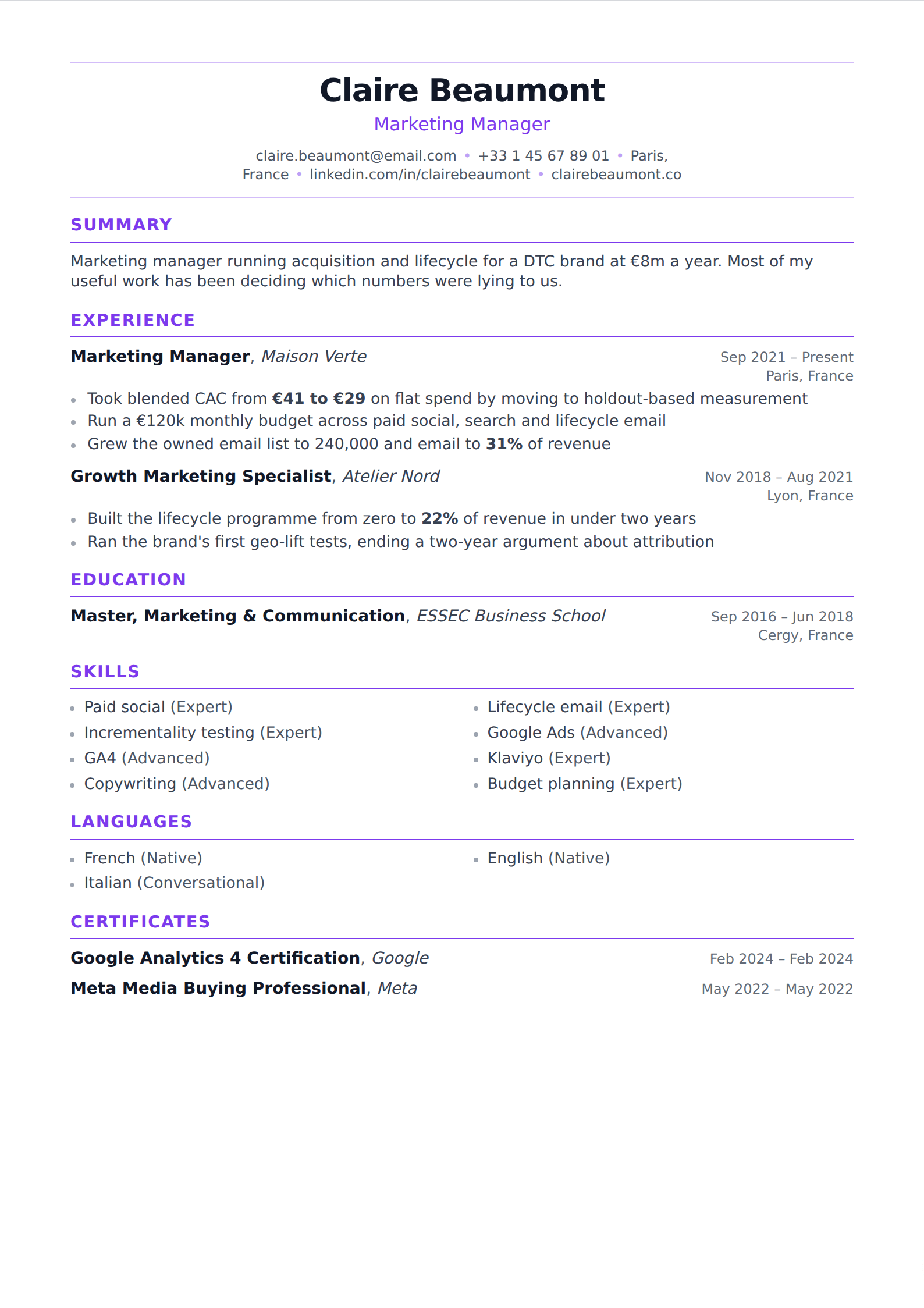
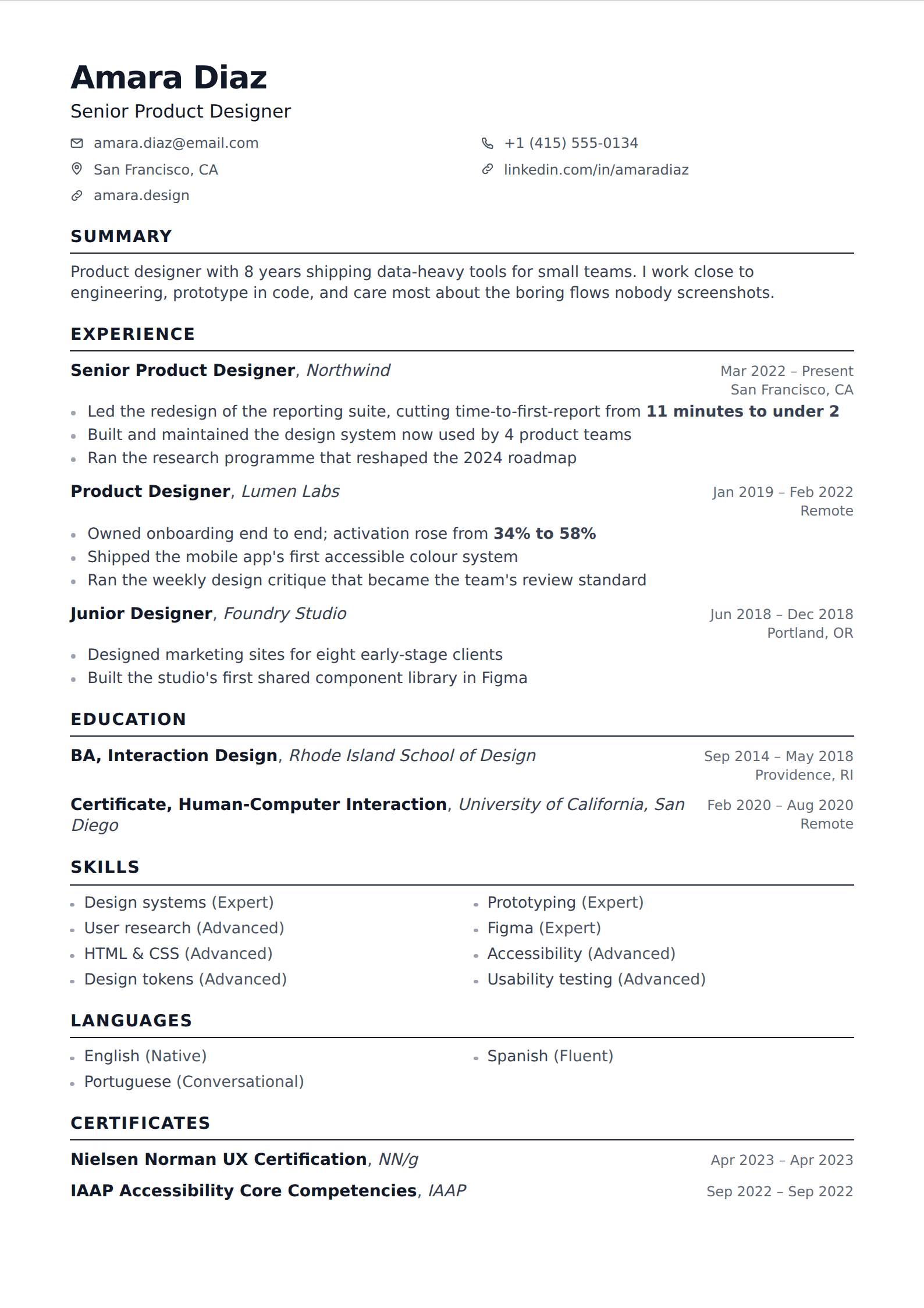
If you do not, the reasons to start are thin. What people actually admire in LaTeX resumes — the density, the restraint, the single column, the consistent spacing — are properties of the layout, not of the engine, and any competent editor reproduces them. This site does not generate LaTeX and is not going to pretend otherwise; what it produces is the same shape of document with the same real-text export, editable without a compiler.
The one case where LaTeX is genuinely required rather than preferred is an academic CV in a field where a specific class file is expected. That is a real constraint, and it is worth knowing that it applies to a small number of people.