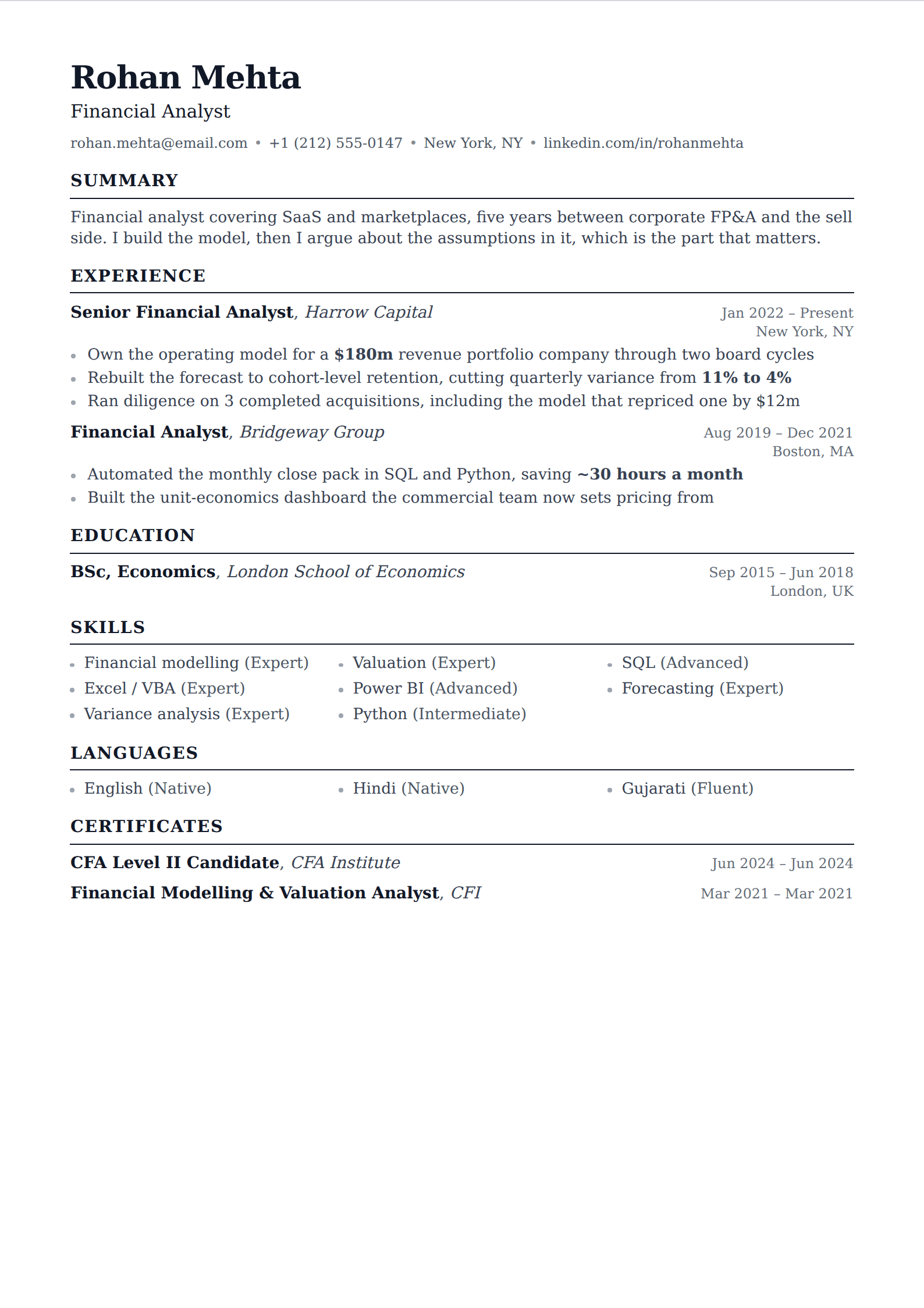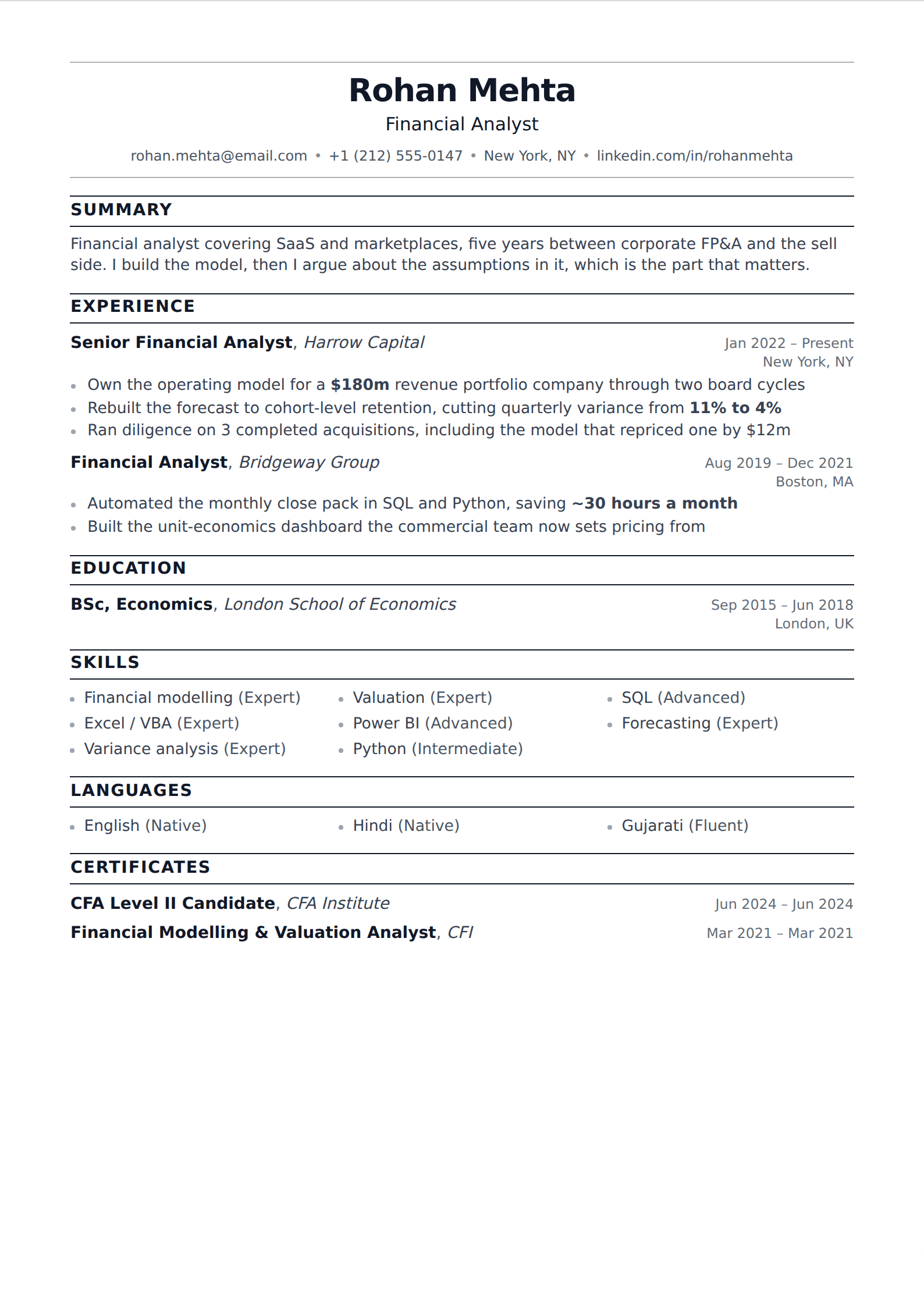

The one rule
Never ask it to generate content. Always ask it to transform content you supply.
That distinction sounds pedantic and it decides everything. "Write me a resume for a marketing manager" returns industry-standard filler with plausible numbers attached — and those numbers are invented, which means you either send a resume with fabricated metrics on it or spend longer correcting them than writing would have taken. "Here is what I did; rewrite this bullet so it leads with ownership and ends with the result" returns something true and better written.
Everything below is a variation on that one rule.
Prompts that actually work
These assume you paste your own material in first. Each one asks for a transformation rather than an invention.
- "Rewrite this bullet so it starts with what I owned and ends with the measurable result. Do not add any numbers I haven't given you."
- "Here are my three most recent roles. Draft a three-sentence summary aimed at this job posting: [paste]. Use only facts present above."
- "Read this job posting and my resume. List the requirements the posting emphasises that my resume doesn't currently address."
- "Which of these bullets have no outcome in them? Just list them — don't rewrite yet."
- "Rewrite this to be about 25% shorter without losing any specific detail."
- "What questions would an interviewer ask about the claims on this resume?" — the fastest way to find the lines you can't defend.
What it gets wrong
Invented specifics are the serious failure. Asked for impressive bullets, a model will supply percentages, team sizes and revenue figures that look exactly like real ones. If any of those reach an interview, you are answering questions about work you did not do — and that is a much worse outcome than a plain resume.
Uniformity is the subtler failure, and it is the actual tell recruiters notice. Not vocabulary — every bullet arriving at the same length, the same rhythm, the same verb-first construction, with no line that sounds like a particular person wrote it. A resume where every bullet is equally polished reads as processed. Keep the ones that sound like you.
It also has no idea what your industry values, what your target company is like, or whether a claim that reads as impressive in one field reads as routine in another. It is editing prose, not advising you on a market.
The privacy question nobody asks
A resume contains your full name, contact details, employment history and often your address. Pasting it into a general-purpose chatbot means it goes wherever that service's data policy says it goes, and for consumer tiers that has historically included model training unless you found and changed a setting.
This is worth thirty seconds of attention rather than none. Check the setting, or use a tool that states plainly what it does — the assistant here works from your resume to produce the response you asked for and does not use it for training, which is the answer you want from anything you hand your employment history to.