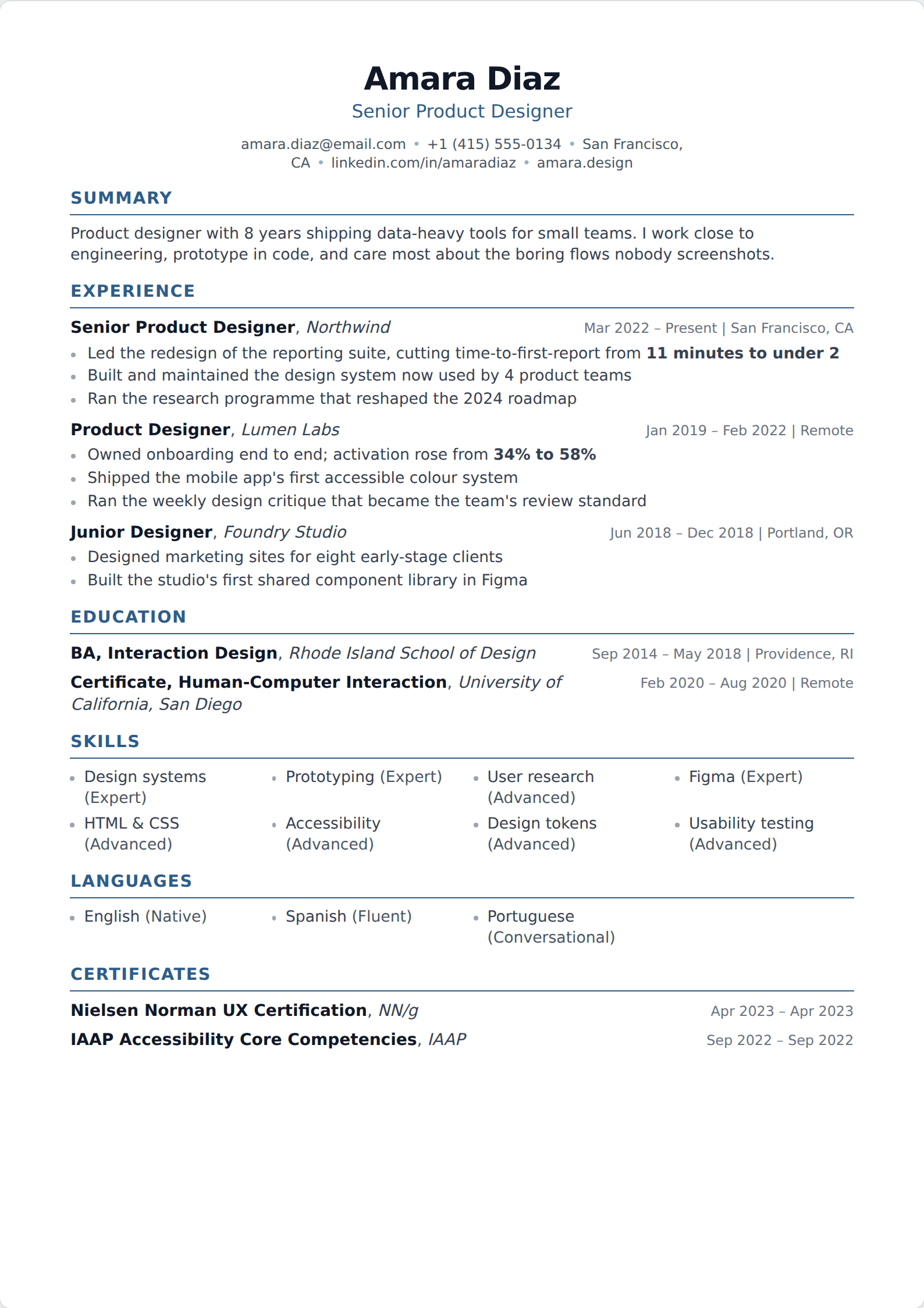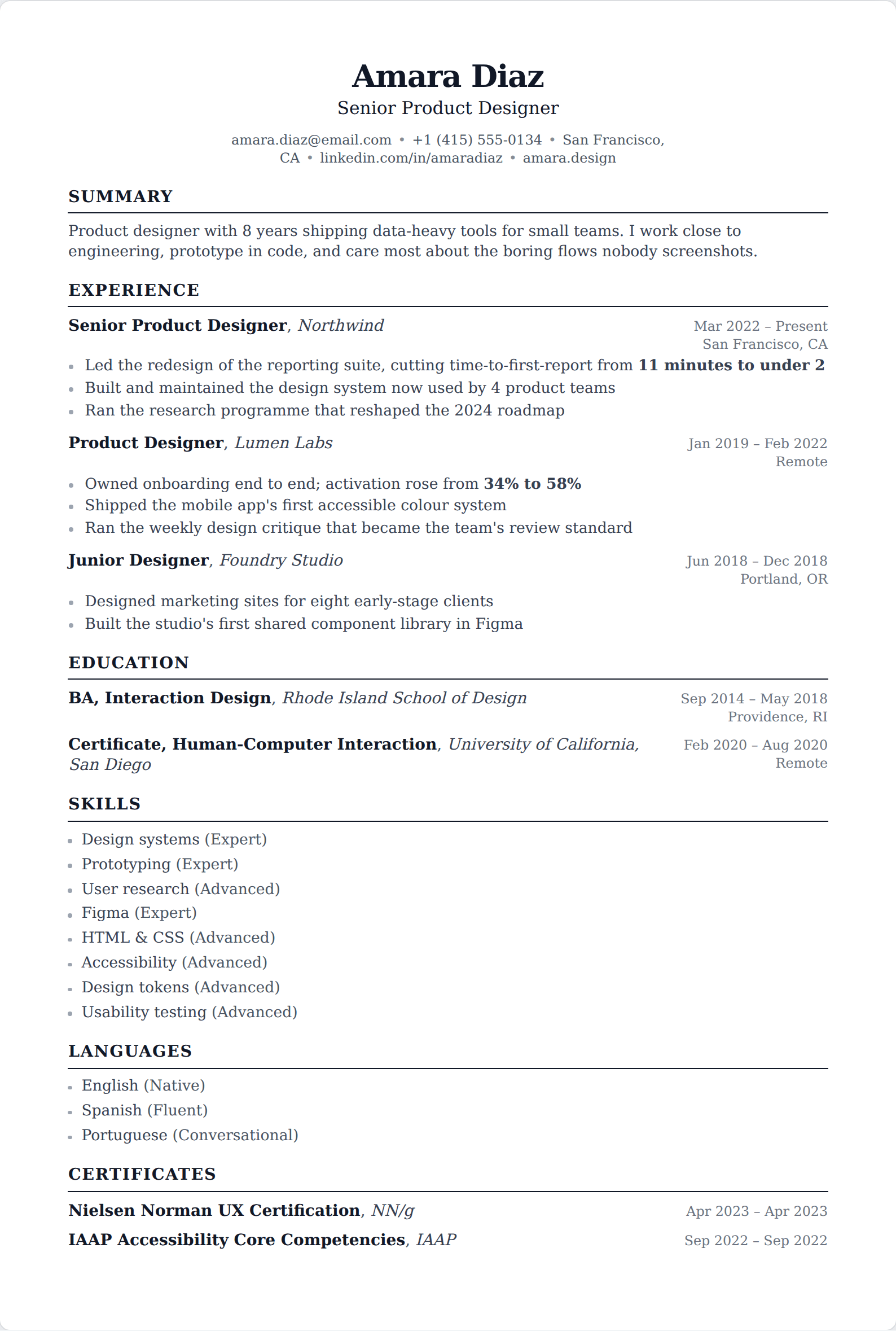

First, test the parse yourself
Open your exported PDF, select all the text, and paste it into a plain text editor. What survives is approximately what a parser extracts, and this single test catches most structural problems in thirty seconds.
You're checking four things, and any failure here matters more than anything else on this page — because content a parser can't read is content that doesn't exist.
- Nothing is missing entirely — anything absent is trapped inside an image
- The order is sensible, with no skills interleaved into a job description
- Every job has its title, employer and dates together and intact
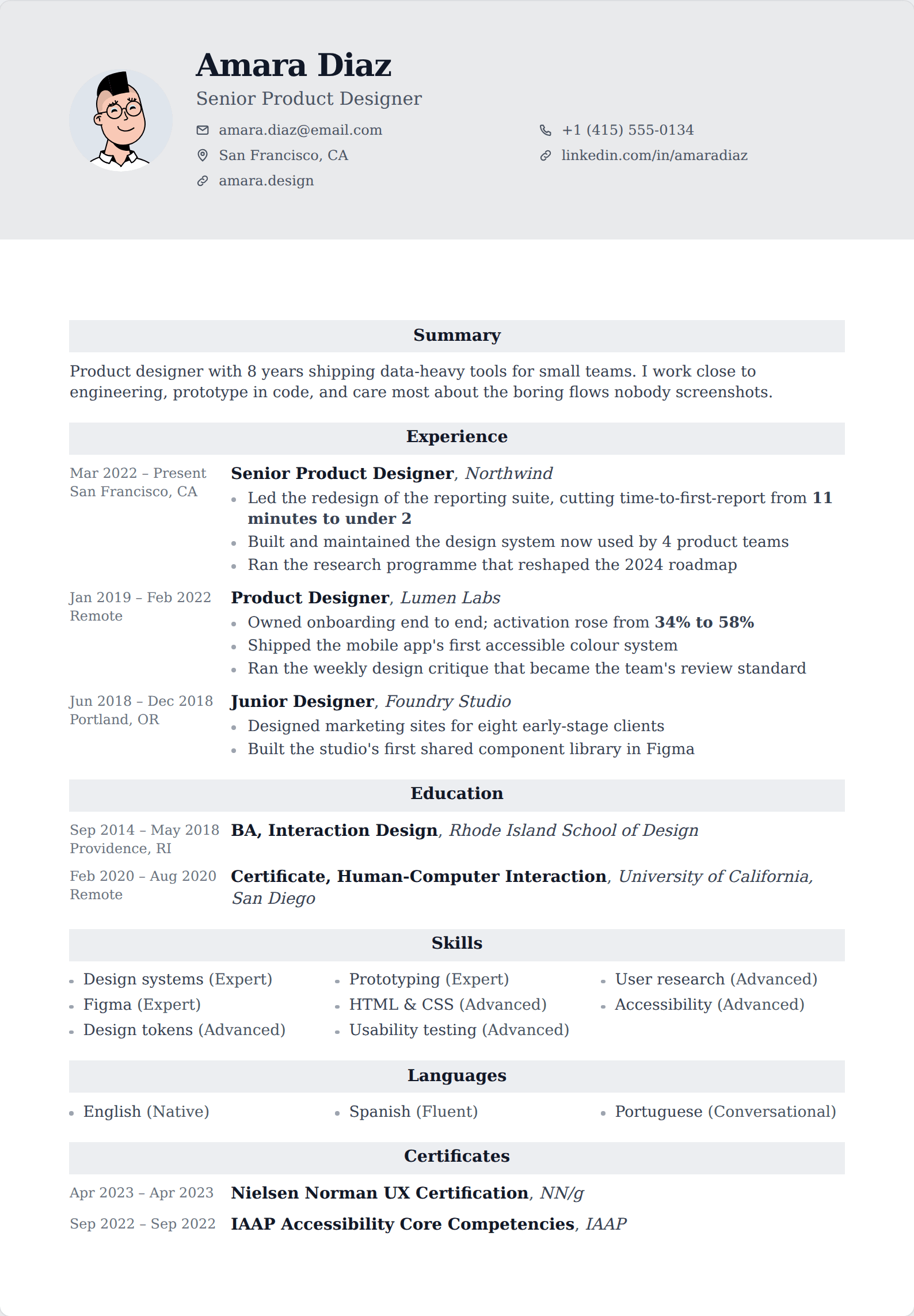
- Your name, email and phone are in the text, not in a document header
Then check the page as a document
These are the failures that survive parsing but lose the human read. Work down the list on the rendered page, not on the text you just extracted.
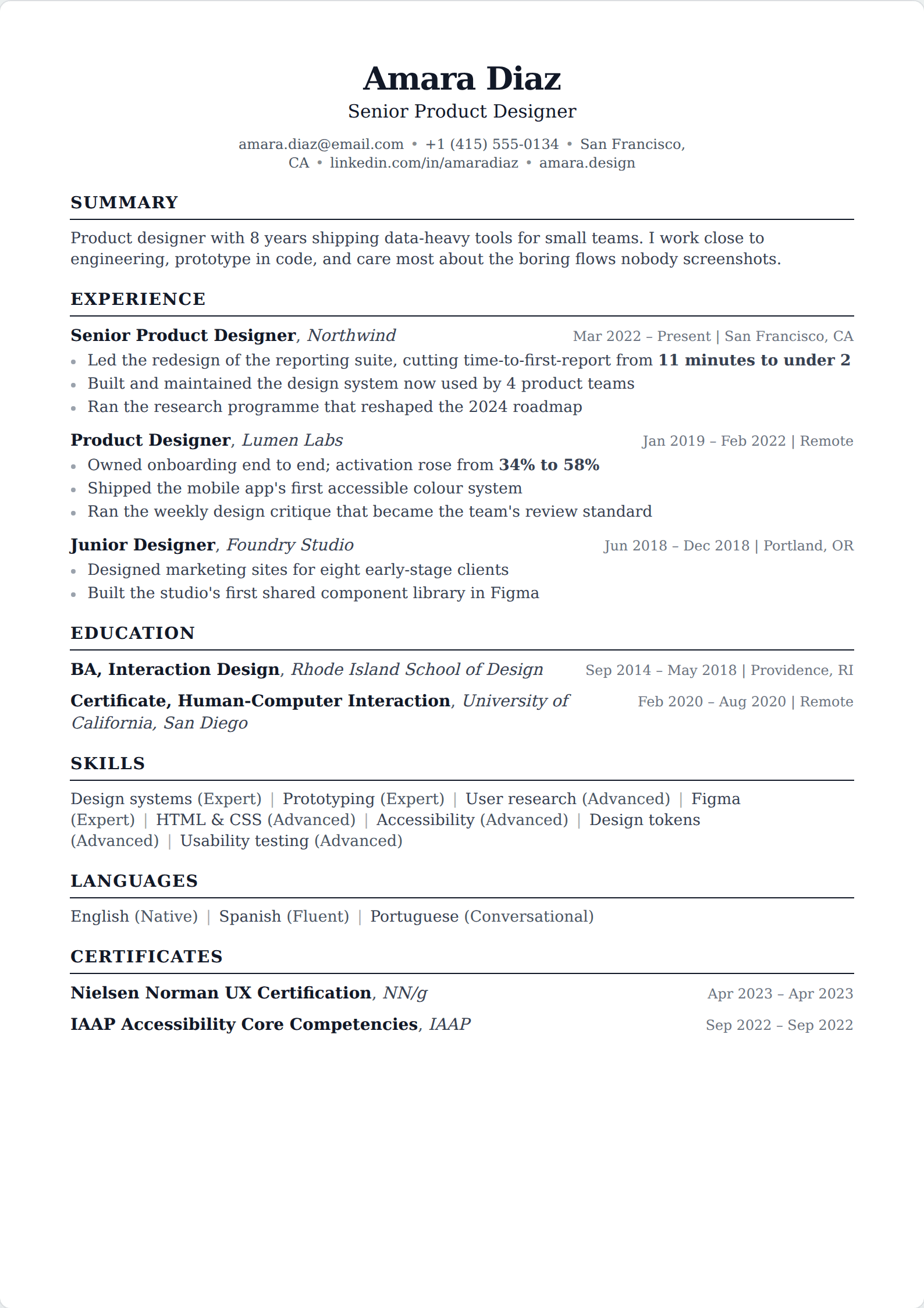
- Standard section headings: Experience, Education, Skills
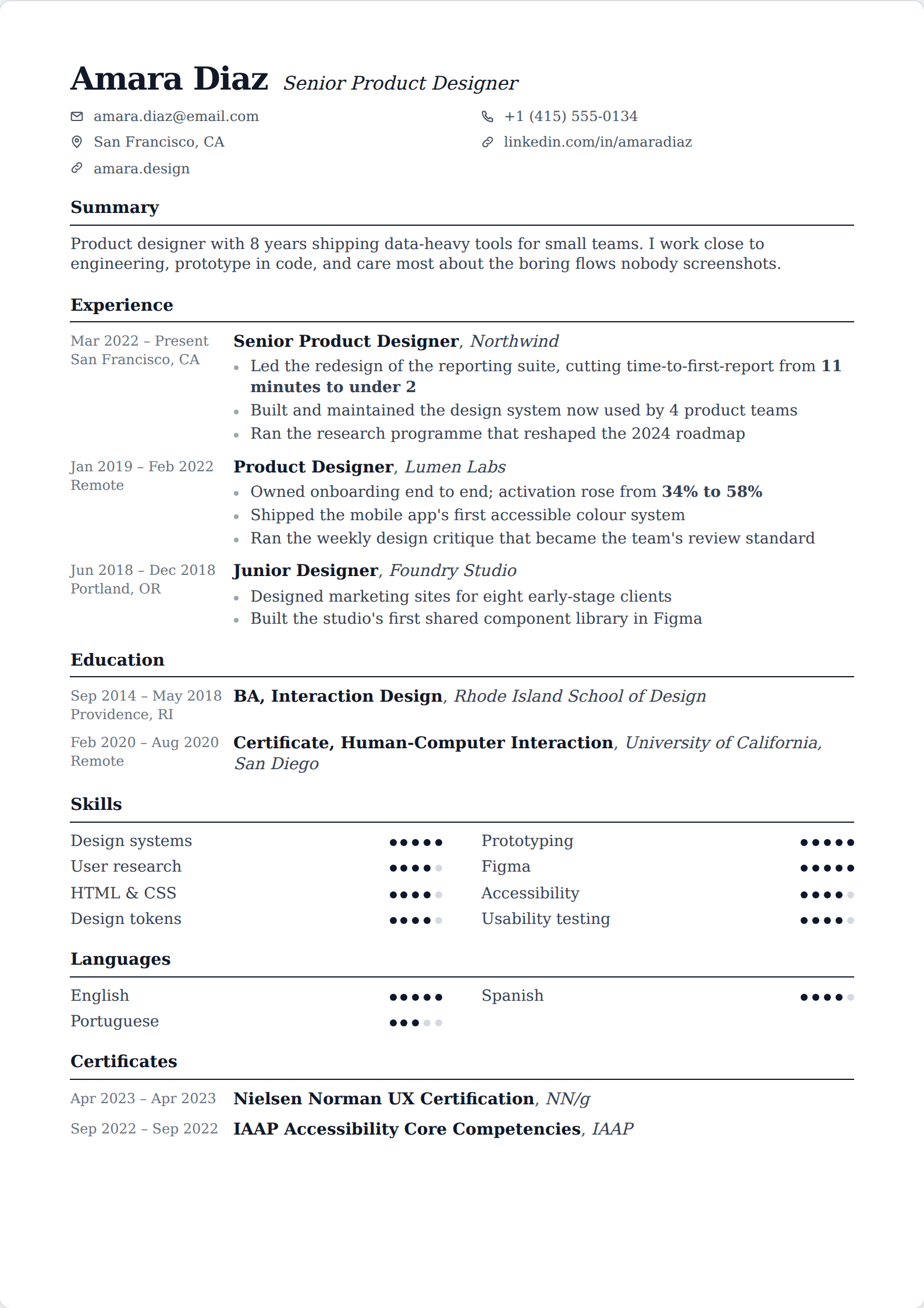
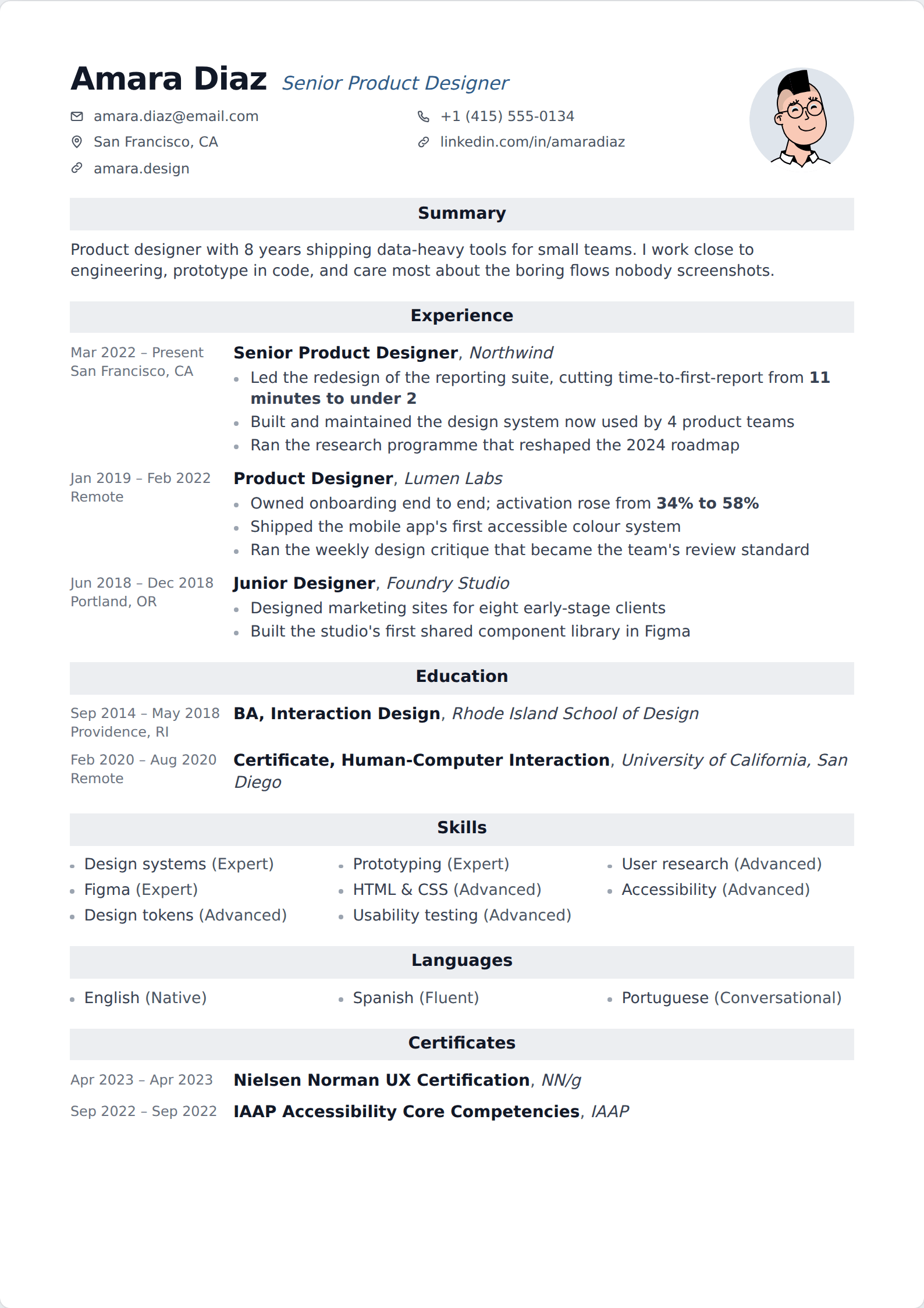
- One column for the content that carries your history
- Dates formatted identically in every entry, with no gaps left unexplained
- A file name that identifies you — "jane-okoro-resume.pdf", not "resume-final-v3.pdf"
- Contact details correct, and an email address you actually check
- Links that resolve, and aren't pointing at a private repository
- One page unless you've genuinely outgrown it, two at most
The five-minute tailoring pass
This is the highest-return work available per minute spent, and most applicants skip it. You are not rewriting the resume — you are reordering it so the first things a reader meets are the things this posting asks for.
Read the posting, then make three changes: adjust the summary's first sentence to name the role and its central requirement, reorder your skills so the posting's priorities come first, and promote the two bullets in your recent roles that most directly answer it.
- Summary names the role you're applying for
- Skills reordered to match the posting's emphasis
- The two most relevant bullets moved to the top of their roles
- The posting's own words used for tools and titles you genuinely have
- Anything irrelevant to this application cut or demoted
The last read, out loud
Read the whole page aloud before attaching it. It's slow, it feels silly, and it catches things silent reading never does: a tense that shifts halfway through a bullet, a sentence that needs two attempts, a word you'd never say in an interview.
That last one is the important one. Every line on the page is something you've agreed to discuss in your own voice, and anything that sounds unlike you when spoken will sound worse when a stranger asks you about it.
Common failures this catches
The pattern in almost every one of these is the same: the resume was fine, and the file wasn't. A layout that looked good and extracted as nonsense, a phone number in a header nobody parsed, a version tailored to a different company still naming that company in the summary.
None of these are writing problems, which is why they survive so many drafts. They're the last ten minutes of work, and they're the ten minutes most applications don't get.
- A scanned or image-based PDF that extracts as nothing at all
- Contact details in a header, making a good application unreachable
- A summary still naming the previous company you applied to
- A two-column layout interleaving skills into your job history
- A portfolio or GitHub link that 404s or requires access