
What the verb is doing
It states your relationship to the work. "Led", "contributed to", "supported" and "owned" describe four genuinely different levels of involvement in the same project, and choosing accurately is what makes the rest of the sentence believable. A reader who suspects you have inflated your role discounts everything after it.
This is why the swap-your-verbs advice misfires. The problem with "Responsible for the monthly close" is not the phrase "responsible for". It is that the sentence contains no action, no scale and no outcome — and replacing the opener with "Spearheaded" produces a sentence that is now both empty and overwritten.
Fix the claim first. The verb usually appears on its own once you know what you are claiming.
Verbs by what they claim
Grouped by the kind of work they describe, because picking from the right group is the useful part.
- Built something: built, designed, developed, launched, created, implemented, engineered, architected, prototyped, shipped.
- Improved something: improved, reduced, increased, streamlined, optimised, automated, accelerated, simplified, consolidated, rewrote.
- Led people: led, managed, mentored, coached, trained, hired, supervised, directed, coordinated, onboarded.
- Owned an outcome: owned, drove, delivered, ran, oversaw, spearheaded, championed, established.
- Analysed: analysed, evaluated, investigated, modelled, forecast, audited, diagnosed, measured, researched.
- Persuaded or aligned: negotiated, secured, influenced, presented, briefed, advocated, resolved, mediated.
- Maintained and supported: maintained, administered, monitored, supported, resolved, triaged, documented.
The openers to replace
Four constructions account for most weak bullets, and all four are symptoms of describing a job rather than a contribution.
"Responsible for…" describes a role that existed. "Duties included…" is a job description with your name on it. "Helped with…" and "Assisted in…" volunteer that your contribution was marginal, which is rarely what you meant and always how it reads. "Worked on…" says you were present.
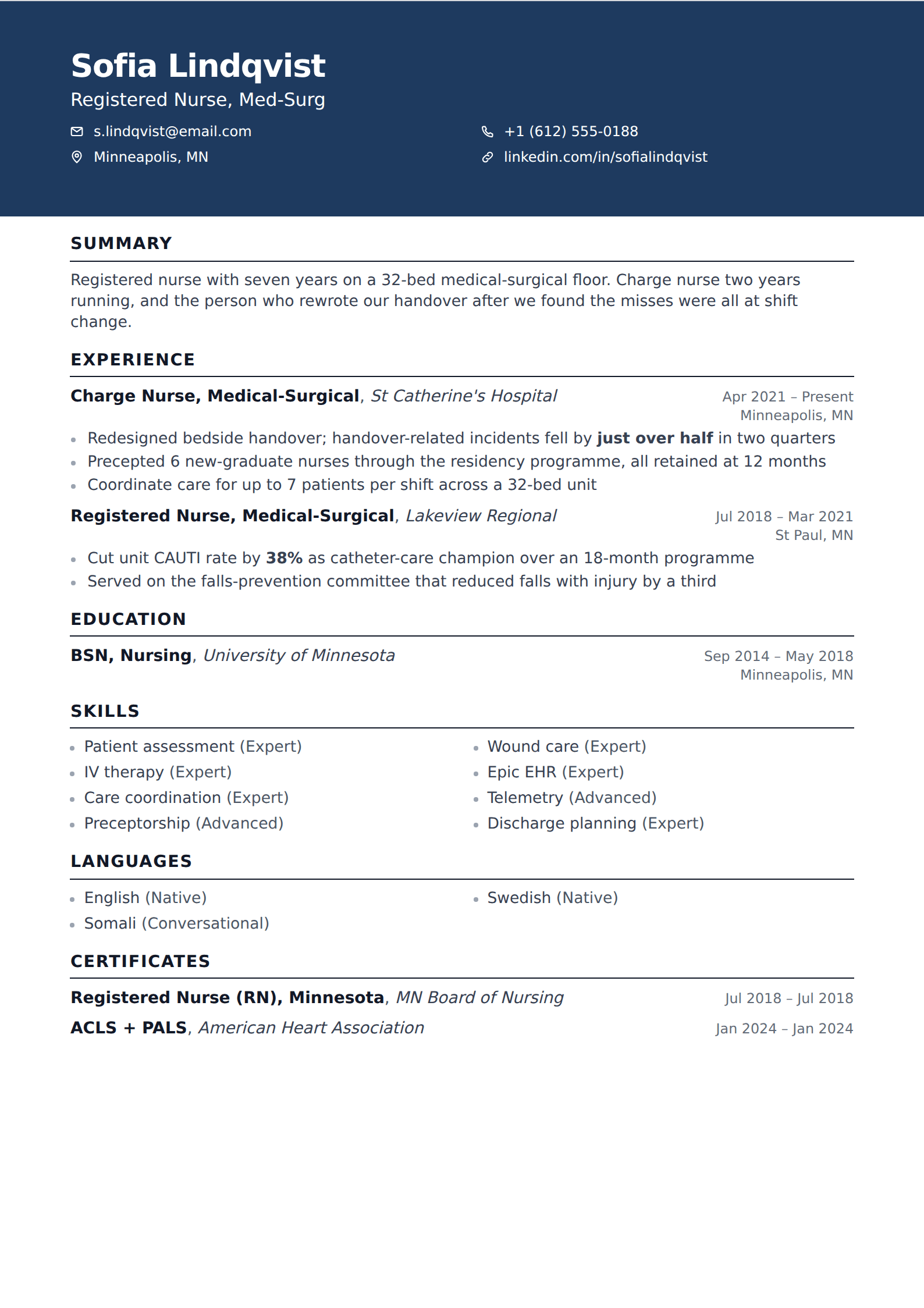
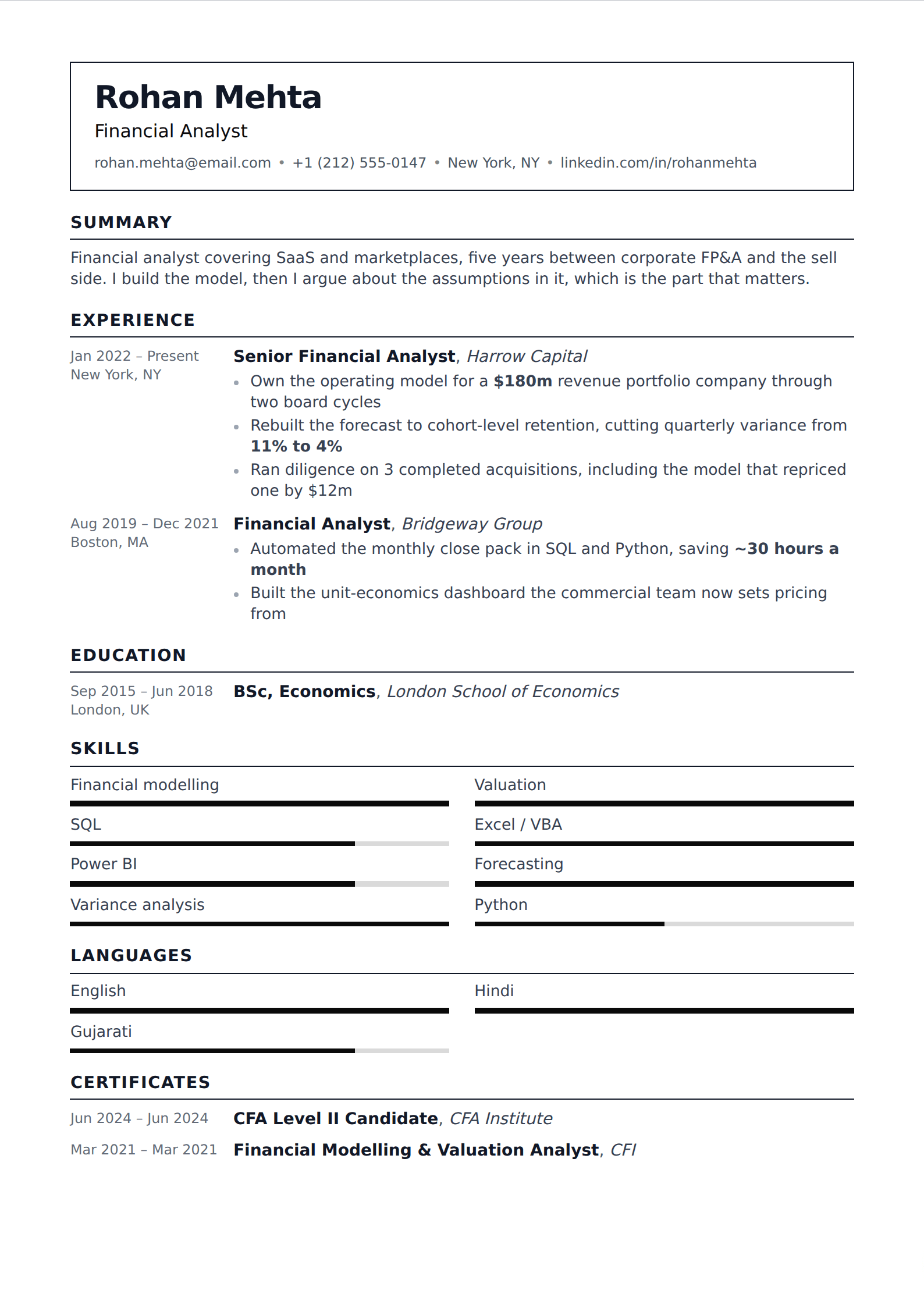
In each case the fix is the same question: what did you actually do, and what happened because of it? "Responsible for the monthly close" becomes "Ran the monthly close for a 12-entity consolidation, cutting the cycle from nine days to five". The verb changed, but the verb is not what fixed it.
Using them well
One verb per bullet, at the start, in past tense for past roles and present for the current one. Do not repeat the same verb three times in one job — it flattens the section and suggests the work was uniform when it was not.
Do not reach for a thesaurus. "Spearheaded", "orchestrated", "pioneered" and "leveraged" appear so often in inflated resumes that they now read as a signal of one, and a hiring manager who has seen four "orchestrated"s this morning is discounting the fifth. Plain verbs — built, ran, cut, wrote, led — are stronger precisely because they are unremarkable enough to be believed.
And keep them honest. "Led" a project you contributed to is the kind of claim that collapses in a thirty-second interview follow-up, and the collapse costs you far more than the accurate word would have.